Naritasan Shinshoji Temple Travel Guide
Plan naritasan shinshoji temple with top picks, neighborhood context, timing tips, and practical booking advice for a smoother trip.
On this page
Naritasan Shinshoji Temple is one of Japan's most visited Buddhist complexes, drawing roughly 12 million worshippers and tourists each year. Founded in 940 AD on the wooded slopes of what is now Narita City, the site sits just a 10-minute train ride from Narita International Airport. That proximity makes it the most accessible major temple in the Kanto region for international travelers.
The complex covers a large hillside and includes more than a dozen significant structures, a 160,000-square-metre park, and a working temple where monks perform fire rituals throughout the day. Entry to the main grounds costs nothing. You can spend anywhere from 90 minutes on a tight airport layover to a full half-day if you explore the park and the surrounding Omotesando street.
This guide covers the key structures, the Ogoma fire ceremony, seasonal highlights, the Kabuki connection, the goshuin stamp practice most visitors overlook, and the practical details you need to plan the visit without surprises.
The Rich History and Significance of Naritasan Shinshoji Temple
The temple was founded in 940 AD when a priest traveled by ship from Kyoto to the Boso Peninsula, carrying a statue of Fudo Myoo said to have been carved by the monk Kobo Daishi (774–835). The mission was religious and political: the priest performed a 21-day o-goma prayer ritual on this site to end a civil rebellion. After the revolt was quelled, the statue reportedly became too heavy to move — interpreted as a divine sign that it should remain here — and Naritasan Shinshoji was established to house it permanently.
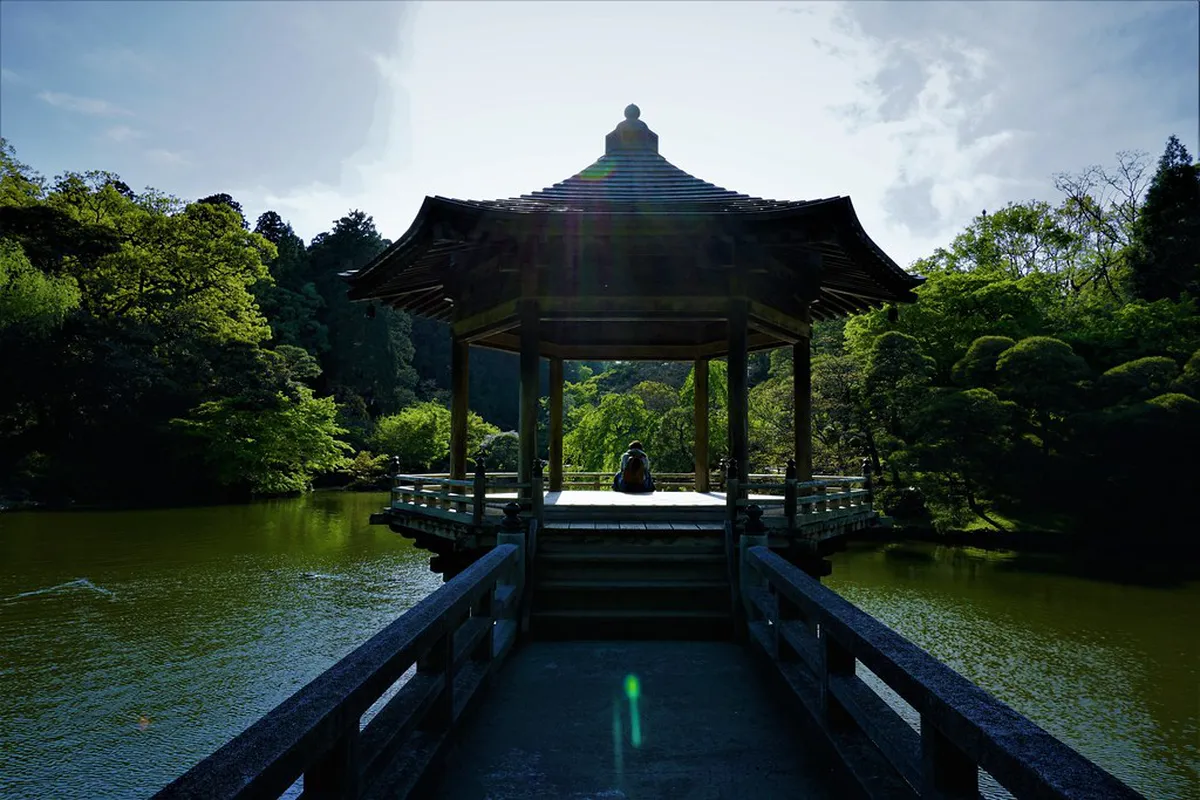
Fudo Myoo, whose name means "Immovable Wisdom King," is a wrathful deity known for compassion. He is depicted holding a sword to cut through ignorance and a rope to bind evil. This contradictory nature — fierce yet merciful — gives the temple its distinctive spiritual atmosphere. The main image remains the same sacred object enshrined in 940 and has never left the complex.
The temple grew to national prominence during the Edo period (1603–1868), when it became a major pilgrimage destination for residents of nearby Edo (today's Tokyo). Its Japan Heritage designation reflects both its age and its unbroken tradition of active worship. Today it is one of the most-visited temples in the entire country, surpassed in annual visitors by very few sites.
Exploring the Temple Complex: Key Structures and Attractions
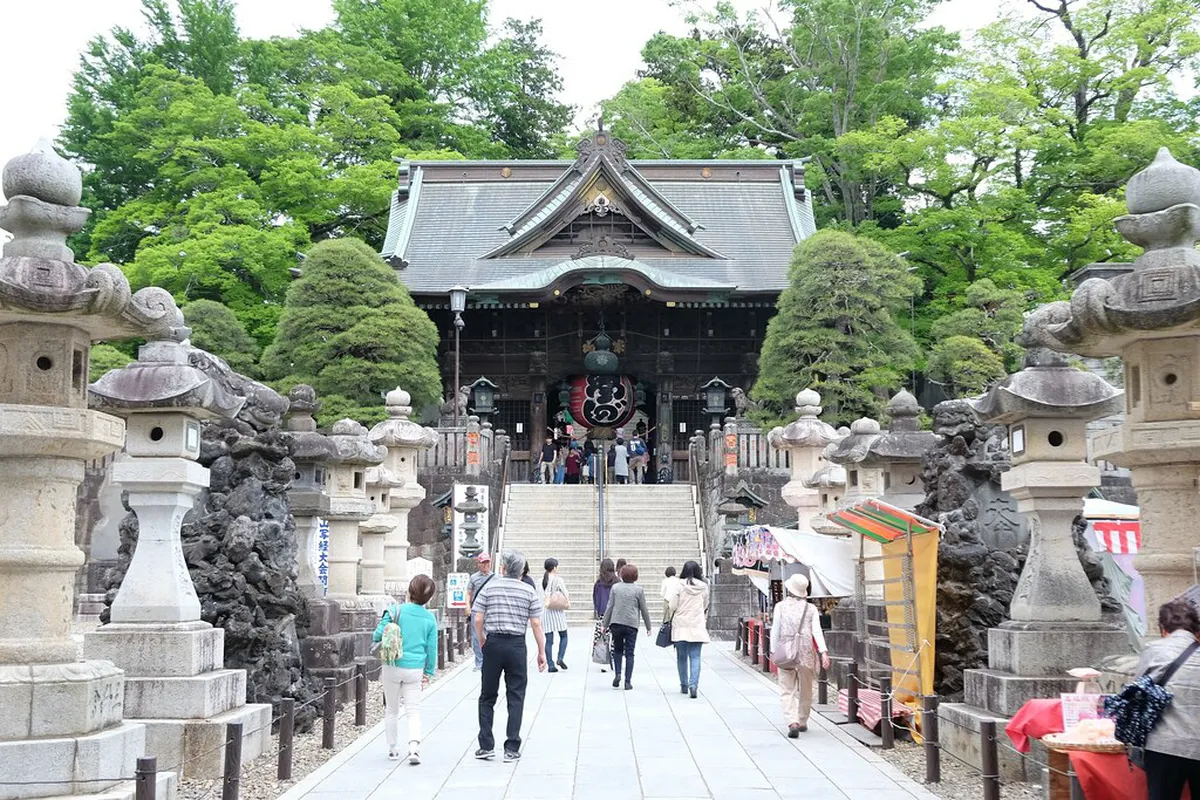
The approach from JR Narita or Keisei Narita stations descends gently downhill, narrowing as it reaches the temple. You first pass through the Somon Gate at street level, then climb a flight of stone steps to the Niomon Gate — designated an Important Cultural Property, built in 1831. The two fierce Nio guardian statues flanking this gate are among the finest examples of their type in the Kanto region.
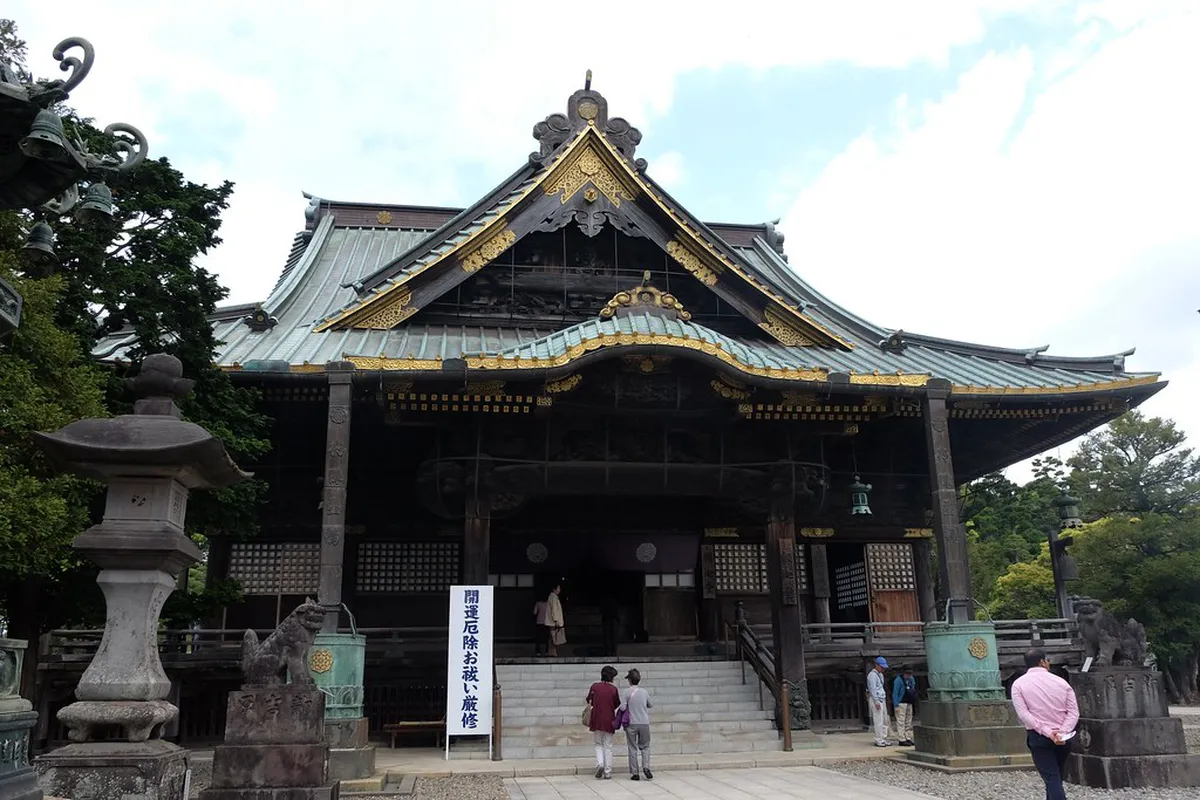
From the Niomon, a second staircase leads to the main courtyard dominated by the Daihondo (Great Main Hall), rebuilt in 1968. This is where Fudo Myoo is enshrined and where the daily Goma fire rituals are performed. To the right of the main hall stands the Three-Storied Pagoda, constructed in 1712 and maintained with its colorful lacquer exterior ever since. It is also an Important Cultural Property. Just nearby sits the Issaikyo-do, a small hall housing a rotating sutra library — visitors can turn the large wooden wheel to receive merit equivalent to reading all the scriptures inside.
Exit the main hall to the left to reach the Shusse-Inari Shrine. As an Inari shrine, it is dedicated to prayers for career success, and one custom here is particularly unusual: supplicants glue their business cards directly onto the wooden ema votive plaques, with glue provided on-site, so the deity can identify who to help. The shrine is tucked away and easy to miss on a quick visit; allow extra time.
Continuing up the hillside, you reach the Shakado Hall (built 1858, the former main hall) with exterior carvings of 500 rakan disciples of Buddha, then the older Komyodo Hall (built 1701, the oldest major structure in the complex), and finally the Great Pagoda of Peace, completed in 1984. The Great Pagoda is visible from the Narita Airport Narita Express train window on clear days. Enter from the base: historical drawings and exhibits inside the lower floor are worth a few minutes, and climbing the carpeted staircase reveals an inner sanctuary lined with murals and anchored by a large Fudo Myoo statue. Remove shoes before ascending.
The Spiritual Experience: Ogoma Fire Ritual and Temple Customs
The Goma (or Ogoma) fire ritual is the defining ceremony of Naritasan Shinshoji and one of the most accessible Buddhist rituals for visitors in Japan. Monks chant sutras and burn cedar sticks representing earthly desires and afflictions in the Daihondo Main Hall. The smoke is understood to carry prayers to Fudo Myoo and to purify those present. Ceremonies are performed several times daily from 09:00, with sessions running roughly every two hours. Admission is free and no reservation is required. The ritual typically lasts around 30 minutes.
Before entering the main hall, visit the chozuya — the water purification basin near the entrance. Use the ladle to rinse your hands before approaching the altar; this ritual cleansing is standard at both Shinto shrines and Buddhist temples. Inside the hall, shoes come off before stepping onto the tatami.
Visitors can write wishes on small wooden ema plaques to hang at the temple, covering requests ranging from safe travel to business success. The temple also occasionally offers sutra-copying sessions (shakyo) for those who want a more meditative, hands-on encounter with Buddhist practice; these sessions are primarily in Japanese, but the quiet calligraphy activity requires no language ability.
Collecting the Goshuin: What Most Visitors Skip
Naritasan Shinshoji is one of the best temples in Japan to collect a goshuin — a hand-brushed temple seal combining red stamps and calligraphy that serves as both a spiritual record and a keepsake. The goshuin office (juinjo) is located near the Daihondo and is open daily. A standard goshuin costs 300 yen and takes a few minutes to complete by hand.
To receive one you need a goshuin-cho, the accordion-style book used to hold temple seals. If you do not already own one, these books are sold at the temple itself and at shops on the Omotesando approach for roughly 1,000–1,500 yen. Naritasan's goshuin features the characters for Fudo Myoo and is considered a collector's piece among pilgrims who travel the Kanto 36 Fudo pilgrimage circuit — Naritasan is the circuit's main temple.
This practice is almost completely absent from English-language coverage of the temple. It is most relevant for repeat visitors to Japan, travelers interested in Japanese Buddhism, or anyone who wants a more intentional souvenir than a keyring. The whole process adds 15–20 minutes to a visit and can be done before or after watching the Goma ritual.
Cultural Significance: Naritasan's Connection to Kabuki
The Ichikawa Danjuro line of Kabuki actors has maintained a formal relationship with Naritasan Shinshoji for more than three centuries. The connection began in the early 18th century when Ichikawa Danjuro I attributed the birth of his son to prayers offered at the temple. Fudo Myoo subsequently became the patron deity of the Ichikawa acting family, and the family's stage name "Naritaya" directly references the temple.
The temple houses votive tablets and artworks donated by successive Ichikawa Danjuro generations, and many Kabuki plays draw on themes or characters associated with Fudo Myoo. This fusion of religious and theatrical patronage is unusual in Japan even by the standards of temple-culture relationships. It helped drive the temple's popularity throughout the Edo period among the urban merchant class who were the primary Kabuki audience at the time.
The current Ichikawa Danjuro XIII, one of the most prominent Kabuki actors working in 2026, continues this tradition of formal visits. The Kabuki connection makes Naritasan a meaningful destination for anyone interested in Japanese performing arts — the temple is not just a religious site but a living piece of theatrical history.
Naritasan Park: Gardens, Waterfalls, and Seasonal Beauty
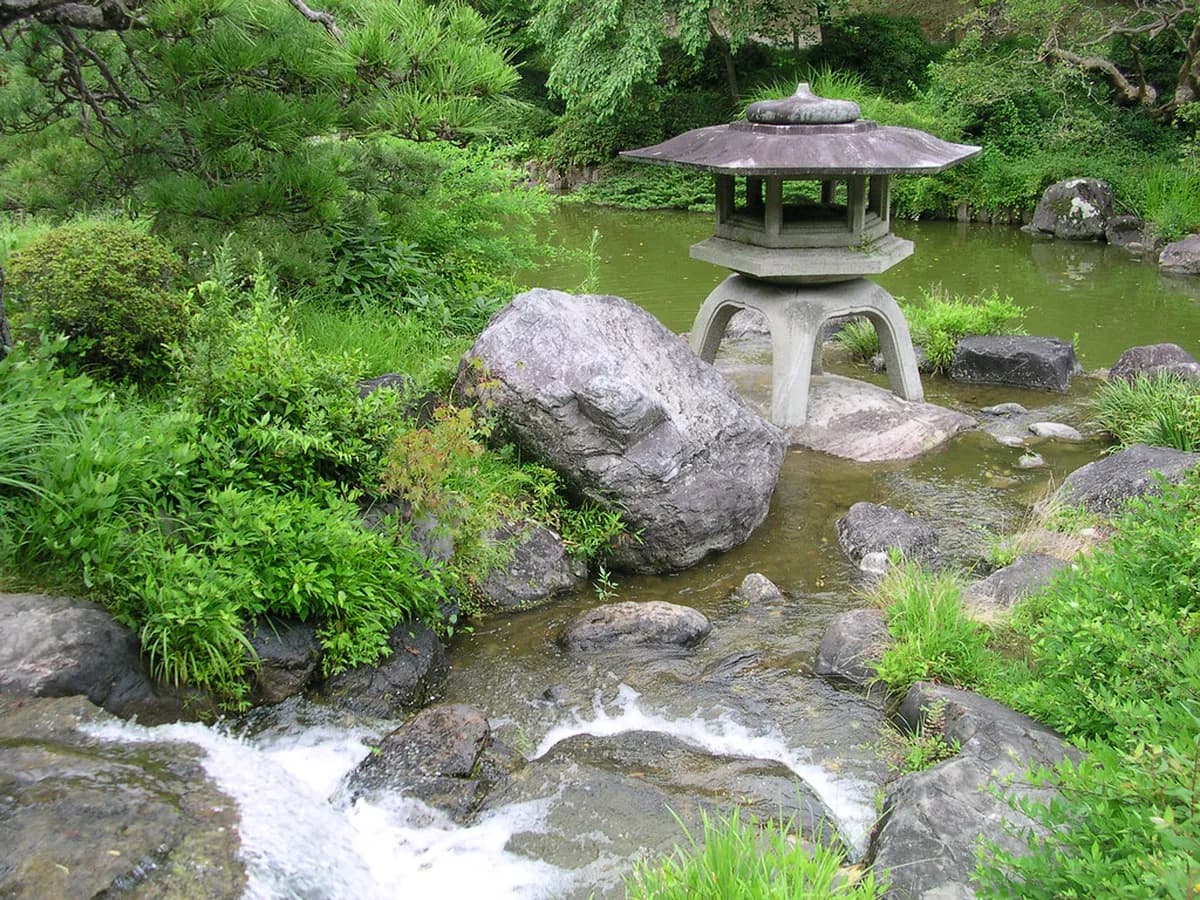
Naritasan Park stretches across the wooded hillside below and behind the Great Pagoda of Peace. The park is free to enter and open year-round. It contains several interconnected ponds fed by a single water source — streams and small bridges link them, and stone lanterns and gazebos dot the banks. The atmosphere is genuinely quiet even when the temple itself is busy, because most day-trippers turn back before reaching the park.
At the upper edge of the park, below the Komyodo Hall, is Yuhi Falls — a 20-metre ribbon of water dropping straight down a rock face. You hear the falls before you see them through the tree cover. A more formal western-style garden sits at the lower end of the park, beneath the Great Pagoda of Peace, and offers a different atmosphere from the naturalistic trails above.
The park transforms markedly with each season. Late March to early April brings cherry blossoms across the full length of the grounds, and this is consistently the most photographed period. June produces hydrangeas in the lower areas. November brings autumn foliage — maples turn red and gold throughout the hillside paths, making this the second major draw for seasonal visitors. New Year (1–3 January) draws close to three million visitors across three days for Hatsumode, the first temple visit of the year; if you want the park quietly, avoid those three days entirely.
Beyond the Temple: Narita City and Omotesando Street
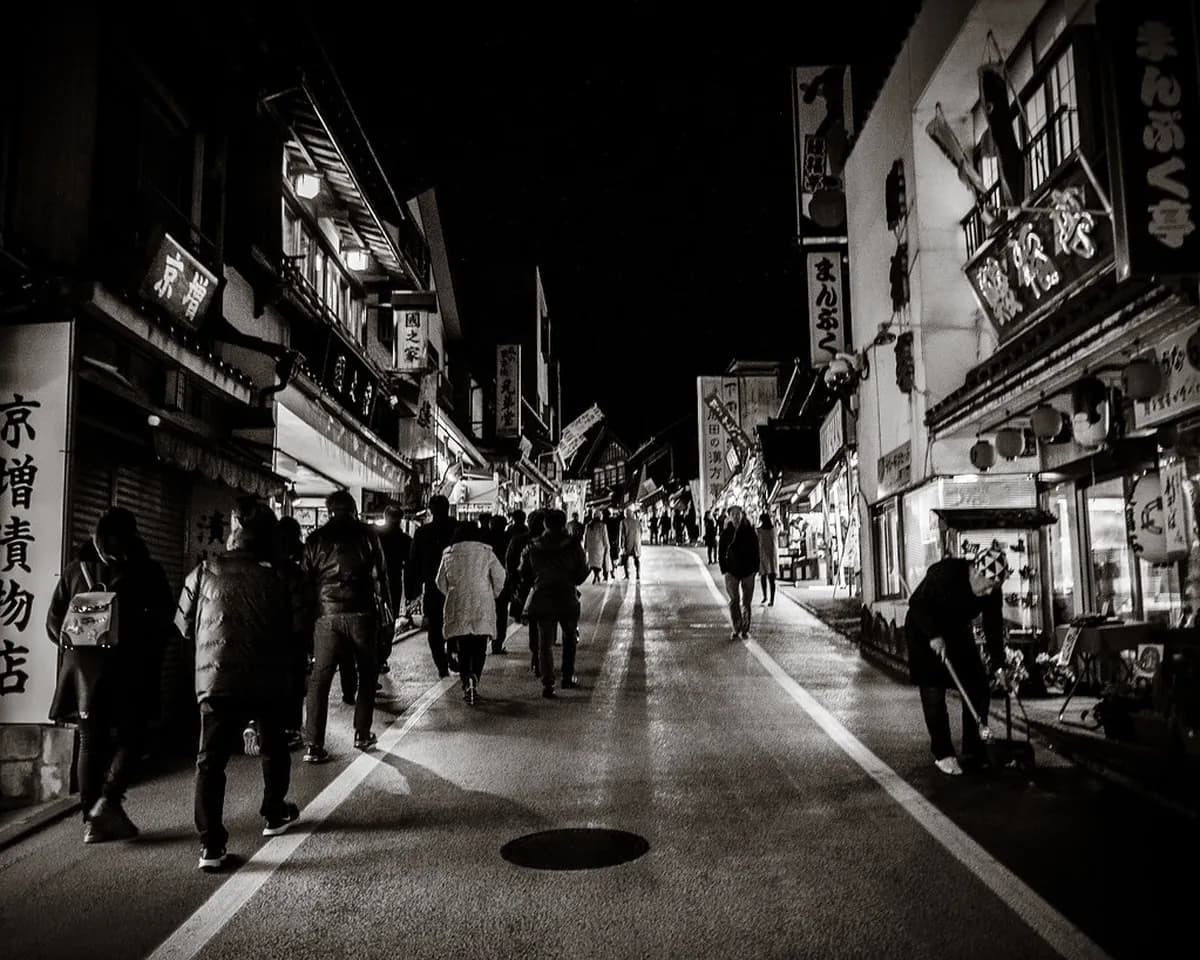
The Omotesando street connecting Narita Station to the temple gate is one of the better-preserved traditional shopping streets in the greater Tokyo area. The road narrows and descends as it approaches the Niomon Gate, lined with shops selling senbei rice crackers, local crafts, and souvenirs. Several vendors offer free samples. Budget 20–30 minutes for the walk if you want to browse; the street is part of the visit, not a detour.
Narita is nationally known for unagi (grilled freshwater eel), and dozens of specialist restaurants operate on or just off the Omotesando. The local preparation leans toward the Kanto style — steamed before grilling — which produces a softer texture than the Kansai method. A full unagi set meal at a mid-range restaurant costs 2,000–3,500 yen. The Narita unagi guide covers the best options by budget and style.
For visitors with extra time, the Museum of Aeronautical Sciences (Koku Kagaku Hakubutsukan), a short taxi or bus ride from the temple, is one of Japan's most detailed aviation museums. Sakura no Yama Park, also accessible by taxi, offers open views of aircraft on the runway approach — an unusual combination of cherry blossoms and landing planes in spring. Neither requires more than an hour.
Those visiting on a layover have a straightforward calculation: Narita Station is 10 minutes from the airport by train, and the temple gate is a 10–15 minute walk from the station. A focused visit covering the main hall, one Goma ritual, and the Omotesando approach fits into two hours. Add the park and lunch, and you need a half day. The Narita layover guide covers timing for different transit windows.
Visitor Information: Access, Hours, and Annual Events
Naritasan Shinshoji Temple is open daily. The main grounds have no admission fee and no fixed closing time for outdoor areas, though individual halls close in the late afternoon. The Goma fire ritual begins at 09:00 and runs on a roughly two-hour schedule through the afternoon; no reservation or admission is required to observe it.
From Narita International Airport, take the JR Narita Line or the Keisei Line to Narita Station or Keisei-Narita Station. Journey time from the airport is approximately 10 minutes. The temple is a 10–15 minute walk from either station, mostly downhill on the way there. Taxis are available but unnecessary given the short distance.
Key annual events in 2026:
- New Year Hatsumode (1–3 January) — approximately 3 million visitors; arrive early or late in the window to avoid peak crowds
- Setsubun Bean Throwing Festival (3 February) — Kabuki actors participate in the bean-throwing ceremony at the main hall
- Taiko Drum Festival (April)
- Gion Festival (July)
- Amulet Burning Ceremony (late December)
Plan for at least 60 minutes on the grounds for a temple-only visit. A visit that includes Naritasan Park, a Goma ritual, and the Omotesando street takes closer to three hours. Wear comfortable shoes — paths include uneven stone steps and cobblestones. The temple has accessible routes for visitors with mobility needs, though several viewpoints involve stairs with no bypass. Check the official Naritasan website for current hall hours before visiting.
Frequently Asked Questions
What is the history of the Naritasan Temple?
Naritasan Shinshoji Temple was founded in 940 AD by Kobo Daishi. It was established to bring peace during a period of rebellion. The temple is dedicated to Fudo Myoo, a protective deity. Its long history makes it a significant cultural and spiritual site in Japan.
Is Naritasan Park free?
Yes, Naritasan Park is completely free to enter and explore. It offers beautiful landscapes, walking paths, and serene ponds. Visitors can enjoy the park's natural beauty without any admission fee. This makes it a great budget-friendly option.
What is the best time to visit Naritasan Park?
The best time to visit Naritasan Park depends on your preferences. Spring offers cherry blossoms, while autumn provides stunning fall foliage. Both seasons feature pleasant weather and beautiful scenery. Consider visiting during shoulder seasons for fewer crowds.
What is the most famous Buddhist temple in Japan?
While many temples are famous, Naritasan Shinshoji Temple is highly renowned. It is one of Japan's most important and frequently visited Buddhist temples. Other famous temples include Senso-ji in Tokyo and Todai-ji in Nara. Each holds unique historical and spiritual significance.
Naritasan Shinshoji Temple rewards visitors at every level of engagement — from a focused 90-minute layover stop to a full-day exploration of the complex, park, and city. Its combination of active religious practice, well-preserved architecture, seasonal landscapes, and the unusual Kabuki connection makes it one of the more layered temple experiences accessible from central Japan.
For the most complete visit, time your arrival to coincide with a Goma ritual, work your way up the hillside through each successive structure to the Great Pagoda of Peace, then descend through the park to catch the waterfalls before heading back down the Omotesando toward a unagi lunch. Allow three hours minimum for that route. Use the full Narita attractions guide to plan what else to include in a longer visit.
For tickets, hours and visitor details, see our Naritasan Shinshoji Temple Visitor Guide and Narita attractions hub.
Free guide: Japan's Hidden Gems
12 under-the-radar places beyond Tokyo & Kyoto — with the best season to visit each and a local tip you won't find in the guidebooks.
You might also like


Continue reading
More guides you'll find useful