Naritasan Omotesando Street Travel Guide
Plan naritasan omotesando street with top picks, neighborhood context, timing tips, and practical booking advice for a smoother trip.
On this page
Naritasan Omotesando Street is an 800-meter stretch of Edo-era townscape leading directly to Naritasan Shinsho-ji Temple. Traditional wooden shopfronts, hand-painted signs, and the persistent aroma of grilling eel define the walk. Budget 60 to 120 minutes for the street alone, more if you stop for a full unagi meal.
The street sits just steps from Narita Station, making it an easy half-day side trip from Tokyo or a practical stopover from Narita Airport. Most shops open by 09:00 and wind down around 17:00. Arriving on a weekday morning keeps the crowds manageable and the food queues short.
Getting to Naritasan Omotesando from the Station
Both JR Narita Station and Keisei Narita Station drop you within a couple of minutes of the street entrance. From JR Narita Station, turn left out of the exit and follow the main road until you spot a stone sign marked "Omotesando" — turn left there and you are at the top of the street. Look for a Chinese zodiac stone statue just inside the entrance as your first landmark.
The path is mostly flat and fully walkable for all fitness levels. Clear signage in English points toward the temple the entire length of the route. The full one-way walk from the station to the temple gates takes roughly 10 minutes at a brisk pace, though most visitors spend far longer with stops along the way.
If you are arriving directly from the airport, both Narita Airport terminals connect to JR and Keisei lines. The train ride from Terminal 2 to Narita Station takes around 10 minutes on either line. Factor in 20 minutes of buffer if you have a tight connection.
The Retro Atmosphere: What Makes Omotesando Distinctive
As you walk deeper into the street, the buildings shift progressively toward a Meiji and Taisho-era aesthetic. Traditional wooden facades replace modern storefronts, and latticed windows and dark roof tiles line both sides. One standout building near the midpoint is a pharmacy selling Kampo herbal medicine — its weathered interior and old-fashioned display cases tend to stop passersby even if they have no intention of buying anything.
The street predates modern Narita by centuries. The temple at its end was founded in 940 CE, and the commercial street that grew up around it evolved through the Edo period (1603–1868). Many families operating shops today are fourth- or fifth-generation owners. That continuity is visible in the craft quality and the unhurried pace of the street.
Omotesando is quieter at night than during the day but worth a brief evening pass if you are staying locally. Lanterns light the approach and the temple's main gate is illuminated, giving a different visual character to the same walk. Most food shops close by 17:00, so an evening visit is best combined with an earlier food stop.
Unagi (Eel) at Kawatoyo: Narita's Defining Dish
Unagi is the culinary signature of Naritasan Omotesando, and Kawatoyo — established in 1910 — is the most famous address for it. The restaurant's process is straightforward and unhurried: hand-select fresh eel, then clean, steam, and grill to order. The cooking happens visibly at the front of the building; even visitors who do not eat eel tend to stop and watch the preparation, which is a spectacle in itself.
The main dish is unaju: grilled eel served over rice in a lacquered box, accompanied by clear liver soup and Narita's local tsukemono pickles. Prices run from roughly 2,500 to 4,000 yen depending on the eel grade and portion size. Kawatoyo does not take advance reservations, so check their website for current wait times before you arrive, particularly on weekends. The restaurant occupies a 1917 wooden building; the second-floor dining room retains its original calligraphy and low ceiling beams.
Narita's connection to eel runs deep enough that the city's official mascot is Unari-kun, a character modeled on a grilled eel. That detail signals how central the ingredient is to local identity — this is not a tourist novelty but a regional specialty that draws visitors from across Japan. The address is 386 Nakamachi, Narita City, Chiba. Hours run 10:00 to 17:00, with irregular closures; open year-round in general.
Osenbei at Hayashida's: The Street's Original Rice Cracker Shop
Hayashida no Osenbei has been on this street since 1912 and is the only shop that still makes its crackers entirely from scratch on-site. The production is visible from the street — crackers grilled over charcoal right in front of you. The signature buy is their kushi-sen: rice crackers on a skewer, available in classic soy sauce or the sweeter mitarashi (sweet soy) glaze. These are best eaten immediately while warm.
Bags of assorted senbei flavors make practical souvenirs. They travel well, pack flat, and carry a reasonable price — a few hundred yen per packet. The shop address is 490 Saiwaicho, Narita City, Chiba. Hours are 09:00 to 17:00. Closed Mondays (or the following day if Monday falls on a national holiday), with no closures in January and May.
Street Sweets: Matcha Ice Cream and the Sesame Alternative
Matcha Sweets Sawawa, at 378 Nakamachi, is the go-to stop for matcha ice cream. They offer two soft-serve options: a standard matcha flavor and a richer premium green tea version with noticeably deeper bitterness. The premium version is the one to choose. They also stock matcha macarons, matcha butter, and green tea parfaits. Prices per serving are typically in the 400–600 yen range.
If you want to skip matcha, Gomafukudo at 390 Nakamachi is the less-obvious alternative. This sesame specialist sells sesame soft-serve alongside croquettes, oils, and sweets including sesame macarons. The ice cream has a toasty, nutty flavour that works especially well in cooler months when matcha ice cream feels less appealing. They sometimes offer samples, which is worth pausing for. Sesame is a smart second snack even if you have already had the matcha — the flavour profiles do not clash.
Japanese Sweets: Dango, Yokan, and Miyoshiya's Hidden Garden
Nana Cafe Koguma at 497-3 Kamicho serves dango — sweet skewered rice dumplings — in traditional flavors including sweet red bean paste. Dango is more filling than it looks; if you are planning to graze along the full length of the street, share a skewer rather than eating one solo. Several dango vendors operate on the street; Nana Cafe Koguma is a reliable stop particularly if others are closed.
Miyoshiya Sweets Cafe sits in a narrow alleyway off the main street at 386-2 Nakamachi. The entrance is easy to walk past — intentionally understated. The alleyway opens into a compact Japanese garden where you can sit and order wagashi (traditional confections), matcha, and light snacks. English menus with hand-drawn illustrations are available. The garden setting makes this the calmest eating stop on the street and a useful break mid-walk before the final push to the temple.
For yokan (sweet red bean jelly) and other packaged sweets to take home, Yoneya Yokan Mihashi Tetsuro Shoten at 337-1 Honcho is the main souvenir shop near the temple exit. They also carry teppozuke, a Chiba specialty of gourd pickled in soy sauce with green chilli. Hours are 09:00 to 17:00 with no regular holidays.
Craftwork and Souvenirs: Seimiya and the Tourist Pavilion
Seimiya at 492 Saiwaicho specializes in handmade bamboo goods — bowls, baskets, and chopsticks produced by an on-site craftsman. Watching the weaving in progress is part of the visit. The items here are higher quality than typical souvenir-shop bamboo products and priced accordingly, but they make durable, distinctive gifts. The craftsman is typically friendly with visitors even when the language barrier is present.
For practical logistics — free WiFi, a restroom break, or a tourist map — the Narita Tourist Pavilion at 383-1 Nakamachi sits directly across from Kawatoyo. It is a useful orientation point, particularly for first-timers who want a physical map before walking the full street. No admission fee.
Naritasan Shinsho-ji Temple: The Street's Destination
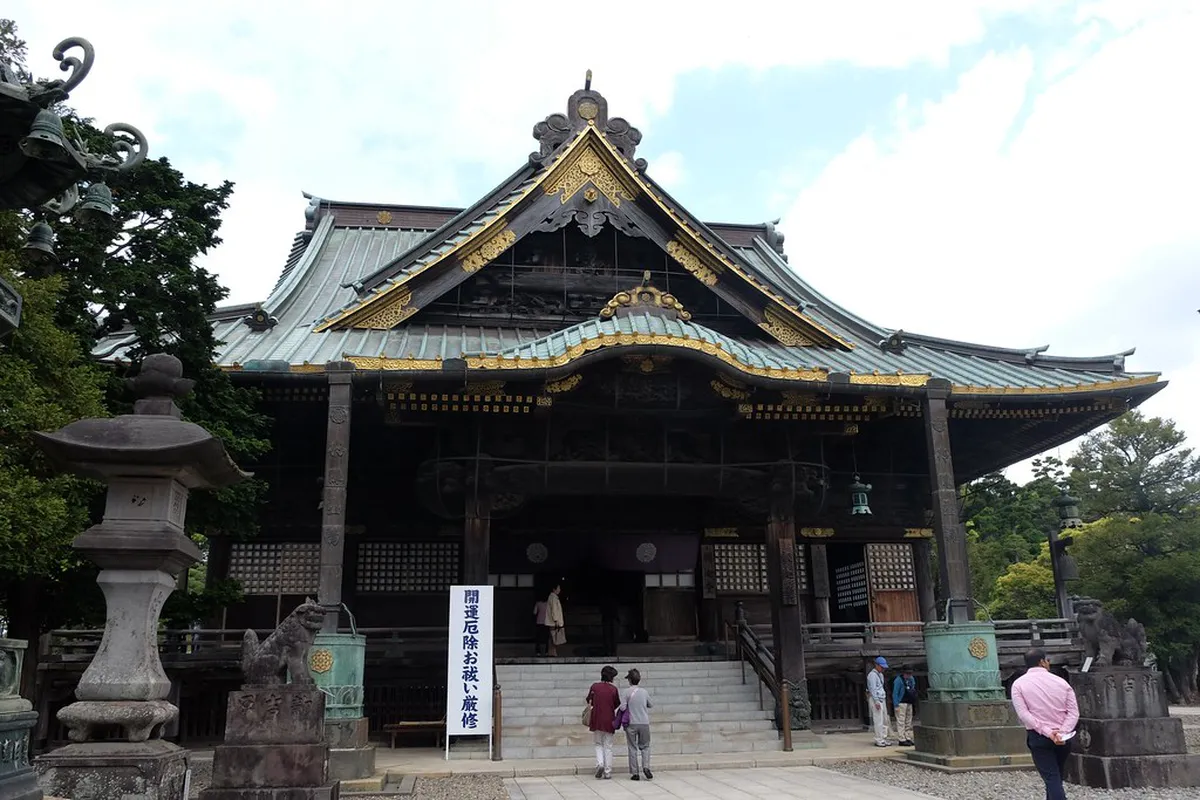
The temple at the far end of Omotesando is over 1,000 years old and draws more than 10 million visitors annually — more than any other temple in Japan outside of Meiji Jingu. The approach through the Nio-mon Gate (a designated Important Cultural Property) sets the tone. Inside the gate, the Nio-ike Pond contains a stone turtle; local tradition holds that if a coin lands on the turtle's back, your wish is granted.
The Daihondo (main hall) anchors the complex. To its right, a 25-meter three-storied pagoda with elaborate colored carvings is the most photogenic structure on the grounds. Fox-shaped amulets sold at the temple are considered particularly effective for career luck — they are unusual enough to stand out among the usual souvenir omamori. Omikuji fortune slips at 100 yen come with reverse-side translations in English, Chinese, and Korean.
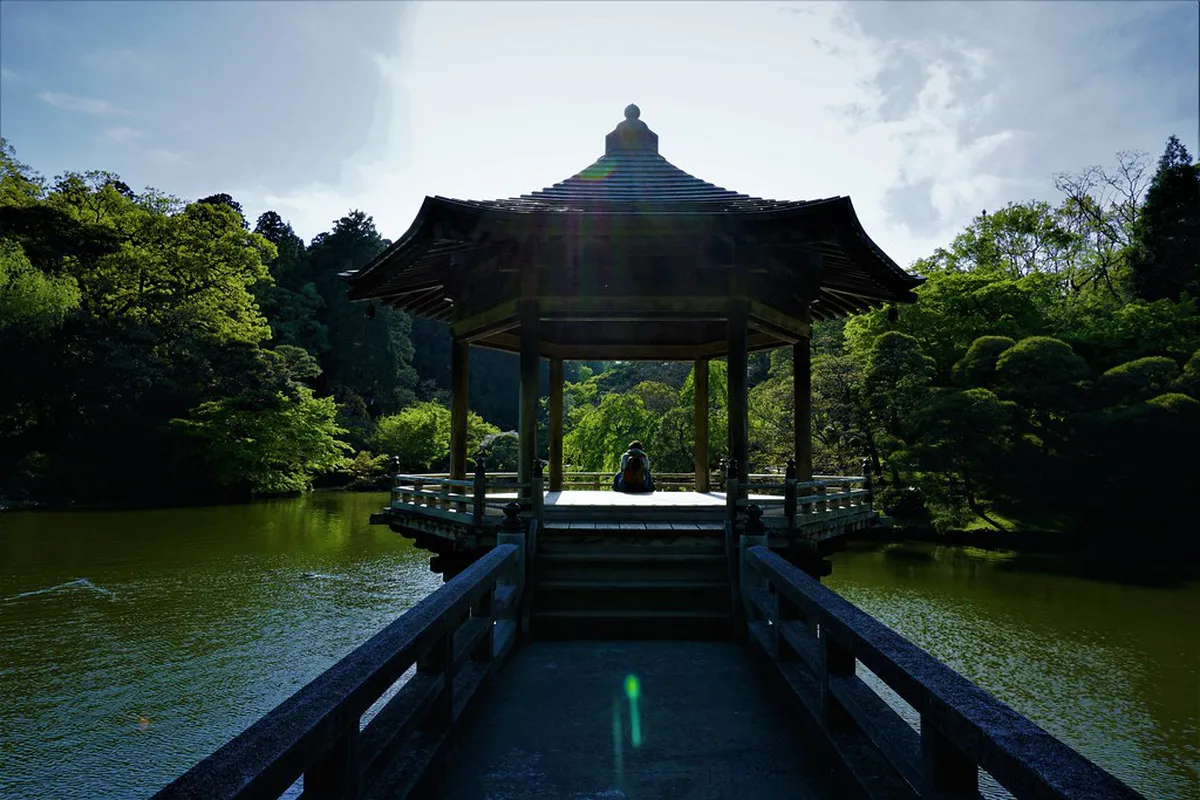
Behind the Daihondo, Naritasan Park stretches across a substantial area with a lake, waterfall, fountain, and seasonal blooms — plum in late winter, cherry blossoms in spring, azalea in May. The park also contains the Naritasan Calligraphy Museum. Entry to both the temple grounds and the park is free. Allow at least 45 minutes for the temple and park combined after finishing the street walk.
The official temple address is 1 Narita, Narita City, Chiba. Worship hours are unrestricted — the grounds are always open. The official website is naritasan.or.jp.
Before or After: Hashira Deli and Planning Your Visit
Hashira Deli and Cafe at 839-30 Hanazakicho is one minute on foot from JR Narita Station — useful either as a pre-walk coffee stop or a place to decompress after the temple visit. Hours are 07:30 to 19:00 (last order 18:00). Closed Sundays, with irregular Monday closures. The cafe is small and owner-operated; expect specialty coffee and a relaxed atmosphere rather than a quick chain-style stop.

For the street itself, a logical sequence for 2026 visitors is: arrive by 09:30, start at Hayashida for fresh-grilled senbei, pick up matcha or sesame ice cream at the midpoint, pause at Miyoshiya's garden for tea and wagashi, continue to Kawatoyo for an unagi lunch (plan around 11:00–11:30 to beat the main lunch queue), then walk through to the temple and park. Return via the same street to collect any souvenir shopping you skipped on the way in. Total time: 3 to 4 hours at a comfortable pace.
If you are on a Narita layover, allow at least 30 minutes transit each way from the airport. A 4-hour layover is the practical minimum for this route; a 6-hour layover gives you comfortable breathing room. For more on timing and what to do with limited airport time, see our Things To Do In Narita Travel Guide overview.
Frequently Asked Questions
What is Naritasan Omotesando famous for?
Naritasan Omotesando is famous for its direct path to Naritasan Shinsho-ji Temple. It is also known for traditional shops, historic restaurants, and local delicacies like unagi (eel) and senbei (rice crackers). The street's retro atmosphere and cultural experiences attract many visitors.
Is Omotesando Street worth visiting?
Yes, Omotesando Street is definitely worth visiting for its unique blend of history, culture, and culinary delights. It offers a charming escape from modern city life. Many travelers combine a visit here with a Narita layover or a day trip from Tokyo.
Is Narita Village worth visiting?
Narita Village, centered around Naritasan Omotesando and the temple, is highly recommended. It provides a rich cultural experience with traditional architecture, delicious food, and serene gardens. It is an excellent destination for those interested in Japanese heritage and local charm.
How do I get to Naritasan Omotesando?
You can easily get to Naritasan Omotesando on foot from Narita Station. It's a 1-minute walk from JR Narita Station and about a 2-minute walk from Keisei Narita Station. The street is well-signposted and leads directly to the Naritasan Shinsho-ji Temple.
Naritasan Omotesando Street is best understood as a sequence: station exit, retro townscape, food stops, temple, park, and back. The food anchors the walk — unagi at Kawatoyo, senbei from Hayashida, sweets at Sawawa or Miyoshiya. The temple and park are the payoff. Allow a full morning or afternoon rather than rushing it.
For full trip planning, see our guide to Things To Do In Narita Travel Guide and our dedicated Narita layover guide for airport transit logistics.
For tickets, hours and visitor details, see our Naritasan Omotesando Visitor Guide: Temple, Food & Layover Tips and Narita attractions hub.
Free guide: Japan's Hidden Gems
12 under-the-radar places beyond Tokyo & Kyoto — with the best season to visit each and a local tip you won't find in the guidebooks.
You might also like


Continue reading
More guides you'll find useful