Fukuoka Hidden Gems Travel Guide
Plan fukuoka hidden gems with top picks, neighborhood context, timing tips, and practical booking advice for a smoother trip.
On this page
Fukuoka keeps its best surprises well off the standard guidebook trail. Most visitors tick off Canal City, Fukuoka Tower, and a bowl of tonkotsu ramen — then leave feeling like they scratched only the surface. The city rewards anyone willing to dig deeper with a reclining Buddha the size of a building, an island overrun by cats, a pitch-black tunnel beneath a temple, and a neighborhood that feels like Tokyo's Harajuku before the tour buses arrived.
This guide focuses on the quirky, the atmospheric, and the genuinely surprising. Every entry below has been chosen because it is something you would not find on a typical three-hour layover itinerary. Use it alongside a Fukuoka City Subway Pass — most of these spots are reachable by subway or a short train ride, and the pass saves money fast once you start moving around.
Must-See Fukuoka Attractions
Nanzoin Temple in Sasaguri is the single sight that most surprises first-time visitors who stray beyond the city center. The complex houses the world's largest bronze reclining Buddha — 41 metres long and 11 metres tall — lying in a state of Parinirvana. Take the JR Sasaguri Line from Hakata to Kido-Nanzoin-mae station (about 20 minutes, ¥280) and follow the signs uphill. Arrive before 10:00 to beat school groups.
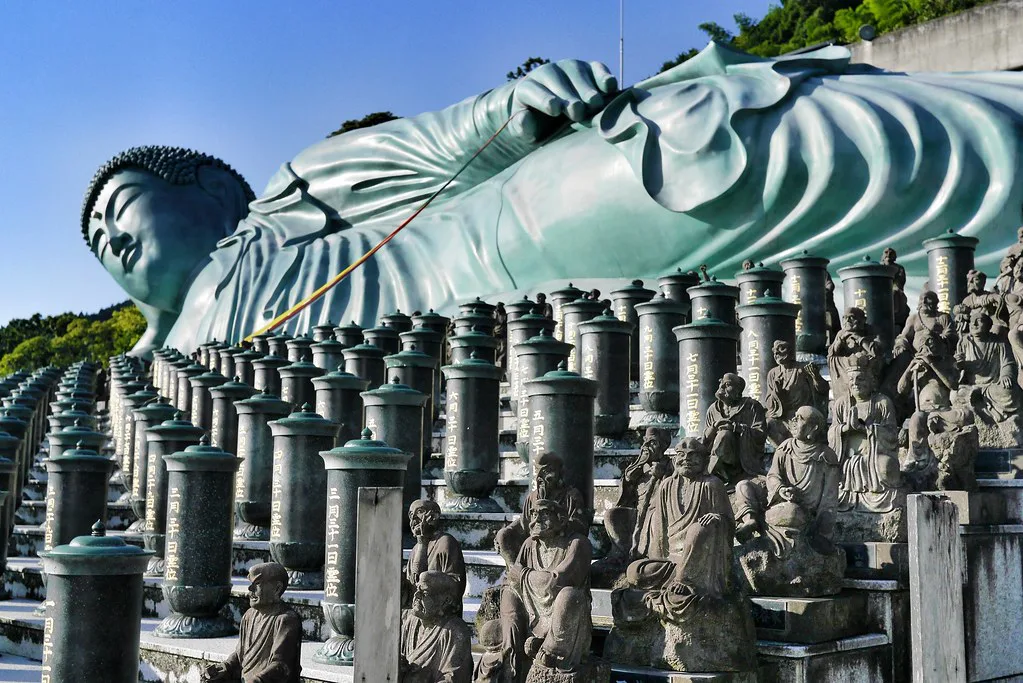
Nanzoin Temple's reclining Buddha is free to view from the grounds; entry inside the mausoleum hall costs ¥500. The JR Sasaguri Line (¥280 from Hakata) runs every 20–30 minutes — no IC card surcharges. Arrive by 09:30 on weekdays to have the statue almost entirely to yourself.
The Fukuoka Red Brick Culture Museum (admission free, closed Mondays) is a beautiful Meiji-era building near Tenjin that often gets skipped in favor of modern attractions. Built in 1909 as an insurance company, it now hosts rotating art and history exhibitions. It pairs naturally with a walk through the ACROS building — more on that below — since both are within five minutes of each other on foot.
Shofukuji Temple, just north of Hakata Station, is Japan's oldest Zen temple, founded in 1195 by the monk Eisai after he returned from China. The grounds are compact and rarely crowded even on weekday afternoons. There is no admission fee. Unlike the larger shrine complexes, Shofukuji has a worn, lived-in quality that feels genuinely ancient rather than restored-for-tourists.
Walk the Path Between Heaven and Hell
Tochoji Temple in the Gion area has two things that make it unlike any other temple in the city. The first is a nearly 11-metre wooden Buddha inside the main hall — photography is not permitted, so you have to go in person (entrance ¥50). The second is the tunnel beneath it, known as the Path Between Heaven and Hell.
You enter through a door and immediately lose the light. The tunnel is about 100 metres long and completely pitch black. Eight illustrated panels depicting Buddhist visions of hell line the walls at the start; after those, it is absolute darkness. Somewhere in the dark, an iron ring hangs from the ceiling — touching it is said to ensure passage to heaven. There is a rope to hold along the wall, which helps. Go early in the morning before tour groups arrive, or late afternoon when it is genuinely quiet.
Tochoji is a short walk from Gion subway station on the Kuko Line. Admission to the grounds is free; the ¥50 fee only applies if you enter the main hall to see the Buddha.
Museums, Art, and Culture in Fukuoka
The Fukuoka Art Museum sits inside Ohori Park, which means a visit can be combined with the park walk for no extra transit cost. Open 09:30–17:30 (closed Mondays), admission ¥200. The permanent collection spans from Dali and Warhol to Japanese Buddhist sculpture and Hakata folk art — an unusual range for a regional museum. Check their website in advance for temporary blockbuster shows that occasionally push the entrance fee higher.
The Fukuoka Asian Art Museum near Hakata Station focuses on modern and contemporary work from across Asia — South Korea, China, India, Southeast Asia — making it a genuine counterpoint to the heavily Western art you find in most Japanese city museums. Tickets are ¥200 and the permanent collection is worth an hour on its own. The building is inside the Hakata Riverain complex, also home to a children's theater and several mid-range restaurants.
For a stranger cultural experience, seek out Sanatorium cafe at 3F Saeki Building, 3-3-23 Tenjin. The owner is artist Takamaka Sumi, and the space is designed to look like a hospital: drinks arrive in laboratory beakers, staff wear medical coats, and anatomical specimens (plastic and preserved) are placed around the room. An MRI scan of the owner's brain hangs on one wall. Opening hours are irregular — check before visiting — but it is one of the most genuinely unusual places to spend an hour in Fukuoka.
Parks, Gardens, and Outdoor Spots in Fukuoka
Ohori Park is the city's main breathing space, built around a large ornamental pond with a zigzag bridge leading to a small island pagoda. The park is walkable year-round; swan and row boats rent for ¥500 per 30 minutes. Sunset here, with the pagoda silhouetted against the water, is one of the better free photo opportunities in Fukuoka. The adjacent Ohori Park Japanese Garden (¥250) has a mist show that runs on timers throughout the day — arrive just before the hour for the best effect.
Maizuru Park connects directly to Ohori Park and contains the Fukuoka Castle Ruins, originally built during the Edo period in the 17th century. Stone walls and guard towers remain; the hilltop gives a clear view across the city center. In late April, azalea gardens on the western edge bloom densely enough to be worth a dedicated visit. In spring, the park is one of the top hanami (cherry blossom viewing) spots in the city.
Yusentei Park, a traditional stroll garden in Minami Ward (¥100 admission, closed Mondays), is small enough that most tourists skip it for Ohori Park, which makes it genuinely quiet. The route winds past a tea house, a pond, and a hillside bamboo grove. Nokonoshima Island Park — reached by a 10-minute ferry from Meinohama Port — operates a seasonal flower calendar covering poppies, sunflowers, and cosmos across the year, with English information available on their website.
Climb the ACROS Green Building
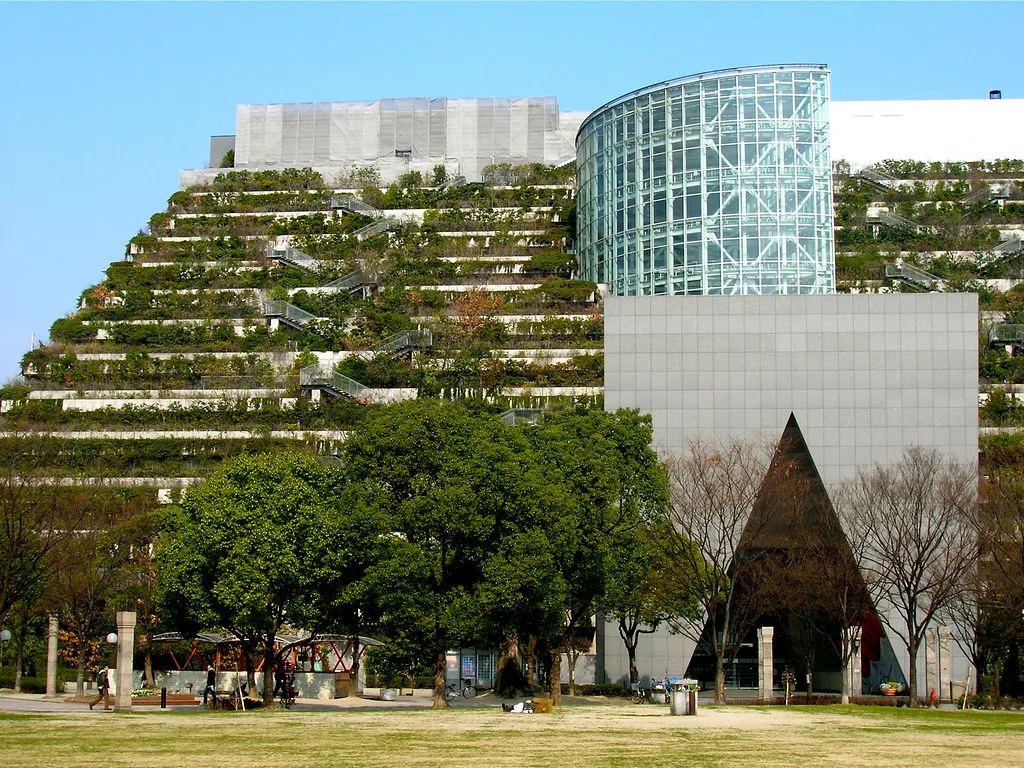
The ACROS Fukuoka building on Tenjin Central Park is unmistakable: one entire facade is covered in ascending terraces of greenery, holding over 35,000 plants across 14 stepped levels. What very few visitors realize is that you can climb it. The entrance is on the green side of the building, on the left when you face it — it is easy to miss and most people walk past it entirely.
Stairs lead up through the planted terraces to an observation area at the top. The official rooftop observation deck closes at 16:30, but the terraced climb itself is accessible later in the day and gives views over Tenjin Central Park toward Ohori and the city skyline. Admission is free. The interior of the building houses a symphony hall and cultural foundation, and entry there is also free to explore. Budget 30 minutes.
Family-Friendly and Budget-Friendly Options in Fukuoka
Ainoshima, the cat island about an hour north of Fukuoka by train and ferry, is the kind of place that converts people into believers. Around 150 mostly feral cats live on the island among the small fishing community. They roam freely, ignore cameras, and sleep on everything. Take the JR Chikuhi Line to Shingu Station, then a local bus to Shingu Port for the ferry (around ¥400 one way). The island has no shops to speak of, so bring snacks and water.
Kushida Shrine, a short walk from Canal City, is free to enter and contains several curiosities that are easy to miss. A Chikari Ishi (strength stone) sits in the courtyard — a heavy rock that sumo wrestlers have historically lifted as a dedication to the gods. Visitors are invited to try. The shrine hosts the Hakata Gion Yamakasa festival every July, one of the city's major annual events, so if your 2026 trip falls in the first two weeks of July, arrive early to watch the float races.
Canal City Hakata runs a Godzilla show most evenings after dark — a projected fight sequence on the mall's glass facade with fountains, flashing lights, and sound effects. Download the venue app if you want to participate in the interactive elements. This costs nothing beyond the time to watch it. It is reliably crowded but runs nightly, so if the first showing is packed, the next one is roughly an hour later.
How to Plan a Smooth Fukuoka Attractions Day
Fukuoka is compact enough that most central attractions can be grouped into two or three geographic clusters: the Hakata Station area (Kushida Shrine, Tochoji Temple, Sumiyoshi Shrine), the Ohori / Tenjin area (ACROS, Ohori Park, Fukuoka Art Museum, Red Brick Museum), and the Momochi waterfront (Fukuoka Tower, PayPay Dome, Momochihama beach). Planning by cluster rather than by interest saves at least 40 minutes of backtracking per day.
Purchasing a Fukuoka City Subway Pass is worth it once you plan to visit more than three sites in a day. The subway reaches Gion (Tochoji Temple), Ohori Park, and the Momochi waterfront. For day trips, such as to Dazaifu or Yanagawa, allocate a full day and leave early — our Fukuoka day trips guide has timed itineraries for both.
For Nanzoin Temple and Ainoshima Cat Island, plan each as a half-day trip minimum. Nanzoin is 20 minutes by JR from Hakata; Ainoshima requires around 90 minutes each way including the ferry. Both are best visited on weekday mornings when crowds are thinner. Check temple websites before visiting; some maintenance closures in 2026 affect access to specific structures.
Foodie Things to Do in Fukuoka
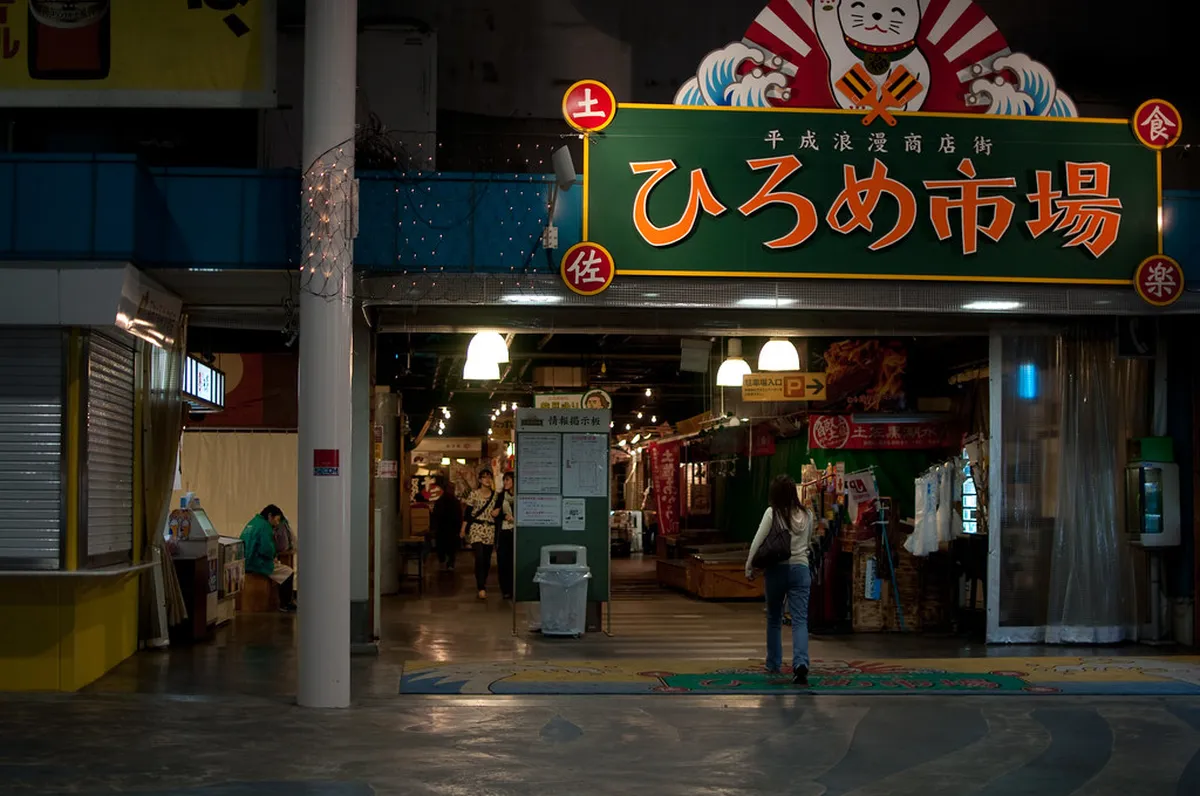
Fukuoka's Nagahama Fish Market is not open to the public on most days, but the tiny arcade of restaurants right next door serves sushi and grilled fish made from the day's catch starting from around 07:00. This is the single best breakfast option in the city if you can get there early. Meals at the counter run around ¥1,100 for fresh sushi with miso soup and pickles. Bring cash; most stalls do not take cards. Finding the entrance is genuinely confusing — Google Maps will seem to be sending you to a concrete office building, but you are not lost: the restaurants are all on one floor inside.
At Hakata AkaChokobe restaurant (7-10 Reisenmachi, Hakata-ku), the specialty is Zubora Udon — thick, half-metre-long noodles cooked in a kettle on the hob rather than a communal vat, served in their cooking water and dipped into a sauce. Two sauce options: one based on natto (fermented soybeans), one a rich spiced broth with intestine. Open 11:30–14:00 and 18:00–23:00, seven days a week. It is a five-minute walk from Kushida Shrine.
The Yanagibashi Rengo Market, called "Fukuoka's Kitchen" by locals, is a narrow covered market near Nakasu running from around 08:00. Stalls sell fresh seafood, mentaiko (spicy cod roe), local vegetables, and prepared foods. Go on a weekday morning to buy mentaiko directly from producers rather than from the airport gift shops, where the same product costs roughly 30% more. This is also the place to find toriten (Oita-style fried chicken) and other Kyushu regional dishes that don't appear in the tourist-facing yatai stalls.
The yatai stalls along the Naka River between Nakasu and Tenjin open from around 18:00. Each stall seats about eight people under a canvas awning. Order tonkotsu ramen, grilled skewers, and local shochu. The experience is unhurried and conversational — you are expected to linger. Wet weather reduces turnout, which actually makes for a better experience if you do not mind a damp evening.
From Scenic Canal Rides to Limited-Edition Ramen: Uncover Fukuoka's Hidden Gems
Yanagawa, 45 minutes south of Hakata by Nishitetsu train (¥870 one way), is a castle town crossed by a network of narrow canals. Flat-bottomed wooden boats poled by boatmen cover the main routes at a pace that makes it genuinely relaxing rather than purely photogenic. The boatmen sing as they pole. Tickets for the main canal route cost around ¥1,500. Most visitors do Yanagawa as a half-day trip from Fukuoka, and that is enough to cover the canals and the Ohana Villa gardens.
For ramen beyond tonkotsu, Fukuoka has a habit of running limited-edition and seasonal bowls at small shops that do not advertise internationally. The best way to find current specials is to check local food-focused Instagram accounts or ask at the tourist information desk at Hakata Station, which maintains a current list of featured restaurants. Several shops in the Daimyo and Yakuin neighborhoods experiment with wagyu-broth variations and fermented garlic toppings that do not appear on any English-language menu list.
Hakata Gion Yamakasa festival (July 1–15 annually) is one of those events where seeing it once makes you understand why locals plan their entire summer calendar around it. Enormous decorated floats called kazari-yamakasa are displayed across the city from July 1; the racing floats (kaki-yamakasa) are lighter and carried at a sprint through the streets. The final race, Oiyama, starts at 04:59 on July 15 from Kushida Shrine. It is free to watch from the street and the 05:00 start means crowds are manageable compared to daytime events.
The Daimyo Neighborhood: Fukuoka's Hidden Creative Quarter
Daimyo, the compact grid west of Tenjin, is the one neighborhood that most Fukuoka guides mention only in passing but deserves a dedicated afternoon. It operates as Fukuoka's equivalent of Tokyo's Harajuku — independent boutiques, vintage clothing shops, chic cafes, and bars with unusual themes — but without tour groups and at a fraction of the price. Walking the main streets takes about 20 minutes; the real reward is in the side alleys.
Alice on Wednesday is a shop reached by crawling through a tiny door set low in the entrance — the Alice in Wonderland reference is intentional. Inside, the space is stocked with themed trinkets, ceramics, and curiosities. The crawl-in entrance alone makes it worth finding. It sits on Konyamachi Higashidori, which is also home to several other independent shops worth browsing.
On the corner of Kokutai-dori and Konyamachi Higashidori, look for the robot vending machine: a full-size robot figure incorporated into a drink vending machine. There is no historical context for this and no official explanation. It dispenses standard drinks. Locals stop to photograph it; most tourists walk straight past. In the same general area, Guru Guru Chicken operates a street stall from 11:30 selling Fukuoka-style rotisserie kebabs — spice level is adjustable, the wrapping is tidy by kebab standards, and it makes a quick and genuinely local lunch for around ¥600.
The Daimyo area is busiest on weekend afternoons from around 14:00. Weekday mornings are quieter and better for browsing the smaller shops at your own pace. Most shops open by 11:00 and many stay open until 20:00 or later.
Beaches & Seaside Views in Fukuoka 🏝️
Momochihama Seaside Park sits next to Fukuoka Tower and PayPay Dome in the Momochi area. The man-made beach has a boardwalk lined with seafood restaurants and a BBQ oyster spot on the eastern end. It is primarily a summer beach — swimming and sunbathing from June through September — but the waterfront walk is pleasant year-round. Fukuoka Tower's observation deck (¥800, open until 22:00) gives the best panorama of the bay at night.
Futamigaura Beach, roughly 45 minutes from central Fukuoka by car or a combination of bus and train, is the kind of beach that appears in travel photography but rarely in itineraries. It is famous for its Meoto Iwa (Married Couple Rocks) and a torii gate that stands in the water at low tide. The sunset here is reliably good. Nata Beach (listed as 奈多海岸 on Google Maps), accessible by subway and a short walk, is a wide, quiet beach with dark teal water that is nearly empty on weekdays.
Uminonakamichi Seaside Park, on a peninsula east of the city (reachable by JR Kagoshima Line to Uminonakamichi Station), covers 350 hectares and has a cycling path, a small zoo, seasonal flower gardens, and a beach with lifeguards in summer. Bicycle rental is available at the park entrance for around ¥300 per hour. It is a full half-day commitment and works well as a family option that combines beach, nature, and cycling without requiring a car.
Best Shopping Spots & Local Markets 🛍️
Kawabata Shotengai, Fukuoka's oldest covered shopping arcade, runs parallel to the Naka River near Nakasu. The shops here sell Hakata dolls, Hakata-ori silk textiles, local sweets, and traditional ceramics. It is more useful for finding genuinely local gifts than the souvenir chains near Hakata Station. Many shops are small family operations and prices are lower than the airport equivalents. The arcade connects directly to the Gion subway station end, making it easy to add after Kushida Shrine.
Tenjin Underground Mall, connecting directly to Tenjin subway station, is one of the largest underground shopping streets in Japan. The practical value for visitors is the weather: whether you are dealing with July heat or winter rain, the underground corridors keep you comfortable while you browse department stores, local boutiques, and food stalls. The Hakata Hankyu department store at Hakata Station — basement food hall in particular — is the best place to buy Fukuoka food souvenirs in one stop: mentaiko, Hakata-ori goods, and local sake all under one roof.
Canal City Hakata is worth visiting for the architecture and the Godzilla show rather than the shopping itself. Most of the retail tenants are standard Japanese chain brands. The exception is the basement food floor, which concentrates several ramen shops representing different regional styles — a useful reference point before you decide which neighborhood ramen shop to try for your proper meal.
Eat at One of the World's Best Restaurants
La Maison de la Nature Goh has placed consistently on Asia's 50 Best Restaurants list and represents the peak of what Fukuoka's fine-dining scene can produce. The kitchen serves French-Japanese cuisine in a six or seven-course menu that leans heavily on Kyushu ingredients — local seafood, Saga wagyu, seasonal produce from the surrounding countryside. Price per head runs ¥15,000–¥20,000 (approximately €90–€125). Reservations are essential and typically require booking weeks in advance; the restaurant's website and Japanese booking platforms like Tableall carry availability.
For a more accessible introduction to high-end Fukuoka dining, the basement floor of Hakata Hankyu and the Yodobashi Hakata building near Hakata Station both concentrate multiple restaurants ranging from ¥3,000 kaiseki sets to specialty fugu (blowfish) courses. Fugu restaurants require chef licensing under Japanese food safety law — only eat fugu at establishments with the official certification displayed. In season (October to March), a fugu course starts around ¥5,000–¥8,000 at mid-tier licensed restaurants.
The city's Michelin Bib Gourmand list (updated annually) is the most practical starting point for finding exceptional value. Several yakitori and ramen shops in Hakata and Nakasu have held Bib Gourmand recognition for multiple years. These are not hidden in any dramatic sense, but they are small, reservation-only operations that require planning — walk-in attempts at 19:00 on a Friday will fail.
For related Fukuoka planning, see our Rainy Day Things To Do In Fukuoka Travel Guide and Romantic Things To Do In Fukuoka For Couples Travel Guide guides.
Frequently Asked Questions
Which fukuoka hidden gems options fit first-time visitors?
First-time visitors to Fukuoka should explore the Fukuoka Red Brick Culture Museum and Shofukuji Temple. These sites offer cultural insights without being overwhelming. Yusentei Park also provides a peaceful introduction to traditional Japanese gardens. Consider a short itinerary to maximize your time.
How much time should you plan for fukuoka hidden gems?
To properly explore several fukuoka hidden gems, allocate at least two to three full days. This allows for comfortable travel between locations and deeper immersion. A shorter stay might require prioritizing specific interests. Planning a detailed itinerary helps manage your time effectively.
What should travelers avoid when planning fukuoka hidden gems?
Avoid over-scheduling your days when seeking fukuoka hidden gems. Rushing through experiences diminishes enjoyment. Also, do not rely solely on major guidebooks for these unique spots. Local recommendations and online research are often more helpful. Verify opening hours for smaller venues.
Is fukuoka hidden gems worth including on a short itinerary?
Yes, including fukuoka hidden gems is highly recommended even on a short itinerary. They offer a more authentic and memorable experience. Prioritize one or two key hidden spots that align with your interests. This adds a unique flavor to your quick visit.
Fukuoka's hidden side rewards curiosity and a willingness to deviate from the standard circuit. The reclining Buddha at Nanzoin, the pitch-black tunnel at Tochoji, a breakfast at the fish market at 07:00, an afternoon crawling through a tiny door in Daimyo — these are the experiences that tend to be the ones you describe to people when you get home. The standard sights are fine; the hidden ones are the reason to come back.
Use the subway pass, group attractions by neighborhood, and leave at least one afternoon unscheduled. Fukuoka has a density of small, unusual places that only surface when you are not rushing. The city is compact enough that serendipity is a genuine travel strategy.
Free: The Fukuoka Essentials guide
Top things to do, where to stay, a perfect day plan, getting around, and the best time to go — a Fukuoka mini-guide you can take offline.
You might also like


Continue reading
More guides you'll find useful