
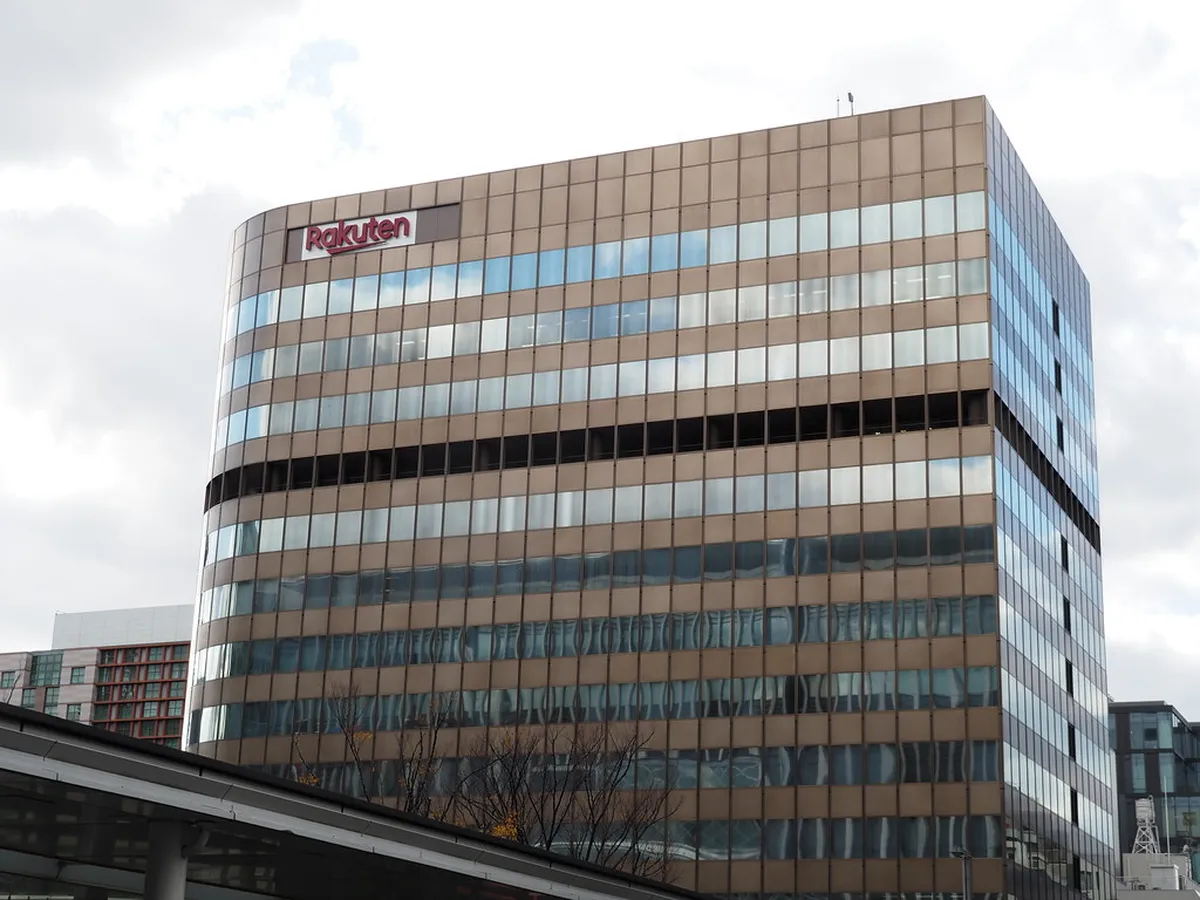
Hakata Station Area Guide: Shopping, Food, and Access
Master Hakata Station with our guide to Kyushu's busiest hub. Discover top shopping spots, authentic ramen, Shinkansen access tips, and nearby Fukuoka attractions.
On this page
Hakata Station is the primary gateway to Fukuoka and the rest of Kyushu, handling roughly 460,000 passengers a day. The complex stacks Shinkansen platforms, JR lines, two subway lines, a bus terminal, two department stores, and a ten-floor dining tower into one block. First-time visitors often feel overwhelmed simply finding the correct exit. This guide gives you a working layout of the station and the practical food, shopping, and transit details that matter most in 2026.
You will not need to leave the building to eat well, shop tax-free, or catch a bullet train to Tokyo. The trick is knowing which side of the station you need before you step through the gates. We focus on concrete details: exit choice, payment methods, crowd timing, and the cheapest ways to handle luggage.
Overview of Hakata Station
Hakata Station is Kyushu's largest railway terminal and the southern endpoint of the Sanyo Shinkansen from Shin-Osaka and Tokyo. It is also the northern terminus of the Kyushu Shinkansen running south to Kumamoto and Kagoshima-Chuo. The building is operated by JR Kyushu, with Shinkansen platforms managed jointly with JR West.
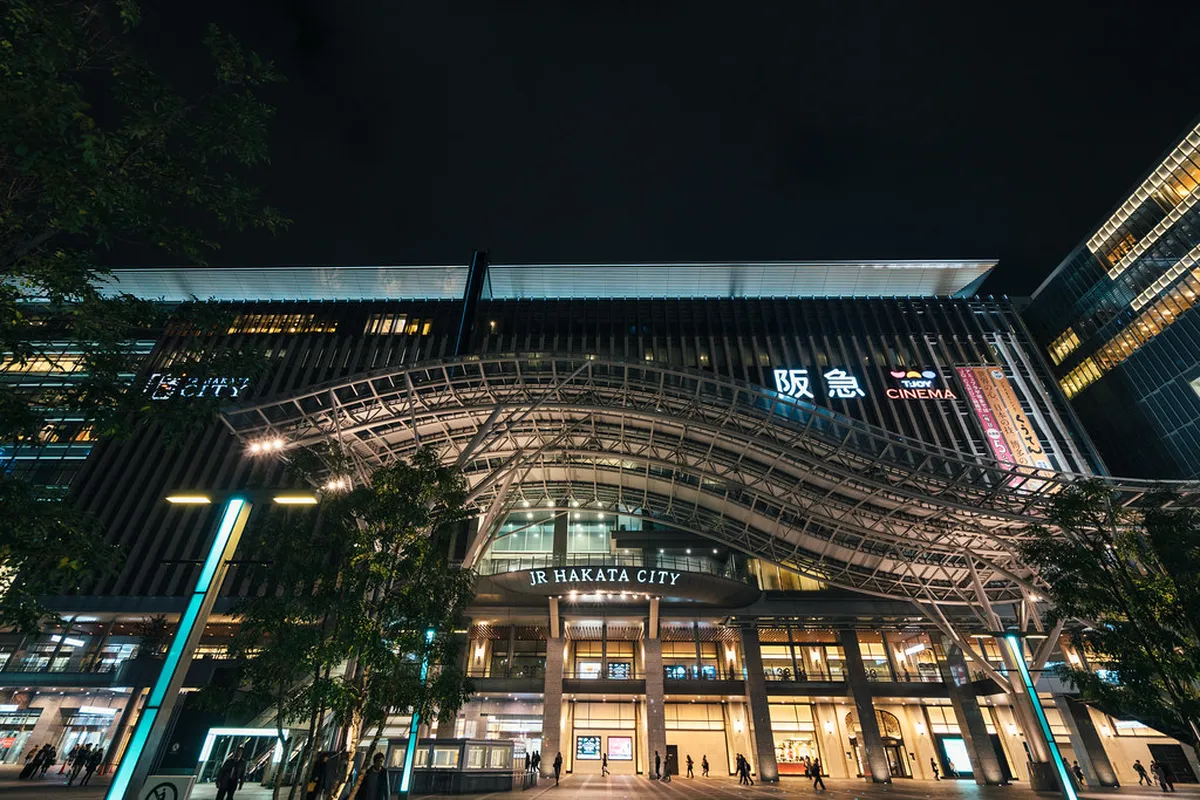
Above the gates sits **JR Hakata City**, a ten-floor retail and dining complex that includes Amu Plaza, Hakata Hankyu, and the **KITTE Hakata** tower. Many visitors stay nearby for the convenience, and you can compare the best Fukuoka hotels by neighborhood to decide whether the station district fits your trip.
The station has two opposing faces. The **Hakata Exit** on the west side opens onto Hakata-guchi Square, the main bus terminal, and the route toward Tenjin and Nakasu. The **Chikushi Exit** on the east is closer to the Shinkansen gates, Yodobashi Camera, and a quieter cluster of business hotels.
The rooftop **Tsubame-no-Mori Hiroba** garden on the JR Hakata City roof is free to enter and includes a small Shinto shrine, a viewing deck, and a miniature railway. It is one of the few quiet outdoor spots inside the complex and works well between trains.
Navigating the Station: Map and Access
If you are arriving by air, the subway is the fastest option. See Fukuoka Airport to City Center 2026: Subway, Bus & Taxi Transfer Guide for the Kuko Line connection. The subway platforms sit directly under the JR concourse, with signage in English, Chinese, and Korean.
For a printable layout, refer to the Hakata Station Map by West Japan Railway Company. Download it before you arrive — Wi-Fi inside the gates is reliable but slow during commute peaks.
Tap-and-go IC cards work on every train, subway, and bus that touches the station. Compare the Fukuoka City Subway Pass vs Tourist City Pass if you plan multiple subway trips in one day. Suica, Pasmo, ICOCA, and the local Sugoca card all work interchangeably.
Hakata Exit vs Chikushi Exit
- Hakata Exit (west) — faces Tenjin and Nakasu, the bus terminal, KITTE Hakata, and the Hakata Hankyu food hall. Best for shopping, sightseeing, and most mid-range hotels.
- Chikushi Exit (east) — faces the Shinkansen tracks, Yodobashi Camera, and budget business hotels. Best for arriving by bullet train and walking straight to your room.
Shinkansen platforms 11 to 16 sit on the third and fourth floors above the JR gates. Both sides of the building have escalators up, but the Chikushi Exit lift line is shorter during weekend evenings.
Fukuoka City Tourist Information Center at Hakata Station
Just past the ticket gates on the first floor of JR Hakata City, near the Hakata Exit, is the Fukuoka City Tourist Information Center. It is the fastest way to get oriented if the station's exit signage feels confusing on a first visit.
Staff speak English, Chinese, and Korean, matching the signage used throughout the concourse, and the counter is open daily from 8:00 to 20:00. Typical requests take only a few minutes to handle.
- Free printed area maps in multiple languages, more detailed than the posted station maps
- Same-day and advance sales of the Fukuoka City Subway Pass and Fukuoka Tourist City Pass
- Hotel and airport luggage forwarding, arranged at the counter for about ¥1,000 per piece
- Guidance on step-free routes and elevator locations between the Hakata and Chikushi sides
The desk is also the easiest place to confirm which exit — Hakata or Chikushi — is closer to a specific hotel or attraction before you commit to a direction inside the complex.
Shinkansen and Rail Services from Hakata
The Hakata-Minami Line uses Shinkansen rolling stock but charges only a regular JR fare plus a small supplement (~¥300 one way). It departs from platforms 11–16 alongside Tokyo-bound bullet trains and reaches Hakata-Minami in 9 minutes — the cheapest legal way to ride a Shinkansen-spec train in Japan.
Hakata is served by four Shinkansen train types: **Nozomi** and **Mizuho** are the fastest but are not covered by the standard Japan Rail Pass. **Hikari**, **Sakura**, and **Tsubame** are JR Pass valid and stop at more stations. If you hold a JR Pass, plan around Kagoshima and Hikari departures rather than rushing for a Nozomi.
The first Shinkansen of the day typically leaves around 06:00, and the last train to Tokyo departs near 20:30. Last departures to Osaka run until about 21:30, and the final Tsubame to Kagoshima-Chuo leaves around 22:30. Always check the bilingual departure boards above the gates — platforms 12 to 16 are assigned flexibly by timetable, not by destination.
For tickets, the JR Kyushu ticket office at the Hakata Exit handles JR Pass exchanges and seat reservations with English-speaking staff. Reserved-seat machines accept foreign credit cards and switch to English with one tap. If you are still planning the Kyushu side of your trip, our Fukuoka cultural heritage itinerary pairs well with a half-day Shinkansen run to Kumamoto Castle.
The Hakata-Minami Line trick
Few guides mention this: the **Hakata-Minami Line** is an 8.5 km commuter spur that uses Shinkansen rolling stock and the Shinkansen tracks, but charges only a regular JR fare plus a small limited-express supplement — roughly 300 yen one way. Trains depart from platforms 11 to 16 alongside the Tokyo-bound bullet trains, and the ride to Hakata-Minami Station takes nine minutes. It is the cheapest legal way to ride a Shinkansen-spec train in Japan and a fun ten-minute detour for railfans with a layover.
Shopping Experiences: JR Hakata City and Beyond
**JR Hakata City** sits directly above the gates and houses Amu Plaza, Tokyu Hands, and a cinema. Tokyu Hands on the first basement floor is the go-to for stationery, kitchen tools, and small Japan-only goods that travel well in carry-on. Most fashion floors run from 10:00 to 21:00.
**Hakata Hankyu** occupies the western half of JR Hakata City. The basement *depachika* food hall is among the best in western Japan, with mentaiko makers like Fukuya and Kaneki Kaiseido selling vacuum-packed cod roe that is legal to carry onto Shinkansen trains. The cosmetic floor on the first floor offers tax-free counters with passport scanning.
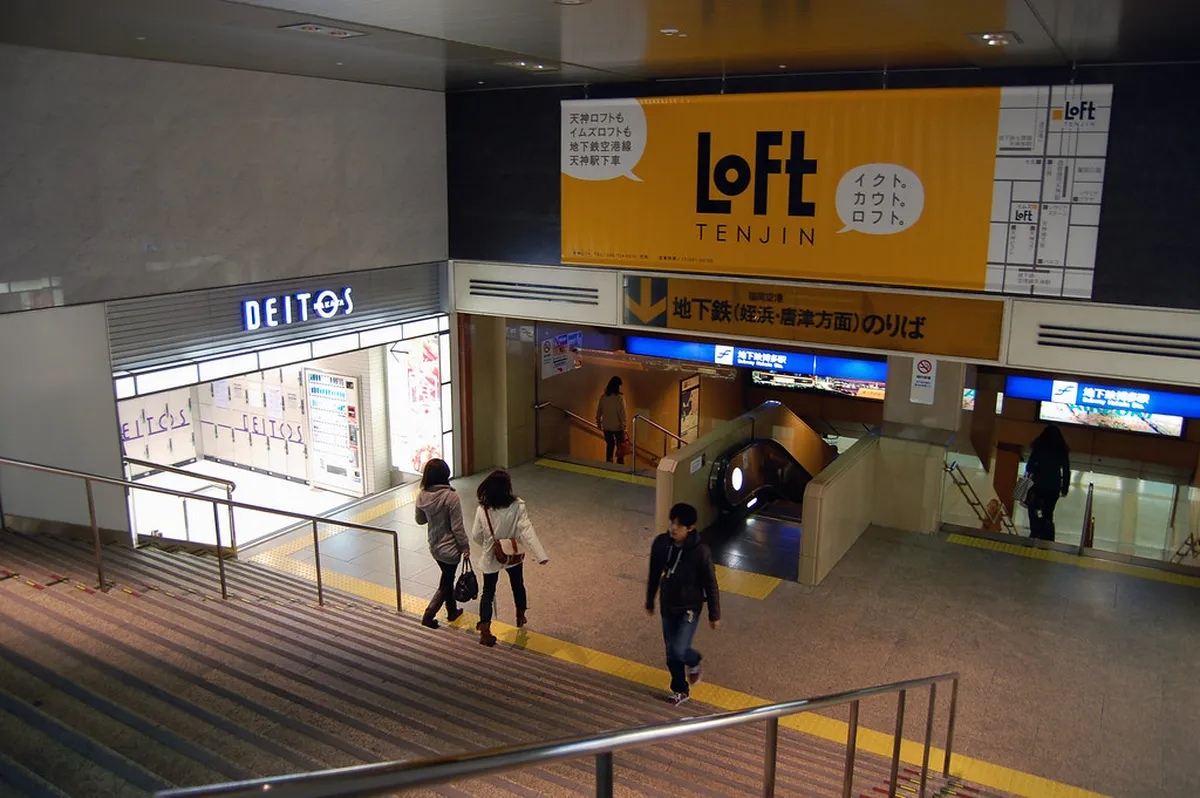
**Deitos** wraps around the Chikushi side and is the souvenir-heavy section, useful for last-minute Hakata-only items: Hiyoko bird-shaped sweets, Tsuruya yokan, and Nakamuraya mentaiko crackers. Most shops add a 10 percent tax-free rebate on purchases over 5,500 yen with a passport.
For electronics, **Yodobashi Camera Hakata** sits a 90-second walk from the Chikushi Exit through a covered bridge. It carries the same SIM cards, lenses, and rice cookers as the Tokyo flagship and is far less crowded on weekdays.
Amu Est Hakata and KITTE Hakata: More Shopping Options
Amu Est Hakata stands across Hakata-guchi Square from the main JR Hakata City building, close to the Hakata Exit bus terminal. It is a separate JR Kyushu building, not connected to the ten-floor complex above the tracks, with roughly six floors of fashion, beauty, and lifestyle shops. Because it is smaller and less crowded than JR Hakata City, it works well for a focused 30 to 45 minute stop rather than a half-day browse. Shop hours run 10:00 to 21:00, matching the rest of the station.
KITTE Hakata is the tower on the Hakata Exit side of JR Hakata City, connected directly to the square so you never step outside. Its lower and mid floors hold Hakata Marui, a department store with fashion, cosmetics, and lifestyle brands aimed at a younger crowd than Hakata Hankyu's depachika-heavy basement. The upper floors are largely dining, including the 9th-floor restaurant row where Motsunabe Ooyama serves single-portion hot pots.
Between the two buildings and JR Hakata City itself, shoppers effectively get three separate department-store-style complexes within a five-minute walk of the gates, each with a slightly different focus: souvenirs and food at Deitos, established department-store brands at Hakata Hankyu, and younger fashion at Amu Est and Hakata Marui.
Dining Guide: Must-Eat Hakata Specialties
Hakata is the home of **tonkotsu ramen** — pork-bone broth boiled cloudy white, paired with thin straight noodles and a *kaedama* (extra noodle refill). The dedicated **Ramen Stadium** on the second floor of Deitos lines up eight famous shops side by side. Avoid 12:00 to 13:00 and 18:30 to 19:30 unless you enjoy waiting 30 minutes; 10:30 or 14:30 are the calmest windows.
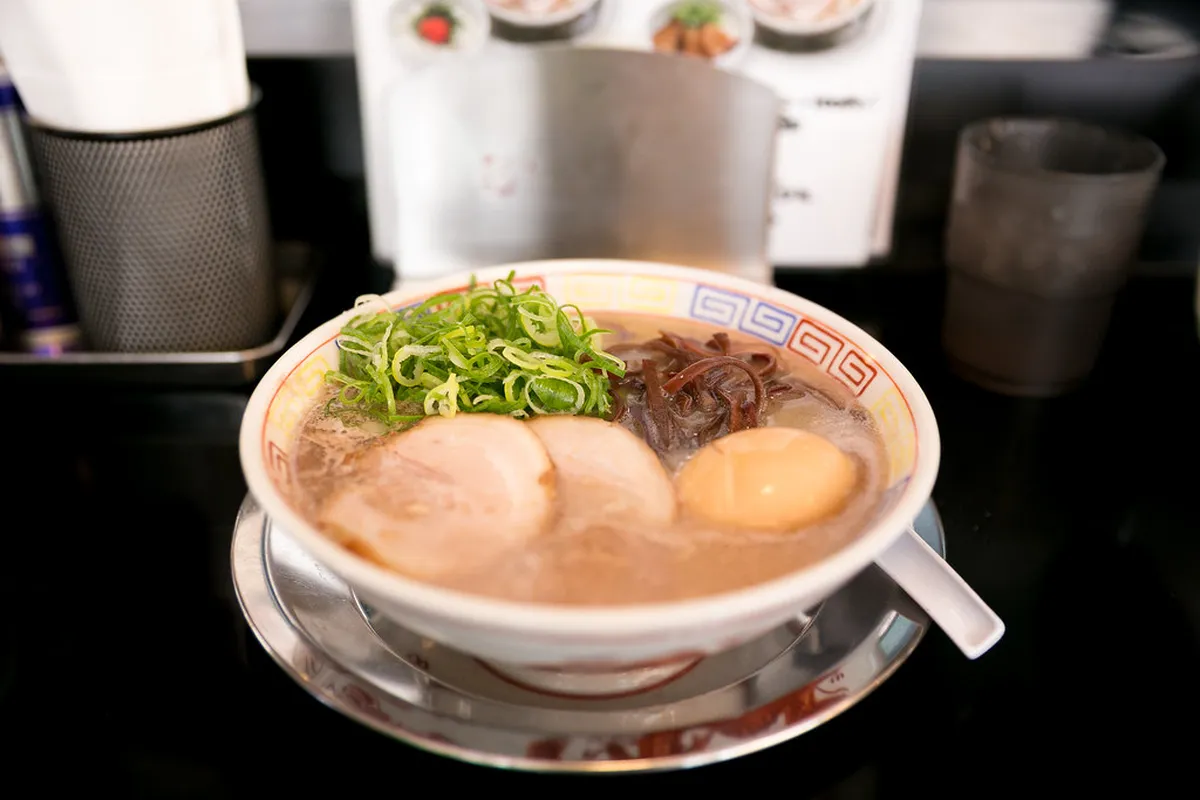
**Motsunabe** is the city's signature winter hot pot, made with beef offal, garlic, leek, and cabbage in a soy or miso base. Most shops finish the pot with *champon* noodles soaked in the residual broth. Many station restaurants serve single portions despite the dish's group-meal reputation.
**Mentaiko** (spicy cod roe) is the Hakata flavor that travels best. You will find it folded into onigiri, baguettes at Mentai France, and pasta at Spaghetteria Mentaiko. Vacuum-packed gift boxes from the Hankyu basement keep refrigerated for two to three days, enough for a flight home.
Fresh seafood arrives daily from Genkai Sea ports. Sushi counters inside KITTE Hakata and the kaisendon shops on the Deitos basement level offer mid-priced lunch sets between 1,200 and 2,000 yen. Use the Hakata Station Food Location (Google Maps) pin to navigate the dining floors.
Top-Rated Restaurants for Local Cuisine
The station's dining tower has more options than any traveler can reasonably try in one trip. The picks below are chosen for specific traveler scenarios — solo, transit, and cashless — rather than just star ratings.
| Restaurant | Location | Best For | Payment |
|---|---|---|---|
| Motsunabe Ooyama | KITTE Hakata 9F | Solo travelers (single-portion pots) | Cash + major credit cards |
| Hakata Ramen Shin-Shin | Deitos 2F | First-time tonkotsu | Cash preferred; IC cards accepted |
| Hakata Ikkousha | Deitos 2F | Cashless travelers | Credit card, IC card, QR pay |
| Makino Udon | Bus Terminal B1F | Transit emergencies (<20 min) | Cash; under 5 min from order |
- Motsunabe Ooyama (KITTE Hakata 9F) — best for solo travelers. The counter section runs individual single-portion pots, so you do not need a group to order. Cash and major credit cards accepted. Reservations suggested for Friday and Saturday nights.
- Hakata Ramen Shin-Shin (Deitos 2F) — best for first-time tonkotsu. Cloudy broth, thin noodles, and friendly counter service. Cash preferred but IC cards now accepted as of late 2025.
- Hakata Ikkousha (Deitos 2F) — best for cashless travelers. Fully cashless ordering via tablet, accepts credit cards, IC cards, and QR pay. Useful when you have only foreign cards left.
- Makino Udon (Bus Terminal B1F) — best for transit emergencies. Soft Fukuoka-style udon served in under five minutes from order, with unlimited dashi refills. The fastest sit-down meal in the entire station if you have less than 20 minutes before a Shinkansen.
If you are heading out for the evening rather than eating in, see Fukuoka Yatai Guide 2026: Best Stalls, Prices, and What to Order for the open-air ramen, oden, and yakitori carts that set up along the river after sunset.
Nearby Attractions and Sightseeing
**Canal City Hakata** is a 10-minute walk from the Hakata Exit. The complex wraps a 180-meter canal with hourly fountain shows and houses Ramen Stadium's larger sister branch on the fifth floor. Free entry, open until 21:00.
**Kushida Shrine** is the spiritual center of the Hakata Gion Yamakasa festival each July.
The giant decorated *kazariyama* float stands inside the precinct year-round and is free to view. Take the Kuko Line one stop to Gion or walk 12 minutes from the station.For a deeper cultural visit, work through our list of 7 must-visit attractions in Hakata Old Town. The Reisen-machi temple district behind Kushida Shrine packs Shofukuji (Japan's first Zen temple) and Tochoji (home to Fukuoka's largest seated wooden Buddha) into a single 20-minute loop.
Essential Tips for First-Time Visitors
Coin lockers at Hakata Station fill up by 11:00 on weekends. If you arrive after that, use the Sagawa Hands-Free Travel counter (first floor, Hakata Exit side) to send your suitcase to a participating hotel for around ¥1,000 per piece — drop off before 14:00 for same-day delivery.
Coin lockers run in three sizes — 400, 600, and 800 yen — clustered near both exits and on the Shinkansen concourse. They fill up by 11:00 on weekends. The **Sagawa Hands-Free Travel** counter on the first floor of the Hakata Exit side accepts same-day suitcase delivery to participating Fukuoka and Kitakyushu hotels for around 1,000 yen per piece if you drop off before 14:00.
Plan your spending in advance with our Fukuoka travel budget and daily costs for 2026. Most station restaurants now accept credit and IC cards, but smaller yatai and the Bus Terminal udon stalls still operate cash-only. Keep at least 5,000 yen in small bills.
The station's two crowd peaks are 07:30 to 09:00 and 17:30 to 19:30 on weekdays, when the Hakata Exit gates back up onto the concourse. Time your shopping for mid-morning, and your Shinkansen boarding for 10 to 15 minutes ahead of departure rather than the 5-minute cushion that works in Tokyo.
Free Wi-Fi covers JR Hakata City and the gate areas under the network name "JR-WEST FREE Wi-Fi" with a one-tap email registration. Tourist information desks on the first floor (Hakata Exit) and second floor (Shinkansen concourse) hand out free English maps and answer transit questions in English, Chinese, and Korean.
Frequently Asked Questions
Which Hakata Station exits are best for shopping?
The Hakata Exit is the best choice for major shopping malls like Amu Plaza and KITTE Hakata. It also provides direct access to the main bus terminal and the Hankyu department store. This side is ideal for those looking for fashion, cosmetics, and large retail brands.
Where can I find the best ramen inside Hakata Station?
Head to the second floor of the Deitos building to find the Ramen Street. This area features a collection of famous local shops like Shin-Shin and Hakata Ikkousha. It is the most convenient spot to sample authentic Tonkotsu ramen without leaving the station complex.
How do I get from Hakata Station to Fukuoka Airport?
The fastest way is via the Fukuoka City Subway Kuko Line, which takes only five minutes. Trains run frequently and the fare is very affordable for travelers. You can check the Fukuoka travel budget for current transit prices and other daily expenses.
Are there coin lockers available at Hakata Station?
Yes, hundreds of coin lockers are located near both the Hakata and Chikushi exits. They come in small, medium, and large sizes to fit different types of luggage. For larger items or hotel delivery, use the Sagawa Hands-Free Travel counter located on the first floor.
Hakata Station rewards travelers who plan five minutes ahead — pick the right exit, time your meal outside the rush, and decide whether the JR Pass or a paid Nozomi seat fits your route. Once you have those three choices sorted, the rest of the complex opens up as one of Japan's most enjoyable transit hubs. Use it as a base, not just a stopover.
For wider city context, see our complete Fukuoka attractions guide.
For related Fukuoka deep-dives, see our Hakata Ward Fukuoka Neighborhood Guide: 10 Essential Areas & Attractions and 8 Key Highlights guides.
Combine this with our main Fukuoka travel guide to plan the rest of your trip.
Free: The Fukuoka Essentials guide
Top things to do, where to stay, a perfect day plan, getting around, and the best time to go — a Fukuoka mini-guide you can take offline.
You might also like


Continue reading
More guides you'll find useful


