

Things To Do In Narita Travel Guide
Plan things to do in narita with top picks, neighborhood context, timing tips, and practical booking advice for a smoother trip.
On this page
Narita is a temple city that most travelers overlook entirely, racing past it on the Narita Express to Tokyo. That is a mistake worth correcting. The city sits just 10 minutes by train from Narita Airport and holds one of Japan's most visited Buddhist complexes, a kilometer of Edo-period shopping street, a park that fills with cherry blossoms in spring, and enough unagi restaurants to settle the debate over Japan's best grilled eel.
Whether you have a six-hour layover or a full day to spend, Narita rewards explorers of every budget and schedule. This guide covers the essential sites, practical transport details, seasonal events, and a few off-the-beaten-path spots that most first-timers miss entirely.
Key Takeaways
- Naritasan Shinshoji Temple and Omotesando Street are the non-negotiable starting points for any visit.
- The Narita Kaiun Pass (¥480 round-trip) saves money over two single Keisei Line tickets (¥260 each way).
- Kawatoyo on Omotesando is the standout unagi restaurant — arrive before 11:00 on weekends to beat the queue.
- Naritasan Park, behind the temple, is a strolling garden that most day-trippers rush past too quickly.
- The Gion Festival (July 7–9) and the eel festival (mid-July to late August) are the city's biggest annual events.
- Families get the most value from Narita Dream Dairy Farm; shoppers from Shisui Premium Outlet Mall, accessible by shuttle from the airport.
Must-See Narita Attractions
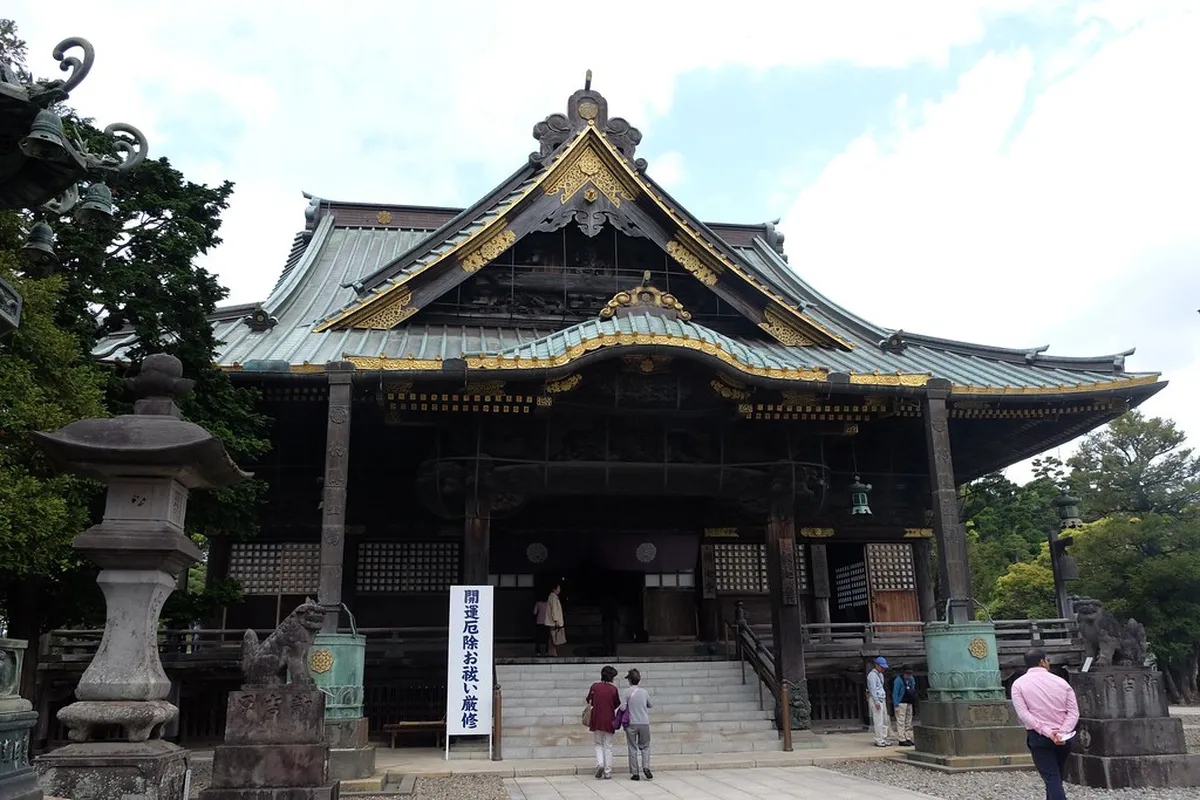
The heart of any Narita visit is the corridor that runs from the train stations to Naritasan Shinshoji Temple. Naritasan Shinshoji Temple Travel Guide was constructed in 940 CE and dedicated to Fudo-Myoo, a Buddhist deity whose statue is said to have been carved by Kobo Daishi, the founder of Shingon Buddhism. The complex spans multiple halls, a three-storey pagoda, and the 58-metre-tall Great Pagoda of Peace, which dates from 1984 and contains a free room where visitors can practice Buddhist sutra calligraphy between 08:00 and 15:00. Entry to the temple grounds is free.
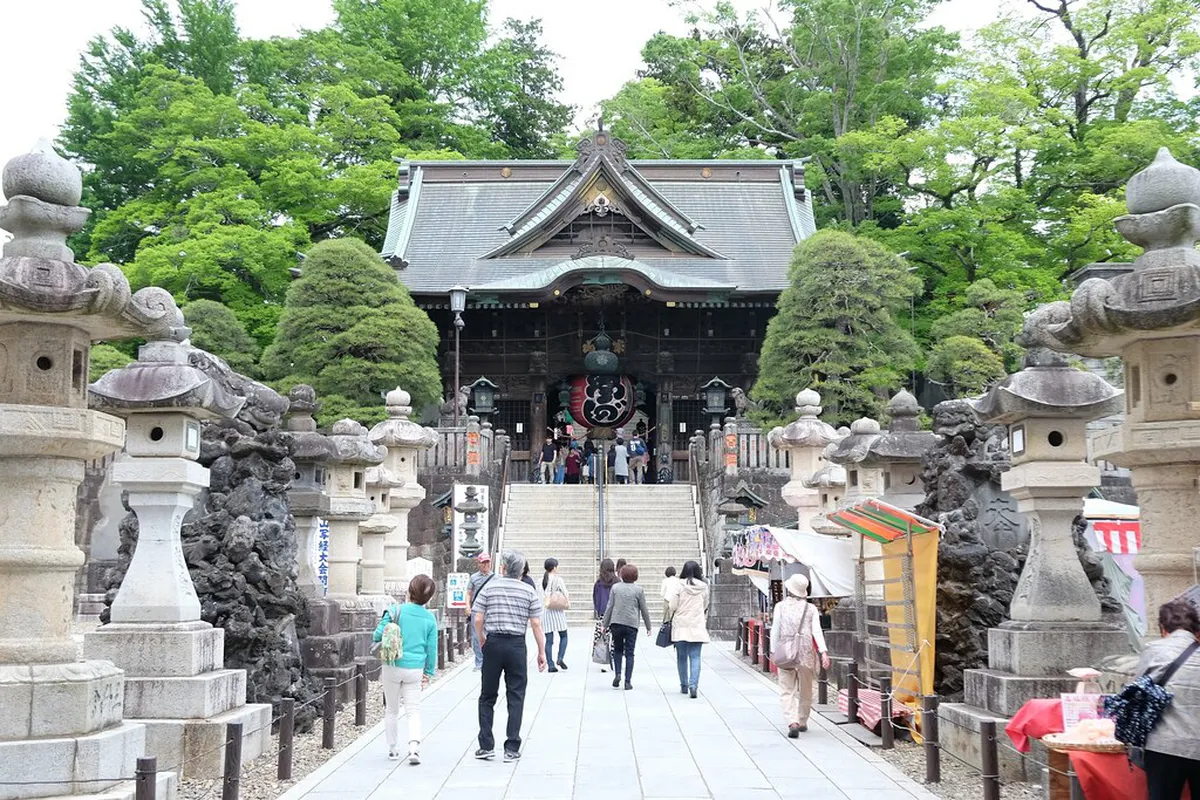
The Niomon Gate, a designated National Cultural Heritage site, is the most photogenic entrance point. Climb the stone steps past vendors selling dried fruit and airplane-themed good-luck charms. Volunteer guides are available at the information centre near the top of the stairs from 10:00 to 15:00; a handful speak English and the tours cost nothing. If you want an English-speaking guide confirmed in advance, contact the Volunteer Guides Association of Narita (Chiba) before your visit.
Running from the two train stations directly to the temple entrance, Naritasan Omotesando Street Travel Guide stretches just over a kilometer and divides naturally into two halves. The upper section near the stations is wider, with larger cafes and souvenir shops. The lower section narrows as it slopes toward the temple, with retro storefronts selling rice crackers, local sake, pickled vegetables, and handmade yokan sweets. The pink-framed Yokan Museum, hidden behind the Nagomi-no-Yoneya sweet shop, is free to enter and explains how these red bean paste confections moved from monastery kitchens to commercial production.
Narita Market, held Tuesday through Sunday from 07:30 to 10:30 (closed Wednesday and Sunday), offers a look at local commerce that predates tourism entirely. It is smaller than Tsukiji but accessible on local buses from Keisei Station. For a tuna auction, booking in Japanese online is required and arrival by 05:00 is mandatory — most visitors find the general market floor visit sufficient and far less demanding.
Naritasan Temple in Depth: What to See Inside
Most visitors photograph the gates and the main Daihondo hall, then leave. The interior circuit rewards those who continue. Beyond the Daihondo — built in the 1960s and housing the principal Fudo-Myoo deity along with a Heisei-era mandala — the path leads left to the 19th-century Shakado, the former main hall, which is covered in 500 hand-carved Buddhist saints, each distinct. This building is a National Heritage of Japan and is often overlooked in favor of the larger structures ahead.
Continuing along the traditional route past Komyodo (18th century) brings you to the Great Pagoda of Peace. Past this pagoda, the path descends through a plum grove that blooms in late February and early March before reaching the entrance to Naritasan Park. The grove is one of the few places in Japan where plum blossoms and a major temple complex overlap at the same site.
At the Okuyama Hiroba plaza, just to the left of the main circuit, fortune tellers and souvenir stalls cluster around the Shusse Inari success shrine. The shrine is dedicated to foxes and is visited by locals hoping for business or career advancement. Small offerings of aburaage (fried tofu) are sold nearby. The views from the shrine's elevated platform back over the temple complex are among the best in the city.
Narita is especially lively during the Gion Festival on July 7–9 and during Setsubun in February. New Year (January 1–3) draws enormous crowds — the temple receives roughly three million visitors in the first three days of January alone — so budget extra time and expect queues throughout Omotesando. The September Scenic Arts Festival (September 16–17) brings traditional performance artists from across Japan to the temple grounds.
Parks, Gardens, and Outdoor Spots
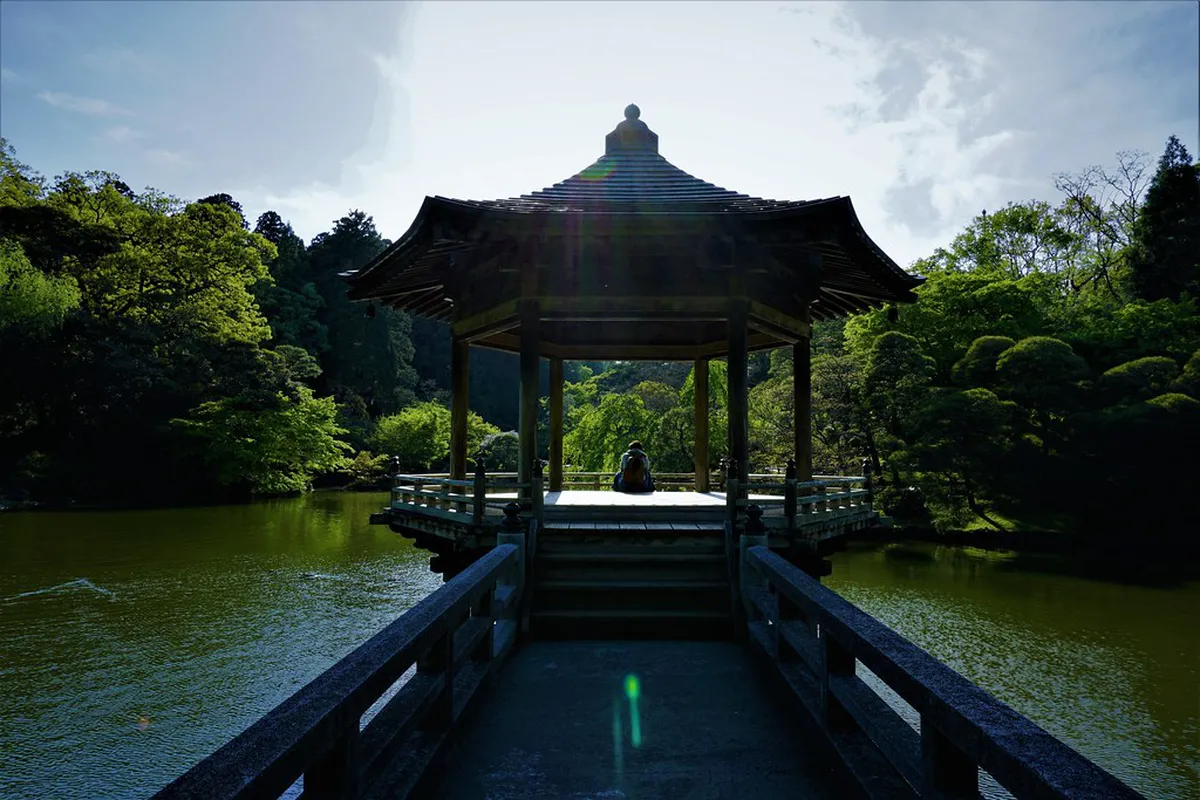
Naritasan Park, reached through the temple grounds just past the Great Pagoda of Peace, is a strolling landscape garden that most day visitors underestimate. The park winds around a central pond lined with black pines and stone lanterns, then climbs cobblestoned paths through tall cedar trees to a 20-metre waterfall. The park is large enough that quiet corners exist even on busy weekends, and it is unusually natural for a formal Japanese garden — not every section is manicured.
Inside Naritasan Park is the Naritasan Museum of Calligraphy (Shodo Museum), which holds over 6,000 pieces spanning ancient Chinese works to contemporary Japanese calligraphy. Entry is paid. The collection is worth an hour even for visitors who cannot read Japanese; calligraphy at this level communicates something through form and energy that transcends the literal characters. The park also has cafes tucked near the waterfall where you can stop for matcha and wagashi before the walk back.
Sakuranoyama Park sits approximately 4 km from Narita Airport and is nicknamed "Plane-Spotting Hill." A grassy slope faces directly onto Narita's main runway, and the sight of wide-body aircraft lifting off at low altitude is genuinely spectacular for children and adults alike. In spring, the park's namesake cherry blossoms line the hill, making it one of the more unusual hanami (blossom-viewing) settings in Kanto. Getting there requires Bus #2 from JR Narita Station toward Tako; alight at Toyama-Nokyo-mae and walk 15 minutes. Allow 30 minutes total from the station.
Sanrizuka Imperial Ranch, a short distance from the city center, offers open farmland and walking paths on what was once a Meiji-era imperial estate. Entry is free. It is a calm, unhurried alternative to the temple circuit — well suited to travelers who want space rather than sights.
Museums, History, and Cultural Sites
Boso-no-Mura Open-Air Museum reconstructs an entire Edo-period settlement across a large outdoor site east of Narita City. Samurai residences, farmhouses, merchant quarters, and a post-town street have all been rebuilt to period accuracy. Costumed staff demonstrate traditional crafts including pottery, weaving, and papermaking. Entry is ¥300 for adults. It is best combined with a full day in Narita rather than a short layover, as the site takes two to three hours to walk properly.
The Narita City Historical Museum covers the development of the city from its origins as a pilgrimage stop on the Narita Kaido route to its modern role as an international aviation hub. The exhibits include Matsuri mikoshi (festival portable shrines) and local agricultural artifacts. Entry is free. Opening hours are 09:00 to 17:00, closed Monday.
For those with a specific interest in traditional medicine, a 280-year-old pharmacy called Ichiriyugan Mitsuhashi operates on Omotesando near the temple entrance. It has sold Ichiriyugan stomach medicine in the same distinctive packaging since the Edo period. The shop also stocks a range of herbal remedies and traditional Chinese medicine products — an unlikely souvenir that connects directly to the pilgrimage economy that built the street around it.
The old Seiso Electric Railway brick tunnel near Denshamichi Street, a short walk from Omotesando, is a designated Public Works National Heritage of Japan. It is a quiet, easily missed site that rewards curious visitors who enjoy industrial archaeology. No entry fee; always accessible.
Family and Budget Options
Narita Dream Dairy Farm (Narita Yume Bokujo) is the best family-oriented stop in the area. Children can feed cows, goats, and sheep, watch butter-making demonstrations, and order soft-serve ice cream made from fresh on-site milk. The farm shop also sells their "Makiba no Yume" cheesecake — rich, gooey, and worth the calories. The farm is accessible by bus from Narita Station; check the local bus schedule for current timings, as the route runs infrequently. Allow a half-day.
Shisui Premium Outlet Mall is the right choice for anyone who wants duty-free discounts on Japanese and international fashion brands before a departure flight. The mall operates a free shuttle from Narita Airport Terminal 2 and Terminal 3; the ride takes under 20 minutes. Tax-free shopping is available for international visitors on purchases above the qualifying threshold. Weekdays are significantly quieter than weekends. The mall opens at 10:00 and closes at 20:00.
AEON Mall Narita is a practical stop rather than a destination. Its supermarket stocks well-priced bento, sushi, and snacks for a meal before a long flight. The food court covers Japanese, Korean, and fast-food options at ¥700–¥1,200 per meal. An AEON bus runs from Narita Airport on a fixed schedule. For last-minute souvenir shopping at ordinary Japanese retail prices — not airport markup — the general stores here beat the terminal shops on value.
Strolling Omotesando itself costs nothing. Street food is cheap: rice crackers from open wooden barrels, grilled senbei, and cups of local sake for tasting. The tourist information pavilion, roughly halfway down the street, has free English-language maps and leaflets. On Thursdays at 10:30 it hosts a tea ceremony open to the public, with an English interpreter available.
Narita's Unagi Tradition: Where to Eat
Narita is one of the few places in Japan where eating unagi (freshwater eel) carries genuine local significance. The tradition is tied to the Tone River and Inba Lake, which historically supplied the city's restaurants with fresh catch. Pilgrims arriving along the Narita Kaido ate eel at roadside stalls before entering the temple — the same logic applies today. The unagi here is charcoal-grilled, lacquered with a sweet-salty tare sauce, and served over rice as una-don or the more elaborate unaju in a lacquer box.
Kawatoyo Honten is the best-known restaurant on Omotesando. The smell of charcoal and the open preparation area — where chefs fillet live eels in under a minute — identifies it before you see the sign. Una-don starts at around ¥2,800–¥3,500 depending on grade. On weekends, queues form before the 10:00 opening. Arriving between 10:00 and 11:00 on a weekday avoids the worst of the wait. Suruga-ya, a short distance up the street on the left, is a comparable alternative with less English signage but rarely has a queue.
If unagi is not your preference, the street offers Senbei (Chiba-region rice crackers), Tsukudani (fish in soy sauce), and Sora Anpan — soft buns filled with lotus root, teppozuke pickles, or sweet potato. Most shops bake or prepare these on the premises. The Narita Tourist Pavilion halfway down Omotesando has a printed English food map pointing out the main specialist shops.
How to Plan Your Narita Day
From Narita Airport Terminal 1, trains depart from the B1 level. Two options connect to Narita city: the Keisei Main Line to Keisei-Narita Station (¥260 one-way, approximately 10 minutes) or the JR Sobu Line to JR Narita Station (¥200 one-way, similar duration). The two stations are a 2-minute walk from each other. If you plan to travel both ways by train, ask at the Keisei counter for the Narita Kaiun Pass — a round-trip rail pass for ¥480 that saves ¥40 over two single tickets and removes the need to queue at machines on the return.
From Tokyo, the Keisei Limited Express from Keisei-Ueno or Keisei-Nippori reaches Keisei-Narita in about 1 hour 11 minutes for ¥840. The JR Sobu Line rapid from Tokyo Station arrives at JR Narita in 1 hour 20 minutes for ¥1,150. Narita City is a more sensible choice than a Tokyo day trip for layovers of 6–8 hours; the round-trip to Tokyo consumes at least 2 hours in transit alone.
A focused half-day itinerary for 4 hours runs like this: arrive at Keisei-Narita by 10:00, walk Omotesando toward the temple, eat at Kawatoyo or Suruga-ya before 12:00, explore the temple complex and the first section of Naritasan Park until 14:00, then retrace to the station and take the train back to the airport. This fits comfortably within most 6-hour layovers after accounting for airport re-entry time. Leave the park and Sakuranoyama for visits with a full day available.
For a full day, add Sakuranoyama Park in the late afternoon (aim for the 15:45 departure from JR Narita Station by bus). The direct bus from Sakuranoyama to Terminal 2 runs five times daily on weekdays: 12:45, 14:05, 15:25, 16:05, and 17:05. The bus does not accept IC cards — carry ¥240 in cash. If you miss the last bus, walk back to Toyama-Nokyo-mae and take the local bus to Narita Station, then the train to the airport. Check train times before committing to the park.
For longer stays or anyone spending the night near the airport, consider linking Narita City into a broader Chiba Prefecture loop. The our Tokyo day trips guide guide includes Narita alongside other Kanto destinations reachable without an overnight stay. If you are arriving at or departing from the airport and need transfer options, the our narita Airport To Tokyo guide guide covers all current rail, bus, and taxi options.
Sora no Yu: The Onsen Most Layover Guides Skip
One of the most useful and least-discussed options for Narita Airport travelers is Sora no Yu, a natural hot spring bath facility a short distance from the airport in the Chiba resort area. The name translates roughly as "sky bath," and the facility is designed specifically for travelers needing to decompress between long-haul flights. It offers indoor and outdoor baths, a sauna, and a rest lounge where guests can sleep between sessions.
This kind of option suits a specific traveler type: those on overnight layovers who have already checked bags at the airport and want somewhere to bathe, eat a proper meal, and rest horizontally before a continuing flight. Most airport hotels in the Narita area charge full room rates even for short stays; an onsen facility charges per session and does not require a reservation. The hot spring water in this part of Chiba Prefecture is naturally dark-brown (containing sodium and chloride minerals), which is unusual and visually striking compared to the clear water of inland onsen.
Note: confirm opening hours and current pricing directly before visiting, as onsen facilities in Japan occasionally close for maintenance periods. Access from the airport is by taxi or the local bus network. Budget travelers often combine a Sora no Yu session with an afternoon in Narita City, using the visit to recover from an eastbound flight before exploring the temple and Omotesando the next morning.
Beyond Narita: The Sawara Area
For visitors with more than one day in the Narita area, Sawara deserves a dedicated excursion. Located in the Katori area of Chiba Prefecture, Sawara is known as "Little Edo" — a historic merchant district where Edo-period canal warehouses and merchant houses survive in a state of preservation almost unmatched in the Kanto region. The main canal is navigable by wooden boat, and the walk along its banks passes sake breweries, traditional craft shops, and a local history museum.
Getting from Narita to Sawara by JR takes approximately 30–40 minutes on the Narita Line toward Choshi; alight at Sawara Station. The fare is around ¥570. JR also runs occasional guided day-trip buses from JR Narita Station to the Sawara area — check the JR East timetable for current departures. The Suigo Sawara Ayame Park, just outside the town, is a notable seasonal destination: its iris garden peaks in mid-June with hundreds of thousands of flowers. Outside iris season the park is quiet, but the boat rides along the Tone River canal system remain available through the summer.
Sawara pairs well with a Narita City itinerary if you have two days. Spend the first day on the temple circuit and Omotesando; use the second morning in Sawara before returning to the airport. The total rail journey from Sawara back to Narita Airport is under 90 minutes via a direct transfer at Narita Station.
Going deeper on this theme? Our What to Eat in Narita guide covers it in detail, with the practical planning this page leaves out.
Frequently Asked Questions
Is there anything to do around Narita?
Yes, Narita offers many attractions beyond the airport. You can explore the historic Naritasan Shinshoji Temple and its surrounding Omotesando Street. There are also museums like Boso-no-Mura and parks such as Sakura-no-Yama Park for plane spotting. Narita provides a rich cultural and recreational experience for visitors.
Is Narita City worth visiting?
Narita City is definitely worth visiting, especially for those with a layover or a day to spare. It offers a charming glimpse into traditional Japan with its ancient temple, historic street, and local cuisine. The city provides a peaceful contrast to bustling Tokyo, making it a rewarding destination for cultural exploration and relaxation.
What to do in Narita for 4 hours?
For a 4-hour visit to Narita, focus on the Naritasan Shinshoji Temple and Naritasan Omotesando Street Travel Guide. From Narita Airport, take a quick train to Keisei-Narita Station. Walk along Omotesando, try some local snacks, and visit the temple grounds. This compact itinerary allows you to experience the city's highlights efficiently.
Is there anything to do in Narita airport?
Yes, Narita Airport offers a variety of activities for travelers. You can enjoy shopping, dining, and even cultural experiences like Kabuki performances. The airport also features observation decks for plane spotting and relaxation lounges. It's well-equipped for a comfortable and engaging layover experience.
Narita rewards travelers who give it more than a glance through a train window.
The temple, the market street, the park, and the eel restaurants form a coherent half-day or full-day circuit that most visitors to Japan never experience.
In 2026 the city remains genuinely uncrowded compared to Kyoto or Kamakura — good news for anyone who wants a slower, more authentic encounter with Edo-period Japan without the crowds.
Start at the train station, walk toward the temple, and let the street take you the rest of the way.
Explore More Narita Guides
In-depth guides for planning your Narita trip.
Browse the Narita attractions hub for detailed visitor guides:
- Naritasan Shinshoji Temple Visitor Guide
- Naritasan Park & Shinshoji Temple Visitor Guide: Itinerary & Tips
- Naritasan Omotesando Visitor Guide: Temple, Food & Layover Tips
- Boso No Mura Open-Air Museum Visitor Guide: Plan Your Trip to Edo Japan
- Naritasan Museum of Calligraphy Visitor Guide: Plan Your Visit
Free guide: Japan's Hidden Gems
12 under-the-radar places beyond Tokyo & Kyoto — with the best season to visit each and a local tip you won't find in the guidebooks.
You might also like


Continue reading
More guides you'll find useful


