

Narita is far more than an airport stopover. Twenty minutes from the terminal, Naritasan Shinshoji Temple rises at the end of a 600-metre historic street, backed by 165,000 m² of landscaped park. It ranks among Japan's top three most visited temples during New Year — on a par with Kawasaki Daishi — and draws around 10 million worshippers a year. This 2026 visitor guide covers everything you need: a step-by-step itinerary, the history and spiritual meaning behind the site, local food picks, and layover logistics.
The History of Naritasan Shinshoji: Born from a Rebellion
The temple's origins trace back to 939, during the Heian period. Samurai Taira no Masakado led an uprising in the Kanto region that threatened the imperial court. Emperor Suzaku dispatched a monk carrying a statue of Fudo Myoo — said to have been carved by the Buddhist monk Kobo Daishi — to Narita, where a goma fire ritual was performed. The rebellion collapsed days later, and the statue was enshrined here. The name "Shinshoji" literally means "new victory temple."
That same sacred fire has burned every single day since 939, without interruption, for over 1,000 years. This unbroken ritual is a central reason Naritasan holds such spiritual weight in Japan. By the Edo period, its fame spread nationwide, helped in part by kabuki actor Ichikawa Danjuro, who made pilgrimages here between performances. Today the temple is the head temple of the Chisan branch of Shingon Buddhism.
Fudo Myoo, the main deity, is depicted with a fierce expression, a sword and a rope. In Shingon teaching, this ferocity represents the power to cut through obstacles and burn away negativity with the fire of wisdom. Visitors come to pray for business success, family safety, protection from misfortune, traffic safety, and academic achievement. The deity's reputation for responding to earnest prayer draws people from every walk of life.
Getting to Naritasan: Access from Narita Airport & Tokyo
Both JR and Keisei Electric Railway stop at Narita Station, one stop from Narita Airport — roughly 10–15 minutes on either line. The fare from the airport is around ¥240–¥260. From central Tokyo the journey takes 60–90 minutes via JR Sobu Rapid or Keisei Main Line, costing ¥990–¥1,370 depending on the service. Either station exits directly onto Omotesando Street, so there is no ambiguity about which direction to walk.
Both JR Narita and Keisei Narita stations have coin lockers — a practical option if you are carrying bags from the airport. Sizes run ¥400 / ¥500 / ¥700. One important note: the coin lockers at Keisei Narita Station are coins-only and nearby shops may not give change, so prepare coins before you arrive. Suica or Pasmo cards work on both rail lines and buses throughout the area.
Your Ideal 1-Day Naritasan Park & Shinshoji Temple Itinerary
A full day at Naritasan breaks into three natural blocks: Omotesando Street in the morning, the temple complex through the afternoon, and the park before you leave. Starting at 09:00 gives you the grounds before tour groups arrive. Wear comfortable shoes — the route involves stone staircases and sloped paths.
- 09:00 — Arrive at Narita Station. Walk 5 minutes south to the top of Omotesando Street.
- 09:05–10:00 — Stroll the 600-metre Omotesando. Browse shops, try free samples, spot the 12 zodiac stone statues along the way. The walk to the temple gate takes about 20 minutes at a leisurely pace.
- 10:00–10:30 — Pass through the Grand Gate (Somon) and Niomon Gate. Look up at the kibana brackets of the Grand Gate for the carved zodiac animals.
- 10:30–12:30 — Explore the Main Hall area: observe the Goma ritual, visit the Three-Story Pagoda, Shusse Inari Shrine, Shakado Hall, Komyo-do Hall, and the Great Pagoda of Peace. Allow 15 minutes minimum at the Main Hall for the ceremony.
- 12:30–13:30 — Lunch on Omotesando: unagi (eel) at Kawatoyo Honten or Surugaya. Budget ¥3,000–¥5,000. Most eel restaurants operate 10:30–17:00; some close Wednesdays.
- 13:30–15:00 — Naritasan Park. Walk the three ponds, find the Yuhiga waterfall, and visit the Naritasan Museum of Calligraphy if open (09:00–16:00, closed Mondays, ¥500).
- 15:00 — Return to station via Omotesando.
Total walking time is around 3–4 km. Budget 7–8 hours for a full day. For a half-day, cut the park and museum to keep things to 4–5 hours.
Exploring Naritasan Omotesando Street: Food & Souvenirs
Omotesando Street runs about 600 metres from the station to the Grand Gate. A decade ago the power lines were buried underground, restoring the street to something close to its Edo-period appearance. Both sides are lined with traditional wooden shop facades, and the atmosphere shifts noticeably as you approach the temple. Along the way, twelve stone statues of the zodiac animals line the pavement — it takes a short detour to find your own sign.
Narita's signature dish is unagi, a tradition that goes back to the Edo period when inns along this street fed eel to temple pilgrims. Narita-style unagi follows the Kanto method: the eel is steamed first, then grilled, giving it a softer texture and richer flavour than the crispier Kansai style. You can often watch chefs preparing the fish in open shop fronts. Kawatoyo Honten and Surugaya are the best-known restaurants on the street; expect to pay ¥3,000–¥5,000 for a full unaju (eel on rice) set.
Beyond eel, Omotesando has good souvenir shopping. Look for yokan (sweet red-bean jelly), peanut senbei (rice crackers made with local Chiba peanuts), and narazuke (sake-pickled vegetables). Several shops offer free samples. For something less generic, check the smaller side alleys for handmade pottery and lacquerware workshops.
One local ritual worth joining: on the 28th of each month, a market called the "Good Fortune Fudo Market" takes place near the Grand Gate. It has an antique-flea-market feel and attracts vendors selling old ceramics, coins, and small crafts.
Must-See Highlights of Naritasan Shinshoji Temple
The temple complex is larger than most first-time visitors expect. All major halls are free to enter, open 08:00–16:00, with no closure days. Allow at least 2 hours to cover the main route without rushing. The sequence below follows the natural path from the outer gates to the back of the grounds.
The Grand Gate (Somon) was completed in 2007 using zelkova wood, standing 15 metres tall. It was built by Kongo Gumi carpenters — a company often cited as the world's oldest, founded in 578. Look up at the decorative kibana brackets: each one is carved with a different zodiac animal. Walking through directly under your own zodiac sign is said to bring extra good fortune. The Niomon Gate just inside was built in 1831 and is an Important Cultural Property. The giant red lantern hanging at the front stands 2.8 metres tall and weighs 800 kg; it bears the word "Uogashi" (fish market) because it was donated by Edo fish merchants praying for safe voyages.
The Main Hall (Daihondo), built in 1968, is where the Goma fire ritual is performed multiple times daily. Monks feed wooden prayer sticks into a sacred fire while chanting, drums beat in waves, and the hall fills with smoke. Visitors can pass personal belongings through the smoke for blessings. Goma ceremonies are typically scheduled at 09:00, 11:00, 13:00, and 15:00 — confirm times on the official Goma schedule page before you visit. The Three-Story Pagoda beside the hall was built in 1712, restored in 2008, and stands 25 metres tall. Its central pillar construction, which helps it resist earthquakes, reportedly influenced the design principles used in Tokyo Skytree.
Further into the grounds, the Shusse Inari Shrine (built 1888) is dedicated to career success and business prosperity. Dozens of aging fox statues line the approach, and visitors place business cards on ema boards to pray for advancement. The Komyo-do Hall (built 1701) enshrines Aizen Myoo and is the go-to spot for love and matchmaking prayers. The Great Pagoda of Peace, built in 1984 at 58 metres tall, looks like two stories from outside but has five floors inside. Its ground floor displays historical materials; the second floor has a hall for prayer. A time capsule buried beneath it contains messages from world leaders, scheduled to be opened in 2434.
The Goma Fire Ritual: What to Expect
The Goma (護摩) is a fire offering ritual rooted in Shingon Buddhism. Monks place wooden prayer sticks — each inscribed with a specific wish — into a sacred fire on the altar of the Main Hall. The burning is accompanied by steady chanting and escalating drum beats that build to a powerful crescendo. The smoke is considered sacred, and at the end of the ceremony, worshippers pass bags, wallets, and other valuables through it to receive a blessing.
The ceremony runs for roughly 30–40 minutes. Non-Buddhist visitors are welcome to watch from inside the hall at no cost. There is no requirement to purchase sticks or make an offering to observe, though you can buy a wooden goma stick at the hall entrance (¥1,000 and up) to include your own wish in the fire. The atmosphere inside — incense, smoke, low light, the resonance of the drums — is striking regardless of your religious background.
This ritual has run every single day since 939 AD. The monks rotate duty so the fire is never unattended. The faint, sweet scent of incense that clings to the Main Hall is the accumulated residue of over a thousand years of continuous burning — something no other temple in Japan can claim in quite the same way.
Discovering the Serenity of Naritasan Park
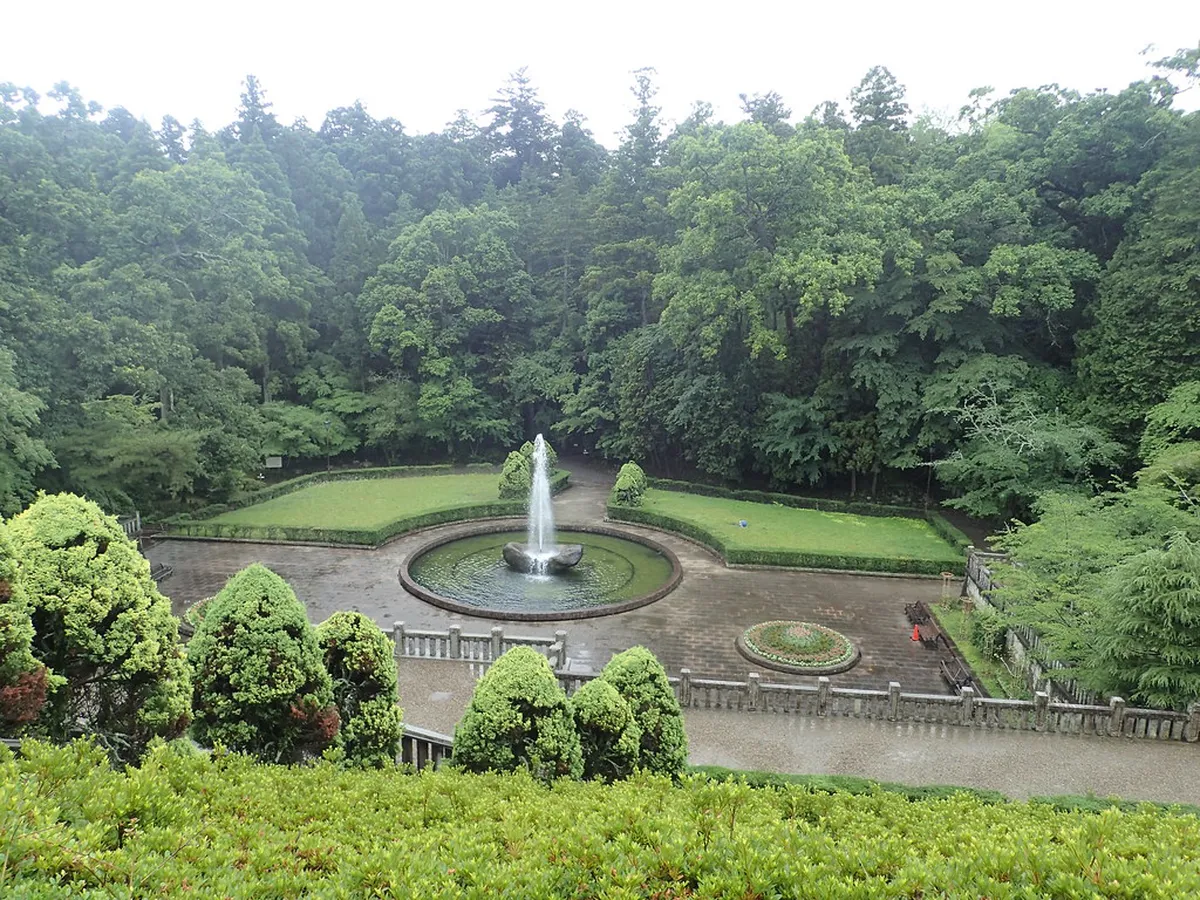
Naritasan Park lies behind the temple complex and covers 165,000 m² — roughly 3.5 Tokyo Domes. It is free to enter and open 24 hours, making it a rare space where you can linger well past the temple's 16:00 closing time. The transition from the busy temple forecourt to the park is immediate: stone paths replace paving, and the crowds thin out sharply.
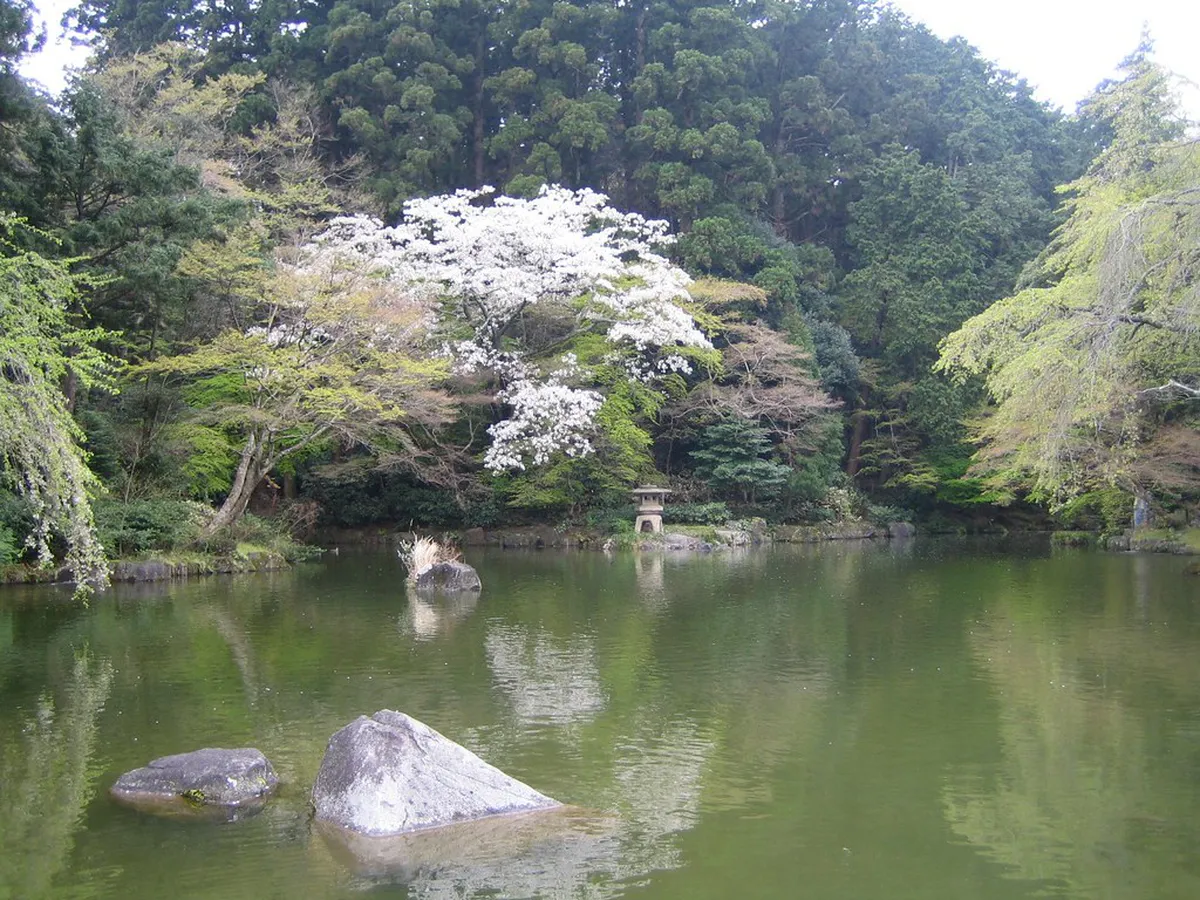
At the centre of the park sit three connected ponds — Monju Pond, Ryuchi Pond, and Ryujyu Pond. The hexagonal pavilion above Ryuchi Pond is the park's most photographed feature, especially when autumn maples frame the reflection. Large koi patrol the shallows, and herons occasionally perch on the banks. Further in, Yuhiga Falls drops through a mossy gorge. The sound of the water makes this corner particularly refreshing on summer afternoons.
Spring brings plum blossoms in February and March, followed by cherry blossoms in late March to early April. Autumn foliage peaks from late November through early December. Both seasons draw local visitors who miss the temple entirely and come only for the park. Within the park grounds you will also find the Naritasan Museum of Calligraphy, which holds Japanese and international calligraphy works (09:00–16:00, closed Mondays, ¥500 admission).
Collecting a Goshuin at Naritasan
Naritasan Shinshoji is one of the most rewarding temples in Japan for collecting a goshuin (御朱印) — a hand-stamped temple seal that serves as a personal record of a pilgrimage. The main stamp desk at the temple office is located to the right of the Main Hall. Staff apply a red ink seal by hand and write the temple name in calligraphy while you wait, usually in 5–10 minutes. The fee is ¥500 per page.
You will need a goshuin-cho (stamp book), sold at the temple office for around ¥1,500–¥2,000 if you do not already own one. Several sub-shrines within the complex — including Shusse Inari Shrine — issue their own distinct stamps, so a single visit can yield three or four different entries. The Naritasan stamp is unusually detailed compared with many other temples, making it a popular choice among collectors as a first or landmark entry in a new book.
This is a detail no generic travel guide covers fully, but it matters in 2026: the goshuin culture has grown substantially in Japan and among overseas visitors, and Naritasan's proximity to the international airport makes it a logical first stop on a stamp-collecting itinerary through Japan. Arrive before 15:30 to ensure the stamp desk is still staffed.
Best Time to Visit Naritasan Park & Shinshoji Temple
The site is worth visiting year-round, but the two peak seasons are spring and autumn. Cherry blossoms in the park typically bloom late March to early April. Plum blossoms arrive earlier, usually February to early March, and draw smaller crowds — a quieter alternative. Autumn foliage in the park runs late November to early December and is particularly vivid around the three ponds.
New Year (1–3 January) sees the largest crowds of the year, with several million visitors over the three days of Hatsumode. Expect long queues and limited access to some halls. If you visit at New Year, arrive before 07:00 or after 20:00 to avoid the peak rush. Weekday mornings in spring and autumn offer the best combination of pleasant weather and manageable visitor numbers.
Summer (July–August) is hot and humid but the park's shade and Yuhiga waterfall provide relief. Winter (December–February, outside New Year) is cold but very quiet, and the incense-warmed interior of the Main Hall during a Goma ceremony feels particularly atmospheric on a cold day. The temple illuminates sections of the grounds for special autumn and winter light-up events — check the official website for 2026 dates.
Combining Your Visit with a Narita Airport Layover
A 3-hour layover is enough to visit the Main Hall, walk Omotesando, and eat lunch — if you move with purpose. A 5-hour layover gives you the full temple route plus the park. The train from Narita Airport to Narita Station takes 10–15 minutes; build in 30 minutes each way for the airport-to-platform walk and security on return.
Suggested 3-hour layover plan: leave bags at the airport (¥300–¥1,000 per bag at terminal coin lockers), take the train to Narita Station (10–15 minutes), walk Omotesando (20 minutes), visit the Main Hall and watch one Goma ceremony (45 minutes), eat unagi on Omotesando (40 minutes), return to airport (30 minutes). Total: around 2h 50 minutes. Do not cut the return margin — Narita Airport security queues are unpredictable.
For a 5-hour layover, add the Three-Story Pagoda, Shusse Inari Shrine, and a loop through the park. If you want a goshuin, arrive at the stamp desk no later than 15:00 to be safe. Keep the station coin locker option in mind: it is faster than going back to the terminal to deposit bags and then returning.
Practical Visitor Information: Hours, Fees, and Etiquette
Temple grounds and all major halls are free to enter. Opening hours for the halls are 08:00–16:00 daily, with no regular closing day. Naritasan Park is open 24 hours. The Museum of Calligraphy charges ¥500 and closes on Mondays (and the following Tuesday if Monday falls on a public holiday). Always confirm any schedule changes on the official Naritasan website before you visit in 2026, particularly around major holidays.
On etiquette: dress does not need to be formal, but shoulders and knees covered are appropriate for entering halls. Remove your shoes at certain interior spaces, particularly the upper floors of the Great Pagoda of Peace. Photography is generally permitted in outdoor areas; inside the Main Hall during the Goma ceremony, cameras are tolerated but should be kept discreet and silent. Maintain quiet during the ceremony itself. Incense smoke at the Main Hall entrance can be strong — visitors with respiratory sensitivities may want to stand to the side.
Frequently Asked Questions
What Do People Pray for at Naritasan Shinshoji?
People primarily pray for good fortune, business prosperity, family safety, and protection from misfortune. The temple is dedicated to Fudo Myoo, a Buddhist deity known for warding off evil. Many visitors seek spiritual blessings and guidance here.
Is 1 day in Narita enough for the Naritasan Park visitor guide?
Yes, one day is sufficient for a comprehensive visit to Naritasan Shinshoji Temple, Naritasan Park, and Omotesando Street. We recommend starting early to enjoy all the main attractions. A single day allows for a fulfilling cultural and spiritual experience.
What are the opening hours for Naritasan Shinshoji Temple?
The Naritasan Shinshoji Temple grounds are generally open from 8:00 AM to 4:00 PM daily. However, Naritasan Park is accessible 24 hours. Always verify specific hall hours and Goma ritual times on the official Naritasan website for the most current information.
Is there an entrance fee for Naritasan Park or Shinshoji Temple?
No, there is no entrance fee for Naritasan Shinshoji Temple or Naritasan Park. Access to the main halls and grounds is free. Some specific facilities, like the Naritasan Museum of Calligraphy, may have a small admission charge.
Naritasan rewards both the day-tripper with two free hours and the traveller with a full day to spare. The temple's thousand-year history, the living Goma ritual, and the quiet ponds of the park give this site a depth that most layover destinations simply cannot match. Whether you come for spiritual reasons, for the unagi, or simply because the airport is nearby, you will leave with a clearer sense of what old Japan looks like at its most intact.
Check the official Naritasan website for Goma ceremony times and any 2026 event schedules before you go. Good footwear, a handful of coins for the lockers, and an early start are all you need.
For official details, visit the Naritasan Park on Wikipedia and Naritasan Park official site.