

The Naritasan Museum of Calligraphy sits inside Naritasan Park, behind the grand halls of Naritasan Shinshō-ji Temple. It holds a collection of more than 6,000 modern Japanese calligraphy works, including a stone inscription over 13 meters tall that dominates the main entrance hall. This 2026 guide covers every practical detail you need — transport from Narita Airport and Tokyo, admission fees, what to see, and how to combine the museum with the temple and park in a single half-day itinerary.
The museum is often skipped by visitors who rush through the temple grounds and head straight back to the airport. That is a missed opportunity. The calligraphy collection is peaceful and specific in a way the temple complex is not, and the park setting around it rewards a slower pace. With just 10–15 minutes on the train from Narita Airport, it is one of the most accessible cultural stops near any international gateway in Japan.
Getting to the Naritasan Museum of Calligraphy
The museum's address is 640 Narita, Narita-shi, Chiba 286-0023. It is a 25-minute walk from the East exit of JR Narita Station (JR Narita Line) or from the West exit of Keisei-Narita Station (Keisei Main Line and Higashi-Narita Line). A taxi from either station takes about 5 minutes and costs roughly ¥1,000 / ~$7. Once inside Naritasan Park, follow signs for the Calligraphy Museum — it sits near the park's inner garden, past the main temple buildings.
From Narita Airport, the journey is short. Both the JR Narita Line and the Keisei Line connect the airport directly to Narita Station in 10–15 minutes; a one-way ticket costs ¥240–¥270 / ~$1.60–$1.80. The walk from the station through Naritasan Omotesando to the temple gate takes another 10 minutes, then you continue through the temple grounds to reach the park and museum. Total door-to-door time from the airport is well under an hour.
From Tokyo Station, take the JR Sobu Line (Rapid) directly to Narita Station — approximately 80 minutes, around ¥1,340 / ~$9. From Asakusa, the Keisei Main Line to Keisei-Narita Station takes about 70 minutes at roughly ¥920 / ~$6. Both options are straightforward, with trains running throughout the day. Verify current schedules on Hyperdia or the JR East website before you travel, as timetables shift seasonally.
Naritasan Museum of Calligraphy: Hours, Fees, and Best Time to Visit
The museum is open 09:00–16:00. It is closed on Mondays — if Monday falls on a public holiday, the museum opens that day and closes on Tuesday instead. Additional closures apply during the New Year period and in the gaps between exhibitions when galleries are being rotated. Always check the official site at naritashodo.jp before visiting, especially in January and between major exhibition changes.
Admission in 2026 is ¥500 for adults, ¥300 for university and high school students, and free for junior high and elementary school students. Visitors with a disability certificate and up to two companions also enter free. There is no separate fee for Naritasan Park itself — the park grounds and the temple's outer areas are free to enter at any time of day.
Weekday mornings are the quietest time to visit. Spring (late March through April) and autumn (mid-October through mid-November) bring the best scenery in the park — cherry blossoms in spring and deep red maples and golden ginkgo trees in autumn. If you visit during New Year (1–3 January), expect large crowds at the temple; the museum itself typically remains closed during that period. For a calm, unhurried experience, aim for a Tuesday or Wednesday between 09:00 and 11:30.
What to See: Highlights of the Calligraphy Collection
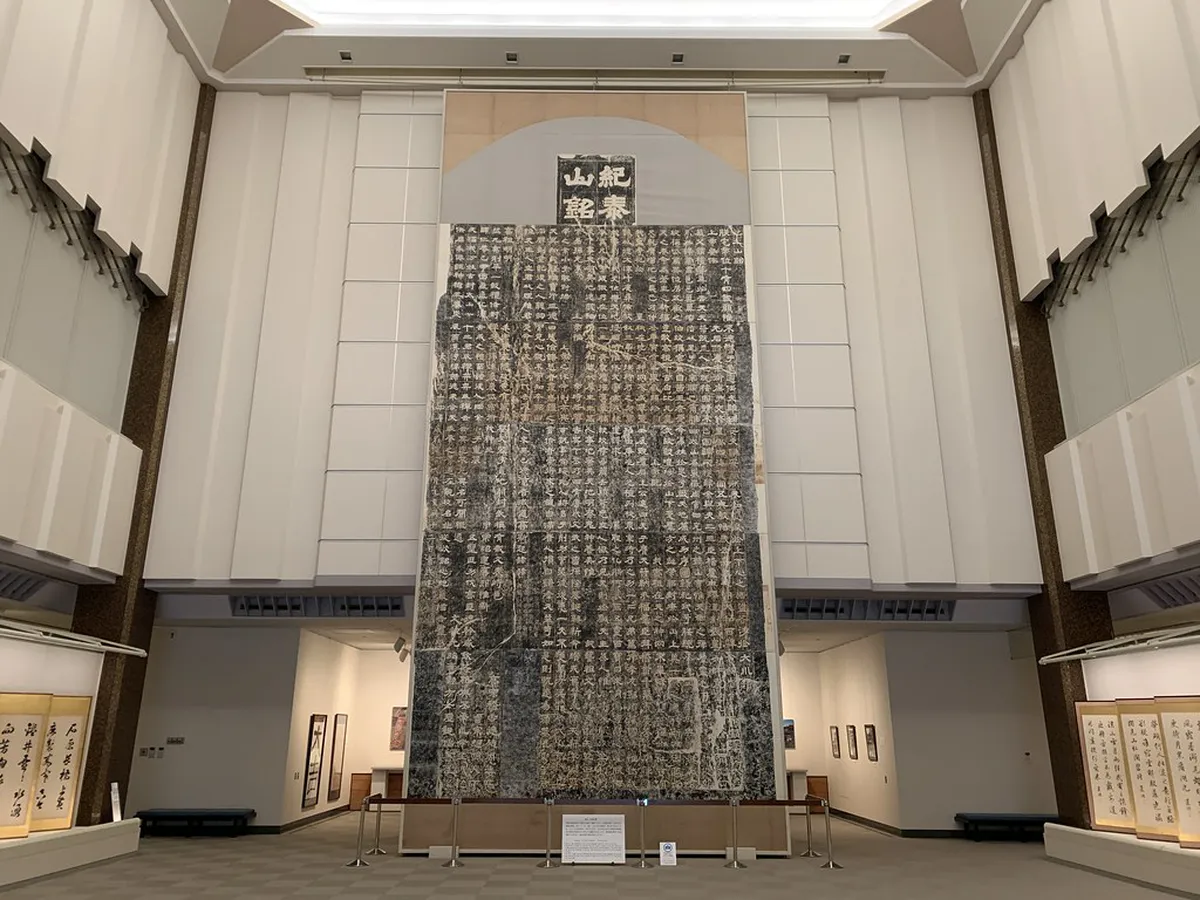
The first thing you encounter inside is a stone inscription calligraphy that towers more than 13 meters high in the main hall. The scale is striking — it immediately communicates calligraphy's status as monumental public art, not just brushwork in a frame. The permanent collection spans ancient scripts through contemporary interpretations, showing how the art form has evolved across different periods and schools.
Special exhibitions rotate several times a year and typically focus on a single artist, a specific calligraphic style, or a historical theme. These temporary shows are often the most compelling reason to visit, since the permanent collection is supplemented with works borrowed from private and institutional collections. Check naritashodo.jp for the current exhibition schedule — the gap closures (when the museum is shut between shows) typically last only a few days.
The museum building itself is designed to complement the park setting, with natural light and garden views visible from some of the galleries. Explanatory texts describe the tools, papers, and inks used for each piece, and the philosophical context behind different styles. Allow 60–90 minutes to move through the collection without rushing. If you have a particular interest in a specific period or style, the staff can usually point you toward relevant works in the collection.
Exploring Naritasan Park: A Serene Setting
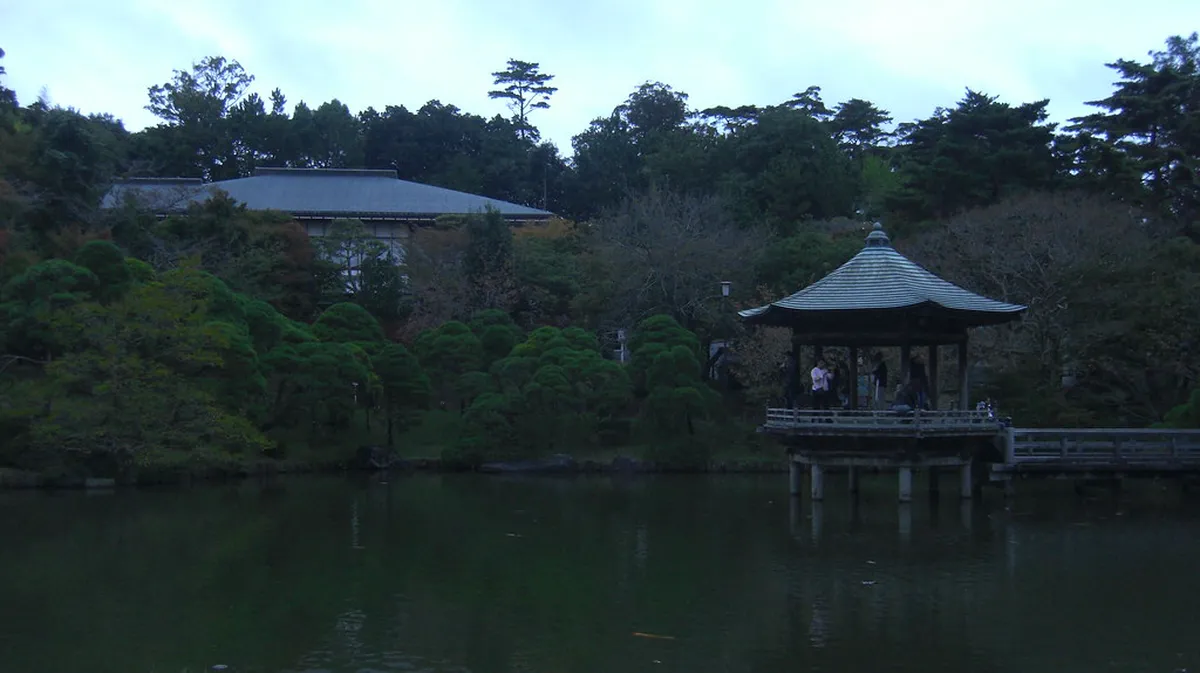
Naritasan Park wraps around the back of the Shinshō-ji Temple complex and is free to enter at any hour. The park contains ponds, small waterfalls, stone lanterns, and walking paths through cedar and zelkova trees. The Calligraphy Museum sits within the inner part of the park, roughly a 5-minute walk beyond the main temple buildings. You pass through the park on the way to the museum, so it works naturally as either a pre-visit or post-visit stroll.
In spring, the cherry blossoms along the pond paths are among the most photographed in Chiba Prefecture. Hanami picnickers gather under the trees, and local shops on Omotesando sell seasonal sakura mochi and cherry blossom sweets. In autumn, the maple and ginkgo trees turn vivid red and gold — the reflection in the ponds makes for excellent photography in the late afternoon. Summer brings hydrangeas near the ponds in June, though morning visits are advisable to avoid the heat and humidity.
The park is large enough that it rarely feels crowded outside of peak cherry blossom weekends and the New Year period. Most visitors spend 30–60 minutes in the park itself, separate from their time at the museum and temple. If you visit in winter, the grounds are quiet and often beautifully still — snowfall occasionally settles on the temple roofs, creating an atmosphere unlike any other season.
Combining Your Visit: Museum, Park, and Naritasan Shinshō-ji Temple
The most efficient approach is to walk from Narita Station through Naritasan Omotesando (10–15 minutes), enter the temple complex through the Niomon Gate, spend time at the main hall and pagodas, then continue into the park and museum. This flows naturally with the terrain — the park and museum sit higher up and behind the main temple buildings, making a forward progression rather than doubling back.
A suggested half-day schedule: arrive at Narita Station by 09:30. Walk Omotesando and reach the temple gate by 09:45. Spend 60–90 minutes at the Shinshō-ji Temple complex, including the Main Hall (Hondo), the Three-Storied Pagoda (1712), and the Great Pagoda of Peace (1984). By 11:15, enter Naritasan Park. Walk through the park for 30–40 minutes before reaching the Calligraphy Museum. Spend 60–90 minutes in the museum, then exit through the park back toward the temple and Omotesando. Lunch on Omotesando street adds another 45–60 minutes. You can return to Narita Airport by 14:00–14:30.
The Naritasan Shinshō-ji Temple complex's outer grounds are open 24 hours. Main halls including the Hondo are generally open 08:00–16:00. Entry to the grounds and park is free; a small admission fee applies only to the Calligraphy Museum. You can find more details about the temple at japanactivity.com.
The Goma Fire Ritual: What Museum Visitors Often Miss
The Goma (護摩) fire ritual is performed multiple times daily in the Hondo, the main worship hall of Naritasan Shinshō-ji. Monks burn cedar sticks in a sacred flame while chanting mantras, with the fire symbolising the destruction of bad luck and obstacles. The ritual typically runs three to five times per day; morning and midday sessions are most accessible for visitors. It lasts approximately 30–40 minutes and is free to observe.
Before entering the Hondo, you can write your wish or prayer on a wooden tablet (gomagi) at a small counter near the main gate. The tablets are placed into the fire during the ceremony, and your intention is considered blessed by the flames. Gomagi cost a few hundred yen depending on the type. This participatory element makes the Goma ritual far more personally meaningful than simply watching a ceremony — it is something most first-time visitors to Narita do not know about until they arrive.
Most visitors who come specifically to see the Calligraphy Museum walk straight past the main hall to reach the park. If you time your arrival for a scheduled Goma ritual (times are posted at the temple gate and on the Shinshō-ji website), you can watch the ceremony first, then continue into the park to visit the museum. The contrast between the intense, smoky atmosphere of the Goma ritual and the quiet contemplation inside the Calligraphy Museum is one of the most memorable sequences you can experience in a single morning in Japan.
Practical Tips: Accessibility, Photography, and Temple Etiquette
The park's main pathways are paved and generally navigable with a wheelchair or stroller, though some sections have gentle inclines near the inner garden. The Calligraphy Museum has elevator access between levels. Some areas of the Shinshō-ji Temple complex — particularly older subsidiary halls — involve stone steps with no ramp alternative. If mobility is a concern, the main approach via the central stone stairway to the Hondo can be avoided by using side paths; ask at the information booth near the Niomon Gate for an accessible route.
Inside the museum, photography rules vary by gallery and exhibition. Personal photography without flash is typically permitted in permanent collection areas. Special exhibitions may prohibit photography entirely — look for posted signs at each gallery entrance. Outside in the park, there are no photography restrictions. Best spots include the pagoda reflected in the lower pond, the cherry blossom paths in spring, and the stone lantern rows in morning mist. Tripods are generally not permitted inside the museum.
Temple etiquette matters at Shinshō-ji. At the temizuya (ritual water basin) near the gate, ladle water over both hands to purify yourself before entering the main hall. Bow slightly when passing through the Niomon Gate. Speak quietly inside worship spaces and avoid taking photographs during active religious services. There is no strict dress code, but overly casual attire is out of place in the main hall — particularly during Goma rituals when the space is in active use.
A few practical notes: carry some cash in yen for the museum admission, taxi, and smaller food purchases on Omotesando. A Suica or Pasmo IC card handles all train journeys. Comfortable flat shoes are important — the stone steps on the temple approach and the park's gravel paths cover more ground than they appear to on a map. The Tourist Information Center at 383-1 Nakamachi on Omotesando offers free Wi-Fi and public restrooms, directly across from Kawatoya restaurant.
Dining and Shopping on Naritasan Omotesando
Naritasan Omotesando runs from Narita Station directly to the Shinshō-ji temple gate — about 800 metres of Edo-era atmosphere, traditional shopfronts, and competing food aromas. The street has been the approach road to the temple for centuries and most of its businesses have operated for generations. It is the best place to eat and buy before or after your museum visit, and the walk back from the temple is more relaxed than the arrival, since you are no longer navigating to a destination.
For food, the highlights are concentrated and specific. Kawatoyo (Kawatoya Narita, 386 Nakamachi) has grilled unagi (eel) on the menu since 1910 and does not take reservations — arrive early or check their website for current wait times. Narita's official mascot is an eel named Unari-kun, which tells you how seriously the city takes this dish. Hayashida's Senbei Rice Cracker Shop (490 Saiwaicho) has made senbei from scratch since 1912; the kushi-sen (skewered rice crackers) come in soy sauce or mitarashi sweet soy. Matcha Sweets Sawawa (378 Nakamachi) serves matcha soft-serve with a strong, bitter green tea flavour that is noticeably less sweet than what most visitors expect. Miyoshiya Sweets Cafe (386-2 Nakamachi) is hidden in a narrow alleyway that opens into a small Japanese garden — easy to walk past, worth finding for traditional wagashi and tea. Nana Cafe Koguma (497-3 Kamicho) is the most accessible dango stop; the red bean paste version is filling enough to share.
For souvenirs, Seimiya (492 Saiwaicho) makes handcrafted bamboo products — bowls, baskets, and chopsticks — and you may see the craftsman weaving on-site. Gomafukudo (390 Nakamachi) sells an unusually wide range of sesame products including sesame soft-serve and sesame croquettes; they sometimes offer samples. You can find more local spots along this route at japanactivity.com.
The Cultural Significance of Japanese Calligraphy
Japanese calligraphy — Shodo (書道) — is practiced as both an art form and a meditative discipline. Each brushstroke is made in a single, unrepeatable gesture; there is no correction or repainting. This irreversibility is central to its philosophy. The calligrapher's mental state, breath, and posture are reflected in the character as directly as the ink itself. Watching someone practice Shodo, or studying finished works closely, reveals a degree of intentionality that is invisible in reproductions.
Naritasan Shinshō-ji Temple has a specific and historical connection to calligraphy. Buddhist monks used sutra copying (shakyo) as a spiritual practice — the physical act of transcribing texts by hand was considered a form of prayer. The museum's collection includes monastic works, secular commissions, and contemporary pieces that respond to this tradition. The presence of a dedicated calligraphy museum within a major temple complex is not coincidental; it reflects the deep entanglement of writing, religion, and cultural identity in Japanese history.
The art form spans a wide stylistic range: from bold, expressive ink painting in the Zen tradition to delicate court styles derived from Chinese Tang-dynasty models, to contemporary works that challenge the boundary between calligraphy and abstract art. The museum's permanent collection makes this diversity visible across multiple rooms. For visitors without any prior knowledge of Japanese calligraphy, this breadth is the most useful thing to absorb — it recalibrates the assumption that calligraphy is a single, fixed style.
For more on Narita's cultural offerings and nearby attractions, visit japanactivity.com.
Brief History of Naritasan Shinshō-ji Temple
Naritasan Shinshō-ji was founded in 940 AD to enshrine Fudō Myōō, the Immovable Wisdom King, and to mark the end of a regional political rebellion. The temple is dedicated to this protective Buddhist deity, depicted with a sword and flames symbolising the severing of ignorance and evil. At 1,080+ years old in 2026, it is one of the oldest continuously active temple complexes in the Kanto region.
During the Edo period (1603–1868), the temple gained national prominence through the advocacy of Kabuki actor Ichikawa Danjūrō I, who promoted it across Japan. Pilgrimage traffic along Naritasan Omotesando grew substantially, establishing the street's commercial character that persists today. The temple now draws more than 10 million visitors annually, with over 3 million arriving for hatsumōde (first temple visit of the New Year) on 1–3 January alone. The Calligraphy Museum was established as a cultural extension of this tradition, providing a dedicated space for the temple's significant holdings of written art.
Frequently Asked Questions
How much time should you plan for Naritasan Museum of Calligraphy?
Allocate about 1.5 to 2 hours to fully appreciate the Naritasan Museum of Calligraphy's exhibits. This allows for thoughtful viewing of the permanent and special collections. You can combine this with additional time for Naritasan Park and the temple.
What should travelers avoid when planning a visit to Naritasan Museum of Calligraphy?
Avoid visiting on Mondays, as the museum is typically closed, or during the New Year holidays. Also, try to avoid peak Japanese national holidays to minimize crowds. Do not forget to check the official website for exhibition-related closures.
Is Naritasan Museum of Calligraphy worth including on a short itinerary?
Yes, the museum is definitely worth including, especially if you have a layover at Narita Airport. Its proximity to the airport and the temple makes it an efficient cultural stop. A 2-3 hour visit offers a profound insight into Japanese art.
How to get to Naritasan Museum of Calligraphy from Narita Airport?
Take either the JR Narita Line or Keisei Main Line from Narita Airport to Narita Station, a 10–15 minute ride. From Narita Station, it's a pleasant 25-minute walk through Omotesando or a quick 5-minute taxi ride to the museum. The total cost is minimal.
What are the opening hours of Naritasan Museum of Calligraphy?
The Naritasan Museum of Calligraphy is open from 9:00 AM to 4:00 PM. It is generally closed on Mondays, New Year holidays, and between exhibitions. Always confirm specific dates and hours on the official museum website before your visit.
The Naritasan Museum of Calligraphy rewards visitors who plan ahead. Know the hours, confirm the current exhibition is running, time your arrival to catch a Goma fire ritual at the main hall first, then move into the park and museum at your own pace. Add lunch on Omotesando on the way back and you have a full, genuinely memorable half-day — one that most travelers passing through Narita Airport never take the time to have.
For the latest official information, see the Naritasan Museum of Calligraphy on Wikipedia and Naritasan Museum of Calligraphy official site.