

Boso no Mura is a sprawling 126-acre open-air museum in Chiba Prefecture that recreates life in Edo-period Japan (1603–1868). Set among woodland near Narita, it brings together a full merchant townscape, farmhouses, a samurai residence, and craft workshops — all hands-on and fully staffed.
At just 300 yen entry for adults, it consistently surprises first-time visitors who expected a static exhibit. This guide covers how to get there, what to do in what order, and the key timing rules that make the difference between a great visit and a wasted morning.
What is Boso no Mura?
The full name is Chiba Prefectural Boso no Mura (千葉県立房総のむら). "Boso" refers to the Boso Peninsula, encompassing all of Chiba Prefecture — specifically the three former provinces of Awa, Kazusa, and Shimousa. The museum draws on that regional heritage throughout its exhibits and workshops.
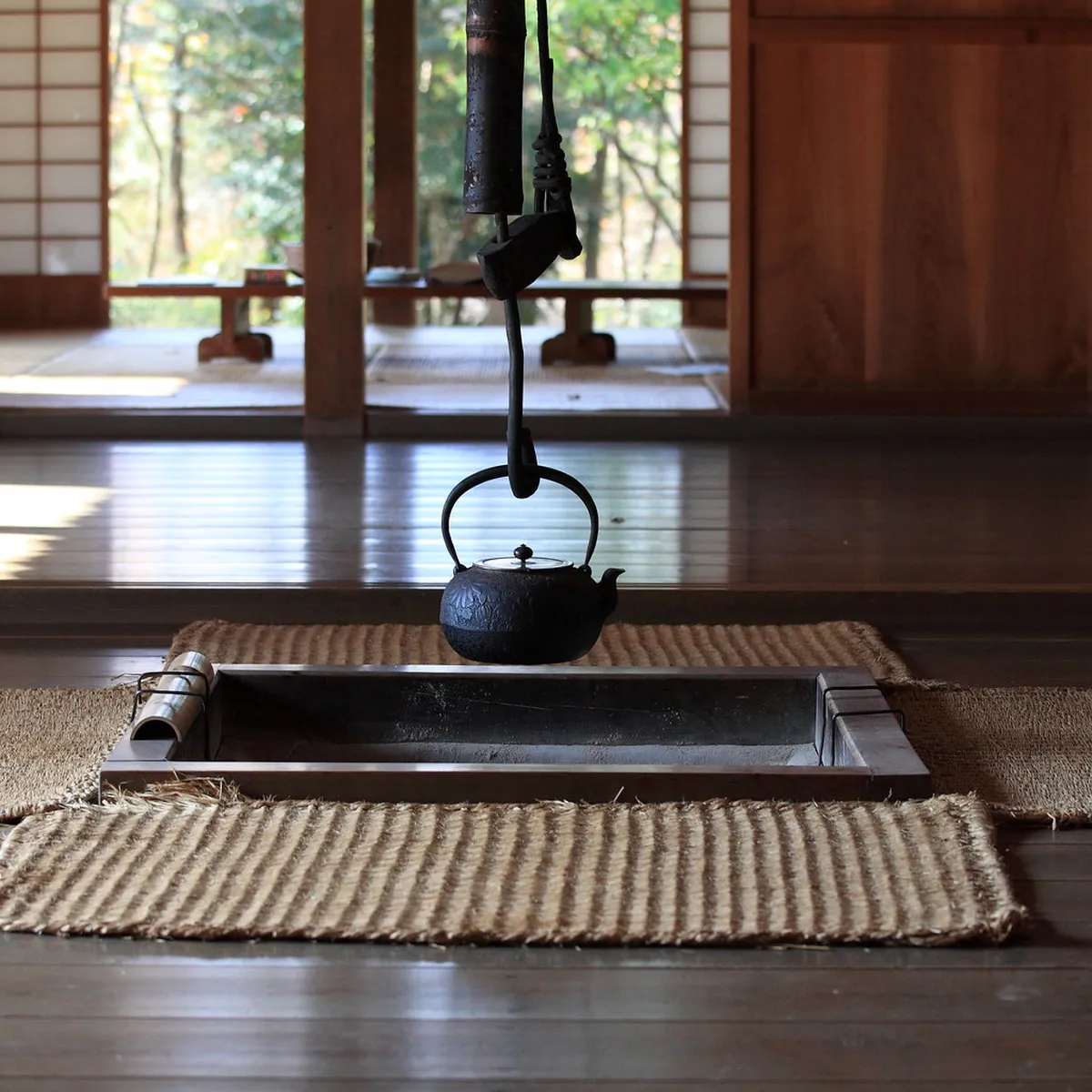
The village is modeled on the historic merchant town of Sawara (now Katori City), about 32 km away. Sixteen of the original buildings were either relocated or faithfully reproduced here. Eight of those merchant houses contain second-floor exhibits, accessible to visitors.
Beyond the Edo period, the museum also covers the Kofun period (3rd–7th centuries). The neighboring Fudoki no Oka area holds more than 110 burial mounds, and haniwa clay figures appear throughout the grounds. It is one of the most comprehensive open-air history museums in the Kanto region.
How to Get to Boso no Mura
The simplest public transport route: from the West Exit of JR Narita Station, board a bus bound for Ryukakujidai Shako. Ride for about 20 minutes and get off at Ryukakujidai Ni-chome. The museum entrance is a 10-minute walk from the stop. No transfer needed.
Alternatively, take the JR Narita Line from Narita Station to Ajiki Station, then catch a connecting bus to the museum — this route is less frequent on weekdays, so check timetables before relying on it.
Drivers should head for the address 1028 Ryukakuji, Sakae-machi, Inba-gun, Chiba 270-1506 (Tel: 0476-95-3333). The main car park is large and free, and a 15-minute drive from Narita Station makes this the easiest option on weekdays.
Transit passengers at Narita Airport can visit Boso no Mura for free through the Narita Airport Transit & Stay Program. English-speaking volunteer guides depart from counters in Terminals 1 and 2 at no charge, though you still pay your own transport and entrance fees. It is one of the program's most popular itineraries.
Entrance Fee & Opening Hours
Admission is 300 yen for adults and 150 yen for high school and university students. Junior high school students and younger enter free. Cash only — credit cards are not accepted at the gate, so bring yen.
The museum opens at 09:00 and closes at 16:30, with last admission at 16:00. It is closed on Mondays (or the following Tuesday when Monday falls on a public holiday). Check the Official Boso no Mura Website for closures around national holidays.
One critical timing note: craft workshops and most shops on Merchant's Street do not open until noon on weekdays. If you arrive at 10:00 on a Tuesday hoping to try the candle-making or blacksmithing, you will find locked shutters. On weekends and public holidays, shops open from the morning. Plan your arrival time accordingly.
Wear a Kimono or Be a Ninja/Samurai for a Day
Before you pass through the entrance gate, look for the Cosplay Annex (コスプレの館, "Cosplay no Yakata") — it is clearly signposted with banners and located in the building just before the ticket counter. The annex stocks more than 100 historical costumes for men, women, children, and infants. Options include formal kimonos, everyday Town Girl (machi musume) styles, hakama, ninja outfits, and samurai armor.
Prices vary by costume style; a catalog with photos helps you choose before heading to the dressing room. A kimono dresser assists you — dressing takes around 15–20 minutes — and your look is completed with accessories like an obi purse and geta sandals. Children's and infant sizes are available, making this ideal for family photos against the Edo-period backdrop.
Wearing the costume throughout your visit is part of the experience. The historical setting makes for exceptional photos at the merchant street, in the samurai house garden, and at the farmhouse gates. Factor in the dressing time at the start of your itinerary.
Exploring Merchant's Street and the Townscape
Merchant's Street is the centerpiece of the museum: a promenade of 16 shop buildings modeled on the Edo-era canal town of Sawara, complete with an Inari shrine, a fire watchtower, a blacksmith's shop, and a Fusaya information office. The street replicates one of the most prosperous merchant districts of the Edo period.
The shops are genuine workshops, not displays. You can step inside, handle authentic tools, and watch artisans demonstrate their trades. The kawaraban shop (本と瓦版の店) sells tile-block printed news sheets from the Edo period — an early form of printed media — alongside traditional books and stationery. Replicas run from a few hundred to around 1,000 yen and make unusually specific souvenirs.
The tatami shop (畳の店) shows the process of weaving rush-grass mats, which remains a licensed trade in Japan today. The pottery shop (瀬戸物の店) stocks handcrafted ceramics reflecting Boso regional styles, and occasionally runs short potter's-wheel demonstrations. The candle shop is worth a dedicated stop: the workshop technique uses chiyogami (intricately decorated Japanese paper) wrapped around a wax core, which is then dipped into hot wax to seal the coating. The resulting candle is a functional piece of Edo craft — workshops run about 30 minutes and cost approximately 800–1,200 yen.
The casual diner (めしや, meshiya) on Merchant's Street serves simple Edo-style dishes such as soba and rice sets. The tea shop (お茶の店) is a quick stop for green tea and senbei (rice crackers) between workshops.
Furusato no Waza Arts and Crafts Area
The Furusato no Waza zone extends beyond the merchant street and features hands-on craft workshops led by artisans. Available sessions typically include papermaking (washi), indigo dyeing, blacksmithing, and pottery. Workshops run 30–60 minutes and cost between 500–1,500 yen depending on the activity.
Booking is not always required for individual visitors, but groups should call ahead. The indigo dyeing and pottery wheel sessions tend to fill first on weekend mornings. Remember: on weekdays these workshops do not begin until 12:00, so arriving at opening to claim a slot is less useful than on weekends.
Samurai House (Buke Yashiki) and Tea Ceremony
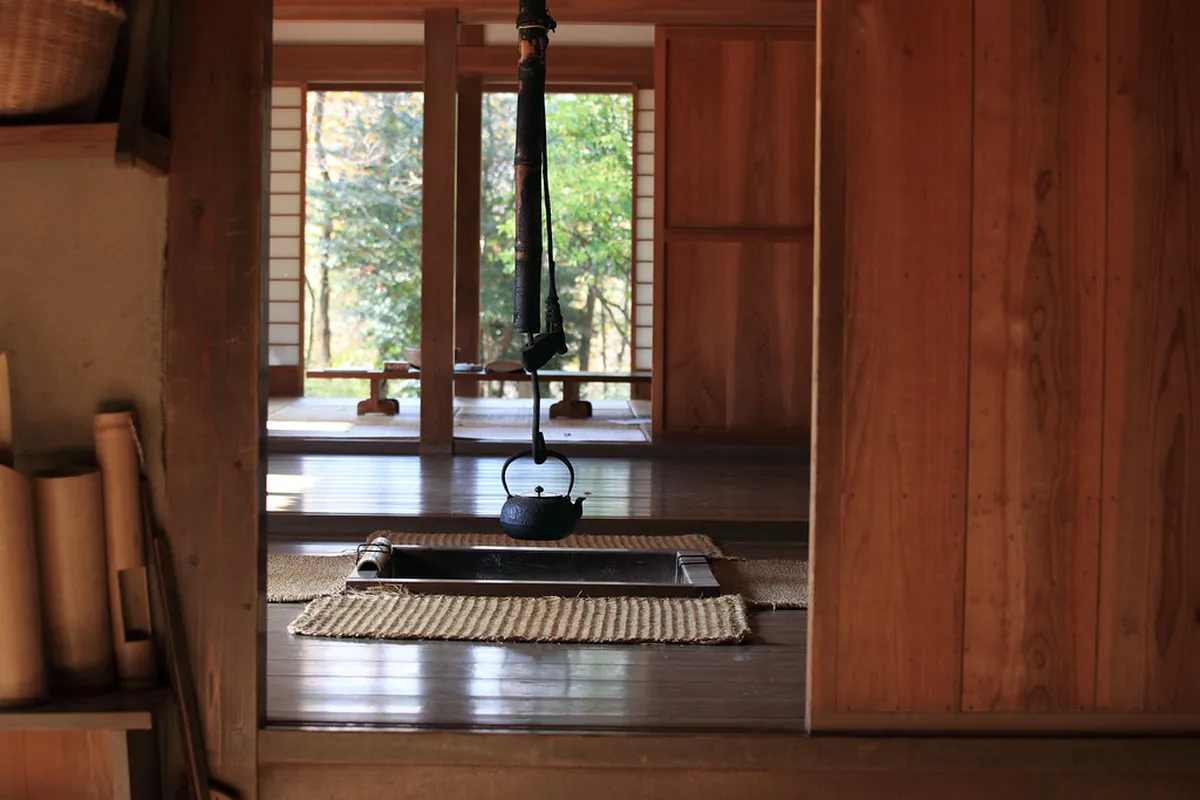
The Buke Yashiki is modeled on the residence of a middle-ranking samurai of the Sakura Clan. Tall hedges ring the property — a typical landscaping convention of the period. Shoes off at the entrance, as with any Japanese home. The tatami rooms are intentionally sparse, divided by shoji sliding doors; one room displays a full katchu suit of armor (helmet and body armor).
The tea ceremony hall is located in a separate building adjacent to the samurai residence. An instructor leads participants through the etiquette of drinking and preparing matcha. Three formats are available: matcha with higashi (dry rice-flour confectionery) for 300 yen; matcha with namagashi (fresh wagashi) for 400 yen; and matcha with namagashi plus the chance to prepare the tea yourself for 500 yen. Booking in advance is advisable during peak weekends.
The Kazusa Farmhouse, Fields, and Children's Games
The Kazusa Farmhouse is a reproduction of a village headman's estate from the late Edo period. The main house, gatehouse, warehouse, and expansive yard are all accessible. Inside, a narrow staircase leads to a mezzanine with a view over the farmland. The kitchen has an earthen floor and is equipped with original tools still in working condition; a traditional straw raincoat (mino) hangs on the kitchen wall.
The surrounding fields grow seasonal crops — the shrubbery lining the perimeter includes tea plants. Hands-on farming workshops (paddy planting, tea picking, harvesting) run at specific times of year and require advance registration by phone or in person.
The outdoor area beside the farmhouse is one of the best parts of the museum for children and is rarely mentioned by competitors. A collection of traditional Edo-period children's games is laid out in the yard: takekuma stilts, kendama (ball-and-cup), spinning tops, and more. These are free to use and require no booking. For families, this is often the most memorable section — particularly for younger children who find the workshops too long.
Festival Square & Village Kabuki Stage
The Festival Square anchors the centre of the village. The Kabuki stage here is a faithful replica of the style of open-air theatre common in Edo-period towns. On most days the stage stands empty, but it is architecturally striking and forms a natural gathering point for families.
Special performances and seasonal festivals take place throughout the year. Dates are published on the Official Boso no Mura Website — checking this before your visit is worthwhile if you want to catch a live event. During festival days the museum is busier and the food stalls on Merchant's Street open earlier.
A Brief History of the Edo Period and Kofun Roots
The Edo period (1603–1868) was a time of enforced peace under the Tokugawa shogunate. With warfare suppressed, the arts flourished: Kabuki theatre, haiku poetry, and ukiyo-e woodblock prints all reached their peak. The rigid four-class system — samurai, farmers, artisans, merchants — shaped the architecture and social geography that Boso no Mura recreates.
The museum's scope extends back to the Kofun period (3rd–7th century CE). Over 110 burial mounds (kofun) have been identified on the museum's grounds and in the adjacent Fudoki no Oka area. Many contain haniwa clay figures — humanoid and animal effigies buried with the dead — which you encounter throughout the site. This pre-feudal layer gives Boso no Mura a depth that purely Edo-focused museums lack.
Planning Your Visit: Timing, Tips, and Nearby Attractions
Allow at least three to four hours. A full day is needed if you want to try multiple workshops, the tea ceremony, and a proper look at the Kazusa farmhouse area. Half-day visitors should prioritise the costume rental, one craft workshop, and the Merchant's Street loop.
Spring (late March to May) and autumn (October to November) offer the best weather for exploring the outdoor grounds. Summer is hot and humid but brings special festival events. Avoid Monday closures and arrive on weekends if you want workshops from 09:00 rather than waiting until noon.
For a full Narita day, combine Boso no Mura with Naritasan Shinshoji Temple and a stroll along Omotesando Street. The temple and its approach road are roughly 20 minutes from the museum by car. Find more ideas on things to do in Narita for a full itinerary.
Frequently Asked Questions
How long should I spend at Boso no Mura Open-Air Museum?
Plan for at least 3-4 hours to experience the main attractions and a craft workshop. A full day allows for a more relaxed exploration, including multiple activities and a tea ceremony. Consider a half-day if you only want to see the Merchant's Street.
Is Boso no Mura suitable for families with children?
Yes, Boso no Mura is highly family-friendly with many interactive activities. Kids love the costume rentals and hands-on craft workshops like papermaking or candle making. The open spaces provide ample room for exploration and play.
What activities can you do at Boso no Mura?
Visitors can rent traditional costumes (kimono, ninja, samurai), participate in craft workshops (pottery, papermaking, blacksmithing), and explore historical buildings. You can also experience a tea ceremony and visit traditional shops. Check the Official Boso no Mura Website for seasonal events.
How much does it cost to enter Boso no Mura?
The entrance fee for adults is 300 yen. High school and university students pay 150 yen, while junior high students and younger enter for free. Additional costs apply for workshops and costume rentals, typically ranging from 500-1500 yen per activity.
What is the best way to get to Boso no Mura from Narita?
From Narita Station, take a bus from the West Exit bound for Ryukakujidai Shako and get off at Ryukakujidai Ni-chome (about 20 minutes). The museum is a 10-minute walk from the stop. Driving is also an option with free parking on site.
Boso no Mura is one of the most undervisited attractions in the Narita area — and at 300 yen entry, one of the best value experiences in Chiba Prefecture. The combination of living craft workshops, authentic architecture, and hands-on activities for all ages makes it far more than a static museum.
Use the timing tips in this guide — particularly the weekday noon rule for workshops — and you will avoid the main pitfall that catches first-time visitors. The Kazusa farmhouse games area and the candle-making workshop are the two highlights most worth building your day around.
For authoritative information, refer to the Boso no Mura Open-Air Museum on Wikipedia and Boso no Mura Open-Air Museum official site.