

15 Best Views of Mount Fuji: Ultimate Guide (2026)
Discover the 15 best views of Mount Fuji, from iconic photo spots to hidden gems. Get expert tips on timing, photography, and planning your perfect trip.
On this page
Mount Fuji is notoriously selective about when it reveals itself. On many days the summit disappears behind cloud for hours at a stretch. The good news: knowing where to stand and when to arrive shortens the odds significantly. This guide covers the 15 best viewpoints, the timing that matters most, photography settings that work, and one twice-yearly phenomenon that every competitor guide on the SERP overlooks entirely. Use the Mount Fuji travel guide to build the wider itinerary around whichever spots appeal most.
Best Time to See Mount Fuji: Seasons and Hours
October through February gives the highest probability of a clear view. Cold, dry air from the north-west settles the atmosphere and snow on the summit makes Fuji especially photogenic. December and January are the peak clarity months. Spring (late March to mid-April) adds cherry blossoms, but afternoon cloud becomes more frequent. Summer is the official climbing season yet the worst time for views — the rainy season runs from early June to mid-July, and August humidity often shrouds the peak by mid-morning.
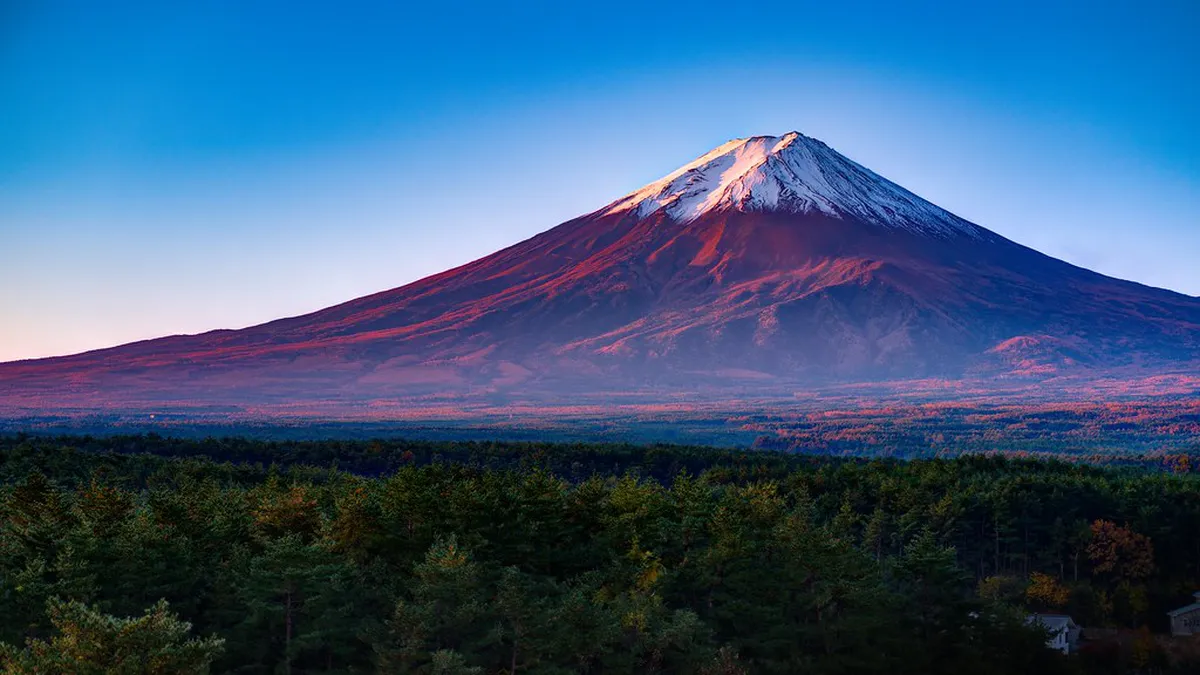
Time of day matters as much as season. The clearest window is typically 06:00–09:00, before thermal updrafts build cloud around the summit. Afternoon views are possible but unreliable — cloud frequently covers the peak by 14:00. On overcast mornings, wait: Fuji has a habit of revealing itself briefly when conditions shift. For a detailed breakdown of monthly visibility patterns, see the best time to see Mount Fuji guide.
The 15 Best Views of Mount Fuji
Each location offers a genuinely different perspective — different light, foreground, and distance. Experienced Fuji watchers rarely stop at just one spot. For comprehensive details on mountain conditions and access, consult the official portal.
- Chureito Pagoda, Arakurayama Sengen Park — The most reproduced Fuji photograph: a red five-storey pagoda with the snow-capped cone behind it. Climb ~400 steps from Shimoyoshida Station; free entry. Arrive before 07:00 in cherry blossom (late March) or autumn foliage (mid-November) season to avoid extreme crowds.
- Lake Kawaguchiko — Northern Shore and Oishi Park — Mirror-calm reflections of Fuji on still mornings. Oishi Park adds lavender in spring and the Maple Corridor in November. Direct highway bus from Shinjuku takes about 2 hours (¥2,000 each way). Staying overnight doubles your chances of a clear sunrise and sunset.
- Shimoyoshida Honcho Street — A traditional shotengai in Fujiyoshida where Fuji fills the far end of the street. Free, walkable from Shimoyoshida Station. Morning light before 08:30 keeps traffic light; step to the side of the road to use the shop awnings as a natural leading line.
- Hakone — Lake Ashi and Narukawa Art Museum — A clear-day view from Lake Ashi's western shore is stunning. Caveat: Hakone sits in a cloud zone; on most summer days Fuji is invisible. Go December–February and check the Gotemba forecast the night before.
- Mt. Kintoki Hike (Hakone) — A moderate 3–4 hour round trip from the Kintoki-toge trailhead (bus from Hakone-Yumoto). The summit at 1,212 m often clears the cloud line when valley viewpoints are obscured. Best in autumn and winter; a tea house near the top sells hot drinks.
- Mt. Tenjo Ropeway, Kawaguchiko — Round-trip ¥900; ascends to 1,075 m above the eastern shore, giving a direct view across the lake to Fuji. Open 09:00–17:00 daily. A small café and the famous "Tenjo Bell" are on the platform.
- Suwanomori Shizen Koen (Fuji Pines Park) — A quiet park in Fujinomiya, Shizuoka, where ancient black pines frame Fuji in a Hokusai-esque composition. Free entry; car or local bus from Fujinomiya Station required. Dawn mist in the pines makes this the most atmospheric shot in the region.
- Harvest Terrace (Fujiyama Beer), Gotemba — A craft-beer restaurant with floor-to-ceiling glass facing Fuji's southern face. Courses ¥1,500–¥3,000; book window seats in advance. Short taxi from Gotemba Station (JR Gotemba Line); open until 21:00 for dinner with a sunset view.
- Nihondaira Plateau, Shizuoka — Views of Fuji, Suruga Bay, and the Izu Peninsula simultaneously. Bus from Shizuoka Station, then Nihondaira Ropeway (¥1,000 round trip) to Kunozan Toshogu Shrine. Winter sunsets turn the mountain pink-orange.
- Miho no Matsubara Beach — A UNESCO World Heritage pine grove on a black-sand beach in Shimizu. The dark shoreline, blue bay, and white Fuji are striking in combination. Free entry; bus from Shimizu Station. Avoid July–September when there is no snowcap.
- Tanzawa Mountains, Kanagawa — Experienced hikers find long-distance Fuji views from peaks like Mt. Oyama (1,252 m). Trailheads off the Odakyu Odawara Line at Isehara and Hadano. Best on clear December and January mornings.
- Mt. Takao — Day Hike from Tokyo — 50 minutes from Shinjuku on the Keio Line. The 599 m summit gives a distant but satisfying view on clear winter days. Cable car ¥900 round trip; Trail 1 on foot takes 90 minutes.
- From the Shinkansen — E-seat window on the right side, Tokyo toward Nagoya/Kyoto/Osaka. Best view between Shin-Yokohama and Shizuoka Stations, 40–55 minutes in. Fuji is visible for about 30 seconds — camera ready before Odawara. Free with your ticket.
- Tokyo Observation Decks — the Tokyo Metropolitan Government Building observatories (Shinjuku, 45th floor, free) and Roppongi Hills Mori Tower (¥1,800–¥2,300, open until 23:00 Fri) both give views on crisp winter mornings. Fuji appears as a silhouette ~100 km to the south-west.
- Hotels with Direct Fuji Views — Kawaguchiko is the best base: Shuhoukaku Kogetsu and Mizno Hotel from ¥15,000/night; Hoshinoya Fuji from ¥60,000/night with private terraces. Always request a north-facing room and confirm it faces the mountain directly.
Diamond Fuji: The Twice-Yearly Event Worth Planning a Trip Around
Twice a year the geometry of the Earth and the mountain align so that the sun rises or sets exactly at the summit, producing a brilliant flash known as Diamond Fuji (Daiyamondo Fuji). The effect lasts only a few minutes but generates one of the most dramatic natural spectacles in Japan — and the dates are predictable via official tourism resources.
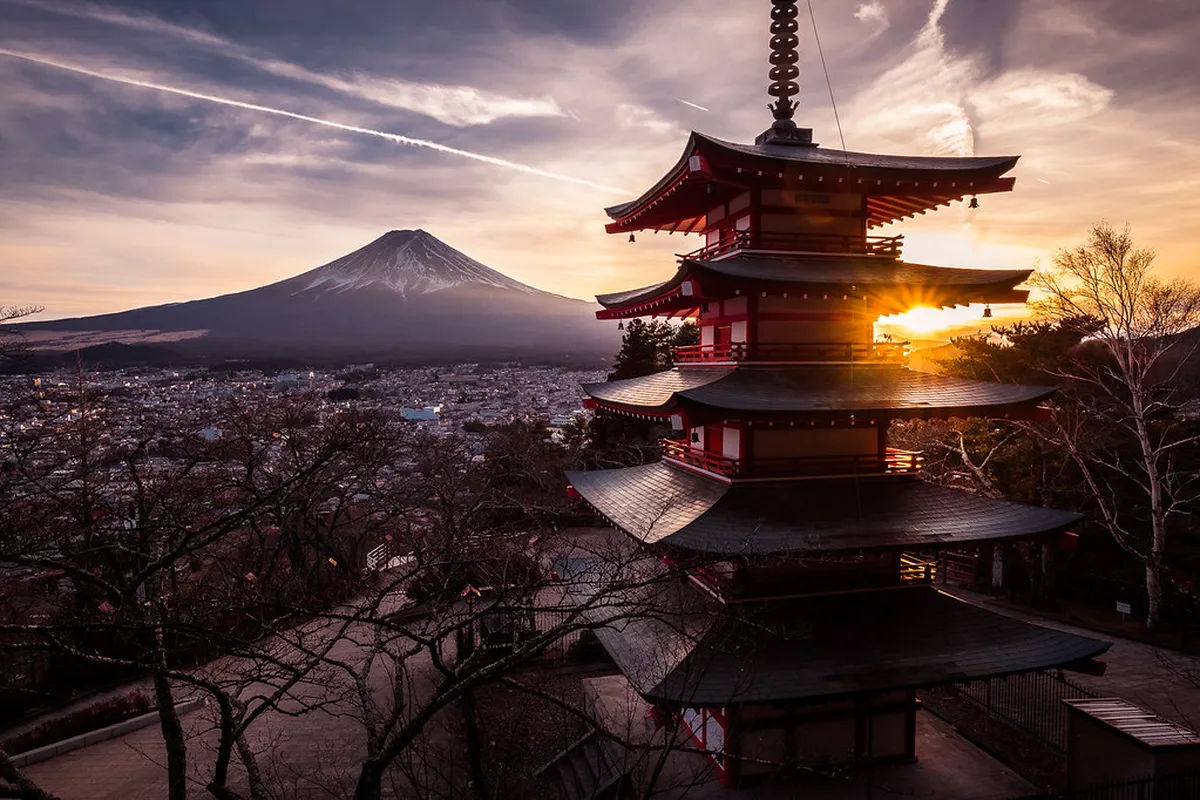
The autumn sunset Diamond Fuji is visible from Lake Kawaguchiko's northern shore around 10–15 November. Oishi Park is the prime vantage point. The winter sunrise version is best seen from Lake Yamanakako — the closest of the Five Lakes to the summit — around 20–25 January, when the sun crests the peak from the east. Arrive 60–90 minutes before the predicted time to secure a clear sight line. Check the precise date each year via the Yamanashi Tourism Board website, as it shifts slightly depending on atmospheric conditions. A companion phenomenon, Pearl Fuji (Shinju Fuji), occurs when a full moon sets at the summit around the same calendar periods — less famous but equally striking for night photographers.
Photography Tips for Capturing Mount Fuji
Arrive at your viewpoint before first light and set up while it is still dark. The 30-minute window after sunrise gives the warmest, most directional light on the mountain, and lake surfaces are glassiest before wind picks up. A tripod is non-negotiable for any shot before full daylight. Use ISO 100, f/8 or f/11 for maximum depth, and carry two spare batteries — cold weather drains them fast. An ND filter (6-stop or 10-stop) smooths out lake reflections; a polarising filter deepens blue skies and cuts glare from the water. Learn more about Mount Fuji's geology and natural history to better understand its moods and seasons.
Focal length determines the feel of the shot. Wide angle (16–24 mm) works at Miho no Matsubara or Nihondaira where the bay is as important as the mountain. Telephoto (100–200 mm) compresses the distance at Chureito Pagoda and makes the mountain dominate the frame. The Lawson convenience store shot near Kawaguchiko Station — now viral on social media — works best with a medium telephoto from across the road, balancing signage and summit in the same plane. Always check the weather forecast the evening before; a clear morning can close over by 09:00 with no warning.
Hotels Near Mount Fuji with a View
Kawaguchiko is the best base for Fuji-facing accommodation. Shuhoukaku Kogetsu and Mizno Hotel both sit on the northern shore with open-air onsen facing the mountain, from around ¥15,000 per night. Hoshinoya Fuji is a luxury glamping resort with private cabin terraces and a guided sunrise canoe programme; rates start at ¥60,000. Book three months ahead for autumn and sakura seasons. Always request a north-facing room — not every room in a lakeside property directly overlooks the mountain.
Other Ways to See Mount Fuji
From a plane, JAL and ANA pilots on the Tokyo–Osaka route frequently announce when Fuji is visible; sit on the left side flying south-west from Haneda. From the sea, the Suruga Bay ferry from Shimizu Port to Toi (65 min, ¥2,500) gives an ocean-level view of Fuji rising from the coastline. The Fuji Tea Fields at Obuchi Sasaba, near Fujinomiya, require a car — public transport doesn't reach the spot — but geometric tea rows framing the volcano make for a shot unlike anything at the lakes. For climbing the mountain itself, the How to Climb Mount Fuji: The Ultimate Guide & Tips for 2026 guide covers the July–September season in full.
Planning Your Mount Fuji View Trip
A single day from Tokyo is feasible but risky — the mountain may be clear in the morning and clouded over by the time your bus arrives. Spending at least two nights in Kawaguchiko gives you two mornings to work with and dramatically improves the odds. The highway bus from Shinjuku Expressway Bus Terminal is the fastest and cheapest option: book in advance on the Fujikyu website, around ¥2,000 each way.
A practical one-night, two-day loop: arrive Kawaguchiko in the afternoon, walk the northern shore at sunset, stay overnight, catch sunrise at Oishi Park, take the Fujikyuko Line to Shimoyoshida for Chureito Pagoda, then bus to Gotemba for Harvest Terrace lunch, finishing on the Tokaido Shinkansen from Mishima back to Tokyo. That covers six viewpoints across Yamanashi and Shizuoka in two days. For step-by-step transport details see the Mount Fuji Day Trip From Tokyo Travel Guide guide.
Frequently Asked Questions
What is the best time to see Mt. Fuji?
The best time to see Mount Fuji is during the colder, drier months from October to February. Early mornings often provide the clearest visibility before clouds gather. Always check local weather forecasts for the best chance of a clear view.
Where is the best place to see Mt. Fuji?
Many consider Arakurayama Sengen Park, with its Chureito Pagoda, to offer the most iconic view. Lake Kawaguchiko provides stunning reflections, while Hakone offers distant, scenic views. The best spot often depends on your preferred experience.
How do you get to Mt. Fuji from Tokyo?
You can reach the Fuji area from Tokyo by direct highway bus from Shinjuku to Kawaguchiko, taking about two hours. Alternatively, take the train from Shinjuku to Otsuki, then transfer to the Fujikyuko Line. The Shinkansen also offers fleeting views from its windows.
Which city is closest to Mt. Fuji?
Fujiyoshida City and Kawaguchiko Town are among the closest urban centers to Mount Fuji, located within the Yamanashi Prefecture. These towns serve as excellent bases for exploring the Fuji Five Lakes region and its numerous viewpoints.
Is photographing Mount Fuji worth it?
Absolutely, photographing Mount Fuji is incredibly rewarding, offering a chance to capture Japan's most iconic natural landmark. Plan for early morning or late afternoon light, and consider unique foreground elements for a memorable shot. The challenge of getting a clear view adds to the satisfaction.
A clear view of Fuji is never guaranteed — that uncertainty is part of what makes it so memorable when it happens. The most reliable strategy: choose October–February, arrive before sunrise, stay at least one night, and pick a viewpoint with a strong foreground. Each location on this list adds a different character to the mountain that no single spot can provide alone.
Check the Fuji Five Lakes guide for accommodation, transport, and activity details across the Kawaguchiko lake region. And if your schedule has any flexibility around late January or mid-November, the Diamond Fuji event is worth building an entire trip around.
Free: The Kawaguchiko Essentials guide
Top things to do, where to stay, a perfect day plan, getting around, and the best time to go — a Kawaguchiko mini-guide you can take offline.
You might also like
Continue reading
More guides you'll find useful


