Fuji Five Lakes Itinerary & Travel Guide: Plan Your Trip
Plan your perfect Fuji Five Lakes trip with our comprehensive guide, including itineraries, transportation, and top attractions for an unforgettable experience.
On this page
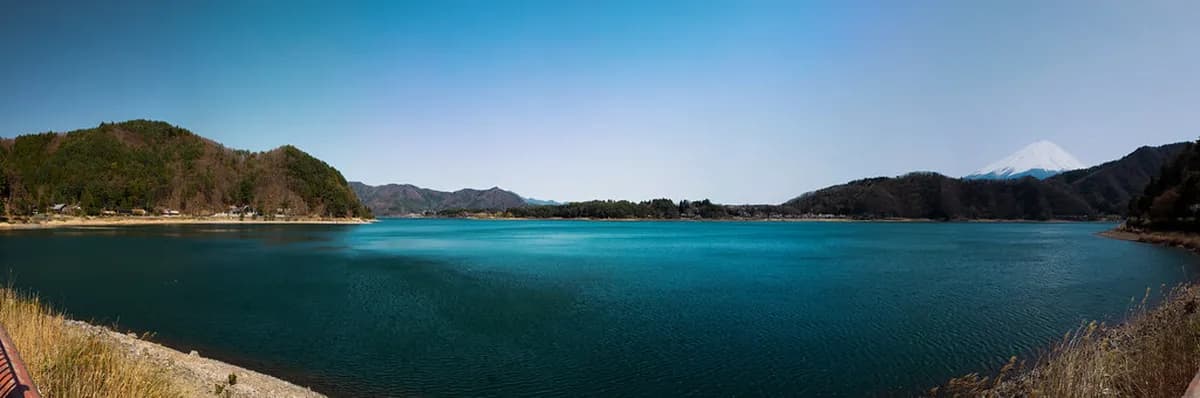
The Fuji Five Lakes region offers some of Japan's most iconic scenery. It sits at the northern base of Mount Fuji Guide: History, Climbing & Travel Tips, providing breathtaking views across five distinct crater lakes. This area combines natural beauty with unique cultural experiences that reward visitors who take more than a single rushed day.
This guide covers everything you need to plan a 2026 trip: how to reach the lakes, what each lake is actually good for, a day-by-day itinerary, and the practical tips most visitors only learn on arrival. It focuses on first-time visitors but includes details that even repeat travelers miss.
Why Visit Fuji Five Lakes?
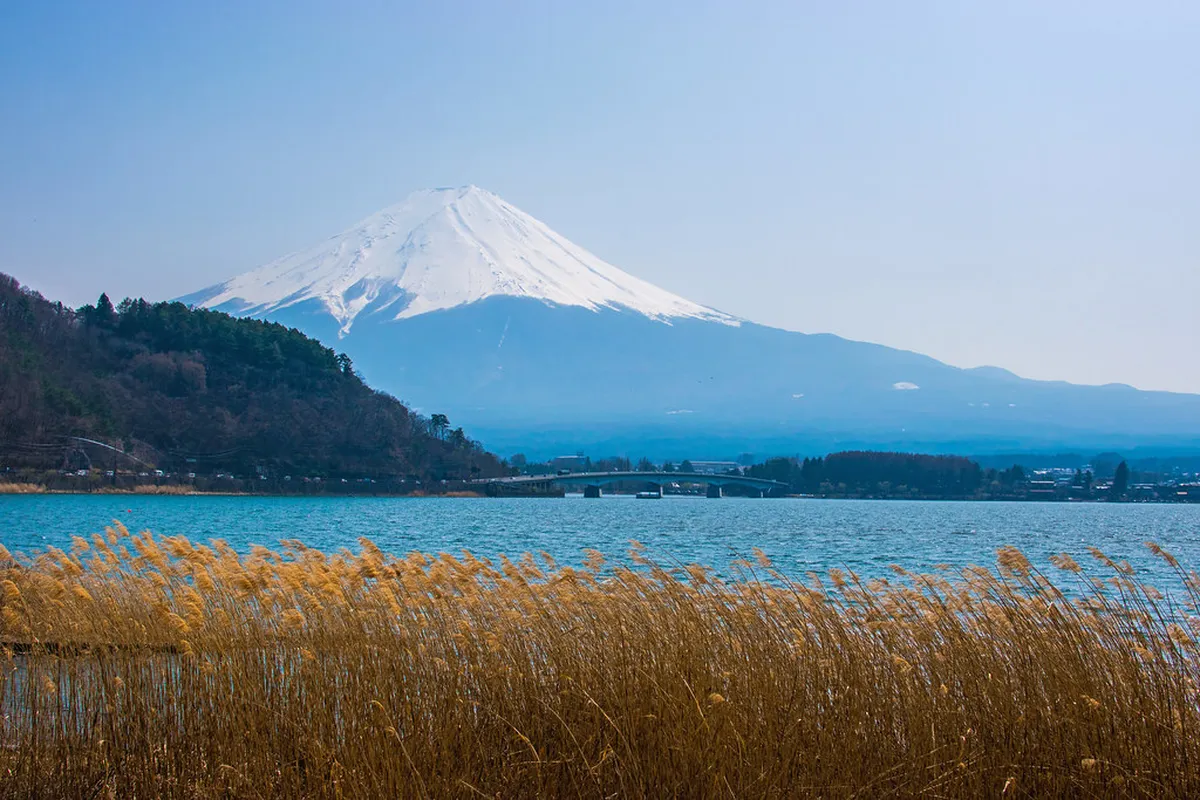
The Fuji Five Lakes area — locally called Fujigoko — gives you sustained, close-range views of Mount Fuji that Tokyo day-trips simply cannot match. On clear mornings the mountain's reflection doubles across the lake surface in a sight that justifies the journey on its own. That clarity is most consistent in winter and early spring, before summer haze builds.
Beyond photography, the region packs in a huge range of activities for a relatively compact area. You can ride one of the world's fastest roller coasters at Fuji-Q Highland, explore lava caves left by ancient eruptions, paddle kayaks on transparent water, and eat a bowl of Hoto noodles — a thick miso stew unique to Yamanashi prefecture — all within the same 2-day visit.
Spring cherry blossoms (late March to mid-April) and autumn foliage (late October to early November) are the headline seasons, but winter is arguably the best time for unobstructed Fuji views and far fewer crowds at major viewpoints. Summer draws large numbers of domestic tourists; expect busier buses and higher accommodation rates from July through August.
Best Time to Visit Fuji Five Lakes
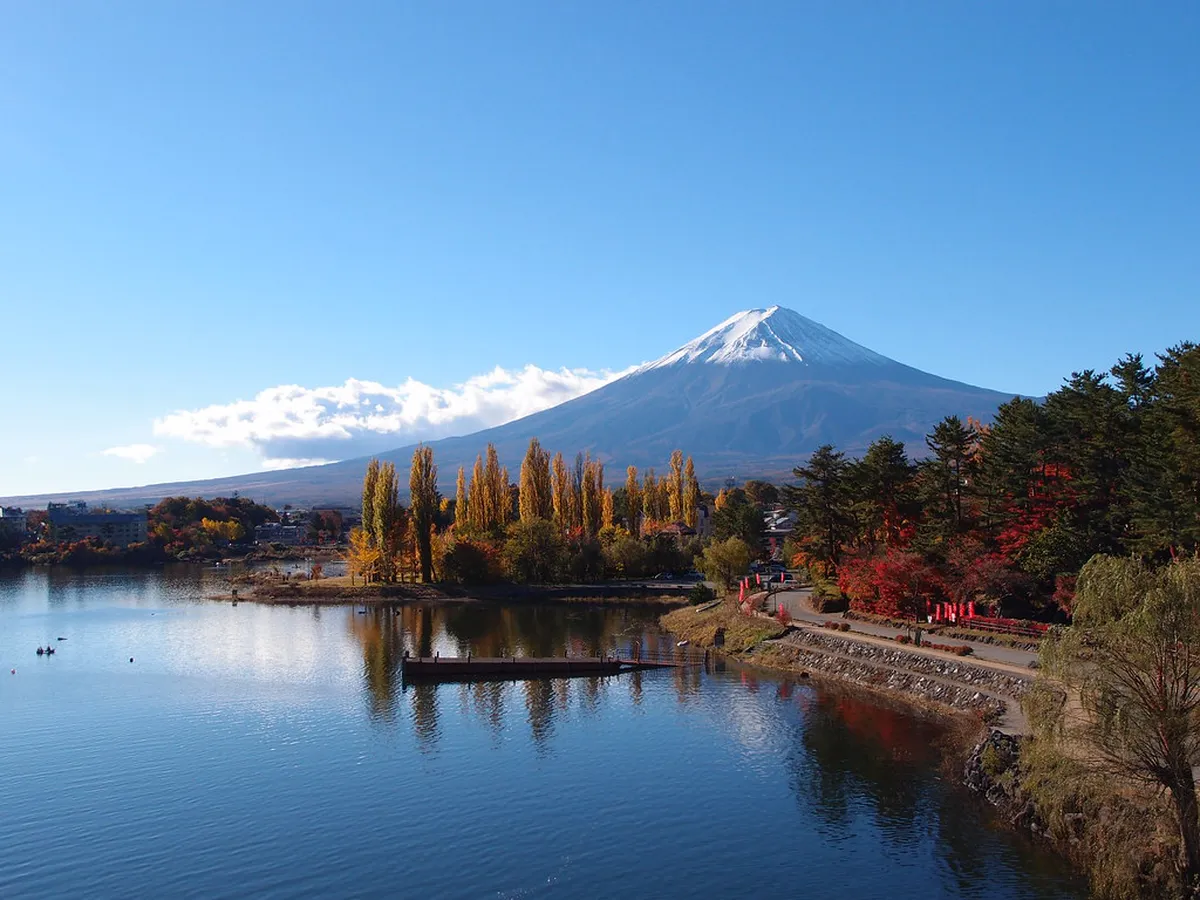
Each season offers a genuinely different experience, so the best time depends on what you prioritize. Spring (late March to early May) delivers the famous Kawaguchiko cherry blossoms, which peak around late March to early April. The Chureito Pagoda shot with blossoms and Fuji behind it is one of the most photographed scenes in Japan, which means weekend crowds can be intense — arrive at Arakurayama Sengen Park before 08:00 if you want the scene without hundreds of people in frame.
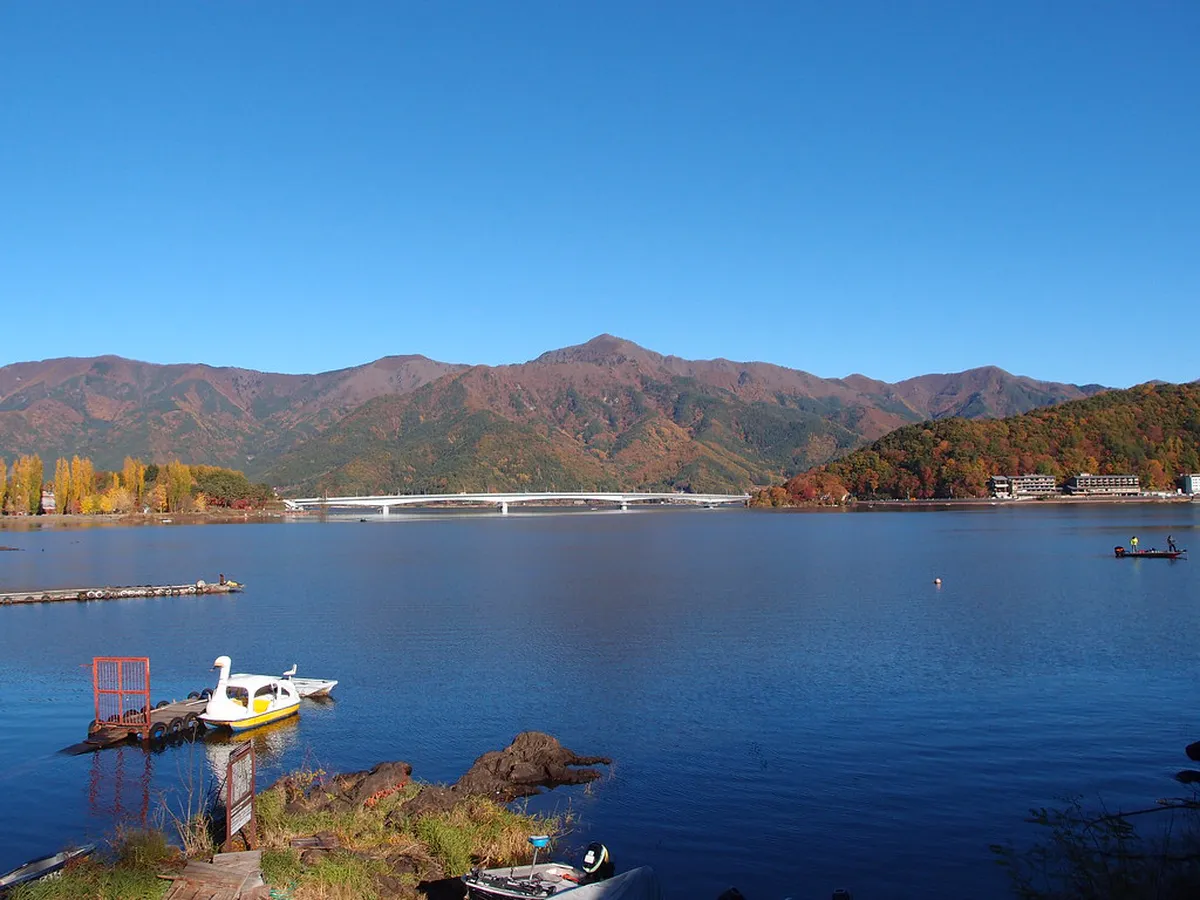
Autumn (mid-October to mid-November) turns the north shore of Kawaguchiko deep red and orange. The foliage at Kawaguchiko peaks roughly the first week of November. This is the most pleasant walking weather of the year. Winter (December to February) strips the trees but rewards with the sharpest Fuji silhouettes and significantly cheaper accommodation. The mountain is typically snow-capped from November through May.
- Spring (late March – early May): cherry blossoms, busy weekends, comfortable temperatures around 10–18°C.
- Summer (July – August): warm, green, good for water sports and Fuji-Q, but humid and crowded; Fuji climbing season open.
- Autumn (mid-October – mid-November): foliage peak, excellent hiking conditions, moderate crowds.
- Winter (December – February): clearest Fuji views, fewest tourists, cold (0–8°C), most accommodation on discount.
Getting to Fuji Five Lakes from Tokyo
The direct highway bus from Shinjuku Expressway Bus Terminal (south exit of Tokyo's Shinjuku Station) to Kawaguchiko Station is the standard route. Journey time is about 1 hour 45 minutes and the one-way fare is ¥2,000. Keio Bus and Fujikyu Bus both run this service; book online in advance on busy weekends as buses sell out. The bus drops you directly at Kawaguchiko Station, the transport hub for the entire region.
By train, take the JR Chuo Line Limited Express to Otsuki (about 1 hour from Tokyo's Shinjuku, covered by JR Pass), then transfer to the Fujikyu Railway Line to Kawaguchiko (about 50 minutes, ¥1,520, not covered by standard JR Pass). Total journey is roughly 2 hours. The Fujikyu railway itself runs alongside Fuji and offers good views on a clear day — sit on the right side facing direction of travel.
From Nagoya or Osaka, the easiest connection is bullet train to Mishima then limited express to Gotemba, followed by a direct Fujikyu bus to Kawaguchiko (about 50 minutes). This is slower than from Tokyo but saves backtracking if you are doing a multi-city trip.
Getting Around Within the Region
Lake Kawaguchiko has the best local bus coverage via the Kawaguchiko Retro Bus and Kawaguchiko Sightseeing Bus, which loop around the lake and stop at all major attractions. A 2-day unlimited pass costs ¥1,500 and pays for itself quickly. Buses run from around 09:00 to 17:30; frequency drops in winter, so check the latest timetables at Kawaguchiko Station before heading out.
For the western lakes — Saiko, Shojiko, and Motosuko — bus service is infrequent, especially outside peak season. Renting a car at Kawaguchiko Station gives you complete flexibility. Typical rental rates start around ¥6,000–¥8,000 per day for a small car including basic insurance. Roads are straightforward and signage is adequate in English. Parking at major sights is generally ¥500–¥1,000 per visit.
Cycling is a popular option around Kawaguchiko itself. Rental shops near the station charge roughly ¥800–¥1,500 per day for standard bikes and ¥1,500–¥3,000 for e-bikes. The flat northern shore of Kawaguchiko makes for an easy 20 km circuit that takes about 1.5 hours by e-bike. E-bikes handle the gentle hills near Kawaguchiko without difficulty.
Exploring Each of the Five Lakes
The five lakes have distinct personalities. Knowing what each is best for saves time and sets realistic expectations.
Lake Kawaguchiko is the most accessible and by far the most visited. It has the widest range of hotels, restaurants, and activities. The Kachi Kachi Ropeway (¥900 round trip, 09:00–17:20) lifts you above the north shore for a panoramic Fuji view. Chureito Pagoda above Fujiyoshida city, reachable by a 10-minute bus ride from Kawaguchiko Station plus a 400-step climb, is one of the classic Japan photographs. The Music Forest Museum (¥1,800, 09:30–17:00) is surprisingly worthwhile if you have a few hours spare.
Lake Yamanakako is the largest of the five by surface area and sits at the highest elevation (980 m). It faces the east flank of Fuji, giving a distinctive wide-angle silhouette. The lake is popular for water sports: windsurfing, stand-up paddleboarding, and kayaking rentals are all available from May to October. A small onsen strip on the western shore provides Fuji views from the outdoor baths. Accommodation here is cheaper than Kawaguchiko and transport to Oshino Hakkai takes only about 15 minutes by bus.
Lake Saiko means "West Lake" and lives up to a less-touristed character. Fuji views here are partly obscured by forested ridges, but the lake is the gateway to two worthwhile caves: Saiko Bat Cave (¥350, 09:00–17:00) and Narusawa Ice Cave (¥350, 09:00–17:00), both in the Aokigahara lava forest. Saiko Iyashi no Sato Nenba, a reconstructed thatched-roof village on the southwestern shore, frames Fuji behind traditional farmhouses — the composition is frequently compared to Shirakawa-go and is far less visited than Kawaguchiko's viewpoints. Opening hours are 09:00–17:00, entry ¥500.
Lake Shojiko is the smallest of the five and the quietest. The Eboshi-dake Panorama Platform on the southwestern ridge (reachable via a short hike from the lake road) frames Fuji with the lake in the foreground for a classic "inverted Fuji" reflection shot when conditions are still. Shojiko has limited accommodation but excellent camping grounds.
Lake Motosuko is the deepest lake at 121 m and has the clearest water. The view from the north shore is the one printed on the old ¥1,000 banknote — the precise composition frames Fuji between two ridgelines. Practically speaking, reaching Motosuko without a car is difficult, but the effort pays off for photographers. Moguran, a glass-bottomed sightseeing boat, gives an underwater perspective on the lake's unusual clarity.
Day-by-Day Itinerary: 3 Days at Fuji Five Lakes
This itinerary is built for first-time visitors using a combination of buses and one day of rental car for the western lakes. It keeps Kawaguchiko as a base throughout.
Day 1 — Kawaguchiko Core
- 08:30: Arrive from Tokyo by highway bus; check in or drop bags at hotel.
- 09:30: Kachi Kachi Ropeway for the morning Fuji view before haze builds (¥900 round trip).
- 12:00: Lunch near Kawaguchiko Station — Hoto noodles at Houtou Fudou (budget ¥1,200–¥1,800).
- 14:00: Retro Bus to Chureito Pagoda — climb the 400 steps and allow 90 minutes.
- 17:00: Retro Bus back along north shore, stop at Kawaguchiko lakefront for sunset.
- 19:00: Dinner and overnight at Kawaguchiko.
Day 2 — Oshino Hakkai and Yamanakako
- 09:30: Bus from Kawaguchiko Station to Oshino Hakkai (~30 minutes). Entry is free; the eight spring ponds and traditional buildings take about 1.5 hours. Arrive by 10:00 to beat tour groups.
- 12:00: Bus or taxi to Lake Yamanakako (~15 minutes from Oshino Hakkai).
- 13:00: Kayak or paddleboard rental on Yamanakako (¥1,500–¥2,500 for 1–2 hours, May–October).
- 16:00: Return to Kawaguchiko by bus. Optional evening stop at one of the lakefront onsen for ¥700–¥1,200.
- 19:00: Hoto noodles or yakiniku dinner; overnight Kawaguchiko.
Day 3 — Western Lakes by Rental Car
- 08:00: Pick up rental car at Kawaguchiko Station.
- 09:00: Saiko Bat Cave and Narusawa Ice Cave (each ¥350, allow 45 minutes combined).
- 10:30: Saiko Iyashi no Sato Nenba thatched village (¥500, allow 1 hour).
- 12:30: Drive to Lake Shojiko (20 minutes). Lunch at a lakeside restaurant or picnic.
- 14:00: Continue to Lake Motosuko north shore for the banknote viewpoint photo.
- 16:00: Drive back to Kawaguchiko Station; return car.
- 17:30: Highway bus or train back to Tokyo.
Top Attractions and Activities
Fuji-Q Highland sits directly at the base of Mount Fuji and is one of the most intense amusement parks in Asia. The park holds several Guinness records for speed and steepness. Day tickets cost ¥6,800–¥8,000 in 2026; book online to avoid queues. Rides are the focus, but even non-riders come for the Fuji backdrop from inside the park. The park is open from 09:00 to 17:00 on weekdays, with extended hours on weekends.
The Aokigahara Forest — also known as the Sea of Trees — covers the northwestern flank of Fuji. Much of the forest sits on hardened lava from a 10th-century eruption. Three cave systems in or near Aokigahara are accessible without special equipment: Fugaku Wind Cave (¥350), Narusawa Ice Cave (¥350), and Saiko Bat Cave (¥350). All three are cool year-round (the ice cave stays below 0°C) and can be combined into a single morning. Guided walks into the deeper forest are offered by local operators and last 2–3 hours.
The Lake Kawaguchiko Sightseeing Cruise runs hourly swan-boat style vessels across the lake. A single crossing takes 20 minutes and costs ¥900–¥1,000. The morning crossing gives cleaner light for Fuji photographs than the afternoon. Arrive at the pier (near Kawaguchiko Station, east end of the lake) 15 minutes before departure; tickets are sold at the pier and don't usually require advance booking except on peak spring weekends.
The Motosuko North Shore: Japan's Famous Banknote View
Most visitors to the Fuji Five Lakes never make it to Motosuko, and most guides give it only a passing mention. This is a mistake. The north shore viewpoint at Motosuko is the precise angle that appeared on the old ¥1,000 banknote for decades — Fuji framed exactly between two forested ridges with the lake's transparent surface in the foreground. There is a small lakeside parking area and a wooden viewing platform with no entry fee.
The best light arrives in the hour after sunrise, typically between 05:30 and 07:00 from October through March. At that hour you will usually find only a handful of photographers. By 09:00 on weekends in peak seasons a small crowd gathers, but the site never reaches the density of Kawaguchiko's north shore or Chureito Pagoda. From April to May, tulip fields are planted along the nearby shore road — the pink and purple blooms add colour to the Fuji frame and are worth the detour specifically during that window. Motosuko is about 45 minutes by car from Kawaguchiko; budget an early start if you want it in combination with the rest of Day 3.
Where to Stay
Kawaguchiko is the most practical base for a first visit. It has the widest range of hotels, ryokans, and guesthouses, plus the best restaurant and transport access. Lake-view rooms at mid-range ryokans typically cost ¥15,000–¥30,000 per person per night including dinner and breakfast. Budget guesthouses start around ¥4,000–¥7,000 per person. Prices jump significantly during cherry blossom and autumn foliage peak weekends — book 4–6 weeks ahead for those dates.
Yamanakako is a quieter alternative, particularly for couples or anyone who wants a less commercial atmosphere. A cluster of resort hotels and onsen lodges sits on the western shore with Fuji views. Rates are usually 10–20% cheaper than Kawaguchiko equivalents. The trade-off is fewer dining options within walking distance and less frequent bus connections to the western caves.
Camping at Saiko or Shojiko is popular with domestic travelers from spring through autumn. Sites with direct lake access cost roughly ¥1,000–¥2,000 per person per night. Both lakes have designated camping grounds with basic facilities. A tent stay at Shojiko or Saiko, away from the Kawaguchiko crowds, gives a markedly different experience — quieter, darker skies, and more direct contact with the forested landscape. See the Mount Fuji region guide for broader accommodation planning including Fujiyoshida city as a budget base.
Essential Planning Tips
Mount Fuji is only visible on clear days, and cloud cover is common from June through August. There is no way to guarantee a view. The Japanese Meteorological Agency publishes daily Fuji visibility forecasts; checking these the night before helps you prioritise which activities make sense when Fuji is hidden versus when it is clear.
- Book highway bus tickets at least 2–3 days ahead for weekend travel. Use the Keio or Fujikyu online booking portals; English interfaces are available.
- The Fujikyuko Retro Bus day pass (¥1,500) covers the main Kawaguchiko sights. Buy it at Kawaguchiko Station kiosk on arrival.
- Fuji-Q Highland requires a separate day — its queues eat a full morning even with a timed entry ticket. Don't combine it with cave visits on the same day.
- Oshino Hakkai is free to enter but the surrounding craft shops and food stalls open at 09:00. Arrive by 10:00 to beat tour buses, which typically arrive from 10:30 onward.
- A Suica or Pasmo IC card works on local buses; load ¥3,000–¥5,000 before leaving Tokyo to avoid queuing at Kawaguchiko Station machines.
- Onsen facilities in the area are widespread. Most day-use baths charge ¥700–¥1,500. Towel rentals are usually available for ¥200–¥300. There are no strict tattoo rules at the outdoor public-bath parks (Fuji Kawaguchiko Onsen has a relaxed policy), though individual ryokan baths may differ.
The Mount Fuji day trip guide covers the one-day version of this trip for travelers with limited time, including which viewpoints are reachable on a single-day highway bus ticket before the last return service at around 19:30.
Frequently Asked Questions
Which Fuji Five Lakes options fit first-time visitors?
First-time visitors should focus on Lake Kawaguchiko due to its accessibility and iconic views. It offers a wide range of activities and accommodation. Consider a visit to Oshino Hakkai for cultural immersion.
How much time should you plan for Fuji Five Lakes?
A 2 to 3-day trip is ideal for first-time visitors to the Fuji Five Lakes. This allows enough time to explore Lake Kawaguchiko and visit at least one other lake. A single day trip is possible but very rushed.
How do I get to Fuji Five Lakes from Tokyo?
The easiest way to reach Fuji Five Lakes from Tokyo is by direct highway bus from Shinjuku Expressway Bus Terminal. The journey takes about two hours. Alternatively, take a train to Otsuki, then transfer to the Fujikyu Railway Line.
When is the best time to visit Fuji Five Lakes?
Spring (April-May) for cherry blossoms and autumn (October-November) for fall foliage offer stunning scenery. Summer provides warmer weather for outdoor activities, while winter offers clear views of Mount Fuji. I find shoulder seasons best for fewer crowds.
The Fuji Five Lakes region rewards visitors who go beyond Lake Kawaguchiko and explore the quieter western lakes. With three days and one day of rental car, you can cover all five lakes, stand at the spot printed on the ¥1,000 banknote, walk through a lava cave, and still spend an evening soaking in an onsen with Fuji in view. Plan around clear weather days for the mountain views and save rainy days for Fuji-Q Highland or the caves.
Use the best views of Mount Fuji guide alongside this itinerary to prioritise which viewpoints match your photography goals and available time.
Free: The Kawaguchiko Essentials guide
Top things to do, where to stay, a perfect day plan, getting around, and the best time to go — a Kawaguchiko mini-guide you can take offline.
You might also like

Continue reading
More guides you'll find useful