

How to Climb Mount Fuji: The Ultimate Guide & Tips for 2026
Plan your Mount Fuji climb with our ultimate guide. Get tips on trails, preparation, gear, and what to expect for a safe and memorable ascent.
On this page
Climbing Mount Fuji is one of Japan's most iconic experiences. At 3,776 metres, Japan's highest peak draws around 300,000 climbers every summer — and for good reason. The view from the crater rim at sunrise, known as goraikō, is genuinely unforgettable. Getting there, however, requires more planning and physical effort than most first-timers expect.
This guide covers the four trails, mountain huts, gear, altitude, descent, and the 2026 regulations that every climber needs to know before setting foot on the mountain. The official climbing season runs from early July to early September. Outside those months, the mountain is a different beast entirely.
What Everyone Gets Wrong About Climbing Mount Fuji
Most people who search "how to climb Mount Fuji" imagine technical mountaineering. It isn't. From any of the four 5th Stations, the journey is a high-altitude hike on well-maintained volcanic paths. No ropes, no harnesses, no specialist skills. The challenge is sustained elevation gain, thin air, and unpredictable weather — not vertical rock faces.
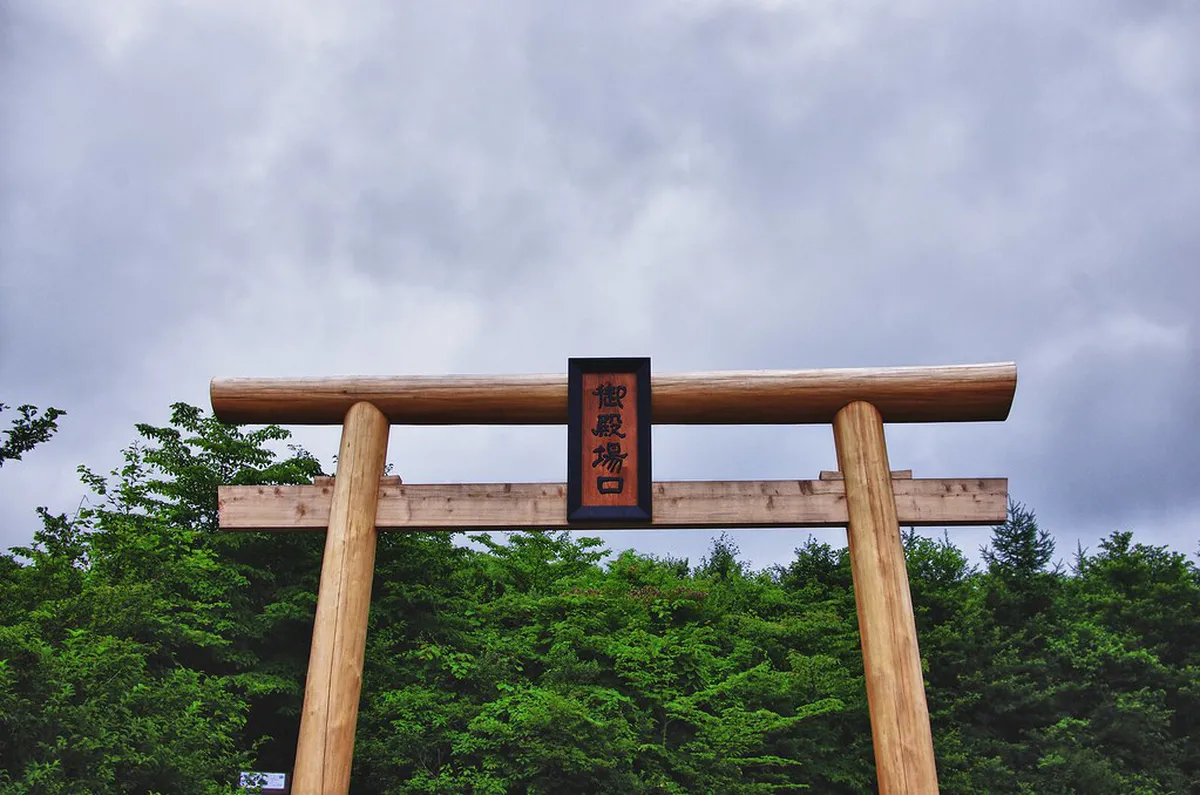
That said, don't assume it's a walk. Altitude above 3,000 metres genuinely affects breathing and energy regardless of your everyday fitness. The reality sits squarely in between extreme challenge and casual stroll: achievable with preparation, punishing without it. For a broader picture of the region, the Mount Fuji area guide covers viewpoints, lake towns, and logistics around the mountain.
The Four Trails: Which One to Take
Four trails lead to the summit, each starting from a different 5th Station. Your choice affects crowding, total distance, gradient, and how many mountain huts you can use for shelter and rest.
The Yoshida Trail (Fuji-Subaru Line 5th Station, 2,305 m) is by far the most popular route, with the most mountain huts, two first-aid stations, and frequent bus connections from Kawaguchiko Station. It also has separate ascending and descending paths, which keeps traffic flowing. The downside is crowds — summit queues during peak season can add an hour to your final push.
The Fujinomiya Trail (Fujinomiya 5th Station, 2,400 m) is the shortest route but the steepest. It shares a summit with the Yoshida Trail and is the second most popular. Buses run from JR Fujinomiya and Shin-Fuji stations. Good choice if you want fewer kilometres underfoot; less ideal if you find steep grades brutal on the knees.
The Subashiri and Gotemba trails are significantly quieter and suit more experienced hikers. Gotemba starts lowest (1,440 m) and has the most elevation gain of any route — around 2,300 metres to the summit. Its soft volcanic sand on the descent is genuinely enjoyable but legs must be willing. Subashiri merges with the Yoshida Trail above the 8th Station, so you get solitude on the way up and company near the top.
For most first-timers, the Yoshida Trail is the sensible default. If crowds genuinely bother you, consider ascending via Subashiri and descending on the Yoshida trail's sand road.
Best Time to Climb Mount Fuji — and Off-Season Realities
The official season runs from early July to early September. During this window, mountain huts are staffed, toilets are maintained, first-aid stations are active, and bus services run directly to the 5th Stations. The trails are snow-free and conditions — while always variable — are as good as they get.
Mid-July to mid-August is the busiest stretch. Weekends and the Obon holiday week (second week of August) bring the heaviest crowds on the Yoshida Trail. A weekday climb in late July or very early August balances good conditions with manageable numbers. Early September is quieter, but huts begin closing progressively through the month.
Off-season climbing — October through June — is a fundamentally different activity. Most huts are closed: no shelter, no food, no water resupply. By winter the summit hits -20 to -30°C with wind chills near -50°C; wind speeds are comparable to 8,000-metre peaks. Crampons, ice axes, and a rescue form submitted to the local police are required for late-autumn and winter attempts. Unless you have genuine alpine experience, do not attempt Fuji outside the official season.
What to Bring: Gear and Packing List
Weather on Fuji can shift from sunny to hail in under an hour. Even on a forecast-clear day in August, the summit can sit below freezing with a wind chill of -10°C. Pack for the worst and you'll be comfortable in the best.
The essentials: waterproof hiking boots broken in before the climb (fresh boots cause blisters on rocky descents), a three-layer system (moisture-wicking base, insulating mid-layer, waterproof shell), full rain trousers, warm hat and gloves, and a headlamp with spare batteries. For a sunrise summit you will be climbing in darkness from around 01:00–02:00, so the headlamp is non-negotiable.
Trekking poles are worth carrying even if you rarely use them elsewhere. The descent — loose volcanic rock and steep gradient for 2–3 hours — is where poles prevent knee damage and falls. Huts rent them for roughly ¥1,000 per day. Canned oxygen (¥500 in town, ¥1,500 on the mountain) is not strictly necessary for everyone but is a sensible backup above 3,500 metres. Do not rely on it as a substitute for acclimatization — it provides short-term relief, not a cure.
- Waterproof hiking boots, broken in beforehand
- Three-layer clothing system (base, fleece, shell) plus spare warm layer
- Full waterproof trousers and rain jacket
- Warm hat, gloves, neck gaiter
- Headlamp and spare batteries
- Trekking poles (or rent on-mountain)
- 20–30L pack, hydration bladder or 2+ litres of water
- High-calorie snacks: nuts, energy bars, chocolate
- First-aid kit including blister plasters and pain relief
- Sunscreen and sunglasses — UV intensity at altitude is high and back-of-hand sunburn is a common mistake
- Yen cash for hut fees, toilet donations (¥100–200), and on-mountain purchases
- Canned oxygen as backup (buy in advance at lower cost)
Physical Preparation: Honest Fitness Assessment
Most people discover they are simultaneously fitter than expected and less fit than they thought. The sustained ascent — six-plus hours of climbing uneven, rocky steps — uses muscles differently from running or gym work. You can feel strong at the 7th Station and hit a wall at the 8th.
In the two to three months before your climb, focus on stair climbing, hill walking, and carrying a loaded pack. Running builds cardiovascular base but not the specific leg endurance for elevation gain. A useful benchmark: a two-hour hilly hike with 5–7 kg on your back, completed without needing to stop. If that feels manageable, a two-day Fuji itinerary is within reach. One-day summit attempts demand significantly more. Age is less of a barrier than people assume — children and adults in their seventies complete the climb regularly. The climbers who suffer most are those who trained for a sprint and found a marathon.
Weather and Altitude Sickness
Even with a favourable forecast, Fuji generates its own microclimate. Clear skies at the 5th Station can become cloud, rain, or hail within an hour above the 7th. Wind gusts near the summit have been recorded strong enough to knock climbers off their feet. Treat any weather forecast as a rough guide, not a guarantee, and pack full rain gear regardless.
Altitude sickness (AMS) typically begins above 2,500 metres. Symptoms include headache, nausea, dizziness, and shortness of breath. It does not discriminate by age or fitness — young athletes can suffer as badly as sedentary older climbers. The single most effective prevention is pace: ascend slowly, take real breaks, drink water consistently. Aim for the 8th Station in 4–5 hours rather than 3, even if your body feels capable of faster.
If symptoms worsen after a rest, descend. Do not push through deteriorating AMS — it can escalate to HACE or HAPE, both life-threatening conditions. Canned oxygen provides short-term relief but does not treat AMS; altitude reduction is the only effective remedy.
Mountain Huts: What to Expect and How to Book
Mountain huts serve two purposes: acclimatization stops during the ascent and a base for the pre-dawn summit push. Most climbers aim to reach an 8th Station hut by around 20:00, sleep briefly, then depart at 01:00–02:00 to arrive at the crater rim for sunrise (around 04:30 in summer).
Accommodation is dormitory-style: futons laid side by side, limited privacy, earplugs strongly advised. Some huts provide sleeping bags; others supply blankets. Simple hot meals — curry, ramen, miso soup — are available. Expect to pay ¥8,000–¥12,000 per person for a bunk with dinner and breakfast. Water costs around ¥500 per bottle on the mountain; buying extra at the 5th Station before you ascend is advisable.
Bookings open from 1 April each year for the coming season. Popular 8th Station huts fill within days of opening, especially for weekend dates. Book as early as possible — walk-ins during peak season are rarely possible. Many huts offer online booking with English interfaces; guided tour operators handle booking as part of the package. Note that under 2026 regulations, only climbers with a confirmed hut reservation can pass the Yoshida Trail gate after 16:00.
The Ascent: What to Expect on the Mountain
The climb begins in earnest above the 5th Station. The lower sections are well-trodden paths with good signage in English and Japanese. Above the 7th Station, the terrain becomes rockier, the gradient steepens, and the air noticeably thins. Pace slows for almost everyone here, regardless of how strong they felt lower down.
For the pre-dawn summit push, you will join a line of headlamps winding up from around 01:00. Progress is dictated by the group in front. Resist the urge to overtake — rushing accelerates AMS. The final 100 metres to the crater rim are the steepest and slowest of the entire climb.
Sunrise from the summit — goraikō — is worth every slow step. The light spreads across the clouds in shades of red, orange, and gold. After sunrise, walk the crater rim (about an hour for the full circuit) and visit Kengamine peak at 3,776 m on the northeastern rim — the true summit, marked by a weather station.
Descending Fuji: The Part Most Guides Underplay
The descent is harder on your body than the ascent, even though it is faster. The Yoshida Trail has a dedicated descent path separate from the ascending route. The terrain is loose volcanic gravel and cinders, which absorbs impact but also pushes feet forward into the toe-box of your boots. Ill-fitting or unlaced boots cause serious blisters and black toenails on the way down — a problem that ruins the post-climb day more effectively than the climb itself.
Trekking poles are arguably more important on the descent than the ascent. They shift load away from the knees on steep, uneven terrain. Descend at a controlled pace — the Gotemba trail's "sand run" is satisfying if your ankles are stable, but on the Yoshida descent, deliberate steps serve you better. Allow 2–3 hours from summit to 5th Station, and stay attentive through the lower sections where most slips and ankle rolls actually happen.
Guided Tours, Group Climbs, and Going Solo
Solo climbing on the Yoshida or Fujinomiya trail during the official season is straightforward. The trails are well-signed in English, huts are staffed, and first-aid stations operate. Most independent climbers find the experience more rewarding than a guided tour — you set your own pace and stop when you want. The key preparation steps (hut booking, transport, gear) are all manageable without a guide.
Guided group tours suit first-timers who want logistics handled for them, or those who feel uncertain about altitude sickness or navigation. A two-day guided tour from Tokyo including transport, hut accommodation, and two meals typically runs ¥30,000–¥60,000 per person. Private guided tours cost more — often ¥80,000–¥150,000 — but allow full flexibility on pace, timing, and trail choice. Off-season climbs essentially require a guide with proper alpine credentials.
Going solo (as opposed to booking independently as a solo traveller) carries specific considerations. You will not have a partner to monitor for AMS symptoms or help if you roll an ankle. Carry a fully charged phone, share your itinerary with someone at home, and fix your turnaround criteria before you start — a clear rule ("I descend at any Station if a headache doesn't ease after 30 minutes of rest") is far more useful than relying on willpower at altitude. Solo climbers are common on Fuji; the well-staffed trails in peak season mean you are never truly isolated.
2026 Regulations: Fees, Gates, and Climbing Limits
In response to overcrowding and safety incidents, Yamanashi Prefecture introduced firm restrictions on the Yoshida Trail starting in 2024, which remain in effect for 2026. A mandatory fee of ¥2,000 is charged per climber at the 5th Station gate. Daily climber numbers on the Yoshida Trail are capped at 4,000. When the daily limit is reached, the gate closes for the remainder of the day.
A trail gate on the Yoshida route is closed between 16:00 and 03:00 for climbers who do not hold a confirmed mountain hut reservation. This gate is specifically designed to prevent "bullet climbing" — ascending and descending in a single overnight push without acclimatization, which was the primary cause of altitude-sickness emergencies. If you plan to summit for sunrise, you must book a hut. There is no workaround.
Beyond fees, responsible climbing means carrying out all rubbish, using designated toilet facilities (¥100–200 per use), staying on marked trails, and not picking up volcanic rocks or plants. These are not just requests — rangers on the mountain enforce compliance. Check the official Fujisan climbing website before your trip for any regulation updates ahead of the 2026 season opening.
The Fuji Five Lakes area, accessed easily from the 5th Station bus terminals, makes an ideal base for the night before and after your climb. For options and logistics, see the Fuji Five Lakes guide.
Common Questions Answered Directly
Can a beginner climb Mount Fuji? Yes — the Yoshida Trail is built for it. The majority of the 300,000 annual climbers have no prior mountaineering experience. The prerequisite is honest physical preparation over several weeks, not technical skill.
Can you climb in one day? Technically yes via the Fujinomiya Trail, but it is not recommended. A single-day ascent skips the acclimatization benefit of the hut stop and increases AMS risk significantly. It also means arriving at the summit in the afternoon and descending in fading daylight.
What does it cost overall? Budget roughly ¥2,000 trail fee + ¥500–1,000 bus + ¥8,000–12,000 hut with meals + ¥1,000–2,000 food and water on the mountain. A self-guided two-day climb from Tokyo runs around ¥15,000–20,000 in mountain expenses. See the Mount Fuji day trip guide for transport logistics from Tokyo.
The Japanese proverb sums up the experience: "He who climbs Mount Fuji once is a wise man; he who climbs twice is a fool." The summit scenery is red-brown volcanic gravel with little vegetation — the mountain's beauty really is best seen from below. Most people who climb Fuji agree with this proverb immediately afterwards and disagree with it the moment they see a clear sunrise photo from the crater rim.
Frequently Asked Questions
How long does it take to climb Mount Fuji?
A typical 2-day climb takes 5-7 hours to ascend to a mountain hut and another 2-4 hours to reach the summit for sunrise. The descent usually takes 3-5 hours, depending on the trail and your pace.
Can a beginner climb Mount Fuji?
Yes, beginners with good physical fitness can climb Mount Fuji, especially via the Yoshida Trail. Proper preparation, including training and appropriate gear, is essential for a safe and enjoyable experience.
Is Mount Fuji hard to climb?
Mount Fuji is physically demanding due to its sustained ascent and high altitude, not technical difficulty. It requires endurance and mental fortitude. Many find it challenging but achievable with preparation.
What is the best month to climb Mount Fuji?
July and August are the best months, as they fall within the official climbing season. The weather is generally milder, and all mountain facilities are open. Early September is also an option, but huts begin closing.
Do I need a guide to climb Mount Fuji?
No, a guide is not strictly necessary for climbing Mount Fuji during the official season. The trails are well-marked and maintained. However, guided tours can offer convenience, safety, and cultural insights.
Climbing Mount Fuji rewards preparation and punishes overconfidence. Get the hut booked early, train specifically for elevation gain, pack for cold and wet, and ascend slowly. The sunrise from the crater rim is one of those experiences that justifies every slow, breathless step. Plan ahead, respect the 2026 regulations, and you'll stand at Japan's highest point with a clear head and strong legs.
Free guide: Japan's Hidden Gems
12 under-the-radar places beyond Tokyo & Kyoto — with the best season to visit each and a local tip you won't find in the guidebooks.
You might also like


Continue reading
More guides you'll find useful


