
Best Time to Visit Kawaguchiko: Seasonal Guide & Mt. Fuji Views
Discover the best time to visit Kawaguchiko for stunning Mt. Fuji views, cherry blossoms, autumn leaves, and winter magic. Plan your perfect trip with our seasonal guide.
On this page
Kawaguchiko sits on the northern shore of Mount Fuji, roughly 100 km from Tokyo, and every season brings a completely different reason to visit. Winter delivers the clearest, unobstructed Fuji views of the year. Spring frames the mountain behind cherry blossom clouds. Autumn ignites the lakeside maple corridor with fire-red foliage. Summer turns Oishi Park into a sea of lavender. There is no objectively bad season — but your priorities around crowds, weather, and which visual payoff you want will determine the right window for you. This guide covers each season in depth, explains month-by-month Fuji visibility, and tells you how to get there and what to do once you arrive.
Understanding Kawaguchiko's Seasons: An Overview
Kawaguchiko's altitude — around 830 m above sea level — keeps it cooler than central Tokyo in every season. Winters are cold and dry, which is exactly why they produce the clearest skies. Summers are warm but significantly less humid than Tokyo, and the rainy season (tsuyu) from mid-June to mid-July brings frequent overcast days. Typhoon season runs through September, which can compromise visibility mid-autumn. The two most popular windows are cherry blossom season in late March to mid-April and autumn foliage in late October to early November, and both bring substantial crowds and higher accommodation prices.
The table below gives a quick read on what to expect across the four seasons. Use it as a triage tool before reading the detailed seasonal breakdowns.
| Season | Months | Avg. Temp | Fuji Visibility | Crowds | Prices | Standout Event |
|---|---|---|---|---|---|---|
| Winter | Dec–Feb | 0–7°C | Highest (20–27 clear days/month in Dec–Jan) | Low (except New Year) | Low–Moderate | Winter illuminations |
| Spring | Mar–May | 5–20°C | Moderate (50% chance in March, declining to 25% in April) | High at peak blossom | High at peak | Cherry Blossom Festival, Shibazakura (mid-Apr to late May) |
| Summer | Jun–Aug | 20–30°C | Low (4–9 clear days/month) | High | Highest | Lavender bloom at Oishi Park (mid-June), Fuji climbing season |
| Autumn | Sep–Nov | 10–20°C | Good from October (12+ clear days) | High at peak foliage | High at peak | Kawaguchiko Festival of Colored Leaves (late Oct–early Nov) |
Mt. Fuji Visibility by Month
Mount Fuji is visible on roughly 100 days per year in total. The data below, drawn from official Yamanashi meteorological records, shows how many fully clear days each month typically delivers. December and January stand apart — you can expect around 20 to 27 days of unobstructed full-mountain views. February drops slightly to around 13 fully clear days but is still excellent. The rainy season tanks visibility from June through August, and August is statistically the worst month of the year: fewer than 6 fully clear days, with the peak hidden entirely on 55% of days. For deeper climate analysis, the Japan Meteorological Agency publishes regional precipitation and visibility datasets.
| Month | Full Visibility Days | Partial Visibility Days | Hidden Days |
|---|---|---|---|
| December | 27 | 3 | 1 |
| January | 23 | 4 | 4 |
| February | 13 | 6 | 10 |
| March | 15 | 7 | 9 |
| April | 8 | 11 | 11 |
| May | 13 | 6 | 12 |
| June | 5 | 10 | 15 |
| July | 9 | 7 | 15 |
| August | 4 | 10 | 17 |
| September | 10 | 10 | 10 |
| October | 12 | 12 | 7 |
| November | 11 | 12 | 7 |
Visibility tends to peak in the early morning. The window between 06:00 and 08:00 gives the best chance of an unobstructed view, before thermal activity builds clouds against the upper slopes by mid-morning. On many days, the summit begins disappearing behind cloud after 09:30. If you arrive at Oishi Park or the Kawaguchiko lakefront at 07:00, you will almost always have a cleaner view than someone arriving at 10:00 even on the same day.
Winter (December – February): Best for Clear Mt. Fuji Views
Winter is the photographer's season. December and January deliver the highest number of clear days in the calendar year, and the snow cap on Fuji is at its most dramatic. Temperatures in Kawaguchiko drop to 0–7°C, with sub-zero mornings common. The lake can partially freeze in January. Crowds are low except around the New Year period (28 December to 4 January), when domestic tourists flock in significant numbers and accommodation fills up fast.
Winter illumination events run at several lakeside locations from November through February, including light-up shows at the Kawaguchiko Music Forest Museum and around the northern shore. These evening events draw some visitors but the crowds are nothing like cherry blossom or autumn season. Accommodation prices are at their annual low outside New Year, which makes winter the best value window. Book a room with a Fuji-facing window and you can photograph the mountain from your futon at dawn.
If you plan to visit in winter, layer heavily. Thermal base layers, a mid-layer fleece, and a wind-proof outer coat are essential for early-morning lakeside photography sessions. Hand warmers are worth carrying. Heating at onsen (hot spring) hotels provides an excellent counterpoint to the cold — a soak at dusk with Fuji visible through steam is one of the signature winter experiences in this part of Yamanashi.
Spring (March – May): Cherry Blossoms and the Shibazakura Festival
Spring brings two distinct floral peaks to Kawaguchiko. The first is the cherry blossom season, which typically runs from late March to mid-April depending on the year. The most iconic viewing spot is Chureito Pagoda, a 15-minute train ride to Shimoyoshida Station and a 400-step climb above the town. The image of cherry blossoms cascading below the five-storey pagoda with Fuji behind it is among the most-reproduced photographs of Japan. Oishi Park also lines up blossom against the lake and mountain without the hike. Both spots see intense weekend crowds at peak bloom — plan for weekday visits or pre-dawn arrivals if you want a manageable scene. Japan's official travel guide tracks real-time blossom forecasts across all major regions.
The second spring highlight is the Fuji Shibazakura Festival, which runs from mid-April to late May at the base of Mount Fuji near Lake Motosuko. Over 800,000 moss phlox plants (shibazakura) form a pink-and-white carpet directly below the mountain. The site is about 40 minutes from Kawaguchiko Station by shuttle bus (around ¥1,700 round trip). This festival overlaps almost entirely with the Fuji climbing season prep period, so the area is busy but the Shibazakura site itself is distinct from the lake area crowds.
Fuji visibility in spring is moderate. March offers roughly a 50% chance of a clear full view, dropping to about 25% in April as humidity rises ahead of the rainy season. May recovers slightly to around 40%. Book accommodation two to three months in advance for peak cherry blossom weekends. Prices spike sharply during this window — a mid-range lakeside hotel that costs ¥15,000 per night in February may run ¥30,000 or more in early April.
Summer (June – August): Lavender, Fuji Climbing, and Lush Green Scenery
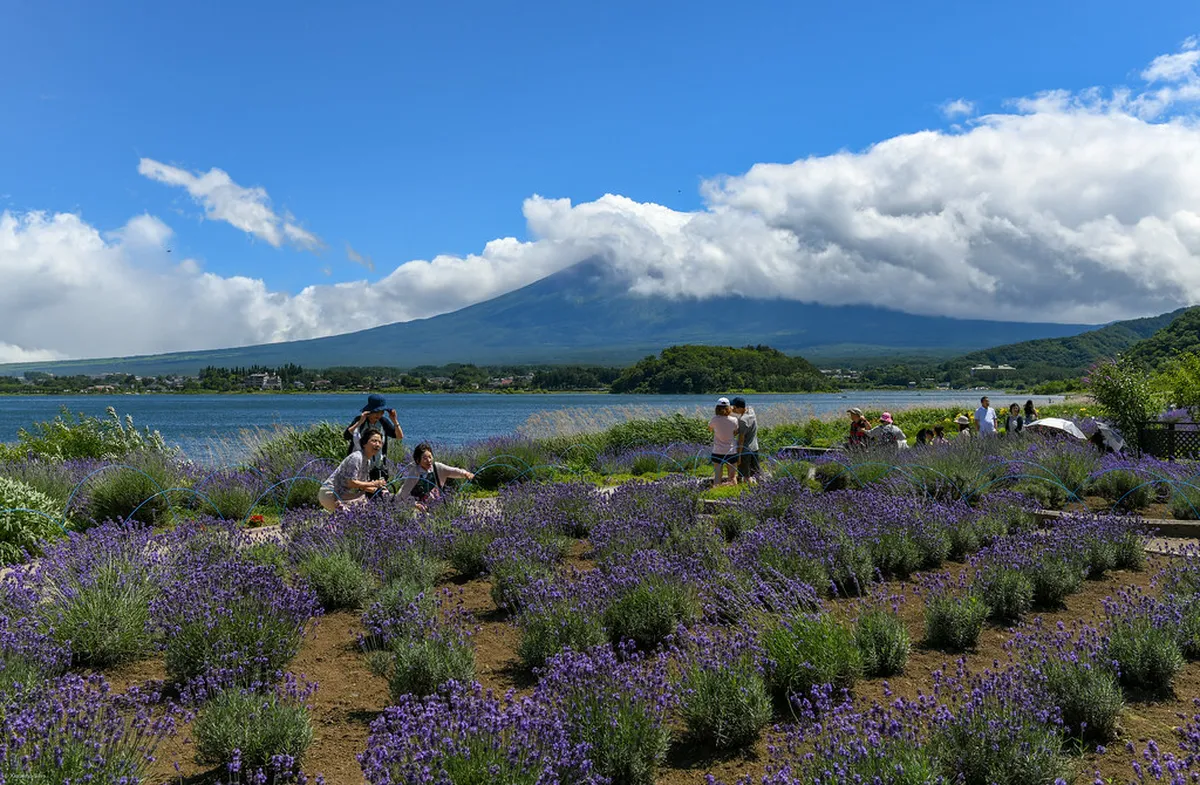
Summer is the worst season for Fuji visibility but not for Kawaguchiko as a destination. The rainy season (tsuyu) from mid-June to mid-July brings overcast skies and frequent rain, which obscures the summit on the majority of days. August improves slightly but humidity is high and the mountain remains elusive. Manage expectations accordingly: summer visits are for the experience of the lake, not the guarantee of a Fuji view.
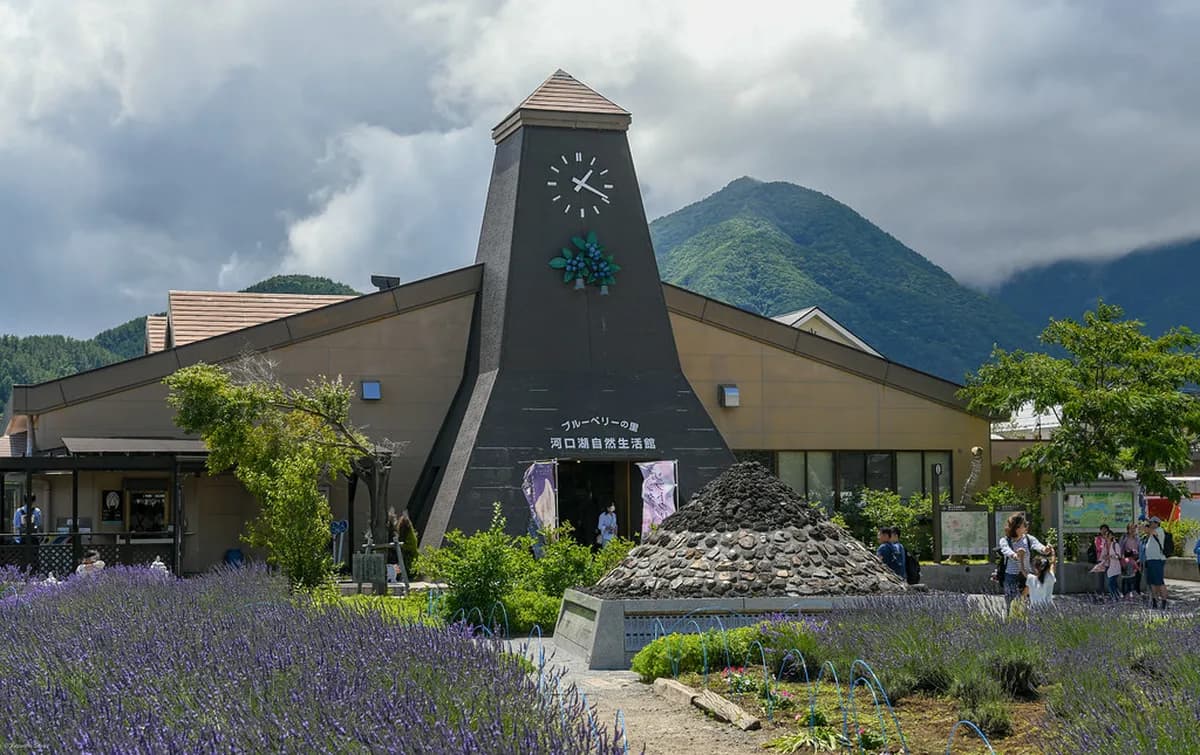
The compensating reward is Oishi Park's lavender bloom, which peaks in mid-June. The purple fields running down to the lake's edge with Fuji visible on clear mornings make for exceptional photographs when the weather cooperates. The Kawaguchiko Herb Festival runs in parallel and includes craft stalls, lavender-scented goods, and evening events along the northern shore. From July to mid-August, blueberry and other fruit picking is available at farms near the Kawaguchiko Natural Living Center — the center can help organize farm visits.
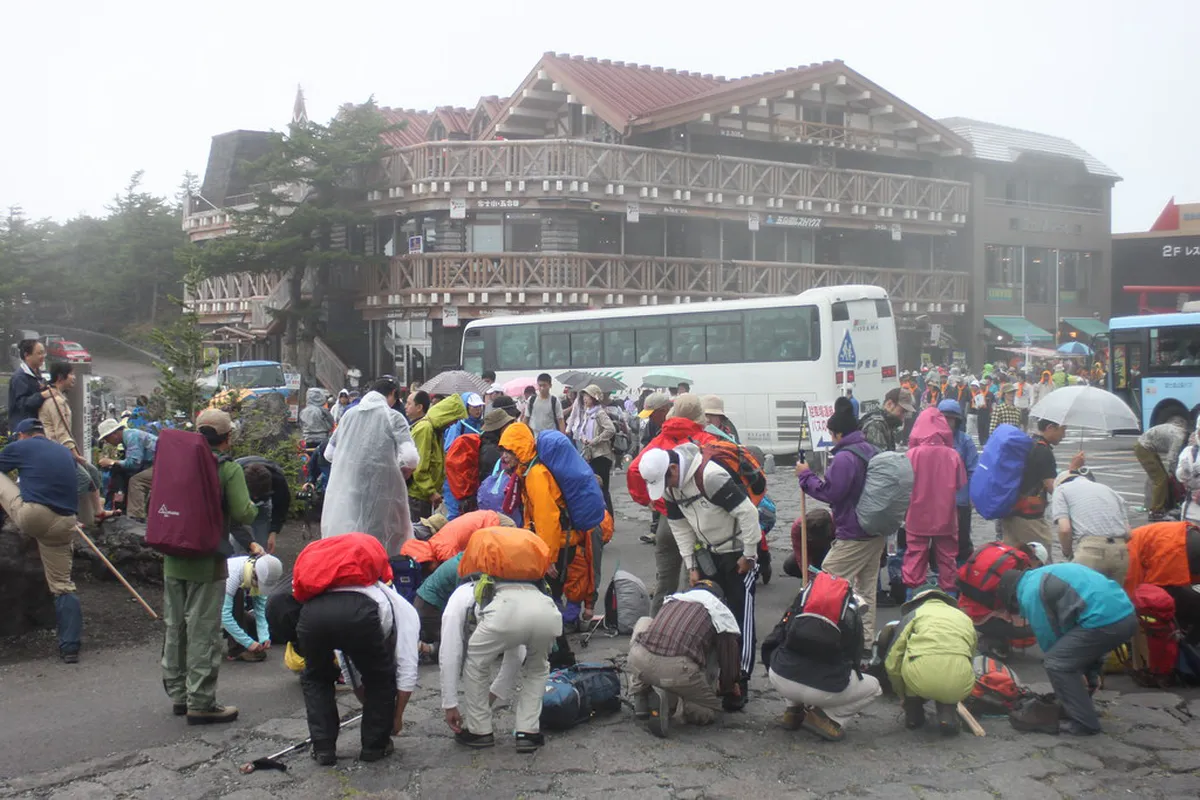
Summer is also the only season when Mount Fuji is open for climbing. The official climbing season runs from early July to early September, with Kawaguchiko Station providing direct bus access to Fuji's 5th Station (Fujisan Subaru Line, around ¥2,700). If climbing Fuji is your goal, summer is your window, and visibility of the mountain from below is less relevant than the summit experience itself. Crowds at Kawaguchiko town and accommodation are high in August, and prices peak — book well ahead.
Autumn (September – November): Vibrant Foliage and the Momiji Corridor
Autumn is arguably the most spectacular season at Kawaguchiko, and the most competitive for accommodation. The Fuji Lake Kawaguchi Festival of Colored Leaves (Kawaguchiko Momiji Matsuri) runs from late October to early November and draws large crowds to the north shore, where the Maple Corridor — a 300-metre stretch of maple trees — erupts in deep red and orange. The Momiji Tunnel near the Itchiku Kubota Art Museum is another focal point. Both are illuminated in the evenings during the festival. Check the official festival schedule (fujisan.ne.jp) for 2026 dates as they shift slightly each year. Lake Kawaguchi's geographic and seasonal profile provides historical context on autumn foliage timing patterns.
Fuji visibility recovers well in October (around 12 clear days) and November (11 clear days), making this the best combination of Fuji views and photogenic foreground. October is the sweet spot: foliage is beginning to turn, crowds are slightly lower than peak November, and visibility is better than any summer month. September is typhoon-prone, which can mean both cloud cover and dramatic stormy skies — worth knowing if you are a weather-flexible photographer.
The Itchiku Kubota Art Museum is worth prioritizing in autumn. The surrounding garden with maple trees against the lake and Fuji is one of the finest outdoor compositions in the Fuji Five Lakes region. Admission is around ¥1,500 for adults. The museum showcases extraordinary kimono work in the tsujigahana dyeing style and has a tearoom with direct Fuji views — plan at least 90 minutes. For autumn foliage combined with a wider view, take the Panoramic Ropeway to Mt. Tenjō's summit, where the red canopy spreads across the bowl of the lake with Fuji behind it.
Diamond Fuji: The Photographers' Hidden Calendar
Twice each year, the sun rises or sets in perfect alignment with Mount Fuji's summit, creating what is known as Diamond Fuji — a single blazing point of light crowning the peak. From the Kawaguchiko lakefront, this phenomenon occurs in late October and in mid-February, when the geometry of the sun's path lines up with the mountain's position relative to the lake's eastern and western shores. The phenomenon lasts only a few minutes and requires both clear skies and precise positioning, but when conditions are right, the result is one of the most dramatic natural light events in Japan.
The eastern shore near Ubuyagasaki Peninsula is the primary viewing location for the autumn Diamond Fuji (around 25–30 October). The western shore near Nagasakijima works for the winter occurrence (around 10–15 February). Neither dates nor exact times are fixed — they shift by a few days depending on the precise solar calendar. Local photography groups in Japan publish predictive schedules each year on platforms like PhotoHito. None of the major travel guides cover this event in the context of best-time-to-visit planning, yet it draws dozens of professional photographers to the lake on those specific mornings. If your dates overlap with either window, position yourself on the correct shore before dawn.
Kawaguchiko vs. Hakone: Which is Better for Fuji Views?
Both destinations sit within two hours of Tokyo and promise views of Mount Fuji, but they serve different priorities. Kawaguchiko is closer to the mountain and faces it more directly from the north, giving a complete, unobstructed view across open water. Hakone sits to the southeast and is itself a mountainous region, which means Fuji views from Hakone are often partial and depend heavily on the angle and conditions at spots like Owakudani or the shores of Lake Ashi. If seeing Fuji clearly is your primary goal, Kawaguchiko has the statistical advantage year-round.
Hakone, however, offers more diversified attractions: the Hakone Open-Air Museum, a more developed onsen infrastructure, the Hakone Ropeway, and a more reliable tourist circuit via the Romancecar train and Hakone Free Pass. When Fuji visibility is poor in June and early July, Hakone makes more sense because its other draws don't depend on clear skies. Kawaguchiko in summer with clouds obscuring Fuji can feel one-dimensional for non-climbers.
The clearest answer: visit Kawaguchiko from October to May for the best Fuji views; default to Hakone in June and September if weather is unreliable and you want more to do regardless of mountain conditions. They are not mutually exclusive — a combined itinerary stopping at Hakone en route by the Romancecar from Shinjuku, then continuing to Kawaguchiko by bus, is feasible in two days.
How to Get to Kawaguchiko from Tokyo
The fastest rail option is the Limited Express Fuji Excursion, a direct service from Tokyo's Shinjuku Station to Kawaguchiko Station in under two hours. Fares start from ¥4,130 one-way. Seats sell out quickly on weekends and during peak seasons — book at least two to four weeks in advance through Eki-net or at Shinjuku Station. The JR Pass covers the Chuo Line portion to Ōtsuki but not the Fujikyuko Railway section, so pass holders still pay ¥1,140 for the Ōtsuki–Kawaguchiko segment.
The cheaper alternative is the highway bus from Shinjuku Bus Terminal (Busta Shinjuku), Shibuya, or Tokyo Station. Buses run frequently throughout the day and cost around ¥2,100 one-way. Journey time is about two hours depending on traffic, and the bus stops at Fuji-Q Highland before Kawaguchiko Station. Book in advance on Willer Express or Kosoku Bus, especially during peak seasons when buses fill up. In heavy holiday traffic, particularly Golden Week (late April to early May) and autumn foliage weekends, bus travel times can extend to three hours or more.
Once in Kawaguchiko, the Retro Bus network (Red, Green, and Blue lines) connects the main attractions. A two-day unlimited pass costs ¥1,700 and covers Oishi Park, the Panoramic Ropeway, and the Maple Corridor. Bicycles are rentable from shops near Kawaguchiko Station for around ¥800–¥1,500 per day — the lakeside path is mostly flat and the full loop is around 20 km. Taxis are available but expensive and scarce during peak periods.
Top Things to Do in Kawaguchiko by Season
Oishi Park on the north shore is the most reliable Fuji photography spot year-round, combining open lake foreground with unobstructed mountain views and accessible parking. In June, it hosts the lavender fields. In autumn, its maple trees frame the mountain. The Panoramic Ropeway (Lake Kawaguchi–Mt. Fuji Ropeway) takes three minutes to reach Fujimidai Station at 1,075 m — the elevated angle across the lake to Fuji is distinct from ground-level shots and worth the ¥1,000 fare in any season. Check for maintenance closures before visiting.
For cultural depth, the Kawaguchiko Music Forest Museum has a French fairground organ from 1905 that plays every 30 minutes, plus European-style gardens with Fuji views. The Itchiku Kubota Art Museum houses extraordinary tsujigahana kimono — most impressive in autumn when the maple garden peaks. Both are accessible from the Red Bus line. Hōtō noodles, the regional dish of flat noodles in a miso-based vegetable stew, are available at Hōtō Fudō restaurants around the lake — try the Kawaguchiko Station branch for convenience.
Chureito Pagoda, reached by train from Kawaguchiko to Shimoyoshida Station followed by a 400-step climb, offers the single most recognizable Fuji composition in Japan. It is best in cherry blossom season (late March to mid-April) and autumn (late October to early November). A round trip from Kawaguchiko by train costs approximately ¥400 extra. For a different angle on Fuji, the Ice Cave (Narusawa Hyōketsu) and Wind Cave (Fugaku Fūketsu) near Aokigahara Forest are accessible year-round and stay cold throughout the summer, offering a cool escape on warm days. Explore the full range of things to see at 15 Best Kawaguchiko Attractions & Things To Do (2026 Guide).
Where to Stay in Kawaguchiko for Every Season
Accommodation in Kawaguchiko divides into two clear tiers: lakeside ryokan and onsen hotels with Fuji-facing rooms, and budget guesthouses and hostels near Kawaguchiko Station. The lakeside properties consistently sell their Fuji-view rooms first. When booking, specify a Fuji-side room explicitly — north-facing or lake-facing rooms deliver the view; south-facing rooms face the hillside. In winter, these rooms allow you to photograph the mountain at dawn from the warmth of your room.
Mid-range properties like Hotel Konanso and Fuji Premium Resort are clustered on the western and northern shores and offer onsen facilities. Budget travelers use K's House Mt. Fuji, a hostel near the station with reliable Fuji-view common areas. For luxury, Kozantei Ubuya provides private onsen rooms with direct lake and Fuji views. Pricing at all tiers roughly doubles during peak cherry blossom weekends and the Kawaguchiko foliage festival. Booking three to four months ahead is standard for those windows. Off-peak — particularly mid-January to late February and mid-June to mid-September — rooms are available with short notice and at significantly reduced rates. For full lodging options and comparisons, see 9 Best Places to Stay in Kawaguchiko (2026 Travel Guide).
What to Do If Mt. Fuji Is Hidden by Clouds
Fuji is famously elusive. Even in December — statistically the clearest month — there are days when cloud sits on the summit. If you arrive and the mountain is not visible, the approach is to wait until the next morning. Cloud patterns shift overnight, and an overcast afternoon commonly clears to a sharp dawn. An overnight stay rather than a day trip from Tokyo is the single best tactical decision for maximizing your chances of a clear Fuji view.
On fully clouded days, the rest of Kawaguchiko holds up independently. The Kubota Art Museum, the Music Forest Museum, an onsen soak, a boat cruise on the lake, hōtō noodles at Hōtō Fudō, and Fuji-Q Highland (if you want thrills) all have nothing to do with Fuji visibility. Chureito Pagoda is most worth visiting when the mountain is clear, but the Shimoyoshida area itself has quiet residential character and a traditional shōtengai shopping street. The ice and wind caves near Aokigahara are interesting regardless of weather. The real risk of a day trip is that you spend three hours in transit each way for a cloud-covered view — an overnight stay removes that risk.
Frequently Asked Questions
How long should I spend in Kawaguchiko?
Most visitors find 1-2 full days sufficient for Kawaguchiko. This allows time to see Mount Fuji, explore the lake, and visit a few attractions. An overnight stay is recommended to experience sunrise or sunset views.
Is Kawaguchiko worth visiting?
Absolutely, Kawaguchiko is definitely worth visiting for its iconic Mount Fuji views. The area offers diverse activities, from scenic boat rides to museums and hot springs. It provides a refreshing escape from city life.
What is the best time of day to see Mount Fuji clearly?
The best time to see Mount Fuji clearly is typically in the early morning, shortly after sunrise. The air is often crispest, and clouds are less likely to obscure the peak. Late afternoon can also offer good visibility.
Kawaguchiko truly offers a magical experience, no matter when you visit. Each season paints Mount Fuji in a different, breathtaking light. Your ideal time depends on what you wish to see and do. From the crisp, clear winter views to the vibrant autumn foliage, careful planning ensures a memorable trip. Consider your priorities for weather, crowds, and activities. This will help you choose the best time to visit Kawaguchiko. Remember to check seasonal events and book accommodations in advance, especially during peak times. Enjoy the stunning beauty and tranquility of this iconic Japanese destination. For a complete guide to the area, visit 15 Best Kawaguchiko Attractions & Things To Do (2026 Guide).
Free: The Kawaguchiko Essentials guide
Top things to do, where to stay, a perfect day plan, getting around, and the best time to go — a Kawaguchiko mini-guide you can take offline.
You might also like


Continue reading
More guides you'll find useful


