
Miyajima Onsen Guide
Plan your miyajima onsen guide with day-bathing tips, ryokan baths, etiquette, timing, and practical advice for a relaxing soak after Mount Misen.
On this page
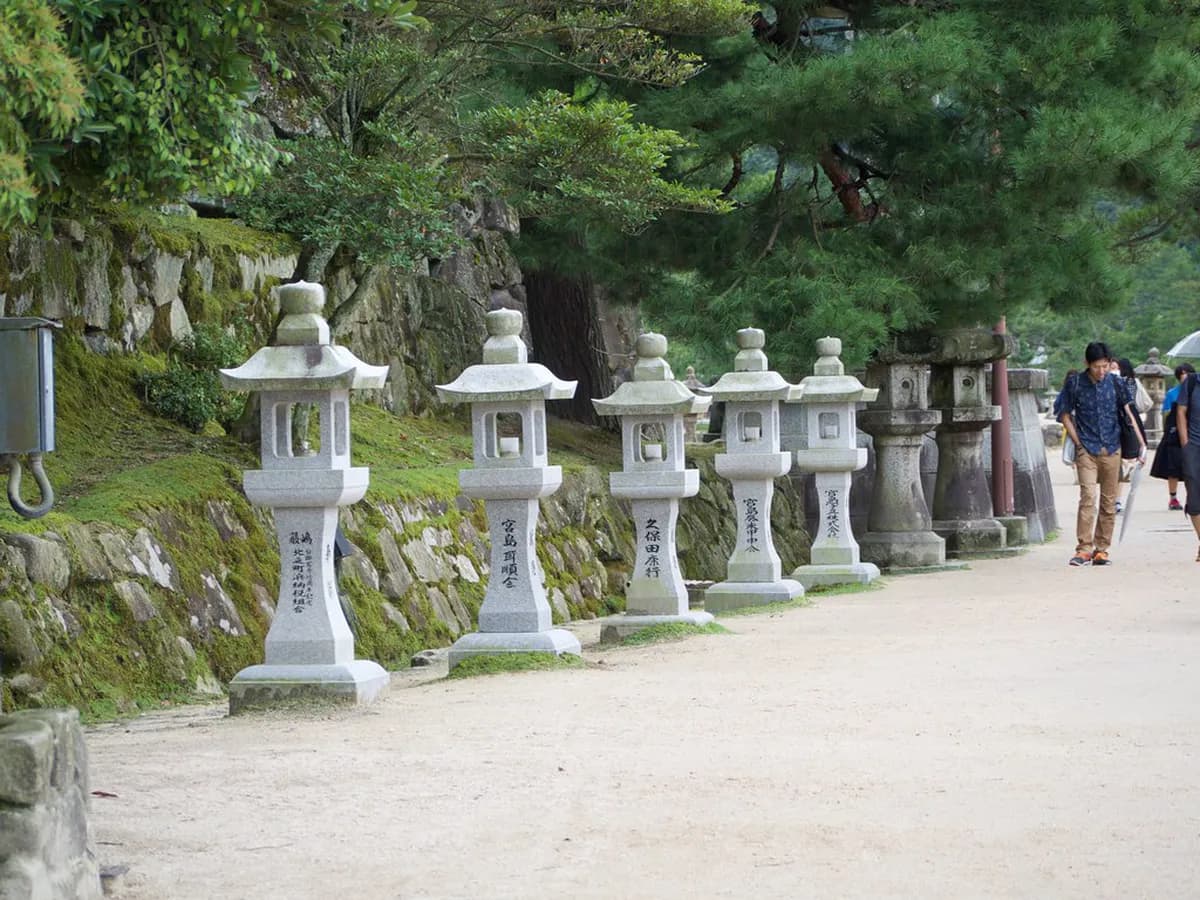
Miyajima is best known for its floating torii gate, sacred shrines, and friendly deer, but the island also offers a quiet bathing culture that most day-trippers never encounter. Because the island is small and historically sacred, hot-spring facilities are modest compared to Japan's famous spa towns. What exists is intimate and deeply tied to the ryokan experience — making your choice of accommodation the central decision for anyone who wants to soak here.
This guide covers the island's onsen options honestly, from which ryokan offer private baths and shared rotenburo to day-use bathing and mainland alternatives. It also helps you match the right property to your travel style, whether you are after quiet luxury, a private soak for two, or a budget-friendly traditional inn. A little planning around ferry times, bath hours, and booking windows makes all the difference.
Why You Should Stay Overnight on Miyajima
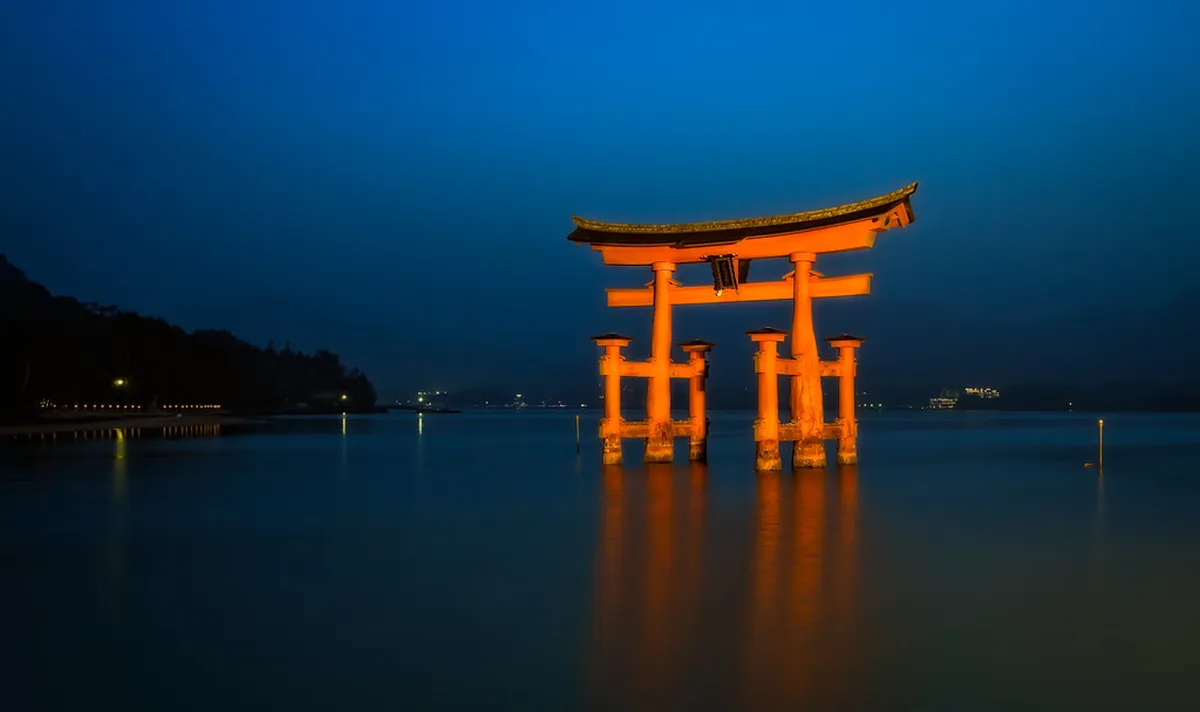
Miyajima during the day is one of Japan's most visited spots. By 16:00 the ferry queue grows long and the main streets fill. But once the last regular ferry departs in the evening, the island changes completely. The deer settle near the shore, the torii gate reflects on still water under soft illumination, and the paths that were crowded hours earlier feel like your own private circuit.
Itsukushima Shrine opens at 06:30 most mornings and the first light on its vermilion pillars, with almost no one around, is one of the most memorable sights in western Japan. That window is only accessible to guests who spend the night. Day-trippers who arrive on the first morning ferry miss it by about an hour.
Food options on the island outside your accommodation are limited after sunset, so ryokan that include kaiseki dinner and breakfast are not just a comfort — they are the practical choice. Seasonal seafood from the Seto Inland Sea, local oysters, and multi-course presentations tied to what is freshest each month are part of why overnight guests consistently describe the stay as a highlight of their entire Japan trip.
If you are fitting Miyajima into a broader Hiroshima attractions itinerary, a single overnight stay is enough to experience the island at its best. Two nights is worth it if you plan to hike Beppu and still want time to linger at the shrine after dark.
Miyajima Onsen: What Actually Exists on the Island
Miyajima Onsen is the collective name for the island's hot-spring bathing scene, but it is not a spa district in the way that Hakone or Beppu are. There is no public bathhouse you can simply walk into off the street. Bathing on Miyajima happens almost entirely within the island's inns and hotels, which draw on warm water sources for their communal and private baths.
Several properties feature rotenburo — open-air baths — where you soak under the sky with views toward the Seto Inland Sea or the forested slopes of Mount Misen. The setting is quiet and unhurried. Shared baths at most properties have separate male and female sections, while higher-end rooms and suites often include a private in-room or semi-outdoor tub you can use at any hour.
The practical implication is straightforward: the quality of your bathing experience on Miyajima depends almost entirely on which property you book. Choosing accommodation with a strong onsen offering — rather than arriving and hoping to find a public bath — is the right approach. Our guide to where to stay in Miyajima covers each property's bath setup in detail.
Best Miyajima Ryokan with Onsen Baths
Iwaso, founded in 1854 and set within Momijidani Park, is the island's most historic ryokan. Its open-air baths look out over a traditional garden and forest. Rooms combine original sukiya-style architecture with modern comforts, and kaiseki dinners focus on seasonal ingredients. Rates start around ¥31,000 per person per night including dinner and breakfast.
Miyajima Grand Hotel Arimoto is the largest dedicated onsen ryokan on the island. It has both spacious indoor baths and outdoor rotenburo with mountain views, making it one of the clearest choices for guests who prioritize the bathing experience. Some room categories include a private open-air bath. Rates begin around ¥65,000 per room per night including meals.
Hotel Miyajima Villa offers a more contemporary feel with panoramic baths that look toward Itsukushima Shrine and the sea. It sits close to the ferry terminal, which is useful if you arrive with luggage after a full day in Hiroshima. Rooms start around ¥37,000 per room per night including breakfast. Kurayado Iroha, near the shrine, is a minimalist modern option with rooftop onsen views and rates around ¥60,000 per room.
For guests focused on affordability, Kikunoya and Hotel Sakuraya both offer communal baths at rates that start under ¥20,000 per person. They do not have the grandeur of Arimoto or Iwaso but deliver the essential ryokan experience — tatami rooms, yukata, and a warm soak after a day on the trails — at a much lower price point.
| Property | Bath Type | Rate (per room/night, incl. meals) |
|---|---|---|
| Iwaso | Open-air rotenburo, communal | From ¥31,000 per person |
| Miyajima Grand Hotel Arimoto | Indoor + outdoor rotenburo; private bath in upper rooms | From ¥65,000 per room |
| Hotel Miyajima Villa | Panoramic communal baths | From ¥37,000 per room (breakfast) |
| Kurayado Iroha | Rooftop onsen views | Around ¥60,000 per room |
| Kikunoya / Hotel Sakuraya | Communal baths | Under ¥20,000 per person |
Matching the Right Ryokan to Your Travel Style
Couples who want maximum privacy should target properties where room categories include a dedicated in-room or semi-private outdoor bath. Miyajima Grand Hotel Arimoto's upper-tier rooms and Kurayado Iroha's suite options both fit this profile. You book the bath as part of the room rather than scheduling a shared slot, which means soaking at 23:00 after a night walk near the shrine is entirely practical.
Families and travelers watching budget get the most from mid-range ryokan like Kikunoya or Yamaichi Bekkan, which include communal baths that are still high quality, plus full kaiseki meals in the rate. Both are located within a short walk of Itsukushima Shrine, so you spend almost no time in transit between sightseeing and your accommodation.
Solo travelers and culture-focused visitors often gravitate toward Iwaso for its historical atmosphere and garden setting, or toward smaller guesthouses where artisan-made interiors and a quieter pace feel more personal than a large hotel. The Daisho-in Temple is a short walk from most island properties and pairs well with a slow morning before checking out.
One detail that all ryokan types share: the evening meal is included in almost every package and it is not optional at most properties. If you have dietary restrictions or allergies, flag them at the time of booking — kitchens on the island are small and advance notice matters more here than at a city hotel.
Day-Use Bathing on Miyajima
Day bathing — known in Japan as higaeri onsen — lets visitors use a bath without booking a room. On Miyajima, a limited number of ryokan open their baths to day visitors during set afternoon hours, typically between 13:00 and 16:00 when guest demand is lower. This is not a guaranteed service at every property, so confirm availability before you arrive at the front desk.
Day-use fees are modest, usually in the range of ¥800 to ¥1,500 per person depending on the property. Some places include a small towel in the fee; others sell or rent one. Arriving a few minutes before the window opens lets you soak at the calmest moment, before the bath fills with other guests. Bring your own small quick-dry towel as a fallback.
Timing matters here. The ropeway to Mount Misen has set hours, and the last ferry to the mainland leaves in the evening. Plan your day-use soak as an afternoon reward after sightseeing rather than a flexible all-day option. A bath right after descending from the mountain works beautifully — tired legs, warm water, and the walk back to the ferry feeling much lighter.
Day-use bath windows at most Miyajima ryokan run from around 13:00 to 16:00. Fees are typically ¥800–¥1,500 per person. Call ahead to confirm availability, as not every property accepts day visitors.
Timing a Soak Around the Island's Key Experiences
The most satisfying sequence for a one-day visit is sightseeing first and bathing after. Start at Itsukushima Shrine in the morning when it is quietest, explore the peaceful halls of the temple nearby, then save the bath for mid-afternoon. Check the tide tables too, since the gate looks completely different at high and low water — the Momijidani Park path is a good shaded detour if you have time to spare before the bath window opens.
For hikers, the climb up Mount Misen rewards visitors with sweeping views over the islands of the Seto Inland Sea. After the descent, a day-use soak fits neatly into the gap between finishing the trail and catching the evening ferry. Allow at least 3 hours for the round trip on foot, or 2 hours if you take the ropeway up and walk down. Do not cut it so close that you are rushing the bath — the point is to slow down, not hurry.
The Omotesando shopping street serves fresh grilled Miyajima oysters and sweet momiji manju cakes for a midday break. A light lunch there keeps your energy up for the afternoon bath without making you too full to enjoy the warm water.
Onsen Etiquette for First-Timers
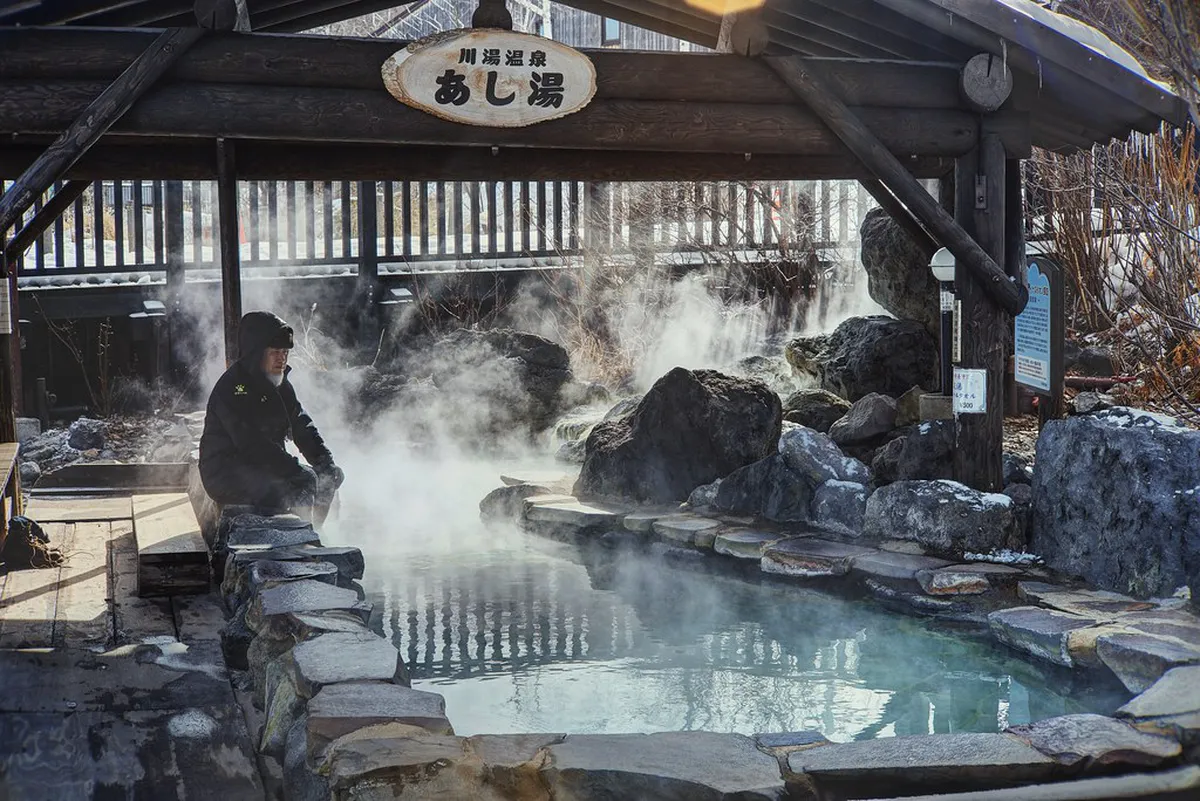
Japanese bathing follows clear, simple customs that keep the experience pleasant for everyone. You wash and rinse thoroughly at the seated shower stations before entering the communal bath. Soap and shampoo belong at the wash area, never in the soaking tub itself. Most ryokan provide body soap, shampoo, and conditioner at the stations. The official Japan travel guide to onsen etiquette covers these customs in detail and is worth reviewing before your visit.
Baths are entered without swimwear. The small towel you carry should not touch the water — most people rest it folded on their head or set it at the bath's edge. Keep voices low, move calmly, and avoid splashing. The shared space is designed for quiet rest, and other guests will appreciate that consideration.
Travelers with visible tattoos should check each property's policy in advance, as rules vary across Japan and across individual inns. Many smaller ryokan on Miyajima are more relaxed about this than large resort facilities, but a polite question at the front desk at booking time removes any uncertainty and lets you relax fully once you are in the water.
Swimwear is not worn in Japanese communal baths. Bring a small quick-dry towel, as some properties charge extra to rent one. Travelers with visible tattoos should confirm each ryokan's policy before arrival, as individual rules vary.
Mainland Onsen Alternatives Near Miyajima
If the island's limited day-use windows do not fit your schedule, the Hiroshima mainland has practical alternatives. Miyahama Onsen, located at Miyajimaguchi — the ferry departure point on the mainland — is the closest option. Several ryokan here, including the well-regarded Garden Ryokan Sekitei, offer full onsen facilities within five minutes of the ferry pier. This is especially useful if you arrive late or want to extend your bathing time after the last island ferry.
The journey from central Hiroshima to Miyajimaguchi takes around 25 minutes on the JR Sanyo Line from Hiroshima Station, then a short walk or bus to the pier. Combining a mainland bath with your return journey is efficient: finish your island sightseeing, catch the ferry back, soak near the pier, then return to Hiroshima for dinner. Travelers staying in the city often find this rhythm far more flexible than racing the island's bath hours.
The night light-up and illumination around Itsukushima Shrine offers another reason to time your soak for the mainland — you can watch the illumination from the last ferry, catch a bath at Miyahama on the way back, and still make an evening meal in Hiroshima without rushing. The general island and area background on the Itsukushima Wikipedia page helps you orient your day-trip planning if this is a new destination.
Making the Most of an Overnight Stay
Overnight guests get the quietest bath hours and the best of the island's other after-dark rewards. After dinner at your ryokan, a slow walk through the illuminated shrine precinct — where the torii floats on the water and deer rest along the paths — is one of those experiences that stays with travelers long after the trip ends. Many guests say this is when Miyajima feels most magical.
Some properties offer cultural programs built into stay packages: tea ceremony sessions, shamoji rice-paddle painting workshops, and guided early-morning shrine tours are available at several inns, usually with language support for overseas guests. These are not tourist-facing add-ons — they are small-group sessions that use the island's own artisans and cultural practitioners, and the quality shows.
Families might also enjoy the gentle exhibits at the Miyajima Aquarium on the morning before check-out. A relaxed schedule across one full evening and one morning gives you far more than any day trip, and the soak that caps your arrival evening becomes the highlight rather than an afterthought.
Frequently Asked Questions
Does this miyajima onsen guide work for day visitors without a hotel?
Yes, day visitors can still enjoy a soak. Many island ryokan open their baths to day visitors for a fee during set afternoon hours. Confirm the day-use schedule and price at the front desk in advance. This is the most reliable way to bathe without staying overnight.
When should you plan a soak in this miyajima onsen guide?
Afternoon is ideal, especially right after climbing down from Mount Misen. Day-use bath windows are limited, so schedule your soak before the last ferry leaves. Check the trail and ropeway hours alongside the tide tables. This keeps your whole island day flowing smoothly.
What should travelers know about etiquette in this miyajima onsen guide?
Wash and rinse fully before entering the shared bath, and keep your small towel out of the water. Baths are usually entered without swimwear, so move calmly and keep voices low. Travelers with tattoos should check each property's policy in advance. A quick question at the desk avoids surprises.
Miyajima's bathing scene is modest by Japanese standards, but that restraint is part of what makes it special. A warm soak at a traditional inn, after the day-trippers have left and the shrine lights are reflected on the water, is exactly the kind of slow, unhurried experience that makes an overnight stay on this island worth planning carefully. Whether you choose a luxury ryokan with a private tub or a budget inn with a shared rotenburo, picking the right property in advance is the single most important step in this guide.
We hope this miyajima onsen guide makes your stay simple to arrange and deeply restful. Confirm your bath setup when you book, pack a small towel, and look forward to easing tired legs in warm water after a full day on the island. Safe travels.
Free: The Hiroshima Essentials guide
Top things to do, where to stay, a perfect day plan, getting around, and the best time to go — a Hiroshima mini-guide you can take offline.
You might also like


Continue reading
More guides you'll find useful


