7 Best Areas and Tips for Where to Stay in Hiroshima (2026)
Discover where to stay in Hiroshima, from the vibrant Hatchobori to peaceful Miyajima. Includes top hotel picks for families, ryokans, and transport tips.
On this page
Deciding where to stay in Hiroshima determines your entire daily rhythm. The city layout is spread across a river delta, meaning a poorly chosen base can result in long, crowded tram rides during peak morning hours. Whether you want the neon-lit energy of the Hatchobori shopping arcades or the misty morning silence of a sacred island shrine, each district offers a distinct personality.
This guide covers the three main areas that matter for 2026 visitors: Downtown Hiroshima, the Station area, and Miyajima Island. It also includes a neighborhood comparison, family-specific advice, and one practical angle that most guides overlook — how the Meipuru-pu sightseeing bus changes the calculus for which area to book. Choosing the right base also affects how easily you reach the the top experiences in the city without wasting vacation time.
Best Areas to Stay in Hiroshima at a Glance
Hiroshima's accommodation is clustered in three distinct zones. Downtown (Hatchobori and Nagarekawa) is the best all-round base: you can walk to the Peace Memorial Park in 15–20 minutes and step outside to dozens of okonomiyaki restaurants. The Station area (Ekimae) trades atmosphere for transit convenience — the Shinkansen departs from here, and both the tram network and the sightseeing loop bus originate at Stop 1 outside the south exit. Miyajima Island is a separate stay entirely: a ryokan on the island gives you sunrise access to the Itsukushima Shrine before the ferry crowds arrive, but restaurants close by 18:00 and prices are significantly higher.
Use the comparison below to match your priorities to an area before reading the detailed sections.
| Area | Vibe | Nearest Sights | Price Band |
|---|---|---|---|
| Downtown Hatchobori | Urban energy, nightlife, okonomiyaki restaurants | Peace Park (15–20 min walk), Atomic Dome, Okonomimura | ¥12,000–¥25,000/night |
| Hiroshima Station | Transit-focused, business hotels, less dining atmosphere | Shukkeien Garden (6 min walk), shopping mall | ¥9,000–¥15,000/night |
| Miyajima Island | Traditional, spiritual, peaceful after sunset | Itsukushima Shrine, stone streets, forest | ¥35,000–¥80,000/night (includes 2 meals) |
- Downtown / Hatchobori: best vibe and dining, 15–20 min walk to Peace Park, mid-range prices from ¥12,000/night, ideal for first-timers and food lovers.
- Hiroshima Station (Ekimae): best transit access, direct Shinkansen connection, business hotels from ¥9,000/night, ideal for day-trippers and transit-heavy itineraries.
- Miyajima Island: best atmosphere, ryokans with dinner from ¥35,000/night for two, dining closes early, ideal for one special night with couples or slow travelers.
Budget is a significant factor. Station-area business hotels consistently undercut downtown rates by 20–30 percent for comparable quality. Miyajima ryokans charge a premium that includes a multi-course kaiseki dinner and breakfast, so the per-night cost is high but the meals are included. Booking at least six months ahead is strongly recommended for all three zones, particularly for dates around the August 6 Peace Memorial Ceremony, Golden Week in early May, and cherry blossom season in late March.
Downtown Hiroshima: Best for First-Timers and Sightseeing
Downtown Hiroshima covers the zone between the Hondori shopping arcade and Heiwa-Odori (Peace Boulevard), with Hatchobori as its commercial spine and Nagarekawa as its nightlife street. From here you can walk to the Atomic Bomb Dome in about 10 minutes and reach the Hiroshima Peace Memorial Museum without catching any tram at all. The same walkability applies to Okonomimura — the three-storey building with 23 okonomiyaki stalls on Shintenchi Street — which is Hiroshima's single best dinner experience and 5 minutes on foot from most downtown hotels. The Peace Memorial Museum is also reached on foot without any tram transfers needed.
The catch is noise. Nagarekawa fills up on Friday and Saturday evenings, and hotels on the main shopping streets can get street-level sound through thinner windows. Book a room on the fourth floor or above if light sleep is a concern. Weekday rates are noticeably lower than weekend rates throughout the year.
Strong mid-range options in this zone include Candeo Hotels Hiroshima Hatchobori (4-star, rooftop onsen with city views, 10-minute walk to Peace Park), Hotel Intergate Hiroshima (onsen, free afternoon drinks, excellent 14th-floor breakfast), and KIRO Hiroshima by THE SHARE HOTELS (boutique design, family rooms for up to six, shared kitchen). For a luxury pick, the Hilton Hiroshima opened in September 2022 near the Meipuru-pu Stop 6 zone with an indoor pool, sauna, and floor-to-ceiling city views from upper floors. The Rihga Royal Hotel Hiroshima offers swimming pool access, panoramic castle views, and rooms that are large by Japanese standards.
Budget travelers should look at Nest Hotel Hiroshima Hatchobori (3-star, 11:00 checkout — a full hour later than most Japanese hotels, which matters when packing up for an onward train) and the fav Hiroshima Heiwaodori apartment hotel, which has in-room washing machines and kitchenettes — useful for anyone staying more than two nights.
Downtown Hatchobori sits only 15–20 minutes on foot from the Peace Memorial Park and offers dozens of okonomiyaki restaurants within a five-minute walk. This is the best all-round base for first-time visitors.
Staying Near Peace Memorial Park: A Quieter Alternative to Hatchobori
For travelers who want to be closer to the Peace Memorial Park itself than the Hatchobori shopping strip allows, the pocket of hotels on the west bank of the Motoyasu River — around Otemachi and Nakajima-cho — puts the museum entrance 5 to 8 minutes on foot rather than the 15 to 20 minutes typical of central Hatchobori. Courtyard by Marriott Hiroshima and Mitsui Garden Hotel Hiroshima both sit in this pocket, and neither is more than a 10-minute walk from the Hondori shopping arcade, so you keep access to shopping and okonomiyaki without sleeping on top of Nagarekawa's bar noise.
Evenings here are noticeably quieter than around Nagarekawa, since the area empties out once the museum and park close for the night. The trade-off is dining density: fewer restaurants stay open past 21:00 immediately around the park than in Hatchobori, so most guests walk about 10 minutes into downtown for dinner. This makes the area worth choosing if your priority is an early, uncrowded walk through the Peace Park before tour groups arrive around 9:00, while still reaching Hatchobori's restaurants in about 10 minutes.
See our dedicated guide to staying near Hiroshima Peace Park for a block-by-block hotel breakdown, and pair it with the local food guide when planning where to eat once restaurants near the park close early.
Around Hiroshima Station: Best for Convenience and Day Trips
JR Hiroshima Station is a transit hub and a shopping mall combined. The south exit leads directly to the tram terminus and to Meipuru-pu Bus Stop 1, while the north (Shinkansen) entrance connects via a pedestrian tunnel to the same underground plaza. For travelers arriving from Osaka, Kyoto, or Hakata by Shinkansen, staying near the station eliminates the effort of crossing the city with luggage. It also makes early-morning departures and late-night returns straightforward.
The main limitation is dining. Hiroshima Station itself has plenty of restaurants, but the concentrated nightlife and the best local okonomiyaki spots are a 15–20 minute tram ride or 30-minute walk away in the downtown core. This is not a dealbreaker for most travelers — the tram is cheap (¥180–¥220 per ride) and runs until around 23:30 — but it does mean you are less likely to wander out for a second dinner on a whim.
The Hotel Granvia Hiroshima (4-star, directly connected to the station concourse) is the top pick for convenience: rooms are large by Japanese standards, the upper floors have river views, and you can reach your room within 5 minutes of stepping off the Shinkansen. The Sheraton Grand Hiroshima (5-star, 1-minute walk from the station) adds an indoor pool and Western breakfast option for those who want a luxury base with maximum transit access. Budget travelers will find the APA Hotel Hiroshima-Ekimae Ohashi (3-star, onsen, 4-minute walk from the station) and Nest Hotel Hiroshima Ekimae offer solid value without sacrificing location.
The Station area is also the closest base to Shukkeien Garden, a 6-minute walk away — one of Japan's best stroll gardens and nearly always less crowded than the Peace Park. Pairing a Shukkeien visit with the adjacent Hiroshima Prefectural Art Museum fills a quiet morning without needing any transit at all.
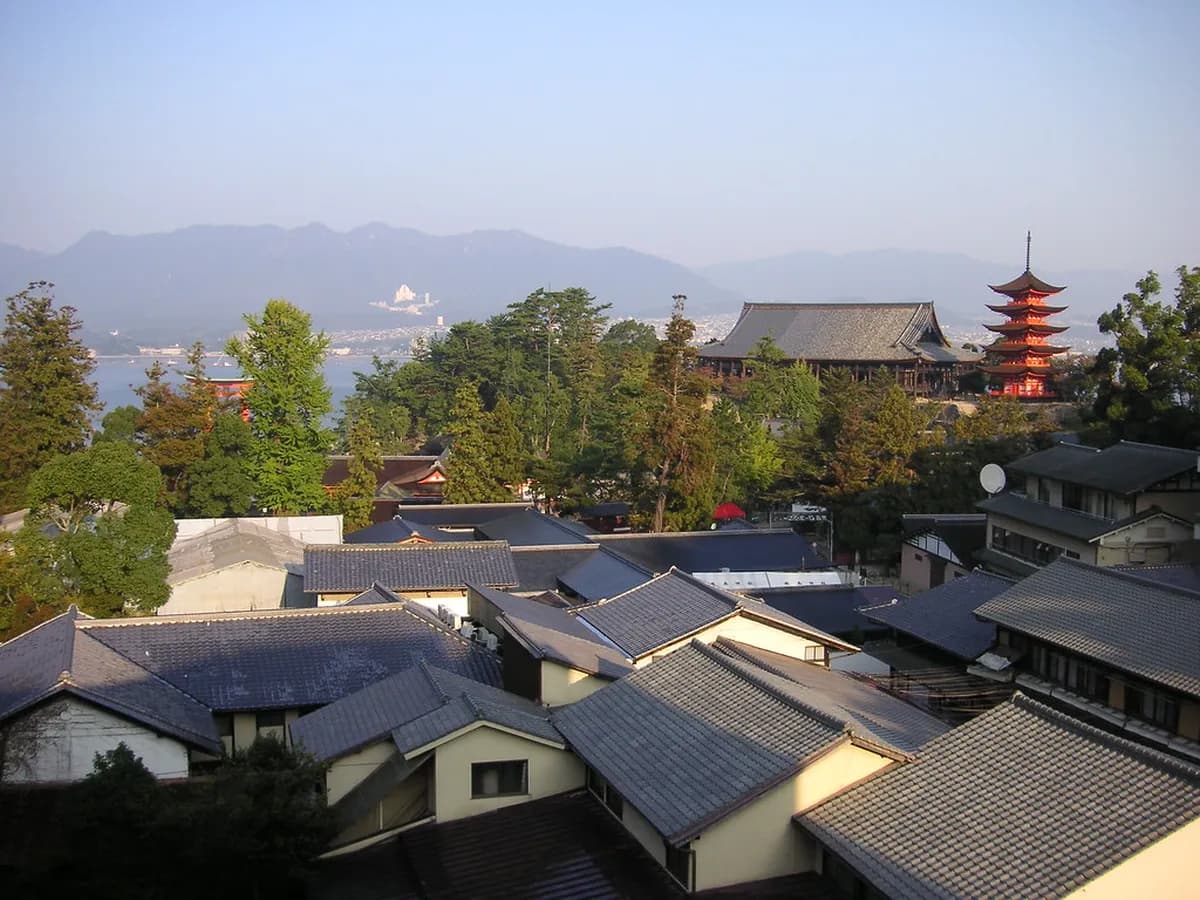
Miyajima Island: Best for Traditional Ryokans and Nature
Staying overnight on Miyajima (Itsukushima Island) is a fundamentally different experience from a city hotel. The island sees over 3 million visitors per year, but the vast majority arrive on the 10:00–15:00 ferry window and leave before the last ferry at around 23:00. If you stay the night, you have the shrine's stone-paved main street almost entirely to yourself from about 17:30 onward — low lantern light, the sound of the tide, and no tour groups.
Ryokan stays on Miyajima include dinner (kaiseki, typically 8–12 courses with local seafood and Hiroshima oysters) and breakfast, both served in your room or a private dining area. Expect to pay ¥35,000–¥80,000 per night for two people including meals. This is significantly more than a city hotel, but when you factor in two restaurant-quality meals, the gap narrows. Most Miyajima ryokans require you to declare all guests, including children, and may charge per-head supplement fees — confirm the full-occupancy pricing before booking.
The island has no convenience stores in the core historic area, so bring any medications, snacks, or items you might need after 18:00. Access is via the JR Sanyo Line from Hiroshima Station to Miyajimaguchi (26 minutes), then a 10-minute JR Ferry to the island — the ferry is covered by the Japan Rail Pass. If you are traveling with large suitcases, consider shipping them via takuhaibin (luggage courier service, available from major hotels) to your next destination the day before, since rolling large bags on the island's uneven stone paths is awkward. For context on combining Miyajima with the city, the our itinerary guide covers the timing in detail.
Hiroshima vs. Miyajima: Which Should You Choose?
The debate between staying in the city or on the island usually comes down to your interest in nightlife versus nature. Hiroshima city is the clear winner for foodies — the density of izakayas, okonomiyaki shops, and ramen stalls is much higher on the mainland. If you stay on Miyajima, be aware that most restaurants close by 18:00, making a half-board ryokan plan almost mandatory rather than optional.
Logistics also play a role, especially if you are traveling with heavy luggage that is difficult to take on the 10-minute ferry. Many travelers choose to leave their main bags at a hotel near Hiroshima Station using the luggage storage service, and take only an overnight pack to the island. This approach lets you enjoy the island's charm without hauling suitcases up the hilly paths between the ferry pier and your ryokan.
A split stay is the optimal strategy if your schedule allows at least three nights in the region. Two nights downtown gives you time for the Peace Memorial Museum, Hiroshima Castle, and a full evening of local food. Following that with a single ryokan night on Miyajima provides a memorable close to the visit before your Shinkansen to the next city. If you only have two nights total, base yourself downtown and do Miyajima as a morning day trip — arrive before 09:00 on the first ferry and you will beat the bulk of the crowd to the shrine.
The Meipuru-pu Bus Advantage: Picking a Hotel by Stop
The Hiroshima Sightseeing Loop Bus (Meipuru-pu) runs two routes — an orange "Maple Loop" and a green "Orizuru Loop" — covering most of the main sights in one circuit. A 1-day pass costs ¥400 and is available at the Tourist Information Center at the station. For JR Pass holders the bus is free of charge, which makes it a significantly better deal than paying per tram ride. What most accommodation guides skip is that the stop your hotel sits near directly determines how efficiently you use this bus.
Stop 1 (Hiroshima Station South Exit) is the starting point. Hotels within a 5-minute walk of the south exit — including Hotel Granvia and the Sheraton — can use the bus to reach the Peace Park zone (Stop 6) in about 15 minutes without any tram transfer. Stop 6 covers the Hiroshima Peace Memorial Museum, the Atomic Bomb Dome, and the Hondori shopping area, making it the effective center of downtown sightseeing. Hotels in the Hatchobori zone (Candeo, Hotel Intergate, KIRO) are themselves close to Stop 6, meaning you can easily catch the loop bus in either direction from your front door.
Stop 8 (Hiroshima Castle) and Stop 10 (Shukkeien Garden) are relevant if you are planning a dedicated cultural morning. Travelers staying near the Station can reach Shukkeien on foot in 6 minutes anyway, but the bus becomes useful for the return leg when carrying bags after checkout. When planning your hotel shortlist, pull up the Meipuru-pu stop map and check which stop is within a 3-minute walk — this single detail will save you meaningful time every day of your stay. The guide on our transit guide has the full timetable and fare breakdown.
Where to Stay in Hiroshima with Kids
Traveling with a family in Japan requires more research than in most countries because of strict per-head occupancy rules. In many Japanese business hotels, children aged 6 and over are counted as full adults and must pay the full adult rate or trigger a mandatory room upgrade. Always declare all guests — including ages — at the time of booking, not at check-in. International chains (Hilton, Sheraton) are generally more flexible with connecting-room options and rollaway beds. The fav Hiroshima Heiwaodori apartment-style hotel is worth looking at for families, as its studio units sleep four without an occupancy surcharge and have in-room washing machines.
The Peace Memorial Park area is particularly good for kids because of its wide car-free pathways, open grass areas, and the Children's Peace Monument — the story of Sadako Sasaki and the paper cranes resonates strongly with children from about age 8 upward. Several hotels in the Motomachi zone near the park provide rental strollers and child-sized yukata robes. KIRO Hiroshima by THE SHARE HOTELS offers family rooms with bunk beds for up to six people, which makes it one of the best downtown options for larger families without stretching to two separate rooms.
For families who want a more home-like environment, the apartment-style hotels near Mazda Stadium in the Minami-machi district offer kitchenettes, laundry machines, and tatami mat floor space where toddlers can move safely. This is a residential neighborhood, quieter than Hatchobori, with a direct tram connection back to the sightseeing core. Game-day energy at the stadium can be lively and fun for sports-enthusiast families, while non-match days feel like a calm local suburb.
Practical Tips for Booking Hotels in Hiroshima
One of the most consistent mistakes is waiting too long to book. The city hosts the annual Peace Memorial Ceremony on August 6, major baseball games at Mazda Zoom-Zoom Stadium, and sees severe availability pressure during cherry blossom season (late March to early April) and Golden Week (late April to early May). For any of these windows, aim to book at least six months in advance. Japanese hotels commonly open their booking windows exactly six months out, so setting a calendar reminder for that date is a practical habit.
Booking at least six months ahead is strongly recommended for cherry blossom season (late March), Golden Week (late April–early May), and August 6 (Peace Memorial Ceremony). Japanese hotels open booking windows exactly six months out — set a calendar reminder.
When comparing prices, be aware that the listed rate for a ryokan on Miyajima almost always includes dinner and breakfast. Strip out the equivalent meal cost (¥5,000–¥10,000 per person per meal for the quality you are getting) and the all-in rate is more defensible against a downtown hotel. For city hotels, the Shukkeien Garden area and the riverside Kamiyanagi-cho district offer a calmer environment than central Hatchobori at slightly lower prices, while still sitting on the tram network.
Avoid hotels located far south of the city center near Ujina port unless you are specifically catching a ferry or cruise ship. The commute into the sightseeing core can take 40 minutes or more each way. Similarly, any hotel that is not on the tram route or within easy reach of a Meipuru-pu stop will cost you significant time per day. A few minutes of route-checking before booking consistently pays off over a multi-day stay.
Keep planning your trip with our neighborhood breakdown and our curated hotel list.
Shinkansen vs. Hiroshima Airport: How Your Arrival Point Shapes Your Choice
Most visitors arrive by Shinkansen into Hiroshima Station, which is exactly why the Station area's Hotel Granvia and APA Ekimae properties make sense for a one-night stopover — you can drop your bags within minutes of stepping off the platform. But if you're flying in from Seoul, Taipei, or a domestic connection through Haneda, Hiroshima Airport lands you about 50 minutes from downtown by limousine bus (roughly ¥1,370 one-way), and that bus terminates at Hiroshima Bus Center in Kamiyacho — inside walking distance of Hatchobori, not the Station area.
In that case, booking downtown saves you a second transfer after already sitting through the flight and the bus ride, rather than backtracking from the Station area into Hatchobori for dinner on arrival night.
Rail Pass holders should also note that the ordinary Japan Rail Pass covers the Sanyo Shinkansen's Hikari and Sakura services into Hiroshima Station but not the faster Nozomi — plan your arrival around a Hikari or Sakura departure if you want the pass to cover the whole leg.
Either way, decide your arrival mode before booking: it affects which of the three areas above saves you the most time on day one, and it's easy to overlook when you're focused only on comparing nightly rates.
Frequently Asked Questions
Is it better to stay near Hiroshima Station or Downtown?
Stay near Hiroshima Station for easy transit and day trips. Choose Downtown if you want to walk to restaurants, shopping arcades, and the Peace Memorial Park. Both areas are well-connected by a 15-minute tram ride.
Which area is best for a first-time visitor to Hiroshima?
Hatchobori is the best area for first-timers because it offers a central location with endless dining options. You can easily reach major sights on foot or by a short tram journey. It provides the most authentic urban Japanese experience.
How many days should I stay in Hiroshima?
Two to three days is ideal for most travelers. This timeframe allows one full day for the city's historical sites and another for a dedicated trip to Miyajima Island. A third day is perfect for exploring hidden gardens or nearby towns.
Finding the perfect place to stay in Hiroshima is about matching your logistical needs to the atmosphere you want to wake up in. Downtown gives you walkability and nightlife. The Station area gives you transit ease and early-morning flexibility. Miyajima gives you a quieter, more spiritual experience that no city hotel can replicate. Most travelers with three or more nights benefit from spending at least one night on each side of the equation.
Book early, check which Meipuru-pu stop your hotel sits near, and declare all guests including children at the time of booking to avoid surprises at check-in. Hiroshima rewards deliberate planning — the city's compact layout means even a modest base puts you within easy reach of some of Japan's most moving and memorable sights in 2026.
Free: The Hiroshima Essentials guide
Top things to do, where to stay, a perfect day plan, getting around, and the best time to go — a Hiroshima mini-guide you can take offline.
You might also like

Continue reading
More guides you'll find useful