8 Best Local Foods and Where to Eat Them in Hiroshima (2026)
Discover where to eat in Hiroshima with our local food guide. From Hiroshima-style okonomiyaki to fresh oysters, explore the 8 best regional specialties.
On this page
Hiroshima's food scene is one of the most distinct in Japan. Local chefs will tell you the city has three things that define it: the teppan griddle, the Seto Inland Sea, and the maple leaf. Every dish here traces back to one of those three. This guide covers the eight essential foods to eat in Hiroshima in 2026, with specific restaurant picks for each one so you can plan your meals before you arrive. For comprehensive travel planning, see the official tourism resources.
The city divides neatly into two eating zones: the urban center around Hondori and Naka Ward, and Miyajima Island about 30 minutes south by streetcar and ferry. Some dishes belong firmly to one zone. Anago meshi is almost always better on Miyajima. Okonomiyaki is best experienced in the city. Knowing this split saves time and prevents disappointment. For a broader planning overview, see our 15 best things to do in Hiroshima guide before you finalize your itinerary.
Hiroshima-Style Okonomiyaki (お好み焼き) — Layered Savory Pancakes
Hiroshima-style okonomiyaki (広島風お好み焼き) is the city's defining dish. Unlike Kansai-style from Osaka, where all ingredients are mixed into the batter before cooking, Hiroshima chefs layer every component separately on a hot teppan iron griddle. The sequence runs: thin batter, mound of shredded cabbage, pork belly slices, yakisoba noodles fried alongside, and finally a fried egg on which the entire stack is flipped. The result is a tall, structurally complex pancake with crispy noodles, soft steamed cabbage, and a savory-sweet sauce on top.
For first-timers, Okonomimura (お好み村, 6F–9F, 4-1 Shintenchi, Naka Ward) is the best starting point. This four-floor food hall houses around 25 independent stalls, each run by a specialist with their own house recipe. Stalls are open roughly 11:00–22:00 daily. Prices run ¥900–¥1,500 per pancake depending on toppings. Eat directly from the teppan using the small metal spatula called a hera — this keeps the pancake hot to the last bite. If you want atmosphere, this is the place.
If you are catching a train or pressed for time, Reichan at Hiroshima Station's ekie dining complex is the more practical option. Reichan was established in the 1950s — it is one of the oldest surviving okonomiyaki operations in the city — and the station branch brings that history to a convenient format. The trade-off versus Okonomimura is atmosphere: ekie is modern and fully accessible, but you lose the cramped counter energy of a specialty stall. Both options are genuinely good; the choice depends on your schedule.
Hiroshima vs. Kansai Okonomiyaki: Knowing the Difference
The distinction matters because many travelers arriving from Osaka or Kyoto assume they already know okonomiyaki. They do not — at least not the Hiroshima version. Here is the core difference. To read more about how to order and eat the local way, see our dedicated guide on how to eat Hiroshima-style okonomiyaki like a local.
- Kansai style (Osaka): All ingredients — batter, egg, cabbage, pork — are mixed together in a bowl, then poured onto the grill as a single mass. Denser, flatter, quicker to make.
- Hiroshima style: Each ingredient is added to the grill in sequence and layered, never mixed. Cabbage volume is three to four times higher than in Osaka style, and yakisoba noodles are always included. The cook flips the entire structure in one practiced move.
- Texture difference: Hiroshima produces a taller, more textured result — crispy edges, soft steamed interior, and a distinct noodle layer that Kansai okonomiyaki simply does not have.
- Sauce and finish: Hiroshima-style uses a slightly sweeter okonomiyaki sauce, finished with aonori seaweed and dried bonito flakes (katsuobushi).
The layering technique is a point of immense local pride that dates back to the post-war period, when protein was scarce and cooks stretched ingredients by building vertically rather than mixing. That history is still referenced by older shop owners in Okonomimura today.
Most small okonomiyaki stalls in Okonomimura are cash-only. Carry at least ¥5,000 in Japanese Yen, or use a 7-Eleven ATM nearby to withdraw cash before eating.
Plump Hiroshima Oysters (かき) — Grilled, Fried, or Raw
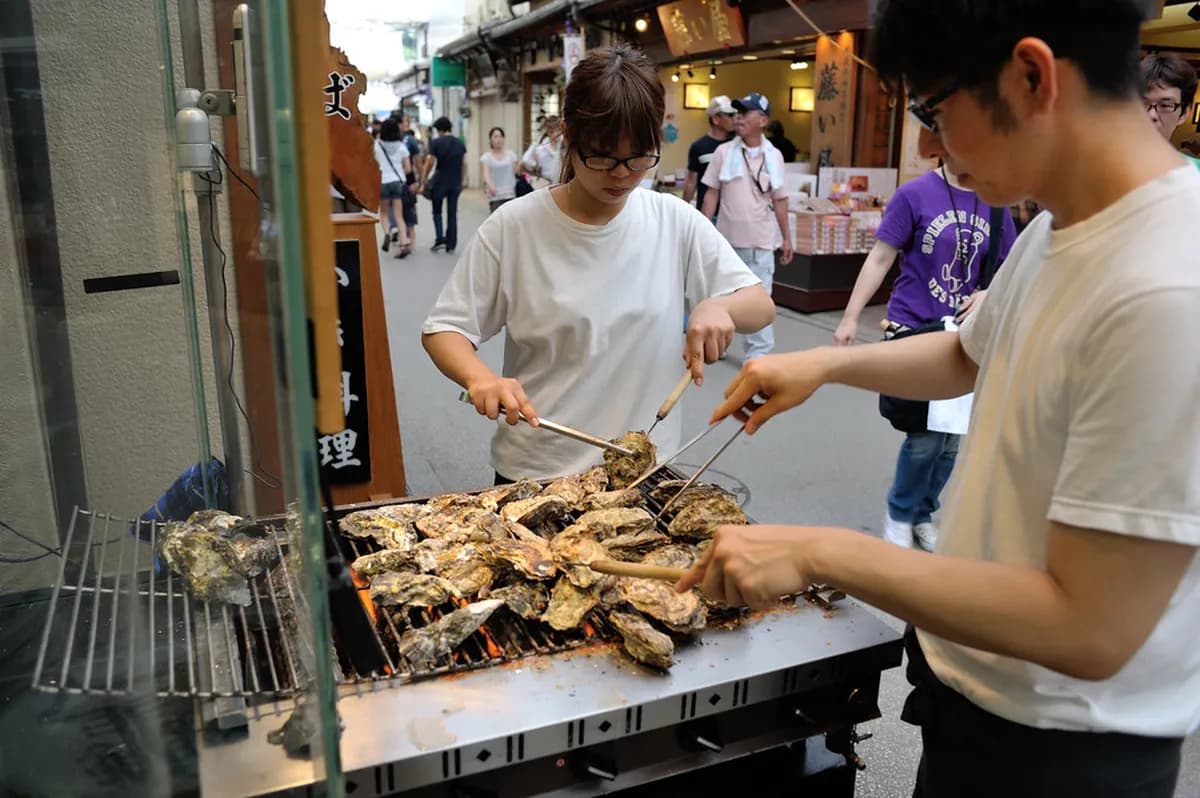
Hiroshima Prefecture produces roughly two-thirds of Japan's total oyster output. The reason is geography: oyster raft farming (ikada) is moored in Hiroshima Bay, where multiple rivers deliver a constant flow of nutrient-rich water. Local oysters are cultivated for 18 to 24 months — longer than the standard one-year cycle used elsewhere — which accounts for their notably larger size. Hiroshima oysters are roughly the size of a closed fist.
The best place to eat them is Kakiya (537 Miyajimacho, Hatsukaichi, open 10:00–18:00 daily), a five-minute walk from Miyajima's ferry pier. The Kakiya set (around ¥2,500–¥3,500) covers multiple preparations: grilled, deep-fried, smoked, pickled, and kaki meshi (oysters cooked in soy sauce and served over rice steamed in oyster broth). Two doors down, Yakigaki No Hayashi (505-1 Miyajimacho, open 10:30–16:30, closed Wednesdays) offers pricier sets that include raw oysters alongside anago meshi, which Kakiya does not. Check both menus before choosing.
Timing matters for raw oysters. Winter — specifically November through February — is the peak season for the largest and sweetest specimens. Hiroshima oysters are available year-round, but summer specimens are smaller and the food safety risk of eating them raw is higher. In July and August, stick to grilled or deep-fried preparations. Planning the best time to visit around seafood seasons enhances your experience. Reputable shops like Yakigaki No Hayashi apply strict sourcing standards, but the seasonal biology is simply less favorable for raw service in warm months.
Miyajima restaurants (Kakiya, Yakigaki No Hayashi) close between 17:00–18:00 daily. Plan to arrive on the island by mid-afternoon to ensure you have time to eat. Many shops do not accept credit cards — bring cash or visit the 7-Eleven near the ferry pier.
Anago Meshi (穴子) — Grilled Conger Eel over Rice
Anago meshi is Miyajima Island's signature dish: saltwater conger eel (anago) grilled over charcoal, glazed in a mildly sweet soy sauce, and served over rice that has been cooked in the same glaze. Anago differs from the more famous unagi (freshwater eel) in texture and flavor — it is softer, less oily, and the glaze is subtler. The Miyajima area is one of the richest anago fishing zones in Japan because the oyster farms that blanket Hiroshima Bay attract the crustaceans and small fish that conger eel feed on.
The most famous shop for anago meshi is Ueno (near Miyajimaguchi Station on the mainland), which has been operating since 1901 and charges around ¥2,000–¥2,500 for a set. Their bento boxes often sell out by early afternoon on weekends. For those already on the island, Tsuki Akari (1 Chome-8-9 Otemachi, Naka Ward, open 11:30–14:00 and 17:00–24:00) in Hiroshima city serves a well-regarded version in the evening. The takeout bento from Ueno is also a practical option if you plan to eat on the ferry or train.
The key practical point: anago is genuinely best on Miyajima, while okonomiyaki is best in the city center. If your schedule only allows one trip to the island, prioritize oysters and anago there, and leave okonomiyaki to your city meals. This division of labor is the single most efficient way to structure your eating in the Hiroshima area.
Shiru Nashi Tantanmen (汁なし坦々麺) — Hiroshima's Soupless Spicy Noodles
Shiru nashi tantanmen (汁なし坦々麺) is Hiroshima's local take on the Chinese Sichuan dandan noodle. The defining feature is the absence of broth: noodles arrive in a bowl coated with a sauce of sesame paste, Sichuan peppercorns, spiced minced pork, and green onion. Diners are expected to mix the noodles thoroughly before eating — locals insist on at least 30 stirs to fully emulsify the sauce. Spice level is customizable at most shops, making this accessible even for those who avoid heat.
Okkundou Mazemen (3 Chome-3-3 Otemachi, Naka Ward, open 11:00–23:00 daily) is the most cited specialist, located on the eastern bank of Motoyasu River just south of Peace Boulevard. A bowl runs ¥700–¥1,000. Another solid option is Kunimatsu (Nagarekawa branch open until late), which is better positioned for evening dining in the Nagarekawa entertainment district. Both shops allow you to add condiments — rice vinegar, extra chili, sesame seeds — to adjust the flavor mid-bowl.
This dish is a strictly local phenomenon: you will not find the same style in Tokyo or Osaka. If you enjoy mazemen or dry ramen formats, shiru nashi tantanmen is one of the most compelling reasons to eat in Hiroshima rather than simply passing through. The bowl is also small enough to serve as a second lunch after okonomiyaki without overfilling you.
Onomichi Ramen (尾道ラーメン) — Soy-Based Seafood Broth
Onomichi Ramen (尾道ラーメン) originates in Onomichi, a coastal town about 80 km east of Hiroshima city. The broth is soy-based (shoyu), enriched with both pork fat and local small fish (usually niboshi dried anchovies), which produces a rich, layered flavor that is savory without being fishy. Thin, flat noodles and distinct chunks of back fat floating on the surface are the visual signature. It is a deeply regional style that you will not encounter outside Hiroshima Prefecture.
The critical logistics point that no other guide makes explicit: Onomichi is a separate city, not a Hiroshima neighborhood. Getting there requires a JR Sanyo Line train from Hiroshima Station, roughly 60–70 minutes each way. The Visit Hiroshima Tourist Pass (available from the tourist information desk at Hiroshima Station, around ¥2,800 for 2 days) covers unlimited JR travel within the zone, including the Onomichi leg, plus the Miyajima ferry. If you are already planning a Miyajima day, adding Onomichi on the same pass makes the ramen trip essentially free on marginal cost. Without the pass, expect to spend around ¥1,400 one-way.
In Onomichi, the local recommendation is Tonchinkan (東珍康), which has a local following and a broth that is notably clean and non-fishy despite the seafood base. For travelers who cannot make the Onomichi trip, the ekie dining complex at Hiroshima Station carries a well-regarded branch serving a city-accessible version, which is a reasonable substitute when time is tight. Order the regular size (nami, 並) unless you have already eaten heavily.
| Dish | Where to Eat | Price Band |
|---|---|---|
| Hiroshima-style Okonomiyaki | Okonomimura (25 stalls) or Reichan (Hiroshima Station) | ¥900–¥1,500 |
| Oysters (Kakigani) | Kakiya or Yakigaki No Hayashi (Miyajima) | ¥2,500–¥3,500 |
| Anago Meshi | Ueno (Miyajimaguchi) or Tsuki Akari (Hiroshima) | ¥2,000–¥2,500 |
| Shiru Nashi Tantanmen | Okkundou Mazemen or Kunimatsu (Nagarekawa) | ¥700–¥1,000 |
| Onomichi Ramen | Tonchinkan (Onomichi) or ekie branch (Hiroshima Station) | ¥800–¥1,200 |
| Momiji Manju (fried) | Momijido Nibanya (Miyajima) | ¥200–¥300 |
Hiroshima Tsukemen (広島つけ麺) — Cold Noodles in Fiery Dipping Broth
Hiroshima tsukemen (広島つけ麺) is a dip-noodle dish distinct from both Tokyo-style tsukemen and the soupless shiru nashi tantanmen above — it uses thick, chilled noodles served alongside a separate bowl of scalding, chili-oil-red broth thickened with vinegar, garlic, and a touch of sesame. Diners dip each bite rather than eating noodles submerged in broth, so the contrast between cold noodle and fiery dip is the point of the dish. The format is generally traced to Chinese chefs working in Hiroshima during the 1960s, and it has stayed a city-specific specialty rarely found outside Hiroshima Prefecture.
Bakudanya, a specialist chain with several branches around downtown Hiroshima and near Hiroshima Station, is the most commonly cited destination for the dish; a bowl typically runs ¥850–¥1,100. Most shops let you dial the broth's spice level up or down, and regulars finish the meal by asking staff to add a splash of hot noodle-cooking water to the remaining broth, turning it into a drinkable soup — skipping this step is considered leaving the meal unfinished.
Because it is served cold-noodle-with-hot-broth rather than all in one bowl, Hiroshima tsukemen works well as a second noodle stop on the same day as shiru nashi tantanmen: order tantanmen for something soupless and immediately spicy, then tsukemen if you want the cold-hot contrast instead.
Momiji Manju (もみじ饅頭) — The Iconic Maple Leaf Dessert
Momiji manju (もみじ饅頭) are small cakes baked in maple-leaf iron molds — the maple leaf is the official symbol of Hiroshima Prefecture. The traditional version uses a soft, slightly sweet dough encasing red bean paste (azuki). Modern fillings extend to matcha, chocolate, custard, cream cheese, and lemon. These are available throughout the prefecture but are concentrated on Miyajima's Omotesando shopping street, making them a natural pairing with an oyster or anago meshi lunch.
The variation worth seeking out is age-momiji (揚げもみじ) — the entire cake battered and deep-fried on a stick. Momijido Nibanya (512-1 Miyajimacho, open 09:00–17:30 daily, next door to Kakiya) is the specialist for this format and charges around ¥200–¥300 per stick. The fried exterior is crispy and light; the inside stays warm and soft. The cheese filling offers a savory counterpoint to the sweet dough that many visitors find unexpectedly good. Eat it immediately — age-momiji loses its texture quickly once it cools.
For a more innovative presentation, Daikonya (だいこん屋) serves momiji manju topped with matcha ice cream and mochi. They also offer complimentary hot green tea, making it a proper sit-down dessert stop rather than a walk-and-eat snack. Both formats make for good souvenirs: the standard baked version travels well in a sealed box without refrigeration, unlike the lemon-cream varieties which require refrigeration.
Setouchi Citrus — Lemons (瀬戸内レモン) and Hassaku (八朔)
Hiroshima Prefecture is the largest producer of lemons in Japan. The fruit grows primarily on Ikuchi Island in the Seto Inland Sea, where the mild maritime climate and dedicated cultivation methods produce lemons that are thinner-skinned and more aromatic than imported varieties. Setouchi lemons (瀬戸内レモン) appear throughout the food scene: in gelato, cakes, drinks, momiji manju fillings, and even craft cocktails. The flavor is bright and clean without the bitterness common in supermarket lemons.
Alongside lemons, hassaku (八朔) is a locally grown citrus that resembles an orange but carries a distinctive sour-bitter finish — roughly midway between a lemon and a grapefruit. It appears in daifuku mochi, pudding, ice cream, and juice, and is particularly concentrated in Onomichi's Senkoji Park tourist shops near the ropeway. If you make the trip to Onomichi for ramen, the Senkoji Park Observatory shop sells hassaku and lemon preparations side by side, making it easy to compare both fruits in one stop.
In Hiroshima city and on Miyajima, the easiest lemon encounter is the Setouchi Lemon Cheese Pudding Cake — a layered dessert of vanilla sponge, pudding, and lemon glaze sold in souvenir shops near Hiroshima Station. Note that the cream-filled versions require refrigeration; buy them as a last stop before your train, not at the start of a full day of sightseeing. The ekie station complex stocks these consistently and is the most reliable place to find the full range of lemon and hassaku products without hunting around the city.
B-Grade Gourmet at Hiroshima Station (ekie)
The 'ekie' dining complex inside the renovated Hiroshima Station is the most underrated eating destination in the city. B-Grade Gourmet (B級グルメ, B-kyu gurume) is a Japanese concept for high-quality, affordable regional comfort food — the kind of food locals actually eat rather than tourist-facing restaurant versions. At ekie, almost every Hiroshima specialty has a branch or outpost in one building, open until around 23:00 most nights.
Key options inside ekie include: Reichan for okonomiyaki (founded 1950s, the oldest surviving brand in the city); a Ramen Tani branch for Onomichi Ramen; multiple counters for shiru nashi tantanmen; and an extensive souvenir floor for lemon products and momiji manju. The North Side's ekie Dining hall is the main food zone. Most counters are open from 11:00 and accept major credit cards — a practical advantage over the smaller cash-only stalls in Okonomimura or along Miyajima's Omotesando street.
For travelers on a tight schedule — a single day in Hiroshima before heading to Kyoto or further west — ekie is an entirely legitimate way to eat well without leaving the station footprint. You can arrive by Shinkansen, eat okonomiyaki and buy lemon sweets as souvenirs, and board your next train within 90 minutes. This is not a compromise; the quality in ekie's specialist branches is genuinely high. The Hiroshima budget travel guide has more detail on using ekie efficiently alongside free sights near the station.
Hiroshima Food Tours and Bar Hopping
A guided food tour is the fastest way to cover multiple dishes and neighborhoods in one evening, particularly if you are visiting solo or spending only one night in the city. The most popular option is the Hiroshima Bar Hopping Food Tour run through GetYourGuide, which takes small groups through the Nagarekawa entertainment district — Hiroshima's densest concentration of izakayas, standing bars, and specialty food counters. Expect to taste okonomiyaki, shiru nashi tantanmen, and local seafood across three to five stops over two to three hours. Prices are typically ¥6,000–¥9,000 per person including food and drinks.
For independent bar hopping, the Nagarekawa area (流川) between Hondori and the river is walkable and compact. Most izakayas open at 17:00 and serve food until midnight or later. A good sequence for a self-guided evening: start with shiru nashi tantanmen at Okkundou or Kunimatsu for dinner, then move to a standing oyster bar for grilled kaki with local Sake, and finish at a small bar in the Nagarekawa backstreets. Hiroshima's bar scene is unpretentious and less crowded than Osaka or Tokyo equivalents on the same budget.
If you are combining a food tour with daytime sightseeing, the Cooking Classes in Hiroshima available on Klook allow you to make okonomiyaki yourself under a chef's instruction. These sessions typically run 90 minutes and include the finished meal. They are particularly useful for travelers who want to replicate the dish at home and understand the layering technique firsthand rather than just watching from a counter seat.
Practical Tips: Miyajima vs. Mainland and Getting Around
The central question for any Hiroshima food itinerary is how to divide time between the city and Miyajima Island. The shortest summary: eat okonomiyaki, shiru nashi tantanmen, and Onomichi ramen on the mainland; eat oysters, anago meshi, and momiji manju on Miyajima. The island's restaurants cluster along the Omotesando shopping street and near the ferry pier, and most close by 17:00–18:00. Plan to arrive on Miyajima by 10:00 to eat a full lunch and browse before the afternoon ferries get crowded.
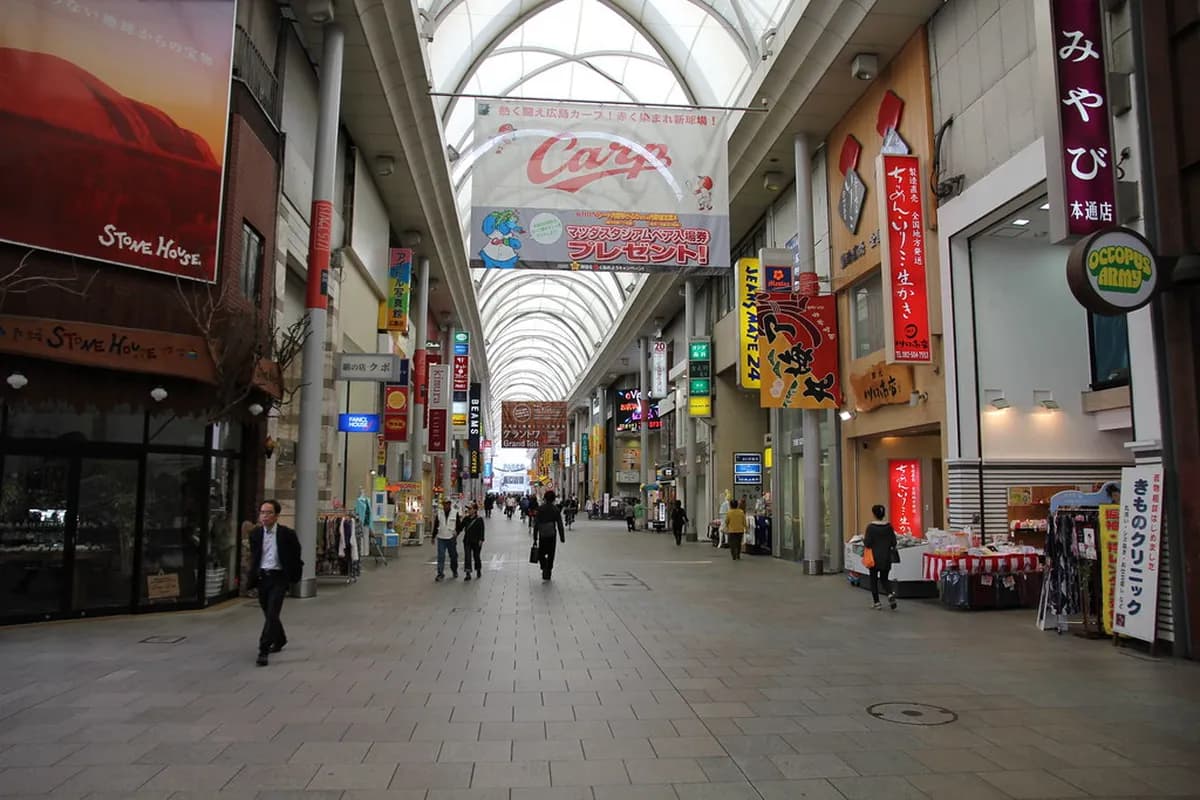
Transportation within Hiroshima city is straightforward via the green streetcar network, which covers most restaurant neighborhoods. The Hatchobori stop gives direct access to Okonomimura and the Hondori arcade. For the Miyajima day trip from Hiroshima, take the JR Sanyo Line or streetcar Line 2 to Miyajimaguchi Station (around 30 minutes from Hiroshima Station), then the JR ferry (10 minutes). The Visit Hiroshima Tourist Pass covers both the JR train to Miyajimaguchi and the ferry — at ¥2,800 for two days it breaks even against a single round trip to Miyajima plus the Onomichi train fare. If you are doing both in one trip, the pass is worth buying.
Most small okonomiyaki stalls and Miyajima seafood vendors are cash-only; carry at least ¥5,000–¥10,000 in Japanese Yen. ATMs at 7-Eleven and Japan Post branches accept international cards reliably. Hiroshima is also notably accessible: the ekie complex and major museum-adjacent restaurants are fully wheelchair accessible, and most streetcars accommodate strollers and mobility aids. Smaller stalls in Okonomimura have narrow stairs — the ground floor stalls on Floor 6 are more accessible than the upper levels.
Keep planning your trip with when to visit, month by month and Hiroshima's hidden gems.
Vegetarian, Vegan, and Allergy-Friendly Options in Hiroshima
Hiroshima's signature dishes lean heavily on pork and seafood, so vegetarian, vegan, and allergy-conscious travelers need to plan around a few specifics rather than assume any dish is automatically safe.
- Okonomiyaki: Many stalls in Okonomimura will prepare a vegetable-only version without pork if you ask when ordering, and can omit the katsuobushi (bonito flake) topping on request. The sauce itself is usually Worcestershire-based and may contain fish or oyster extract, so confirm with the stall if you need a fully vegan version.
- Shiru nashi tantanmen: The minced pork is typically mixed into the sauce base before serving rather than added as a garnish, which makes it difficult to remove — treat this as unreliable for vegetarians without advance notice to the kitchen.
- Momiji manju: The plain and anko (red bean) fillings contain no meat or dairy, but the castella-style batter is made with egg, so momiji manju are vegetarian rather than vegan; custard and chocolate fillings add further egg and dairy.
- Setouchi lemons and hassaku: Fresh citrus and most citrus-based sweets are naturally vegan.
- Shellfish allergies: Oysters and anago appear throughout Miyajima menus, so travelers with shellfish allergies should state this clearly when ordering rather than assume a dish is oyster-free by default.
For English-language ordering support, the restaurants inside Hiroshima Station's ekie complex are the most consistently equipped with picture menus and staff accustomed to foreign visitors, making it the easiest place to manage dietary requests if your Japanese is limited.
Frequently Asked Questions
What is the most famous food in Hiroshima?
Hiroshima-style okonomiyaki is the city's most iconic dish. It is a savory layered pancake featuring batter, cabbage, pork, yakisoba noodles, and a fried egg. You can find it at hundreds of specialized shops across the city center.
Where can I find the best okonomiyaki in Hiroshima?
Okonomimura is the best place to start, as it features over 25 stalls in one building. For a more modern and convenient experience, the ekie dining hall at Hiroshima Station is also highly recommended by locals.
Is Miyajima food different from Hiroshima city food?
Yes, Miyajima is specifically famous for grilled oysters and Anago Meshi (conger eel over rice). While you can find these in the city, the island offers the freshest versions and a unique atmosphere for seafood lovers.
Hiroshima offers one of the most distinct and rewarding food scenes in all of Japan. From the smoky teppan grills of Okonomimura to the briny oysters of Miyajima, every meal tells a story. Structure your eating around the city-vs-island split and you will cover the essential dishes without backtracking. For a complete travel plan, consider our Miyajima day trip guide to round out your visit.
Free: The Hiroshima Essentials guide
Top things to do, where to stay, a perfect day plan, getting around, and the best time to go — a Hiroshima mini-guide you can take offline.
You might also like

Continue reading
More guides you'll find useful