Best Time To Visit Hiroshima Month By Month Travel Guide
Plan your trip with our month-by-month Hiroshima guide. Discover the best time for cherry blossoms, autumn foliage, and festivals with weather and crowd tips.
On this page
The best time to visit Hiroshima is mid-March to late April for cherry blossoms, or October for autumn foliage and stable weather. Both windows offer mild temperatures, manageable crowds, and the most photogenic conditions the city produces.
Hiroshima enjoys a drier, sunnier climate than most of Japan. The Chugoku Mountains to the north and west create a rain shadow effect over the city, shielding it from the heavier precipitation that hits Tokyo and Osaka. The Seto Inland Sea to the south moderates temperatures year-round, keeping winters less bitter and summers slightly cooler near the coast. The result is a destination that rewards visitors in every season — not just spring.
This guide covers the full picture: seasonal weather, month-by-month data, the best things to do in each window, August 6th ceremony logistics, how to time your Miyajima visit with the tides, and how many days to budget. See our full guide to our full attractions guide for the complete list.
Golden Week (late April to early May) sees domestic travel surge across Japan — prices spike 20–40% and accommodation books out fast. If you want cherry blossoms without peak-season chaos, aim for the last week of March or first week of April, or skip to late May for shoulder-season pricing and warm weather.
October is widely considered the single best month to visit Hiroshima year-round: temperatures average 18–22°C (64–72°F), rainy days drop to just 7, typhoons are rare after mid-September, and crowds are noticeably lighter than spring — all while hotels remain below peak-season rates.
Hiroshima Weather: A Seasonal Overview
Hiroshima has a humid subtropical climate with four distinct seasons. Spring and autumn are the most comfortable for sightseeing, with temperatures between 13–21°C / 55–70°F and low rainfall. Summer is hot and humid, peaking at 30–33°C / 86–91°F in August, while winter is mild by Japanese standards — rarely dropping below 2°C / 36°F in the city center.
The Seto Inland Sea micro-climate is the key factor that makes Hiroshima different from other major Japanese cities. Because the Chugoku and Shikoku mountain ranges block moisture-laden air masses from both the north and south, the city receives roughly 1,550 mm of annual rainfall — significantly less than Tokyo (1,530 mm, but far more humid) and well below Osaka's 1,280 mm rain totals in summer months. More practically: on a day when Kyoto sees drizzle, Hiroshima is often in sunshine. This matters when you are choosing between itinerary stops.
Rainfall peaks in June and July during the Tsuyu rainy season, but even then, showers are typically intense and short rather than all-day affairs. Typhoon risk climbs in August and September, occasionally disrupting the Miyajima ferry. Snow in central Hiroshima is rare — perhaps two or three light dustings per year.
Spring (March–May): Cherry Blossoms and Mild Weather
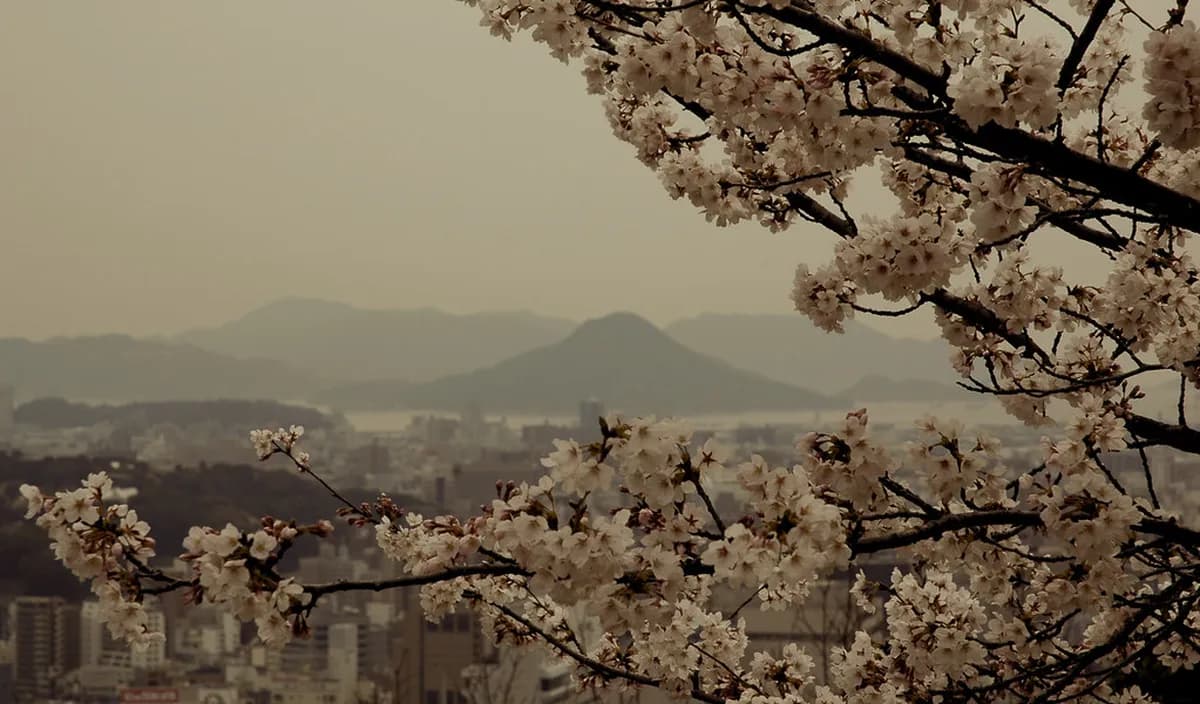
Spring is the most popular season in Hiroshima and rightly so. Cherry blossoms at Peace Memorial Park and along the Motoyasu River typically peak in the last week of March or first days of April — roughly three to five days earlier than Tokyo due to Hiroshima's slightly warmer latitude. The pink petals against the A-Bomb Dome make for one of the most striking photographs in Japan. Consult official cherry blossom forecasts to time your visit precisely. Book accommodation four to six weeks ahead if you plan to visit during peak bloom.
Visit our cherry blossom viewing spots guide for the best parks and local tips. Beyond Peace Park, Shukkeien Garden and the moat around Hiroshima Castle both offer excellent bloom views with far fewer tour groups. Temperatures during peak bloom average 13–17°C / 55–63°F during the day, with evenings cool enough for a light jacket.
April remains ideal until the Golden Week holiday block (late April to early May), when domestic travel surges and prices jump 20–40%. Crowds thin noticeably after May 5th. Late May sees warm temperatures around 20–23°C / 68–73°F, fresh green foliage, and hotel rates that return to normal — a strong shoulder-season option for budget travelers.
Summer (June–August): Festivals, Humidity, and Typhoons
June marks the start of the Tsuyu rainy season. Average temperatures sit around 23–27°C / 73–81°F, but humidity makes it feel hotter. Carry a compact umbrella daily; afternoon downpours can arrive without much warning. The rain shadow effect reduces total rain days compared to western Japan, but June still sees around 175 mm of precipitation — the wettest month of the year.
July dries out significantly as the rainy season ends, but heat and humidity intensify. Daytime highs regularly reach 31–33°C / 88–91°F in late July. Indoor attractions — the Peace Memorial Museum, Hiroshima Museum of Art, and Okonomimura — become welcome midday refuges. The Hiroshima Flower Festival runs in early May, but several riverside events and outdoor concerts occur through summer as well.
August carries the highest typhoon risk, with storms typically tracking through Kyushu and the Seto Inland Sea. Most typhoons cause one to two days of disruption to ferry services before passing. Always check the Japan Meteorological Agency forecast if a storm is approaching during your travel dates. Budget an extra hotel night as buffer when visiting in late August or September.
August 6th: Peace Memorial Ceremony Logistics
August 6th is the most emotionally significant day in Hiroshima's calendar. The Peace Memorial Ceremony begins at 08:15 in the park, marking the exact moment the atomic bomb detonated in 1945. Around 50,000 people attend annually — survivors, foreign dignitaries, and visitors from across Japan. The ceremony lasts approximately one hour and centers on the ringing of the Peace Bell and a minute of silence at 08:15.
Logistics require planning. Roads around the park close from early morning and sections of the park fill by 07:00. Arrive by 06:30 if you want a position near the Cenotaph. The lantern floating ceremony on the Motoyasu River begins at dusk (around 18:30–19:00) and is more accessible for late arrivals — thousands of paper lanterns drift downstream in front of the A-Bomb Dome, and this is the most visually arresting event of the day.
The heat in early August is serious: temperatures routinely reach 34–36°C / 93–97°F by mid-morning. Drink water before arriving, carry a folding fan or small battery-powered fan, and wear lightweight, modest clothing (the ceremony is formal in tone). There is no public seating; you will stand throughout. Viewing the ceremony is free and requires no registration, but the formal seating area near the podium is reserved for official guests and registered representatives.
Autumn (September–November): Fall Foliage and Clear Skies
October is widely considered the single best month to visit Hiroshima. The summer heat breaks, typhoon frequency drops sharply after mid-September, and the skies turn a deep, photogenic blue. Daytime temperatures average 18–22°C / 64–72°F — comfortable for full days of walking. Crowds are present but noticeably lighter than spring, and hotel prices typically sit below peak-spring rates.
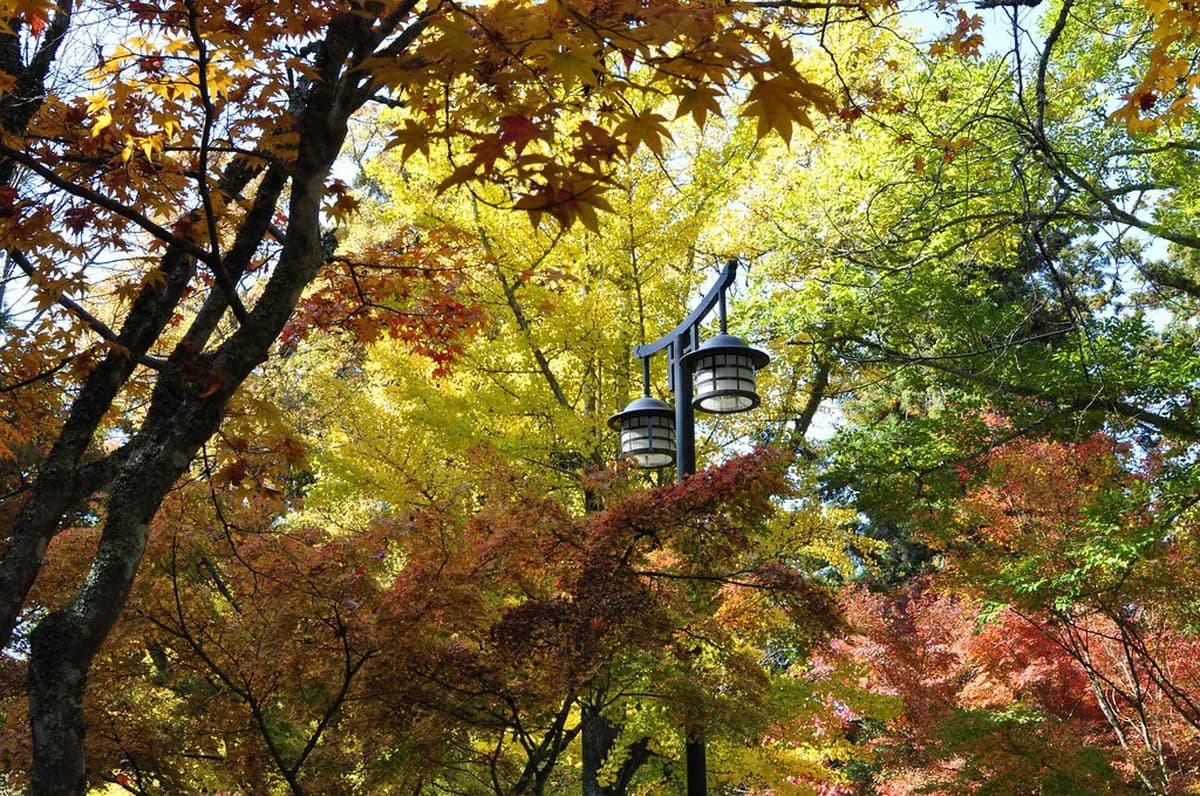
November brings the foliage season. Shukkeien Garden is the premier location for autumn maple viewing, with the reds and golds reflecting in the central pond. Peak color usually arrives in the second half of November. Check official foliage forecasts, as the exact peak shifts by one to two weeks depending on temperatures that year. Temperatures in November drop to 12–16°C / 54–61°F during the day.
September can still feel warm and carries residual typhoon risk, but it is much cheaper and less crowded than October. If weather flexibility matters less to you than cost, early-to-mid September is an underused shoulder option. See our our sample autumn itinerary for how to sequence the key sights across two or three days.
Winter (December–February): Cold Days and Winter Illuminations
Winter is the quietest season in Hiroshima, with the lowest prices and smallest crowds of any time of year. Daytime temperatures average 6–10°C / 43–50°F in January and February; evenings drop to 2–4°C / 36–39°F. The city center rarely sees snow, though the mountains inland can receive significant accumulation. Pack a mid-weight coat and a thermal layer — you will not need heavy ski gear, but a thin fleece alone is insufficient.
February is the peak of oyster season. Hiroshima produces roughly 60% of Japan's farmed oysters, and winter is when they are at their largest and most flavorful. Temporary oyster huts (kakigoya) open along the Ninoshima and Etajima coastlines, where you can grill oysters over charcoal for around ¥1,000–¥1,500 per set. Many also operate in the covered market areas near the ferry terminals.
Peace Boulevard hosts a winter illumination display through December and into early January. The long evenings make the lights more atmospheric. Visit Find Hotels in Hiroshima for the best off-season rates — discounts of 25–40% compared to spring peak are typical. Most businesses take a break between December 29 and January 3, so plan museum visits accordingly.
What to Pack for Hiroshima in Every Season
Packing for Hiroshima depends heavily on which season you're visiting, since daytime temperatures swing from the mid-30s°C in August to single digits in January. Layering is the general rule — Peace Memorial Park, Shukkeien Garden, and Miyajima's Mount Misen trail all involve significant walking, so comfortable, broken-in shoes matter more than any single jacket.
| Season | Pack | Skip |
|---|---|---|
| Spring (Mar–May) | Light layers, a packable rain jacket, sunglasses | Heavy coats — daytime highs reach 13–17°C during peak bloom |
| Summer (Jun–Aug) | Moisture-wicking fabrics, a compact umbrella, a portable fan, sunscreen | Cotton T-shirts, which stay damp in the humidity |
| Autumn (Sep–Nov) | A light jacket for October, a mid-weight one for November evenings (12–16°C) | Shorts after mid-October |
| Winter (Dec–Feb) | A mid-weight coat, a thermal base layer, scarf and gloves for 2–4°C evenings | Heavy ski gear — central Hiroshima rarely sees snow |
One item works across every month: a compact umbrella. Even outside the June–July Tsuyu rainy season, Hiroshima gets short, intense downpours, and ponchos are harder to find away from central Hondori.
Hiroshima Month-by-Month Breakdown
The table below summarizes average temperatures, approximate rainy days, and a crowd factor score from 1 (very quiet) to 10 (extremely busy). Data is based on long-term climatological averages for Hiroshima city.
| Month | Avg High (°C) | Avg Low (°C) | Rainy Days | Crowd Factor (1–10) | Highlight |
|---|---|---|---|---|---|
| January | 9 | 2 | 5 | 2 | Quiet museums, low prices |
| February | 10 | 3 | 6 | 2 | Oyster season peak |
| March | 14 | 6 | 9 | 5 | Plum blossoms; early cherry |
| April | 20 | 11 | 9 | 9 | Cherry blossom peak |
| May | 25 | 16 | 9 | 7 (10 during Golden Week) | Flower Festival, warm days |
| June | 28 | 21 | 13 | 4 | Rainy season; affordable hotels |
| July | 32 | 25 | 10 | 5 | Heat; indoor attractions |
| August | 33 | 26 | 8 | 6 | Peace Ceremony on Aug 6th |
| September | 28 | 22 | 10 | 4 | Typhoon risk; shoulder prices |
| October | 22 | 14 | 7 | 7 | Best all-round weather |
| November | 17 | 8 | 7 | 7 | Autumn foliage peak |
| December | 11 | 4 | 6 | 3 | Illuminations; very quiet |
June has the most rainy days of any month, but the rain shadow effect limits total accumulation compared to cities on Japan's Pacific coast. October combines the lowest rainy-day count outside of winter with the most comfortable temperatures — that combination explains why it consistently tops travel forum recommendations for Hiroshima.
Miyajima: Timing Your Visit Around the Tides
Visiting Miyajima Island involves a decision most travel guides gloss over: when to arrive relative to the tide cycle. At high tide, the Itsukushima Torii gate appears to float on the water — the classic postcard image. At low tide, the gate sits on exposed sand flats that extend 200–300 metres from the shoreline, and you can walk directly to its base. Both are worth experiencing, but for different reasons and different times of day.
The optimal strategy depends on your priorities. If you want the floating-gate photograph, arrive 30–60 minutes before high tide and stay through peak. Tidal highs in spring and autumn often coincide with morning or late-afternoon light, which produces the best photography conditions. If you want to walk to the gate, plan for low tide — the sand flats are revealed for roughly two to three hours either side of low water. The Japan Meteorological Agency publishes daily tide tables for Miyajima at no cost; search "宮島潮位表" (Miyajima tide table) or use the Tide Graph app, which displays the full monthly cycle in English.
Season also affects the experience. In spring, the cherry trees along the island's Omotesando approach bloom simultaneously with the mainland, creating blossom-framed views of the torii from the ferry. In autumn, the maple-covered slopes of Mount Misen turn red behind the gate. Winter visits offer the gate with no crowds and occasional morning mist over the Inland Sea — arguably the most atmospheric time of all. The ferry from Hiroshima's Ujina port runs throughout the year, with services approximately every 15 minutes. Check the schedule in advance if you plan a November evening visit, as last ferries can be earlier than expected.
Is Hiroshima Worth Visiting?
Hiroshima is absolutely worth a dedicated stop. The city is often tacked onto a Kyoto–Osaka itinerary as a half-day side trip, but that undersells what it offers. Two full days is the realistic minimum to give both the Peace Memorial site and the rest of the city fair coverage. Three days allows for an overnight on Miyajima and a more relaxed pace.
The Peace Memorial Park and Museum carry considerable emotional weight. The museum is one of the most thoughtfully curated historical exhibits in Japan, going beyond statistics to document individual stories — children's belongings, handwritten letters, photographs. Many visitors find it harder than expected. That heaviness is balanced by the rest of the city: the downtown Hatchobori area has excellent coffee shops, the riverside promenade is genuinely beautiful, and the food scene is a highlight in its own right.
Hiroshima-style okonomiyaki is a distinct dish from the Osaka version. At Okonomimura — a multi-storey building in central Hiroshima housing 25 competing okonomiyaki stalls — you can eat for around ¥900–¥1,200 per plate and watch the dish assembled on the iron griddle in front of you: crepe batter, cabbage, noodles, pork, egg, and a dark Worcestershire-style sauce. No reservations, no pretension. It is one of the most enjoyable eating experiences in Japan.
How Many Days Do You Need in Hiroshima?
Two days in Hiroshima covers the essentials comfortably. Spend the first day on Peace Memorial Park, the A-Bomb Dome, and the museum (allow three to four hours for the museum alone). Use the afternoon for Hiroshima Castle and Shukkeien Garden, then dinner in Okonomimura. Day two works well for a full day on Miyajima — take the morning ferry, hike part of Mount Misen or walk the Omotesando shopping street, time your departure around the tide cycle, and return to the city by early evening.
Three days gives you a more relaxed pace and room for half-day options: Himeji Castle is 40 minutes east by Shinkansen and is one of the most impressive castle structures in Japan. Add Hiroshima Museum of Art or the Mazda Museum (reservation required, free, excellent if you have any interest in automotive design) for variety. Four or more days is comfortable if you plan to stay overnight on Miyajima, which transforms the island experience — the shrine and gate at dusk and dawn, with day-trippers gone, are exceptional.
Most itinerary planners allocate too little time. If you are traveling the standard Tokyo–Kyoto–Osaka route, Hiroshima is a two-night minimum addition, not a day trip. The Shinkansen from Kyoto takes about 90 minutes (Nozomi), making the logistics straightforward. See our our Miyajima logistics guide for ferry times and getting there efficiently.
Best Things to Do in Hiroshima by Season
Some attractions are worth doing year-round; others are genuinely season-specific. In spring, the walk from Peace Memorial Park along the Motoyasu River under the cherry trees is the defining Hiroshima experience. The path is best at 07:00–08:00 before tour groups arrive. Shukkeien Garden also peaks in early April — the entry fee is ¥260 and the crowds are far lighter than the Peace Park area.
In summer, the Peace Memorial Museum is an excellent choice for the hottest hours (10:00–14:00) when outdoor walking is punishing. The museum is air-conditioned and can absorb two to three hours. The Hiroshima Flower Festival (first week of May, technically late spring but summer-adjacent) takes over the downtown boulevards with parades, food stalls, and outdoor concerts; it draws around one million visitors over three days.
Autumn rewards those who explore beyond the main circuit. Mount Misen on Miyajima turns dramatically red in November — the ropeway saves most of the climbing, and the summit view across the Seto Inland Sea on a clear October or November day is outstanding. In winter, the kakigoya oyster huts near Miyajima's ferry piers open from November through February, serving grilled oysters for ¥1,000–¥1,500 per plate with cold Hiroshima Lemon Cider or local sake.
Day Trips, Getting Around, and Where to Stay
Miyajima is the undisputed first choice for day trips, reachable in under 30 minutes from central Hiroshima via the Hiroden streetcar (Line 2 from Hiroshima Station to Miyajimaguchi, then a 10-minute JR ferry). Himeji Castle is the second-best option — take the Sanyo Shinkansen Nozomi from Hiroshima to Himeji (40 minutes, approximately ¥3,890 one-way). A round trip to Himeji fits comfortably into a half-day if you leave by 09:00.
Getting around central Hiroshima involves a clear trade-off. The Hiroden streetcar network covers all the major sights and is the most scenic way to travel — Line 1 from Hiroshima Station passes the Peace Park stop in about 10 minutes for ¥190 per ride. The catch is that it runs slower than buses in traffic and the routes require one transfer to reach some peripheral stops. Buses and the Astram Line (a rubber-tyred metro line running north from central Hiroshima) cover areas the streetcar misses, including the northeastern residential districts. For most visitors, the streetcar handles everything; buy a one-day pass for ¥700 if you expect more than four rides.
For accommodation, the Hatchobori district is the most convenient base: central, walkable to Peace Park, and close to the main Okonomimura and dining streets. The Candeo Hotels Hiroshima Hatchbori sits in an ideal location with clean, modern rooms. Budget travelers do well in Hiroshima Station-area hostels and business hotels, which are well connected by the streetcar. Avoid booking on Miyajima itself unless you specifically want the overnight experience — island accommodation is expensive and limited.
Keep planning your trip with essential travel tips and our local food guide. For the full city overview, see our complete Hiroshima attractions guide.
Japanese Public Holidays That Raise Hiroshima Prices
Beyond Golden Week and the August 6th ceremony, a few other Japanese holidays shift Hiroshima's prices and crowd levels enough to plan around.
- New Year (January 1–3): Many restaurants, small shops, and some museums close or run reduced hours. Hiroshima Toshogu Shrine and other local shrines get busy with hatsumode, the first shrine visit of the year, and hotel rates tick up slightly from December 29 through January 3.
- Obon (mid-August, typically August 13–16): Domestic travelers return to hometowns nationwide to visit family graves. Combined with the August 6th Peace Memorial crowds, this makes early-to-mid August the most expensive and most booked-out stretch of summer, with Shinkansen seats to Hiroshima selling out days in advance.
- Silver Week (late September, in years when Respect-for-the-Aged Day and the Autumnal Equinox line up into a five-day weekend): Domestic tourism rises and hotel prices climb moderately, though nowhere near Golden Week levels.
None of these dates change the weather, but they change availability. If your travel dates overlap any of them, book accommodation at least a month out and expect train reservations to need more lead time than usual.
Frequently Asked Questions
What is the rainiest month in Hiroshima?
June is typically the rainiest month in Hiroshima due to the Tsuyu rainy season. Expect frequent showers and high humidity during this time. Always carry a compact umbrella if you visit in early summer.
When is the best time to see cherry blossoms in Hiroshima?
The best time is usually from the last week of March to early April. Peak bloom varies slightly each year based on local temperatures. Popular spots like Peace Park become very busy during this window.
Is August a good time to visit Hiroshima?
August is meaningful for the Peace Memorial Ceremony but is also extremely hot. Humidity levels are very high, making long walks difficult for some. It is a busy time for domestic travel in Japan.
Hiroshima is a city that offers something unique in every single season. Whether you want cherry blossoms or winter oysters, timing is everything. Plan your visit for the shoulder seasons to get the best weather. We hope this month-by-month guide helps you plan an unforgettable trip.
Remember to book your hotels early if you choose the peak months. The resilience and beauty of the city will impress you any time. Enjoy your journey through one of Japan's most significant urban centers. Safe travels on your upcoming adventure to the Seto Inland Sea.
Free: The Hiroshima Essentials guide
Top things to do, where to stay, a perfect day plan, getting around, and the best time to go — a Hiroshima mini-guide you can take offline.
You might also like


Continue reading
More guides you'll find useful