10 Essential Hiroshima Travel Tips: Etiquette, Money & Packing Guide
Master your trip with our Hiroshima travel guide. Includes essential etiquette for the Peace Park, money-saving tips, a seasonal packing list, and top attractions.
On this page
Hiroshima is a city that blends a somber past with a vibrant and hopeful present. Many travelers visit to honor history but stay for the incredible food and warm hospitality. Planning a trip here requires a mix of practical knowledge and cultural respect. This guide covers the essential hiroshima travel tips to ensure your visit is smooth, respectful, and genuinely rewarding.
Is Hiroshima Worth Visiting?
Hiroshima is absolutely worth visiting, and not only for its history. The Peace Memorial Park and Museum are among the most significant sites anywhere in the world, yet they represent just one dimension of a city that has rebuilt itself with extraordinary energy. Walking the modern downtown streets, lined with coffee shops and riverfront promenades, shows how much the community has created since 1945.
The city feels genuinely welcoming rather than merely somber. You will find beautiful green spaces, a thriving food scene, and an easy-going urban rhythm that rewards slower travel. Hiroshima Castle stands almost to itself on weekday mornings, and the nearby Shukkien Garden offers a peaceful counterpoint to the emotionally heavy museum. Many travelers leave feeling inspired rather than depleted.
English signage is common in most tourist areas and transit hubs, making navigation straightforward for first-time visitors. Local people are proud of their city and reliably helpful with directions or recommendations. The combination of history, nature, food, and the sacred island of Miyajima just offshore makes Hiroshima one of the most well-rounded stops on any Japan itinerary in 2026.
How Many Days Do You Need in Hiroshima?
One full day allows you to cover the main sites in the city center: the Peace Memorial Park in the morning and Hiroshima Castle or Shukkien Garden in the afternoon. That schedule works if you are passing through on a longer Japan trip, but rushing through the museum can feel emotionally exhausting. Allow yourself time to stop and process.
Two days is the sweet spot for most first-time visitors. Dedicate day one entirely to the city — the Peace Park, the A-Bomb Dome, Okonomimura for dinner — and day two to Miyajima Island. You can follow a detailed Hiroshima itinerary to sequence everything without backtracking. Staying overnight also means you can explore the riverfront at dusk and enjoy the local restaurant scene properly.
Three days or more suits travelers who want to go deeper. Day trips to Iwakuni's Kintai Bridge or the Saijo sake district fit naturally into a third day. Extra time also lets you revisit favorite spots at a relaxed pace. Longer stays reward you with a sense of Hiroshima as a living city rather than a series of checkboxes.
How to Get to Hiroshima
Most international visitors arrive via Shinkansen from Osaka or Tokyo. Osaka is the closer gateway — the Nozomi bullet train covers the distance in about 50 minutes, while the Sakura takes roughly 1 hour 20 minutes. From Tokyo the Nozomi runs in approximately 4 hours. Hiroshima does have its own airport, but it primarily handles domestic and short-haul Asian routes, so the train remains the default approach.
The JR Pass covers the Hikari and Sakura Shinkansen services to Hiroshima but not the faster Nozomi. If your itinerary includes multiple bullet-train legs between Tokyo, Kyoto, Osaka, and Hiroshima, the pass often pays for itself. Buy it before leaving your home country — purchasing in Japan costs more. Check the Hiroshima Navigation (Official Tourism) site for updated timetable information and local transport options once you arrive.
From Hiroshima Station to the Peace Memorial Park it is about 3 km. The most useful option is the Hiroshima tram (Line 2 or Line 6, alight at Genbaku-Dome-mae), which costs a flat ¥180 per ride. The Maple-oop tourist loop bus is free if you hold a valid JR Pass voucher and covers all the major landmarks. Taxis from the station to the park run about ¥1,200–¥1,500 and take 10–15 minutes depending on traffic.
Essential Hiroshima Etiquette and Local Customs
Respect is the primary rule at the Peace Memorial Park. Keep your voice low and avoid loud conversations near any of the monuments. Many visitors come here to pray, reflect, or search for family names among the records. Read our museum guide for specific visitor rules and recommended time allocations.
Photography outdoors in the park is generally permitted, but the angle and spirit of your shot matters. Avoid staging smiling selfies directly in front of the Cenotaph or the Children's Peace Monument — it reads as disrespectful to other visitors. Inside the museum, many exhibits prohibit flash photography and some sections ban cameras entirely. Always check for posted signs or ask staff before you raise your camera.
Respectful photography at the A-Bomb Dome follows similar unwritten rules. The structure sits on the far bank of the Motoyasu River, and people often pause on the bridge in quiet contemplation. Standing quietly for a moment before you photograph signals awareness rather than tourism reflex. Tripods and drone use near the memorial grounds require advance permission from the city.
Bowing is a sign of respect when greeting locals, thanking shop staff, or showing gratitude. Even a slight 15-degree bow signals genuine cultural awareness and deepens interactions with Hiroshima residents. A bow combined with eye contact and a smile is one of the most universally appreciated gestures you can make throughout Japan.
General Japanese social norms apply throughout the city. Bowing slightly when greeting someone or thanking shop staff is always appreciated. Avoid eating while walking on busy sidewalks, and keep your phone on silent in museums and restaurants. When visiting Itsukushima Shrine on Miyajima, follow the ritual handwashing (temizuya) before approaching the main hall and remove shoes before entering any indoor wooden spaces.
Money in Hiroshima: Cash, Cards, and ATMs
Japan is still a cash-heavy society, and Hiroshima is no exception. Most of the individual stalls inside Okonomimura and many small souvenir shops near the Peace Park are cash-only. Always carry a mix of coins and small bills — a ¥1,000 note covers most lunches, a ¥5,000 note handles a comfortable dinner. Using a Hiroshima budget travel guide can help you estimate daily cash needs by activity type.
Seven-Eleven ATMs are the most reliable withdrawal point for foreign debit and credit cards. They offer English-language menus, accept Visa, Mastercard, Maestro, and most international networks, and operate 24 hours. There are 7-Eleven branches on Aioi-dori near the Peace Park and several more within a few minutes' walk of Hatchobori. Japan Post ATMs (inside post offices, 09:00–17:00 weekdays) are the alternative if you cannot find a 7-Eleven.
IC cards like Suica, Pasmo, or the local Paspy work on all Hiroshima trams and most buses. Tap on and tap off — no paper tickets needed. Top up at any ticket machine in Hiroshima Station. For day-trippers who plan to ride the tram multiple times, the Hiroshima Sightseeing Loop Pass (¥700 for one day, available at the tourist desk inside Hiroshima Station) covers unlimited tram rides and the Maple-oop bus, making it better value than paying ¥180 per segment.
Major hotels, department stores like Sogo, and large restaurants accept international credit cards. For the Miyajima ferry, the JR-operated service is free with a JR Pass; otherwise it costs ¥200 each way. Budget roughly ¥3,000–¥5,000 per person per day for food, transport, and entry fees when planning your cash float.
Many small businesses in Hiroshima still do not accept credit cards or digital payments. Small souvenir shops, traditional okonomiyaki stalls, and local street vendors operate cash-only. A traveler who arrives with no access to cash can face frustration at the most authentic dining spots. Always carry at least ¥5,000 in small bills as a safety margin, especially if you plan to explore beyond the major tourist thoroughfares.
Hiroshima Packing List: What to Wear and Bring
Comfortable walking shoes are the single most important item. You will cover several kilometers a day between the Peace Park, Hiroshima Castle, and the riverfront. Make sure your footwear is fully broken in before you arrive. Breathable, moisture-wicking fabrics are essential for the humid summer months of June to August, when temperatures regularly exceed 33°C.
The ferry crossing to Miyajima is short — about 10 minutes — but the open deck can be windy and surprisingly cool even in summer. Pack a light windbreaker or compact rain jacket that compresses into its own pocket. Sun protection is non-negotiable for outdoor days: a wide-brim hat, SPF 50 sunscreen, and UV-blocking sunglasses cover the basics. A small folding umbrella handles the sudden afternoon downpours common in spring and early autumn.
For the Peace Memorial Museum and any temple visits, avoid sleeveless tops or very short shorts. The museum is air-conditioned to a low temperature year-round, so a light layer is useful even in midsummer. If you visit Itsukushima Shrine on Miyajima during high tide, the pathway can be slippery — shoes with grip matter more than sandals.
Beyond clothing, these items earn their weight in your bag:
- Portable power bank — navigation and maps run the battery down quickly on a sightseeing day
- IC card (Suica loaded to your phone or a physical card) pre-loaded with at least ¥2,000
- Small day bag or daypack — lockers at Hiroshima Station (¥300–¥600 per day) let you stow your main luggage
- Reusable water bottle — vending machines are everywhere, but a bottle cuts plastic waste and saves money
- Tissues and a handkerchief — many public restrooms outside the main tourist hubs lack hand dryers
Top Things to Do in Hiroshima
The Peace Memorial Park is the emotional heart of the city. Plan at least half a day here: start at the A-Bomb Dome on the northern bank of the Motoyasu River, cross the Peace Bridge, and work through the park toward the museum. The Children's Peace Monument — covered in thousands of origami cranes — is especially moving. Admission to the Peace Memorial Museum is ¥200 per adult and the exhibition can take 1.5 to 2 hours at a considered pace. Check the Peace Memorial Park Official Info for current opening hours and any temporary exhibition changes.
Hiroshima Castle is a short tram ride or 25-minute walk northeast of the Peace Park. The original structure was destroyed in 1945 but the 1958 reconstruction is faithful to the original Momoyama-period design. Climb to the fifth floor for a panoramic view of the city and the Chugoku Mountains. Admission is ¥370. The moat and surrounding park make it a pleasant place to walk even if you skip the interior.
Shukkien Garden, built in 1620, compresses a series of miniature landscapes — valleys, islands, hills, and bridges — around a central pond called Takuei-chi. It is one of the finest strolling gardens in western Japan. Admission is ¥260. The garden sits a 10-minute walk northeast of Hiroshima Station and is best visited on a weekday morning before tour groups arrive. Plum blossoms peak in early February, cherry blossoms in late March, and maples turn in mid-November.
For something less expected, the Mazda Museum in Fuchu offers a factory tour showing how the automaker (headquartered in Hiroshima since 1920) assembles its vehicles. The free tour runs on weekdays and requires advance reservation through the official Mazda website. It takes about 90 minutes and appeals to visitors who want to see a living piece of Hiroshima's postwar industrial rebuild.
Where to Stay: Best Neighborhoods and Hotels
Hatchobori is the best all-round base for first-time visitors. It sits in downtown Hiroshima on the city's largest island, directly on the Line 1 and Line 6 tram routes. The Peace Memorial Park is a 15-minute tram ride west and Hiroshima Castle is a short walk north. The Candeo Hotels Hiroshima Hatchbori is a strong mid-range option here — clean, well-located, and popular with international travelers. The neighborhood stays lively into the evening with a dense concentration of restaurants and bars on Hondori shopping street.
Hiroshima Station is the alternative hub, best for travelers arriving by Shinkansen with an early check-in or those departing on a first-morning train. The area has been extensively redeveloped with new malls and hotels, and the tram and bus network connects it quickly to the city center. The walk to the Peace Park from the station takes about 30 minutes; the tram takes under 15.
If you plan to spend a night on Miyajima Island, book accommodation there at least two to three months in advance — the island has a limited number of ryokan and guesthouses and they sell out quickly, especially on weekends and around the August 6th Peace Memorial Ceremony, when Hiroshima city hotels also fill up fast. Staying on Miyajima lets you see the Itsukushima Shrine after the last ferry brings day-trippers back to the mainland, which is genuinely worth the extra cost.
Where to Eat and Drink: Hiroshima Specialties
Hiroshima-style okonomiyaki is the dish you must try. Unlike the Osaka version where all ingredients are mixed into the batter, Hiroshima's style is layered: a thin crepe base, cabbage, bean sprouts, noodles (usually soba or udon), and toppings like pork belly or a fried egg, all bound together with a sweet-savory okonomiyaki sauce. Learning to eat okonomiyaki like a local turns the meal into an experience. Okonomimura is the most famous destination — a multi-story building in downtown Hiroshima housing 25 individual stalls, each with a tiny counter and its own recipe. Most stalls are cash only, prices range from ¥800 to ¥1,400, and no reservation is needed.
Fresh oysters from the Seto Inland Sea are another Hiroshima signature. The region produces roughly 60% of Japan's total oyster harvest. You can find them grilled over charcoal, deep-fried as kaki furai, or served raw with ponzu at restaurants near the Peace Park and along the Hondori covered arcade. Winter (October to March) is peak oyster season when the flavor is richest, but they appear on menus year-round.
Spicy tsukemen — thick noodles served cold alongside a deep, fiery dipping broth — has a strong local following. The spice scale typically runs from level 1 to level 10 at specialist shops, and the cold noodles are a welcome refresher on a humid August afternoon. For coffee, Obscura Coffee Roasters has two central Hiroshima locations and draws serious attention from specialty coffee travelers passing through Japan.
For a quick and inexpensive lunch, onigiri from Onigiri Nitaya on the riverside opposite the Peace Memorial Park makes a satisfying stop. Take one to a bench overlooking the Motoyasu River and you have both a good meal and one of the better views in the city for well under ¥500.
Getting Around Hiroshima: Trams, Buses, and Ferries
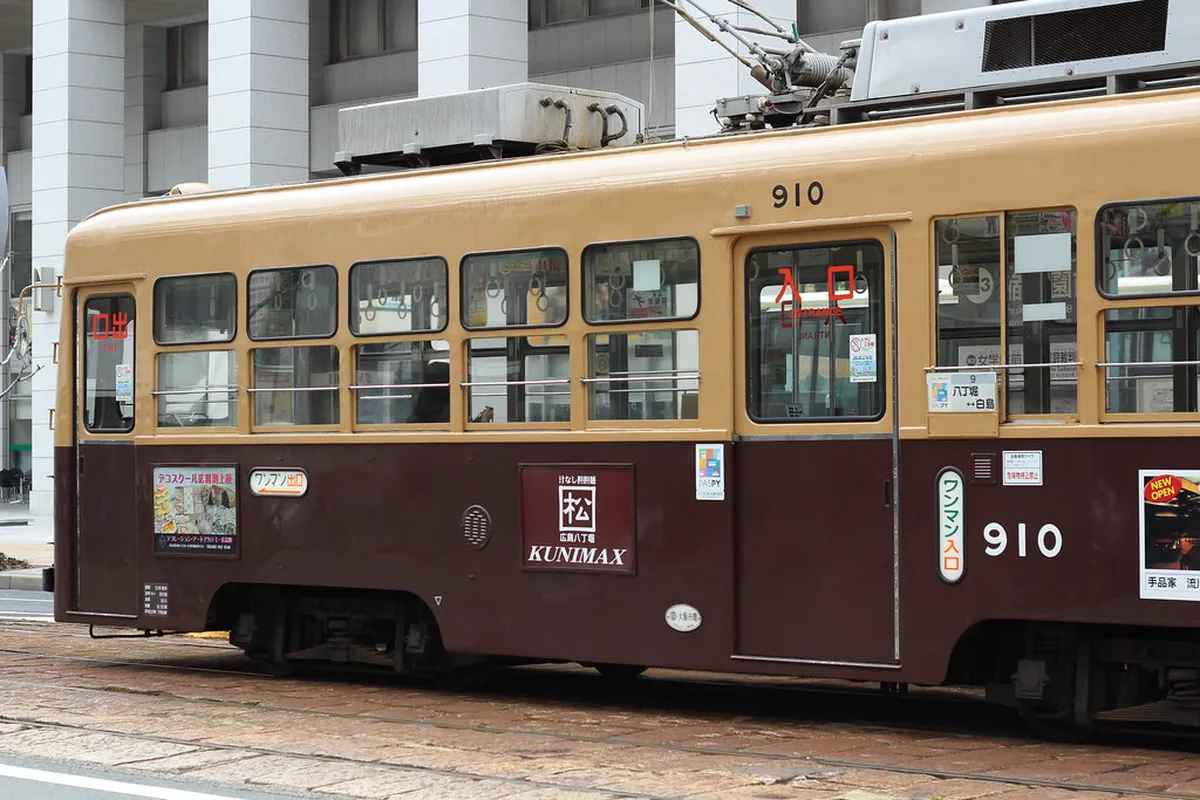
Hiroshima's streetcar network is one of the oldest and most useful in Japan. Flat fare of ¥180 per ride covers most tourist routes. Lines 2 and 6 connect Hiroshima Station to Genbaku-Dome-mae (Peace Park) in about 14 minutes. Try navigating the city by streetcar for a proper local experience — some of the vintage cars operating on Line 7 date from the 1940s and survived the atomic bomb. Line 2 continues all the way to Miyajimaguchi pier for the Miyajima ferry, though the full ride takes about 55 minutes; most visitors prefer the faster JR train from Hiroshima Station to Miyajimaguchi (25 minutes, ¥410).
The Maple-oop tourist loop bus runs a circuit of all major attractions every 15–20 minutes from 09:00 to 18:00. It is free with a valid JR Pass. Without a pass, the day ticket (¥400) covers unlimited rides and is sold at the tourist desk inside Hiroshima Station. A Suica, Pasmo, or Paspy IC card works on both the trams and the Maple-oop bus, so there is no need to carry cash for every single trip. Top up at any staffed ticket window or self-service machine in the station.
Ferries to Miyajima Island depart from Miyajimaguchi pier roughly every 10–15 minutes and the crossing takes about 10 minutes. Two companies operate the route: JR (¥200 one way, free with JR Pass) and Matsudai Kisen (¥200 one way, cash only, IC card not accepted). Check the Hiroshima Navigation (Official Tourism) site for live tide times before you go — the iconic torii gate of Itsukushima Shrine appears to float at high tide and sits on mudflats at low tide. Timing your arrival for high tide is worth planning around.
Day Trips from Hiroshima
Miyajima is the obvious choice and deserves the reputation. The island's main draw is Itsukushima Shrine, a UNESCO World Heritage site whose vermilion torii gate appears to rise from the sea at high tide. The 10-minute ferry crossing is easy, the walk from the pier to the shrine takes about 5 minutes, and you can cover the island's highlights — the shrine, Omotesando Market, the five-story pagoda — in a half day. Deer roam freely on the island and will investigate your bag if you carry food openly. Budget ¥2,500–¥3,500 for the round-trip ferry, shrine entry (¥300), lunch, and a maple-leaf manju (the island's signature snack).
Iwakuni's Kintai Bridge is the less-visited alternative and takes about 45 minutes by JR train from Hiroshima (¥820 one way, or free with JR Pass). The five-arch wooden bridge dates to 1673 and spans the Nishiki River against a backdrop of forested hills. Entry to the bridge costs ¥310. Add Iwakuni Castle on the hill above (¥260 for the ropeway, ¥260 for the castle) and you have a full morning's sightseeing for around ¥2,000 total — significantly cheaper than Miyajima on a per-experience basis. Crowds are a fraction of what you will find on Miyajima on any weekend.
Himeji Castle is possible as a day trip but it is a long one. The Nozomi Shinkansen covers the roughly 90-minute journey for about ¥8,000 each way. Himeji is the largest and most intact castle in Japan — a national icon and UNESCO site — and the adjoining Kokoen Garden is worth the extra hour. Factor in a full 5–6 hours on the ground and a round-trip cost of ¥16,000 before meals. It is expensive but visitors rarely regret it.
Best Time to Visit Hiroshima
Spring (late March to early May) is the most popular season. Cherry blossoms peak around the first week of April in the Peace Memorial Park, around Hiroshima Castle, and in the Shukkien Garden. Temperatures sit between 12–20°C and days are largely dry. Expect larger crowds and higher accommodation prices during peak bloom and Golden Week (late April to early May).
Autumn (October to early December) is the other peak season, for fall foliage and clear skies. Early November delivers comfortable temperatures (12–18°C) and some of the year's best light for photography at the A-Bomb Dome. Hiroshima receives noticeably fewer visitors than Kyoto or Osaka in autumn, which makes it feel more relaxed. Check the 2026 event calendar for festivals and special autumn programs.
Summer (June to August) is hot, humid, and rainy, but visitor numbers drop. Average August temperatures exceed 32°C with high humidity. August 6th is the Peace Memorial Ceremony, a solemn annual event commemorating the atomic bombing. The ceremony draws large crowds to the Peace Park and completely fills central Hiroshima hotels — if you plan to attend, book accommodation at least six months in advance. For most other summer travelers, plan indoor activities between 11:00 and 15:00.
Winter (December to February) is off-season and quieter than any other period. Daily temperatures hover between 3–10°C in January and February, with occasional light snow. Most attractions remain open; ferry services to Miyajima continue on a reduced schedule. Oysters are at peak season in winter, making it an underrated time for food-focused travelers who prefer empty museums and half-price hotels.
Keep planning your trip with when to visit, month by month and our local food guide.
Frequently Asked Questions
What is the proper etiquette at the Hiroshima Peace Memorial?
Visitors should maintain a quiet and respectful demeanor at all times. Avoid loud talking, running, or eating within the park grounds. Photography is allowed outdoors, but please avoid taking disrespectful or smiling selfies in front of memorial monuments and the Cenotaph.
Do I need cash for okonomiyaki restaurants in Hiroshima?
Yes, many traditional okonomiyaki stalls and small shops are cash-only businesses. While larger restaurants and malls accept cards, it is vital to carry yen for local dining. You can find 7-Eleven ATMs throughout the city center for easy cash withdrawals.
Can I use a Suica or Pasmo card on Hiroshima trams?
Yes, major IC cards like Suica, Pasmo, and Icoca are accepted on all Hiroshima streetcars and local buses. Simply tap your card on the reader when entering and exiting the vehicle. This is much faster than buying individual paper tickets for every trip.
What should I pack for Hiroshima in the summer?
Pack lightweight, breathable clothing to handle the high humidity and heat. A portable fan, sunscreen, and a hat are essential for staying comfortable outdoors. Don't forget a small umbrella for sudden rain and comfortable walking shoes for the long days of sightseeing.
Hiroshima is a city that offers much more than just a history lesson. By following these travel tips, you can enjoy a respectful and well-organized trip. From the delicious food to the peaceful gardens and the sacred island offshore, there is something genuinely rewarding for every type of traveler. Prepare your bags and get ready for an unforgettable visit to this resilient city.
With the practicalities sorted, plan the rest of your visit using our our Hiroshima hub.
Free: The Hiroshima Essentials guide
Top things to do, where to stay, a perfect day plan, getting around, and the best time to go — a Hiroshima mini-guide you can take offline.
You might also like

Continue reading
More guides you'll find useful