Hiroshima Budget Accommodation and Hostels: Best Areas
Discover the best budget accommodation and hostels in Hiroshima. Our guide covers top-rated stays in Hatchobori and near Hiroshima Station, plus money-saving travel tips.
On this page
Hiroshima rewards budget travelers more than almost any other major city in Japan. Hostel dorm beds run ¥3,000–4,500 per night, the tram network is flat-rate and efficient, and most of the city's best sights are free or cost under ¥500. According to JNTO's official Hiroshima guide, the city attracts visitors year-round seeking both historical and cultural experiences. This guide covers the best hiroshima budget accommodation and hostels in 2026, with a direct comparison of the two main stay zones and practical advice on getting the most from your yen.
We focus on Hatchobori (the downtown core) and the Hiroshima Station area — the two neighborhoods where budget properties cluster. Both work well, but the right choice depends on your schedule. Use this budget travel guide alongside this accommodation guide to plan your full Hiroshima itinerary.
Must-See Hiroshima Attractions
The Atomic Bomb Dome is the single most-visited landmark in Hiroshima, and it costs nothing to walk up to. The skeletal steel frame of the former Industrial Promotion Hall was preserved exactly as the blast left it on 6 August 1945. Standing a few metres from the structure is a disorienting experience — the modern city hums around it, and the contrast is the point.
Peace Memorial Park spreads across the delta island directly south of the dome. The park is free to enter at all hours. Allow at least 90 minutes to walk the main monuments: the Cenotaph, the Flame of Peace (burning since 1964 and kept lit until all nuclear weapons are eliminated), and the Children's Peace Monument with its cascading paper cranes. The Peace Memorial Museum sits at the southern end of the park and charges ¥200 — one of the lowest museum admission prices in Japan.
Hiroshima Castle is a 20-minute walk north of the park. The exterior grounds are free; the five-floor reconstructed keep charges ¥370. From the top floor you get a clean aerial view of how the six rivers divide the city into its distinct islands. Check out the 1-day itinerary if you want a timed route connecting all three sites.
- Key free or low-cost sights
- Atomic Bomb Dome — free, open 24 hours
- Peace Memorial Park — free, open 24 hours
- Peace Memorial Museum — ¥200 adults, closed on certain Mondays
- Hiroshima Castle grounds — free; keep ¥370
- Children's Peace Monument — free, inside the park
Museums, Art, and Culture in Hiroshima
The Peace Memorial Museum is the city's defining cultural institution. Its two buildings trace the human cost of the 1945 bombing through survivor testimonies, physical artefacts, and photographs. A full visit takes about two hours. Book timed entry tickets online if you are visiting between March and May — spring school trips fill slots quickly.
The Hiroshima Prefectural Art Museum sits adjacent to Shukkeien Garden, a 12-minute walk from Hiroshima Station. The permanent collection holds over 4,500 works, with a focus on Surrealism and contemporary Japanese art. Admission is ¥510 for the permanent galleries. Visiting the museum and garden together makes a natural half-day loop from the Station area.
Hiroshima Orizuru Tower, standing directly beside the Atomic Bomb Dome, has a free observation terrace on the upper floor and a paid rooftop deck (¥700). It is worth a stop for the skyline view across the delta. The ground-floor souvenir shop stocks locally made origami paper and Hiroshima maple-leaf sweets at better prices than the tourist stalls near the dome.
Parks, Gardens, and Outdoor Spots in Hiroshima
Shukkeien Garden is a 400-year-old strolling garden six minutes on foot from Hiroshima Station. Admission is ¥260. The pond, stone bridges, and teahouse are at their best in late November when the maples turn red and orange. This is the single most undervisited paid attraction in the city — tourists heading straight to the Peace Park miss it entirely.
Hijiyama Park sits on a small wooded hill in the Minami ward, a 15-minute tram ride from Hatchobori. The climb to the summit takes about 20 minutes and rewards you with a panoramic view of the city. Entry is free. The park also houses a small manga library (Hiroshima City Manga Library) — admission is free, and the collection runs to tens of thousands of volumes, which is a reliable rainy-day stop.
Mitaki-dera Temple is reached by a 20-minute walk through cedar forest from Mitaki Station, three stops west of Hiroshima Station on the Sanyo line. The grounds are free and the mossy stone steps, waterfalls, and small sub-shrines feel completely removed from the city. Plan an hour. It is the kind of detour most budget travelers skip on a tight schedule — and therefore usually uncrowded even on weekends.
Where To Stay In Hiroshima: Hatchobori vs Hiroshima Station
Almost all budget accommodation in Hiroshima falls into one of two zones. Choosing between them comes down to three practical questions: how late you plan to be out, how early you need to catch a train, and whether you want to walk to the Peace Park or take the tram.
Hatchobori is the commercial and nightlife core of central Hiroshima. Budget properties here sit within a 15-minute walk of the Peace Memorial Park and the Atomic Bomb Dome. You can return to your room between sightseeing sessions, and bars, izakaya, and late-night ramen are steps from the door. The trade-off is that street noise picks up on weekend evenings. Nest Hotel Hiroshima Hatchobori is the standout budget business hotel in this area — clean, modern rooms from around ¥7,000 per night for a double, plus a complimentary breakfast and coin laundry on site. GuestHouse Hostel MangeTak offers mixed and female-only dorms from ¥3,500, a shared kitchen, and a cozy bar that doubles as a social hub.
Hiroshima Station area is quieter and slightly cheaper on average. The area is ideal if you are arriving on the Shinkansen, taking an early-morning train onward, or making a day trip to Miyajima Island (the JR ferry terminal is on the south side of the station). Guesthouse Akicafe Inn is the area's best-known budget option, with dorms from ¥3,000 and a welcoming atmosphere that makes solo travelers feel at home. The main catch: most dining and nightlife requires a 20-minute tram ride to downtown. If you are primarily sightseeing and not drinking, this is the cheaper and lower-noise choice.
The Knot Hiroshima sits in the downtown zone close to the Peace Park and is the best mid-budget option if you want a rooftop bar and modern style without a hostel dorm. Rates start from around ¥10,000 per night. For families or small groups who need more space and a kitchenette, Sotetsu Grand Fresa Hiroshima offers river and A-Dome views from the upper floors with a breakfast restaurant on floor 15.
| Property | Zone | Type | From (per night) | Guest Kitchen | Female-only Dorm | Laundry | Distance to Tram |
|---|---|---|---|---|---|---|---|
| Guesthouse Akicafe Inn | Station | Hostel | ¥3,000 | Yes | Yes | Yes | 2 min |
| GuestHouse Hostel MangeTak | Downtown | Hostel | ¥3,500 | Yes | Yes | Yes | 3 min |
| Nest Hotel Hatchobori | Downtown | Budget Hotel | ¥7,000 | No | No | Yes (coin) | 1 min |
| The Knot Hiroshima | Downtown | Boutique Hotel | ¥10,000 | No | No | Yes (coin) | 2 min |
| Sotetsu Grand Fresa | Downtown | Business Hotel | ¥8,500 | No | No | Yes (coin) | 3 min |
| KIRO Hiroshima | Downtown | Boutique Hotel | ¥9,500 | Yes (shared) | No | Yes (coin) | 5 min |
Female-only dorm beds sell out quickly during high season. Book at least three months in advance if you are traveling during cherry blossom season (late March to early April), the Peace Memorial Ceremony (6 August), or Golden Week (late April to early May).
Capsule Hotels and Other Hotel Alternatives in Hiroshima
Hostels and business hotels are not the only budget options in Hiroshima. If Hatchobori and Station-area dorms are full, or you want more privacy for the same money, several other formats fill the gap.
Capsule hotels
Capsule properties near Hiroshima Station charge roughly ¥3,200–¥4,800 per night for a private sleeping pod with shared bath and lounge facilities. They suit solo travelers who want a lockable space without booking a full private room, and most allow late check-in after an evening Shinkansen arrival.
Chain business hotels
National chains such as Toyoko Inn, APA Hotel, Super Hotel, and Comfort Hotel each operate multiple properties within a 10-minute walk of Hiroshima Station, typically from around ¥5,500 for a single room. Rates are more predictable than boutique hotels and most include a simple breakfast, though rooms run compact.
Vacation rentals and share houses
Licensed minpaku apartments around Hatchobori and Yokogawa start from around ¥6,000 per night for a studio and suit groups of three or more who want a kitchen and washing machine. Confirm the listing displays a valid minpaku registration number, which Japanese law requires hosts to show.
Manga and internet cafes
As a last-resort option if you miss the final tram, 24-hour manga cafes near Hiroshima Station rent private booths with a reclining chair, shower, and drink bar from around ¥2,000 for an overnight stay. They are not a substitute for proper sleep on a multi-night visit, but they work in a pinch.
How to Plan a Smooth Hiroshima Attractions Day
The Meipuru-pu (Maple Loop Bus) is the most efficient way to connect Hiroshima's sights without memorizing the tram network. It runs two color-coded loops — the orange loop clockwise, the green loop counter-clockwise — and a one-day pass costs ¥400. The bus runs roughly every 20–30 minutes from 09:00 to 17:30 daily. Schedules are available at the tourist information desk inside Hiroshima Station South Exit.
The bus stops matter specifically for accommodation choices. Stop 1 is at Hiroshima Station South Exit — so guests in the Station area board here. Stop 6 is "Peace Memorial Museum/Peace Memorial Park," which is a 3-minute walk from The Knot Hiroshima, MangeTak, and Nest Hotel Hatchobori. Stop 8 is Hiroshima Castle. This means downtown stays are within walking distance of two major stops, while Station-area guests use Stop 1 as their starting point each morning. Both work; the downtown position saves you the first and last bus segment every day.
A practical one-day sequence using the bus: Start at Stop 1 (Hiroshima Station) with an 09:00 departure, arrive Stop 6 by 09:25, spend the morning at the Peace Memorial Museum and park, walk to the Atomic Bomb Dome (free, 10 minutes), continue to Stop 8 for Hiroshima Castle at midday, return to Stop 6 for lunch near Okonomimura, then ride to Stop 11 (Shukkeien Garden/Prefectural Art Museum) for the afternoon. For a Miyajima day trip, skip the bus entirely and take the JR line directly from Hiroshima Station to Miyajimaguchi (25 minutes), then the JR ferry (10 minutes). Check the official Hiroshima tourism guide for real-time schedules and current attractions. A Japan Rail Pass covers both legs.
Family-Friendly and Budget-Friendly Options
Families need space, and that is exactly what most Hiroshima business hotels do not offer. The best-value family option in 2026 is Fav Hotel Heiwa Odori, which has rooms with bunk beds (queen-size lower bunks) sleeping up to six people, plus an in-room washing machine and dryer, microwave, and fridge. A 7-Eleven sits directly across the street. The hotel is a 20-minute walk from the Peace Park or a short ¥800 taxi ride. Rates for a six-person room work out far cheaper per head than booking separate double rooms.
KIRO Hiroshima by THE SHARE HOTELS is worth considering for families who want more social atmosphere. Triple and quadruple rooms with loft layouts accommodate up to six people. There is a shared kitchen on site — useful for self-catering breakfasts — and a coffee bar that keeps early risers happy. The design is modern and minimal without feeling sterile. It is situated near Okonomimura, which makes feeding a family easy and cheap.
One practical note specific to Japan: all hotels require you to declare the total number of guests including children at check-in. Do not assume small children can share a room without being counted. Some hotels will request payment for an additional room if the occupancy limit is exceeded. The Rihga Royal Hotel Hiroshima is the upscale option for families who want extra space, a swimming pool, and staff experienced with international guests — but budget ¥18,000+ per night for a family room.
Japanese hotels strictly enforce occupancy limits. You must declare all guests, including children, at check-in. Exceeding the room's capacity may result in charges for an additional room or refusal of check-in. Always confirm the maximum occupancy number when you book.
When to Book: The 6-Month Rule and Hiroshima Pricing
Most Japanese hotels open their booking calendar exactly six months in advance. If you search for a date further out than that, properties will appear fully booked when they have not actually set their availability yet. This is one of the most common planning mistakes for first-time visitors to Japan. Set a calendar reminder for six months before your travel date and book the same morning the window opens.
Hiroshima has four high-demand windows per year. Cherry blossom season (late March to early April) is the most competitive — prices at popular downtown hostels can double, and female-only dorm beds sell out in hours. The Peace Memorial Ceremony on 6 August draws an international crowd and fills the Station area quickly. Golden Week (late April to early May) and Silver Week (late September) both spike prices city-wide. If your travel dates overlap with any of these windows, the six-month booking rule becomes a six-month deadline, not a guideline.
Outside these peaks, Hiroshima is one of the more affordable overnight stops on a Kansai or western Japan circuit. A solo traveler can realistically keep total daily spending under ¥7,000–8,000 including a hostel bed, three meals, and transit. The streetcar day pass at ¥700 is particularly good value if you are making more than three tram trips. For a realistic daily cost breakdown by travel style, see the table below.
| Budget tier | Lodging | Food | Transport | Attractions | Daily total |
|---|---|---|---|---|---|
| Backpacker (hostel dorm) | ¥3,000–4,500 | ¥2,500 | ¥700 (day pass) | ¥200 (museum) | ¥6,400–7,900 |
| Budget solo (private room) | ¥7,000–8,500 | ¥3,500 | ¥700 | ¥500 | ¥11,700–13,200 |
| Mid-range couple | ¥10,000–14,000 | ¥6,000 | ¥1,400 | ¥1,000 | ¥18,400–22,400 |
| Family of 4 (shared room) | ¥12,000–18,000 | ¥10,000 | ¥2,800 | ¥1,500 | ¥26,300–32,300 |
Tram-Connected Budget Zones Outside the Center
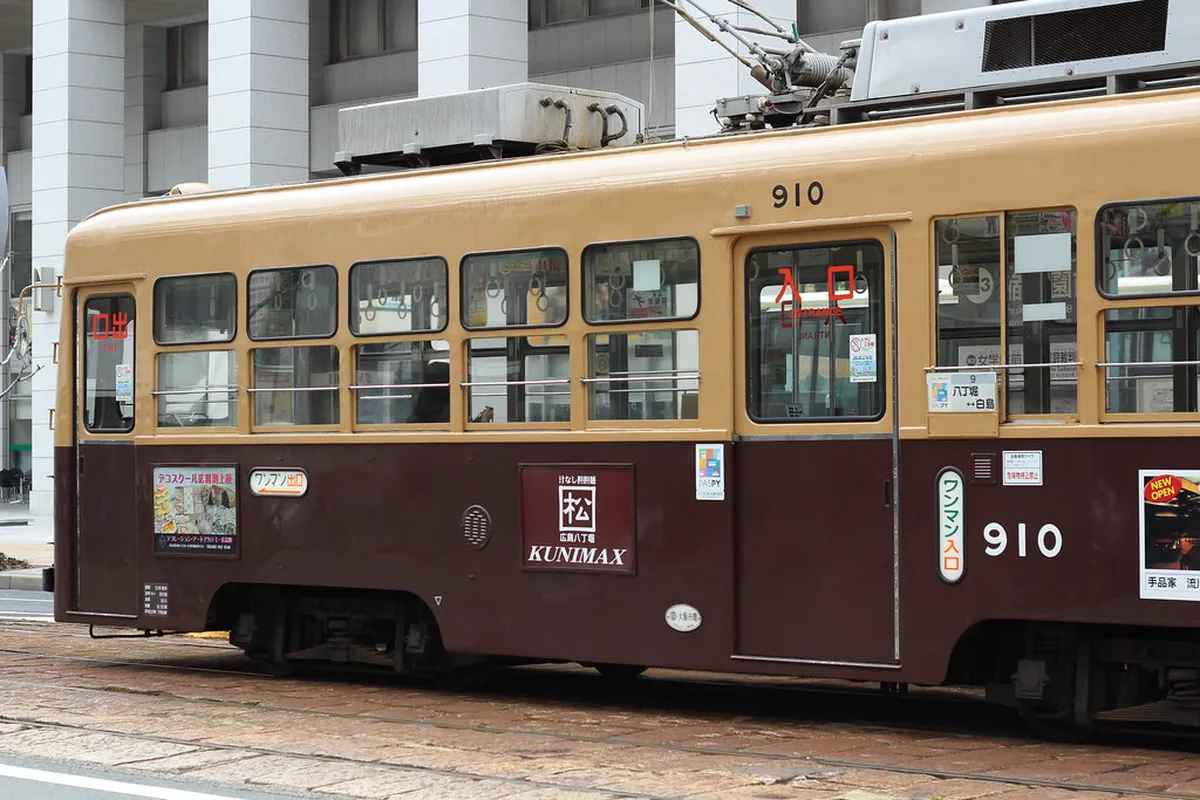
Hiroshima's tram network (Hiroshima Electric Railway) runs frequent, flat-rate service across the city. A single ride costs ¥220 regardless of distance, and the day pass at ¥700 makes longer detours economical. The official Hiroden website publishes current route maps and schedules. This opens up a category of budget options that competitors rarely mention: accommodation in the Minami ward and along the Ujina line, where nightly rates at business hotels can run ¥1,000–2,000 less than equivalent properties in Hatchobori.
The Hijiyama area, served by the Minami-Hiroshima and Hijiyamashita stops, is roughly 15 minutes by tram from the Peace Memorial Park stop. Basic business hotels and guesthouses in this zone charge ¥5,500–7,000 for a private double. The tradeoff is that you lose walkability to downtown nightlife and restaurants. For travelers whose itinerary is sightseeing-heavy and ends early, this is a legitimate way to cut ¥1,500–2,000 per night off accommodation costs.
Similarly, the Eba and Kannon areas to the west have occasional minshuku (Japanese family-run guesthouses) that charge ¥4,000–6,000 for a private room with breakfast. These are sparse and require advance booking, but they offer the closest thing to a ryokan experience at hostel-adjacent prices. Search for these on Japanese booking platforms such as Jalan or Rakuten Travel rather than international OTAs, where listings are thinner. Always confirm tram stop proximity before booking — some addresses in these areas are a 10-minute walk from the nearest stop.
Keep planning your trip with our top hotel picks and our Hiroshima accommodation guide. For the full city overview, see our complete Hiroshima attractions guide.
Budget Accommodation in Other Japanese Cities on Your Itinerary
Hiroshima sits on the San'yō Shinkansen line between Osaka and Fukuoka, so most budget travelers combine it with at least one other stop. Planning the rest of the route now saves you from booking mid-trip at peak-season prices.
Kyoto, roughly 100 minutes away by Shinkansen, has the country's densest hostel scene — dorm beds run ¥3,000–¥4,000 in neighborhoods like Gion and around Kyoto Station, similar to Hiroshima's own rates. The Kyoto budget accommodation guide breaks down pricing by area.
Osaka, about 90 minutes from Hiroshima, tends to be cheaper for hostel dorms on average (¥2,500–¥3,500) and is better connected to Kansai Airport for onward flights. The Osaka budget accommodation guide covers the Namba and Umeda options.
If you're continuing south into Kyushu, Fukuoka is roughly 70 minutes away and typically runs slightly cheaper than Hiroshima for equivalent hostel quality.
- Kyoto: dorms from ¥3,000, best for temple-focused itineraries
- Osaka: dorms from ¥2,500, best for nightlife and food budgets
- Fukuoka: dorms typically under ¥3,000, best value for a Kyushu extension
Frequently Asked Questions
What is the best area to stay in Hiroshima for budget travelers?
Hatchobori is the best area for budget travelers due to its central location and cheap eats. You can also check our budget guide for more tips. Staying here saves you money on daily transport costs.
Are there female-only dorms in Hiroshima hostels?
Yes, most hostels in Hiroshima offer dedicated female-only dorm rooms for extra privacy. These rooms usually cost the same as mixed dorms. We recommend booking these beds at least three months in advance.
How much does a hostel cost in Hiroshima per night?
A typical hostel bed in Hiroshima costs between ¥3,000 and ¥4,500 per night. Prices can rise during the peak cherry blossom season in April. This range is very affordable compared to Tokyo or Kyoto.
Hiroshima is a rewarding city that fits easily into any budget travel plan. By choosing the right hiroshima budget accommodation and hostels — and using the Meipuru-pu bus to anchor your daily sightseeing — you can save your money for experiences rather than logistics. Book early, eat like a local at Okonomimura, and use the tram day pass to keep daily spending comfortably under ¥8,000.
Free: The Hiroshima Essentials guide
Top things to do, where to stay, a perfect day plan, getting around, and the best time to go — a Hiroshima mini-guide you can take offline.
You might also like

Continue reading
More guides you'll find useful