Budget Accommodation in Kanazawa: 10 Best Areas and Tips
Plan your budget stay in Kanazawa with our guide to the 10 best areas and hotels. Includes neighborhood trade-offs, ryokan tips, and a 2-day itinerary.
On this page
Kanazawa rewards budget travelers more than almost any other city in Japan. While Kyoto and Osaka prices have surged with post-pandemic tourism, Kanazawa still offers clean business hotels from around ¥7,000 per night, capsule-style guesthouses from ¥3,500, and entry-level ryokans that undercut anything comparable in the Golden Route cities. The challenge is not finding cheap rooms — it is picking the right neighborhood for your travel style.
This guide covers the four main areas where budget accommodation clusters in Kanazawa, explains the concrete trade-offs for each, and flags the practical details most guides skip. You will also find ryokan advice for first-timers, a 2-day itinerary designed around transport savings, and a note on how Kanazawa's famously wet weather should factor into your neighborhood choice.
Where To Stay In Kanazawa: An Overview
Kanazawa is compact by Japanese city standards. Almost all tourist-relevant accommodation sits within a 3 km corridor between Kanazawa Station to the northwest and the Higashi Chaya teahouse district to the northeast, with the Kenrokuen Garden and Korinbo shopping area filling the middle. Most sights are reachable on foot or with a single Loop Bus ride from any of the four main neighborhoods. For a deeper overview of all accommodation tiers, see our Areas to Stay in Kanazawa: 2026 Planning Guide guide.
The Loop Bus is the backbone of budget transport here. A one-day pass costs ¥600 and covers the Kenroku-en, Higashi Chaya, Omicho Market, Korinbo, and both station exits. Bus stops cluster near every major hotel zone, so you rarely need a taxi. Keep in mind that buses run roughly every 15 minutes and become unreliable in heavy rain — more on why that matters below.
For most first-time visitors on a budget, the decision comes down to two neighborhoods: the station area (practical, slightly characterless, cheapest per night) versus the Omicho/Korinbo corridor (central, atmospheric, 10–20% pricier but saves on transport). The historic districts — Higashi Chaya and the Katamachi riverside strip — are better suited to travelers who prioritize atmosphere over price and are staying at least three nights.
One overlooked factor is the weather. Kanazawa is one of the wettest cities in Japan, receiving around 2,300 mm of rain per year — roughly double Tokyo's annual rainfall — and earns the nickname "rainy city" among locals. This matters for accommodation choice: the station area sits under a covered pedestrian arcade and has direct covered bus access, while the cobblestone streets of Higashi Chaya become slippery and the Nagamachi samurai district's earthen walls get muddier in sustained rain. If you are visiting in winter (November–February) or during the rainy season (June), the station area's all-weather convenience has real practical value.
Kanazawa Station Area: Best for Budget Hotels
The Kanazawa Station area concentrates the highest density of budget business hotels in the city. The Hokuriku Shinkansen connects Kanazawa to Tokyo in about 2.5 hours and to Osaka (via the extended line opened in 2024) in roughly 1 hour, making the station the arrival point for most foreign visitors. Staying within a 10-minute walk of the station is the single most practical choice for anyone on a tight schedule or arriving late at night.
CHISUN BUDGET Kanazawa Ekimae is one of the most affordable chains in the area, with twin rooms from around ¥7,000–8,000. Daiwa Roynet Hotel Kanazawa Eki Nishiguchi sits a 3-minute walk from the station's west exit and offers well-appointed rooms with occasional upgrade deals that bring it within budget range. Hotel Torifito Kanazawa is slightly further from the concourse and quieter as a result, with a communal sento bath that adds value. All three have 24-hour convenience stores within a 2-minute walk.
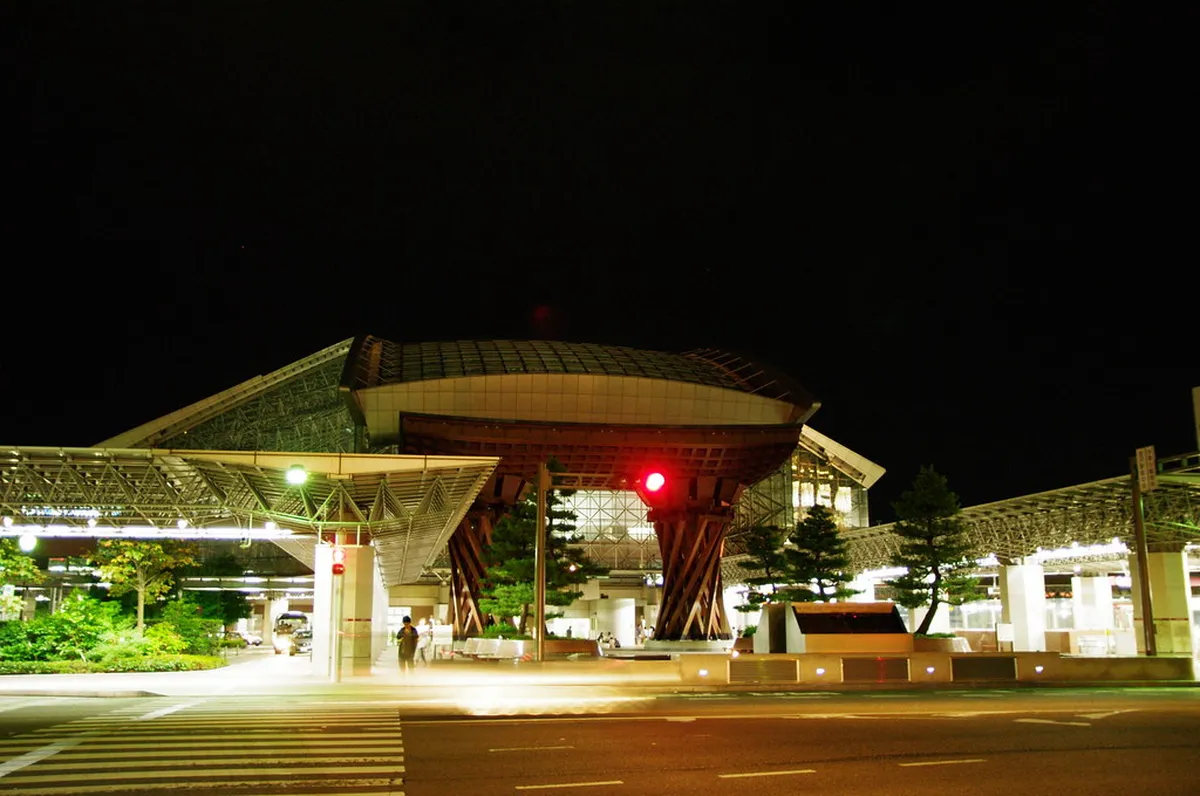
The honest trade-off is atmosphere. The iconic Tsuzumi-mon drum gate and wooden canopy of Kanazawa Station are genuinely impressive, but the surrounding streets are built for transit, not exploration. Evening dining options are mostly chain restaurants. The Higashi Chaya and Omicho areas are about 20–25 minutes on foot, or two Loop Bus stops. For visitors using Kanazawa as a base for Shirakawa-go, the Noto Peninsula, or day trips to Fukui, the station location saves meaningful time each day.
Learn more about local bus routes in our Kanazawa Transport Guide: 10 Ways to Navigate the City.
Omicho Ichiba Area: Central Value Stays
The Omicho Ichiba area is the best all-round choice for budget travelers who want centrality without sacrificing atmosphere. The covered market itself is one of the finest fresh food markets in Japan, open from around 09:00 to 17:00 daily, with stalls selling Noto Peninsula seafood, Kaga vegetables, and ready-to-eat sushi at prices well below restaurant level. Eating two meals a day from the market stalls cuts food costs dramatically compared to dining at Korinbo restaurants.
Accommodation near Omicho tends toward boutique hotels and smaller inns rather than large chains. Hotel Kanazawa Zoushi blends traditional details — Kutani ware ceramics, washi paper panels — with standard hotel amenities and sits around a 10-minute walk from both the station and Kenrokuen. The Square Hotel offers sauna, public bath, and free bicycle use, making it exceptional value when those amenities factor into your transport budget. Boutique options like SOKI Kanazawa sit at the upper edge of the mid-range bracket but occasionally offer weeknight deals that bring them within reach.
The neighborhood quiets considerably by 18:00 once the market closes, which suits travelers who prefer peaceful evenings. Kanazawa Castle Park and Kenrokuen Garden are both within a 15-minute walk. The Loop Bus stop outside Omicho Market is one of the network's most frequent stops, linking easily to Higashi Chaya in about 5 minutes. This area is the natural base for food-focused travelers who also want cultural sightseeing on foot.
Explore more about local dishes in our What To Eat In Kanazawa Travel Guide guide.
Korinbo and Katamachi Area: Nightlife and Cheap Sleeps
Korinbo is Kanazawa's downtown core — the main shopping street (Hyakumangoku-dori Avenue), the Nagamachi Samurai District, Oyama Shrine, and dozens of restaurants and bars all sit within a 10-minute walk of each other. The Katamachi strip alongside the Sai River extends this nightlife zone further south, with a concentration of izakayas and cocktail bars. For travelers who plan evening outings, staying here eliminates late-night taxi costs.
Budget options in this zone include APA Hotel Kanazawa Katamachi, which delivers the reliable APA formula — compact rooms, strong breakfast buffet, low price — right in the entertainment district. HOTEL AMANEK Kanazawa sits just off the Nagamachi Samurai District and offers Japanese and Western-style rooms, an indoor public bath, and family rooms sleeping up to five people. Both are within walking distance of the 21st Century Museum of Contemporary Art (free entry to the outer zones, ¥1,000 for the gallery).
The trade-off is noise and room size. Hotels in this zone sit on or adjacent to busier streets, and rooms in the ¥7,000–9,000 range tend to be small even by Japanese standards — under 18 sqm for a single. Requesting a higher floor at check-in reduces street noise. The Loop Bus connection from Korinbo to Kanazawa Station is straightforward (about 15 minutes), but travelers arriving by shinkansen with large bags will feel the distance on the first and last day.
Discover more about evening dining in our Kanazawa nightlife guide.
Higashi Chaya-gai Area: Traditional Atmosphere on a Budget
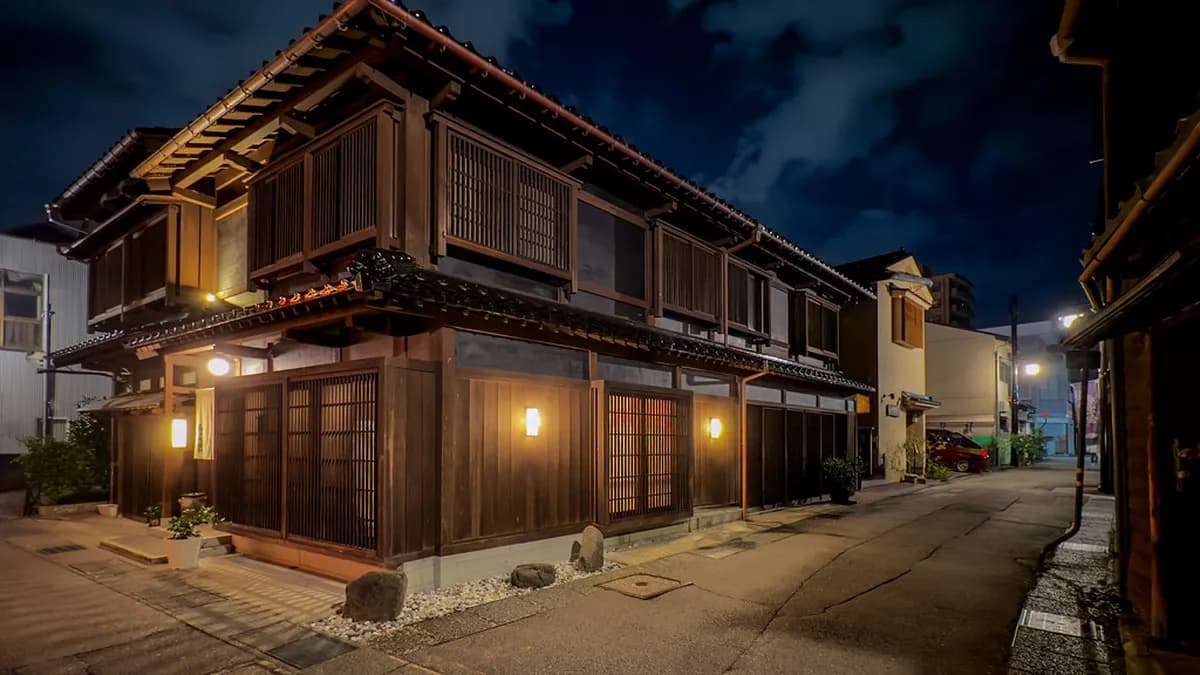
Higashi Chaya is Kanazawa's most photogenic neighborhood — narrow lanes of latticed wooden machiya (townhouses), gold-leaf craft shops, matcha cafes, and the preserved geiko (geisha) teahouses that define the city's image. Staying here puts you in that atmosphere rather than just visiting it on a day trip. Early mornings in the district, before 09:00, are entirely peaceful — no tour groups, just the sound of the river and the smell of wood smoke from nearby food stalls.
This is the most expensive area to stay in Kanazawa, but budget options do exist. Hotel Rashiku Kanazawa is the most accessible price point in the district, with 15 individually decorated rooms inspired by local Kaga crafts. It blends into the traditional streetscape without the luxury ryokan price tag. For something more immersive, smaller guesthouses on the district's edges can come in under ¥10,000 per night — worth searching on Japanese booking platforms like Jalan as well as the global aggregators, since some properties list exclusively there.
The Kanazawa Gold Leaf Museum sits a short walk from here and is free to enter, making it one of the best no-cost sightseeing additions in the city. Visitors can explore the Kanazawa Gold Leaf Museum to understand how Kanazawa produces over 99% of Japan's gold leaf. One practical note: Higashi Chaya's cobblestone streets become genuinely slippery in rain, and the district has limited covered shelter between buildings. Waterproof footwear is not optional here in winter or June.
Ryokans in Kanazawa: Traditional Stays on a Budget
Kanazawa is one of the better cities in Japan for accessing entry-level ryokan experiences without the full kaiseki dinner cost. The key is understanding what "budget ryokan" actually means here. A standard ryokan package with dinner and breakfast can run ¥20,000–30,000 per person at better-known properties. But room-only or breakfast-only ryokan bookings — which many properties offer quietly alongside their package rates — can bring the nightly cost to ¥8,000–12,000. This is worth searching for explicitly.
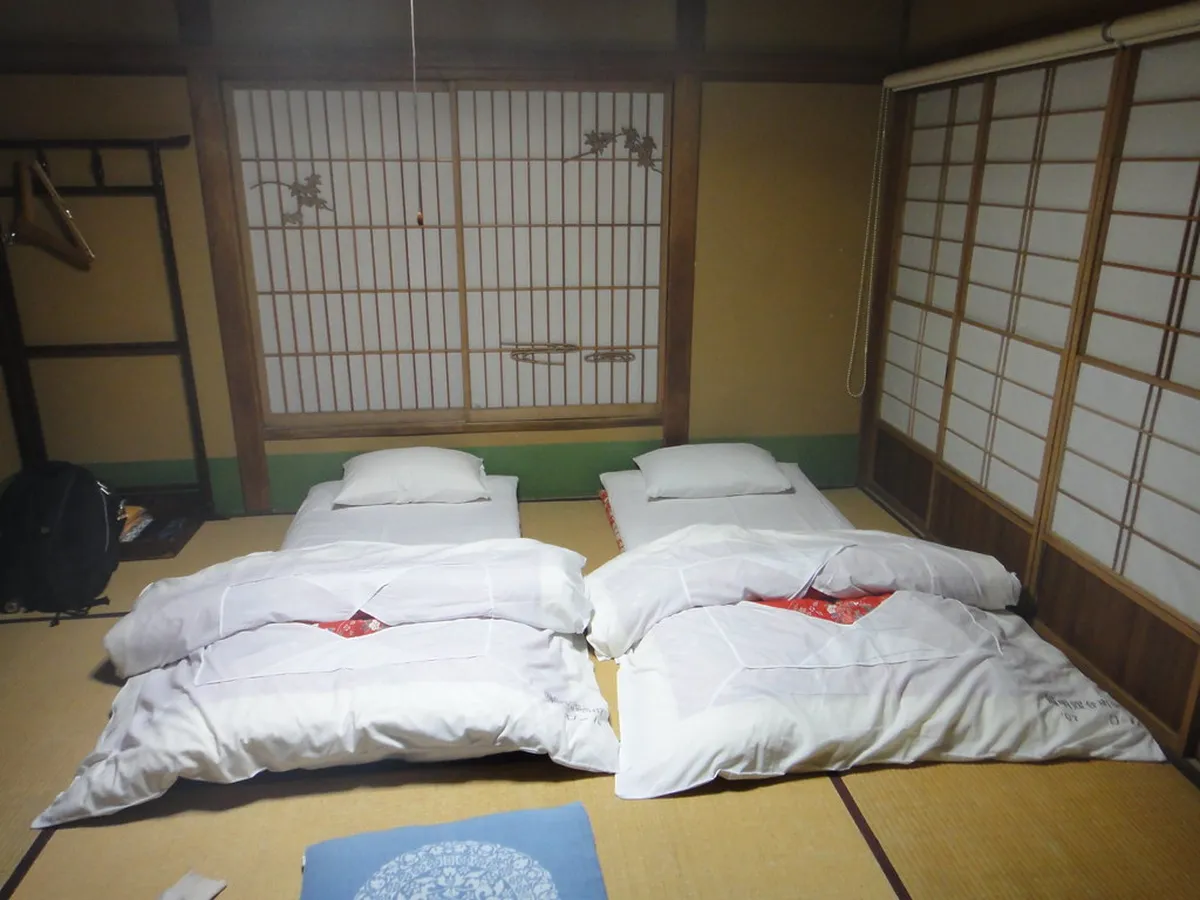
What you give up in a budget ryokan is the shared onsen quality (smaller facilities, fewer bathing hours) and the meals. What you keep is the tatami room, the futon, the yukata, the slippers, and the specific sense of quietude that wooden inn buildings create. Hotel Kanazawa Zoushi near Omicho Market bridges this gap well — it has Kaga craft details and a traditional feel without the formal inn structure. For a more authentic option, Machi no Odoriba near the Asano River is a restored machiya with an onsen and garden, located about 12 minutes from the station on foot.
First-timers often book a ryokan without understanding the shared bath etiquette. Tattoos are still prohibited at most Kanazawa public baths and some ryokan facilities, though a handful now offer tattoo-cover stickers — ask in advance if this applies to you. Communal baths are gender-separated and require you to wash thoroughly at the individual shower stations before entering the soaking pool. Check reviews carefully for cleanliness ratings, and look for properties with at least 4.0 on Booking.com or an equivalent on Jalan.
See our Best Ryokan In Kanazawa Travel Guide guide for a full comparison of options across price tiers.
Choosing Your Area: A Practical Decision Guide
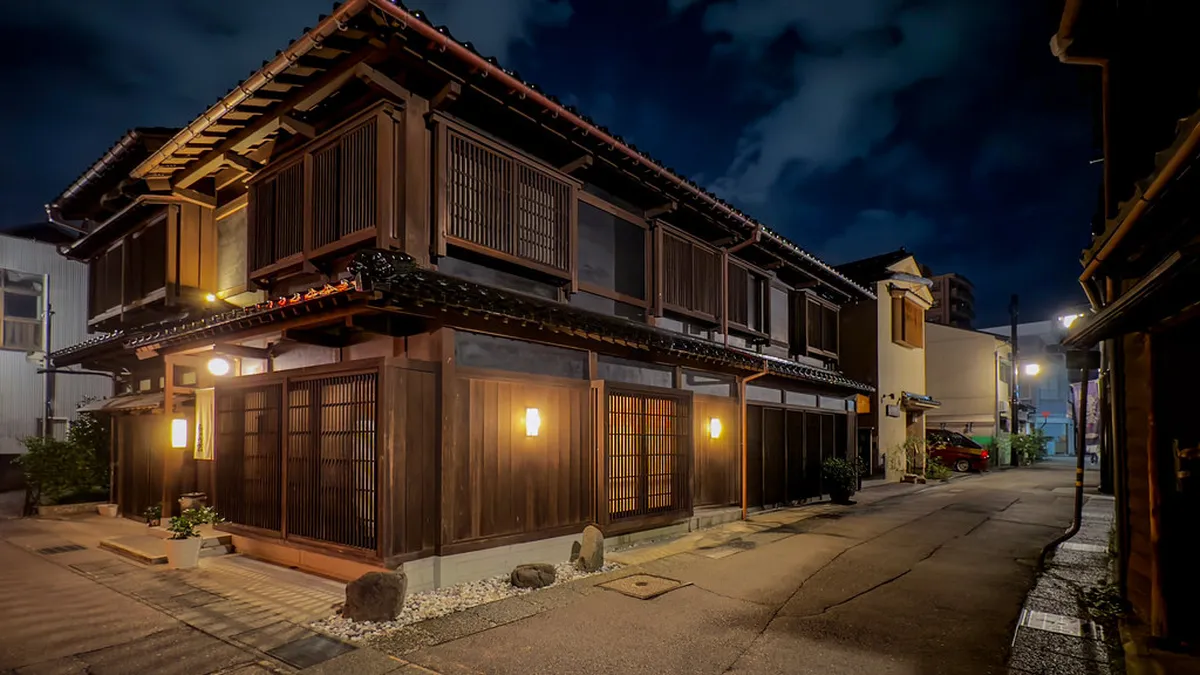
The four main neighborhoods serve different traveler profiles, and the wrong choice adds either time or money to your trip. Here is how the trade-offs break down in concrete terms for 2026.
- Kanazawa Station area — best for: rail arrivals, tight schedules, day-trippers to Shirakawa-go or Noto. Budget rate: ¥7,000–9,000 for a decent business double. Walk to Kenrokuen: 35 minutes or two bus stops. Evening atmosphere: low. Rainy-day convenience: excellent (covered arcade).
- Omicho Ichiba area — best for: foodies, walkers, anyone staying 2+ nights. Budget rate: ¥9,000–12,000. Walk to Kenrokuen: 15 minutes. Evening atmosphere: moderate (quiet after 18:00). Bicycle use: several hotels offer free bikes.
- Korinbo and Katamachi — best for: nightlife seekers, groups, families needing restaurant variety. Budget rate: ¥7,500–10,000. Walk to Kenrokuen: 20 minutes. Evening atmosphere: high. Room sizes: smallest in this tier.
- Higashi Chaya-gai — best for: atmosphere seekers, repeat visitors, those prioritizing photos and culture. Budget rate: ¥10,000–14,000 at the low end. Walk to station: 25 minutes or 2 bus stops. Rainy-day convenience: low (cobblestones, limited shelter).
| Type | Price/night (2026) | Best Area | Best For |
|---|---|---|---|
| Capsule hotel / pod | ¥3,500–5,500 | Station area, Korinbo | Solo travellers, ultra-budget |
| Hostel dorm | ¥3,000–4,500 | Higashi Chaya edges, Omicho | Backpackers, social travellers |
| Budget business hotel (single) | ¥7,000–9,000 | Station area, Korinbo | Rail arrivals, tight schedules |
| Mid-budget business hotel (twin) | ¥9,000–12,000 | Omicho, Korinbo | Couples, foodies, walkers |
| Budget guesthouse / machiya inn | ¥8,000–11,000 | Higashi Chaya, Omicho | Atmosphere seekers, repeat visitors |
| Entry-level ryokan (room-only) | ¥8,000–12,000 | Omicho, Asano River area | First ryokan experience |
| Ryokan with breakfast | ¥10,000–16,000 | Higashi Chaya, Asano River | Comfort + culture combo |
The single strongest move for most first-time budget travelers is the Omicho area. It sits equidistant from the station and the two main historic districts, cuts food costs via the market, and offers bicycle access to Kenrokuen in under 10 minutes of flat riding. The station area is the right fallback for anyone arriving after 21:00 or leaving early in the morning — the extra ¥1,000–2,000 per night is offset by avoiding taxis at either end of the trip.
2 Days in Kanazawa: Itinerary Built Around Your Accommodation
Two days is the standard Kanazawa visit, and your accommodation location shapes how efficiently you use that time. The following routing assumes a base in or near the Omicho area, which minimizes transport costs while covering the main sights.
Day 1: Walk to Kenrokuen Garden (open 07:00, entry ¥320) in the morning before tour groups arrive. The adjacent Kanazawa Castle Park is free. Walk through the Higashi Chaya district for late morning, then return via the Loop Bus to Omicho Market for lunch — budget ¥1,000–1,500 for market sushi or donburi. Afternoon: Nagamachi Samurai District (free to walk, optional paid museum entry ¥500). Evening: Korinbo or Katamachi for dinner.
Day 2: Kenroku-en and Kanazawa Castle are already done, so use the second day for the 21st Century Museum of Contemporary Art (outer circuit free, inner galleries ¥1,000), the Higashi Chaya district gold-leaf shops, and the Nishi Chaya or Kazuemachi geisha districts if time allows. The Loop Bus day pass (¥600) is worth buying on day 2 rather than day 1 if you used mainly walking on the first day.
A practical transport hack: the Kanazawa Loop Bus day pass is sold at the station tourist information counter and at IC card machines near the bus terminal. Buying it in advance avoids the queue that forms during peak season (late March to early May, and October). Our 2-day Kanazawa itinerary has a detailed route with opening times and admission prices.
Kanazawa vs Kyoto and Osaka: The Budget Case
Most first-time Japan visitors combine Kanazawa with the Kansai cities. The Hokuriku Shinkansen extension (fully operational since 2024) now connects Kanazawa to Osaka in around 1 hour and to Kyoto in about 45 minutes, which changes the calculation significantly. You can sleep in Kanazawa and do a Kyoto day trip, rather than paying Kyoto hotel prices, and many budget travelers are starting to do exactly this.
Comparable business hotel rooms cost roughly 30–50% more in Kyoto and Osaka than in Kanazawa for the same brand and standard. A Daiwa Roynet in Kanazawa runs ¥8,000–10,000; the same chain in Gion-Kyoto or central Osaka runs ¥12,000–16,000, and often sells out months in advance during cherry blossom season. Kanazawa has its own cherry blossom viewing at Kenrokuen (mid-April typically) but without the Kyoto crowds or price premiums.
The case for using Kanazawa as a base is strongest for travelers who want to visit both cities without rushing. Three nights in Kanazawa, with day trips to Kyoto and a half-day in Shirakawa-go, costs less in accommodation than three nights split between two Japanese cities. The trade-off is that late evenings in Kyoto or Osaka require catching the last shinkansen back, which departs Kyoto around 21:30 and Osaka around 22:00.
For comparison guides, where to stay in Kyoto and where to stay in Osaka both illustrate the price gap clearly. Kanazawa is consistently the stronger value proposition in 2026.
When to Book and What to Expect on Price
Kanazawa has two clear price peaks: cherry blossom season (late March to early May, particularly around Kenrokuen) and the autumn foliage period (mid-October to mid-November). During these windows, even budget business hotels in the station area sell out 6–8 weeks in advance, and prices increase 40–70% above base rates. The same room that costs ¥7,500 on a Tuesday in September may cost ¥12,000 on a Saturday in April.
The shoulder windows — late May through mid-June (before rainy season intensifies), and September — offer the best combination of availability and price. Late November through February is the quietest period and the cheapest for accommodation, though some travelers find the grey, rainy weather discouraging. Spring (March) brings the start of the cherry blossom anticipation surge even before the flowers open; book by early February for any spring visit.
For first-time visitors, searching both Booking.com and the Japanese platform Jalan gives a broader picture of what is available. Some smaller Kanazawa guesthouses and ryokans list only on Jalan (in Japanese, but usable with browser translation). Flexible cancellation policies are widely available in Kanazawa and worth choosing over non-refundable rates unless you are very confident in your dates.
Frequently Asked Questions
Which budget accommodation in Kanazawa options fit first-time visitors?
First-time visitors often find the Kanazawa Station Area ideal for budget stays. It offers excellent transport links and many affordable business hotels. The Omicho Ichiba Area is also great for central access and food lovers. Both provide convenience for exploring major sights easily.
How much time should you plan for budget accommodation in Kanazawa?
Plan for at least 2-3 days to fully experience Kanazawa's main attractions on a budget. This duration allows you to explore key areas like Kenrokuen Garden and the samurai district. You can also enjoy local cuisine without feeling rushed. A longer stay can offer better value for your accommodation.
What should travelers avoid when planning budget accommodation in Kanazawa?
Avoid booking last-minute, especially during Japan's peak travel seasons like cherry blossom or autumn. Prices tend to surge dramatically. Also, be wary of accommodations far from public transport if you plan on extensive sightseeing. This can lead to unexpected taxi expenses.
Is budget accommodation in Kanazawa worth including on a short itinerary?
Yes, budget accommodation in Kanazawa is absolutely worth it for a short itinerary. Even a one-night stay can offer great value compared to larger cities. Focus on areas like Kanazawa Station for maximum efficiency. This strategy allows quick access to sights and transportation hubs.
Budget accommodation in Kanazawa gives you genuine options — not just cheap rooms, but well-located, clean, and often characterful stays that undercut the Kansai cities by a significant margin. The key decisions are neighborhood (station for logistics, Omicho for balance, Korinbo for nightlife, Higashi Chaya for atmosphere) and timing (book 6–8 weeks ahead for spring and autumn, expect discounts in September and winter). With the Hokuriku Shinkansen now connecting Kanazawa to Osaka in under an hour, staying here and day-tripping to the big cities is a legitimate strategy for 2026 travelers who want more value per night.
Free: The Kanazawa Essentials guide
Top things to do, where to stay, a perfect day plan, getting around, and the best time to go — a Kanazawa mini-guide you can take offline.
You might also like


Continue reading
More guides you'll find useful