

Takayama Spring Festival 2026 Guide: 10 Essential Planning Tips
Plan your 2026 Takayama Spring Festival trip with our expert guide. Includes the April 14-15 schedule, Hida beef picks, and hotel booking tips.
On this page
The Takayama Spring Festival 2026 takes place on April 14 and 15 — a Tuesday and Wednesday — at Hie Shrine in the mountain city of Gifu Prefecture. Known locally as the Sanno Matsuri, this UNESCO Intangible Cultural Heritage event consistently ranks among Japan's three most beautiful festivals, alongside Kyoto's Gion Matsuri and the Chichibu Night Festival. If you have any flexibility in your April itinerary, this is the event to anchor it around.
Most travelers arrive via the Limited Express Hida train from Nagoya, which takes about 2.5 hours and is covered by the Japan Rail Pass. This guide covers every practical detail: the full day-by-day schedule, best spots for the lantern procession, what to eat, and a clear plan B if it rains.
2026 Festival Dates & What Makes Sanno Matsuri Special
The Sanno Matsuri is fixed to April 14 and 15 every year. In 2026 those dates fall mid-week, on a Tuesday and Wednesday. That timing has a practical effect: domestic day-trippers from Nagoya and Osaka are fewer than during weekend editions, but international demand for the 2026 festival remains extremely high. Expect 150,000 to 200,000 visitors over the two days regardless of the weekday.
The festival honors the Shinto deity (kami) enshrined at Hie Shrine in the southern part of Takayama's Old Town. Records of the event date to the mid-17th century. The twelve Yatai floats were designated UNESCO Intangible Cultural Heritage in 2016, placing them alongside the Gion Matsuri in cultural significance. Each float is owned by a specific neighborhood association, repaired by descendants of the original Hida craftsmen, and stored year-round in purpose-built Yatai-gura storehouses.
The two-day structure is consistent: float displays from morning to late afternoon, mikoshi processions in the early afternoon on both days, and the lantern night festival on the evening of April 14 only. There is no night festival on April 15. If you can only attend one day, choose April 14.
| Day | Time | Event |
|---|---|---|
| April 14 | 09:30 | Yatai floats emerge and line up |
| April 14 | 10:00 & 14:00 | Karakuri puppet performances (~50 min each) |
| April 14 | 13:00 | Mikoshi procession departs Hie Shrine |
| April 14 | 18:00–21:00 | Yomatsuri night festival (lanterns) |
| April 15 | 09:30 | Floats on display |
| April 15 | 10:00 & 14:00 | Karakuri puppet performances |
| April 15 | 12:30 | Mikoshi return procession to Hie Shrine |
Must-See Yatai Floats and Karakuri Puppet Performances
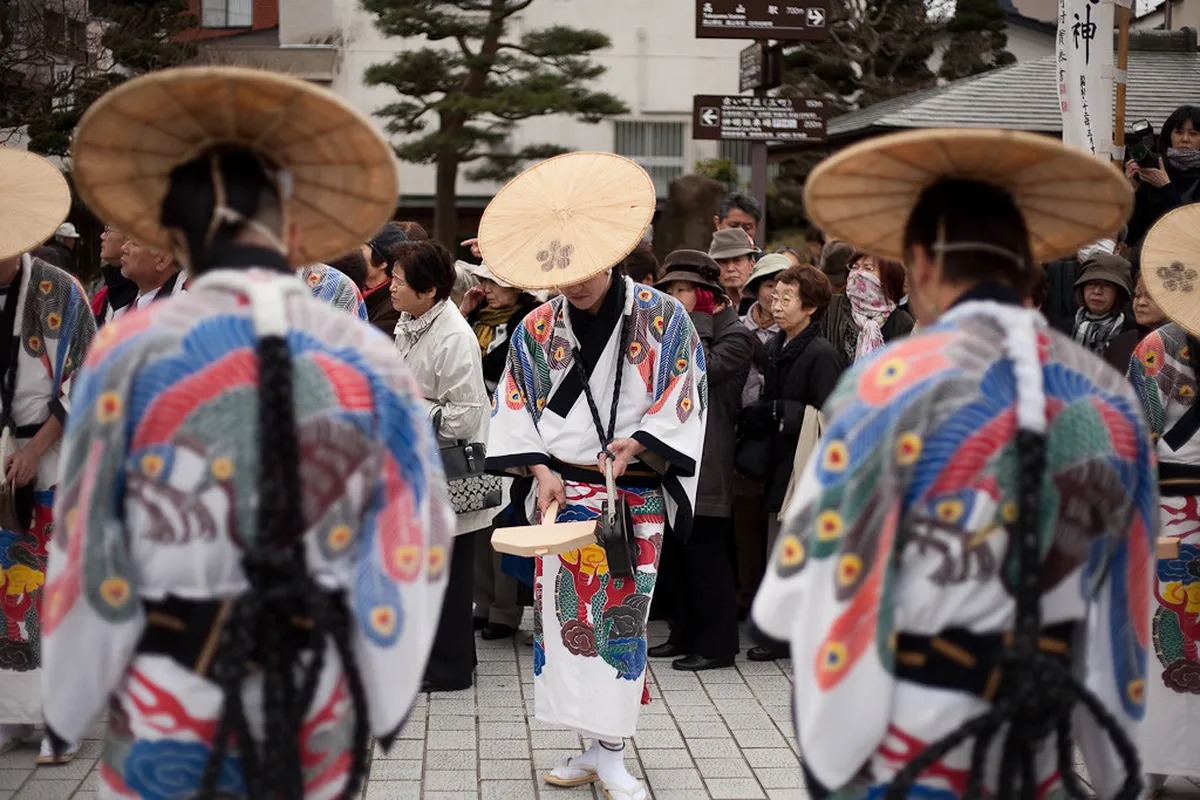
The twelve Yatai floats stand up to 8 metres tall and fill the narrow lanes of the Sannomachi district. They emerge from their storehouses near the Enako River by 09:30 on both festival days. Morning is the best time for photography — the light is good and the crowds are still manageable. By midday the main streets are packed, so early positioning matters.
Three of the twelve floats carry karakuri ningyo — mechanical puppets that perform acrobatic sequences powered by strings, springs, and gears with no electronics. Performances run at approximately 10:00 and 14:00 on both days, each lasting around 50 minutes. A team of hidden puppeteers controls the figures from inside the float. The shows depict traditional folktales and are genuinely spectacular even without prior interest in traditional crafts. Arrive 30 minutes before the performance to secure a clear sightline at the festival square near Hie Shrine.
The Mikoshi procession carries the Shinto deity through town in a portable shrine, accompanied by hundreds of participants in Edo-period court costumes, lion dancers, and flute-and-drum musicians. On April 14 it departs Hie Shrine at 13:00 and arrives at the ritual rest point Otabisho by around 16:00. On April 15 it leaves Otabisho at 12:30 and returns to the shrine by 16:00. Standing along the procession route rather than chasing the floats gives a less crowded and more intimate experience.
Day One: April 14 — The Grand Procession & Night Festival
Arrive at Nakabashi Bridge by 08:30 to watch the floats emerge and line up along the old town streets. The first karakuri puppet performance begins around 10:00. After that, follow the Mikoshi procession departing Hie Shrine at 13:00 — position yourself along Sannomachi Street rather than near the shrine entrance, where the crowd compresses badly. The procession moves at a slow ceremonial pace; walking alongside it for 200 metres gives a fuller sense of the event than watching from one fixed spot.
The night festival (Yomatsuri) is the most visually striking part of the entire festival. Starting at 18:00, each float is fitted with roughly 100 paper lanterns and paraded through the darkened wooden townscape to flute and drum. The procession runs until approximately 21:00. Temperatures in mid-April Takayama drop to 3–5°C after dark — bring a warm layer regardless of how mild the afternoon feels.
Nakabashi Bridge fills dangerously by 17:30 for the night festival. Position yourself on the Enako River bank 150–200 metres north of the bridge for more space and a clear sightline as the lantern-lit floats pass. This spot also exits easily once the procession ends.
For the night festival, Nakabashi Bridge is the iconic spot but fills dangerously by 17:30. A better position: the Enako River bank 150 to 200 metres north of the bridge. You lose the bridge background but gain space and a clean sightline as the lantern-lit floats pass in front of the riverside merchant houses. This position also exits easily once the procession ends.
Day Two: April 15 — Return Rituals & Morning Markets
Start at 08:00 at the Miyagawa morning market, which runs from 07:00 to noon along the riverbank. Farmers and vendors sell mountain vegetables, spring pickles, handmade crafts, and sarubobo — the faceless red cloth dolls specific to the Hida region. The second market in front of Takayama Jinya runs on the same hours and sees fewer photographers. Day Two crowds at both markets are lighter than Day One, making it a better time to browse properly.
The second round of karakuri puppet performances runs at 10:00 and 14:00. The afternoon atmosphere on April 15 is more relaxed — some domestic tourists leave after the previous night's lantern festival, and the streets thin slightly by mid-morning. This is the day to linger near the floats and examine the lacquerwork and metalwork up close. By late afternoon the floats make their final return procession to their storehouses — a quietly moving finale. Many locals say watching the floats disappear into their storehouses is the most poignant moment of the entire festival.
Museums, Art, and Culture in Takayama Old Town
The Takayama Festival Floats Exhibition Hall (Yatai Kaikan) at Sakurayama Hachiman Shrine displays four actual festival floats year-round in a rotating exhibition. This is the best way to examine the craftsmanship — lacquerwork, embroidered curtains, puppet mechanisms — from centimetres away without festival crowds pressing against you. Admission is ¥1,000 for adults; open daily 09:00–17:00. Allow 45 minutes. It is significantly less crowded than the main float streets even during the festival peak.
The Takayama Jinya is the only surviving Edo-era government office in Japan. The tatami reception rooms, rice storehouses, and interrogation chamber are well-preserved and explained in English. Admission is ¥440; open 08:45–17:00 during the festival period. It sits adjacent to the Jinya-mae morning market, so combining both into one morning loop is efficient. Crowds here are substantially lighter than the float districts.
The Sannomachi Suji — three parallel streets of preserved Edo-period merchant houses — is the photogenic core of the old town. Sake breweries, miso shops, and craft studios line the lane. Look for the sugidama (cedar ball) outside brewery entrances — it signals fresh seasonal sake. The Hirase Shuzo and Funasaka Shuzo breweries offer tastings during festival days at ¥200–¥500 per cup, with no entry fee. Walking the district takes 30–40 minutes at a casual pace; add significant time for festival crowd density.
Parks, Gardens, and Cherry Blossom Spots in Takayama
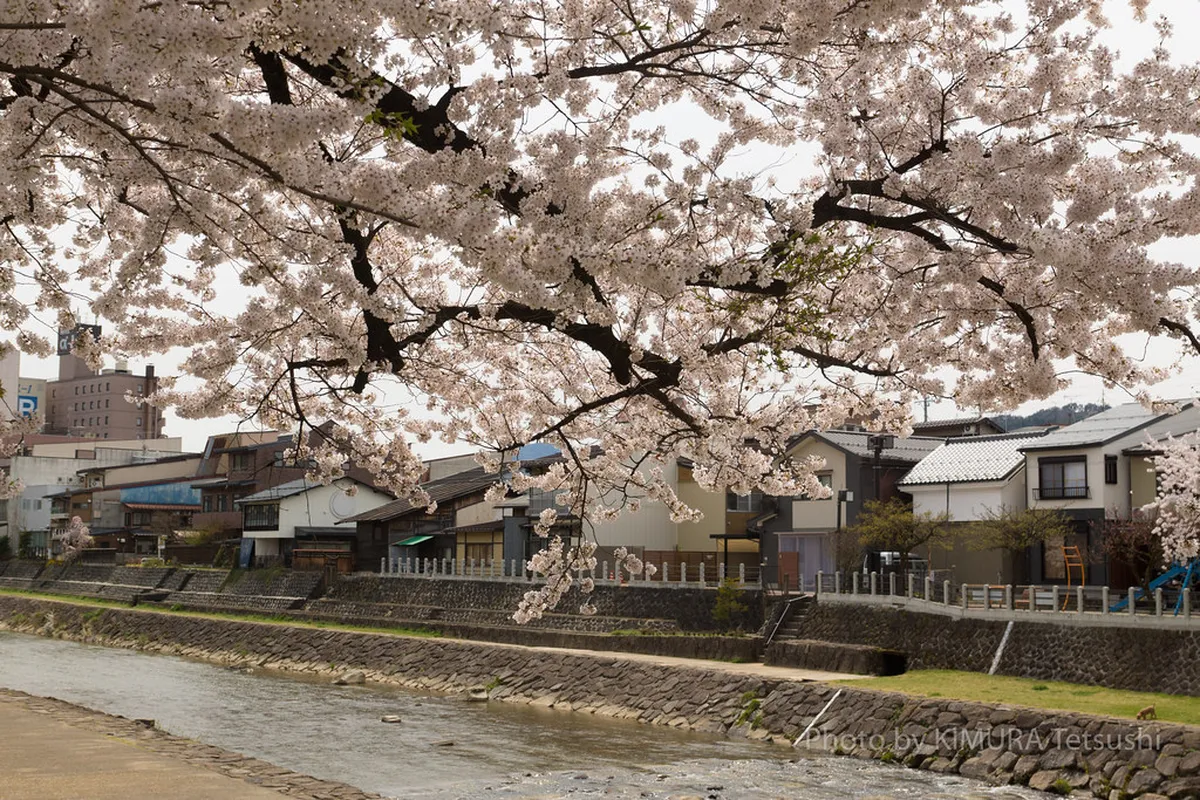
April 14–15 typically coincides with late cherry blossom season in Takayama. Because the city sits at higher elevation than Tokyo or Kyoto, sakura blooms two to three weeks later — mid-April is often the sweet spot. The Miyagawa River path is the main viewing area, with trees lining both banks for several hundred metres through the town centre. The riverbank is also significantly less crowded than the float streets, making it a practical refuge when the Sannomachi lanes compress during processions.
Shiroyama Park, on the hill above the old town, offers panoramic views of Takayama with cherry trees in the foreground and the Japanese Alps behind. The 20-minute walk up from Sannomachi is steep but well-maintained. It is far quieter than the river path and offers the best early-morning light before festival crowds arrive. The park is free and always open.
The Higashiyama Promenade — a 3.5 km walking trail east of the old town passing eleven temples and five shrines — has moss-covered stone lanterns, moss-roofed gates, and cherry trees with almost no festival foot traffic. It takes about 90 minutes at a relaxed pace and works well as a late-afternoon wind-down on either festival day. For those combining Takayama with a day trip, the Shirakawa-go UNESCO village is 50 minutes by bus and pairs well with a post-festival travel day on April 16.
Hida Beef & Local Mountain Cuisine Guide
The festival itself is entirely free to attend — float viewing, karakuri puppet shows, and processions cost nothing. A realistic daily food and museum budget is ¥3,000–¥5,000 per adult relying on street food and skipping sit-down restaurants.
Hida beef (飛騨牛) is Gifu Prefecture's premium wagyu, with marbling that rivals Kobe and Matsusaka grades. During the festival, street stalls are the fastest option: beef skewers cost ¥500–¥1,200 depending on cut, and stalls near the Miyagawa River have shorter queues than those on the main Sannomachi Street. Raw Hida beef nigiri is also widely available at street carts — unusual but safe and worth trying. For a proper sit-down meal, book a restaurant in advance at a Hida beef specialist — festival period wait times reach two hours without a reservation.
Other local dishes worth seeking out: hoba miso — fermented soybean paste grilled on a magnolia leaf over charcoal, topped with mushrooms and spring onion — is sold at several Old Town shops for around ¥800 and is unlike anything else in Japanese cooking. Gohei-mochi (grilled rice cake brushed with sweet miso, ¥300–¥400) is the ideal quick snack between processions. Takayama ramen uses a soy-based broth with thin curly noodles — one of Japan's most underrated regional styles — at ¥900–¥1,200 per bowl. Mountain vegetables (sansai) foraged from the surrounding Japanese Alps appear on most menus from April onward: fiddlehead ferns, bamboo shoots, and wild garlic are common and have no equivalent in lowland Japanese cooking.
Family-Friendly and Budget-Friendly Options in Takayama
The festival itself is entirely free to attend. Float viewing, the karakuri puppet shows, and the processions cost nothing. A realistic daily budget for food and optional museum entries runs ¥3,000–¥5,000 per adult if you rely on street food and skip sit-down restaurants. The morning markets are the best source of inexpensive snacks. Mitarashi dango (soy-glazed rice dumplings, ¥200–¥300 per skewer) are universally popular with children.
For families with strollers, Sannomachi Suji cobblestones are genuinely difficult during the procession when the streets narrow with crowds. The Miyagawa riverbank path is flat, paved, and significantly more manageable for young children. Karakuri puppet performances work well for children aged five and up: the mechanical movements are slow enough to follow and visually dramatic enough to hold attention without explanation. Budget accommodation options include K's House and Relax Hostel near the station, with dorm beds from approximately ¥3,500 per night. If Takayama is fully booked, Gero Onsen (40 minutes south by train) and Furukawa (15 minutes north) serve as quieter and cheaper base alternatives.
Visitors with limited mobility should note that Hie Shrine has a flight of stone steps at the entrance with no ramp alternative. The float storehouses, the Yatai Kaikan exhibition hall, and the morning market sites are all flat-access and fully navigable by wheelchair. For specific viewing area arrangements during the procession, the Hida Tourism Association can advise in advance via Hida.jp.
How to Plan a Smooth Takayama Festival Day: Logistics & Getting There
From Tokyo, take the Tokaido Shinkansen to Nagoya (1h 40m), then transfer to the JR Limited Express Hida to Takayama (2h 30m). Total journey: approximately 4h 10m, covered by the Japan Rail Pass. The Hida train requires reserved seats during the festival — book exactly 30 days before departure at 10:00 Japan time when the reservation window opens. One-way fare from Nagoya is around ¥6,340. Highway buses run from Osaka and Kyoto for ¥4,000–¥6,000. Do not drive; road closures around the Old Town make it impractical. Check the Visitgifu.com site for any 2026 transport alerts specific to the festival period.
Luggage storage is a detail most guides skip. JR Takayama Station coin lockers fill by 09:00 on festival mornings — if you arrive early with bags, they will be full. The better option is the Takayama Nouhi Bus Center temporary baggage storage, located just north of the station. It opens at 07:30, handles large suitcases the station lockers cannot fit, and is far less crowded than the station. Do not drag rolling suitcases through the festival streets; the cobblestones and dense crowds make it disruptive and exhausting. A ryokan in Takayama will typically hold your bags from early morning if you call ahead.
Book accommodation six to twelve months before the festival. Many properties open April reservations exactly six months in advance and sell out within hours of the calendar opening. If Takayama is full, Gero Onsen and Furukawa are practical bases. Cash matters here: most Old Town stalls and small shops are cash-only. ATMs at Japan Post (near the old town) and 7-Eleven (near the station) are the most reliable. Withdraw before the festival mornings — ATM queues grow long once the gates open. If it rains on April 14 or 15, the Yatai floats stay in their storehouses with doors open for viewing; outdoor processions are canceled. Save the storehouse map locations in advance as a rain contingency. The 3-day Takayama itinerary builds in extra buffer days for weather flexibility.
Combine With: Fuji Shibazakura Festival
The Fuji Shibazakura Festival (April 12 – May 25) carpets the ground beneath Mt. Fuji with 500,000 stalks of pink moss phlox and runs concurrently with the Takayama spring dates in mid-April 2026. The two festivals sit on opposite sides of the Japanese Alps and cannot be reached directly — the train route requires returning through Nagoya, and driving takes five to six hours. The most practical sequence: Tokyo → Fuji Five Lakes (2–3 nights) → Tokyo → Tokaido Shinkansen to Nagoya → Hida limited express to Takayama for April 14–15. Allow a full travel day between events to avoid arriving after the evening procession begins.
Treat Fuji Shibazakura as the first leg and Takayama as the finale. You arrive in the mountain town after open-air lakeside scenery, ready to slow down, and the festival energy carries the final days. It is an ambitious but genuinely rewarding mid-April circuit for 2026.
Frequently Asked Questions
What are the exact dates for the Takayama Spring Festival 2026?
The festival always takes place on April 14 and 15 every year. In 2026, these dates fall on a Tuesday and Wednesday. Most events run from 9:00 AM until 9:00 PM.
What happens if it rains during the Takayama Festival?
The valuable floats are kept inside their storehouses to prevent water damage. Visitors can still view them by walking to the specific storehouse locations. The outdoor processions are usually canceled.
Is the Takayama Spring Festival free to attend?
Yes, watching the processions and viewing the floats in the streets is free. You only pay for food, souvenirs, or entry to specific museums. I recommend following a Takayama Itinerary for First-Timers to save money.
Where is the best place to see the night festival lanterns?
The Nakabashi Bridge is the most iconic spot for the night festival. However, it becomes extremely crowded by 5:30 PM. I suggest finding a spot along the Enako River for more space.
The Takayama Spring Festival 2026 is one of the most rewarding events on Japan's April calendar. With its 400-year-old floats, lantern-lit processions, and mountain cuisine, it earns its reputation as one of Japan's three most beautiful festivals. Lock in accommodation now, save the float storehouse locations for a rain contingency, and arrive early on April 14 for the best of what Sanno Matsuri offers.
Combine this with our main Takayama attractions guide for a fuller itinerary.
Free: The Takayama Essentials guide
Top things to do, where to stay, a perfect day plan, getting around, and the best time to go — a Takayama mini-guide you can take offline.
You might also like


Continue reading
More guides you'll find useful


