What to Eat in Shimonoseki: 7 Best Foods to Try in 2026
What to eat in Shimonoseki: 7 must-try dishes from fugu blowfish to Karato Market sushi, plus 2026 prices, hours, and budget-by-budget restaurant picks.
On this page
Last updated August 2026, this guide answers what to eat in Shimonoseki with seven dishes worth building a trip around. Fugu leads the list, alongside Karato Market sushi, kawara soba, and a Korean-influenced offal hot pot called tonchan nabe. Each entry below names a specific restaurant, market stall, or price band so you can plan a single afternoon or a full weekend.
Why Shimonoseki Is Known as Japan's Seafood Capital
Shimonoseki sits at the western tip of Honshu, framed by the Seto Inland Sea, the Hibikinada Sea, and the Sea of Japan. That triple coastline centers local cooking on the Kanmon Straits, the channel separating Honshu from Kyushu, with Mojiko and the rest of Kitakyushu visible across the water. Fugu, the local blowfish, carries the city's reputation, and in the Shimonoseki dialect it's called fuku, sharing a word with luck. Traditional fugu season runs through winter in much of Japan, but Shimonoseki's processing infrastructure means restaurants here serve it year-round. Two markets handle the supply: Haedomari Market runs the wholesale fugu auction, while Karato Market is where visitors browse stalls and eat. Kawara soba fills out the third pillar, a noodle dish with roots in the Kawatana Onsen district outside downtown.
What to Eat in Shimonoseki: 7 Signature Dishes
These seven dishes anchor a Shimonoseki food itinerary, from a multi-course blowfish dinner to a sushi bite priced under ¥100 at Karato Market. Prices below come from published Tabelog and Savor Japan restaurant listings current as of 2026. Confirm hours and menus directly before booking, since izakaya and market schedules shift seasonally.
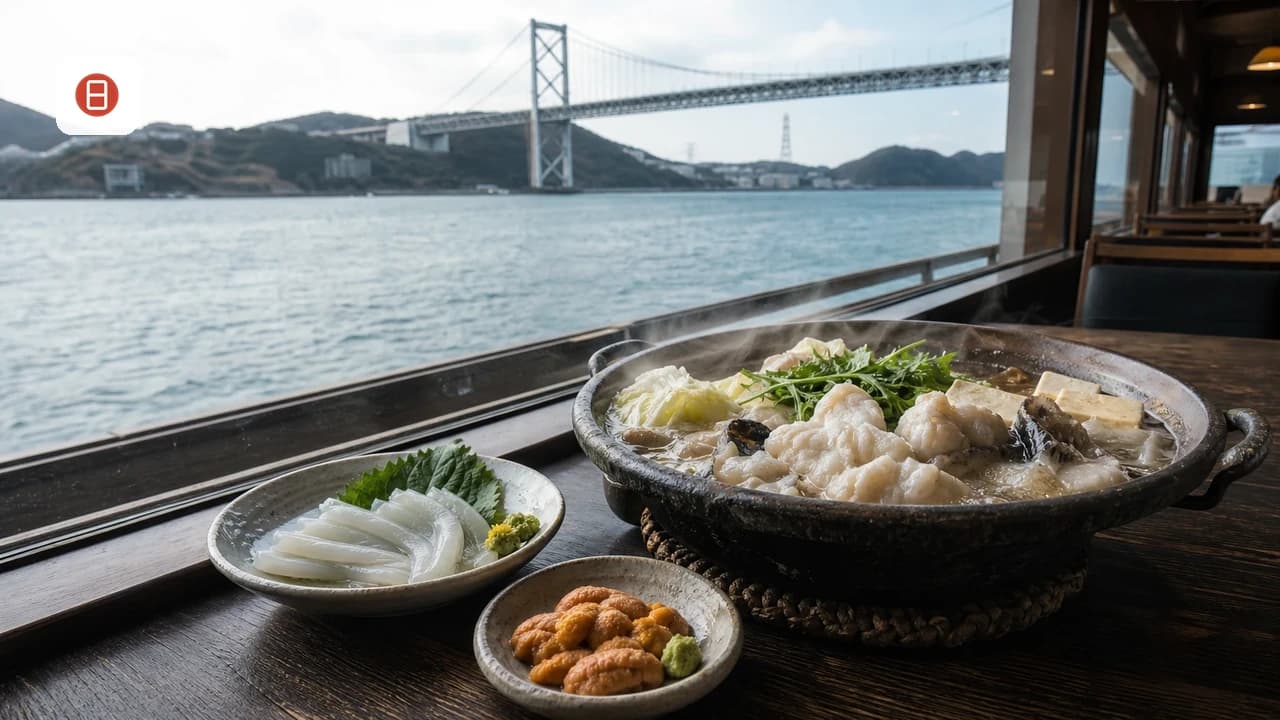
- Fugu (Blowfish) Full-Course Meal
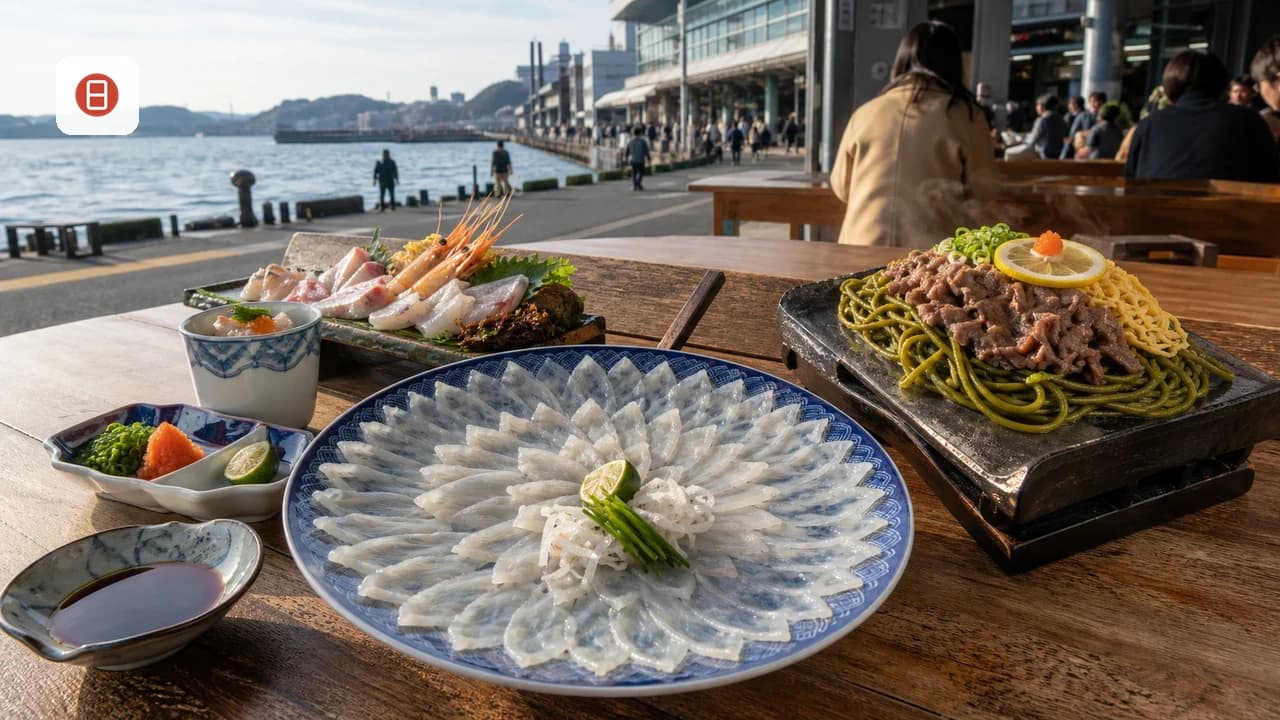
- A full course typically layers sashimi sliced into a chrysanthemum pattern with ponzu, fried karaage, a nabe hot pot, zosui rice porridge, and hirezake, hot sake with a grilled fugu fin.
- Shunpanro Shimonoseki Honten, credited as Japan's first licensed fugu restaurant, lists dinner courses at ¥20,000–29,999 on Tabelog.
- The full fugu guide covers the licensing history and why only certified chefs may serve the fish.
- Karato Market Sushi and the Iki-iki Bakara
- Individual nigiri pieces run roughly ¥200–500 at the market's stalls, well below what a sit-down sushi counter charges elsewhere in Japan.
- The Iki-iki Bakara sushi event has typically run Friday and Saturday around 10am–3pm, and Sunday and holidays around 8am–3pm, so confirm the current schedule before visiting.
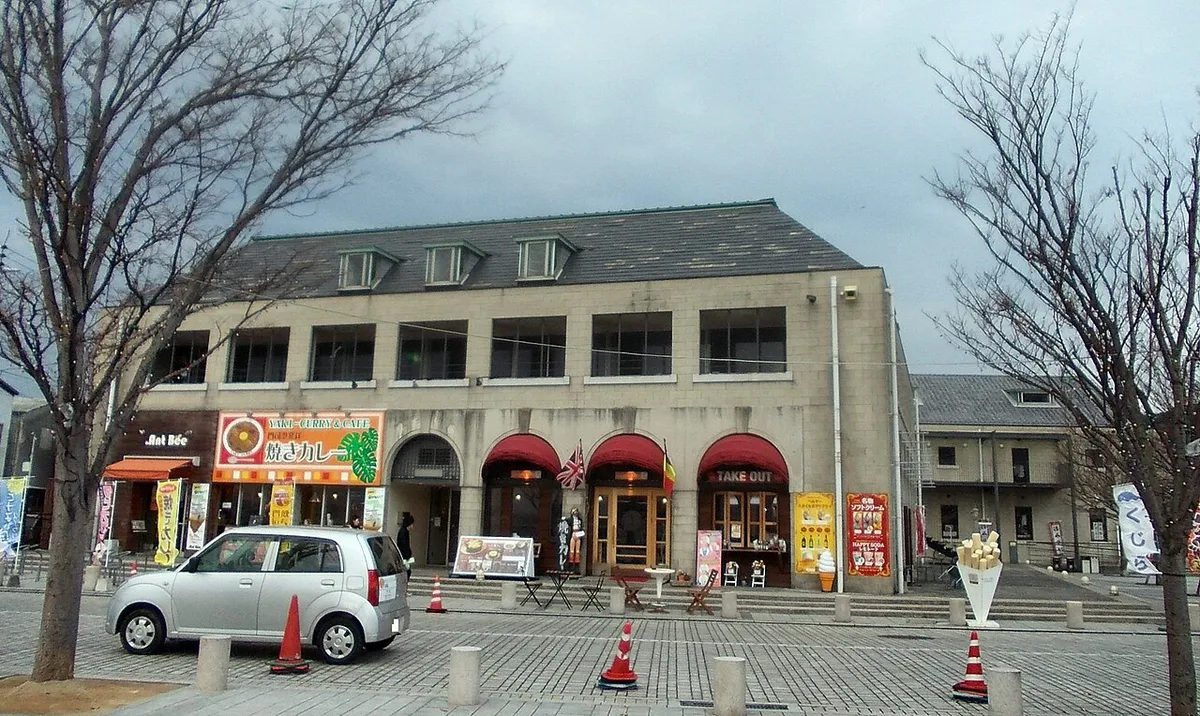
- Kamon Wharf, next to the market, has sit-down restaurants for whenever the stalls are closed, and the Karato Market guide maps every stall.
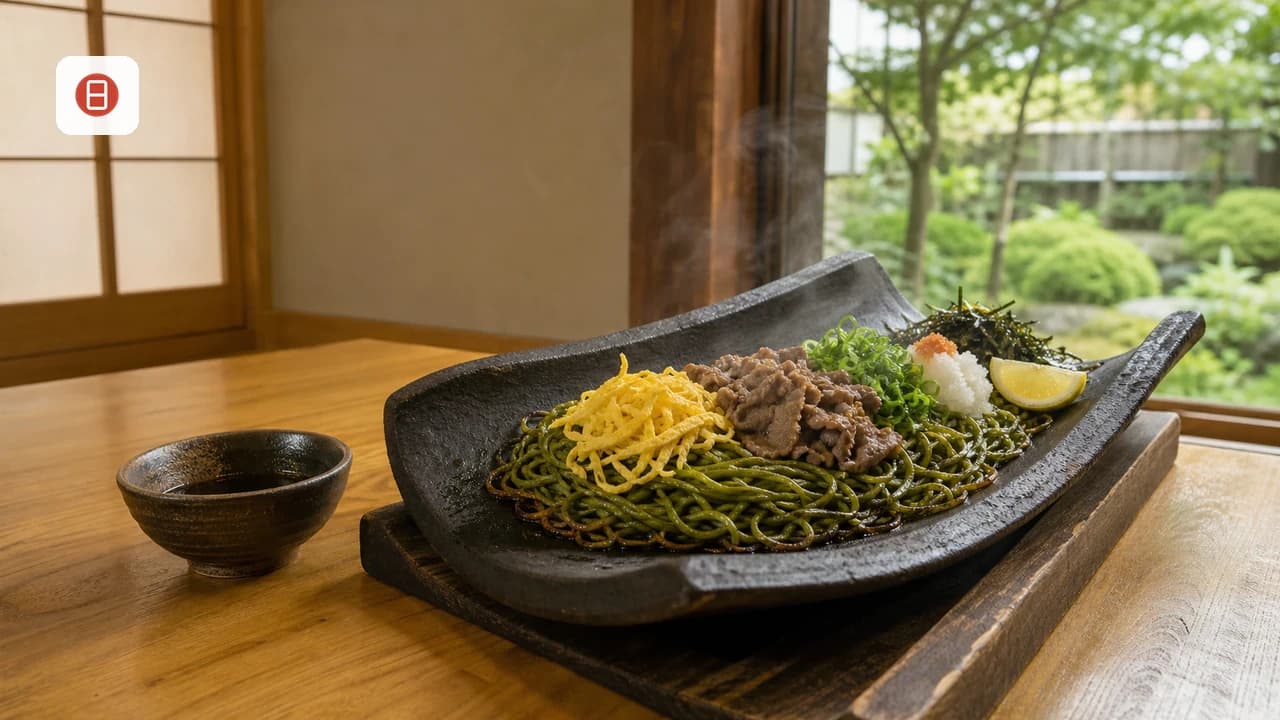
- Kawara Soba (Tile Noodles)
- Green tea buckwheat noodles are seared on a heated roof tile and topped with beef, egg, shredded nori, grated daikon, and lemon, served with a dipping sauce.
- The dish traces to the 1870s, when Satsuma Domain soldiers are said to have cooked meat and vegetables on hot roof tiles during the era's samurai uprisings.
- Kawatana Onsen, credited as the dish's birthplace, sits apart from downtown branches like Shabushabu Kawara Soba Saryo Fuku no Hana, priced at ¥1,000–1,999 on Tabelog. The kawara soba guide covers the onsen-district originals.
- Tonchan Nabe (Offal Hot Pot)
- This Korean-influenced hot pot simmers beef or pork offal with vegetables in a seasoned broth, and it functions as local soul food rather than a tourist dish.
- Horumon-focused yakiniku spots carry it alongside grilled offal skewers. Sumibi Yakiniku Horumon Yokochou Shimonoseki ten lists dinner around ¥5,000–5,999 on Tabelog.
- The tonchan nabe guide maps the neighborhoods where the dish originated and the izakaya that still serve it.
- Whale (Kujira)
- Shimonoseki's whaling-port history left behind dishes like kujira-jiru whale soup and pan-fried whale cutlets, still served at a handful of specialist restaurants.
- Shimonoseki Kujiraya Nisshin Maru, three minutes from Karato Market, pairs whale dishes with Yamaguchi sake. Tabelog lists dinner around ¥4,000–4,999, and the restaurant closes Sundays.
- Whale dishes are a smaller niche than fugu or kawara soba, so confirm a restaurant's current menu before planning a trip around it.
- Anglerfish Liver (Ankimo)
- Shimonoseki is regularly cited as one of Japan's top anglerfish landing ports, and the liver, ankimo, is prepared steamed and chilled.
- Texture and richness draw comparisons to foie gras, though the flavor stays distinctly oceanic.
- Look for it as a seasonal small plate at seafood-focused izakaya rather than at a dedicated ankimo restaurant.
- Sea Urchin (Uni)
- Sea of Japan uni arrives in small wooden boxes, prized for a creamier texture and deeper color than uni from warmer waters.
- It appears as a sashimi course at Karato Market stalls and at seafood restaurants near the market during its local season.
A Few More Specialties Worth Knowing About
The seven dishes above cover the essentials, but a couple of runner-up specialties suit a longer stay. Swordtip squid, caught off Tsunoshima and the Sea of Japan coast, turns up as sashimi prized for its sweetness and soft texture. The Shimonoseki Seafood Guide: Uni, Whale, Squid and Monkfish Beyond Fugu tracks seasonal availability for squid, uni, and other catches beyond this list, since what's freshest shifts through the year.
Is Fugu Safe to Eat in Shimonoseki?
Fugu contains a potent neurotoxin, and mishandling it is genuinely dangerous, which is exactly why Japan regulates who can prepare it. Licensing requires years of training plus a hygiene exam, and only chefs who pass may clean and serve the fish commercially. Shimonoseki's status dates to the Meiji era: in 1888, Prime Minister Ito Hirobumi reportedly tasted fugu at Shunpanro and helped push the local ban toward relaxation. Shunpanro later hosted the 1895 Treaty of Shimonoseki negotiations, adding another layer of history to the same dining room. Ordering at any registered restaurant in the city today means the fish already passed through a licensed processor. The sashimi, karaage, and nabe on your table carry the same safety standard regardless of price point. Fugu's history in Japan is longer and rockier than a modern menu suggests. Archaeological evidence points to pufferfish being eaten as far back as the Jomon period, and poisoning incidents were common enough that many regions enforced their own bans. Tradition holds that Toyotomi Hideyoshi issued a nationwide prohibition in the late 16th century after poisoning incidents among his troops. Various domains kept their own restrictions through the Edo period, some with severe penalties. The ban eased locally after Ito Hirobumi's visit to Shunpanro in 1888, and Japan's 1947 Food Sanitation Act later gave the modern licensing system its legal foundation. That law is why every fugu chef serving you today has passed a formal exam.
Fugu safety is guaranteed at registered restaurants regardless of price tier; casual lunch courses run ¥2,000–2,999 while formal dinners cost more, because every chef must pass the required licensing exam.
Karato Market Logistics: Hours, Iki-iki Bakara, and Kamon Wharf
Karato Market functions as a regular fish market on weekdays, with stalls selling to restaurants and locals more than tourists. Locals sometimes describe it as the kitchen of the Kanmon Straits, since it supplies both restaurants and home cooks. Weekend energy shifts the moment the Iki-iki Bakara begins: vendors slice fresh catch to order and sell it piece by piece, sushi-bar style, standing at the counter. That event runs Friday, Saturday, Sunday, and public holidays, with Friday and Saturday starting later, around 10am, and Sunday and holiday sessions starting earlier, around 8am. Both windows close by roughly 3pm, so a late lunch arrival can miss the last rounds. Budget travelers get the best value here: a plate that would cost several thousand yen at a ryotei runs a few hundred yen per piece at the stalls. For a sit-down alternative with the same strait-side setting, Kamon Wharf sits next to the market with restaurant counters that don't depend on the weekend schedule. A fugu monument near Kamon Wharf marks the neighborhood's signature food a few steps from the market.
Getting to Shimonoseki: Stations, Airports, and the Final Stretch
Shin-Shimonoseki Station is the Shinkansen stop, and its food options are limited, so most restaurants worth planning a meal around cluster downtown instead. That downtown hub sits around Shimonoseki Station, home to Karato Market, most fugu specialists, and the bulk of the restaurants in this guide. A local JR train connects the two stations in about 10 minutes, and buses also run directly from Shin-Shimonoseki to the Karato Market area. Japan Rail Pass holders should note that the fastest Nozomi and Mizuho Shinkansen services aren't covered; Hikari and Sakura trains are. Travelers arriving from the Kitakyushu side can also cross the Kanmon Straits by passenger ferry from Mojiko. The table below rounds up travel times from the main gateway cities and airports.
| Origin | Route | Approx. Time |
|---|---|---|
| Hakata Station (Fukuoka) | Shinkansen to Shin-Shimonoseki | About 30 minutes (Hikari/Sakura for JR Pass) |
| Hiroshima | Shinkansen to Shin-Shimonoseki | About 30 minutes |
| Osaka or Kyoto | Shinkansen to Shin-Shimonoseki | About 2–2.5 hours |
| Tokyo | Shinkansen to Shin-Shimonoseki | About 4.5–5 hours |
| Fukuoka Airport | Subway to Hakata, then Shinkansen | About 5 minutes plus 30 minutes |
| Yamaguchi Ube Airport | Direct airport bus to Shimonoseki Station | About 75 minutes |
| Kitakyushu Airport | Direct airport bus to Shimonoseki Station | About 60 minutes |
Where to Eat: Restaurant Picks by Budget
Prices in Shimonoseki span a wide range, from a ¥65 sushi piece to a multi-course fugu dinner well past ¥20,000. The table below groups current Tabelog and Savor Japan listings by budget so you can match a restaurant to the meal you actually want.
| Restaurant | Specialty | Price Band | Notes |
|---|---|---|---|
| Shunpanro Shimonoseki Honten | Fugu full course | ¥20,000–29,999 dinner / ¥10,000–14,999 lunch | Historic first licensed fugu restaurant |
| Shunrakukan | Fugu, casual | ¥6,000–7,999 dinner / ¥2,000–2,999 lunch | 5-minute walk from Karato Market, solo-friendly |
| Shunsai Aburi Dining Karato Ya | Fugu sashimi, kawara soba | ¥3,000–3,999 dinner / ¥2,000–2,999 lunch | Kanmon Strait view, both signature dishes on one menu |
| AKAMA Fukutei | Fugu, seafood | ¥6,000–7,999 dinner / ¥3,000–3,999 lunch | Closed Mondays |
| Fuku Choshu Ryori KATSUMOTO | Fugu, whale, anglerfish | ¥5,000–5,999 dinner / ¥1,000–1,999 lunch | Private rooms, closed Mondays |
| Hanare Rindo | Seasonal seafood, sashimi | ¥10,000–14,999 | Closed Sundays |
| Yakiniku Sakaba Chayamaya | Yakiniku, izakaya | ¥4,000–4,999 | Closed Sundays |
| Kuimono Ya Wan | Izakaya, seasonal dishes | ¥3,000–3,999 | 2-minute walk from Shimonoseki Station, private rooms up to 52 |
| Yatai Zushi Shimonoseki ekimae-cho | Casual sushi | From ¥65 per piece | Near the station, family-friendly |
A Sample Day of Eating in Shimonoseki
Morning works best at Karato Market, especially on a Friday, Saturday, Sunday, or holiday when the Iki-iki Bakara stalls are running. Follow market sushi with a walk to Kamon Wharf or along the Kanmon Straits waterfront, both covered in the Shimonoseki activities guide. Lunch is a good slot for kawara soba, either at a downtown branch or with a side trip to Kawatana Onsen if time allows. Afternoon leaves room for a coffee break at UMI NO NE Coffee Roastery or a slower walk back through the market stalls before they close for the day. Save fugu for dinner, when a full course takes time to work through properly, and reserve ahead since popular restaurants fill up. On a second day, work through tonchan nabe or a whale-focused menu at dinner, and use the morning for anglerfish or sea urchin at a seafood restaurant near the market.
Common Mistakes to Avoid
A few planning slips account for most disappointing meals in Shimonoseki.
The train takes about 10 minutes to connect the stations, but the transfer is essential because Shin-Shimonoseki lacks restaurants while Shimonoseki Station puts you near Karato Market and fugu specialists.
- Showing up at Karato Market on the wrong day
- The Iki-iki Bakara sushi stalls run Friday through Sunday and holidays, not every day of the week.
- A Tuesday or Wednesday visit still finds a working fish market, just without the piece-by-piece stall event.
- Getting off at the wrong station
- Shin-Shimonoseki has the Shinkansen platform but few restaurants worth the trip.
- The dining hub, including Karato Market and most fugu specialists, is a short local train ride away at Shimonoseki Station.
- Assuming fugu is a winter-only dish
- Fugu's traditional season is winter in much of Japan, which leads some travelers to skip it on a summer trip.
- Shimonoseki's processing infrastructure means restaurants here serve it year-round, so it's on the menu whatever month you visit.
- Booking a fugu dinner without a reservation
- Fugu courses take real prep time, and popular restaurants can fill up, especially on weekends.
- Reserving a day or two ahead avoids showing up to a full dining room after a long train ride.
Explore food in other cities
Frequently Asked Questions
Is fugu safe to eat in Shimonoseki?
Yes, when you order it at a registered restaurant. Only chefs who complete Japan's licensing process, which includes hygiene training and an exam, may legally clean and serve fugu, and that standard applies across every price tier in the city.
How much should you budget for a fugu meal in Shimonoseki?
Casual fugu lunches at spots like Shunrakukan start around ¥2,000–2,999, while a full dinner course at a specialist like Shunpanro runs ¥20,000–29,999. Market sushi at Karato Market offers a cheaper way to sample seafood first, at roughly ¥200–500 per piece.
What day is best for Karato Market's sushi stalls?
Friday, Saturday, Sunday, and public holidays are when the Iki-iki Bakara stall event typically runs, with Friday and Saturday starting later than the Sunday and holiday sessions. Confirm current hours before you go, since stall schedules can shift.
Should you get off at Shin-Shimonoseki or Shimonoseki Station?
Get off at Shin-Shimonoseki only if you need the Shinkansen platform, then continue by local train. Shimonoseki Station is the actual dining hub, about 10 minutes away, with Karato Market and most restaurants in this guide clustered nearby.
Is fugu only available in winter in Shimonoseki?
No. Winter is the traditional fugu season in much of Japan, but Shimonoseki's processing infrastructure supports serving it year-round, so it's available whatever month you visit.
What's the difference between Karato Market and Haedomari Market?
Haedomari Market runs the wholesale fugu auction and isn't set up for casual dining. Karato Market is the visitor-facing market with sushi stalls, including the weekend Iki-iki Bakara event.
How do you get from Shin-Shimonoseki Station to Karato Market?
Take a local JR train to Shimonoseki Station, about a 10-minute ride, then continue on foot or by bus toward the market. Direct buses from Shin-Shimonoseki to the Karato Market area are also available.
What's the cheapest way to eat well in Shimonoseki?
Karato Market nigiri runs roughly ¥200–500 per piece, and Yatai Zushi Shimonoseki ekimae-cho lists sushi starting at ¥65 near the station. Either option covers a filling meal for well under ¥2,000.
Explore Shimonoseki Food and Dining
Use these guides to compare local dishes, dining areas and practical food experiences in Shimonoseki.
Food and Dining Guides
Free guide: Japan's Hidden Gems
12 under-the-radar places beyond Tokyo & Kyoto — with the best season to visit each and a local tip you won't find in the guidebooks.
You might also like

Continue reading
More guides you'll find useful