Kawara Soba Shimonoseki: Where to Eat the Original Tile-Grilled Noodles
A practical guide to kawara soba Shimonoseki: the Kawatana Onsen origin story, Takase vs Otafuku, current prices, hours, and how to eat it.
On this page
Last updated August 2026, this guide to kawara soba Shimonoseki breaks down the tile-grilled green tea noodles that anchor Kawatana Onsen's dining scene. It covers the dish's 1962 origin story, a side-by-side look at Takase and Otafuku, and the drive or train route from central Shimonoseki to Toyoura-cho. Expect current prices, posted hours, and step-by-step eating instructions rather than general description.
What Is Kawara Soba in Shimonoseki?
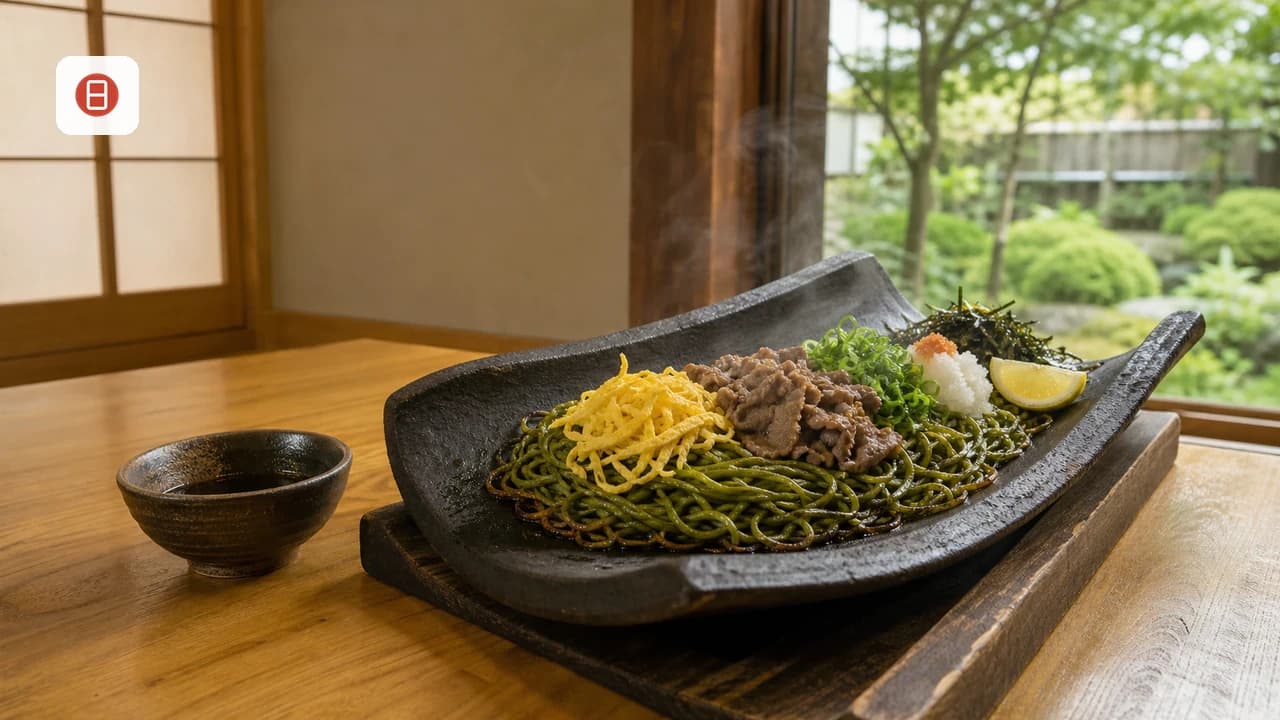
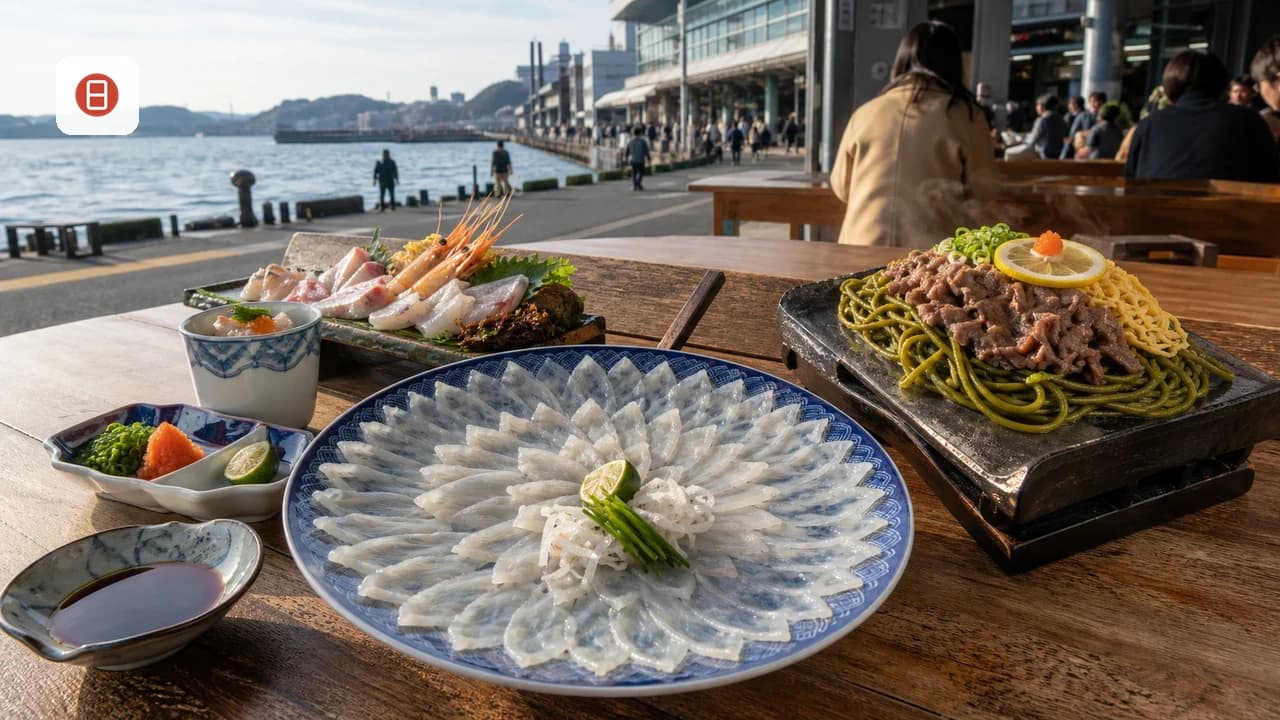
Kawara soba is boiled green tea soba noodles served on a scorching-hot roof tile, called a kawara, then finished at the table. Matcha gives the noodles their color, and the tile keeps the plate hot through far-infrared heat retention. Standard toppings turn the dish into a full meal rather than a plain bowl of noodles. It sits at the center of Shimonoseki's food scene, alongside the city's seafood and fugu specialties.
- Thinly sliced beef, cooked directly on the hot tile
- Shredded fried egg (kinshi tamago)
- Dried seaweed strips
- Grated daikon with chili, known as momiji oroshi
- A lemon slice for acidity
- A side cup of bonito-kombu dipping soup
The Legend Behind the Tile: Kawatana Onsen and the Seinan War
Kawara soba traces back to 1962, when Shinichi Takase, founder of Kawara Soba Takase, developed the dish at his restaurant in Kawatana Onsen. He drew on a story from the 1877 Seinan War, when soldiers from the Satsuma Domain cooked wild grass and meat on roof tiles while laying siege to Kumamoto Castle. Takase adapted that improvised method into a formal recipe using decades-old Japanese kawara. Kawatana Onsen became the dish's home base first, then it spread across Yamaguchi Prefecture, including Shimonoseki city, as a local specialty. A kawara's far-infrared effect retains heat well after the plate leaves the kitchen, so the noodles stay warm through the meal. Ingredients touching the tile directly pick up a scorched, crispy texture that soft noodles never develop. Home cooks can recreate a version without a roof tile: pan-fry boiled green tea soba in a skillet or on an electric griddle, then add the same toppings and a dark dipping soup.
Where to Eat Kawara Soba: Takase vs Otafuku
Two restaurants dominate the kawara soba scene around Kawatana Onsen: Takase, the dish's originator, and Otafuku, set inside the Kawatana Grand Hotel. Takase's main store occupies a building around 100 years old, remodeled inside, and uses noodles made from Uji Matcha and Hokkaido buckwheat flour, with the matcha ground on a traditional quern stone. Otafuku pairs the same tile-grilled format with onsen access, larger group seating, and parking built for hotel guests. Otafuku does not take reservations for individual diners, but groups of ten or more can book a Kawara Soba set menu from ¥1,500 plus tax, or a kaiseki course from ¥3,500 plus tax. Tabelog lists Otafuku at a 3.40 rating from 148 reviews, based on the platform's current review count. The table below lines up the practical differences for planning a visit.
Takase's building, around 100 years old, actually predates the 1962 kawara soba invention; the structure housed the recipe innovation long before the dish became established tradition.
| Detail | Takase (Kawatana Main Store) | Otafuku (Kawatana Grand Hotel) |
|---|---|---|
| Best for | History, tradition, signature Unameshi | Onsen access, larger groups, hotel parking |
| Kawara soba price | ¥1,485 per plate, tax included, per the restaurant's own site | JPY 1,000-2,999 average spend range, per Tabelog |
| Hours | 11:00 a.m. to 8:00 p.m., last entry 7:30 p.m. | 11:00 a.m. to 10:00 p.m., last order 9:00 p.m. |
| Closed days | Thursdays and Fridays, open on national holidays | Historically open on Wednesdays, its usual closing day, per its own listing |
| Seating | 34 ground seats and 18 table seats on the 1st floor, 16 table seats on the 2nd floor | 68 seats, tatami and sunken seating |
| Address | 5437 Oaza Kawatana, Toyoura-cho, Shimonoseki | 4912-1 Oaza Kawatana, Toyoura-cho, Shimonoseki, inside Kawatana Grand Hotel |
| Payment | Contact the restaurant directly for current accepted methods | VISA, Mastercard, JCB, Amex; no electronic money |
How to Eat Kawara Soba: Three Bites, Three Textures
Kawara soba rewards a specific order of eating, since the tile keeps changing the noodles' texture through the meal. Locals often treat the scorched bottom layer as the best part, because the top portion never develops that same crunch.
- Step 1: Pour the warm bonito-kombu dipping soup into your cup, then lift noodles from the top of the pile while they are still soft.
- Step 2: Add the lemon slice and momiji oroshi (spicy grated daikon) to the soup to cut through the beef's richness.
- Step 3: Work down toward the bottom of the pile last, where direct tile contact turns the noodles crisp and lightly scorched.
Prices, Hours, and Getting to Kawatana Onsen
Most kawara soba restaurants sit in Kawatana Onsen, inside Toyoura-cho, a district folded into greater Shimonoseki City rather than the downtown port area. That distinction matters for planning, since the drive from central Shimonoseki runs roughly 30 to 60 minutes depending on your starting point and route. Expect to pay between the ¥1,485 Takase plate and Otafuku's JPY 1,000-2,999 average spend for the noodles alone. Add roughly ¥2,200 for Unameshi (eel rice) if you order it as a side, based on published reference pricing from a nearby ryokan partner; confirm the current figure with the restaurant directly. Carry cash as a backup, since Otafuku's listed payment options do not include electronic money.
- By car from Fukuoka: exit the expressway at Shimonoseki IC, then drive toward Toyoura and Nagato for about 30 minutes.
- By car from Hiroshima: exit at Ozuki IC and continue roughly 20 minutes via Kikugawa.
- By car from Nagato's Yumoto Onsen area: allow about 60 minutes.
- By train: ride the JR Sanin Main Line to Kawatanaonsen Station, then take a 5-minute taxi or walk about 20 minutes.
Mistakes to Avoid and Pro Tips for Kawara Soba
A few planning missteps trip up first-time visitors to Kawatana Onsen more than any other part of the trip.
Unameshi is Takase's standard eel-rice pairing; adding roughly ¥2,200 to the ¥1,485 plate makes the full meal typically more expensive than Otafuku's average spend range.
- Skip Thursdays and Fridays if you're set on Takase's main store; it's closed those days except on national holidays.
- Do not overlook Unameshi, also called una-cha: eel rice is the standard pairing at Takase and gets its own menu category on the restaurant's site.
- Keep hands and utensils off the plate itself. The kawara's far-infrared heat retention keeps it genuinely hot for the length of the meal.
- Pair the trip with another regional specialty: foodies exploring beyond the classic plate can add a stop for Shimonoseki's tonchan nabe on the same itinerary.
Beyond Kawara Soba: Rounding Out a Shimonoseki Food Day
Kawara soba pairs naturally with the rest of Shimonoseki's food identity, since the city built its reputation on more than one specialty. A stop at Karato Market works well earlier in the day, before the drive out to Toyoura-cho. Dinner back in the city center is a natural slot for a dedicated fugu dinner, the port's other signature dish. Travelers comparing seafood options across the city can check Shimonoseki's seafood restaurants for additional picks near the harbor. For a fuller day plan around the noodles, 10 Best Things to Do in Shimonoseki: A Local Travel Guide covers sights worth combining with the trip out to Kawatana Onsen. For broader trip logistics beyond Yamaguchi, Japan's national tourism portal covers current entry and regional access advice.
Pair Kawara Soba with a Kawatana Onsen Bath
Otafuku offers the easiest way to combine kawara soba with Kawatana Onsen. The restaurant sits inside Kawatana Grand Hotel at 4912-1 Oaza Kawatana in Toyoura-cho. This makes it more convenient than Takase for travelers who want a meal and hot-spring experience in one stop.
Meal-and-bath arrangements may be available through the hotel, but access conditions can change. Check Kawatana Grand Hotel’s official information before traveling, especially if you are not staying overnight. Ask whether bathing requires advance booking and whether towels are included.
Allow time between eating and bathing rather than rushing directly to the changing room. The tile keeps the noodles hot, and portions with beef and egg can be filling. Travelers arriving by train can reach the district from Kawatanaonsen Station by a short taxi ride. Those driving can use the hotel parking, making Otafuku practical for groups or families carrying bathing gear.
Frequently Asked Questions
What does kawara soba taste like?
Kawara soba tastes like a savory, slightly smoky take on soba, built around matcha noodles and a scorched bottom layer. The tile toasts the noodles touching it directly, adding a crisp texture the soft top layer never gets. Beef, egg, seaweed, daikon, and lemon round out the flavor with salt, richness, and acidity.
How much does kawara soba cost in Shimonoseki?
Takase's own site lists its classic plate at ¥1,485, tax included, on its current published menu. Otafuku's average spend runs JPY 1,000-2,999 per Tabelog's listing. Add roughly ¥2,200 for Unameshi (eel rice) if you order it, based on published reference pricing; confirm the current figure directly with the restaurant.
Is Kawatana Onsen the same place as Shimonoseki city center?
Not exactly. Kawatana Onsen sits in Toyoura-cho, a district within greater Shimonoseki City, separate from the downtown port area most visitors picture. Plan on a 30 to 60 minute drive between the two, depending on your route and starting point.
Should you choose Takase or Otafuku?
Choose Takase for the dish's history, its roughly 100-year-old main building, and its signature Unameshi pairing. Choose Otafuku if onsen access, larger group seating, or hotel parking matter more for the visit. Both restaurants sit in the same Kawatana Onsen district, so either works well with the same day trip.
How do you get to Kawatana Onsen without a car?
Take the JR Sanin Main Line to Kawatanaonsen Station, then finish the trip with a 5-minute taxi ride or a roughly 20-minute walk. Both Takase and Otafuku sit within that same Oaza Kawatana district, close to the station.
Can you make kawara soba at home?
Yes. Takase's own guidance describes pan-frying boiled green tea soba in a skillet or on an electric griddle, then adding the usual toppings. Serve it with a dark bonito-kombu dipping soup on the side, the same way the restaurant version is served.
Free guide: Japan's Hidden Gems
12 under-the-radar places beyond Tokyo & Kyoto — with the best season to visit each and a local tip you won't find in the guidebooks.
You might also like

Continue reading
More guides you'll find useful