Kobe Sobameshi and Local Dishes: A B-Kyu Gurume Food Guide
Discover Kobe sobameshi and local dishes, from Nagata's bokkake and dobe sauce to where to eat this B-kyu gurume soul food in 2026.
On this page
Last updated August 2026, this guide to Kobe sobameshi and local dishes centers on Nagata ward, the B-kyu gurume neighborhood built around this yakisoba-and-rice hybrid. Sobameshi pairs chopped noodles with fried rice and bokkake, a topping of beef tendon and konnyaku simmered in a sweet-spicy broth. Below, find the sauce hierarchy behind bara and dobe, the Shin-Nagata shops worth the trip, and other Kobe dishes to round out the visit.
Kobe Sobameshi and Local Dishes: What Makes Nagata's B-Kyu Gurume Different
Kobe beef draws most of the attention, but sobameshi is what Nagata ward residents eat on an ordinary weekday. Sobameshi combines finely chopped yakisoba noodles with fried rice, cooked together on a hot iron griddle. Locals call this style b-kyu gurume, or B-class gourmet. It's cheap, fast, and rooted in local history rather than fine dining. Shin-Nagata, on Kobe's southwest side, is the neighborhood most associated with the dish, and it remains the starting point for anyone tracking down an authentic plate. A full plate runs well under the cost of a Kobe beef dinner, which is part of why budget-conscious day-trippers from Osaka and Kyoto build entire afternoons around it. For a citywide overview of where to eat, see the Kobe Food Guide: 11 Best Dishes and Local Dining Tips (2026). The 9 Best Places and Tips for Eating Kobe Beef in Kobe (2026) covers the luxury end of Kobe dining that sobameshi sits apart from.
The Anatomy of a Sobameshi Plate: Noodles, Rice, and the Sauce Hierarchy
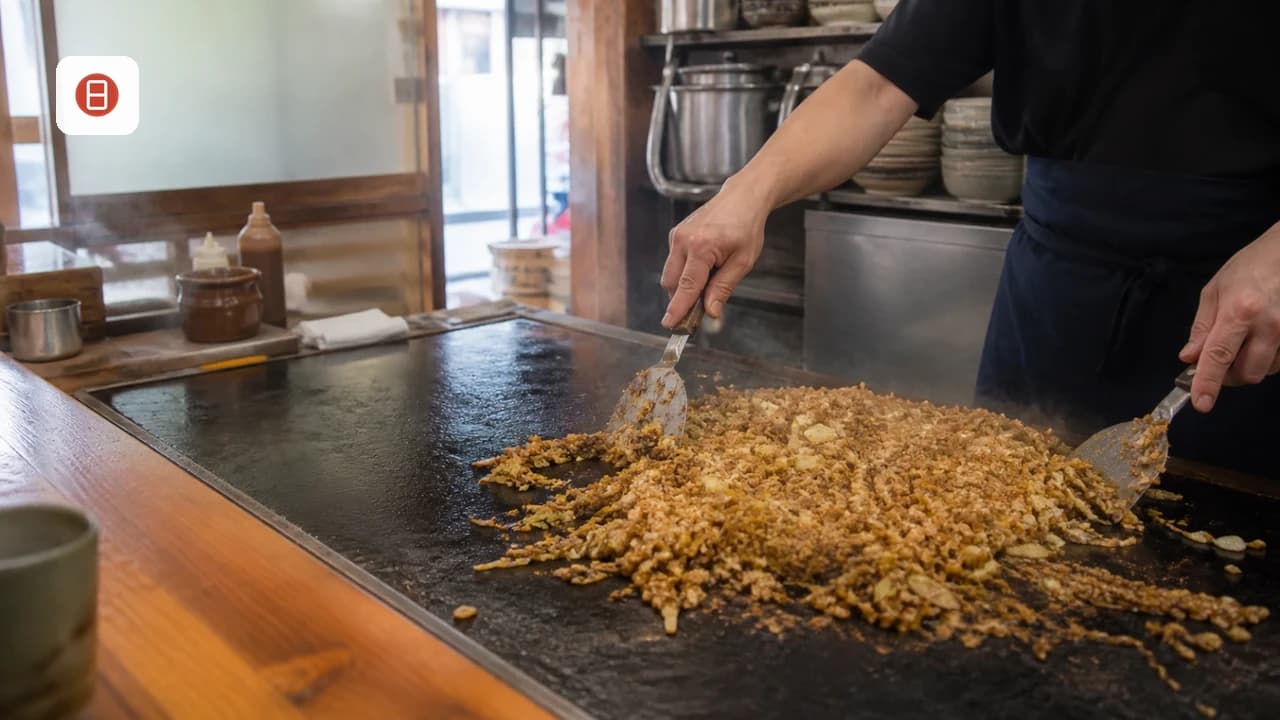
Every plate starts with the same base. Finely chopped yakisoba noodles get mixed with rice on the griddle, then chopped further with the cook's metal spatulas. Many shops add bokkake, a topping of beef tendon and konnyaku simmered in a sweet and spicy broth. Some restaurants use wagyu beef tendon in this topping. This communal teppan setup means portions arrive fast, since the same griddle cooks multiple orders at once. There's no expectation of a leisurely multi-course meal here. Sauce choice matters as much as the topping itself. Two versions define the Nagata style, listed below. Ask for dobe sauce by name if you want it, since many counters keep it out of sight unless a customer requests it directly.
The preparation method explains the ¥800 to ¥1,200 price range: rice extends noodles into a larger, satisfying portion without requiring expensive proteins. Bokkake topping delivers richness through simmered tendon and konnyaku in savory broth rather than generous meat portions.
- Bara sauce: the everyday bottled Worcester-style sauce found on Nagata tables, with sweet and savory notes.
- Dobe sauce: thicker and more concentrated, reportedly made from sediment left over during bara sauce production.
From Factory Floors to the Teppan: Sobameshi's Origins in Nagata Ward
Sobameshi's story traces back to 1957 in Nagata ward, according to a commonly repeated account. One version credits a customer at a shop believed to be Aomori. He brought cold rice from a lunch box and asked the cook to heat it up alongside a soba dish already on the griddle. A second version points to women working in nearby factories. They brought rice from home and mixed it with noodles on the grills at neighborhood okonomiyaki restaurants during lunch breaks. Both stories point to the same appeal: a filling, affordable meal built from whatever ingredients were on hand. Aomori is the shop most often named in connection with the dish's origin, and it still serves it today. One 2025 visit to the area found that it isn't actually clear which restaurant served the dish first. Treat the Aomori story as the leading account rather than settled fact. From Nagata's factory-worker roots, sobameshi grew into the B-kyu gurume dish it's known as today, valued for stretching a small amount of rice and noodles into a filling meal.
Sobameshi emerged in 1957 as factory-worker lunch—an affordable, quick meal built from basics. Despite Kobe's global reputation for luxury dining, the dish retains that economic identity; today's portions cost ¥800 to ¥1,200, keeping it accessible for day-trippers from Osaka and Kyoto.
Where to Eat Sobameshi in Kobe
Four spots come up repeatedly in coverage of Kobe's sobameshi scene, each with a different angle on the dish. Aomori remains the traditionalist's pick, since it's the shop most often linked to sobameshi's 1957 origin story and still operates in Nagata ward today. Nagata Tank Suji works well for travelers who can't make the trip to Shin-Nagata. It sits closer to Sannomiya and offers multiple sauce options on its sobameshi menu. Kobe Entrecote takes the opposite approach. It's an English-menu teppanyaki restaurant where sobameshi appears as a side dish alongside the tenderloin steaks it's known for. That combination works well for travelers who want one meal spanning both ends of Kobe's food identity. Ikari keeps its menu short: four dishes total, split between bokkake and pork versions of sobameshi and plain yakisoba. It opens 10:30am to 9:30pm daily, with last food orders taken at 9:00pm. Service runs in Japanese only, though menus include English, Korean, and Chinese text with photos. Takeout is available, but there's no reservation system and no vegetarian menu. Arrive and wait for counter seats during busy stretches, since walk-in is the only option. Across all four spots, the constant is the shared griddle experience rather than a specific address.
| Shop | Location | Known for | Price / budget |
|---|---|---|---|
| Aomori | Nagata ward | Widely credited as one of sobameshi's originating shops; still serving today | Check current hours and pricing locally |
| Ikari (Shin-Nagata) | Asuta Plaza First, about a 2-minute walk from Shin-Nagata Station | Bokkake and pork sobameshi or yakisoba; English, Korean, and Chinese menus with photos | About ¥1,000 budget per its listing; a 2025 visit for a double-topping plate cost ¥900 |
| Nagata Tank Suji | Closer to Sannomiya, more central than Shin-Nagata | Sobameshi with multiple sauce options on the menu | Similar B-kyu gurume pricing to other Nagata-style shops |
| Kobe Entrecote | Teppanyaki restaurant with an English menu | Sobameshi served as a side alongside tenderloin steak | Priced above standalone sobameshi counters, in line with a teppanyaki steak dinner |
Getting to Shin-Nagata and B-Kyu Etiquette to Know
Shin-Nagata Station connects to both JR and subway lines, putting Nagata's sobameshi shops within a short walk of the platform. Ikari's Asuta Plaza First branch sits about two minutes from the station on foot. Just outside the station stands a 59-foot Tetsujin 28 statue, based on the manga by Mitsuteru Yokoyama. That covered shopping street nearby carries the same name as the statue. Combine the statue and the covered arcade with lunch for an easy half-day loop. The Kobe attractions guide covers more sightseeing stops in this part of the city. Kobe is a common day trip from both Osaka and Kyoto for travelers chasing this kind of food culture specifically. Confirm current train schedules and fares before building a tight timeline around Ikari's opening hours. Most sobameshi shops seat you around a shared teppan griddle rather than at individual tables. Watching the cook chop noodles, rice, and toppings together with metal spatulas is part of the experience, not something to rush through. Order the Nagata specialty drink called Apple if you want a non-alcoholic pairing for the heavier bara and dobe sauces. Expect to pay roughly ¥800 to ¥1,200 for a full plate. Ikari's own listing puts its budget at about ¥1,000, and a 2025 visit there for a bokkake-and-pork combination came to ¥900. Lunch service gets busy well past the standard noon-to-1pm rush. One 2025 visit found the shop still full outside those hours. Arriving earlier or later doesn't guarantee a fast seat.
Beyond Sobameshi: Other Kobe Local Dishes Worth a Detour
Akashi-yaki is another Hyogo specialty worth seeking out alongside sobameshi. These are small egg-batter dumplings dipped in hot dashi broth, rather than topped with the mayonnaise-and-sauce style common on Osaka-style takoyaki. Food travelers often describe it as a predecessor to modern takoyaki. This dashi-dipping step is what separates the texture from typical takoyaki, since the broth softens the outside just before each bite. Nankinmachi, Kobe's Chinatown district, offers a different kind of street food entirely, worth a stop on the same trip. For more on the district's stalls and shops, see the Nankinmachi Chinatown guide. Kobe's bakery scene is another local specialty worth pairing with a sobameshi-focused day. Find specific shops and pastries in the Kobe bakery guide. Nada ward's sake breweries offer a different kind of local specialty entirely, worth a separate half-day route. Tasting stops distinct from the Nagata food crawl appear in the Nada sake brewery guide. Both routes work as a separate day from the Nagata sobameshi crawl, since this guide stays focused on B-kyu gurume rather than the citywide food scene.

Mistakes to Avoid When Ordering B-Kyu Gurume in Kobe
A few habits separate a good Nagata visit from a frustrating one. Keep these points in mind before ordering:
- Don't expect a quiet meal. Teppan counters are loud, smoky from the griddle, and built for fast turnover, not lingering conversation.
- Don't confuse bokkake with bukkake. Bokkake is the beef tendon and konnyaku topping. Bukkake is an unrelated word, and mixing up the two at the counter causes confusion.
- Don't skip the dobe sauce if spice appeals to you. It isn't always on the table, so ask for it directly.
- Don't assume a vegetarian option exists. Ikari's official listing shows no vegetarian menu, so ask ahead or choose plain noodles where available.
Frequently Asked Questions
What is sobameshi?
Sobameshi is a Kobe specialty that combines finely chopped yakisoba noodles with fried rice, cooked together on a hot griddle. Most versions add a topping and a Worcester-style sauce, and many shops in Nagata ward specialize in it. Order it at a Nagata teppan counter for the most traditional version of the dish.
What's the difference between bokkake and bukkake?
Bokkake is a Kobe topping made from beef tendon and konnyaku simmered in a sweet and spicy broth. Bukkake is an unrelated word, so avoid mixing the two up when ordering. Ask the counter staff to point at the menu if pronunciation feels uncertain.
What's the difference between bara sauce and dobe sauce?
Bara sauce is the standard bottled Worcester-style sauce found on tables across Nagata. Dobe sauce is thicker and more concentrated, reportedly made from sediment left over during bara sauce production, and it isn't always offered unless you ask. Try the standard bara sauce first, then ask for dobe if you want more heat.
How do you get to Kobe's best-known sobameshi shops?
Shin-Nagata Station connects to JR and subway lines and puts most sobameshi shops within a short walk. Ikari's Asuta Plaza First branch is about two minutes on foot from the station. A Tetsujin 28 statue outside the station makes a useful landmark before or after the meal.
How much does a plate of sobameshi cost in Kobe?
Budget roughly ¥800 to ¥1,200 for a full plate at most Nagata shops. Ikari's own listing puts its budget at about ¥1,000, and a 2025 visit there for a double-topping plate cost ¥900. Treat that range as a planning guide, since individual shop pricing can vary.
Does Ikari offer a vegetarian menu?
No, Ikari's official listing states that it does not offer a vegetarian menu. Vegetarians should ask ahead or consider a plain noodle option where available, since toppings are meat-based. Confirm current offerings directly with the shop before visiting.
Can you find sobameshi somewhere more central than Nagata ward?
Yes. Nagata Tank Suji serves sobameshi with multiple sauce options in a location closer to Sannomiya, more central than Shin-Nagata.
Free: The Kobe Essentials guide
Top things to do, where to stay, a perfect day plan, getting around, and the best time to go — a Kobe mini-guide you can take offline.
You might also like


Continue reading
More guides you'll find useful