

Kobe Illumination 2027: Luminarie Dates, Tickets & Venue Guide
Plan the Kobe illumination season with confirmed 2027 Luminarie dates, Meriken Park ticket prices, three venue maps, and tips for avoiding the crowds.
On this page
Last updated September 2026, this guide covers the Kobe illumination season built around Kobe Luminarie, the city's 32nd annual light festival. Kobe Luminarie runs January 29 to February 7, 2027, spreading nightly light displays across three central venues near Sannomiya and Motomachi stations. This guide breaks down which sections are free, what the Meriken Park paid zone costs, and how to time a visit around the heaviest crowds.
Kobe Illumination 2027: Quick Facts
Kobe Luminarie's 32nd edition keeps the dispersed format introduced in 2024, spreading light displays across three sites instead of one long route. Many travelers searching for Kobe illumination expect a December event, but Luminarie itself runs in late January and early February. Weekday visits after 19:00 cost less and draw smaller crowds than weekend evenings, a pattern this guide breaks down further below. Here are the essentials before you book anything. For the wider seasonal calendar, see Kobe in Winter: Weather, Luminarie Dates & Arima Onsen Guide (2026). If these dates do not fit your trip, check Kobe's best visiting months.
| Detail | Info |
|---|---|
| Dates | January 29 – February 7, 2027 |
| Hours | 17:30–21:30 nightly |
| Cost | Free at Higashi Yuenchi Park and the Former Foreign Settlement; ¥500–¥1,500 for the Meriken Park paid zone |
| Venues | Higashi Yuenchi Park, Former Foreign Settlement, Meriken Park |
| Nearest stations | Sannomiya, Motomachi |
Why Kobe Luminarie Isn't a Typical Christmas Light Show
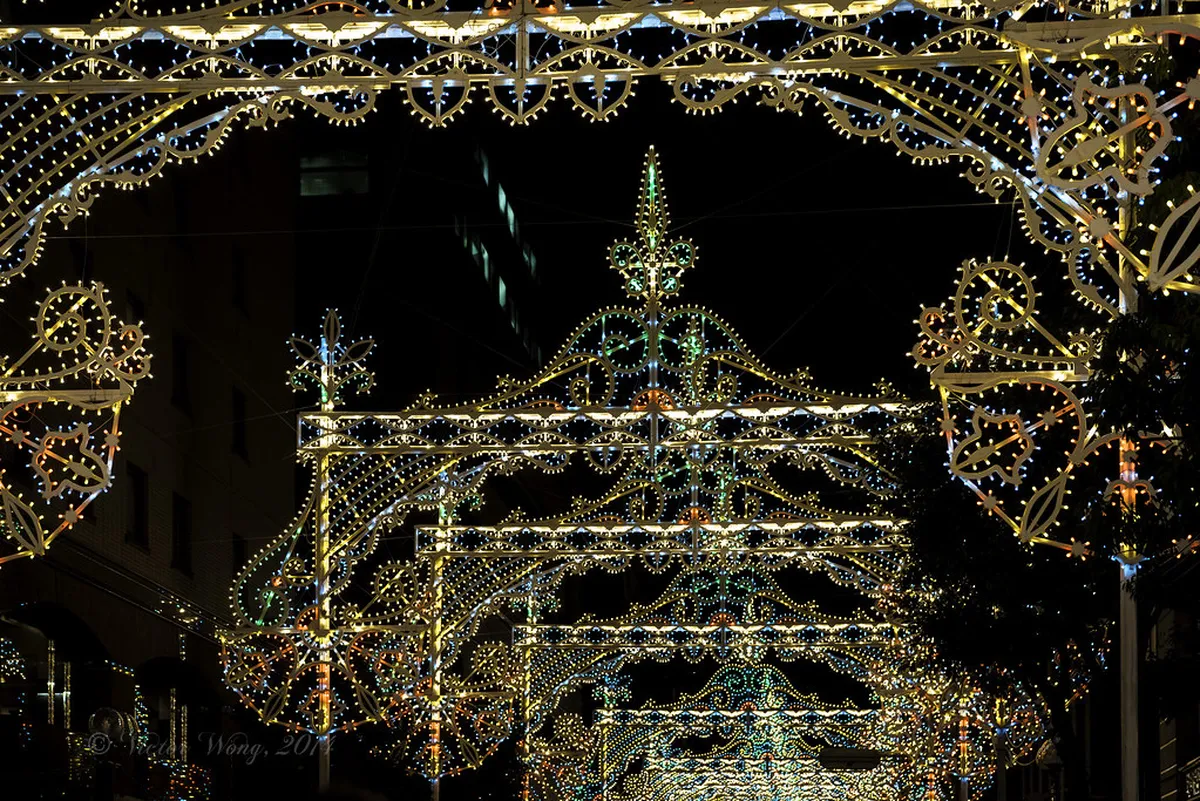
Kobe Luminarie began in 1995 as a memorial for the Great Hanshin earthquake, which killed more than 6,000 people and cut power across the city. Japan's national tourism board describes the festival as a symbol of hope and recovery for residents who lived through the disaster. The name itself comes from the Italian word for an illumination of miniature bulbs. Italian craftspeople contributed the design, and organizers hang over 200,000 individually hand-painted lights each year, powered by biomass electricity. Silent prayers open the event, and organizers post a memorial naming the victims each night the lights run. In 2011, the same year as the Tohoku earthquake and tsunami, organizers added a special exhibition to raise funds for victims in that region too. Pandemic restrictions paused the event in 2020, since Italian craftspeople could not travel to Japan, and it returned in January 2024 with the current three-venue format. Historical attendance ran between three and five million visitors most years; the redesigned 2024 edition drew roughly 2.3 million, per organizer-reported figures. That reflective tone separates Kobe Luminarie from the citywide Christmas season, which runs on its own calendar in December.
The Three Kobe Luminarie Venues
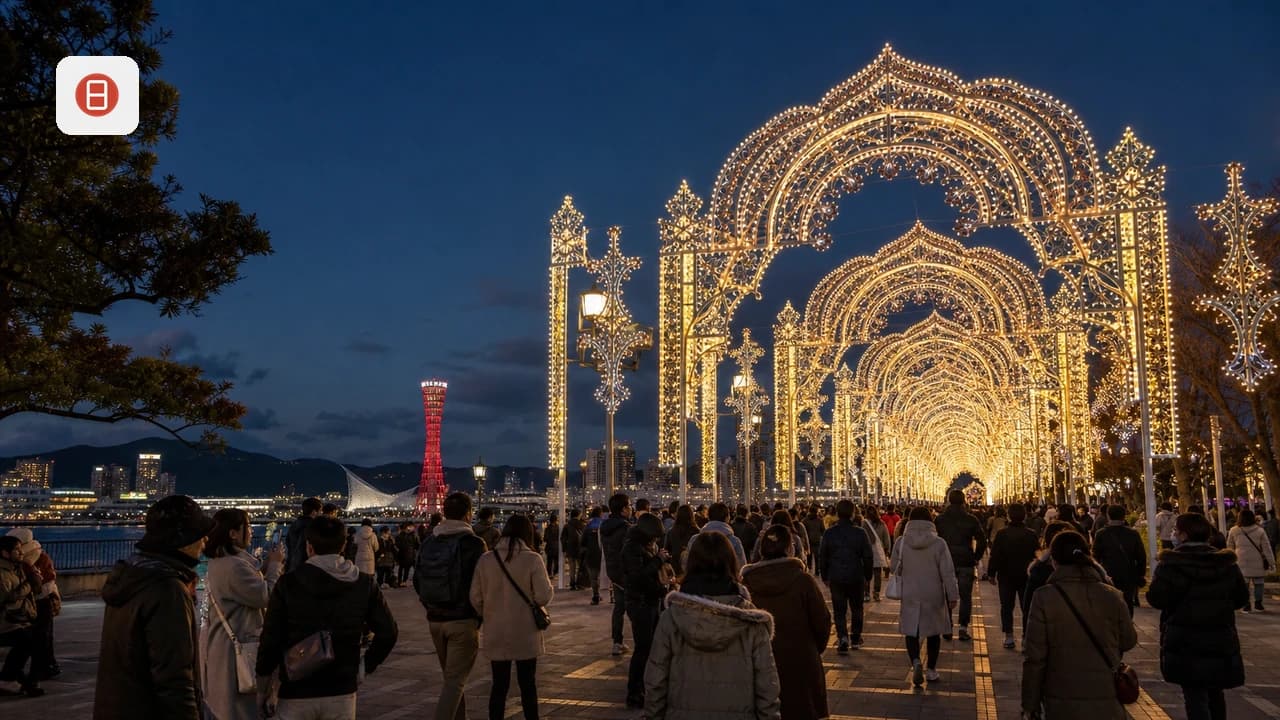
Since 2024, Kobe Luminarie splits into three walkable sections, each with a different mood. For a full route between all three, see Kobe Luminarie's full route breakdown. Meriken Park also anchors Kobe's other landmark sights nearby.
- Higashi Yuenchi Park (Kobe East Park) is the main gathering point. Its 78m × 22m Spalliera wall display anchors the space, alongside food stalls, live music, and memorial plaques naming earthquake victims. It sits a 5–10 minute walk from Sannomiya Station.
- Former Foreign Settlement offers a quieter stretch, with Western-style buildings lit from the street. It suits photography and slow walking, about 5–10 minutes from Motomachi or Sannomiya Station. Kyukyoryuchi-Daimarumae subway station also sits within walking distance.
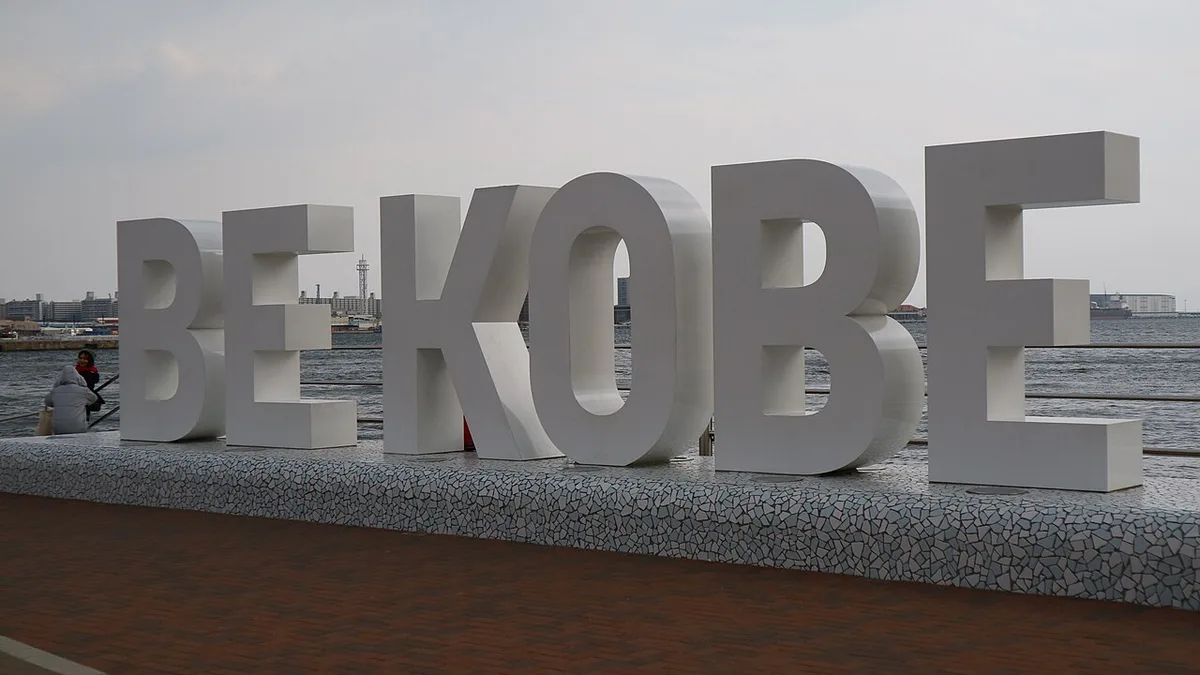
- Meriken Park is the ticketed finale, home to the 70-meter Galleria corridor and the ornate Frontone entrance. The illuminated BE KOBE sign stays lit here too, framing photos against Kobe's waterfront. Vendor stalls sell goods and snacks alongside the paid displays. Because entry is timed and paid, density stays lower than in the free zones. It sits about 10 minutes from Motomachi or Kobe Station.
Meriken Park Tickets: Advance vs Same-Day Pricing
Only Meriken Park charges admission; Higashi Yuenchi Park and the Former Foreign Settlement stay free for the entire run. Booking ahead cuts the price roughly in half, and same-day tickets go on sale from 3 p.m. at the gate. Book through the official ticket page in advance, and confirm current details on Kobe's official tourism site before travel. Same-day stock is limited, so a same-day purchase is not guaranteed once evening demand builds. Weekday advance tickets are the cheapest way to see the Galleria and Frontone up close. Skipping the paid zone entirely still covers most of the event, since the two free venues carry the bulk of the atmosphere.
Booking advance saves about half the cost—¥500 is the weekday minimum—and pairing with a 19:00 arrival adds crowd savings on top.
| Zone | Advance | Same-day |
|---|---|---|
| Weekday | ¥500 | ¥1,000 |
| Weekend | ¥750 | ¥1,500 |
Getting to Kobe Luminarie From Osaka, Kyoto, and Tokyo
Kobe sits on Kansai's main rail spine, and every major city links to it by train. Osaka Station reaches Sannomiya in about 20–25 minutes on the JR Kobe Line. Kyoto connects via the JR Special Rapid, arriving in around 50 minutes. Tokyo requires a shinkansen to Shin-Kobe, roughly 2 hours 45 minutes, plus one subway stop to Sannomiya. Travelers heading straight to the original corridor can instead ride the subway to Kencho-mae Station, about a three-minute walk from Motomachi Station. Sannomiya Station serves Higashi Yuenchi Park, while Motomachi Station serves the Former Foreign Settlement and Meriken Park. Local streets around the venues close to car traffic during lighting hours, turning the route into a pedestrian-only walk. Day-trippers from Osaka can compare timing options in this Kobe day trip guide. Anyone staying overnight near the venues should check where to stay in Kobe before the event dates sell out nearby rooms.
The 21:30 finish time fits Osaka day-trippers (20–25 minute return) and Kyoto visitors (around 50-minute return), enabling a complete evening within a single day.
Crowd Strategy: Weekday Evening vs Saturday Night
Timing changes the experience more than any other factor. Arriving at 17:30 on a Saturday means fighting the entrance crowd. Arriving around 19:00 on a Tuesday means walking straight through instead. Weekend admission also costs more at every tier than weekday admission, per the pricing above. Pair a weekday visit with an early Kobe beef dinner before the lights come on at 17:30. Check typical January conditions in Kobe before packing for an evening outdoors.
| Timing | Crowd level | Trade-off |
|---|---|---|
| Weekday, ~19:00 arrival | Low | Shorter waits, easier photos, later finish |
| Weekend, 17:30 arrival | High | Full atmosphere, longest queues at Meriken Park gates |
A Sample Kobe Luminarie Evening
A simple sequence keeps the evening efficient without feeling rushed.
- Arrive in central Kobe by mid-afternoon and spend an hour or two around Kitano-cho or Nankinmachi.
- Eat an early Kobe beef dinner around 17:00, before restaurants near Sannomiya fill up.
- Walk to Higashi Yuenchi Park as the lights come on at 17:30, then continue toward the Former Foreign Settlement.
- Finish at Meriken Park, timing paid-zone entry for around 19:00 on a weekday to avoid the heaviest queues.
- Catch a return train before the 21:30 finish; Sannomiya connects to Osaka in about 20–25 minutes and to Kyoto in around 50.
Beyond the Luminarie: Harborland, Nankinmachi, and Other Kobe Winter Lights
Kobe Luminarie is a short, ten-day event, and its dates rarely overlap December. Harborland, another waterfront district in central Kobe, runs its own Mosaic illuminations and keeps an illuminated Ferris wheel lit through the season. Nankinmachi, Kobe's Chinatown, adds lantern displays that peak around Chinese New Year rather than the Luminarie's late-January to early-February window. Both sit within Kobe's central waterfront area, making a Harborland-to-Nankinmachi walk an easy add-on before or after Luminarie. For the lantern side of that celebration, see Nankinmachi's lantern fair. Kobe's full event calendar, including December markets, lives in Kobe's full events lineup. Daytime, free sightseeing during the same trip is covered in Kobe's no-cost daytime activities. Travelers extending north see a different style at Hakodate's winter illuminations. Kyushu offers another contrast at the Fukuoka Christmas market. Onsen travelers often extend the evening with a soak at Arima Onsen, a hot spring town near Kobe.
Common Mistakes to Avoid at Kobe Luminarie
A few planning errors show up again and again.
- Assuming it's a Christmas event: Kobe Luminarie runs in late January and early February, not December, so it never overlaps Christmas lights elsewhere in the city.
- Waiting to buy same-day Meriken Park tickets: same-day prices run double the advance rate, and stock starting at 3 p.m. can sell out before the gates even get busy.
- Arriving right at 17:30: the opening hour draws the heaviest crowd, and a 19:00 arrival clears most of the initial rush.
- Funneling everyone through Sannomiya: starting at Motomachi instead for the Former Foreign Settlement and Meriken Park spreads pedestrian traffic more evenly across the evening.
Kobe Christmas Market at Nunobiki Herb Gardens
For a festive December alternative, head to the Kobe Christmas Market at Nunobiki Herb Gardens. It has a much more celebratory mood than Luminarie’s earthquake memorial setting. The venue sits on Mount Rokko’s lower slopes above Shin-Kobe Station.
Take the Kobe Nunobiki Ropeway from beside Shin-Kobe Station to reach the gardens. The ride itself gives wide views across the city and harbor after dark. Seasonal stalls typically focus on warm drinks, sweets, small gifts, and Christmas-themed food.
- Best for: December trips and couples seeking a Christmas atmosphere.
- Nearest rail stop: Shin-Kobe Station, with the ropeway nearby.
- Plan for: cooler temperatures than central Kobe because of the hillside location.
Check the garden’s official winter schedule before travelling. Opening dates and evening operations vary by season, and the market is separate from Kobe Luminarie’s late-January to early-February run.
Frequently Asked Questions
When is Kobe Luminarie 2027?
Kobe Luminarie runs January 29 to February 7, 2027. Lights are on nightly from 17:30 to 21:30 across the three venues.
Is Kobe illumination free to see?
Most of it is. Higashi Yuenchi Park and the Former Foreign Settlement cost nothing to enter. Only the Meriken Park special-viewing zone charges admission, starting at ¥500 in advance.
What is the Bell of Hope at Kobe Luminarie?
Kobe Luminarie's 32nd edition introduces the Bell of Hope, a new permanent memorial element for 2027. It adds a lasting fixture to a festival that otherwise comes down each February. The addition continues the event's broader theme of hope and recovery after the 1995 earthquake.
Can you visit Kobe Luminarie as a day trip from Osaka or Kyoto?
Yes. Osaka to Sannomiya takes about 20 to 25 minutes on the JR Kobe Line. Kyoto to Sannomiya takes roughly 50 minutes on the JR Special Rapid. That leaves time to see the lights and catch a return train before the 21:30 finish.
Which station should you use for Kobe Luminarie?
Sannomiya Station serves Higashi Yuenchi Park, while Motomachi Station serves the Former Foreign Settlement and Meriken Park. Both stations sit within walking distance of each other, so switching venues mid-evening is simple.
Is Kobe Luminarie the same as Kobe's Christmas illuminations?
No. It's a January-to-February memorial event for the 1995 earthquake, while Kobe's Christmas lights and markets run separately in December. See 4 Best Christmas Events in Kobe: Illuminations, Markets & Winter Guide (2026) for that season's schedule.
How many people visit Kobe Luminarie each year?
Attendance varies by edition. Historically the event drew between three and five million visitors most years. Its redesigned 2024 edition, per organizer-reported figures, drew roughly 2.3 million.
Where should you eat before Kobe Luminarie?
Restaurants near Sannomiya and Motomachi fill up fast on event nights. An early Kobe beef dinner before the 17:30 lighting avoids the wait entirely.
What should you wear to Kobe Luminarie?
Late January and early February evenings in Kansai run cold after sunset. Layered clothing and comfortable walking shoes suit the outdoor, mostly-standing format best.
Free: The Kobe Essentials guide
Top things to do, where to stay, a perfect day plan, getting around, and the best time to go — a Kobe mini-guide you can take offline.
You might also like

Continue reading
More guides you'll find useful


