

Kobe in Winter: Weather, Luminarie Dates & Arima Onsen Guide (2026)
Plan a trip to Kobe in winter with monthly temperatures in Celsius and Fahrenheit, what to wear, Kobe Luminarie dates, and a day trip to Arima Onsen.
On this page
Last updated September 2026: Kobe in winter runs milder and drier than most of the Kansai region, thanks to the Rokko Mountains blocking cold northern air. The Seto Inland Sea keeps temperatures steady, and December through February brings the Kobe Luminarie's memorial lights, hot-spring soaks near Sannomiya at Arima Onsen, and skiing on Mount Rokko. This guide covers monthly weather, event dates, and a realistic itinerary between the harbor and the mountains.
Why Kobe Is a Milder Winter Base in Kansai
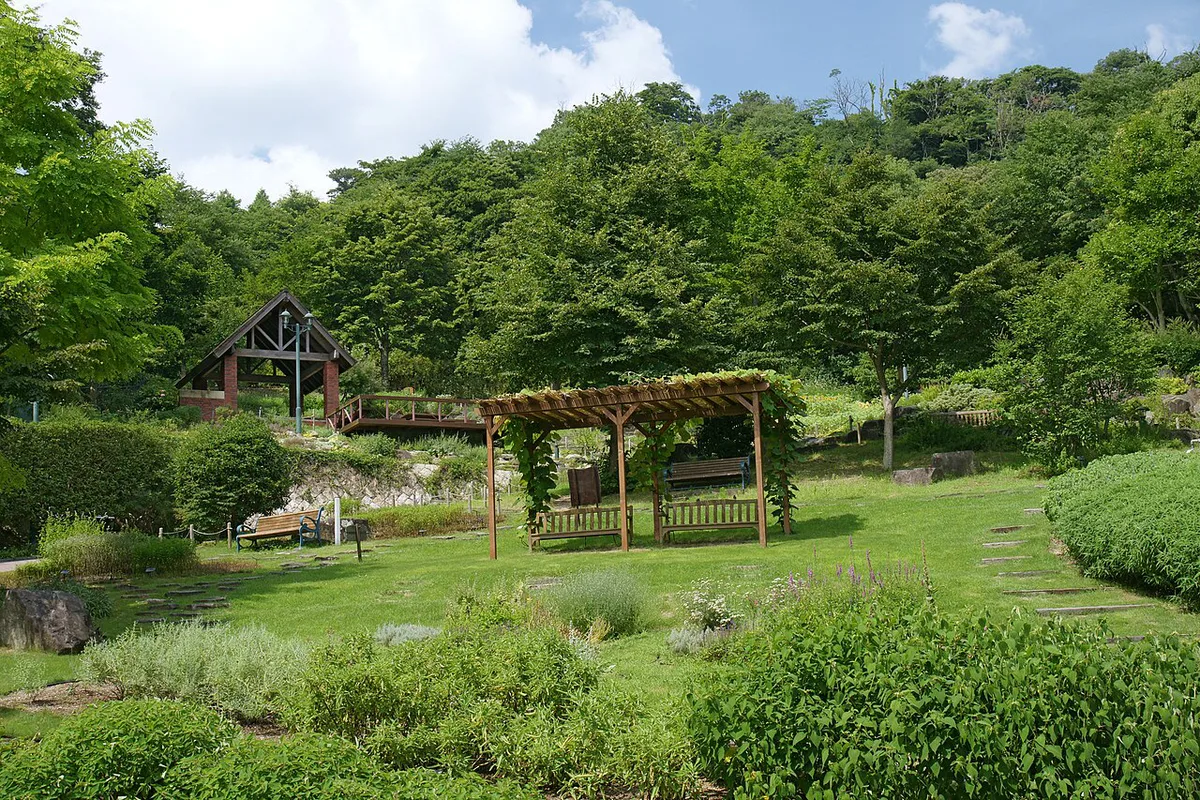
Kobe sits between the Rokko Mountains and the Seto Inland Sea, and that geography shapes its winter. Mountains block cold air moving down from the north, while the sea keeps temperatures more stable than inland Kansai cities. Kyoto and Osaka often feel colder and windier on the same December day. Kobe follows a Seto Inland Sea climate pattern: mild, dry, and comparatively stable through the season. Northern Hyogo towns such as Kinosaki and Tajima sit on the Japan Sea side instead, and they get real winter snowfall most years. That combination makes Kobe one of the more comfortable Kansai winter bases for travelers who still want mountain scenery and hot springs close by. For a full seasonal comparison across the year, see Kobe's best travel months.
Kobe in Winter: Weather and Temperatures by Month
December stays the mildest month, with average highs of 12.2°C (54°F) and lows around 5.7°C (42°F). January turns driest and coldest, with highs near 10.8°C (51°F) and lows of 4.1°C (39°F). Dry air chaps skin and irritates throats, so pack lip balm and a mask. February holds similar daytime highs around 12.1°C (54°F), but rainfall jumps to 93.5 mm, so build a compact umbrella into the bag. Humidity climbs steadily too, from 59% in December to 67% by February, which is part of why the air still feels drier here than in much of coastal Japan. Check the full seasonal Kobe temperature data for the rest of the year.
| Month | Avg High | Avg Low | Precipitation | Winter Highlight |
|---|---|---|---|---|
| December | 12.2°C (54°F) | 5.7°C (42°F) | 0.5 mm | Luminarie season begins; Nunobiki Christmas Market |
| January | 10.8°C (51°F) | 4.1°C (39°F) | 16 mm | Coldest, driest month; New Year shrine visits |
| February | 12.1°C (54°F) | 5.6°C (42°F) | 93.5 mm | Nankinmachi Lunar New Year; last weeks for Rokko Snow Park |
What to Wear in Kobe This Winter: The Layering Strategy
Trains, subways, and department stores in Kobe run heated well above outdoor temperatures. A heavy coat that feels right on the harbor front turns uncomfortable the moment you step onto a warm platform. Build an outfit in peelable layers instead of one thick shell, then add or remove pieces as you move between outdoor sightseeing and indoor stops.
- A heat-retaining base layer that will not overheat on a warm train
- A wool sweater or fleece you can shed indoors
- A wind- and water-resistant outer shell for gusts at Meriken Park and Harborland
- A scarf, knit hat, and gloves for early shrine visits and evening illuminations
- Thick socks or leggings for standing outdoors at Luminarie or the Christmas Market
Kobe Luminarie: Route, Meaning, and Crowd Rules
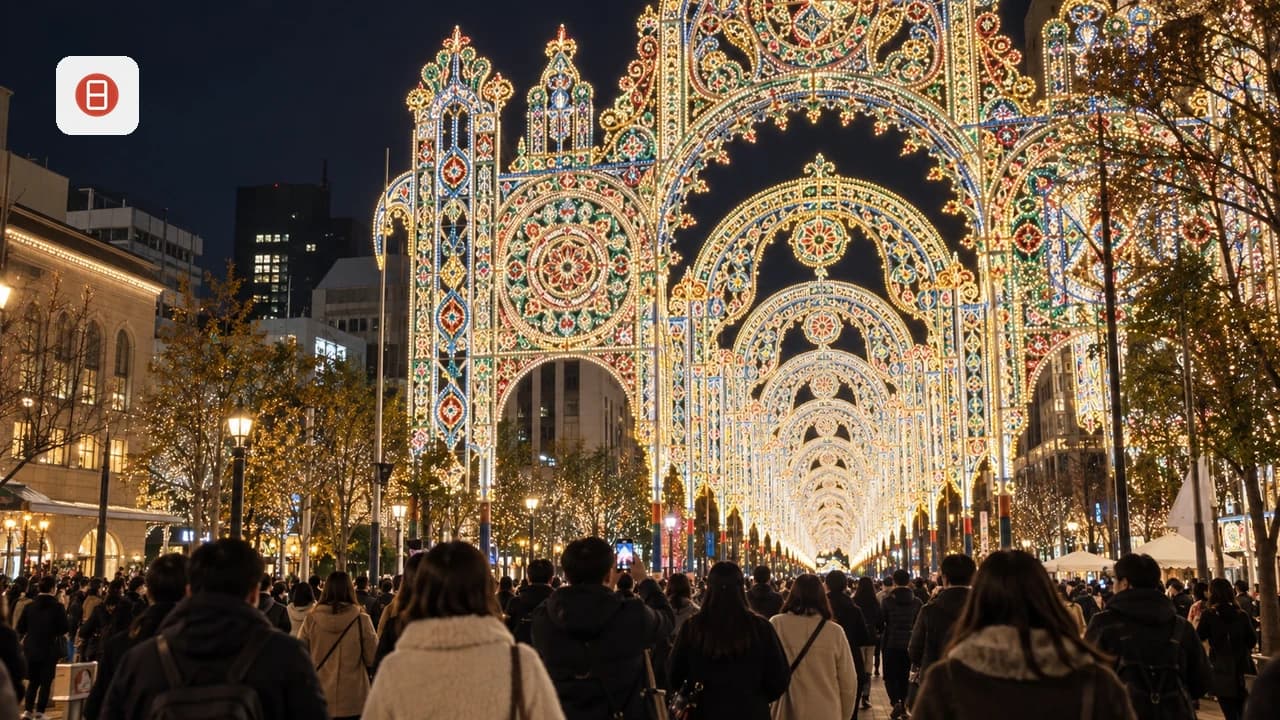
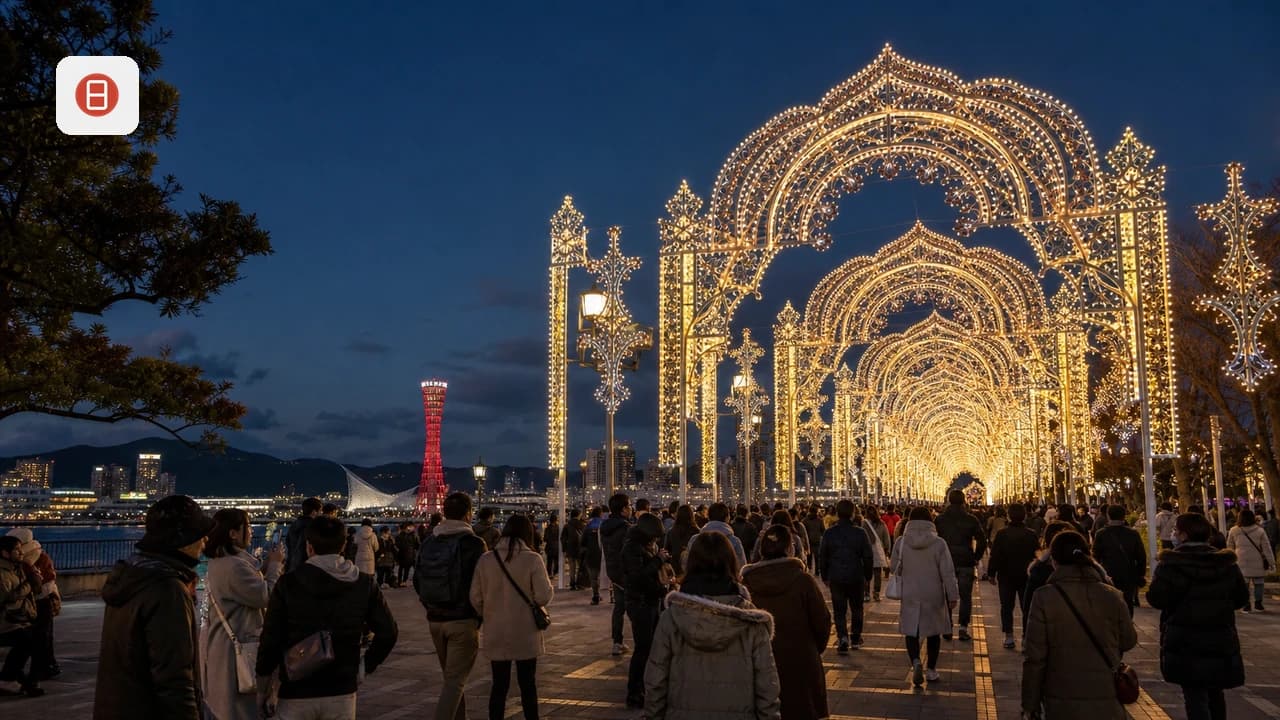
Kobe Luminarie began in 1995 as a memorial for victims of the Great Hanshin-Awaji Earthquake, and it returns most winters with the same quiet intent. Displays run between the Former Foreign Settlement and Higashi Yuenchi Park, and the event usually lasts about ten days. Each year's structure comes from an Italian design team working alongside Japanese artisans, with materials shipped in from Italy for on-site assembly. Expect one-way walking routes and staff-directed crowd control during peak evening hours, so follow posted signage rather than backtracking through the crowd. Exact dates have shifted between December and January in recent years. Confirm current 2026 dates through the official Kobe tourism site before locking in travel. For the wider season of light displays around the city, see Kobe's winter illumination lineup. For a deeper look at the memorial event itself, read the full Luminarie route breakdown. For dates across the full December-to-January run, check Kobe's full Christmas season guide.
Nunobiki Herb Gardens, the Ropeway, and Kobe's Christmas Market
The Nunobiki Ropeway lifts visitors above the city to a hillside herb garden, and round-trip tickets run about ¥2,800 per adult. In December, the garden's upper terrace turns into a German-style Christmas market, with stalls, mulled drinks, and string lights strung through the greenhouses. Arrive before the 6 PM peak if you want to shoot photos without a crowd blocking the market's main walkway. Ropeway cabins hold only a handful of riders at a time, so lines build fast after dark. Tickets can sell out on weekend evenings during the market's run, so a weekday visit is worth considering. Check the year-round Kobe events calendar for that year's exact market dates and hours.
Nankinmachi and the Lunar New Year Season
Nankinmachi, Kobe's Chinatown near Motomachi Station, runs busiest during the Lunar New Year window. The neighborhood has held its Nankinmachi Spring Festival since 1987, with lion dances and parades filling the streets for the holiday. Stalls sell steamed buns and other hot street food, which works well against a cold February afternoon. Lunar New Year falls on a different date every year, so check the Nankinmachi Lunar New Year schedule before planning around it.
First Sunrise From Mount Rokko and Mount Maya
Hatsu-hinode, the first sunrise of the new year, draws early risers up Mount Rokko and Mount Maya on January 1. Both peaks offer wide views over the harbor and city below, well above the morning haze that can sit over Sannomiya. Many locals follow the sunrise with a visit to a shrine such as Ikuta, Minatogawa, or Nagata to pray for the year ahead. None of this costs anything beyond transport, so it pairs well with no-cost Kobe activities elsewhere in the city.
Arima Onsen: Kobe's Hot-Spring Escape
Arima Onsen ranks among Japan's oldest hot-spring resorts, and it sits about 30 minutes from Sannomiya by train. Two waters define the town: Kin-no-Yu, an iron-rich golden spring, and Gin-no-Yu, a radium-rich silver spring, both kept around 42-44°C (108-111°F). Every January 2, the town holds the Arima Onsen Iri-zome Ceremony, where geiko in white robes perform a traditional yunomi dance to open the bathing year. The larger Taiko-no-Yu complex bundles multiple bathing areas under one ticket, and several tattoo-friendly facilities in town welcome travelers who would be turned away at a stricter bathhouse. Single-facility entry costs less than a pass covering both springs, so weigh how much soaking time you actually want first. Check current hours and admission through the Arima Onsen Tourist Association before visiting. Browse the wider Kobe attractions list for how to combine the trip with a city-center morning.
Water kept around 42-44°C (108-111°F) feels dramatically warmer than January lows near 4.1°C (39°F), making Arima's onsen especially restorative during winter.
| Arima Onsen | Sannomiya Public Baths (Sento) | |
|---|---|---|
| Time from Sannomiya | About 30 minutes by train | Walking distance downtown |
| Water | Kin-no-Yu and Gin-no-Yu, kept around 42-44°C (108-111°F) | Standard municipal bathhouse water |
| Vibe | Historic ryokan resort town | Everyday neighborhood bathhouse |
| Cost | Higher: resort admission plus transit | Lower: single neighborhood entry fee |
Rokko Snow Park: Skiing and Snow Play Without the Gear Hassle
Rokko Snow Park sits about 35 minutes from central Kobe and stays open into March on artificial snow. Every rental, from skis and boards to full winter outerwear, is available on-site, so travelers without gear can still spend an afternoon on the slopes. A guided day tour bundling equipment, lift access, and a buffet lunch lists at ¥19,000, well above the roughly ¥7,500 charged for a lighter herb-garden-and-aquarium day tour. That price gap reflects how much each trip includes, so compare what's covered before booking either one. The park's dedicated sledging zone works well for families with young children who are not ready for a lift line. Its location above the city means a morning shopping stop in Sannomiya and an afternoon on the snow both fit into the same day.
A full Rokko tour with equipment and lunch costs ¥19,000, roughly seven times the ¥2,800 round-trip Nunobiki Ropeway ticket, reflecting the difference in scope.
Winter Food Beyond Kobe Beef
Kobe Beef deserves its reputation. A separate guide covers where to book a Kobe Beef dinner. Winter also brings kaiseki menus built around hot pot dishes, grilled seafood, and seasonal vegetables at traditional ryokan, especially in Arima. Ryokan kaiseki menus change with the week's catch and harvest, so no two winter visits serve quite the same courses. Kobe's Nada district produces much of the region's sake, and several breweries there run tours and tastings through the cold months. A brewery visit pairs naturally with a Nunobiki or Kitano-cho afternoon, since Nada sits a short train ride from central Kobe.
Where to Stay in Winter: Sannomiya, Harborland, or Arima
Sannomiya works as the default base: it sits on the main train and subway lines, puts Kitano-cho and Motomachi within walking distance, and keeps travel time to Arima or Rokko under 35 minutes. Harborland suits a slower, view-focused stay near Meriken Park and the illuminated Kobe Port Tower, though harbor wind bites harder there than in Sannomiya's covered streets. Harborland also runs an outdoor ice rink through the winter months, which adds a reason to base there beyond the view. Arima Onsen suits travelers who want a ryokan stay with in-room kaiseki and private baths rather than a city hotel. A Sannomiya room typically costs less than an Arima ryokan night with meals included, so compare current rates on Kobe hotel picks before deciding where to sleep.
A 1-Day and 2-Day Winter Itinerary
A single day works if Kobe is one stop on a wider Kansai trip. Add a second day, or an overnight, to work in Arima Onsen without rushing the soak. Travelers based in Osaka can also run the first day as a single long trip. See the Osaka-to-Kobe day trip plan for train times and a tighter schedule.
| Day | Morning | Afternoon | Evening |
|---|---|---|---|
| Day 1 | Nunobiki Ropeway to the herb gardens | Kitano-cho's former foreign settlement streets | Luminarie or Harborland illuminations |
| Day 2 (optional) | Train to Arima Onsen, about 30 minutes | Soak in Kin-no-Yu or Gin-no-Yu | Kaiseki dinner and an overnight ryokan stay |
Mistakes to Avoid on a Kobe Winter Trip
A few planning gaps trip up first-time winter visitors more than any weather surprise.
- Skipping a Kobe Beef reservation during the New Year rush, when popular counters book out days ahead
- Underestimating harbor wind chill at Meriken Park and Harborland, where gusts off the water cut through a light jacket
- Assuming everything stays open: many museums, shops, and some restaurants close from December 29 through January 3
- Packing only a heavy coat and skipping peelable layers, then overheating on warm trains and in department stores
- Booking a Rokko Snow Park trip without checking the season's closing date, since the park runs only into March
How Kobe's Winter Compares Within Japan
Kobe Luminarie carries a memorial tone that sets it apart from purely commercial light shows elsewhere in Japan. Travelers building a longer winter itinerary sometimes compare it against Hakodate's winter illuminations further north. Others weigh it against Fukuoka's Christmas market in Kyushu. Each sits in a different climate and scale, so treat them as separate winter trips rather than substitutes for Kobe. Kobe's advantage stays practical: a memorial illumination, a working ski park, and Japan's oldest hot spring resort all sit within about 35 minutes of Sannomiya.
Getting to Arima Onsen: Bus or Train From Sannomiya
Arima Onsen is close enough for a day trip, but the route changes the feel of the day. The train route involves a transfer onto the Kobe Electric Railway, then arrives at Arima Onsen Station near the resort center. It is usually the quicker choice when connections line up.
A direct bus from Sannomiya avoids transfers and is easier with a suitcase, shopping bags, or younger children. It takes longer than the fastest rail journey, especially when traffic is heavy, but it delivers you directly into the onsen town.
- Choose the train for a faster trip and flexible return timing.
- Choose the bus for a simpler journey with luggage or limited mobility.
- Check the final return departure before starting a late-afternoon soak.
In winter, allow extra time for the change between Kobe’s city streets and Arima’s steeper, cooler lanes. Wear shoes with grip if rain or a cold snap is forecast.
Frequently Asked Questions
When does the Kobe Luminarie run in 2026?
Exact 2026 dates were not finalized when this guide was checked. The event has shifted between a December and a January slot in past years, running for roughly ten days each time. Confirm current dates through the official Kobe tourism site before booking flights or hotels around it.
Does it snow in Kobe in winter?
Snow is rare in central Kobe and almost never accumulates on the ground. Northern Hyogo towns such as Kinosaki and Tajima sit on the Japan Sea side and get heavy snowfall most winters. If a snow day matters to your trip, head up to Mount Rokko or Rokko Snow Park instead of expecting it in the city center.
What should you wear in Kobe in December versus January?
December calls for a lined jacket over a sweater, since highs run around 12.2°C (54°F). January turns colder and drier, so add a heat-retaining base layer, a scarf, and gloves for lows near 4.1°C (39°F). Trains and department stores run warm indoors, so build the outfit in peelable layers rather than one heavy coat.
Is Arima Onsen worth a winter day trip from Kobe?
Yes. Arima Onsen sits about 30 minutes from Sannomiya by train, making it an easy add-on to a Kobe winter itinerary. The resort's Kin-no-Yu and Gin-no-Yu waters run around 42-44°C (108-111°F), which feels good against a cold winter afternoon. Check current hours and admission through the Arima Onsen Tourist Association before you go.
Are shops and restaurants open in Kobe around New Year?
Many museums, shops, and some restaurants close from December 29 through January 3 for the New Year holiday. Popular Kobe Beef restaurants also fill up fast during this window, so book ahead if a steak dinner is part of the plan. Nankinmachi and major train stations generally stay open, making them reliable fallback options during the closure.
How cold does Kobe get at night in winter?
Overnight lows hit their coldest in January, dropping to around 4.1°C (39°F) on an average night. December and February stay slightly milder, with lows near 5.6-5.7°C (42°F). Central Kobe rarely drops to freezing, but wind off the harbor makes it feel colder than the number suggests.
Free: The Kobe Essentials guide
Top things to do, where to stay, a perfect day plan, getting around, and the best time to go — a Kobe mini-guide you can take offline.
You might also like

Continue reading
More guides you'll find useful


