
Kanazawa in Winter: A Practical Guide to Snow, Seafood, and Coastal Weather
Plan Kanazawa in winter with real snow and rain patterns, the kano and kobako crab calendar, waterproof footwear tips, and where to stay near Kenrokuen's yukitsuri.
On this page
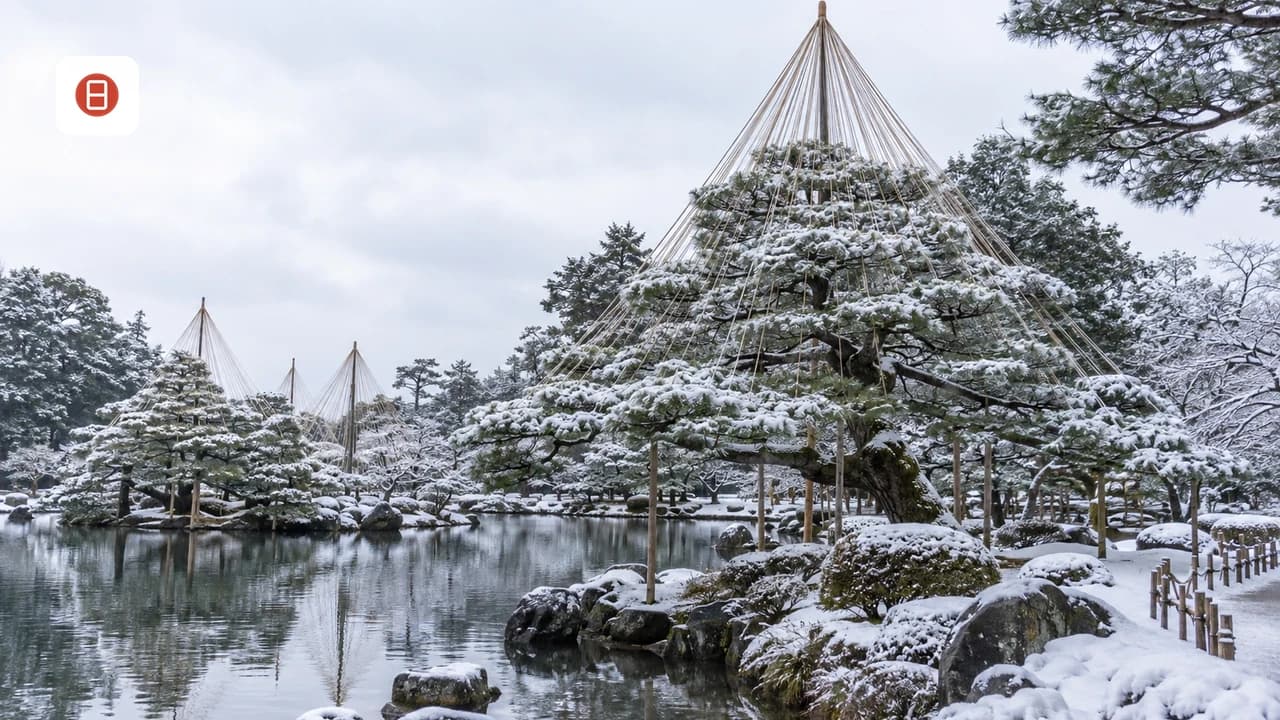
Last updated September 2026: Kanazawa in winter centers on Kenrokuen Garden's yukitsuri, the conical rope supports gardeners tie onto pine branches each November. Those ropes protect against wet snow, which falls alongside frequent rain from December through February. Groundwater street sprinklers keep sidewalks damp through winter, and this guide covers the kobako crab window plus the waterproof footwear the season demands.
Why Visit Kanazawa in Winter: The Fast Answer
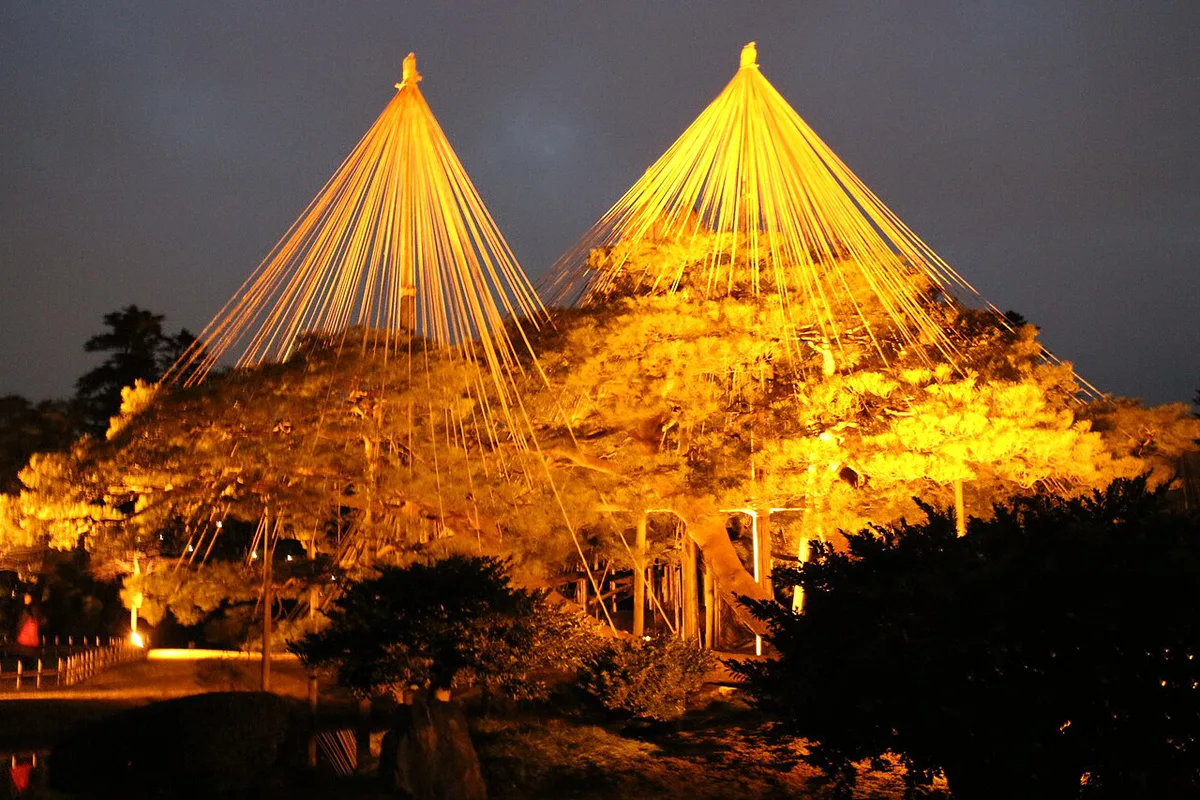
Three reasons pull travelers to Kanazawa between December and February. Kenrokuen's yukitsuri display peaks alongside a possible evening light-up on select dates in February. Snow crab season is in full swing, with kobako and kano crab both on menus across the city. Crowds thin out compared to the cherry blossom rush covered in the seasonal trade-offs guide. Popular spots like Higashi Chaya feel less crowded as a result. Guided day tours pairing Kenrokuen with the geisha district and a samurai villa run about ¥23,800 in January. Itineraries reaching Shirakawa-go or Yamanaka Onsen price higher, up to roughly ¥31,800.
Guided tours cost ¥23,800 in January, but kobako crab sells out by late December; those prioritizing the female crab should visit earlier or plan for kano.
The Real Kanazawa in Winter Weather: Snow, Rain, and Wet Streets
Average January highs hover around 4°C (39°F), roughly 2°C (3.6°F) cooler than Tokyo. Lows rarely drop far below freezing, 0°C (32°F), though coastal wind can make it feel colder than the numbers suggest. Snowfall typically starts in late December and continues through late February. Most of it falls as heavy, wet snow rather than light powder. Rain is just as common, especially in the first half of January. It often washes accumulated snow away within a day or two. Streets stay wet even on dry days. A groundwater sprinkler system built into the road surface melts snow before it can ice over, which is efficient but leaves sidewalks perpetually damp. Check current seasonal advisories through the Kanazawa Tourism site before finalizing winter travel dates.
- Waterproof boots or shoes with sealed treads — non-negotiable for the wet streets
- Removable layers, since restaurants and shops run indoor heating high
- A packable rain shell alongside a winter coat, since rain and snow both show up in the same week
- Free umbrella and boot loans have historically been available at the Kanazawa Station Tourist Information Center and the Kanazawa Central Tourist Information Center; confirm current availability before relying on it
Winter Sights: Yukitsuri, Komogake, and Snow on the Chaya Streets
Kenrokuen ranks among Japan's three great gardens. Gardeners tie its pines with yukitsuri, the conical rope supports, from November into December, and the ropes stay up until mid-March. Winter details and current opening hours are listed on the official Kenrokuen site. On select February evenings the garden opens for illuminated night viewing. Confirm current dates through the festival calendar before planning an evening visit. Nagamachi's samurai district gets its own winter treatment called komogake. Straw mats go up over the earthen walls every December to keep them from soaking through. They stay in place until mid-March, the same window as the garden's yukitsuri. Higashi Chaya's wooden lattice facades hold snow well. A wider street called Hiromi gives the clearest sightline for photos there. Mt. Utatsu, a 140-meter (459-foot) rise just behind Higashi Chaya, offers a rooftop view where black tiles contrast against snow cover. For sights that run year-round rather than just in winter, the year-round attractions guide covers the rest of the city.
The Winter Seafood Calendar: Kano and Kobako Crab
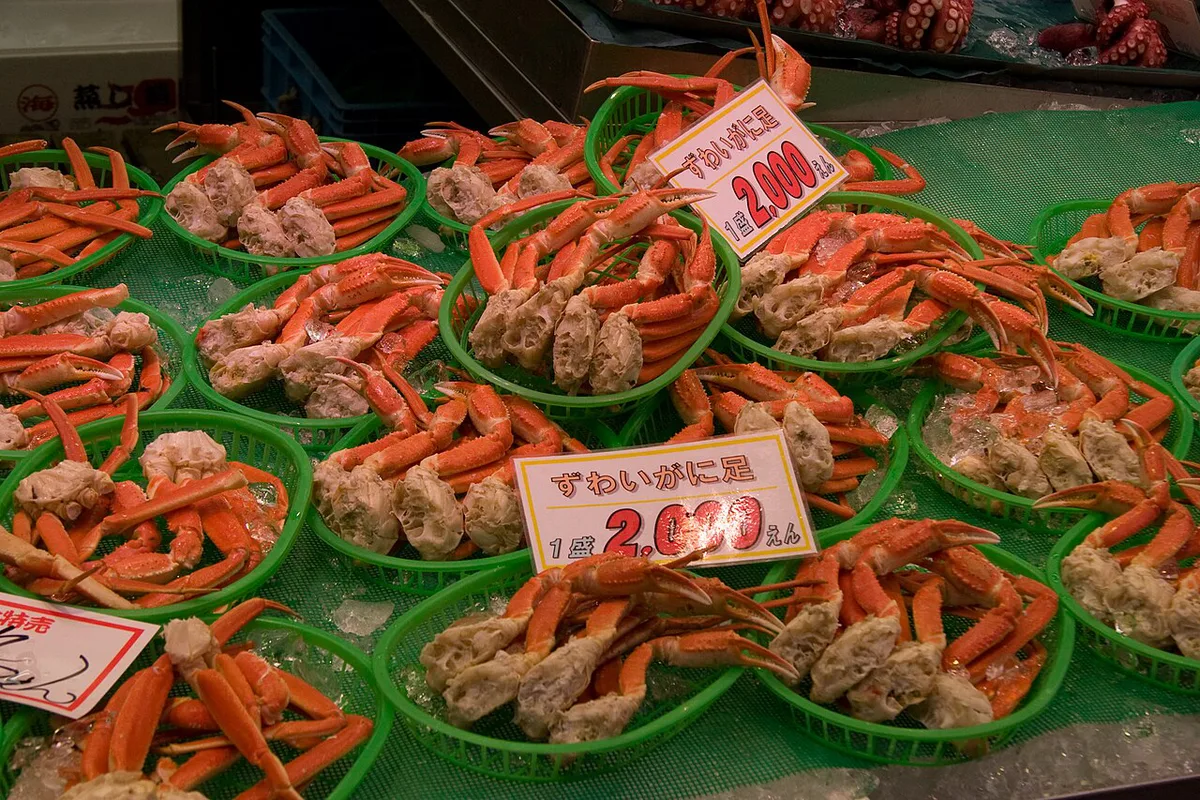
Snow crab season opens November 6th and runs through winter under two names. Kobako crab, the smaller female, is in season for about two months and typically sells out by late December. Kano crab, the larger male, stays available roughly five months longer, identifiable by the blue tag fixed to each leg. For the opening weeks of the season, the December visit guide covers timing crab dinners around a trip. Omicho Market, a 10-minute walk from Kanazawa Station, has supplied the city's kitchens for more than 300 years. Its seafood bowls put both crab varieties on display. Evening visits to Omicho Market can overlap with Kinpaku Kirara, a lantern-lit event staged at spots around central Kanazawa each winter season. Kanazawa's version of oden gets a seasonal ingredient called kani-men, a crab shell stuffed with roe and meat that only appears during the kobako window. Kuruma-fu, a wheel-shaped wheat-gluten cake, soaks up the dashi broth and is worth ordering alongside it. Winter yellowtail, called kanburi locally, carries more fat than the year-round catch, making it a standout on Omicho Market menus. Hot sake, brewed nearby from mountain water and local rice, is the standard pairing with either dish.
- Kano crab (male): season opens November 6th and runs roughly five months; blue tag confirms authenticity
- Kobako crab (female): same opening date, but the window closes around late December; smaller frame, sweeter meat, often eaten with the roe
- Kani-men: Kanazawa oden's kobako-stuffed crab shell, available only during the female season
Rainy-Day Backup Plan: Museums and Indoor Retreats
Winter days in Kanazawa can swing from snow to rain to sun within a few hours, so it helps to have an indoor option nearby. D.T. Suzuki Museum's modern zen architecture centers on a Contemplative Space overlooking the Water Mirror Garden, a quiet stop when weather turns. 21st Century Museum of Contemporary Art occupies a circular building with a 360-degree view of the surrounding park. That layout makes it a useful stop for waiting out a squall between exhibits. Inside Kanazawa Castle Park, the Tsuru-no-maru rest hall has floor-to-ceiling windows facing the castle. Gyokusenan, a nearby tea room, overlooks Gyokuseninmaru Garden with matcha and seasonal sweets on the menu. Craft workshops around the city include hands-on lessons in gold leaf work and other local techniques. These sessions run an hour or longer, doubling as a dry, warm activity on a rough-weather day. A few teahouses in the Higashi Chaya district run private indoor dining experiences that double as shelter from the weather. For a shorter warm-up between sights, the cafe picks near the sightseeing core cover spots close to Kenrokuen and the chaya districts.
Getting to Kanazawa in Winter: Shinkansen, Thunderbird, and Local Transit
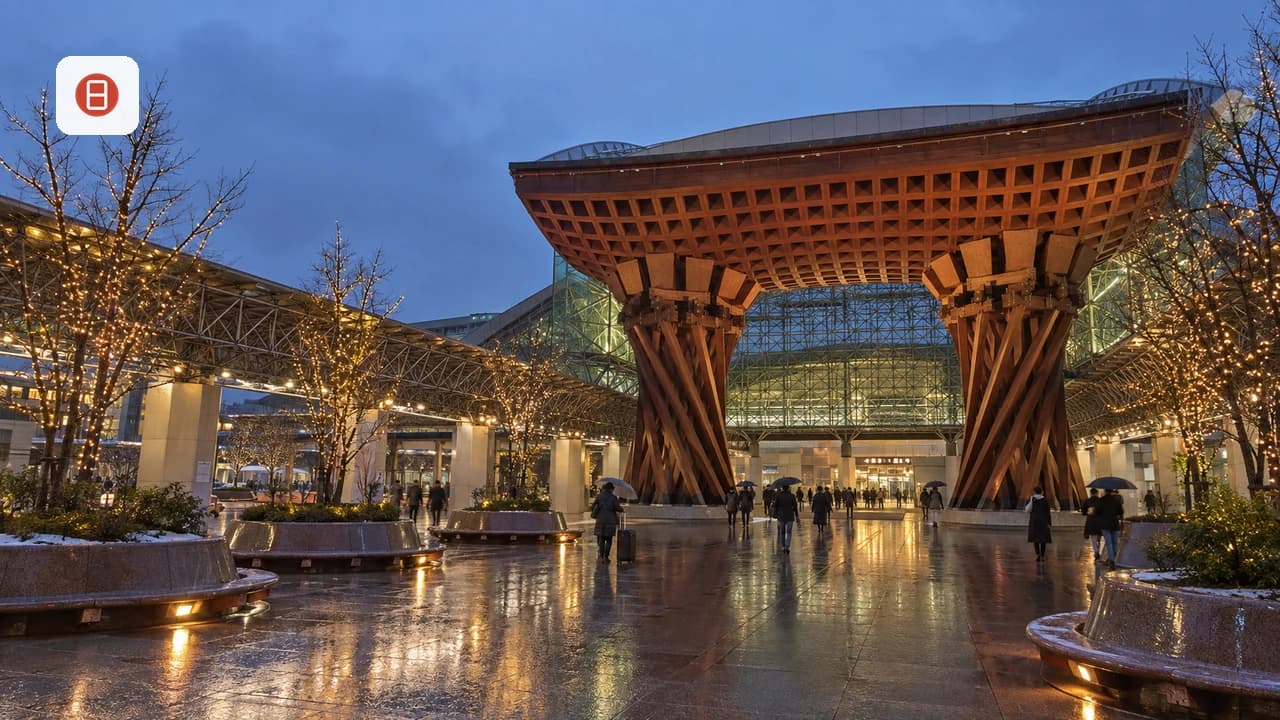
Hokuriku Shinkansen connects Tokyo to Kanazawa Station in about 2 hours and 30 minutes. Winter delays are uncommon, since the line runs mostly inland. Thunderbird express once linked Osaka and Kyoto to Kanazawa directly in about 2.5 hours. That changed with the Hokuriku Shinkansen's March 2024 extension to Tsuruga. Some journeys from the Kansai region now require a transfer partway through, so confirm current routing and total travel time before booking. Once in the city, the Kanazawa Loop Bus circles the main sightseeing districts. Its compact center means most stops sit within a short ride of each other.
The Hokuriku Shinkansen takes about 2 hours and 30 minutes from Tokyo, but winter weather can affect transit schedules; tight same-day connections carry additional risk.
- Hokuriku Shinkansen from Tokyo: about 2 hours 30 minutes to Kanazawa Station
- Thunderbird express from Osaka and Kyoto: about 2.5 hours historically, though some routes now transfer at Tsuruga since the March 2024 Hokuriku Shinkansen extension
- Kanazawa Loop Bus: circles the main sightseeing districts within the compact city center
Where to Stay: City Center vs. Onsen Towns
Staying near Kanazawa Station or the Korinbo shopping district puts crab dinners, oden counters, and Omicho Market within walking distance. That matters on nights when rain makes longer trips unappealing. Central hotels also sit closest to the Kanazawa Loop Bus routes covering Kenrokuen, Nagamachi, and Higashi Chaya. Yuwaku Onsen, about 20 minutes away by car, once served the Kaga clan and now holds nine inns with hot-spring baths. It's a good overnight add-on after a day of sightseeing. Kaga Onsen is reachable by train further south and works as a day trip or overnight stay. For a full rundown of options, the ryokan comparison guide compares individual properties. Onsen towns beyond Yuwaku appear in the day-trip routes from the city, alongside other stops outside town.
Kanazawa in Winter vs. the Rest of the Year
Winter is the coolest, wettest season in Kanazawa, but it is not the only one worth planning around. Spring brings the cherry blossoms covered in the spring blossom guide, with milder days and heavier crowds at Kenrokuen. Summer runs warm and humid, with long daylight hours good for evening walks along the Asano River. Autumn cools back down with drier air and foliage across the same gardens that hold yukitsuri in winter. Hotel rates and tour prices tend to sit lower in winter than during the spring blossom peak, since demand drops with the temperature.
| Season | Weather | Signature Moment | Good For |
|---|---|---|---|
| Winter (Dec-Feb) | Highs near 4°C (39°F); frequent rain and wet snow | Yukitsuri ropes at Kenrokuen; kano and kobako crab season | Seafood, fewer crowds, lower rates |
| Spring (Mar-Apr) | Mild days, occasional rain | Cherry blossoms at Kenrokuen and Kanazawa Castle Park | Blossom viewing, festival season |
| Summer (Jun-Aug) | Warm and humid | Long daylight hours along the Asano River | Evening walks, river festivals |
| Autumn (Sep-Nov) | Cool, drier air | Foliage across Kenrokuen and Higashi Chaya | Comfortable walking weather |
Mistakes to Avoid When Visiting Kanazawa in Winter
Suede shoes and non-waterproof sneakers soak through fast on Kanazawa's sprinkler-dampened streets. Wet socks ruin a day of walking faster than the cold does. Pack or rent proper waterproof boots before setting out each morning. Crab dinners book up on December weekends especially, since kobako season is short and in high demand. Reserve a table in advance rather than walking in and hoping for a seat. Sunset comes early in January and February, cutting outdoor photo time short by mid-afternoon. Plan garden visits and chaya-district walks for daylight hours. Save indoor stops like museums for later in the day. Tight same-day connections are another risk, since winter weather can affect public transit schedules across the region. Build slack into any tight transfer, especially around snow-heavy days in January and February.
Frequently Asked Questions
Is Kanazawa worth visiting in winter?
Yes, if the trade-offs fit the trip. Expect wet, cold weather, but also Kenrokuen's yukitsuri display, the kano and kobako crab season, and thinner crowds than the cherry blossom months. Pack for rain and snow both, since Kanazawa's coastal winter rarely settles into one pattern for long.
How cold does it get in Kanazawa in winter?
January is the coldest month, with average highs around 4°C (39°F). Lows rarely drop far below freezing, 0°C (32°F), though coastal wind can make it feel colder. Kanazawa runs about 2°C (3.6°F) cooler than Tokyo through the same months.
When can you get kobako crab in Kanazawa?
Snow crab season opens November 6th, and kobako, the smaller female crab, stays available for about two months. That window typically closes by late December, so plan a visit before the season ends if kobako is the priority. Kano, the larger male crab, stays in season for months longer.
Do you need special shoes for Kanazawa in winter?
Waterproof boots are close to essential. Kanazawa clears snow from its streets using groundwater sprinklers, which keeps the roads from icing over but leaves them wet even between storms. Free umbrella and boot loans have historically been available at the Kanazawa Station Tourist Information Center, though it's worth confirming current availability before counting on it.
Should you stay in central Kanazawa or at an onsen town in winter?
Central Kanazawa, near the station or Korinbo, keeps crab dinners and sightseeing within walking distance on wet or snowy nights. Yuwaku Onsen, about 20 minutes away by car, adds a hot-spring soak and works well as a one-night add-on. Split the trip between both if time allows, spending most days in the city and one night at the onsen.
What is the best month to see Kenrokuen's yukitsuri?
Yukitsuri ropes go up in November and stay through mid-March, so most of winter works for viewing them. Snow cover looks best from late December through February, once regular snowfall begins. Evening illumination happens on select dates in February; confirm the current calendar before planning a night visit.
Free: The Kanazawa Essentials guide
Top things to do, where to stay, a perfect day plan, getting around, and the best time to go — a Kanazawa mini-guide you can take offline.
You might also like
Continue reading
More guides you'll find useful


