Kyoto at Night: Evening Walks, Illuminations, and Transit Tips for 2026
Plan kyoto at night around Gion and Pontocho's lantern-lit walks, seasonal temple illuminations, late onsens, and the transit cutoffs that shape a 2026 evening.
On this page
Last updated September 2026, this guide treats kyoto at night as a sightseeing plan, not a bar crawl. After 6:00 PM the temple crowds thin, and lanterns take over Hanamikoji and Pontocho. The sections below cover which routes to walk, which trains and buses still run, and where a late soak beats a taxi fare home.
Kyoto at Night at a Glance
Tourist crowds in Kyoto peak by day, but the city does not close at sunset. Kyoto's tourism board defines night sightseeing as anything after 6:00 PM, once the temple circuit thins out. Sunset lands near 7:00 PM in summer and closer to 5:00 PM in winter, so the practical evening window shifts with the season. For the daytime side of the trip, the Kyoto attractions guide covers the temple circuit this article picks up after dark. A one-night stay works best around three anchors.
- A lantern-lit walk through Gion or Pontocho
- One seasonal stop, such as a temple illumination or a meditation session
- A route home planned before trains and the Yoru Bus stop for the night
Gion and Pontocho: Lantern-Lit Evening Walks
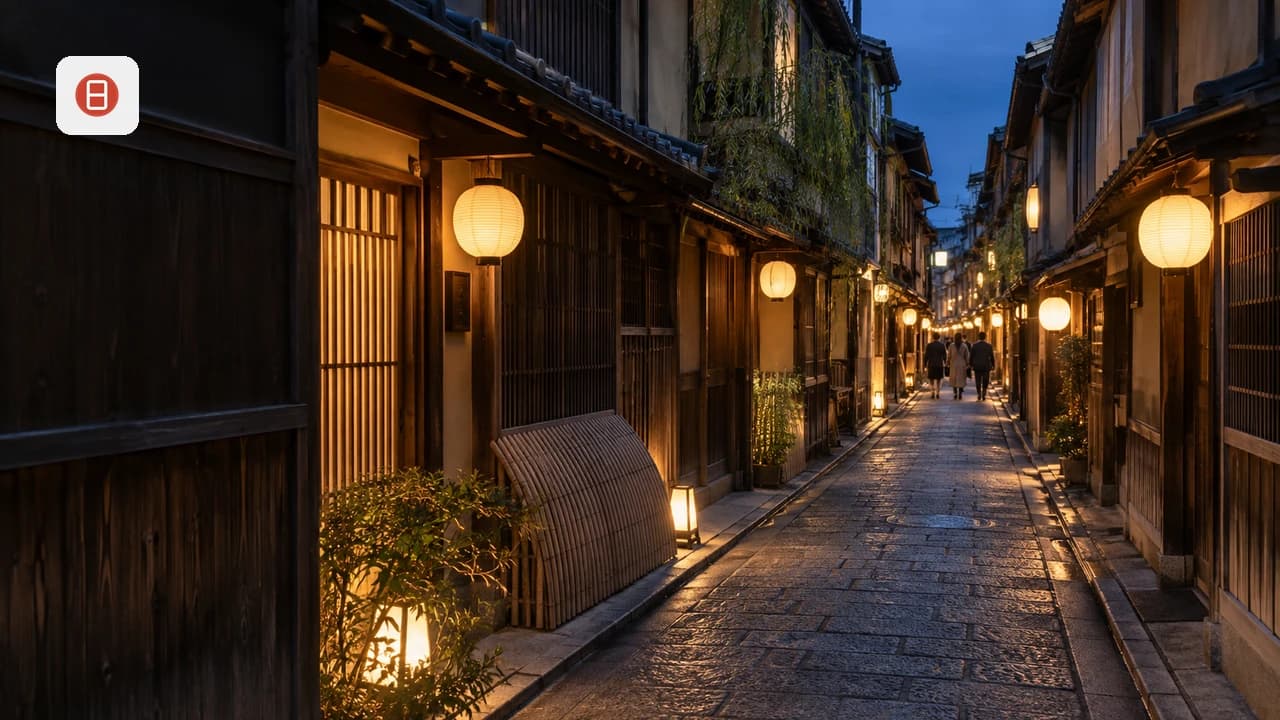
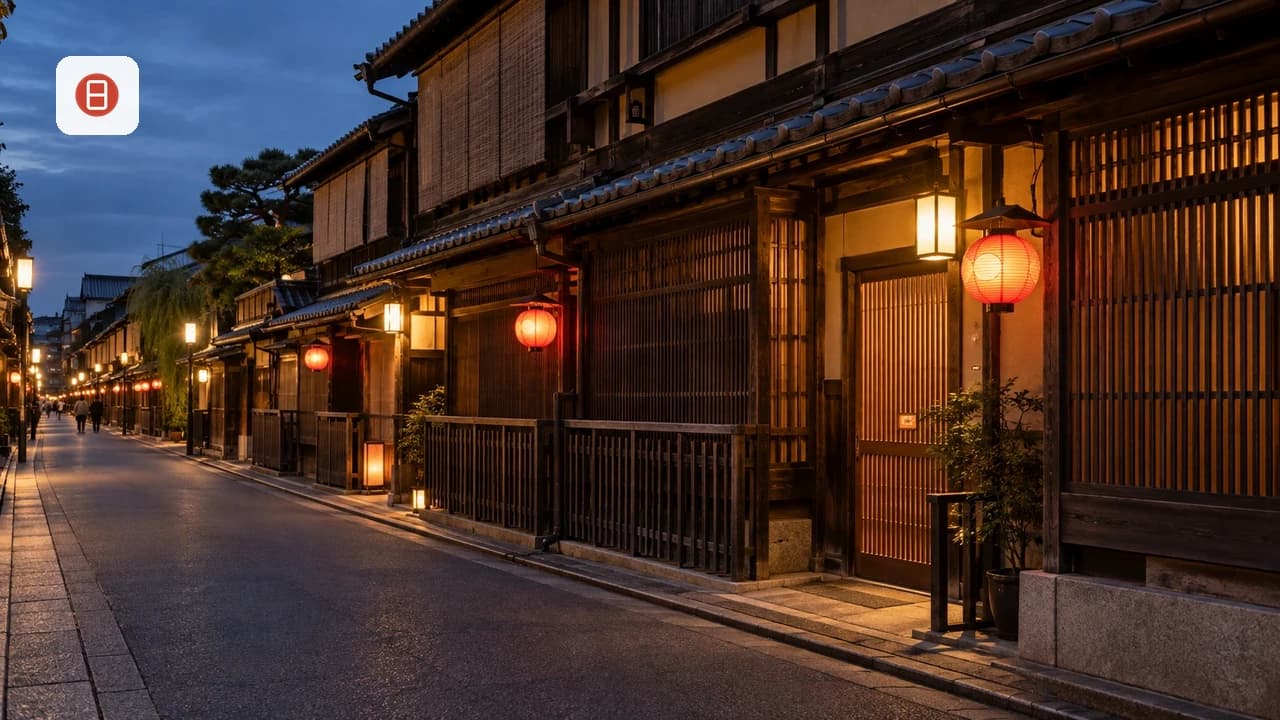
Hanamikoji Street turns into Gion's signature scene once its wooden machiya facades catch lantern light after dusk. Private lanes off the main street are residences and teahouses, not photo backdrops, and geiko and maiko should never be photographed without permission. Gion's after-dark etiquette covers the no-photography rules in more depth before you go. Pontocho Alley runs one block over, a single narrow lane of restaurant entrances and lanterns packed tighter than almost anywhere else in the city. Between May and September, restaurants along the Kamogawa River build kawadoko platforms over the water for open-air dinners. Pontocho's version of this riverside seating fills fast on weekend nights, so book ahead.
The Quiet Kyoto Route: Shirakawa Canal to Yasaka Shrine
Pontocho and Hanamikoji draw the heaviest evening foot traffic in the city, so a quieter alternative starts at the Shirakawa Canal. Willow branches lean over the water here, and the canal-side lane sees a fraction of the crowds one block away in Gion. Follow the canal east toward Yasaka Shrine, where the vermilion gate stays lit and the grounds remain open through the evening. This route trades izakaya noise for a slower walk, suited to travelers pacing a night around temples and shrines rather than bars.
Fushimi Inari and Cultural Experiences After Dark
Fushimi Inari Taisha has no gates and stays open 24 hours a day. Torii-lined paths up Mount Inari stay accessible long after sunset. Crowds thin out sharply once the tour buses leave. Lantern light along the lower paths replaces the daytime crush with a quieter, slightly eerie atmosphere that still feels safe to walk. For a different kind of evening hike, the Kurama to Kibune trail covers a separate route north of the city. Two contemplative options round out a cultural evening. Fukujuen's flagship store on Shijo Tominokoji runs a candlelit tea ceremony after dark. Hozen-in Temple offers a nighttime zazen meditation session with a plant-based meal, priced at ¥28,000 per person for about two hours. Travelers who prefer a similar slow, mindful pace by day should look at the Saihoji moss garden guide. The temple requires advance reservation, so check current booking rules on the Saihoji official site before planning around it.
Seasonal Temple Illuminations in Kyoto
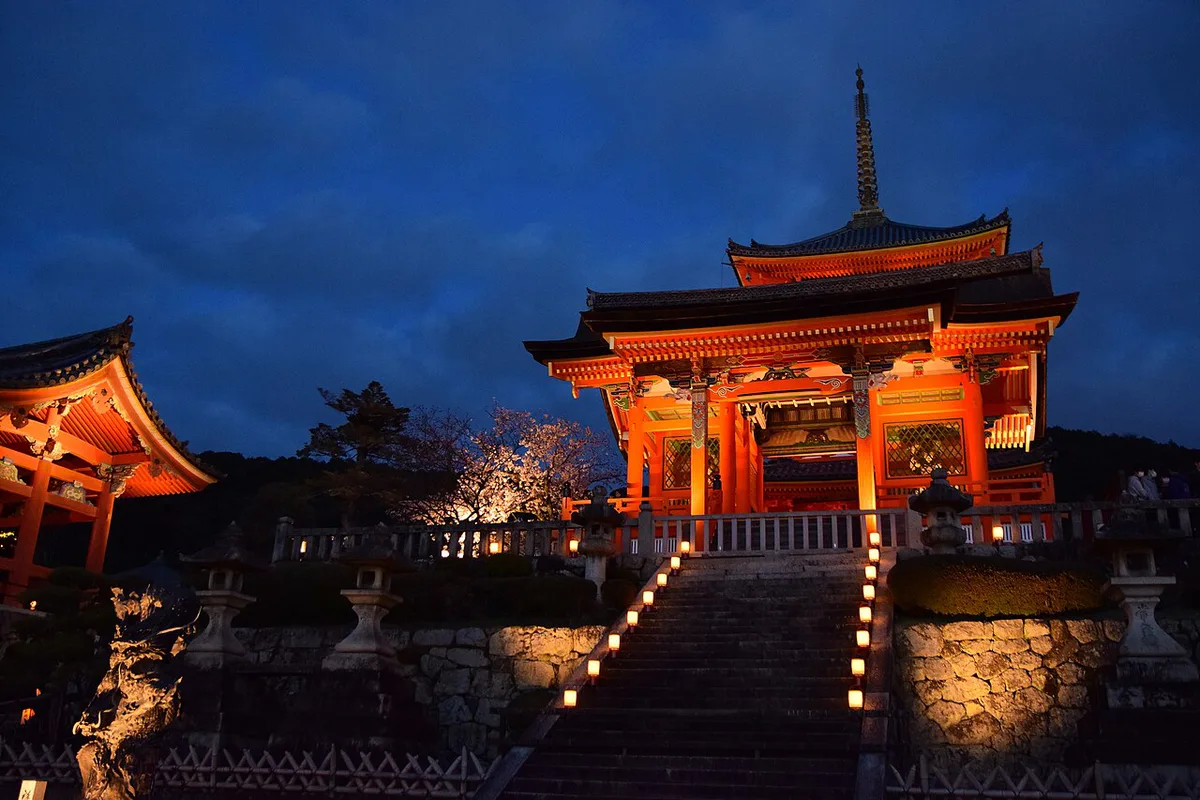
Special night illuminations light up several temples during two windows each year. The first runs late March into early April, and the second in November. Kiyomizu-dera's hillside perch over Higashiyama makes it the top illumination target, and the Kiyomizu-dera official site lists current spring and autumn light-up dates each season. Kodai-ji is the other major illumination stop, and it follows the same seasonal schedule as Kiyomizu-dera. Outside those two windows, both temples keep standard daytime hours. Check dates against the Best Time to Visit Kyoto: Monthly & Seasonal Guide (2026) guide before planning around them. Summer brings a different kind of evening event: the Gion Matsuri festival nights in July fill central streets with lantern floats and food stalls.
Modern Kyoto: Kyoto Tower, Rooftop Bars, and Late-Night Cafés
Kyoto Tower gives the clearest orientation of the city grid, with a 360-degree observation deck open until 9:00 PM for ¥900 admission. From up there, Kyoto reads as a working city of station lights and grid streets, not only temple roofs. Rooftop bars fill a similar role at street level. For a fuller rundown of bars, izakaya, and where locals actually drink, the Kyoto nightlife guide covers that side of the evening in more depth. If bars are not the plan, Cafe Bibliotic Hello!, set inside a converted townhouse, stays open until 11:00 PM with dessert and a book-lined interior.
Kyoto Tower's observation deck is open until 9:00 PM, allowing visitors to orient themselves well before the Yoru Bus departs at 10:50 PM.
- K36: views across to Yasaka Pagoda and the Higashiyama rooftops
- L'Escamoteur: theatrical cocktails in a small speakeasy-style room
- Cicon: a more budget-friendly rooftop with drinks and tapas
Late-Night Onsens for Unwinding
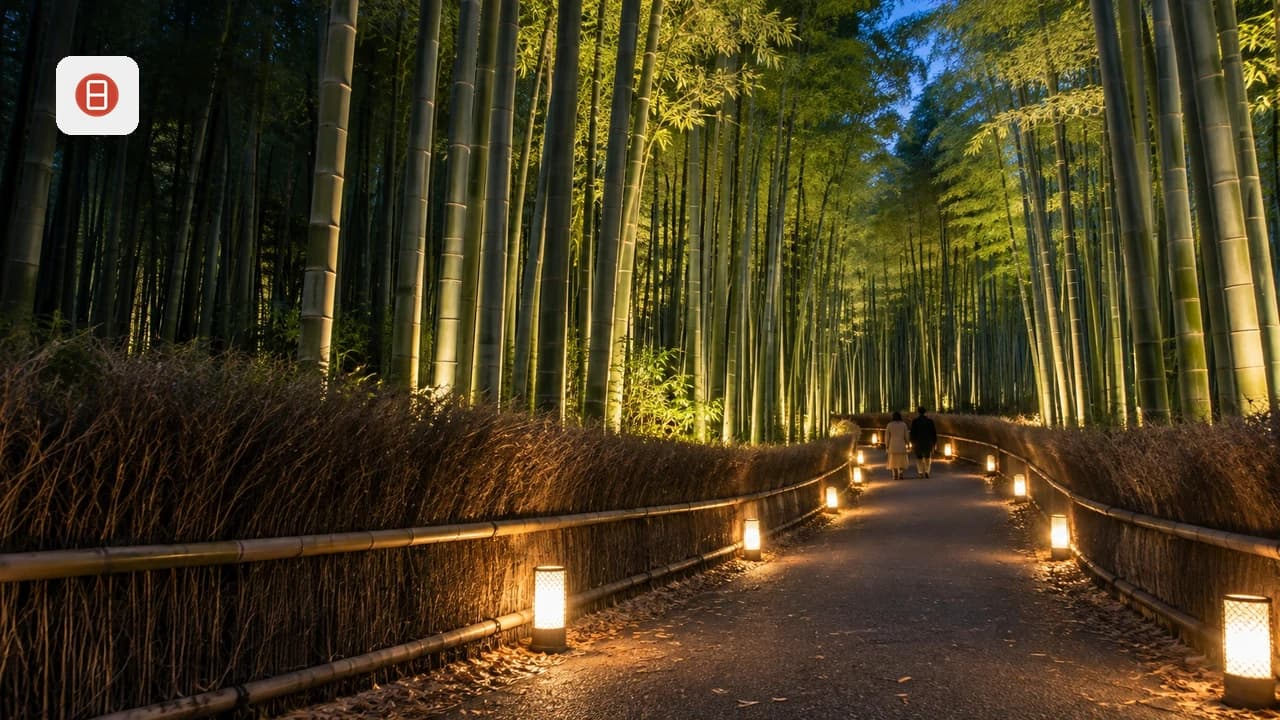
A soak works well as the last stop of the night, especially after a full day of walking. Kyoto Takenosato Onsen Manyo-no-Yu keeps its baths open 24 hours a day. That makes it one of the few genuinely late-night or early-morning soak options nearby. Fu Fu No Yu, near Arashiyama Station, adds a cold plunge pool, sauna, and garden setting to the soak. It pairs naturally with an evening walk through the nearby bamboo grove before the paths empty out. Both are day-use facilities rather than overnight ryokan stays, so towels and basic toiletries are typically provided at the front desk.
A soak at Kyoto Takenosato Onsen Manyo-no-Yu stays open 24 hours a day, making it accessible after the last bus at 10:50 PM and trains near midnight.
Gion vs Pontocho vs Kyoto Station: Where to Base Your Evening
Gion, Pontocho, and the area around Kyoto Station each suit a different kind of evening, and picking the right base saves backtracking later. The table below lines up crowds, general price point, overall vibe, and how easy each area is to reach.
| Area | Crowds | Price Point | Vibe | Ease of Access |
|---|---|---|---|---|
| Gion (Hanamikoji) | Heavy on the main street, lighter in side lanes | Mid-range to high-end dining | Traditional, lantern-lit, geiko district | Keihan Line to Gion-Shijo Station, or Hankyu Line to Kawaramachi Station |
| Pontocho Alley | Heavy, especially on weekend nights | Mid-range to high-end, kawadoko seating May to September | Narrow, lantern-lit, Edo-period feel | Short walk from Gion-Shijo Station |
| Kyoto Station area | Moderate, mostly transit passengers | Budget to mid-range | Modern and functional | JR Kyoto Station, the terminus for most trains and buses |
Getting Around After Dark: Trains, the Yoru Bus, and the Midnight Wall
Kyoto's evening transit has a hard edge that catches first-time visitors off guard. Most trains run until around 12:00 AM, but the exact last departure varies by line and station. Check the specific line before relying on it. The Yoru Bus (Night Bus) covers the gap earlier in the evening, running between the Kawaramachi and Gion areas and Kyoto Station until 10:50 PM. Miss both and the only option left is a taxi, which costs far more than the last train or bus would have. Staying somewhere in Central Kyoto, rather than out near Arashiyama or Fushimi, keeps that gap small enough that walking home is often realistic.
Budget vs Splurge, and Mistakes to Avoid
Kyoto at night can run cheap or expensive depending on where you sit, and both ends are worth knowing. A canned drink from a convenience store, enjoyed on the Kamogawa riverbank, costs around ¥500. A cocktail at K36 runs closer to ¥3,000, which buys the same river-adjacent city but from a rooftop with skyline views. Pontocho and the riverside kawadoko platforms cause the most common reservation mistake. Both fill up on weekend nights, so book ahead rather than walking in. The other recurring mistake is treating Gion like a photo set. Keep voices down near residential lanes, and put the camera away the moment a maiko or geiko passes.
- Budget: ¥500 for a convenience-store drink by the Kamogawa
- Splurge: ¥3,000 for a cocktail at K36 with Higashiyama views
Frequently Asked Questions
Is Kyoto safe to walk around at night?
Yes, walking around after dark is common and generally considered safe. Kyoto's tourism board describes the city after dark as safe and convenient, even for solo walkers. Stick to lit main streets in unfamiliar areas, and use the same street sense you would anywhere else.
What time does Kyoto shut down at night?
Kyoto does not shut down entirely, but transit does. Most trains run until around 12:00 AM, and the Yoru Bus stops at 10:50 PM between Kawaramachi, Gion, and Kyoto Station. Bars, some cafes, and rooftop spots stay open later, but getting home after those cutoffs usually means a taxi.
Can you take photos of geisha in Gion?
Not without permission, and not inside the private lanes off the main streets. Geiko and maiko are commuting to work, not posing for tourists. Treat a sighting the way you would any stranger's private moment, and keep the camera down in residential side streets.
Is Fushimi Inari Taisha open at night?
Yes, the shrine has no gates and no set closing hours, so the torii-lined paths up Mount Inari are accessible any time. Lantern light replaces the daytime crowds after dark, and the lower stretches of the trail feel quieter and a little more atmospheric. Fewer facilities operate late, so bring a flashlight if you plan to go past the main torii gates.
Where is the best area to stay for an easy night out?
Central Kyoto, close to Kawaramachi, Gion, or Kyoto Station, keeps the after-dark logistics simplest. Most nightlife, illuminations, and evening walks cluster there, and you stay within reach of the Yoru Bus and the last trains. Staying farther out, near Arashiyama or the hills, usually means budgeting for a taxi if plans run late.
Free: The Kyoto Essentials guide
Top things to do, where to stay, a perfect day plan, getting around, and the best time to go — a Kyoto mini-guide you can take offline.
You might also like

Continue reading
More guides you'll find useful