Gion at Night: A Guide to Kyoto's Lantern-Lit Geisha District
Plan Gion at night: the golden route from Yasaka Shrine to Hanamikoji-dori, Shirakawa Canal photo tips, geiko etiquette, and the ¥10,000 photography fine rules.
On this page
Last updated September 2026. Gion at night trades daytime crowds for lantern light along Hanamikoji-dori, willow-lined canals, and the chance of spotting a geiko on her way to an appointment. This guide to Kyoto's attractions covers the golden route, photography rules that carry a ¥10,000 fine for private alleys, and where to eat without an invitation.
Why Gion at Night Feels Different From the Day
By day, Gion functions as a shopping street and tour-bus stop near Yasaka Shrine. After dark, it reverts to its original role as a kagai, a flower district where ochaya teahouses host geiko and maiko for private engagements. The district runs about 500 meters, or roughly a third of a mile, from Yasaka Shrine in the east to the Kamo River in the west. It spans a similar distance from Kennin-ji in the south to Shinbashi-dori in the north. Lantern light along Hanamikoji-dori begins around 5 pm, which is the recommended time to start a stroll. Streets stay lively until roughly 9 pm, when crowds thin and the lanes near Shirakawa Canal go quiet. For a wider view of after-dark options across the city, see this guide to Kyoto after dark.
Planning the Golden Route: Timing, Blue Hour, and Seasonal Light
A logical route starts at Yasaka Shrine, continues south onto Hanamikoji-dori, crosses Tatsumi Bridge into the Shirakawa canal area, and finishes across the river in Pontocho. Most visitors need two to three hours to cover this roughly 0.6-mile loop at a relaxed pace. For photography, aim for blue hour, the roughly 20-minute window after sunset when lantern glow contrasts against a still-blue sky. Sunset timing shifts the plan by season. In summer, stroll and eat first, then head to photo spots once it turns dark. Winter's early sunset flips that order: visit photo spots first, then stroll and dine at a slower pace afterward. December brings the Kaomise nameplates to Minamiza's facade, and July's Gion Matsuri crowds Shijo-dori. Check the Gion Matsuri festival guide before booking a July trip. For the broader seasonal calendar, consult this guide to the Best Time to Visit Kyoto: Monthly & Seasonal Guide (2026). If your itinerary spans more than one evening, pair this walk with a daytime visit to Saihoji's moss garden. Saihoji requires advance reservations for entry; confirm current dates and procedure on the Saihoji official site before you go. The Kiyomizu-dera official site is another Higashiyama-area daytime option worth checking for current hours. Hikers can reserve another day for the Kurama to Kibune trail.
The 0.6-mile loop takes two to three hours to complete; begin at 5 pm when lanterns light up and finish around 9 pm as crowds thin.
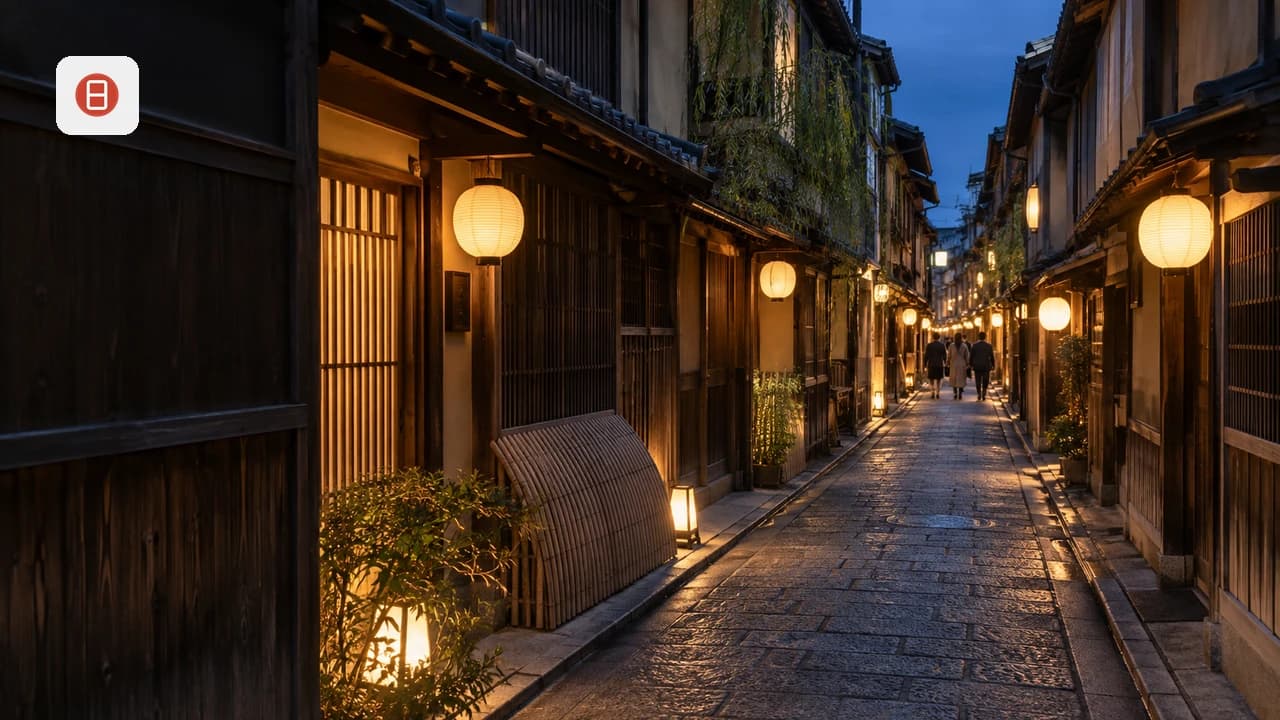
Hanamikoji-dori After Dark: Machiya Facades and Lantern Light
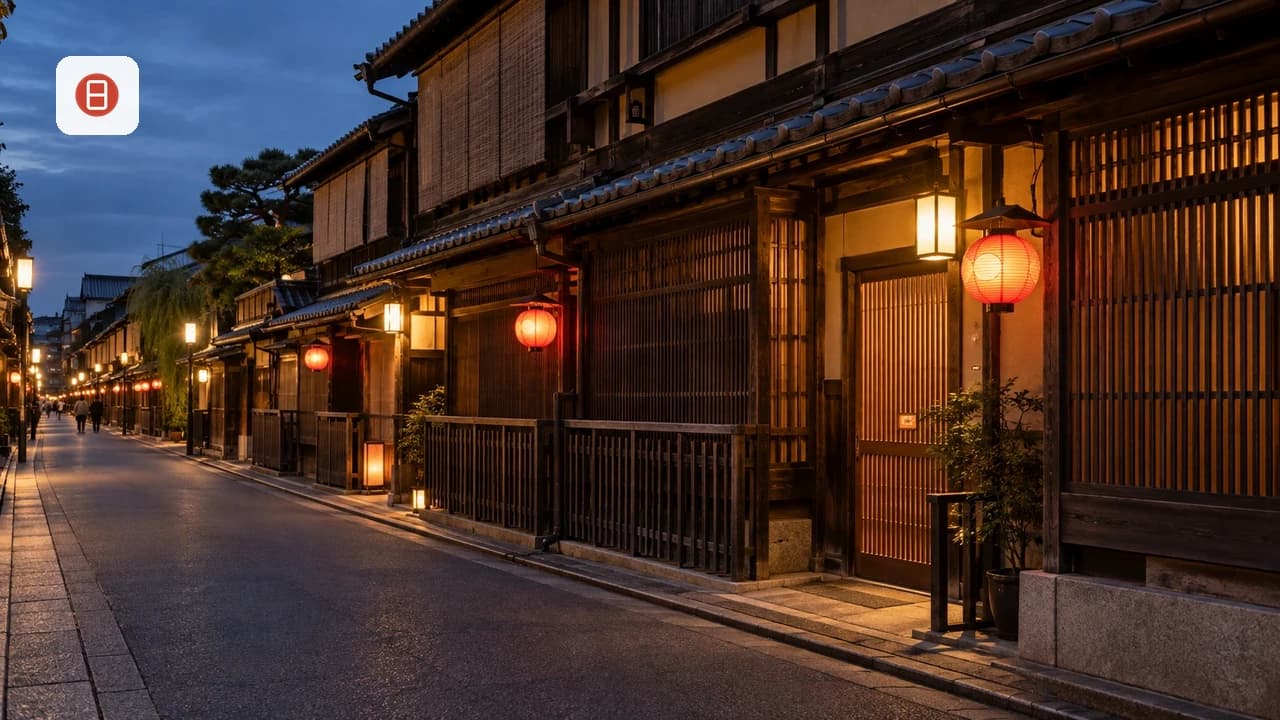
Hanamikoji-dori functions as Gion's spine, a cobblestone street lined with two-story machiya townhouses built narrow-front to reduce the old street-frontage tax. Shijo-dori splits the street in two: the north side holds izakaya-style pubs, and the south side keeps the traditional ryotei and ochaya. Lantern light picks out the wooden lattice windows after 5 pm, turning the cobblestones amber against the dark sky. Since April 2024, entering or photographing the private alleys off the south side has been banned. Violations can bring fines up to ¥10,000, so stay on the public road itself for photos. A quieter parallel lane, Kiri-doshi-dori, runs one block east and offers similar machiya scenery with noticeably fewer visitors. Some restored machiya on the block now hold small boutiques and cafes instead of restaurants, worth a slower look even without a dinner reservation.
Shirakawa Canal and Tatsumi Bridge: Willows, Stone Bridges, and Quiet Hours
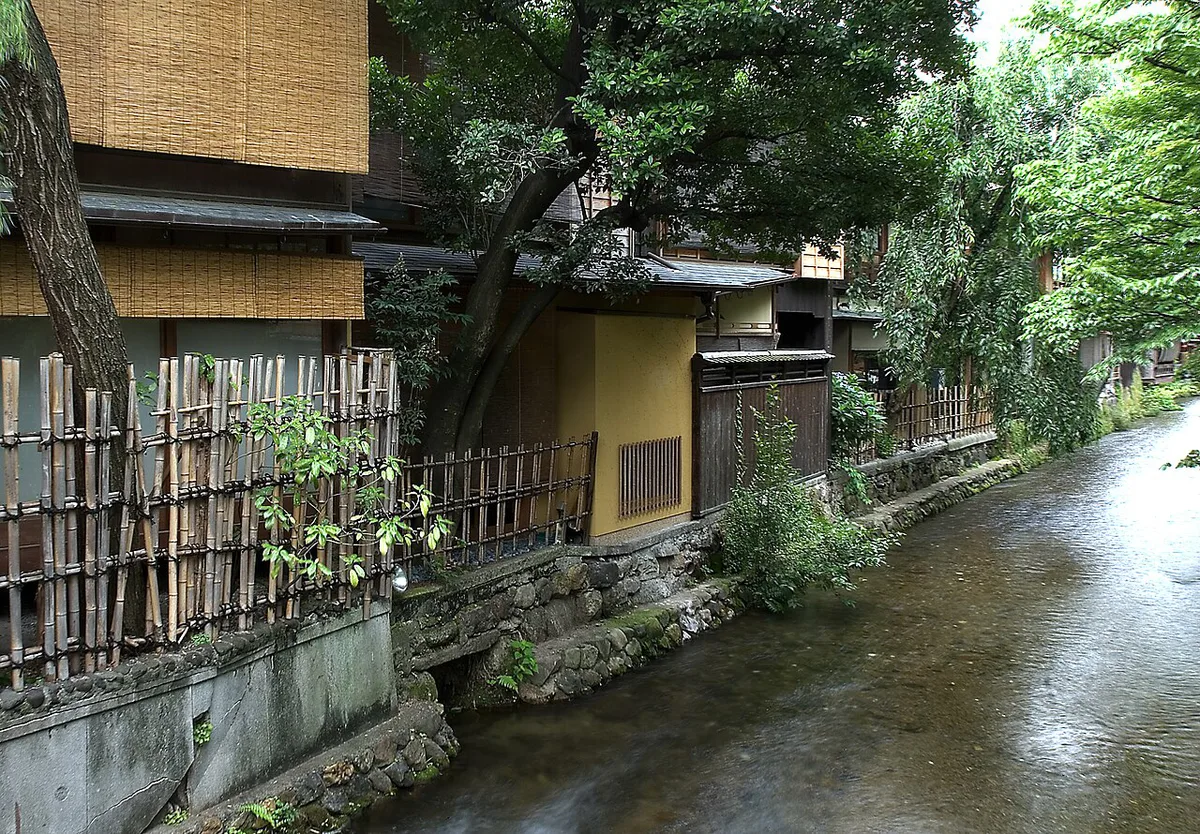
A five-minute walk east from the southern end of Hanamikoji-dori leads to Shirakawa Minami-dori, where willow branches lean over a narrow canal lined with stone footbridges. The red-lacquered Tatsumi Bridge is the area's signature crossing point, its reflection in the water giving the block its Memoirs of a Geisha reputation. Tripods and monopods are prohibited along the canal to protect resident privacy, so plan on handheld shots only. After 9 pm, the lanes empty out and go quiet, so keep voices and footsteps down out of respect for people living along the water. Every November 8th at 11 am, a geiko and maiko lay chrysanthemums at the nearby Kanikakuni Monument in a public ceremony that costs nothing to watch. Cherry blossoms line the canal in late March and early April, and autumn foliage turns the same stretch gold and red by November.
Yasaka Shrine, Kennin-ji, and Minamiza: Gion's Night Anchors
Yasaka Shrine anchors the eastern end of Gion, established as early as 656, and functions as the district's guardian shrine. Its grounds stay open 24 hours with no admission fee. Once the sun sets, the Nishi-romon gate, the open-air butai stage, and the main hall are lit up against the night sky. A popular framing angle is the Nishi-romon photographed head-on from the eastern end of Shijo-dori. Vehicles still cross that intersection at night, so never stop on the crosswalk for a photo. Its amulet counter, however, operates roughly 9 am to 4:30 pm, so buy charms before your evening walk. Kennin-ji marks the district's southern edge and offers a quieter, darker stroll than Hanamikoji once its gates close for the evening. Minamiza stands at the eastern foot of Shijo Bridge, just steps from Exit 6 of Gion-Shijo Station. It ranks among Japan's oldest kabuki theaters, founded in 1610, with its current building dating to a 1929 reconstruction. Programs change monthly, and most performances start between 4 pm and 4:30 pm, with English audio commentary available for first-time viewers.
Geiko and Maiko: Spotting Etiquette and Gion Corner
Kyoto's geisha carry the local title geiko, while their apprentices are called maiko; both are collectively known outside Kyoto as geisha. Spotting one is a matter of luck, and the best window is between 5 and 6 pm, when geiko and maiko head to evening engagements at ochaya teahouses. If you do see one, do not request a photo, follow her, or block her path. A slight bow is the more appropriate acknowledgment. Gion Corner, inside the Gion Kobu Kaburenjo theater on Hanamikoji-dori, offers a guaranteed look at traditional performing arts. It runs a one-hour digest of seven to eight art forms, including Kyo-mai dance, tea ceremony, and bunraku puppet theater. Two shows run daily at 6 pm and 7 pm. From December 1 through March 11, performances are limited to Tuesday through Friday. Seated photography without flash is allowed, but video and audio recording are not. The Gion Kagai Art Museum offers a structured way to meet maiko and geiko for photos, an alternative to hoping for a street sighting. A paid two-hour guided walking tour helps distinguish public roads from private alleys around Hanamikoji, since the boundaries are not always obvious to first-time visitors.
To catch geiko and maiko heading to work, visit between 5 and 6 pm—but strictly observe etiquette: no photos, no following, and only a bow if they acknowledge.
Where to Eat in Gion: Walk-In Restaurants vs Invitation-Only Teahouses
Most of Hanamikoji's ochaya and top-tier ryotei still follow ichigen-san okotowari, the invitation-only tradition that requires introduction from an existing patron before you can book a table. Along the main street itself, though, renovated former teahouses now operate as walk-in restaurants and cafes, and the wider choice sits across the river in Pontocho and Kiyamachi. Issen Yoshoku on Yamatooji-dori serves a single dish, okonomiyaki, for ¥750, with hours running 11 am to midnight, good for a quick, unfussy meal. In Pontocho, Yasubee plates okonomiyaki for ¥2,000 to ¥3,000, takes cash only, and closes on Tuesdays. Kyomachi's Kamo River terrace runs a seasonal Kyo-ryori course from ¥6,500 to ¥13,000 plus a ¥600 terrace charge, available only from May 1 through October 15. Hiro Pontocho Bettei serves wagyu yakiniku nightly from 5 pm to 11 pm inside a converted okiya near the Kaburenjo Theater. The seventh-floor Old Imperial Bar, inside the Imperial Hotel Kyoto that opened in March 2026, pours cocktails over a Hanamikoji view from 5 pm to midnight. Kiyamachi-dori, one block over from Pontocho, runs more casual and less expensive bars and restaurants, a good stop for a final nightcap. Carry roughly ¥5,000 to ¥10,000 in cash per restaurant, since many smaller spots in the back alleys still don't take cards. Browse this guide to Kyoto's nightlife for more after-dark options across the city.
| Feature | Gion (Hanamikoji Area) | Pontocho Alley |
|---|---|---|
| Primary vibe | Historic streetscape, formal | Narrow lanes, social bar-hopping |
| Best for | Architecture and geiko or maiko sightings | Dinner and cocktails |
| Crowd level | High on the main street | High in the narrow alleys |
| Accessibility | Public roads only; many ochaya are invitation-only | Mostly open, with tourist-friendly menus |
Gion Etiquette and Photography Rules: Avoiding the ¥10,000 Fine
Signed rules posted throughout Gion are maintained by the Gion Shopping Street Promotion Association. They cover conduct and photography, and violations of the alley photography ban carry fines up to ¥10,000. The ban covers the private alleys branching off Hanamikoji's south side; the public street itself remains open for photos. A parallel rule along Shirakawa Canal bans tripods and monopods, so handheld shots are the only option there. Beyond photography, the district enforces a short list of conduct rules meant to protect residents and working geiko and maiko. Read the posted signs at each junction since specific boundaries can shift. When in doubt, stay on the paved public road and keep the camera at eye level instead of raised over a fence.
- No touching a geiko or maiko, and no blocking her path
- No selfie sticks anywhere in the district
- No sitting on the road or leaning against machiya buildings or fences
- No littering, eating, drinking, or smoking while walking the streets
Frequently Asked Questions
Is it safe to walk around Gion at night?
Gion sits in central Kyoto and is considered safe for an evening walk. Hanamikoji and the Shirakawa area stay well lit, and the main streets remain lively until around 9 pm. Avoid entering the dark, restricted private alleys, and check last-train times at Gion-Shijo Station before heading back.
Do you need cash in Gion?
Yes, carry cash for a night out in Gion. Many small bars and restaurants in the back alleys are cash-only, even though larger venues increasingly take cards. Bringing roughly ¥5,000 to ¥10,000 per restaurant stop covers most situations without a search for an ATM.
What is the most famous street in Gion?
Hanamikoji-dori is Gion's most famous street. It runs south from Shijo-dori through a row of machiya townhouses that house ryotei, ochaya, and, closer to the main road, walk-in restaurants and cafes. Lantern light along this street after 5 pm creates the scene most visitors associate with Gion at night.
What are the photography rules in Gion at night?
Photography rules in Gion are specific. Since April 2024, entering or photographing the private alleys off Hanamikoji's south side has been banned, with fines reaching ¥10,000 for violations. Tripods and monopods are also banned along Shirakawa Canal. Never photograph geiko or maiko without permission, since approaching or following them is considered a serious breach of etiquette.
Can you explore Gion at night without a guide?
Yes, the main public-road sights are open to independent visitors without a guide. The mix of public and private roads and the etiquette around geiko and maiko can be confusing on a first visit, though. A paid two-hour guided walking tour is a practical option if you want that context explained on the spot.
What is the best season to visit Gion at night?
Each season changes the mood of Gion at night. Spring cherry blossoms and autumn foliage draw the heaviest crowds along Shirakawa Canal. Summer adds riverside noryo-yuka dining terraces but also brings July's Gion Matsuri crowds near Shijo-dori. Winter draws fewer visitors overall, which makes for a quieter, more relaxed stroll.
How much does an evening in Gion cost?
Costs in Gion at night vary widely. A casual meal like Issen Yoshoku's okonomiyaki runs about ¥750, while a seasonal Kyo-ryori course at Kyomachi runs ¥6,500 to ¥13,000 plus a ¥600 terrace charge. Walking the streets, visiting Yasaka Shrine, and photography along the public road cost nothing beyond what you spend on food or drink. Set aside roughly ¥5,000 to ¥10,000 in cash per restaurant stop to cover that range.
Free: The Kyoto Essentials guide
Top things to do, where to stay, a perfect day plan, getting around, and the best time to go — a Kyoto mini-guide you can take offline.
You might also like

Continue reading
More guides you'll find useful