
Gion Matsuri Kyoto Guide: Parades, Schedule & Local Tips
Plan a Gion Matsuri Kyoto trip with the July 2026 schedule, Saki vs. Ato Matsuri differences, ¥6,000 paid seating, and where to watch the 12-ton floats turn.
On this page
Last updated August 2026, this guide covers everything you need to plan a Gion Matsuri Kyoto visit before July's crowds arrive. Kyoto's Gion Matsuri began in 869 AD as a purification ritual against plague, and it still runs the entire month of July. Two float processions anchor the month, on July 17 and July 24, with hoko floats reaching 25 meters and 12 tons.
What Is Gion Matsuri? A Festival Dating to 869 AD
Gion Matsuri is a Shinto festival held at Yasaka Shrine, the shrine that gives the celebration its name. According to Yasaka Shrine's official history, the festival began in 869 AD as a purification ritual to end a plague. Organizers erected 66 ceremonial halberds that year to represent Japan's provinces. Kyoto's downtown still fills with festival floats every July, drawing crowds who come specifically to see the yamaboko up close. Records show the festival running almost continuously since the year 1000, pausing only for about three decades during the Onin War in the late 1400s. It stopped again briefly in 1912 amid a dispute over Kyoto's streetcar expansion, before organizers restored the parade. July in Kyoto runs hot and humid, so check the Best Time to Visit Kyoto: Monthly & Seasonal Guide (2026) guide before setting your dates.
Hoko and Yama: Understanding Gion Matsuri's Floats
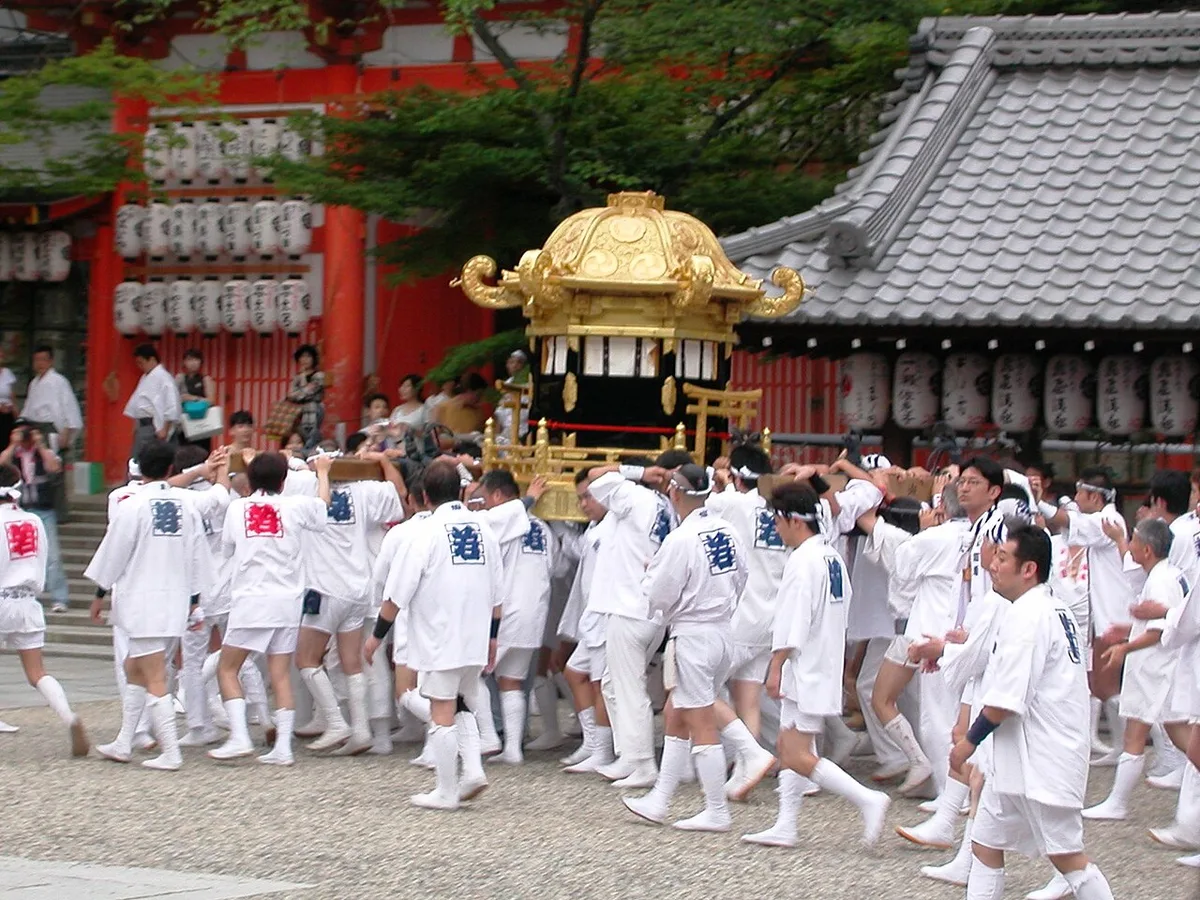
Gion Matsuri's processions divide floats into two categories, hoko and yama, collectively called yamaboko. Hoko carry a tall sacred pole and roll on wheels roughly 2 meters across, while about 40 to 50 musicians ride aboard playing drums, gongs, and flutes during the parade. Yama are smaller, shoulder-carried floats built around a pine pole, and most depict scenes from Japanese or Chinese folklore and Noh plays. Many floats are hung with imported tapestries from China, Persia, and Europe alongside textiles from Nishijin, Kyoto's traditional weaving district, which is why the display is often called a mobile art museum. Naginata Hoko leads the July 17 parade and carries a real child, called a chigo, chosen each year as a sacred messenger. From July 13 until the parade ends, the chigo cannot let his feet touch the ground. Yamahoko floats were added to UNESCO's Representative List of the Intangible Cultural Heritage of Humanity in 2009, recognizing the craftsmanship behind their construction and yearly reassembly.
Gion Matsuri Kyoto: The July Calendar and Key Dates
Gion Matsuri runs the entire month of July, but two stretches matter most for trip planning. Preparations begin July 1 through July 10, including the Kujitori-shiki lottery that sets each float's position in the parade. Crews then assemble the floats by hand between July 10 and July 14, tying joints with rope instead of nails. Organizers split the festival into two halves, with the Saki Matsuri building toward July 17 and the Ato Matsuri building toward July 24. Mikoshi Togyo carries the shrine's three portable shrines from Yasaka Shrine to the Otabisho, a temporary resting hall, on the evening of July 17. Deities stay there for about a week before the mikoshi return to Yasaka Shrine on the night of July 24. For the fuller year-round rundown, see the Kyoto festivals and events guide.
| Dates | Event | Detail |
|---|---|---|
| July 1–10 | Preparations and Kujitori-shiki | Lottery sets float order at Kyoto City Hall |
| July 10–14 | Float construction | Yamaboko floats built without nails, using rope-tying |
| July 14–16 | Saki Matsuri Yoiyama | Vehicle-free zones July 15–16, 18:00–23:00 |
| July 17 | Saki Matsuri Yamaboko Junko | 23 floats parade roughly 9:00–13:00; mikoshi depart in the evening |
| July 18–21 | Second float construction | Ato Matsuri floats assembled |
| July 21–23 | Ato Matsuri Yoiyama | Smaller-scale evening festivities |
| July 24 | Ato Matsuri Yamaboko Junko | 11 floats parade roughly 9:30–11:50; mikoshi return to Yasaka Shrine |
Saki Matsuri vs. Ato Matsuri: Which Should You Attend?
First-time visitors usually get more from the Saki Matsuri on July 17, with more than double the floats and a bigger night-market scene. Returning visitors often prefer the Ato Matsuri on July 24 for a quieter, more traditional atmosphere. This two-procession format returned in 2014, after organizers merged the parades into a single July 17 event from 1966 to 2013. Kyoto's official tourism site documents the change as a return to the festival's original form. Use the comparison below to match the event to your priorities.
| Factor | Saki Matsuri (July 14–17) | Ato Matsuri (July 21–24) |
|---|---|---|
| Floats in procession | 23 | 11 |
| Crowd density | Heaviest of the month | Noticeably lighter |
| Street food stalls | Extensive night-market stalls | Fewer stalls, more local shops |
| Overall atmosphere | High-energy, first-timer favorite | Quieter, more traditional |
| Best for | First-time visitors | Returning visitors wanting fewer crowds |
Yoiyama: The Festive Nights Before Each Parade
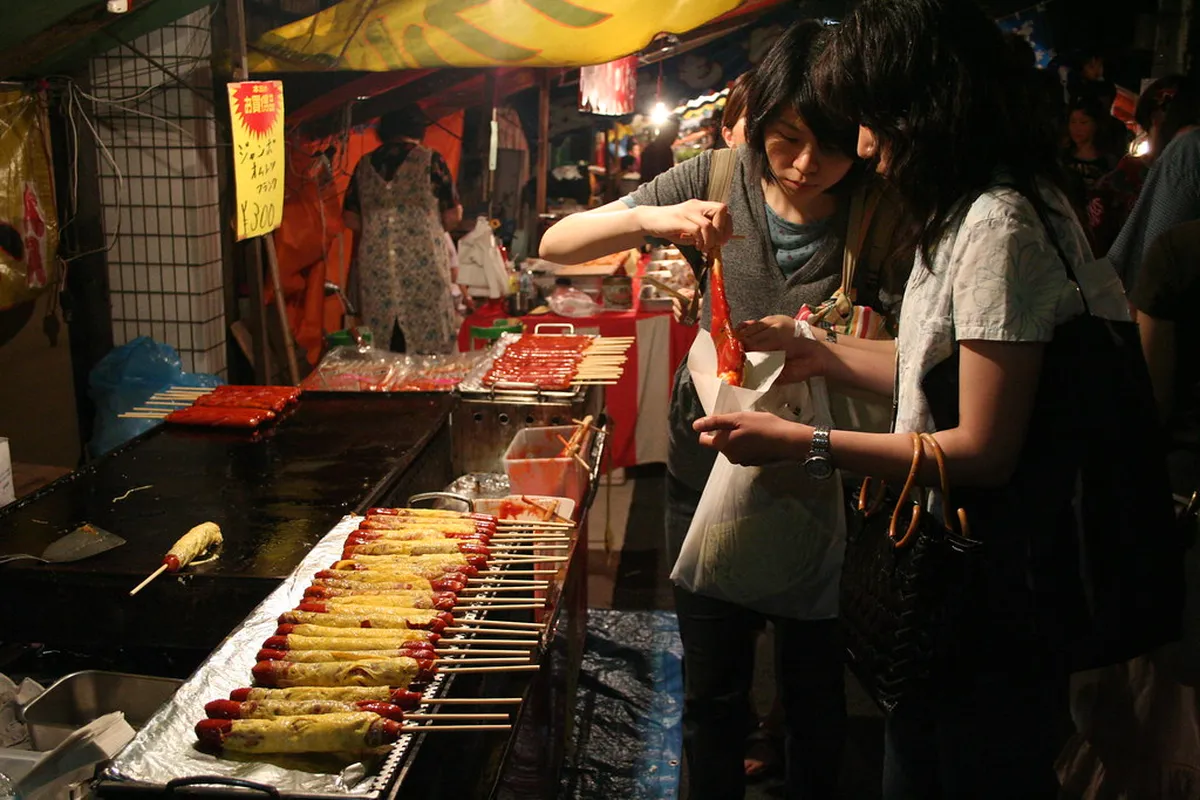
Yoiyama festivities run on the three nights before each procession, but the traffic rules are not the same every night. For 2026, vehicle-free zones on Shijo-dori and Karasuma-dori operated only on July 15 and 16, from 18:00 to about 23:00; they were not installed on July 14 or during Ato Matsuri Yoiyama on July 21–23. Floats still stand lit with lanterns throughout both Yoiyama periods. During the Byobu Matsuri, or Screen Festival, merchant families in the Shinmachi and Muromachi areas open their machiya townhouses to the public. They display folding screens, kimono, and other heirlooms passed down through generations. Japan's national tourism site lists this heirloom display among the festival's signature traditions. Street stalls sell chimaki, bundled reed charms meant to hang at a home's entrance for protection. They are not food, despite looking edible to newcomers.
- Yakitori (grilled skewers)
- Taiyaki (fish-shaped cakes)
- Takoyaki (octopus balls)
- Okonomiyaki (savory pancakes)
Tickets, Transport, and Where to Watch the Floats Turn
Paid seating for the July 17 procession typically starts around ¥6,000, with advance booking required opposite Kyoto City Hall. That option trades cost and mobility for a guaranteed sightline, so weigh it against a free spot on the roughly 3-kilometer route. Floats make 90-degree turns, called tsujimawashi, at fixed corners. Crews pivot the 12-ton hoko using bamboo strips and water. Getting around during the festival takes patience. Buses reroute or cancel near the parade streets, and Karasuma Line subway platforms get crowded before and after each Yoiyama night. Visitors planning a longer Kyoto stay can use a quieter midday window for a side trip. Our 15 Best Day Trips from Kyoto (2026 Guide) guide covers options that avoid the peak afternoon heat.
Hoko floats weigh 12 tons and reach 25 meters tall, yet crews maneuver these massive structures through 90-degree street corners using only bamboo strips and water.
- Paid seating: from ¥6,000, advance booking required, seats opposite Kyoto City Hall
- Free viewing: anywhere along the roughly 3-kilometer Shijo, Kawaramachi, and Oike route
- Best corners for the tsujimawashi turns: Shijo-Kawaramachi and Kawaramachi-Oike
Where to Stay for Easy Festival Access
Karasuma-dori and Kawaramachi sit inside the float-display zone, which makes them a better base than the Gion district for festival logistics. Gion keeps its own attractions, but it sits across the Kamo River from where the floats and Yoiyama stalls actually gather. A hotel within two blocks of Shijo-Karasuma puts guests inside the road closures, so expect night noise and restricted taxi drop-offs during Yoiyama. Accommodation choices generally fall into three tiers for festival week. Karasuma-dori also sits a short walk from Nishiki Market, covered in the 10 Best Free Things to Do in Kyoto (2026) guide, for a low-cost meal before Yoiyama opens.
- Luxury: central addresses near Shijo with easy access to the parade route
- Ryokan: traditional stays a short walk from Karasuma-dori or Kawaramachi
- Budget: rooms near Kyoto Station, reached by subway for the evening events
Mistakes to Avoid: Heat, Booking Windows, and the Gion Mix-Up
Kyoto's July humidity runs high, and festival crowds make it feel worse. Plan water breaks and shaded rest stops between Yoiyama and the morning procession. Central hotels near Karasuma and Kawaramachi sell out well ahead of July, and Japan's national tourism site advises booking accommodation months in advance for this festival. A common misstep is heading straight into the Gion geisha district and waiting there for the floats. Despite the name, the Yamaboko Junko processions and most Yoiyama activity happen on the opposite side of the Kamo River, centered on Shijo-Karasuma and Kawaramachi, not inside Gion itself.
Beyond Gion Matsuri: More Festivals to Plan Around
Kyoto runs a full festival calendar beyond July, and pairing Gion Matsuri with another seasonal event can round out a longer trip. May brings the Aoi Matsuri, a procession of ox-drawn carts and Heian-era costume. October brings two more: the Jidai Matsuri parade spans centuries of Kyoto fashion. Kurama, north of the city, hosts the Kurama Fire Festival torch procession the same month. For festival travel further afield, several regional guides track matsuri season by destination.
Frequently Asked Questions
When does Gion Matsuri take place in 2026?
Gion Matsuri runs across the entire month of July, from July 1 through July 31. Two main Yamaboko Junko processions fall on July 17 and July 24, with Yoiyama evening festivities on the three nights before each one.
Is it free to watch the Gion Matsuri parade?
Watching from the street along the roughly 3-kilometer route is free on both procession days. Paid seating is optional, typically starting around ¥6,000 opposite Kyoto City Hall, with advance booking required for a guaranteed sightline.
Do the Gion Matsuri floats actually pass through the Gion district?
No, despite the name, the Yamaboko Junko processions take place on the opposite side of the Kamo River from Gion. Floats and most Yoiyama activity center on Shijo-Karasuma and Kawaramachi, not inside the Gion geisha district.
What are chimaki, and can visitors eat them?
Chimaki sold at Gion Matsuri are bundled reed charms, not food. Vendors set them up near the floats during Yoiyama, and the custom is to hang one at a home's entrance for protection through the year.
How far in advance should travelers book a hotel for Gion Matsuri?
Rooms near Karasuma and Kawaramachi book out months ahead of July. Japan's national tourism site advises reserving accommodation early specifically for this festival. Booking as soon as travel dates are confirmed gives the widest choice of rooms within walking distance of the float-display streets.
Free: The Kyoto Essentials guide
Top things to do, where to stay, a perfect day plan, getting around, and the best time to go — a Kyoto mini-guide you can take offline.
You might also like

Continue reading
More guides you'll find useful


