
Kurama Fire Festival 2026: Schedule, Transit & Crowd Guide
Plan the Kurama Fire Festival: the 2026 October 22 schedule, the Eizan Railway route from Kyoto, and a crowd strategy for the night.
On this page
Last updated August 2026, this guide covers exactly what to expect from the Kurama Fire Festival, Kyoto's night of blazing torches and mountain-village ritual. Kurama no Hi Matsuri fills the narrow streets around Yuki Shrine every October 22, honoring the relocation of the shrine's spirits with pine torches that reach 3 meters long. The sections below walk through the schedule, the Eizan Railway bottleneck, and a crowd strategy for surviving one of Kyoto's most physically demanding nights.
What Is the Kurama Fire Festival?
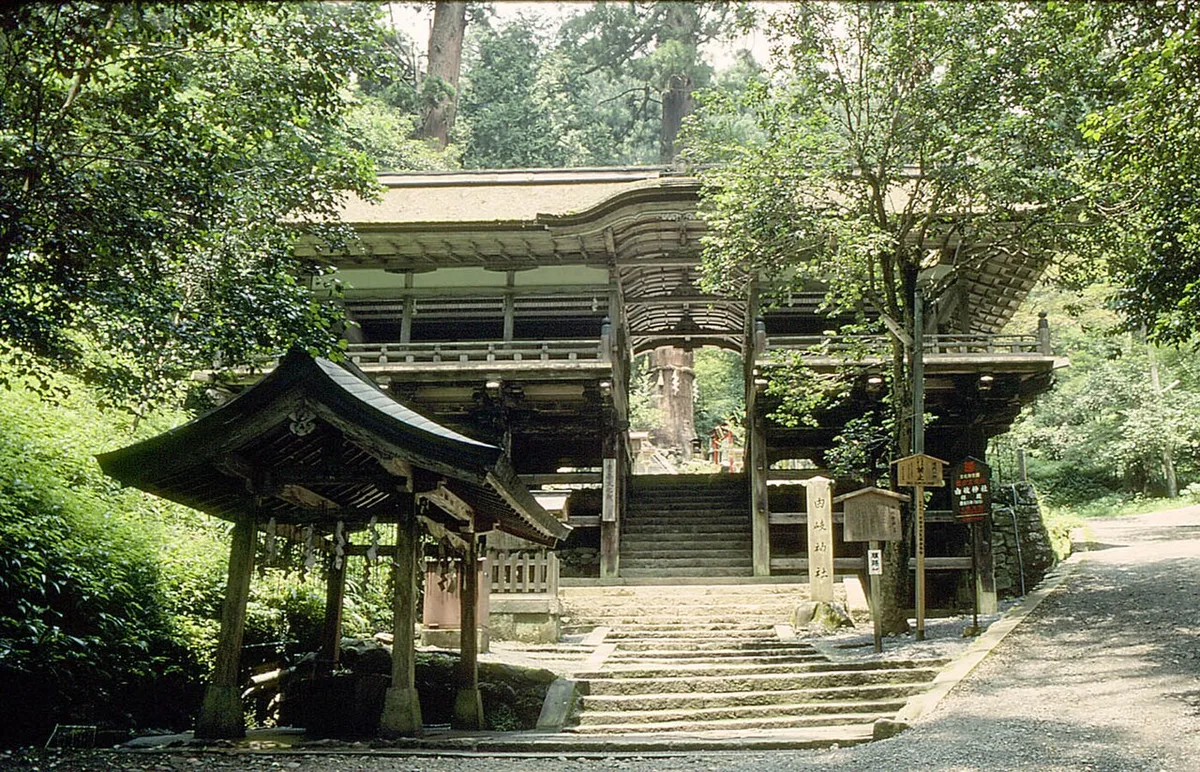
Kurama no Hi Matsuri lights up the mountain village of Kurama every October 22, just north of central Kyoto. The festival honors the relocation of the deity Yuki Daimyojin to Yuki Shrine after a series of disasters struck the capital. Discover Kyoto's event calendar dates that relocation to the year 940. Mount Kurama itself carries long-running tengu legends, stories of mountain spirits tied to these slopes for centuries. At sunset, villagers light small taimatsu torches outside their homes. Men then shoulder pine torches up to 3 meters long and carry them through the narrow streets toward the Sanmon Gate at Kurama-dera, the temple complex above Yuki Shrine. Japan's official tourism site lists it among Kyoto's most famous fire festivals. It appears among the seasonal highlights in our 10 Best Kyoto Festivals and Events to Plan Around in 2026 guide. Other entries there include Gion Matsuri each July. Aoi Matsuri follows every May.
October 22: Kyoto's Festival Double-Header
October 22 is the busiest single day on Kyoto's festival calendar. Jidai Matsuri, also called the Festival of Ages, reenacts costumed eras of Kyoto's history around Kyoto Imperial Palace earlier that same afternoon. Our Jidai Matsuri guide covers that procession's costumed reenactment in full. Kyoto's official tourism board keeps current seasonal travel advisories for both events on its site. Combining both means leaving central Kyoto by mid-afternoon to reach Kurama before the evening crowds build. Demachiyanagi Station is the transfer point for the Eizan line, roughly 30 minutes by rail from Kurama Station. Watching Jidai Matsuri's finish and still claiming a good vantage point in Kurama by 18:00 is a tight window. Treat the pairing as a choice, not an easy double booking. Many visitors treat Jidai Matsuri as a daytime add-on rather than a full commitment, catching part of the parade before heading north. Others skip Jidai Matsuri entirely and spend the extra hours reaching Kurama early enough to find solid footing before the crowds peak. Reaching the Imperial Palace area from Kurama afterward is impractical, so most visitors treat the day as Kurama-first or palace-first, not both in sequence.
Kurama Fire Festival Schedule: The Ritual Progression
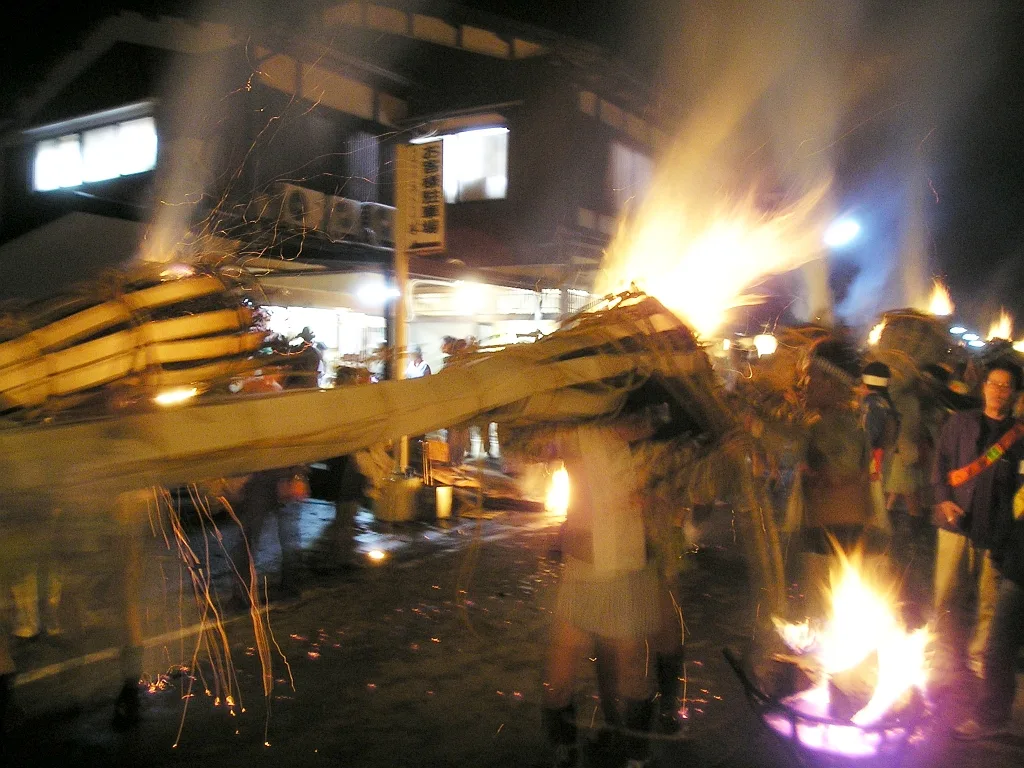
The Kurama Fire Festival follows a set progression once the sun goes down. Watch fires appear in front of houses around 18:00, and taimatsu torches are lit soon after. Children lead the procession with the smallest torches, followed by teenagers carrying mid-sized ones. Adult men carry the heaviest taimatsu, which can weigh up to 80 kg apiece. Some households display family heirlooms, such as samurai armor, in their windows as the torches pass. The procession fills the single main street running through the village, leaving little independent room for spectators. By the time bearers converge on the Sanmon Gate steps, more than a hundred torches can be gathered at once. Once a sacred rope is cut, selected men climb the mountain to bring down two mikoshi portable shrines. Carrying the mikoshi through the village is a visible show of strength, since the shrines are built heavy on purpose. Video and photography are common throughout the procession, though the moving crowd limits how long any single spot stays available. Festivities run until close to midnight. Traditional dress for participants includes:
| Time | What Happens |
|---|---|
| 18:00 | Watch fires and taimatsu torches lit outside homes |
| 18:00-20:00 | Torch procession moves through the village streets |
| 20:00-22:00 | Peak gathering at the Sanmon Gate; mikoshi descend the mountain |
| ~Midnight | Festival concludes |
- Woven straw sandals
- A loincloth
- A braided rope skirt tied at the waist
- A colorful armguard on one arm
- A padded cloth over one shoulder to cushion the torch
Getting There: The Eizan Railway Bottleneck
Reaching Kurama starts at Kyoto Station, the hub for onward rail connections. From there, riders typically connect through Demachiyanagi Station before boarding the Eizan Electric Railway's Kurama Line. The Eizan Line covers Demachiyanagi to Kurama Station in about 30 minutes. That single-track line becomes the same bottleneck once the festival lets out. Demachiyanagi itself gets crowded well before the last convenient outbound trains toward Kurama depart in the late afternoon. Boarding an earlier train, rather than waiting for a late-afternoon departure, avoids the worst of the platform crush at Demachiyanagi. Waits of an hour or more for a return train are common once the peak crowd starts leaving Kurama after 22:00. Buying a round-trip ticket, or topping up an IC card before entering the platform, avoids a slow ticket line during the exit crush. Japan's official tourism site outlines one specific route from Kyoto Station:
- JR Nara Line to Tofukuji Station
- Transfer to the Keihan Line toward Demachiyanagi
- Connect to the Eizan Line's Kurama service at Demachiyanagi
Crowd Strategy: Managing the One-Way Human River
Kurama's streets are narrow, and the festival draws a crowd that fills them completely. Police direct foot traffic into one-way routes through the busiest stretches, so standing still to watch is often not an option. Officials close some side streets to new arrivals once the main routes reach capacity, redirecting foot traffic along alternate approaches. Arriving by 16:00 gives time to find a stable vantage point before the paths fill. Arriving at 18:00, when torches are lit, usually means joining a moving line instead of choosing where to stand. Photographing the procession from one fixed spot is difficult once the one-way flow begins, since stopping to frame a shot blocks the people behind you. Moving with the crowd, camera ready, tends to work better than searching for a single perfect angle. Loose, natural-fiber clothing is safer than synthetics, since floating embers and radiant heat from the taimatsu are a real hazard at close range. Falling embers are common near the torch bearers, so keep young children close and away from the torch shafts themselves. Keep some distance from the torches themselves, and expect the narrow lanes to feel far hotter than the October night air outside them.
Visitors combining October 22's Jidai Matsuri with the fire festival must board early, since the Eizan Line journey requires 30 minutes and post-22:00 return trains face waits exceeding an hour. Arriving by 16:00 rather than 18:00 proves essential for securing a stable vantage point.
What to Wear and Bring for a Kurama Night
Discover Kyoto's account of the festival describes the still-warm October night air lasting well into the evening. A light jacket usually covers the temperature swing between the afternoon commute and a late walk back after midnight. Layering works better than a single heavy coat, since the walk from the station and the wait near torches involve very different comfort levels. Comfortable, closed-toe shoes matter more than fashion, since the ground is uneven and the crowd rarely stops moving. A charged phone or portable battery is useful for coordinating a meeting point, since mobile signal can weaken once the crowd fills the narrow lanes. Cash in small denominations covers food stalls in the village, since not every vendor accepts cards during the rush. Check the best time to visit Kyoto guide for broader seasonal packing advice beyond festival night.
Where to Stay and Nearby Kibune
Staying near Demachiyanagi Station cuts the commute to a single, direct Eizan Line ride each way. Ryokan and guesthouses directly in Kurama are limited, which is another reason many visitors base themselves near Demachiyanagi instead. Kibune, listed among the area's closest nearby spots on regional tourism guides, sits a short walk from Kurama Station. It is a common add-on covered in our 15 Best Day Trips from Kyoto (2026 Guide) guide. Kurama-dera also sits within the village and draws its own daytime visitors separate from the evening festival crowd. The hiking trail connecting Kurama and Kibune makes sense on non-festival days, but it is frequently closed on festival evenings for safety. Do not plan on that trail as a shortcut between the two villages on October 22.
Mistakes That Ruin a Kurama Night
A few recurring mistakes cause the most frustration on festival night:
- Wearing synthetic or flammable clothing near torches that reach 3 meters and burn at close range.
- Bringing expensive outerwear you would not want marked by ash or a stray ember.
- Expecting a quiet, uncrowded shrine visit, since the one-way crowd flow rules out a calm approach.
- Forgetting that the last train out is the only realistic way back, since Kurama has no taxi stand nearby.
- Assuming a ride-share car will be available near Kurama late at night.
- Skipping food and drink stops early, since options thin out once the procession fills the main street.
Is the Kurama Fire Festival Worth the Crowds?
The trade-off is straightforward: a physically demanding evening in exchange for a ritual few other festivals match. Standing shoulder to shoulder in a moving crowd for hours is not comfortable for everyone. Combining the festival with an earlier daytime visit to Kurama-dera, before the crowds arrive, is one way to experience the village without the crush. Travelers who want a lower-key October evening instead can check our 10 Best Free Things to Do in Kyoto (2026) guide. Photographers and festival-goers who don't mind long stretches on their feet tend to get the most out of the night. For those prepared for the crush, firelight, mikoshi, and centuries-old ritual on the slopes of Kurama are not something a typical daytime procession, like Jidai Matsuri or Aoi Matsuri, replicates.
Who Should Consider Skipping the Kurama Fire Festival?
The festival is memorable, but it is not an easy sightseeing stop. Kurama’s main street becomes a dense, moving crowd. Police-directed one-way routes can make it hard to leave quickly or return to a chosen viewing point.
Visitors who need frequent seating, step-free access, or a predictable exit should weigh the experience carefully. The village streets are narrow, torch heat is intense, and the return train queue may last an hour or longer after the peak.
- Go if you are comfortable standing and walking for several hours in close crowds.
- Arrive early if traveling with older children, and keep them well back from torch bearers and falling embers.
- Choose another Kyoto autumn event if mobility needs, crowd anxiety, or heat sensitivity would make a moving procession difficult.
A daytime visit to Kurama-dera on a different date offers a calmer way to see the mountain setting. The fire festival is best treated as an intense ritual spectacle, not a relaxed village evening.
Frequently Asked Questions
What time does the Kurama Fire Festival start?
Watch fires and small taimatsu torches appear outside homes around 18:00, just after sunset on October 22. The procession builds toward its peak between 20:00 and 22:00, and events continue until close to midnight.
How do you get to the Kurama Fire Festival?
Take a train to Demachiyanagi Station, then transfer to the Eizan Electric Railway's Kurama Line. That ride from Demachiyanagi to Kurama Station takes about 30 minutes, and the festival fills the streets right outside the station.
Is the Kurama Fire Festival free to attend?
Watching the procession itself is free. Expect out-of-pocket costs for round-trip rail fare on the Eizan Line, plus any food or drink bought from village stalls. Check the Eizan Electric Railway's official site for current fares close to your travel date.
Can you see both Jidai Matsuri and the Kurama Fire Festival on the same day?
Both fall on October 22, with Jidai Matsuri in the afternoon near Kyoto Imperial Palace and Kurama's torches starting after sunset. It is possible, but it means leaving central Kyoto by mid-afternoon to beat the evening trains and crowds.
How crowded does the Kurama Fire Festival get?
Crowds fill Kurama's narrow streets completely, and police enforce one-way walking routes through the busiest stretches. Arriving by 16:00, rather than at the 18:00 start, gives a better chance at a stable viewing spot before flow restrictions take effect.
What should you wear to the Kurama Fire Festival?
Choose natural fibers like cotton rather than synthetics, since floating embers and radiant heat from the torches are a real hazard at close range. Dress warm enough for a late-October mountain evening after dark, and skip anything you would not want marked by ash.
What happens if it rains during the Kurama Fire Festival?
Official sources reviewed for this guide do not publish a standard rain contingency, so check the Eizan Electric Railway or Yuki Shrine's own site close to your travel date for any weather-related changes. A compact rain layer is still worth packing, since ponchos are easier to manage than umbrellas in a dense, moving crowd.
Where exactly does the Kurama Fire Festival take place?
The festival fills the streets of Kurama village in Sakyo-ku, Kyoto, centered on Yuki Shrine at 1073 Kuramahoncho. Kurama Station, the Eizan Line's terminus for this trip, sits right at the edge of the festival streets.
Free: The Kyoto Essentials guide
Top things to do, where to stay, a perfect day plan, getting around, and the best time to go — a Kyoto mini-guide you can take offline.
You might also like

Continue reading
More guides you'll find useful


