15 Best Food Experiences in Kyoto: A Local Dining Guide (2026)
Plan your 2026 trip with the best food in Kyoto. Discover top restaurants, hidden cafes, and street food with prices, hours, and local booking tips.
On this page
Kyoto's best meals hide behind modest wooden doors, in quiet parking lots, and down alleys locals would never label a tourist street. The city runs on a concept called shun — eating whatever ingredient is at peak season — which means the menu you see in April looks nothing like the one in November. That seasonal discipline is also what keeps the cooking here sharper than almost anywhere else in Japan.
This guide covers the essential Kyoto experiences for food lovers in 2026: the restaurants that consistently deliver, the food shops worth your yen, what to pack home, and a practical district-by-district timing plan that most first-timers never get told. All prices are in JPY and USD equivalents at 2026 rates.
Whether you have one afternoon or five full days, the eating here rewards curiosity over itinerary. Mix a high-end kaiseki lunch with a late-night gyoza counter and you will understand what Kyoto actually tastes like.
The Best Restaurants in Kyoto
Kyoto's dining landscape splits into three reliable tiers. The first is refined tradition: kaiseki restaurants, unagi houses, and Michelin-recognized ramen shops that require advance booking and budgets of ¥5,000 to ¥30,000 per person. The second is casual local eating — gyoza counters, curry shops, yakitori spots — where you walk in, spend ¥1,500 to ¥3,000, and leave full and satisfied. The third is the city's remarkable specialty coffee and pastry culture, which rivals Tokyo but operates at a slower, quieter pace.
Understanding this structure helps you plan a realistic Kyoto itinerary around eating. Most visitors make the mistake of reserving all their appetite for a single big kaiseki dinner and skipping the mid-tier spots that are actually more representative of daily Kyoto life. Mixing tiers across each day produces a far richer overall experience.
The fifteen picks below are grouped by type and time of day rather than by rank. They are selected for consistency, distinct character, and practical accessibility for travelers who are not staying at a luxury ryokan with a concierge on call.
Karasemitei
Karasemitei serves miso-marinated seafood in a quiet setting in Nakagyo Ward, a ten-minute walk from Karasuma Station. The kitchen specializes in the preservation technique of saikyo-zuke — marinating fish in sweet Kyoto white miso for one to three days before grilling. The result is buttery, deeply savory, and nothing like the miso fish you encounter in hotel breakfast buffets. This is an ideal stop if you're exploring the neighborhoods around Karasuma.
Budget ¥2,500 to ¥5,000 per person. They open at 11:30 and close at 21:00 daily. Arrive before noon or after 14:00 to avoid the lunch rush. The miso-marinated cod is the dish to order; the mackerel is excellent as a backup when cod is off the seasonal menu.
Tonkatsu Shimizu
Tonkatsu Shimizu is a short walk from the Imperial Palace area, near Marutamachi Station. The chef fries thick-cut pork loin to order in breadcrumbs ground to a specific coarseness, which gives the crust an unusual combination of crunch and lightness. The interior stays juicy because the oil temperature is lower than a standard tonkatsu shop.
Lunch runs from 12:00 to 14:00. Expect a short wait even on weekdays — local office workers from the surrounding government buildings fill the seats fast. A full set with rice, miso soup, and pickles costs around ¥1,800 to ¥3,500. This is one of the most affordable meals on this list and one of the highest satisfaction-per-yen options in the city.
Café Momoharu
Café Momoharu is a deliberately quiet coffee shop in the Teramachi shopping district. The staff discourages loud conversation, which sounds restrictive but is actually a relief after a morning in Nishiki Market. Hand-drip coffee costs around ¥600 to ¥900 and the small snack menu changes weekly. The chairs are comfortable enough to sit in for an hour without feeling watched.
Open 12:00 to 19:00; closed most Tuesdays and Wednesdays. Best visited mid-afternoon when the main tourist traffic has moved on to temple areas. It is a fifteen-minute walk from the northern end of Nishiki Market, which makes it a natural stopping point on the way toward Pontocho.
Tea and Sake Tasuki Shinpuhkan
Located inside the Shinpuhkan complex — a repurposed Meiji-era telephone exchange building in central Kyoto — this dessert counter specializes in kakigori, the Japanese shaved ice that shares almost nothing with the Hawaiian version except the basic concept. Seasonal flavors include roasted hojicha, white peach, yuzu, and rotating limited editions based on what the chef sources that month.
A single kakigori costs ¥1,800 to ¥2,800 depending on the topping selection. Open 11:00 to 20:00 daily. Use the digital reservation tablet at the entrance to secure a spot during peak hours; walk-ins are possible on weekday mornings. Check their social media before arriving to see the current flavor lineup, as it can change mid-week during harvest season.
Blue Bottle Coffee Kyoto
The Kyoto branch of Blue Bottle occupies a carefully restored traditional townhouse near the Nanzen-ji temple complex in the eastern hills. The architecture does the heavy lifting: weathered wooden beams contrast against polished pour-over equipment, and the gravel courtyard gives you space to sit without feeling crowded. This is the only Blue Bottle location in the world where the building is genuinely worth visiting on its own terms.
Coffee runs ¥700 to ¥1,500. Open 09:00 to 18:00 daily, accessible via a ten-minute walk from Keage Station on the Tozai line. Visit between 09:00 and 10:00 to get a courtyard seat before the Nanzen-ji tourist wave arrives. Pair a visit here with a walk through the Philosopher's Path section nearby.
Okuniya Manbei Unagi
Okuniya Manbei is one of the few remaining unagi restaurants in Kyoto where the eel is grilled using the Kansai method — split from the belly, skewered without steaming, grilled directly over charcoal. This produces a crispier skin and a more intensely smoky flavor than the Tokyo-style preparation most visitors have tried before. The setting is a historic merchant townhouse in Nakagyo Ward.
Unagi-don sets cost ¥5,000 to ¥10,000. Lunch service runs from 11:00 to 14:00 and is the easiest time to access; dinner fills weeks in advance. Book through your hotel concierge or via phone at least two weeks ahead. If you can only afford one high-end meal in Kyoto that is not kaiseki, this is the one to choose: it is rarer, more tied to local technique, and harder to replicate anywhere else.
Bar Ixey
Bar Ixey operates without a printed menu. You sit down, describe what you feel like drinking — a spirit, a fruit, a mood — and the bartender builds something around that. The omakase approach to cocktails is not a gimmick here; the bar stocks unusual Japanese liquors and seasonal ingredients that the bartender genuinely wants to show you. Located in the Kiyamachi nightlife corridor.
Cocktails run ¥2,500 to ¥6,000 per drink. Open 18:00 to 01:00. The small space seats about twelve people. Arrive before 20:00 on weekends to get a seat without waiting. Solo travelers and couples do well here; large groups tend to disrupt the intimate pace the bartender needs to work well. If you enjoy the Kyoto nightlife scene more broadly, Kiyamachi has a compact cluster of quality bars within walking distance.
Ebisugawa Gyoza Nakajima
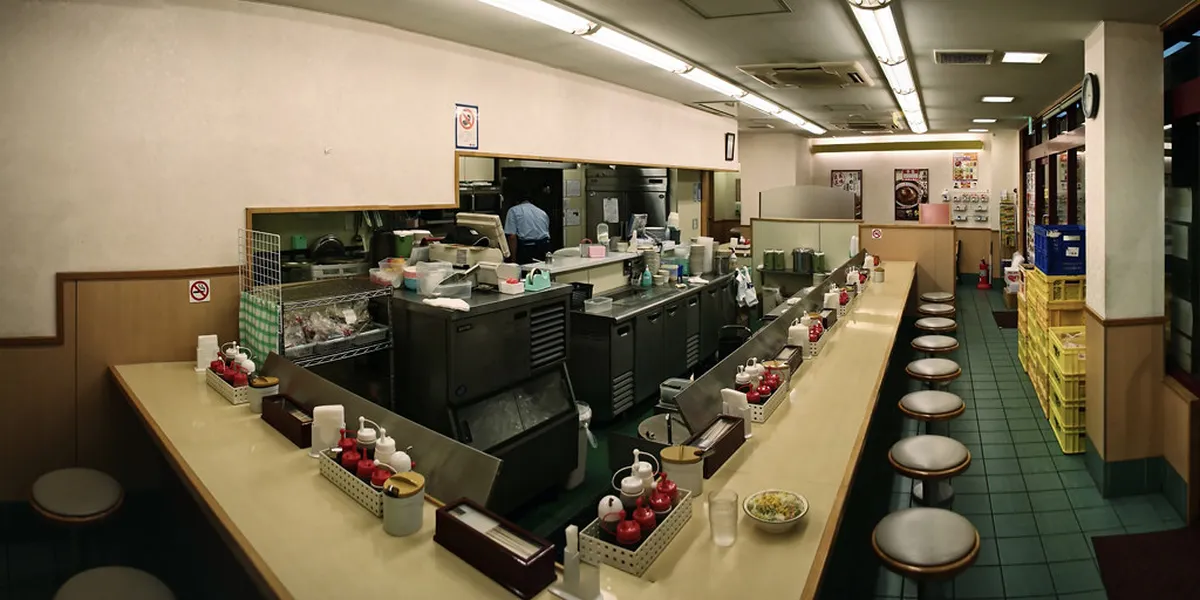
Ebisugawa Gyoza Nakajima is not trying to be anything other than what it is: a loud, fast, affordable gyoza counter near the Kamo River. The potstickers arrive with a crackling base and a juicy pork-and-cabbage filling. The miso-dare dipping sauce adds a layer of savory complexity that lifts these above the standard ponzu or soy dip. Order the fried version, not the steamed; the contrast of textures is the whole point.
A full dinner with beer runs ¥1,200 to ¥2,500 per person. Open from 16:00 to 22:00. Best visited on a Tuesday or Wednesday when the weekend tourist traffic is gone and the local crowd is more relaxed. This is the ideal post-sightseeing stop before heading into the Pontocho alley area for the evening.
Men-ya Inoichi
Men-ya Inoichi is Michelin Bib Gourmand recognized and serves one of the clearest, most refined dashi broths in Kyoto. The kitchen uses a blend of kombu, dried shiitake, and multiple varieties of dried fish that takes two days to prepare. The resulting soup is light in color but deeply savory — the kind of ramen that convinces people who claim not to like ramen.
A bowl costs ¥1,400 to ¥2,500. Located in Shimogyo Ward, operating 11:00 to 14:30 and 17:30 to 21:00, with early closures when the broth sells out. Visit at 11:00 on a weekday. The shop closes if broth runs out, which can happen as early as 13:30 on busy days. Check this Condé Nast Traveller guide to Kyoto for further pairing suggestions from chef contributors.
Honke Daiichi-Asahi
Honke Daiichi-Asahi is the ramen institution every Kyoto local has an opinion on. Located a few blocks from Kyoto Station, it has been serving the same soy-sauce broth since 1947. The soup is rich and pork-forward, with thick noodles and generous slices of chashu. There are no seasonal specials and no rotating menu — consistency is the entire value proposition.
A bowl costs ¥900 to ¥1,600. Open 06:00 to 23:00. The queue at 08:00 is manageable; the one at 12:30 is not. If you are arriving at Kyoto Station by bullet train in the morning, this is an excellent first meal before checking in. Eat early, eat fast, and you will understand why this place has survived seventy-five years without changing anything.
Wabiya Korekido
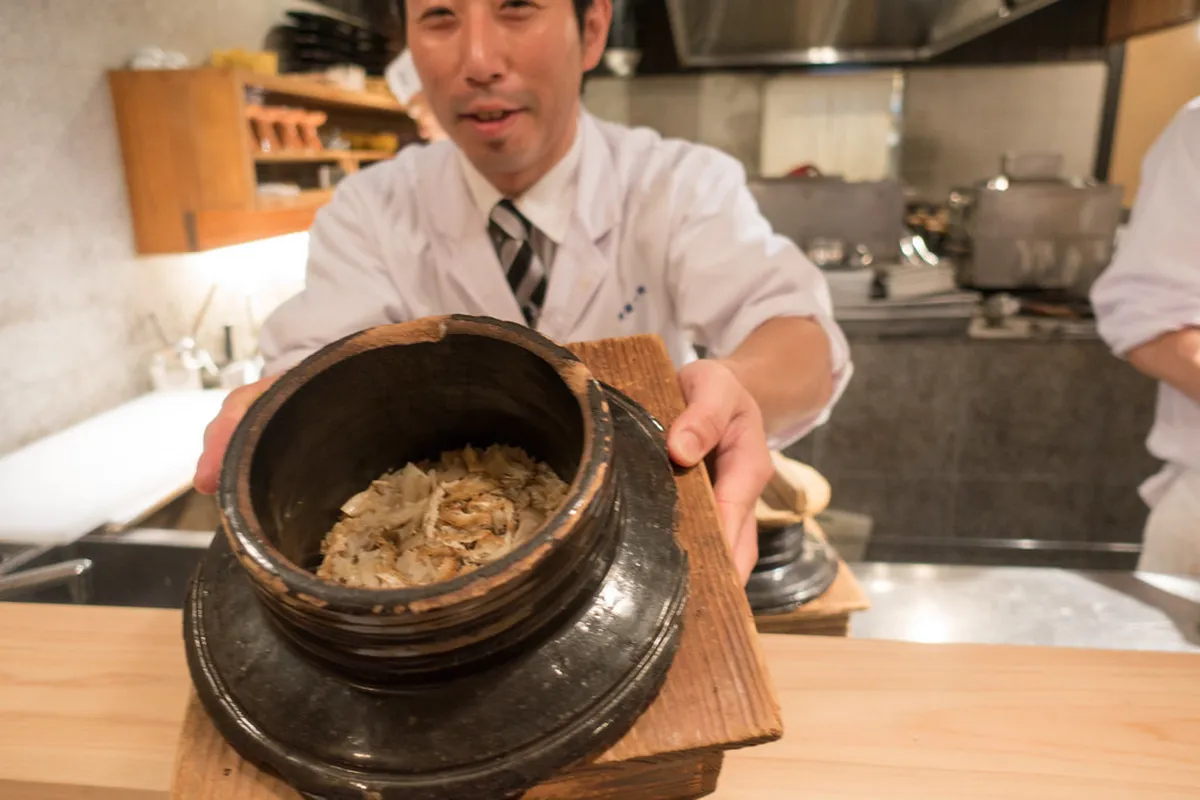
Wabiya Korekido is on Hanami-koji street in Gion, the famous lane lined with historic ochaya teahouses. Despite the tourist-heavy location, the restaurant draws a reliable local crowd for its premium yakitori and stone-pot chicken rice. The stone pot (kama-meshi) is the dish to order: the chef brings it to the table still cooking, scrapes the crispy bottom layer for you, and mixes everything together. It takes about twenty minutes but is worth every second.
Dinner runs ¥3,500 to ¥7,000 per person. Open for lunch and dinner daily. Book ahead for Gion evening slots; walk-in lunch seats are usually available before 12:30. The surrounding street is best explored after your meal when the tourist groups have thinned and the lantern lighting comes on around sunset.
D&Department Shokudo
D&Department Shokudo is an unusual restaurant: it serves seasonal set menus that highlight traditional ingredients sourced from different prefectures across Japan, rotating the featured region every few months. You might eat Okinawan bitter melon one visit and Aomori apple dishes the next. The concept is sometimes called long life design eating — choosing producers and recipes that preserve regional food culture.
The restaurant sits inside the Bukko-ji Temple grounds in Shimogyo Ward, a ten-minute walk from Shijo Station. Set lunches cost ¥1,500 to ¥3,000. Open 11:00 to 18:00; closed Tuesdays. Browse the attached craft shop before or after your meal. This spot works particularly well for travelers who want to taste flavors from across Japan without changing cities — an angle no other restaurant on this list offers.
The Best Food Shops in Kyoto
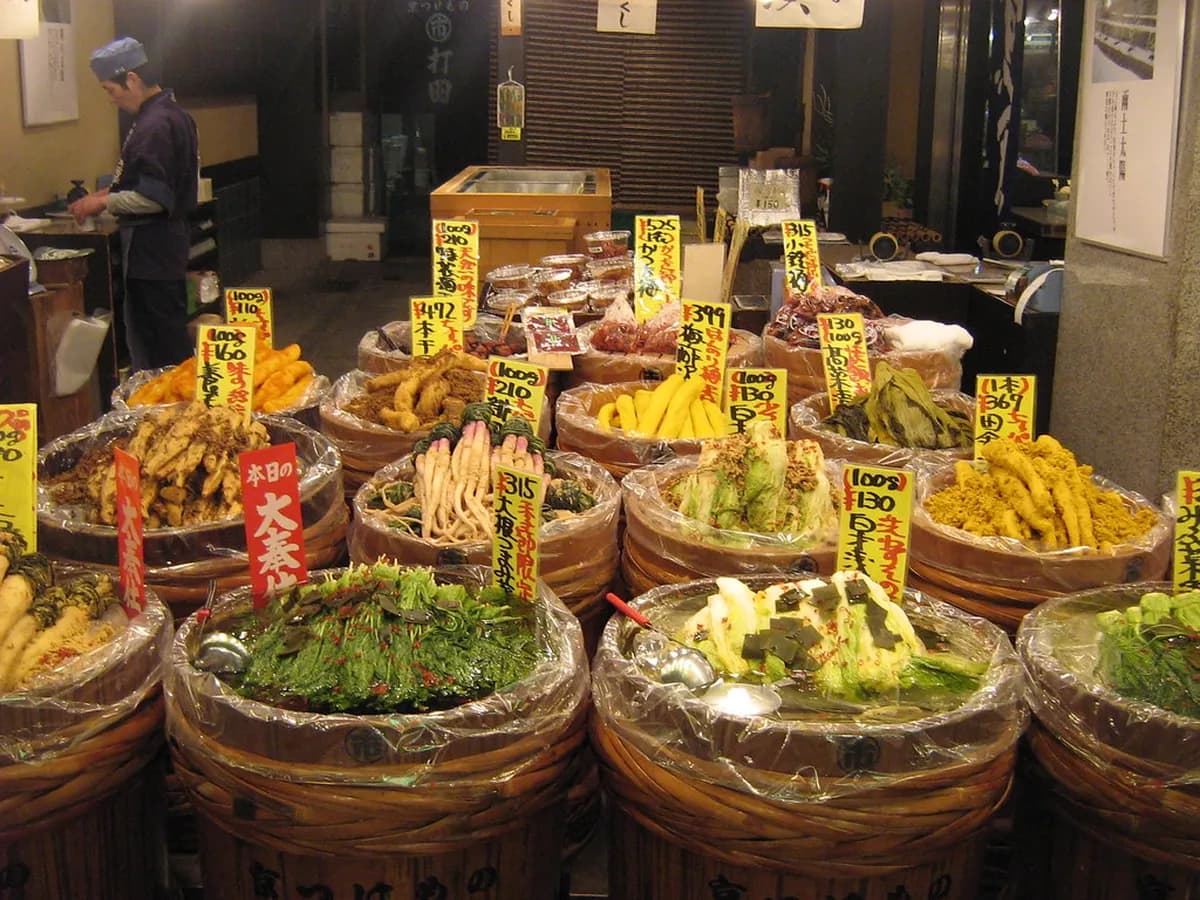
Nishiki Market is the obvious starting point — a narrow covered street in Nakagyo Ward with over a hundred vendors selling fresh tofu, pickled vegetables, dried seafood, matcha sweets, and street snacks. Most stalls open around 09:00 and close by 17:30. Eat your snacks standing still at the stall where you bought them; walking and eating simultaneously is considered poor form in Japan and is increasingly enforced by posted signs.
Avoid eating or drinking while walking through Kyoto's narrow shopping streets, including Nishiki Market. Street eating is seen as disrespectful and many tourists face polite but firm correction from shopkeepers or staff. Finish your snack at the vendor's stall or step aside to find a bench before moving on.
Beyond Nishiki, the department store basement halls (depachika) of Daimaru and Takashimaya on Shijo Avenue offer curated selections of premium bento boxes, wagashi sweets, and seasonal produce in one air-conditioned space. These are excellent for pre-journey provisions or gifts. The Teramachi and Sanjo shopping areas northwest of Nishiki Market are where the long-standing tea merchants operate — shops that have been selling a single grade of sencha or matcha for over a century. Most offer small tasting samples, so you can compare grades before committing to a purchase.
For detailed maps and additional picks, see this Where to Eat in Kyoto guide by Anders Husa, which has mapped many of these shops by neighborhood. For a broader sense of what to do between meals, the Kyoto shopping guide covers the surrounding retail areas in more depth.
The Ingredients to Take Home from Kyoto
Kyoto produces a handful of ingredients that are genuinely difficult to find at the same quality level outside the city. Saikyo miso — the white, sweet miso used at Karasemitei and dozens of other local kitchens — is the most versatile souvenir. It keeps well under refrigeration and transforms any simple fish or vegetable marinade at home. Look for it at Nishiki Market or at Miso Murata near Fushimi. Expect to pay ¥500 to ¥1,500 for a 500g pack.
High-grade matcha from the Uji area just south of Kyoto is the other essential purchase. The difference between a ¥2,000 tin of ceremonial-grade matcha and the commodity powder sold at airports is significant enough to taste without being a tea expert. Horii Shichimeien and Ippodo Tea in the Teramachi area are the two most reliable shops; both have English-speaking staff who can explain grades. Yatsuhashi — the folded rice flour and cinnamon confection that has been Kyoto's signature souvenir since at least the 17th century — is worth buying from a traditional maker like Honke Nishio rather than from airport kiosks where it sits too long. Look for the fresh unbaked version (namagashi) if you plan to eat it within two days.
Kyoto kitchen knives are a more durable investment. Aritsugu at Nishiki Market has been forging blades since 1560 and will engrave your purchase while you wait. A quality single-bevel knife runs ¥8,000 to ¥50,000 depending on the steel and handle. It is the one Kyoto purchase that gets used every day for decades after your trip ends.
When and Where to Eat: A District Timing Guide
Most visitors cluster their eating around famous landmarks rather than around the city's natural rhythms. The result is that they hit Nishiki Market when it is most crowded (10:30 to 13:00), compete for seats at Gion restaurants during peak dinner service (19:00 to 21:00), and miss the windows when Kyoto's eating culture is actually at its best. Adjusting your timing by district makes an enormous practical difference. If you're planning a full trip, integrate this into your overall strategy with our 1-day Kyoto itinerary focus.
Start mornings east of the Kamo River. The Higashiyama hillside neighborhood near Nanzen-ji and the Philosopher's Path has several specialty coffee shops and bakeries — including the Blue Bottle Kyoto branch — that are uncrowded before 10:00. Breakfast in this area followed by a temple walk means you reach Nishiki Market after the morning rush but before the lunch crowds, around 11:00 to 11:30. That is the ideal Nishiki window.
For lunch, Nakagyo Ward around the Nishiki area has the densest concentration of accessible options: Tonkatsu Shimizu near Marutamachi, the gyoza counters near the river, Men-ya Inoichi in Shimogyo. These spots peak between 12:00 and 13:30; arriving at 11:30 or after 14:00 avoids most waits. Save your Gion dining for the early evening — Wabiya Korekido on Hanami-koji, or a walk through Pontocho starting around 17:30 before the main dinner rush, when a few counters still have walk-in availability. Late-night eating (after 22:00) works best near Kiyamachi, where Bar Ixey and a handful of small izakayas remain open past midnight.
Nishiki Market hits its sweet spot between 11:00 and 11:30 AM, after the morning rush clears but before lunch crowds arrive. The ideal window opens when you finish a temple walk on the east side of the Kamo River and gives you over an hour to browse the stalls without pushing through shoulder-to-shoulder tourists.
| District | Best Time | Key Spots |
|---|---|---|
| Higashiyama (Nanzen-ji) | 08:00–10:00 | Blue Bottle Coffee, specialty bakeries |
| Nishiki Market area | 11:00–11:30 | Market stalls, food shops, snacks |
| Nakagyo Ward (Lunch) | 11:30 or after 14:00 | Tonkatsu Shimizu, Men-ya Inoichi, gyoza counters |
| Gion (Early evening) | 17:30–19:00 | Wabiya Korekido, Hanami-koji walk-ins |
| Kiyamachi (Late-night) | After 22:00 | Bar Ixey, small izakayas |
Is Kaiseki Worth the Price?
Kaiseki is the formal multi-course expression of Kyoto's seasonal cooking philosophy. A full dinner kaiseki runs ¥15,000 to ¥50,000 per person at a serious establishment. The cost reflects not just the ingredients but the months of training required to plate twelve courses with the precision Kyoto diners expect. If you approach it as pure eating, the value is debatable. If you approach it as a performing art that happens to be edible, it makes complete sense.
The practical shortcut is lunch kaiseki. Many restaurants that charge ¥30,000 for dinner offer a four- to six-course lunch using the same seasonal ingredients for ¥5,000 to ¥10,000. The experience is compressed but not cheapened. Book lunch kaiseki at least two weeks in advance; some of the most respected kitchens require a month. Your hotel concierge is genuinely useful here — restaurants that decline direct bookings from foreign visitors will often accept a concierge call.
If kaiseki is not the right fit — either budget or temperament — the best alternative is the unagi at Okuniya Manbei or a Michelin Bib ramen bowl at Men-ya Inoichi. Both reflect the same shun philosophy and the same attention to technique, at a fraction of the price and without the three-hour commitment.
Essential Kyoto Dining Tips
Carry cash. Many of the best small restaurants and market stalls in Kyoto are cash-only. Smaller family-run shops rarely accept foreign credit cards even when they have a card reader for domestic payments. ¥20,000 in cash covers most combinations of dining on a full day of eating. The 7-Eleven ATMs near Kyoto Station accept foreign cards and have English interfaces.
Reservations matter more than anywhere else in Japan. For the top unagi restaurant, kaiseki spots, and popular ramen counters, you need at least two weeks — sometimes a month — of lead time. If you have not booked, focus your energy on the counter-seating spots that run first-come-first-served: Honke Daiichi-Asahi, Tonkatsu Shimizu, Ebisugawa Gyoza Nakajima. These absorb walk-in visitors more reliably than almost anything else on this list.
Say itadakimasu before eating and gochisousama deshita after. Do not tip. Do not talk loudly on your phone in smaller rooms. These are not rigid rules enforced by anyone, but they signal that you understand where you are — and in Kyoto, that awareness changes how staff treat you in ways that are hard to quantify but very easy to feel. For additional planning, our Kyoto 3-day itinerary maps out meal slots alongside the main sightseeing stops.
Explore Kyoto Food and Dining
Use these guides to compare local dishes, dining areas and practical food experiences in Kyoto.
- Kyoto attractions hub: tickets, hours & maps
- Kyoto Obanzai Guide
- 8 Best Dining Experiences in Kyoto 2026
- 9 Best Bites in Our Kyoto Street Food Guide
- Kyoto Tea Ceremony Guide
- 13 Best Vegetarian and Vegan Restaurants in Kyoto
- 15 Best Cafes in Kyoto
- 8 Best Kaiseki Restaurants in Kyoto
- Kyoto Station Food Guide
- 7 Best Wagashi in Kyoto
- Kyoto Tofu Restaurants
- Nishiki Market Kyoto Food Guide
Explore food guide in other cities
Frequently Asked Questions
Which best food in kyoto options fit first-time visitors?
First-time visitors should prioritize Nishiki Market for variety and Honke Daiichi-Asahi for a classic ramen experience. These spots offer a great introduction to local flavors without requiring complex reservations.
How much time should you plan for a food tour in Kyoto?
A comprehensive food tour typically takes three to four hours to complete. This allows enough time to visit multiple stalls at Nishiki Market and enjoy a sit-down meal in a nearby neighborhood.
What should travelers avoid when planning dining in Kyoto?
Avoid visiting major attractions like Kyoto temples during peak lunch hours if you want to find a seat at nearby restaurants. Plan to eat slightly earlier or later to beat the largest crowds.
Kyoto is a city that rewards the curious and the patient food lover. By mixing high-end kaiseki with humble street food, you will discover the true heart of Japanese culinary arts. I hope this guide helps you find your new favorite meal in this historic and beautiful city.
Remember that the best experiences often come from the most unexpected places. Keep an open mind, respect the local traditions, and enjoy every bite of your 2026 Kyoto adventure.
Free: The Kyoto Essentials guide
Top things to do, where to stay, a perfect day plan, getting around, and the best time to go — a Kyoto mini-guide you can take offline.
You might also like

Continue reading
More guides you'll find useful