11 Best Places and Tips for Kyoto Cherry Blossoms (2026)
Plan your Kyoto cherry blossom trip with our 2026 guide. Includes the best sakura spots, peak bloom forecasts, hidden gems, and booking tips.
On this page
Kyoto transforms into a pink wonderland for a brief window each spring, drawing millions of visitors from across the globe. Getting the most from the 2026 sakura season means knowing not just where to go, but when to arrive, where to sleep, and what to do if the timing slips. Understanding the best time to visit Kyoto is the first step toward a successful trip.
This guide covers the full picture: the iconic Higashiyama district, quieter temple gardens that most tourists skip, the early-blooming Kawazu-zakura in Yodo, neighborhood-level accommodation advice, and day trips beyond the city. We also include honest guidance on what to do when the main bloom has already peaked — a scenario most guides ignore entirely.
The Best Time to Visit Kyoto for Cherry Blossoms
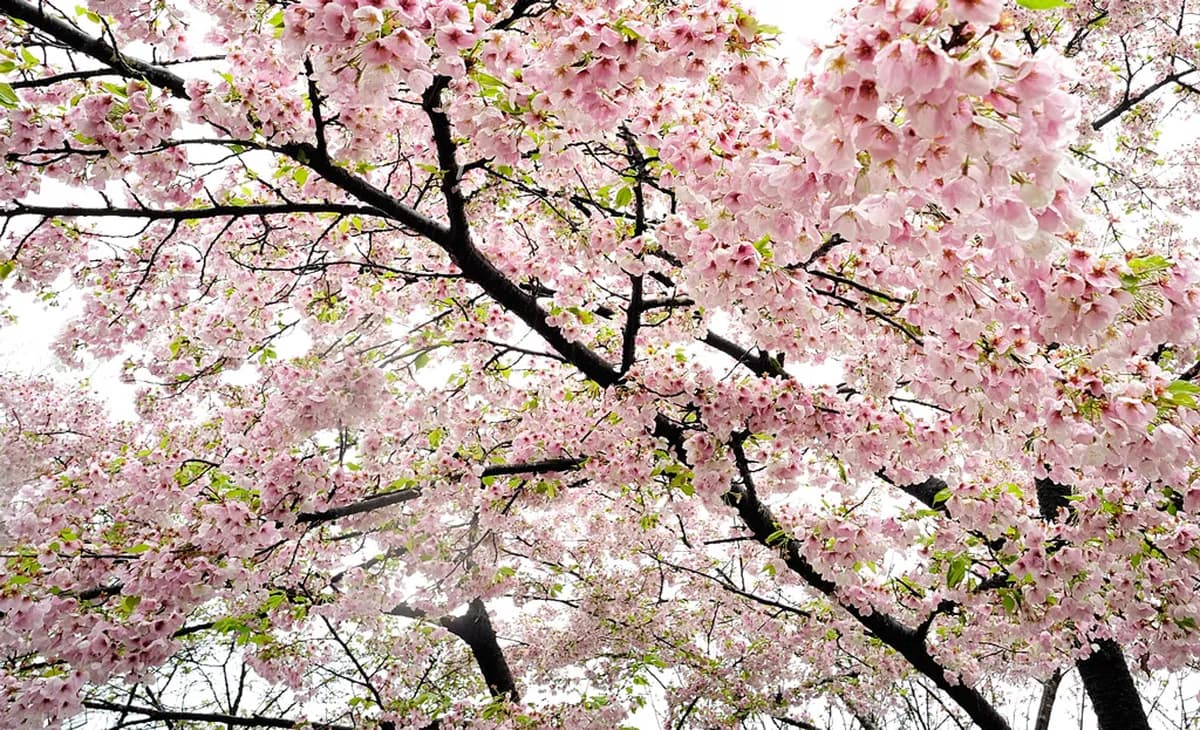
Cherry blossom season in Kyoto typically runs from late March to mid-April. In an average year, the Somei Yoshino — the pale pink, five-petaled variety that lines most canals and parks — reaches full bloom (Mankai) around 1 April. The first bloom (Kaika) usually appears about a week before that, so the safe target window for peak viewing is 28 March to 8 April.
The key distinction to understand is Kaika versus Mankai. Kaika is when the first buds crack open on a few branches; the trees look sparse and the color is faint. Mankai is when roughly 80 percent of flowers are open and the canopy is fully pink. You want to be in Kyoto as close to Mankai as possible, not just "during blossom season." That peak window lasts only five to seven days in calm weather — a single afternoon of strong wind or heavy rain can strip a tree overnight.
Warmer winters push the bloom earlier; a late cold snap in March delays it. The 2026 forecast called for an early season, with first bloom on 24 March and full bloom on 30 March. Specific forecasts become reliable only in early March, so monitor the Kyoto cherry blossom calendar weekly once February ends. Flexibility in your Kyoto itinerary is the single biggest advantage you can give yourself.
Higher elevations like Arashiyama often peak two to three days after the city center, so if you miss the flat-city peak you can chase the bloom uphill. Conversely, spots near the Kamo River and Maruyama Park tend to peak first. Plan a downtown-to-hills progression across your trip rather than hitting every spot on day one.
Kyoto Cherry Blossom Forecast and Timing
The 2026 forecast expected first bloom (Kaika) around 24 March and full bloom (Mankai) by 30 March — roughly four to five days earlier than the long-term average. These numbers come from accumulated-temperature models that track how much warmth cherry trees absorb after winter dormancy breaks. They are directionally useful but carry an error margin of three to five days in either direction even in March.
Late bloomers provide a valuable safety net. The Omuro-zakura at Ninna-ji Temple typically peak in mid-April, ten to fourteen days after the main Somei Yoshino flush. Ninna-ji keeps its inner garden open specifically for this late variety; entry costs 800 JPY. If you arrive after 10 April and feel you've missed everything, Ninna-ji is where to go first.
Tokyo usually peaks four to seven days before Kyoto. In 2026 Tokyo's first bloom began on 19 March with full bloom expected around 25 March. If you are combining both cities, start in Tokyo and travel west to Kyoto for the peak there. Osaka blooms roughly in sync with Kyoto, sometimes a day or two earlier.
The distinction between Kaika (first buds cracking open, sparse appearance) and Mankai (80% of flowers open, full canopy) is crucial. Mankai lasts only 5–7 days in calm weather, making the exact timing critical for your visit.
Top Popular Sakura Spots in Kyoto
These seven locations are the ones every visitor should see at least once, ideally before 09:00 when tour buses arrive. Each is within walking distance of the others in the Higashiyama corridor, making a single morning loop practical.
- Maruyama Park — The city's most popular hanami ground. A massive illuminated weeping cherry (shidarezakura) anchors the center. Entry free, open 24 hours. Best at dusk when the lanterns glow and food stalls are trading. Crowds peak from 11:00 to 15:00.
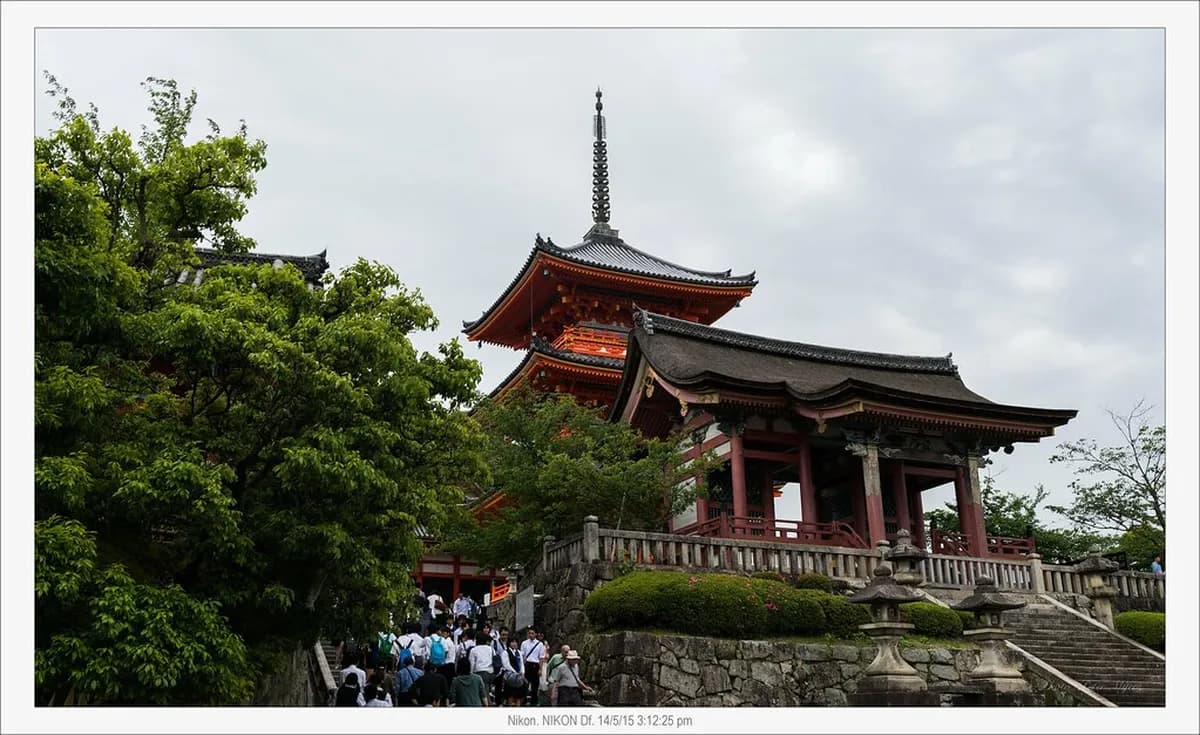
- Yasaka Pagoda and Ninenzaka / Sannenzaka Streets — Preserved wooden townhouses with weeping cherry trees framing the five-story pagoda. One of Kyoto's most photographed views. Even at 06:00 this spot can feel crowded on weekends; plan accordingly.
- Keage Incline — A disused cargo railway slope forms a petal tunnel during peak bloom. Free access, open 24 hours. Arrive by 07:00. Nearby Nanzen-ji has a handful of cherry trees and opens at 08:40 (600 JPY).
- Philosopher's Path — A 2 km stone canal walk linking Eikando to Ginkaku-ji. Best stretch is between Eikando and Honen-in. Free access, open all hours. At full bloom this is Kyoto's most atmospheric corridor; at off-peak hours it can feel like a crowd management exercise.
- Arashiyama and Togetsukyo Bridge — The wooded mountainside provides a dramatic backdrop of mixed pink and green. The bridge and riverbanks are free; Tenryu-ji charges 500 JPY for the garden. Arrive before 08:00 or after 17:00. Rowboats on the Hozugawa River cost about 1,500 JPY per 30 minutes and offer an unusual low angle for photography.
- To-ji Temple Night Illumination — Japan's tallest wooden pagoda reflected in the temple pond, surrounded by lit-up cherry trees. Special night entry approximately 1,000 JPY; open 18:00 to 21:00 during the peak weeks. Located five minutes south of Kyoto Station, convenient for a last stop of the day.
- Heian Jingu Shrine Garden — The vast stroll garden features the Benishidare variety — a deep crimson-pink weeping cherry — overhanging a pond. Entry 600 JPY, open 08:30 to 17:30. Less crowded than Maruyama Park and visually distinct from any other spot in the city.
Hidden Gem Sakura Spots to Avoid Crowds
The Philosopher's Path is beautiful but rarely peaceful during peak weeks. Smart travelers turn west at the Ginkaku-ji end of the path and climb Yoshida Hill, where a cluster of Buddhist temples and Shinto shrines sit largely unvisited. The walk from the path's end to these spots is about 2 km and worth every step.
Yoshida-jinja Shrine sits on a forested hillside and offers quiet paths lined with blossoms and vermilion torii gates. You will encounter more local university students than tour groups in this academic neighborhood. A short walk away, Takenaka Inari Shrine presents the classic Japanese image of red torii gates framed with white cherry blossoms; both are free to enter. Shinnyodo Temple, ten minutes further, features a three-story pagoda, a small pond, and dense cherry planting throughout the grounds. The combination of dark wooden temple buildings and soft pink petals is one of the most photogenic in Kyoto without the crowds to prove it.
For a riverside experience without the masses, Half-wood Road (Hakaragi-no-michi) by the Kamo River delivers shidarezakura — weeping cherry trees — draping over the water between Kitaoji and Kitayama bridges. Free access, local foot traffic only. This is a favorite spot for morning joggers and families rather than tour groups, and the hanging branches photograph exceptionally well with a 50mm or longer lens in the soft morning light.
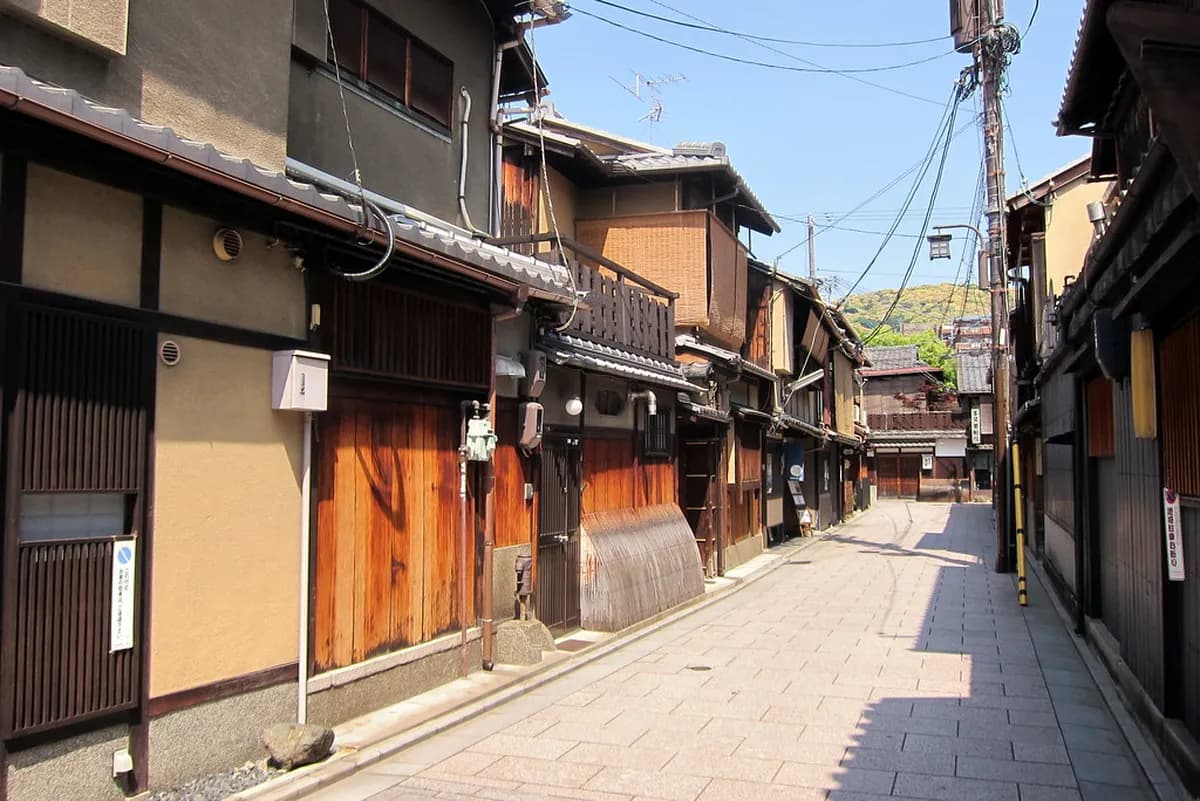
The Shirakawa Canal in Gion is another alternative. The narrow canal cuts through traditional wooden townhouses and reaches a cherry blossom archway that typically peaks by 1 April. It is busiest in the evening, so a quick detour on your morning walk through Gion is the right move.
Early Bloomers: Kawazu-Zakura in Yodo
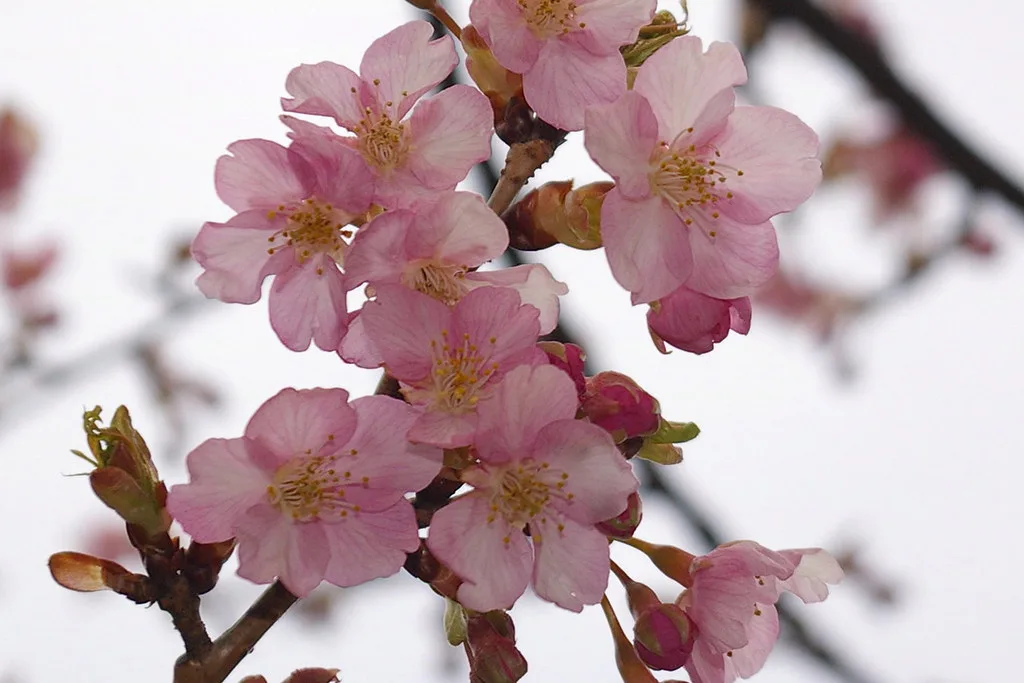
Travelers arriving in early March before the main season can still see spectacular blossoms at Yodo, a small town reachable by Keihan Railway about 30 minutes south of central Kyoto. The Kawazu-zakura variety blooms here in early to mid-March, up to four weeks ahead of the Somei Yoshino. The flowers are a noticeably deeper, richer pink than the pale standard variety and last longer on the tree.
The viewing route follows the Yodo Suiro canal, which is free to walk and lined for roughly one kilometer with mature trees. Check local social media tags for "淀水路" or "Yodo Suiro" to confirm the bloom status before making the trip — the window can be as short as one week. Combine it with a stop at Fushimi Inari (also Keihan line) for a full southern Kyoto day.
For the opposite end of the season, Ninna-ji Temple in northwestern Kyoto holds the Omuro-zakura — a shorter, multi-petaled variety that blooms ten to fourteen days after the main flush. Viewing these late-season trees in mid-April means significantly smaller crowds and often calmer weather. The inner garden ticket is 800 JPY.
Kyoto Botanical Garden: A Floral Haven
The Kyoto Prefectural Botanical Garden in the north of the city is one of the most underrated sakura spots in Kyoto. It houses over 200 cherry trees of more than 50 different varieties, meaning something is always in bloom from late February through late April. Standard admission is 200 JPY for adults; the garden opens daily from 09:00 to 17:00 with the last entry at 16:00.
The night illumination event here runs during peak bloom weeks, typically from 18:00 to 21:00 with a separate evening entry ticket of around 200 JPY. Unlike the illuminations at To-ji or Kiyomizu-dera, photography tripods are permitted on the open lawn areas of the Botanical Garden — making it a genuine destination for photographers rather than just a walk-through attraction. The north exit connects directly to Kitayama Station on the Karasuma subway line.
Rain days are not wasted here. The large conservatory provides a dry, colorful backup if the spring weather turns sour. The conservatory entry is included in the standard garden admission and houses a year-round tropical collection alongside the seasonal displays.
Peak sakura weeks draw millions of visitors; the Philosopher's Path and Kiyomizu-dera approach streets become nearly impassable on sunny weekend afternoons between 11:00 and 15:00. Plan early mornings (before 08:00) or evening illuminations instead for the most famous spots.
Other Kyoto Spring Activities
April is the month of the annual geisha dances, known locally as the Kyo Odori in the Miyagawacho district and the more famous Miyako Odori in the Gion Kobu Kaburenjō Theatre. The Miyako Odori runs throughout April with tickets priced from 4,000 to 7,000 JPY. The Kyo Odori in 2026 runs from 4 April to 19 April at 13:00 and 16:00 daily; tickets cost 6,000 JPY (second floor) and 7,000 JPY (first floor), both including tea. These are not tourist spectacles — they are time-honoured traditions performed in front of predominantly Japanese audiences, with geiko and maiko in full costume. Book at the venue up to five days in advance or via an agency like HIS if you cannot pay with an international card online.
Several major temples open at night for spring illuminations. Kodai-ji runs its illumination from 13 March to 6 May 2026, from 17:00 to 21:30, at 600 JPY (rising to 800 JPY from April). Kiyomizu-dera opens for night viewing from 27 March to 5 April 2026, from 18:00 to 21:30, at 500 JPY. These nighttime visits feel completely different from the daytime experience and are worth scheduling on at least one evening. Check the Kyoto cherry blossom calendar for any additional temples that open on specific dates.
Booking Accommodation During Cherry Blossom Season
Accommodation fills two to four months in advance for the peak dates of late March and early April. Book the moment you settle on your dates — prices rise steadily as the season approaches, and the best-value rooms at popular ryokan disappear first. If you can only confirm your dates in January, start searching immediately.
Neighborhood matters more in Kyoto than in most cities. Gion and Higashiyama put you within walking distance of Maruyama Park, Keage Incline, and the Philosopher's Path before crowds arrive, but rooms here run 20 to 40 percent more than average during peak weeks. Shimogyo, the district immediately west of Kyoto Station, offers a wider range of business hotels and mid-range options; the tradeoff is a 20-minute bus or taxi ride to the cherry blossom corridor. Okazaki, between Heian Jingu and the Philosopher's Path, is the sweet spot: quieter than Gion, very walkable to the Higashiyama route, and slightly cheaper. Check Booking.com Kyoto Hotels with flexible cancellation if the forecast is still uncertain when you book.
If central Kyoto is fully booked, Osaka is a genuine alternative base. The Shin-Osaka to Kyoto shinkansen takes about 15 minutes; even standard rapid trains run the route in 30 minutes and cost around 560 JPY. Room availability and pricing in Osaka during Kyoto's peak are dramatically better. Just factor in early starts — the Philosopher's Path empties quickly after 09:00 when crowds arrive, so a 06:30 departure from Osaka gets you there at the right moment. For staying in Kyoto proper, explore our best area to stay in Kyoto guide to find the right neighborhood.
Sakura Beyond Kyoto: Day Trip Ideas
Nara is the easiest cherry blossom day trip from Kyoto, reachable in 45 minutes by JR Nara Line or 35 minutes by Kintetsu limited express. Nara Park is free to enter and open 24 hours; hundreds of wild deer roam freely under ancient cherry trees in one of Japan's most surreal juxtapositions. The trees at Yoshikien Garden (250 JPY, closed Tuesdays) offer a more composed garden setting. Nara blooms in close sync with Kyoto — usually within a day or two — so the timing rarely misaligns.
Osaka Castle Park is the top pick for an Osaka cherry blossom day, reachable in 30 minutes from Kyoto Station. The Nishinomaru Garden inside the castle grounds holds about 300 trees and costs 200 JPY to enter; the broader park is free. The castle itself charges 600 JPY. Osaka and Kyoto peak within one to two days of each other, so a same-trip visit to both is entirely feasible.
If you have more time and want less crowded blossom viewing, Kinosaki Onsen on the Japan Sea coast is reachable in about 2.5 hours from Kyoto by limited express. Cherry trees line the town's central canal beside traditional machiya buildings and the hot spring bath houses — the combination makes it one of the most photogenic blossom spots in western Japan at a fraction of the Kyoto crowd density. Bloom timing here usually runs five to seven days behind Kyoto, making it a natural extension of a sakura-chasing itinerary.
| Sakura Spot | Type | Peak Timing | Entry Fee |
|---|---|---|---|
| Maruyama Park | Shidarezakura (weeping) | Late Mar–early Apr | Free |
| Philosopher's Path | Mixed Somei Yoshino | Late Mar–early Apr | Free |
| Arashiyama & Togetsukyo Bridge | Mixed varieties | Late Mar–early Apr | Free (500 JPY for Tenryu-ji) |
| Heian Jingu Shrine Garden | Benishidare (crimson-pink weeping) | Late Mar–early Apr | 600 JPY |
| Ninna-ji Temple (Omuro-zakura) | Multi-petaled late variety | Mid-April (late bloomers) | 800 JPY |
| Kyoto Botanical Garden | 200+ trees, 50+ varieties | Late Feb–late Apr | 200 JPY (night: +200 JPY) |
| To-ji Temple Night Illumination | Reflected in pond | Peak weeks | 1,000 JPY (18:00–21:00) |
If You Miss the Peak: What to Do After the Blossoms Fall
Most guides treat a missed peak as a disaster. It is not. The week after full bloom produces Hana-fubuki — petal blizzards — where wind lifts carpets of petals off the ground and swirls them through the air. Many visitors find this more visually striking than the stationary full-bloom trees, and the crowds drop sharply once the official peak passes.
The practical fallback strategy has two stages. First, shift to late-blooming varieties: the Omuro-zakura at Ninna-ji (mid-April, 800 JPY), the double-flowered Yaezakura at Heian Jingu (late April, 600 JPY for the garden), and the Fuji cherry at Daigo-ji in southeastern Kyoto (late March to late April depending on variety, 1,500 JPY for the full complex). These overlapping windows mean that some variety of cherry tree is genuinely blooming in Kyoto until early May most years.
Second, recalibrate expectations upward: May in Kyoto is arguably the most pleasant month to visit. Wisteria and azaleas replace the sakura, temple gardens are green and lush, and the crowds that made the Philosopher's Path feel like a shopping mall have completely vanished. If you arrived for the blossoms and caught only the tail end, the remainder of a spring trip in Kyoto is still better than most cities in full season. The Kyoto hidden gems that feel genuinely hidden — Yoshida-jinja, Konkai-Komyoji, the graveyard with city views above Shinnyodo — are at their most accessible in the post-peak lull.
Is Kyoto Cherry Blossom Season Worth the Crowds?
Yes — with conditions. The atmosphere in the city during peak bloom is unlike almost anything else in travel: a shared sense of collective joy that cuts across language barriers, age groups, and tourist versus local divides. Locals spread picnic sheets in Maruyama Park from dawn; office workers in suits photograph branches on their lunch break; grandparents and grandchildren line the canal paths together. Hanami is not a tourist performance but a genuine cultural practice, and being part of it for even a single evening is worth the planning effort.
The conditions: avoid the Togetsukyo Bridge in Arashiyama between 11:00 and 15:00 when tour buses peak. Avoid the Kiyomizu-dera approach streets on sunny weekend afternoons — they can become nearly impassable. Save those iconic spots for early morning or evening illuminations. The rest of the day, move freely through the less-visited spots on Yoshida Hill and along the northern Kamo River where the crowds thin considerably.
Consider the Kyoto food guide specifically for spring: sakura-mochi, cherry blossom flavored matcha, and seasonal bento are sold at almost every department store basement (depachika) throughout late March and April. These small seasonal touches — eaten on a riverside bench with petals drifting past — make the trip feel complete even if you spend less time in the most famous spots. For dining recommendations, check our best restaurants in Kyoto guide. Kyoto in bloom is a bucket-list experience that rewards the visitor who plans carefully and stays flexible.
Frequently Asked Questions
When is the best time to see cherry blossoms in Kyoto?
The peak usually falls between March 25 and April 7. Timing depends on the weather, so check the forecast in late winter. Full bloom typically lasts only one week before petals begin to fall.
Are cherry blossoms in Kyoto free to see?
Many of the best spots like Maruyama Park and the Philosopher's Path are free. However, most temples and the Botanical Garden charge a small entry fee. Expect to pay between 200 and 1,000 JPY per site.
How do I avoid crowds during sakura season?
Visit popular landmarks before 8am or during evening illumination hours. Explore Kyoto temples guide entries in quieter northern neighborhoods. Avoiding weekends will also significantly reduce the number of local visitors you encounter.
Kyoto in the spring is an experience that stays with you long after the petals have fallen. By combining the iconic Higashiyama corridor with quieter spots on Yoshida Hill and the northern Kamo riverbanks, you can enjoy the season without feeling overwhelmed. Book accommodation two to four months out, stay flexible on exact dates, and don't panic if you arrive a day or two late — the late bloomers and the post-peak lull both have their own reward.
Whether you are a photographer chasing the perfect shidarezakura shot or a first-timer who just wants to sit in Maruyama Park with a sake cup and watch the petals fall, the 2026 sakura season has something for you. We hope this guide helps you create an unforgettable spring journey through the heart of Japan.
For the wider city overview, see our Kyoto attractions guide.
Free: The Kyoto Essentials guide
Top things to do, where to stay, a perfect day plan, getting around, and the best time to go — a Kyoto mini-guide you can take offline.
You might also like

Continue reading
More guides you'll find useful