

9 Best Things to Do in Kinosaki Onsen (2026)
Discover the 9 best things to do in Kinosaki Onsen in 2026: soak the seven public sotoyu baths in yukata, feast on Matsuba-gani snow crab, ride the ropeway up Mt Daishi, and get travel tips for reaching this Sea of Japan gem from Kyoto or Osaka.
On this page
Kinosaki Onsen is one of Japan's most beloved hot-spring towns — a 1,300-year-old onsen resort on the Sea of Japan coast in northern Hyogo Prefecture, where the entire experience is structured around wandering between seven public bathhouses in a cotton yukata and wooden geta sandals. The willow trees lining the Otani River, the lacquered lanterns above the bathhouse doors at dusk, the unhurried clatter of geta on stone: Kinosaki Onsen has not substantially changed its essential character in centuries, which is precisely why it remains one of the most atmospheric overnight escapes from Kyoto and Osaka.
The town sits in the Toyooka basin at the northern edge of Hyogo Prefecture, reachable by direct JR Limited Express in around two hours and twenty minutes from Kyoto without a transfer. It is fundamentally a one-night, two-day destination: arrive by early afternoon, check into your ryokan, collect your communal yukata and bath pass, and spend the evening moving unhurriedly between bathhouses. The following morning, before checkout, you have time for one more soak and a quiet walk by the river. That rhythm — not an itinerary to optimise but a pace to surrender to — is the Kinosaki experience.
This 2026 guide covers all nine things worth doing in Kinosaki Onsen, from the signature sotoyu bath circuit to Matsuba-gani snow crab in winter, the ropeway ascent up Mt Daishi, and the ancient temple that gave the hot springs their spiritual sanction nearly thirteen centuries ago. Planning sections on transport, timing, and overnight logistics follow the attraction list below. For the full entity profile and map, see our Kinosaki Onsen attractions hub.
The seven public sotoyu baths are included in most ryokan stays — your inn provides the yukata, towel, and a bath-entry pass covering all seven houses. Day visitors can buy the same pass at the tourist information office near the station. Each bathhouse has its own rest day and closing time, so download the weekly schedule from the Kinosaki Onsen Tourism Association before planning your circuit order.
Key Takeaways
- The seven public sotoyu bathhouses are the soul of Kinosaki Onsen — each has a distinct architectural character, patron deity, and bathing tradition that sets it apart from the others.
- Kinosaki is best experienced as an overnight ryokan stay: the kaiseki dinner, the yukata stroll between baths by lantern light, and the early-morning calm before day-trippers arrive are all part of the complete experience.
- Winter (November–March) is prime season for Matsuba-gani snow crab, the prized local catch that anchors the town's kaiseki menus and is one of the finest cold-weather food experiences in western Japan.
- The Kinosaki Onsen Ropeway connects the town to Onsenji Temple mid-mountain and continues to a summit viewpoint over the Sea of Japan — allow ninety minutes for the full return trip.
- Tajima beef — the source bloodline of Kobe beef — is raised in the surrounding Toyooka valley and appears on local menus at significantly lower prices than its more famous descendent.
9 Best Things to Do in Kinosaki Onsen
These nine activities are arranged in order of impact on the overall Kinosaki experience. The first three together form the core of what makes the town worth the journey from Kyoto or Osaka; later items reward a second day or visitors arriving by car who can reach the coastal sites more easily.
-
Soak through all seven public sotoyu bathhouses
The signature ritual of Kinosaki Onsen is the sotoyu bath circuit — seven separate public bathhouses, each owned by the town, each with a distinct character, patron deity, and design inherited from a different era. Ichino-yu is a grand Baroque-style hall whose ornate facade has graced Kinosaki's postcards for a century; Goshono-yu evokes the rectilinear architecture of a Noh theatre; Mandara-yu, the smallest and most intimate of the seven, sits quietly at the foot of Mt Daishi with a cave-like interior that rewards the walk to find it. Most ryokan stays include a printed pass for all seven; day visitors buy the equivalent pass at the tourist information office near the station (2026 planning estimate: ¥1,200–1,500 for a full-day circuit pass — confirm locally before visiting). Plan your circuit for the early evening when the willow lanterns are lit and the streets fill with yukata-clad guests moving between houses — that is the Kinosaki Onsen experience at its most complete. -
Stroll the willow-lined Otani River in yukata and geta
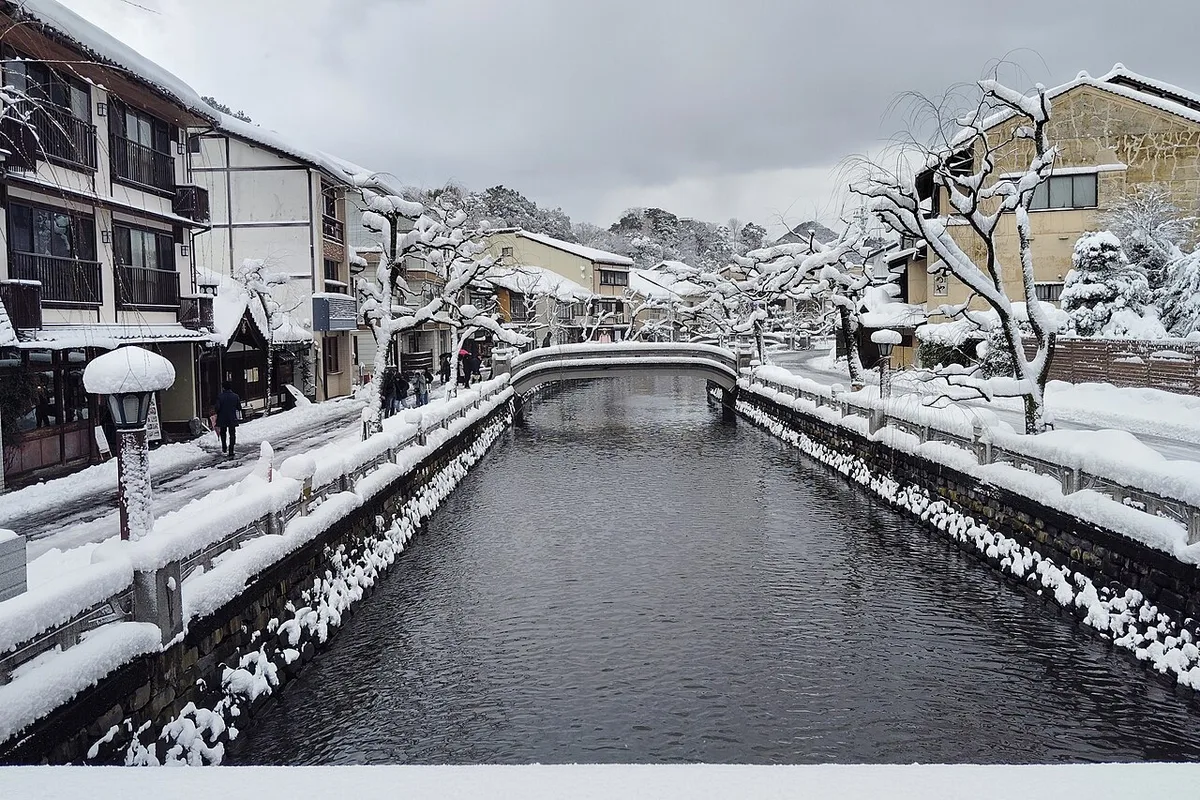
The entire town of Kinosaki functions as a single extended onsen resort — one big ryokan, as the local saying goes — and the yukata dress code is what gives the street scene its coherence. Your inn provides a cotton yukata, obi sash, and wooden geta sandals sized to your build; wearing them between bathhouses is not a tourist affectation but the expected mode of movement for every guest. The Otani River canal, lined with weeping willows and crossed by arched stone bridges, is the main promenade: in winter, a dusting of snow on the branches produces the image that has defined Kinosaki's visual identity for a century; in spring, the willows leaf out in pale green above the water. Allow at least an hour for a relaxed evening stroll, stopping at the outdoor footbath beside the station if your new geta have rubbed your feet. -
Stay overnight in a ryokan with kaiseki dinner
A Kinosaki ryokan stay is the centrepiece of the experience, not a logistics decision. Your inn provides the yukata, the bath pass, the multi-course kaiseki dinner served in your room, and the overall rhythm that structures the two days. Budget ryokans with shared onsen facilities and two meals start at roughly ¥15,000 per person per night (2026 planning estimate); mid-range properties offering private open-air baths run ¥25,000–35,000; premium ryokans with concierge bath-circuit guidance and elaborate crab kaiseki menus in winter cost ¥40,000 or more. Our Kinosaki Onsen accommodation guide covers the main properties across each price tier, which ones offer private rotenburo, and how to navigate the booking window for winter weekends — demand for crab season stays fills rooms two to three months in advance. -
Feast on Matsuba-gani snow crab in winter (November–March)
Between November and March, Kinosaki Onsen is one of the best places in Japan to eat Matsuba-gani — the male snow crab caught in the Sea of Japan waters off the Sanin coast, served across the region as kani kaiseki: crab prepared in seven or eight courses, from steamed legs and shabu-shabu through to a grilled claw and a final bowl of kani zosui crab rice porridge. Kinosaki sits at the centre of the primary crab-fishing zone; many of the town's ryokans specialise in crab kaiseki packages during the season, and the combination of quality, setting, and heritage makes it one of the defining cold-weather food experiences of western Japan. Our winter crab guide covers the season dates in detail, how to read a kani kaiseki menu, and which ryokans offer the best-value crab packages in 2026. -
Ride the ropeway up Mt Daishi to the summit view
the Kinosaki Onsen Ropeway departs from the southern end of town and climbs Mt Daishi (Daishiyama, 231 metres) in around five minutes, with a mid-station stop at Onsenji Temple before continuing to a summit observation platform. Operating hours are approximately 9:00–17:00 (2026 estimate — confirm locally before visiting), with a return fare of roughly ¥1,000 per adult. At the top, the view sweeps across the Toyooka basin and, on clear days, out to the Sea of Japan coast — a perspective that makes the geography of the whole San'in region suddenly legible. Allow ninety minutes for the full return trip including time at the temple mid-station and the summit platform; the pilgrim path on foot is a rewarding alternative for the descent. -
Visit Onsenji Temple, the 8th-century guardian of the baths
Halfway up Mt Daishi, reachable by ropeway or on foot via a stone-stepped pilgrim path through cedar and bamboo, Onsenji Temple is the spiritual origin point of Kinosaki Onsen. The temple was founded in 738 AD by the monk Dochi Shonin, who is said to have spent 1,000 days in prayer beside the natural springs before a twelve-armed Kannon Bosatsu appeared and granted the townspeople permission to bathe. The sotoyu bath circuit and every ryokan stay that follows are formally understood as an extension of that original blessing. Today Onsenji is a working Tendai Buddhist temple with a main hall housing National Treasure sculptures; the stone path up from town takes around thirty minutes through dense greenery and is genuinely atmospheric, particularly in the early morning mist before the ropeway opens. -
Visit Kinosaki Marine World and Genbudo Cave (coastal add-ons)
For visitors with a second day or arriving by car, the Sea of Japan coastline around Toyooka offers two worthwhile additions within thirty minutes of the town. Kinosaki Marine World is a mid-sized aquarium on the Maruyama River estuary with sea-lion shows and touch pools — most useful for families travelling with children. Far more distinctive is Genbudo Cave, a complex of five natural basalt caves formed by volcanic activity approximately 1.6 million years ago, with striking hexagonal columnar jointing visible in the cave walls and ceiling. Entry to the caves is free and the walk through takes around thirty minutes. A hire car from Toyooka Station (one stop south on the JR line) is the most practical way to combine both sites with the hot springs in a single day without relying on infrequent local buses. -
Try Tajima beef — the quieter ancestor of Kobe
Tajima beef is the source breed of Kobe beef: the same Tajima-strain Wagyu cattle raised in the Toyooka valley, marketed under the Tajima label rather than Kobe (which requires additional finishing criteria and commands a significant premium). The practical consequence for visitors is that Tajima beef — equally marbled, equally tender — frequently appears on local restaurant menus and ryokan dinner courses at a fraction of the Kobe price. Look for it grilled on a teppan, served as shabu-shabu, or as a lunchtime beef bowl at the smaller restaurants near the station. Several establishments near Kinosaki Onsen Station offer Tajima beef set lunches at accessible prices that give a genuine taste of the local cattle culture without requiring a full kaiseki reservation. -
See the town across its seasons
Kinosaki Onsen rewards any season, but two moments in particular transform its visual character in ways that justify timing a visit around them. In late March and early April, cherry blossom lines the Otani River and the branches overhead form a canopy of pale pink above the stone bridges — one of the quieter hanami settings in the Kansai-San'in border region, without the scale of crowds that descend on Kyoto's major parks. In deep winter, when snow settles on the weeping willows and steam rises from the outdoor footbaths into cold air, the town takes on the quality of a woodblock print. Our seasonal guide to Kinosaki Onsen maps each window in detail — crab season versus crowds, snow scenery versus icy mountain paths, spring blossom versus summer festival — to help you choose the right visit for your priorities.
How to Get to Kinosaki Onsen
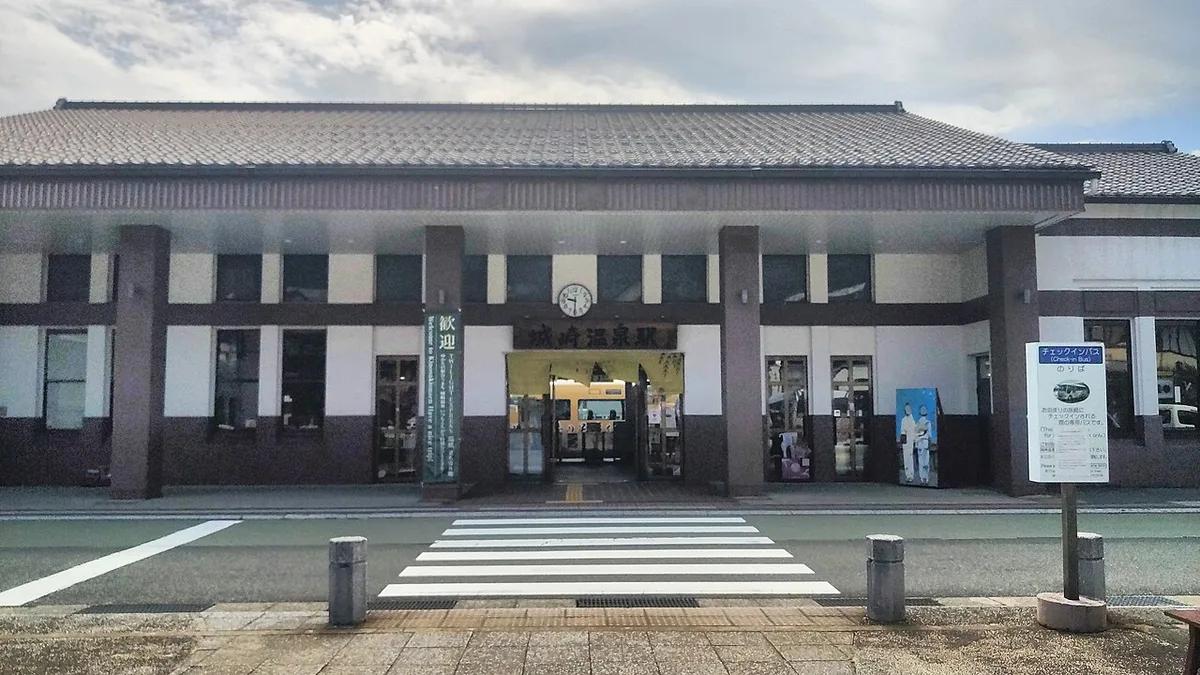
Kinosaki Onsen sits on the JR San'in Main Line in northern Hyogo Prefecture. The most practical access from the Kansai region is the JR Limited Express Kounotori, which runs direct from both Kyoto and Osaka without requiring a transfer. All major routes, including IC card strategy and Shinkansen connection options for visitors coming from Tokyo, are covered in detail in our Kinosaki Onsen transport guide. The table below shows 2026 planning estimates; confirm current fares and timetables on the JR West website before travelling.
| Origin | Train / Route | Journey time | Approx. fare (2026 est.) |
|---|---|---|---|
| Kyoto Station | JR Ltd Exp Kounotori (direct) | ~2h20 | ~¥5,500 reserved seat |
| Osaka (Osaka Stn) | JR Ltd Exp Kounotori (direct) | ~2h40 | ~¥5,000 reserved seat |
| Tokyo (via Shinkansen) | Shinkansen to Kyoto + Kounotori | ~4h30 total | ~¥18,000+ (JR Pass valid) |
The town itself is entirely walkable — most ryokans are within ten minutes of Kinosaki Onsen Station, and the seven sotoyu bathhouses are spread across an area you can cover end-to-end in around fifteen minutes on foot. There is no practical need for a taxi or hire car within the town centre; the geta-and-yukata pace of the place is specifically designed for walking. If you plan to visit Genbudo Cave or Kinosaki Marine World, renting a car at Toyooka Station (one stop south by local train) or arriving with your own vehicle makes those coastal excursions significantly easier.
Kinosaki also sits naturally on the San'in rail corridor, making it a logical anchor for a longer itinerary that continues west to Tottori (the sand dunes) or south to Kyoto via the scenic Kinosaki limited express route. The JR San'in Main Line connects both directions.
How Long to Stay: Overnight vs Day Trip
Kinosaki Onsen can technically be visited as a day trip from Kyoto, but the town functions best — and is overwhelmingly more commonly visited — as a one-night, two-day escape. The case for staying overnight is not simply about time: the sotoyu circuit is an evening ritual, the kaiseki dinner served in your ryokan room is the principal culinary experience the town offers, and the early-morning atmosphere — after day-trippers have returned to the city and before the next wave arrives — is a completely different place from the busier midday version. Our 1-night/2-day planning guide maps a complete schedule including arrival timing, bath circuit order, evening walk route, and morning routines before checkout.
For those with genuine schedule constraints, our day trip from Kyoto guide covers how to maximise a single visit — including which three or four of the seven sotoyu baths to prioritise when you cannot circuit all of them, and the optimal train departure times to maximise usable hours in town. A day tripper arriving at around 10:30 and departing at 17:00 can realistically visit three to four baths, walk the Otani River, and take the ropeway up to Onsenji Temple. That is a genuinely rewarding day; it is not, however, the full Kinosaki experience, and the 2h20 each-way travel time from Kyoto means the maths of a day trip is tighter than it first appears on the map.
Best Time to Visit Kinosaki Onsen
Every season in Kinosaki Onsen has a distinct character, and the town is worth visiting year-round. The two premium windows are winter (for snow crab) and spring (for cherry blossom), though summer and autumn both have their advocates.
November to March is peak season, driven by the Matsuba-gani snow crab harvest. Ryokan rates are at their highest — particularly December through February on weekends — and booking two to three months in advance is necessary for the best properties. Snow settling on the willows, steam rising from outdoor footbaths on cold nights, and a kani kaiseki menu served by firelight: this is the most atmospheric season the town offers, and for many visitors, the reason for coming at all.
Late March to early April brings cherry blossom along the Otani River. Weekends book quickly but midweek stays are manageable at shorter notice, and the combination of onsen warmth and spring flowers is genuinely appealing — especially for visitors who want the Kyoto cherry blossom experience without the Kyoto cherry blossom crowds.
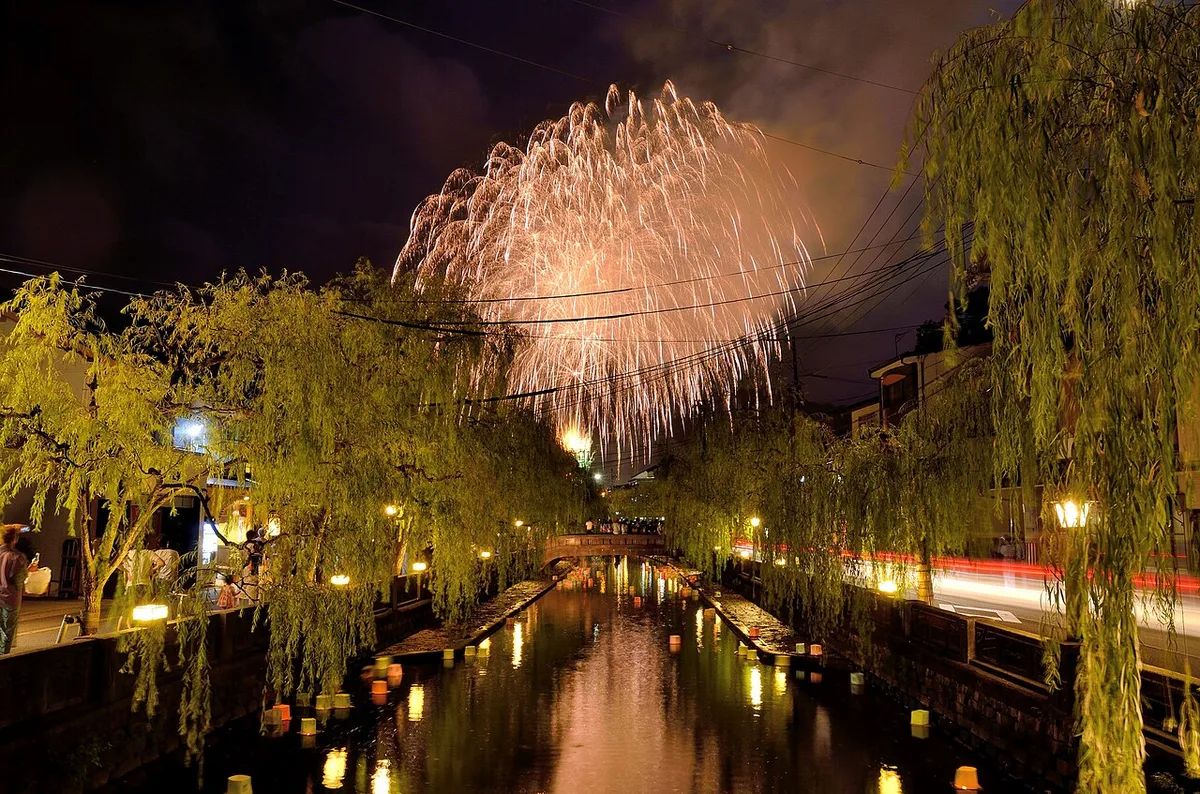
Summer (June–August) is quieter on the crab-and-snow circuit; the baths and river walk remain pleasant, ryokan rates soften, and the Kinosaki Onsen Grand Fireworks in August draw domestic visitors. Autumn (October–November) sees foliage colour the hillside around Mt Daishi and the slopes above town at the same time as the crab season opens — frequently cited by locals as the best all-round combination of aesthetics and food. Full seasonal trade-offs — crowds, pricing windows, festival dates, and mountain trail conditions — are covered in our dedicated when to visit guide.
Practical Tips for Visiting in 2026
A few particulars that make a meaningful difference to the Kinosaki experience:
Yukata etiquette. Your ryokan will provide a yukata, obi sash, and geta sandals; mention your height and shoe size when booking if you are taller than average or have particularly large feet, as not all inns stock large sizes. Wrap the left side of the yukata over the right — the reverse is associated with funerals and will draw a quiet correction from staff. The complete yukata and geta guide covers dressing protocol, tying the obi, and which bathhouses are most formal about the changing-room customs.
Tattoo policies. Most of the seven sotoyu bathhouses prohibit visible tattoos, consistent with standard practice at traditional Japanese onsen. Private kashikiri (reserved private bath) options are available at several of the sotoyu houses and at many ryokans — book directly with the property or the town's tourist office well in advance.
Cash and connectivity. The town is largely cash-based for small purchases; most ryokan accept major credit cards for the room and meal charges. Carry ¥3,000–5,000 in cash for the bath pass, street snacks, souvenirs from the Otani River arcade, and any individual attraction admissions. The post office near the station has the most reliably accessible ATM in the town centre.
Bathhouse rest days. Each of the seven sotoyu houses takes one rest day per week on a rotating schedule, and closing times vary from 21:00 to 23:00. Pick up the current week's schedule at your ryokan or the tourist office on arrival and plan your circuit order around the closures — attempting all seven in one evening without checking the schedule risks arriving to find two or three houses dark.
Frequently Asked Questions
Do you need to stay overnight to use the seven sotoyu baths in Kinosaki Onsen?
No — day visitors can purchase a sotoyu circuit pass at the tourist information office near Kinosaki Onsen Station (2026 planning estimate: roughly ¥1,200–1,500 for access to all seven bathhouses; confirm locally on arrival). Ryokan guests typically have the circuit pass included in their stay rate. The evening atmosphere — lanterns lit, willows by the river, other guests in yukata — is significantly richer than what a midday day trip provides, and most visitors who have done both strongly recommend the overnight option.
How much does a Kinosaki Onsen ryokan cost per person in 2026?
Budget ryokans with shared onsen facilities and two meals (dinner and breakfast) start at around ¥15,000 per person per night (2026 planning estimate — confirm before booking). Mid-range properties with private open-air baths run ¥25,000–35,000 per person; premium ryokans with concierge services and elaborate kaiseki cost ¥40,000–60,000 or more. Winter crab-kaiseki packages command a premium on top of the base room rate. Our accommodation guide covers the main options across each price tier.
How do I get to Kinosaki Onsen from Kyoto?
Take the JR Limited Express Kounotori from Kyoto Station directly to Kinosaki Onsen Station — journey time approximately 2 hours and 20 minutes, reserved-seat fare around ¥5,500 (2026 estimate; confirm on the JR West site). No transfers are required, and the JR Pass covers this express service. The full transport guide covers departure time options, IC card tips, and the alternative route from Osaka (~2h40 direct on the same train).
When is snow crab season in Kinosaki Onsen?
Matsuba-gani snow crab season runs from early November through to late March. Kinosaki Onsen sits in the middle of the primary Sea of Japan crab-fishing zone, and most ryokans offer dedicated kani kaiseki packages throughout the season. Peak demand falls in December through February; booking two to three months in advance is strongly recommended for weekend stays during this window. Our winter crab guide covers season dates, menu structure, and the best-value package options.
Is Kinosaki Onsen worth visiting as a day trip from Kyoto?
Yes, with realistic expectations. A day tripper arriving around 10:30 and departing at 17:00 can visit three or four of the seven sotoyu baths, walk the willow-lined Otani River, and take the ropeway up to Onsenji Temple — a rewarding day. However, the 2h20 each-way journey from Kyoto means usable time in town is tight, and the defining aspects of Kinosaki (the evening bath circuit by lantern light, the ryokan kaiseki dinner, the early-morning quiet) are only available to overnight guests. The day trip guide from Kyoto maps the most efficient single-day schedule if the overnight option is not feasible.
Kinosaki Onsen is one of those destinations that rewards patience more than planning. The seven sotoyu bathhouses are not a checklist to complete efficiently; they are an excuse to move through an evening at the pace that most of Japan's most-visited cities do not permit. Between the steam, the willows, the clatter of wooden geta on stone, and a kaiseki dinner eaten cross-legged in a yukata while watching the canal, Kinosaki Onsen makes a case for the overnight ryokan escape that very few places in Japan match. Whether you time it for snow crab season, the spring cherry blossom, or the quieter autumn weeks when the hillside turns and the crab season has just opened, it earns the journey from Kyoto or a longer San'in coast route comfortably.
For trip context north and south of Kinosaki, our Kyoto attractions guide and Osaka attractions guide cover the two natural Kansai bookends for any San'in itinerary, while our guide to things to do in Amanohashidate covers the pine-clad sandbar an hour west that folds neatly into a two-day Sea-of-Japan loop with Kinosaki.
Explore More Kinosaki Onsen Guides
Plan a 1-night onsen escape to Kinosaki from Kyoto or Osaka: the willow-lined stroll between the seven public sotoyu bathhouses in yukata and geta, winter snow crab and kani kaiseki, the best ryokan, the ropeway up Mt Daishi to Onsenji Temple, plus how to get there, when to go and a tight two-day itinerary.
The Onsen Experience
- Kinosaki's Seven Sotoyu Public Baths: 2026 Guide
- Yukata, Geta and the Onsen Stroll in Kinosaki
- Where to Stay in Kinosaki Onsen: Best Ryokan
- Kinosaki Winter Crab and Kani Kaiseki
Sights & Itineraries
- Kinosaki Onsen Ropeway and Onsenji Temple
- Kinosaki Onsen Itinerary: 1 Night, 2 Days
- Kinosaki Onsen Day Trip vs Overnight from Kyoto
Plan Your Trip
Free guide: Japan's Hidden Gems
12 under-the-radar places beyond Tokyo & Kyoto — with the best season to visit each and a local tip you won't find in the guidebooks.
You might also like


Continue reading
More guides you'll find useful


