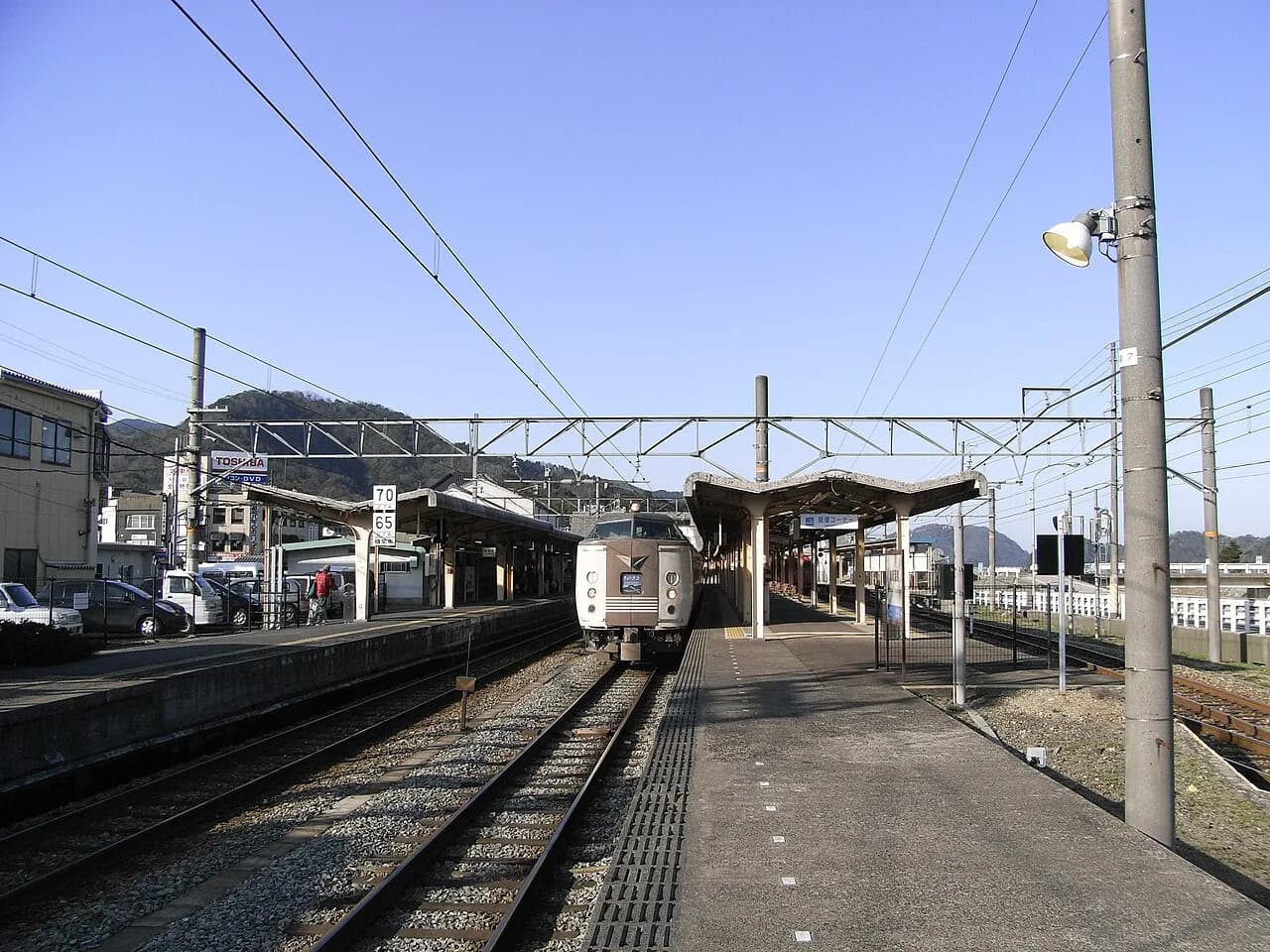
Best Time to Visit Kinosaki Onsen (2026)
Best time to visit Kinosaki Onsen in 2026: when snow crab is on, cherry blossom and foliage windows, crowd and price patterns by month, and ryokan booking tips for each season.
On this page
Kinosaki Onsen is one of those rare hot-spring towns that works in every season — but the seasons are genuinely different from one another, and choosing the right window makes a significant difference to what you experience. Winter brings snow-dusted weeping willows and steam rising from the Otani River alongside the prized Matsuba-gani snow crab; spring lines the same river with cherry blossoms; summer evenings glow with lantern light and the smell of festival food; autumn turns Mt Daishi into a canvas of copper and red. The town's famous sights and bathhouses are enjoyable in all four seasons, but the backdrop, the food, and the crowd level vary enormously.
If you have one trip and want the single most atmospheric experience, winter is the answer: the combination of snow on the willows, the steaming river, the warmth of a cedar bath, and a plate of Matsuba-gani is uniquely Japanese in a way that summer Kinosaki, however pleasant, simply is not. But winter is also the busiest and most expensive season, and ryokan on popular weekends book out months in advance. If value and quiet matter more, late May, early June, and September offer the same bathhouses at lower prices with far shorter queues.
This 2026 guide covers each season in detail — what to expect, who is there, what it costs, and when to book — plus a month-by-month reference table to make planning your dates straightforward.
Kinosaki's most atmospheric time — snow on the willows, steam on the river, snow crab on the table — is also its most expensive. New Year and winter weekends fill up months ahead. Whatever the season, the town is at its best after dark, once the bridges and willows are lit.
Key Takeaways
- Winter (November to March) is the signature season: snow crab (Matsuba-gani) is available from around 6 November until late March, and a light snowfall on the weeping willows makes for Kinosaki's most photographed scene.
- Cherry blossoms in late March to early April line the Otani River and the ropeway area, offering a quieter and cheaper alternative to the crab-season peak immediately before them.
- Summer evenings are genuinely pleasant by the river despite daytime heat; Kinosaki Marine World and the San'in coast beaches make summer a practical choice for families.
- Autumn foliage on Mt Daishi and around Onsenji peaks in October, just before snow crab season opens in early November — visiting in late October catches both.
- New Year, winter weekends, and the cherry-blossom window are the busiest and most expensive periods; book ryokan accommodation months ahead or aim for weekdays.
Winter (November–March): Snow Crab and the Steaming River
Winter is the undisputed highlight of the Kinosaki Onsen calendar. Snow crab — Matsuba-gani, the San'in coast's prized local species — comes into season around 6 November each year and stays on the menu until late March. A full crab course at a ryokan is the defining Kinosaki meal: grilled, steamed, served raw as crab sashimi, and finished as a rice porridge (zosui). The visual theatre of eating it in a private room, still in yukata after an evening circuit of the bathhouses, is hard to replicate anywhere else in Japan. For everything you need to know about ordering and what to expect, our guide to Matsuba-gani snow crab covers the different crab grades, what a crab dinner costs, and how to request the right thing when booking.
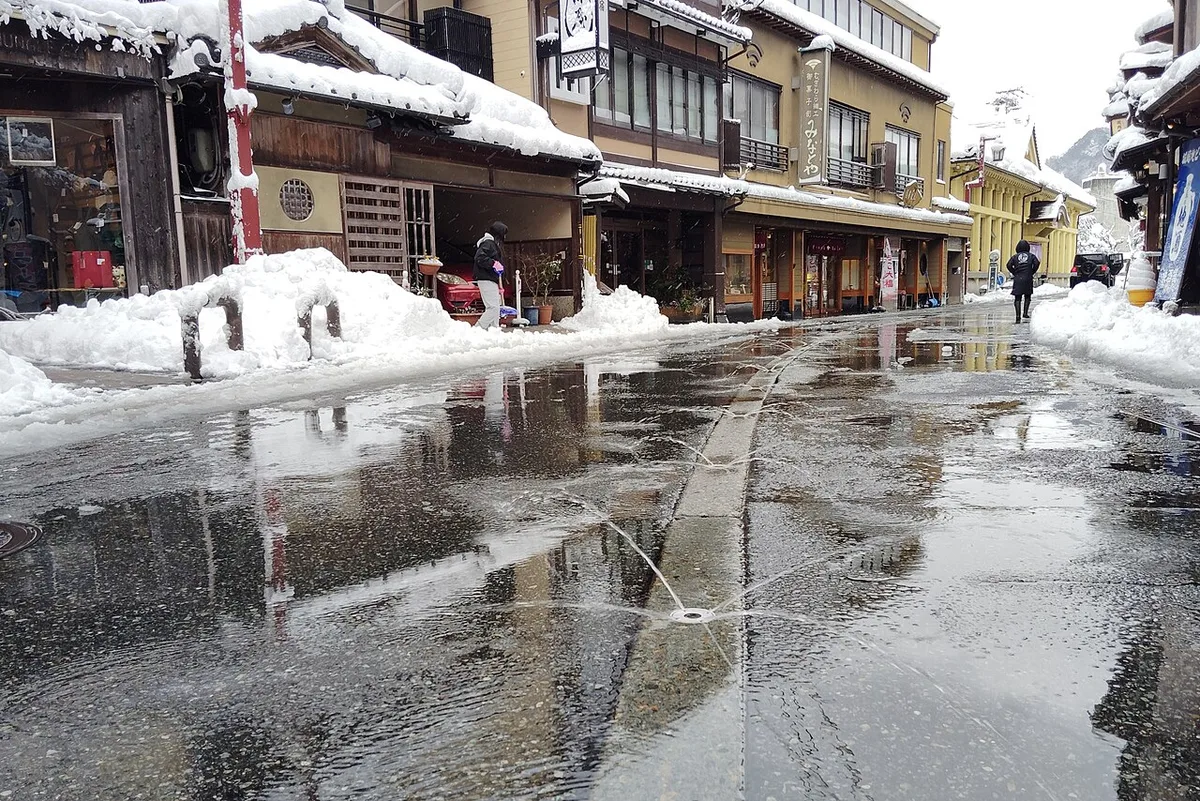
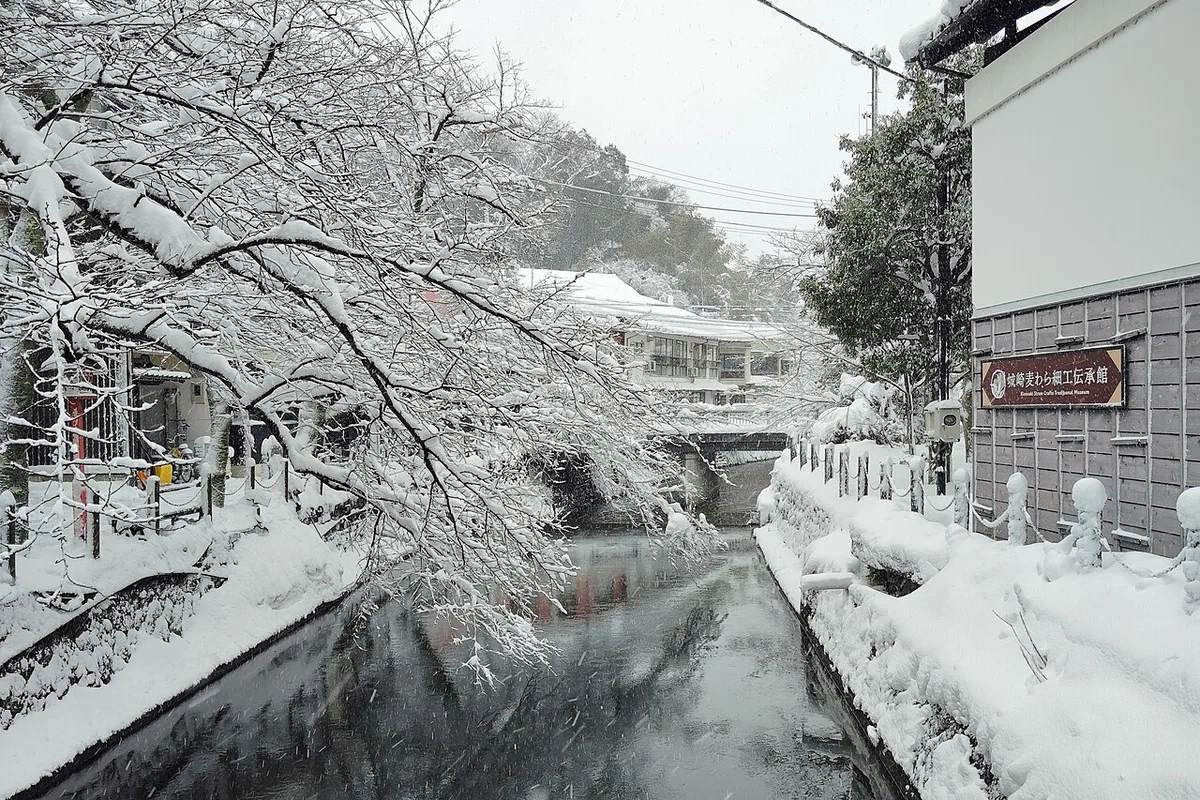
Beyond the crab, winter gives the town its most photogenic mood. When snow settles lightly on the weeping willows along the canal and steam rises from the river surface in the early morning cold, Kinosaki looks exactly like the woodblock print it has always inspired. A steaming bath feels most earned after a cold walk between the bathhouses — the seven sotoyu public baths are at their most atmospheric in winter because the contrast between cold air and hot water is greatest. Evenings, when the lanterns reflect on the river and a yukata-clad crowd moves between the baths, are stunning regardless of temperature.
The trade-off is crowds and cost. New Year's Eve through early January is the single busiest period, and premium winter weekends — particularly those coinciding with school holidays — book out months in advance. Weekdays in January and February, after the New Year rush, offer the full crab experience at lower prices and with considerably shorter queues at the bathhouses.
Spring (Late March–April): Blossoms Along the Otani River
Spring is a quieter and more affordable alternative to the crab peak that immediately precedes it. Cherry blossom (sakura) lines the Otani River and the area around the ropeway station from late March into early April, and the combination of pink blossom, green willows just coming into leaf, and the gentle river creates some of the prettiest spring scenery on the San'in coast. Temperatures are mild — comfortable for the between-baths stroll in yukata — and crowds, while present at weekends, are lighter than comparable winter weekends.
Crab season technically ends in late March, so the very start of the blossom window overlaps with the last crab dates: a brief and very popular combination that moves prices up. Once crab season closes, April prices ease considerably. Late April and early May (Golden Week excluded) offer mild weather, fresh green willows, and good value — though Golden Week itself, which falls in late April to early May, brings a surge in domestic visitors that rivals winter weekends for busyness.
Summer (June–August): Green Willows and Festival Evenings
Summer in Kinosaki is warm and humid during the day, but evenings along the Otani River are genuinely pleasant — a gentle breeze off the water, the willows in full leaf, lanterns swaying, and the smell of yakitori from food stalls near the bathhouses on festival nights. The town's summer calendar includes local festivals and outdoor events that make an evening arrival more rewarding than a midday one.
Summer also pairs well with the wider San'in region. Kinosaki Marine World, the large aquarium just north of the town, is a natural summer excursion, and the beaches of the San'in coast are within easy reach for a half-day. Soaking in a hot spring on a hot day sounds counterintuitive but is very much local practice — the baths are refreshing rather than oppressive if you cool down between dips. Hot-spring eggs (onsen tamago) cooked in the natural springs and shaved ice sold outside the bathhouses are quintessential summer Kinosaki snacks.
Summer is the lowest-crowd and lowest-price period of the year, with June and early July (outside Obon) offering the best value. If your priority is securing a good ryokan room at a fair rate, summer weekdays are when competition is lowest. The one exception is mid-August Obon, which brings a significant domestic travel spike.
Autumn (October–November): Foliage and the Run-Up to Crab Season
Autumn is Kinosaki's most underrated season. Temperatures are comfortable for walking — the between-baths circuit in yukata is genuinely pleasant rather than sweaty (summer) or bracing (winter) — and the foliage on Mt Daishi and around Onsenji Temple turns copper, red, and gold through October. The colours peak in late October and early November, coinciding almost exactly with the opening of crab season on approximately 6 November. The week or two either side of that date — when foliage is still strong and the first crab of the season is available — is arguably Kinosaki's best-kept timing secret.
For a full two-day Kinosaki itinerary, October to early November allows the most varied schedule: a morning hike to Onsenji via the ropeway for the foliage, an afternoon circuit of the seven bathhouses, a crab dinner in the evening, and a sunrise bath before departure. Prices rise as November progresses and crab season becomes established, so early-to-mid November tends to offer the most rewarding combination of experience and value.
Kinosaki Weather by Month and What to Pack
Kinosaki sits near the Sea of Japan coast in northern Hyogo. Its weather is damper and colder in winter than Kyoto or Osaka, so the packing list changes more than most visitors expect. These figures are approximate seasonal norms for the Toyooka area.
- December–February: daytime highs of roughly 5–9°C, with frequent overcast skies and snow or sleet. Heavy snowfall is possible in January and February. Pack waterproof shoes with grip, a warm coat, gloves, and a scarf. Rubber-soled footwear matters because the wooden geta sandals provided by ryokan are slippery on packed snow.
- March–April: highs climb from about 10°C to 18°C. Evenings stay cold, so bring a layer you can wear over a yukata.
- May–early June: highs of about 22–26°C and generally comfortable. This is the most dependable weather of the year for the between-baths stroll.
- Mid-June to mid-July: the rainy season (tsuyu) brings several grey, drizzly weeks. The low prices are real, but take a compact umbrella and plan the bathhouse circuit around the showers.
- Late July–August: highs often reach 32°C or more, with high humidity. Light clothing and a small towel for the walk are enough.
- September: still warm early on, and typhoon season can disrupt travel. Check forecasts a few days ahead before you commit to a trip.
- October–November: highs of roughly 14–22°C, cooling quickly after sunset. A light jacket is enough in October. You will want a proper coat by late November.
In winter, allow extra time for the journey. Heavy snow can delay limited express trains on the San'in line, so avoid tight onward connections on the day you leave. Our guide on how to get to Kinosaki Onsen covers the routes in detail. If you plan to walk the town in a yukata whatever the season, the yukata and street food guide explains how to dress for the cold.
Crowds, Prices, and When to Book
The table below summarises what to expect month by month. All crowd and price ratings are relative to the annual average. Whatever the season, arriving on a weekday rather than a weekend typically reduces both bathhouse queues and ryokan rates by a meaningful margin.
| Month / Season | What's On | Crowd Level |
|---|---|---|
| January–February (Deep Winter) | Snow crab at peak; possible snow on willows; steaming river atmosphere | High on weekends; very high at New Year |
| March (Late Winter) | Crab season ends late March; early cherry buds beginning | Moderate (eases after crab closes) |
| Late March–April (Spring) | Cherry blossoms along Otani River and ropeway area | Moderate; high during Golden Week |
| May (Late Spring) | Fresh green willows; mild temperatures; good value | Low (except Golden Week) |
| June–July (Early Summer) | Lush greenery; summer festivals; pleasant evenings; lowest prices | Low — best budget window |
| August (Summer) | Obon festivals; Kinosaki Marine World; San'in beach day trips | Moderate; high during Obon |
| September (Early Autumn) | Pleasant temperatures; few visitors; excellent value | Low — second-best budget window |
| October (Autumn) | Foliage on Mt Daishi and Onsenji; comfortable walking weather | Moderate |
| November (Autumn-Winter) | Foliage peaks + crab season opens ~6 November | High (popular combination) |
| December (Winter) | Crab established; pre-New Year atmosphere; possible snow | High; very high at New Year |
For the most popular dates — New Year, winter crab weekends in January and February, the first crab weekend in November, and the cherry-blossom window in late March to early April — book your ryokan three to six months ahead. Many of Kinosaki's best inns release peak-season rooms on a fixed calendar: check the ryokan's own website rather than relying solely on booking platforms. Our Kinosaki Onsen accommodation guide lists the best options by price tier and notes which inns include a crab dinner in their winter plans. When strolling between the bathhouses in yukata, the season affects what layers to put on underneath — the yukata guide has practical notes for winter visits in particular.
Frequently Asked Questions
When is snow crab season in Kinosaki Onsen?
Matsuba-gani snow crab season runs from around 6 November each year until late March. This is the most popular time to visit Kinosaki Onsen: the combination of fresh crab, possible snow on the weeping willows, and a steaming hot bath is the town's signature winter experience. Ryokan rooms that include a crab dinner sell out months ahead on winter weekends — particularly around New Year and in January.
What is the least crowded time to visit Kinosaki Onsen?
June and September are the quietest months, with the lowest prices and shortest queues at the seven sotoyu bathhouses. Late May is nearly as quiet and benefits from fresh greenery and comfortable temperatures. Avoid Golden Week (late April to early May) and Obon (mid-August) even in the off-peak season, as domestic travel spikes sharply during both periods.
Is it worth visiting Kinosaki Onsen in summer?
Yes. Daytime temperatures are warm and humid, but summer evenings along the Otani River are genuinely pleasant, and local festivals add atmosphere. Kinosaki Marine World and the San'in coast beaches are a bonus for families. Summer is the cheapest season and the easiest time to secure a last-minute ryokan room, making it a practical choice even without the crab-and-snow drama of winter.
When do the cherry blossoms bloom in Kinosaki Onsen?
Cherry blossoms typically line the Otani River and the ropeway area from late March into early April, though the exact dates shift by one to two weeks depending on the year. The final days of crab season and the first days of blossom sometimes overlap — a popular but busy and expensive combination. Once crab season closes in late March, crowds ease and April prices drop.
How far ahead should I book a ryokan in Kinosaki Onsen?
For peak dates — New Year, winter crab weekends, the first crab weekend in November, and the cherry-blossom window — book three to six months ahead. Weekdays in the same seasons are significantly easier to secure and are often cheaper. For summer and early autumn visits, booking four to eight weeks ahead is usually sufficient. Check ryokan websites directly, as some release rooms on their own calendar before third-party platforms.
Kinosaki Onsen genuinely rewards every season, but knowing what each one delivers makes the difference between arriving at the right time for your priorities and arriving at the wrong time for your budget. Winter is the headline — snow crab, steaming willows, and the specific pleasure of being very warm in a cedar bath while it is very cold outside — but it comes with the highest prices and the most competitive booking environment. If the crab is a must, target a weekday in January or February after the New Year rush; if you want the foliage-and-crab combination with slightly lower competition, early-to-mid November is the sweet spot.
For those for whom budget or spontaneity matters more, June and September are Kinosaki at its most accessible: the same seven bathhouses, the same lit willows after dark, the same yukata stroll — just without the snow and the crab, and at a fraction of the winter room rate. For a full trip plan built around whichever season you choose, our Kinosaki Onsen two-day itinerary structures the town's main sights, baths, and meals into a logical sequence. To see everything the town has to offer beyond timing, start with the complete Kinosaki Onsen attractions guide.
For further background, see Kinosaki Onsen on Wikipedia.
Free guide: Japan's Hidden Gems
12 under-the-radar places beyond Tokyo & Kyoto — with the best season to visit each and a local tip you won't find in the guidebooks.
You might also like


Continue reading
More guides you'll find useful