Saki-no-yu Onsen: Shirahama's Seaside Rock Bath (2026)
Guide to Saki-no-yu, Shirahama's famous open-air seaside rock bath, in 2026: its imperial-era legend, tide-dependent opening, what the rustic public bath is really like, and admission estimates.
On this page
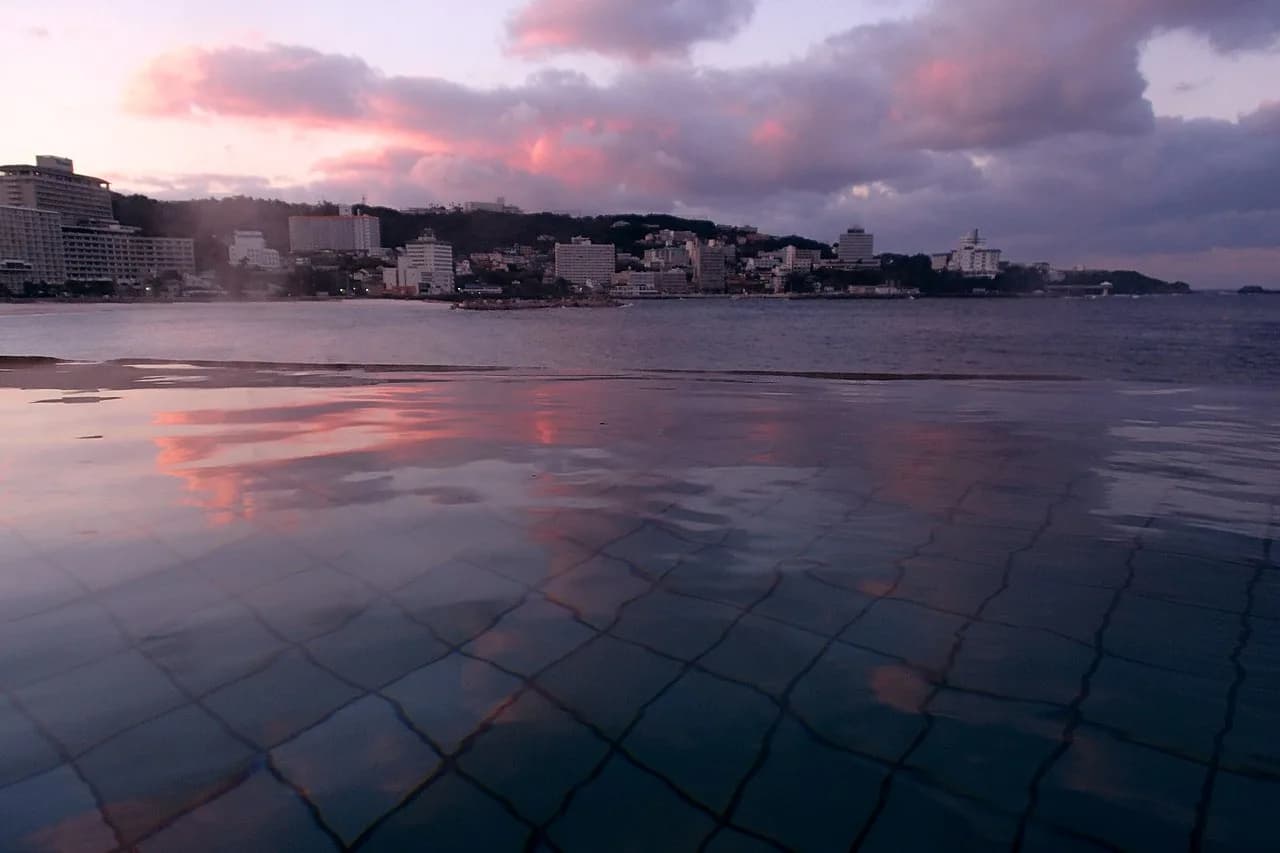
No bath in Shirahama captures the town's identity quite like Saki-no-yu. Rather than a tiled tub or manicured rotenburo, it is carved directly into the shoreline rocks, with the Pacific breaking just beyond its low stone edge — on a rough day, spray can reach the water. It is one of the sites tied to Shirahama's claim to be among Japan's three oldest hot springs, with local tradition holding that imperial visitors bathed here in antiquity.
This 2026 guide covers the legend behind the bath, its rustic setup, why it sometimes closes without notice, and practical details on admission and access.
Because Saki-no-yu sits directly at the shoreline, it is tide-dependent — check conditions on the day before you go, since high tide or rough seas can force a temporary closure.
Key Takeaways
- Saki-no-yu is an open-air rock bath carved into Shirahama's shoreline, with the sea visible — and occasionally splashing in — just beyond the bath's edge.
- The bath is linked to Shirahama's status as one of Japan's three oldest hot springs, with tradition holding that imperial visitors bathed here in antiquity.
- It is tide-dependent: rough seas or high tide can close the bath for safety, so it's worth checking conditions before making the trip.
- Facilities are deliberately simple — a basic changing area, gender-separated bathing, and no soap or shampoo provided — part of its old-fashioned, rustic charm rather than an oversight.
- Admission runs around ¥500 (2026 estimate), among the least expensive ways to experience Shirahama's hot-spring heritage.
The Legend Behind Saki-no-yu
Shirahama's hot springs are often cited among the three oldest documented in Japan, referenced in early records describing visits by members of the imperial court. Saki-no-yu is the bath most closely tied to that heritage — tradition places it among the sites where those early visitors are said to have bathed, drawn to the coastal spring emerging right at the water's edge. Whatever the precise historical detail, the bath preserves that "bathing in the wild sea" feeling more vividly than any other in town, since it was never converted into a conventional indoor facility.
That continuity is why Saki-no-yu draws travellers who have already covered Shirahama's more polished baths at the town's other onsen and want something rawer — a bath defined by its setting as much as its water.
What to Expect: A Rustic, Tide-Dependent Bath
Saki-no-yu is deliberately simple. Bathing is gender-separated, and the changing area is basic — a roofed structure with baskets or shelves rather than lockers, and no soap or shampoo provided at the taps, so guests should rinse off before soaking rather than expect a full wash. That stripped-down setup is part of the appeal: this is not a resort spa, and its old-fashioned character is exactly what draws travellers past the more modern facilities near Shirahama Beach.
The defining quirk is its relationship with the tide. Because the bath sits directly on the shoreline rock, high tide or rough weather can send waves right into it, and the facility closes for safety when conditions turn — a routine part of how it operates, not a rare event, so check conditions before making it the centrepiece of your day.
Visiting Saki-no-yu: Hours, Admission, and Access
Admission runs roughly ¥500 (2026 estimate) — a fraction of a private ryokan bath, reflecting its status as a simple public bath rather than a premium attraction. Hours run through the daytime as a 2026 estimate, but the bath also closes periodically for cleaning on top of weather- and tide-related closures, so same-day confirmation is worth the extra step.
The bath is a short walk from central Shirahama, easy to combine with a wider loop of the coastline — many visitors pair it with the Sandanbeki cliffs nearby, or slot it into a broader Shirahama itinerary. Bring your own towel, since none is provided or rented at the bath, and arrive with modest expectations of comfort: the reward here is the setting, not the amenities.
Frequently Asked Questions
What makes Saki-no-yu different from Shirahama's other onsen?
Saki-no-yu is an open-air bath carved directly into the shoreline rocks, with the sea visible — and sometimes splashing in — right at the edge. Unlike Shirahama's more polished resort-style baths, it is a simple, rustic public bath, prized for its raw setting rather than spa-style comfort.
Why does Saki-no-yu sometimes close?
Because the bath sits directly at the shoreline, high tide or rough seas can make it unsafe to use, and it closes as a routine precaution. It also closes periodically for cleaning. Checking conditions on the day is worth doing if Saki-no-yu is a priority stop.
Does Saki-no-yu provide soap, shampoo, or towels?
No. Saki-no-yu has a simple changing area, gender-separated bathing, and no soap, shampoo, or towel rental. Bring your own towel and rinse off before soaking — this bath is set up for a quick, simple dip rather than a full wash.
How much does it cost to visit Saki-no-yu?
Admission is roughly ¥500 per adult as a 2026 estimate, making it one of the least expensive hot-spring experiences in Shirahama. The bath is a short walk from the centre of town, so it's easy to combine with a wider look at the coastline.
Saki-no-yu earns its place among Japan's most memorable public baths not through luxury but through setting: a rock bath at the edge of the Pacific, tied to Shirahama's claim as one of the country's oldest hot springs, and unaltered enough to still feel wild rather than manicured. Its tide-dependent hours and no-frills facilities are the trade-off for that authenticity, and most visitors find it a fair one.
Treat it as a short, characterful stop within a longer coastal walk rather than a full afternoon — pair it with Shirahama's other onsen or a look at the Sandanbeki cliffs nearby, and see the Shirahama attractions guide for the full picture.
Free guide: Japan's Hidden Gems
12 under-the-radar places beyond Tokyo & Kyoto — with the best season to visit each and a local tip you won't find in the guidebooks.
You might also like


Continue reading
More guides you'll find useful