

Sandanbeki Cliffs: Sea Cave and Sunset Guide (2026)
Guide to Sandanbeki in Shirahama for 2026: the clifftop walk along the sea cliffs, the elevator down to the sea cave once used by Kumano Navy lookouts, nearby Senjojiki rock shelf, sunset timing, and current entry estimates.
On this page
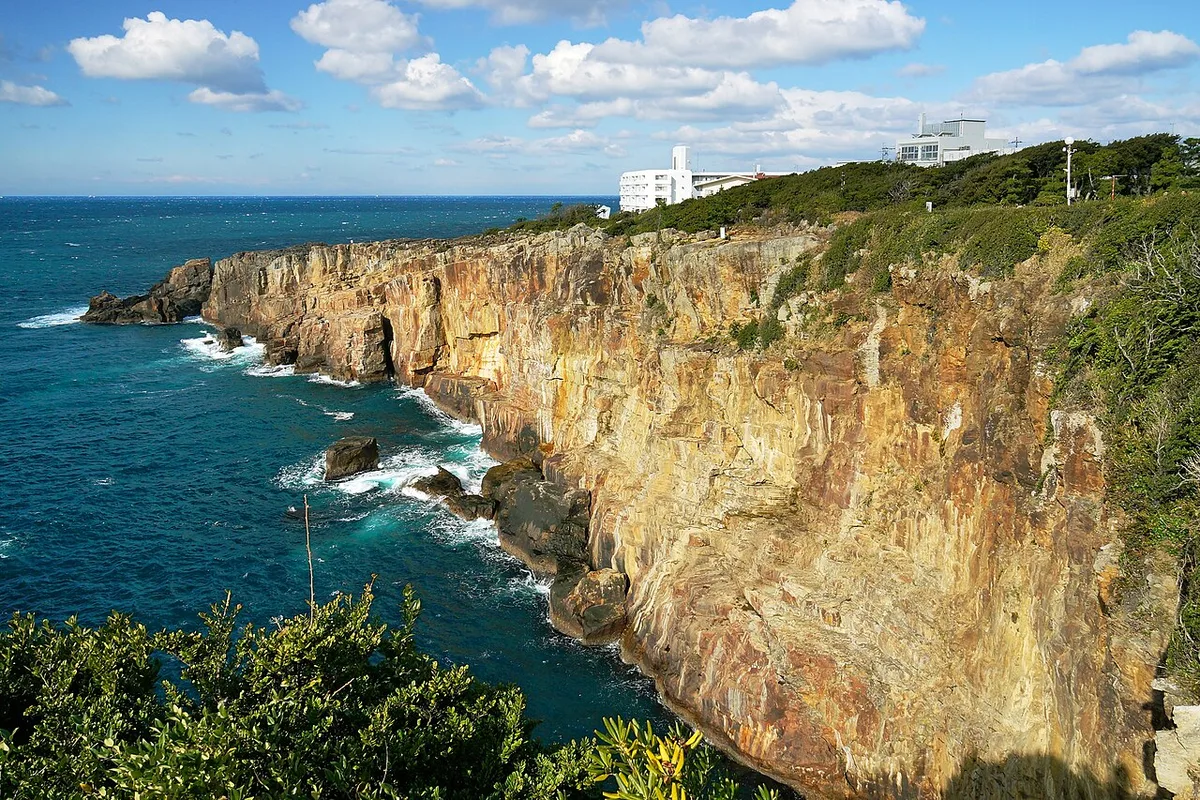
Along Shirahama's coastline, roughly two kilometres of sheer sea cliffs rise about 50 metres above the Pacific, carved over centuries by wave erosion into a jagged, wind-battered wall of rock. This is Sandanbeki, one of the most photographed natural sights on the Shirahama coast — and one of the few spots here where a clifftop walk and a genuine sea cave sit within a few minutes of each other.
Most visitors arrive expecting only the clifftop view, then discover that an elevator descends roughly 36 metres through the rock to a cavern at the base — a chamber local lore ties to the Kumano Navy, a coastal fleet said to have used the hidden opening as a lookout and boat shelter.
This 2026 guide covers the clifftop walk, the sea cave, nearby Senjojiki, sunset timing, and current entry estimates for planning a visit from central Shirahama.
The sea cave elevator and clifftop platform can close temporarily in high winds or rough seas — check conditions before making a special trip, especially outside the calmer spring and autumn months.
Key Takeaways
- Sandanbeki is a roughly 2 km stretch of sea cliffs about 50 m high, formed by long-term wave erosion along Shirahama's coast.
- An elevator descends about 36 m through the cliff to a sea cave at the base, historically linked in local lore to the Kumano Navy's coastal lookout and boat shelter operations.
- The clifftop observation platform and walking path are free; the sea cave elevator runs around ¥1,300 for adults as a 2026 estimate.
- Because the cliffs face west, late afternoon and sunset are the best window for photos and for watching waves strike the rock face.
- Senjojiki, a flat sedimentary rock shelf popular for tide pools, is a short walk or drive from the main Sandanbeki viewpoint and pairs naturally with the same visit.
The Cliffs: Two Kilometres of Erosion-Carved Rock
Sandanbeki's defining feature is scale rather than a single dramatic drop: the cliffs run for roughly two kilometres along the coast, standing about 50 metres above the water at their tallest points. Centuries of pounding surf have cut the rock face into an irregular, jagged profile — ledges, undercuts, and exposed strata that give the cliffs a raw, unfinished texture.
A clifftop observation platform and short walking path run along the top of the cliff line, giving unobstructed views down at the waves breaking against the rock. Both are free to access, making Sandanbeki an easy add-on to a day built around Shirahama's beaches. The walk is short and largely flat, suitable for most visitors without special preparation.
Inside the Cliff: The Sandanbeki Sea Cave
The more distinctive part of a Sandanbeki visit is beneath the clifftop entirely. An elevator carries visitors approximately 36 metres down through the rock to a sea cavern at the base of the cliffs, where the chamber opens directly onto the crashing waves at sea level. Standing inside, with the surf amplified by the rock walls, gives a very different sense of the cliffs than the view from above.
According to local lore, the cave was historically used by the Kumano Navy — a regional coastal fleet sometimes described as suigun — as a hidden lookout point and shelter for boats, concealed by the cliff face above. Whether taken as documented history or coastal folklore, the detail is why many visitors treat the cave as the highlight of the stop rather than the clifftop view.
The elevator and cave access run on the same operating hours as the rest of the site, roughly 8:00–17:00 with seasonal variation as a 2026 estimate, and the elevator entry fee is approximately ¥1,300 for adults. Because the chamber is enclosed rock, it can also be the better option on windy days — though very rough seas can prompt a temporary closure.
Senjojiki: The Flat Rock Shelf Nearby
A short walk or drive from the main Sandanbeki viewpoint brings you to Senjojiki, a flat shelf of sedimentary rock at sea level rather than atop a cliff. The name translates roughly to "a thousand tatami mats," a nod to the broad, level expanse of stone spreading toward the water. Tide pools form in the rock's natural depressions at low tide, and the layered sedimentary bands are visible underfoot in a way the clifftop never allows.
Because the two sites sit so close together, most visitors treat them as a single stop: the clifftop and sea cave for the scale of Sandanbeki, then Senjojiki for a quieter, ground-level walk. Both pair naturally with a wider day exploring Shirahama's other attractions, and neither requires more than an hour combined unless you linger for the tide pools.
Sunset Timing and Practical Notes
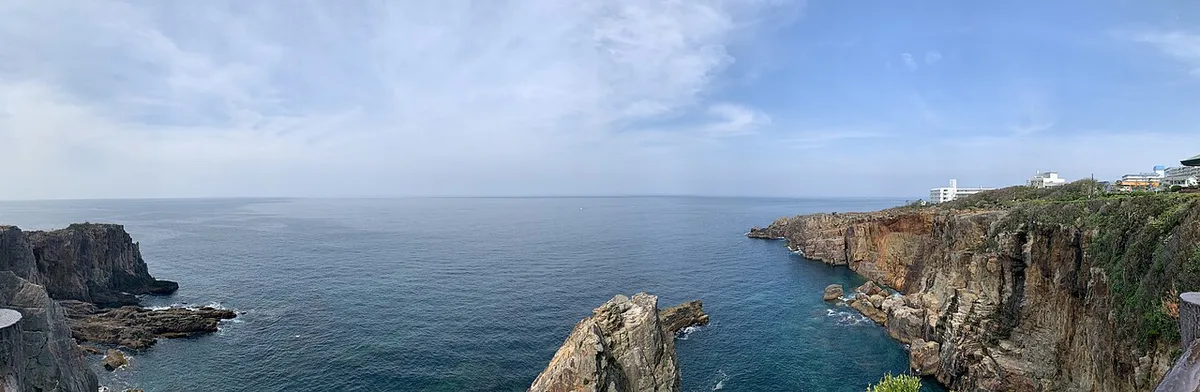
Sandanbeki's cliffs face west, which makes late afternoon and the approach to sunset the strongest window for a visit. As the sun drops toward the horizon, the light rakes across the cliff face and catches the spray thrown up by the waves, turning a merely scenic midday view into something genuinely striking.
Getting there from central Shirahama takes roughly ten minutes by car or local bus from JR Shirahama Station, making it an easy addition to a day that also covers Shirahama's onsen or the Engetsu Island viewpoint. Comfortable footwear is worth bringing for the clifftop path, and travellers planning a fuller coastline day may find it useful to check the best time to visit Shirahama for seasonal weather and crowd patterns.
Frequently Asked Questions
Is the Sandanbeki sea cave included with the clifftop viewpoint?
No, they are priced separately. The clifftop platform and walking path are free, while the elevator descending to the sea cave costs approximately ¥1,300 for adults as a 2026 estimate. Both are on the same site, so most visitors combine them in a single stop.
What is the historical story behind the Sandanbeki sea cave?
Local lore ties the cave to the Kumano Navy, a regional coastal fleet sometimes called suigun, said to have used the hidden cavern as a lookout point and boat shelter concealed beneath the cliff face. The elevator now carries visitors down roughly 36 metres to the chamber.
What is the best time of day to visit Sandanbeki?
Late afternoon into sunset is the strongest window, since the cliffs face west and catch the low sun across the rock face and sea spray. The site is open at any time of day, but photographers tend to plan around the hour before sunset for the best light.
Is Senjojiki the same place as Sandanbeki?
No, they are two distinct but nearby formations. Sandanbeki is the roughly 2 km stretch of sea cliffs with the clifftop platform and sea cave elevator, while Senjojiki is a flat sedimentary rock shelf at sea level a short walk away, known for tide pools. Most visitors see both on the same stop.
Sandanbeki works because it layers three experiences into one stop: the sheer scale of the clifftop walk, the atmospheric descent into a sea cave with a genuine piece of coastal history behind it, and quieter tide-pool exploring at nearby Senjojiki — all in an hour or two.
Time it for late afternoon if you can, bring comfortable shoes for the clifftop path, and pair it with a look at Engetsu Island or a soak in one of the town's onsen afterward. For a longer stay, the Shirahama itinerary guide covers how the cliffs fit alongside the beach, onsen, and Adventure World.
For background on the wider region's coastal geology, see Shirahama on Wikipedia.
Free guide: Japan's Hidden Gems
12 under-the-radar places beyond Tokyo & Kyoto — with the best season to visit each and a local tip you won't find in the guidebooks.
You might also like


Continue reading
More guides you'll find useful


