Kinosaki's Seven Sotoyu Public Baths: 2026 Guide
Guide to Kinosaki Onsen's seven sotoyu public baths in 2026: each bath's traditional blessing and character, the Yumepa pass versus day-visitor pricing, opening hours, tattoo policy, and tips for planning your meguri circuit.
On this page
The defining ritual of any stay in Kinosaki Onsen is the sotoyu meguri — the unhurried circuit of the town's seven public bathhouses, each with its own legend, architecture, and spring. Kinosaki is one of very few onsen towns in Japan where the baths are genuinely distributed across the townscape rather than confined to individual ryokan: you change into your inn-issued yukata and wooden geta, step out into the willow-lined canal street, and walk between them, contributing to the gentle clatter of clogs on stone that defines the town's soundscape after dark.
Each of the seven sotoyu carries a different traditional blessing — luck in love, business success, beauty, good fortune, fertility, family safety, longevity — which gives the circuit a narrative arc that pulls guests through baths they might otherwise skip. Ryokan guests receive a complimentary Yumepa all-seven pass for the duration of their stay; day visitors can buy a one-day all-seven pass at roughly ¥1,300 (2026 planning estimate), or pay approximately ¥600–800 per bath at the door.
This 2026 guide covers all seven sotoyu — their characters, blessing traditions, and what makes each architecturally or experientially distinct — plus practical notes on passes, hours, tattoo policy, and the most logical order for approaching the circuit.
Each of the seven sotoyu has its own weekly closing day, staggered so that at least six baths are always open. Check the current schedule with your ryokan or on the official Kinosaki Onsen website before planning your meguri route.
Key Takeaways
- Kinosaki Onsen's seven sotoyu each carry a distinct traditional blessing — from luck in love at the oldest bath (Kono-yu) to health and longevity at the largest (Satono-yu) — and bath-hopping between them on foot is the town's defining experience.
- Ryokan guests receive a free Yumepa all-seven pass; day visitors can buy a ¥1,300 one-day pass or pay roughly ¥600–800 per bath — the pass pays for itself after three baths.
- Tattooing is generally accepted at all seven public sotoyu, making Kinosaki one of the most accessible onsen destinations in Japan for tattooed travellers.
- Weekly closing days rotate across the seven baths so that no single day sees all baths shut — but checking the schedule before you visit avoids arriving at a locked door.
- Satono-yu, the largest and most modern bath, has shorter hours (approximately 13:00–21:00) than the rest, which mostly open around 07:00 and close at 23:00.
The Sotoyu Meguri: Kinosaki's Bath-Hopping Tradition
Kinosaki's seven sotoyu are not simply public baths — they are the infrastructure of a town-wide ritual that has remained largely unchanged for over a thousand years. The bathhouses were kept communal and distributed across the townscape so that every visitor, whether staying at the grandest ryokan or the most modest guesthouse, could access the same thermal waters. That democratic design is what gives Kinosaki its distinct atmosphere: on any evening the canal street fills with guests in yukata moving unhurriedly between baths, pausing at street-food stalls or sake vendors between soaks.
The tradition of ascribing a different blessing to each bath — likely formalised during the Edo period — encourages guests to treat each bathhouse as a destination in its own right rather than an interchangeable dip in hot water. Whether you take the blessings as a piece of living folklore or as an itinerary device, the effect is the same: the circuit has shape and meaning, and arriving at the final bath of the evening feels like a small achievement. The full Kinosaki Onsen attractions guide places the sotoyu meguri alongside the town's other worthwhile stops along the canal street.
All Seven Sotoyu: Blessings, Character, and Key Features
The table below covers every bath in the meguri circuit — its traditional blessing, defining character, and the one detail most worth knowing before you visit.
| Bathhouse | Traditional Blessing | Character & Key Feature |
|---|---|---|
| Kono-yu (鴻の湯) | Luck in love, happy marriage | The oldest bath, at the north-west end of town near the ropeway. Legend holds that an oriental stork (kounotori) healed its injured leg in the spring here, revealing the source. Outdoor rotenburo surrounded by greenery. |
| Mandara-yu (まんだら湯) | Success in business, wishes granted | Small and intimate, associated with the monk Dochi Shonin who is credited with founding Kinosaki's bathing tradition. Features a distinctive cypress barrel-style tub — one of the most atmospheric interiors in the circuit. |
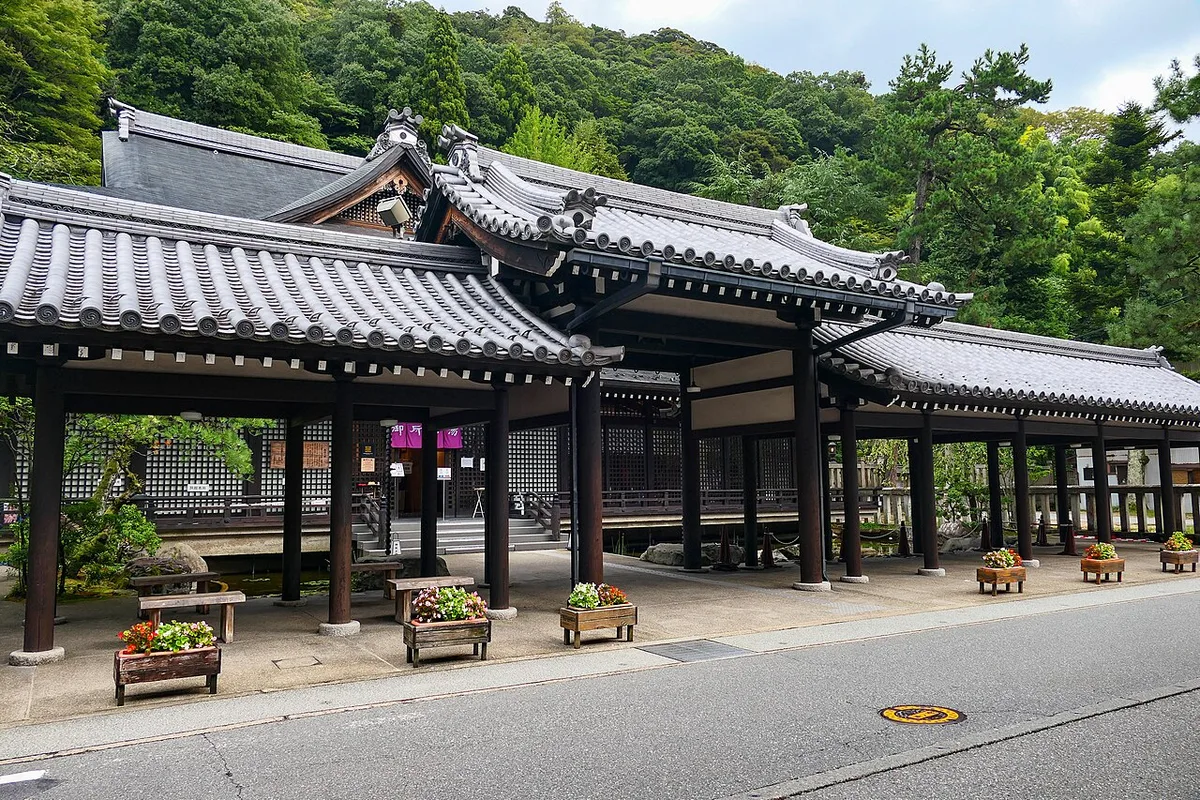
| Goshono-yu (御所の湯) | Beauty, fire prevention, marriage | The grandest bathhouse, modelled on the architecture of the Kyoto Imperial Palace. Its outstanding feature is a dramatic outdoor waterfall bath; this is the most-photographed of the seven and the one guests tend to return to. |
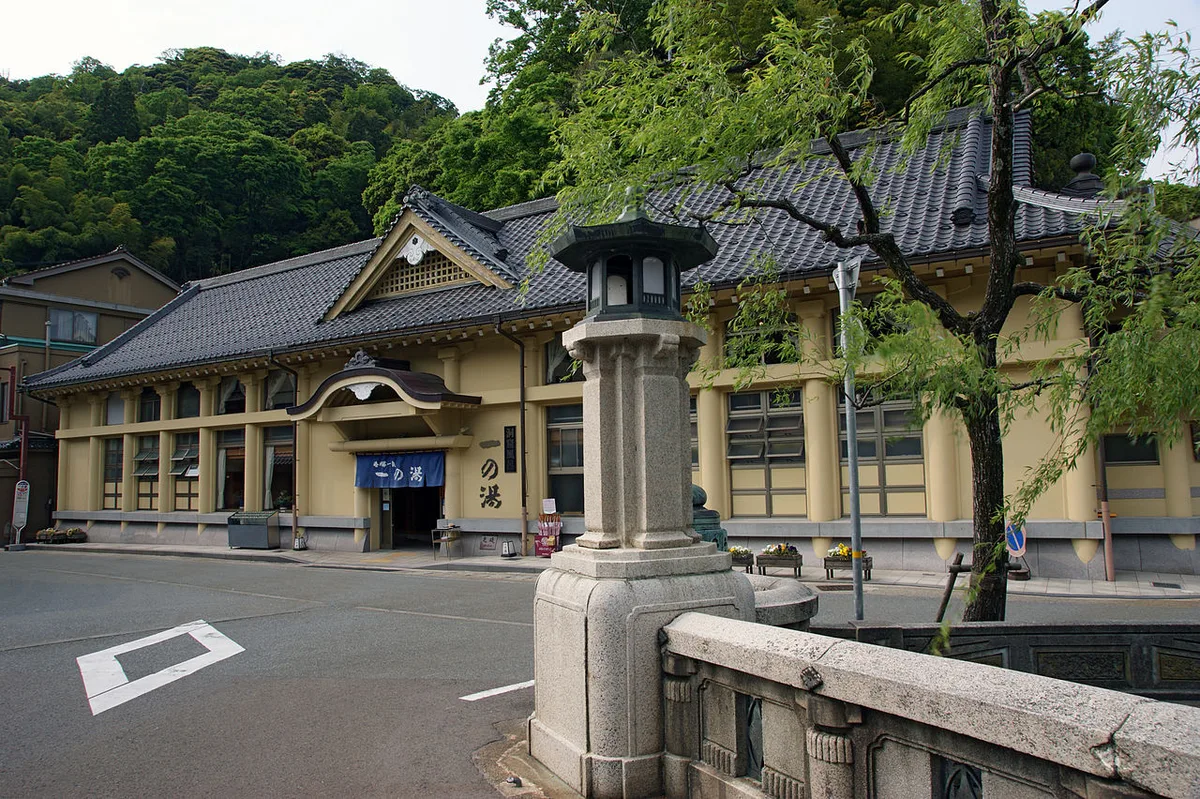
| Ichino-yu (一の湯) | Good luck, academic success | A striking kabuki-theatre-style facade on the main street announces it from a distance. Famous for the dokutsu-buro cave bath, where the thermal water flows through a natural rock grotto — the most theatrically atmospheric soak in the circuit. |
| Yanagi-yu (柳湯) | Children, fertility, safe childbirth | The smallest of the seven, tucked beside a willow tree that gives it its name (yanagi = willow). Compact and quiet; popular with guests seeking a slower pace away from the more visited central baths. |
| Jizo-yu (地蔵湯) | Family safety, household protection | A modern building near the town entrance, notable for a distinctive hexagonal window. One of the few sotoyu with a private family bath option — practical for guests travelling with young children. |
| Satono-yu (さとの湯) | Health and longevity | The largest and most contemporary bath — a three-floor spa beside Kinosaki Onsen Station with a rooftop open-air bath, sauna, and varied indoor tubs. Shorter hours (~13:00–21:00) than the rest of the circuit. |
The Baths Worth Seeking Out in Detail
All seven sotoyu repay a visit, but four have features distinctive enough to single out — especially for first-timers or day visitors who can realistically cover only three or four baths in an evening.
Goshono-yu is the bath most guests photograph first. The building's imperial-palace aesthetic is deliberate — it was designed to evoke the formal grandeur of Kyoto's court architecture — and the outdoor waterfall bath is genuinely beautiful in the evening light, when the stone and timber glow against the dark. Goshono-yu's dedicated page has current opening details and visitor flow guidance.
Ichino-yu, on the main street, announces itself with a kabuki-stage facade that catches every first-time visitor's eye. Inside, the cave bath — a rock grotto through which the hot spring water flows — is the single most atmospheric experience in the Kinosaki circuit and the reason many guests revisit this particular bathhouse on consecutive evenings. See Ichino-yu's attraction page for current hours and layout notes.
Kono-yu, the oldest of the seven, sits at the quieter north-west end of the town close to the cable-car base for the Kinosaki Onsen ropeway. Its position draws fewer day-trippers, giving the outdoor rotenburo a slower pace than the central baths. The stork legend — a kounotori that healed its leg in the spring, thereby revealing the thermal source — is the founding myth of Kinosaki's entire bathing heritage. Full visitor details at Kono-yu's profile page.
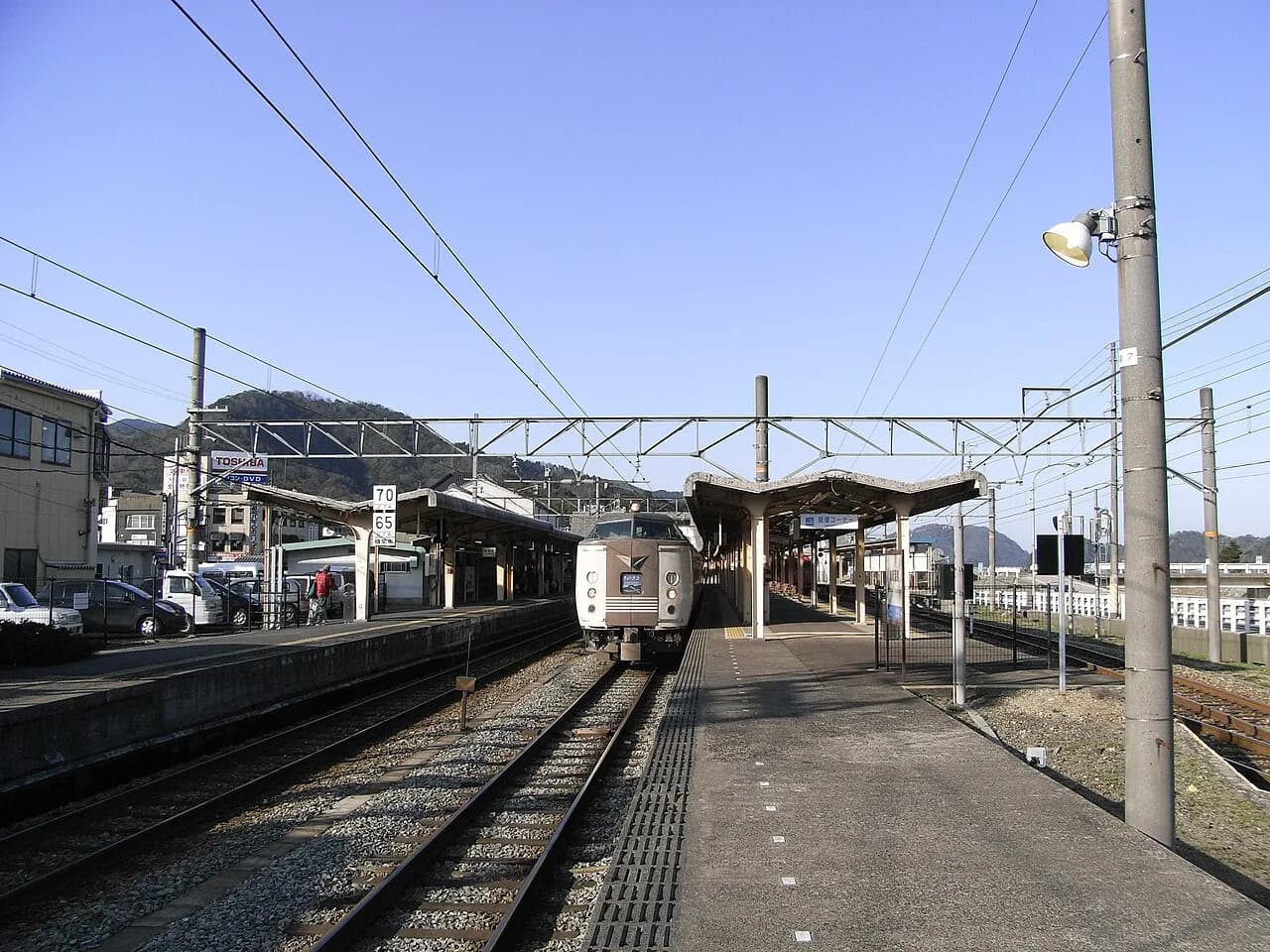
Satono-yu, directly beside the station, is the logical first stop for day visitors arriving by train. Its three-floor modern spa format — rooftop open-air bath, sauna, varied indoor tub types — feels closer to a contemporary urban bathhouse than the older sotoyu, which some guests prefer and others find at odds with the canal-street atmosphere. Note the shorter hours; morning arrivals should visit a central bath first. Satono-yu's page covers the floor plan and access details.
Tickets, Hours, and Practical Notes
Understanding Kinosaki's two-tier pricing system before you arrive saves money and avoids the mild frustration of discovering a day pass at your fourth bath.
Yumepa pass (ryokan guests): Guests staying at an accredited Kinosaki ryokan receive a Yumepa all-seven pass valid for their entire stay, typically handed over with the room key. It covers unlimited entries to all seven sotoyu at no additional charge.
Day-visitor one-day pass: Approximately ¥1,300 per adult (2026 planning estimate), covering one entry to each of the seven sotoyu within the day. Available at Satono-yu near the station. Three or more baths makes it better value than paying individually.
Per-bath entry: Around ¥600–800 per adult at the door (2026 planning estimate; verify at each bath). Practical only if you are visiting two baths or fewer.
Hours: Most sotoyu open around 07:00 and close at 23:00, making them accessible for both early-morning and late-evening soaks. Satono-yu operates shorter hours — roughly 13:00–21:00 as a 2026 estimate. Each bath closes one day per week on a staggered schedule; ask your ryokan for the current chart or check the official Kinosaki Onsen tourism website.
Towels and etiquette: Bring a small towel or purchase one at the bath. Standard onsen protocol applies: shower before entering any communal tub, tie back long hair, and keep towels clear of the water. Tattoos are generally accepted at all seven sotoyu — an unusually inclusive policy for communal bathing in Japan. Choosing the where to stay in Kinosaki Onsen also affects proximity to the circuit and whether your ryokan includes a private bath.
Planning Your Meguri Route
The classic approach is to walk from one end of town to the other — either beginning at Satono-yu near the station and ending at Kono-yu near the ropeway, or the reverse. Most experienced visitors prefer starting at the far end and walking back towards their ryokan, finishing close to where they are staying. The canal street is flat and compact — the full length of the town is about a fifteen-minute walk — so backtracking between baths adds little time.
For a first-time half-evening circuit, three baths cover the range of what Kinosaki offers: Goshono-yu for architectural drama and the waterfall bath, Ichino-yu for the cave bath, and Kono-yu for the outdoor rotenburo and quieter north-end atmosphere. A full evening allows five or six baths comfortably, with time for food and sake between soaks. The route naturally integrates with street-food stalls, ice-cream vendors, and sake shops along the canal, so the meguri is as much an evening stroll as a bathing itinerary.
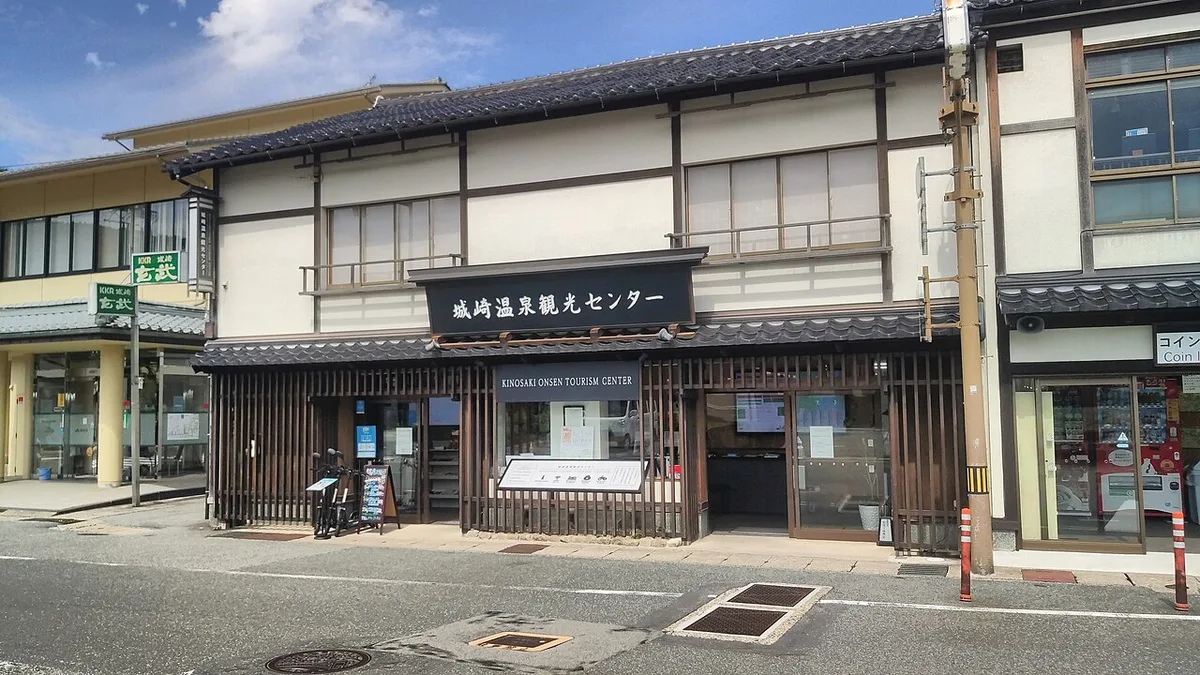
For a longer stay that builds the meguri into a structured two-night plan alongside the ropeway and the winter crab season, the Kinosaki Onsen itinerary guide covers the full programme. If you are arriving from Kyoto or Osaka on a single-day excursion, the guide to getting to Kinosaki Onsen covers train options, travel time, and the day-pass logistics from the station.
Frequently Asked Questions
Do ryokan guests get free access to all seven Kinosaki sotoyu?
Yes. Guests staying at an accredited Kinosaki ryokan receive a Yumepa all-seven pass for the duration of their stay at no extra charge. The pass covers unlimited entries to all seven sotoyu and is typically handed over with your room key on arrival. Day visitors can purchase a one-day all-seven pass for approximately ¥1,300 (2026 planning estimate) at Satono-yu near the station.
Are tattoos allowed at Kinosaki's public baths?
Yes — tattoos are generally accepted at all seven of Kinosaki's public sotoyu, which is notably unusual for communal bathing in Japan. Most onsen facilities ban tattoos outright, making Kinosaki one of the more accessible onsen destinations in Japan for tattooed travellers. Always confirm the current policy at individual baths before visiting, as house rules can change.
Which of the seven Kinosaki sotoyu has the cave bath?
Ichino-yu has the famous dokutsu-buro cave bath — a natural rock grotto through which the thermal spring water flows. It is the most theatrically atmospheric of the seven baths and one of the main reasons guests return to Ichino-yu on consecutive evenings. The bath also has one of the most distinctive facades on the main street, modelled on a kabuki theatre.
How long does it take to complete the Kinosaki sotoyu meguri?
Allow 15–20 minutes per bath (including changing and the soak itself) plus walking time between them. Visiting all seven in a single evening takes roughly three to four hours at a relaxed pace, more if you stop for food or sake along the canal. Most guests spread the circuit across two evenings, visiting three or four baths each night. Checking weekly closing days before you plan helps ensure all the baths you want to visit are open.
What are the opening hours of Kinosaki's sotoyu?
Most of the seven sotoyu open around 07:00 and close at 23:00, making them accessible for early-morning as well as late-evening soaks. The exception is Satono-yu, the largest and most modern bath, which has shorter hours — approximately 13:00–21:00 as a 2026 planning estimate. Each bath also closes one day per week on a rotating schedule; ask your ryokan for the current weekly chart or check the official Kinosaki Onsen website before your visit.
The sotoyu meguri is what makes Kinosaki Onsen fundamentally different from almost any other hot-spring destination in Japan. The seven baths are not interchangeable: each has its own legend, its own architectural logic, its own mood — from the imperial grandeur of Goshono-yu's waterfall rotenburo to the cave-bath theatrics of Ichino-yu to the weathered simplicity of Kono-yu at the quiet end of town. Walking between them in yukata, at whatever pace the evening allows, is the experience Kinosaki was designed around for over a millennium.
At roughly ¥1,300 for a full day pass — or free on a Yumepa pass for ryokan guests — the circuit is also among the more generous-value bathing experiences in Japan. Build the meguri into an overnight Kinosaki Onsen itinerary if time allows; a single evening is enough to feel the town, but two nights lets the ritual settle into something properly unhurried. For the broader picture of what to do in town beyond the baths, the Kinosaki Onsen attractions guide is the starting point.
For reference information on the sotoyu circuit, see Kinosaki Onsen on Wikipedia.
Free guide: Japan's Hidden Gems
12 under-the-radar places beyond Tokyo & Kyoto — with the best season to visit each and a local tip you won't find in the guidebooks.
You might also like


Continue reading
More guides you'll find useful