

Kinosaki Winter Crab and Kani Kaiseki (2026)
Plan your Kinosaki Onsen snow-crab dinner in 2026: season dates (6 November to late March), Matsuba-gani vs Seko-gani, the full kani kaiseki course, and ryokan pricing from ¥18,000 to ¥60,000+ per person.
On this page
In winter, the atmosphere along Kinosaki Onsen's narrow willow-lined canal street shifts into something heightened and particular: lanterns reflected in dark water, the muffled slap of geta on stone paths, and — drifting from every ryokan entrance — the unmistakable smell of charcoal-grilled crab. November to March is when snow crab, known locally as Matsuba-gani (松葉ガニ), arrives at the San'in coast ports nearest Kinosaki, and many Japanese travellers plan their visit around nothing else. For the full picture of what Kinosaki Onsen offers across all seasons, the pillar guide has you covered; this article is for those who have already decided that crab is the point.
A kani kaiseki — a full crab course served in the kaiseki multi-course tradition — is one of Japan's most theatrical dining experiences. The same large Matsuba-gani is carried through six to eight preparations over the course of two hours, from raw sashimi to a warming rice porridge made from the depleted broth of the hotpot. Eating it in a ryokan, with the prospect of sliding into an onsen bath afterwards, is different in character from eating it in a restaurant. The meal is the evening; everything before and after is secondary.
This 2026 guide covers the season dates, the difference between crab grades, each dish in the kaiseki sequence, how to navigate the wide price range, and what to do if your trip falls outside the season window.
Snow-crab fishing on the San'in coast is governed by strict seasonal regulations. The season opens on 6 November each year and closes around 20 March — outside those dates, fresh local Matsuba-gani is simply not available, regardless of the ryokan's reputation or price point.
Key Takeaways
- Snow-crab season at Kinosaki runs 6 November to approximately 20 March; the first November weekend and the New Year period are peak booking periods — rooms sell out months in advance.
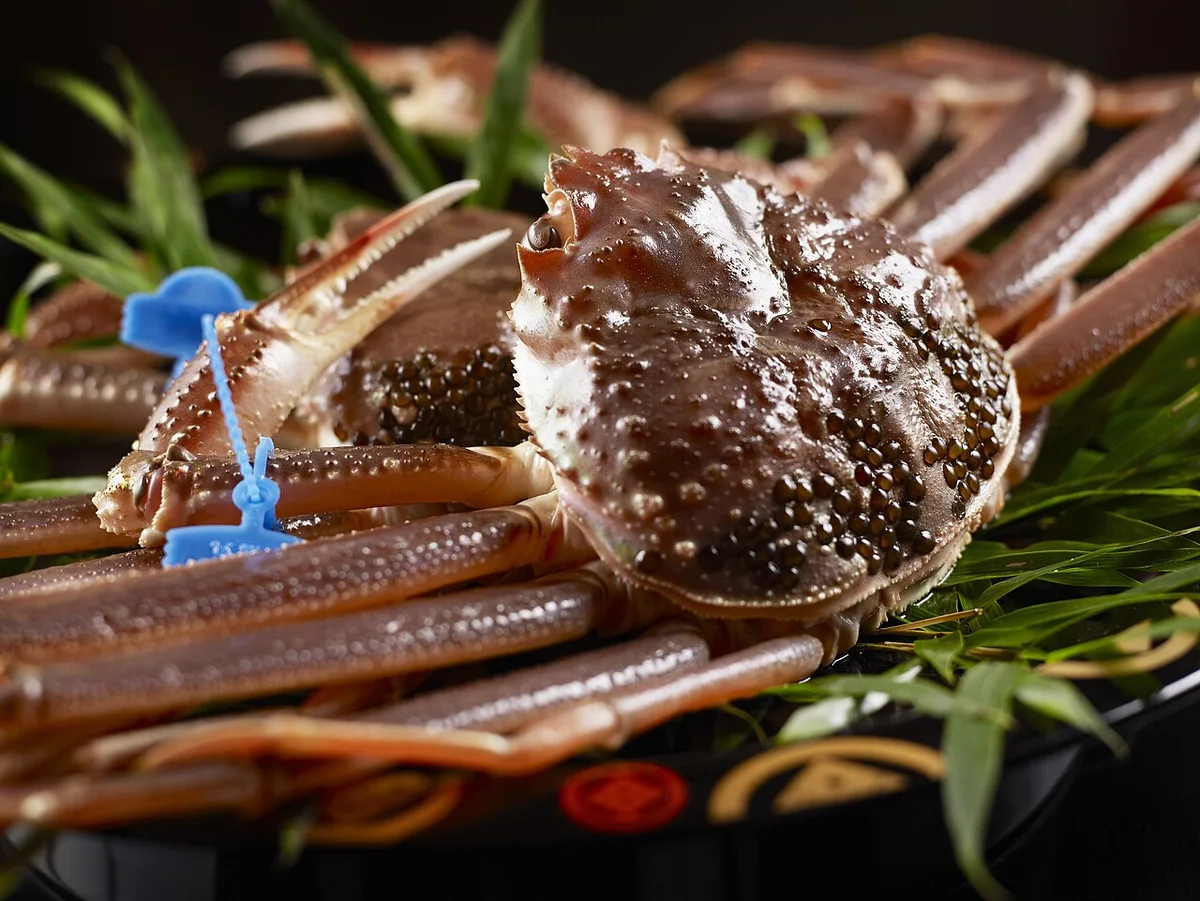
- The premium male crab, Matsuba-gani, is tagged with a coloured plastic port label (e.g., Tsuiyama-gani or Kasumi-gani); the smaller female Seko-gani is prized for its internal uchiko egg masses and external sotoko roe clusters.
- A full kani kaiseki takes a single crab through up to eight courses — raw kani-sashi, grilled yaki-gani, hotpot, boiled, tempura, and the celebrated kani-zosui rice porridge at the close.
- Ryokan crab plans range from roughly ¥18,000–¥25,000 per person (standard snow-crab, 2026 estimate) to ¥35,000–¥60,000+ for a premium tagged Matsuba-gani course.
- Many ryokan also offer Tajima wagyu alongside the crab — the Tajima bloodline is what underpins Kobe, Matsusaka, and Omi beef, and the local version is exceptional.
The Season — When Snow Crab Comes to Kinosaki
The official opening of snow-crab fishing on the San'in coast is fixed by regulation at 6 November each year. It functions almost as a regional food holiday: Kinosaki ryokan are commonly fully booked for the first weekend of November by August or September, and the word "kaikin" (解禁 — the lifting of the ban) appears on banners and menus across the town the moment the date arrives. The season closes around 20 March, aligned with the warming of Sea-of-Japan waters and the thinning of the crab catch.
Within that window, timing changes the experience. November brings the season's first crab alongside full autumn colour on the surrounding hills. December through February is the cold core of winter — snow on the rooftops, steam rising dramatically from the public sotoyu bathhouses, the canal path at its most atmospheric. The New Year period, from late December to early January, sees peak domestic travel demand: crab prices rise, ryokan availability tightens sharply, and the town fills with Japanese guests for whom this is an annual ritual. For the full seasonal picture across the year, including spring cherry-blossom and summer greenery windows, see our guide to the best time to visit Kinosaki Onsen.
Matsuba-gani and Seko-gani — Knowing Your Crab
The male snow crab landed at the San'in ports — Tsuiyama, Kasumi, and Shibayama among the closest to Kinosaki — is Matsuba-gani (松葉ガニ), named for the pine-needle shape its long legs make when arranged on a plate. Premium individuals are tagged with a small coloured plastic label clipped to one leg and stamped with the port of landing. A Tsuiyama-gani or Kasumi-gani tag certifies origin and traceability — it also explains the price premium over untagged or imported snow crab. When a ryokan advertises a "tagged Matsuba-gani course", that tag is the substance of the claim, not a decorative flourish.
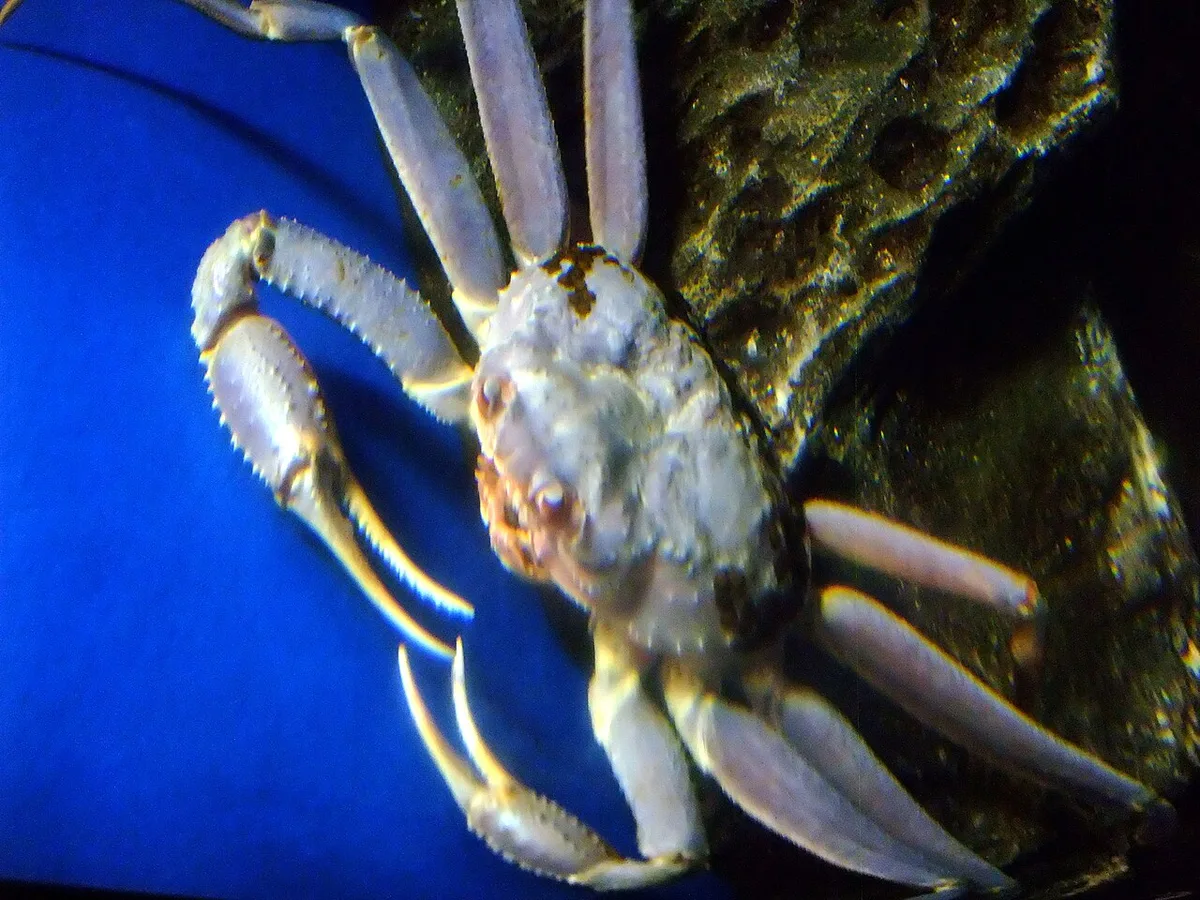
The female snow crab — Seko-gani — is far smaller but commands deep loyalty among Japanese connoisseurs. The attraction is internal: uchiko, the orange-yellow compressed egg masses within the body cavity, and sotoko, the bright-red external roe clusters clinging to the underside, have a concentrated, almost creamy richness that the sweet white meat of the legs cannot replicate. Seko-gani availability is narrow even within the season — females are at their best in November and December — and some ryokan offer a Seko-gani supplementary dish alongside the main Matsuba-gani course for guests who wish to try both genders of the species in a single meal.
The Kani Kaiseki — Course by Course
A kani kaiseki does not rush the crab. The kaiseki format — rooted in Zen temple cuisine and later refined by Kyoto tea culture — brings deliberateness to what is, at its core, the business of eating an entire large crab over two hours. Smaller seasonal appetisers arrive first; the crab itself is usually presented whole at the table before the cook begins. What follows is the same ingredient encountered again and again, each preparation extracting something different from the same creature.
| Dish | What It Is |
|---|---|
| Kani-sashi | Thinly sliced raw crab meat — the Matsuba-gani equivalent of sashimi — served chilled with ponzu or citrus soy. The sweetness and translucency of fresh raw snow crab is unlike any cooked preparation. |
| Yaki-gani | Crab legs grilled over charcoal or a table-top grill. Heat concentrates the natural sugars and lightly caramelises the edges; guests typically grill at the table themselves. |
| Kani-suki / kani-nabe | Crab simmered in a light kombu and dashi broth alongside tofu, chrysanthemum greens, and enoki mushrooms. The broth deepens in flavour as the meal progresses and becomes the base for the final course. |
| Yude-gani | Boiled crab — the most direct preparation, and the one that reveals the quality of the ingredient most plainly. Premium Matsuba-gani legs are dense, sweet, and easy to extract cleanly. |
| Kani tempura | Crab claws or claw meat lightly battered and fried. Often served as a lighter bridge between the heavier hotpot and the rice course that closes the meal. |
| Kani-zosui | The finale: rice and beaten egg simmered gently in the crab-rich nabe broth, which by this point carries the concentrated flavour of the entire evening. Many guests consider this the best dish of the meal. |
Individual ryokan vary the sequence and add supplementary dishes — steamed crab dumplings, crab miso soup, or a seasonal vegetable course between the crab preparations. The table above describes the core arc; what arrives before and between it is the kitchen showing off.
Pricing and Booking — What to Budget
The range of ryokan crab plans at Kinosaki is wide, and the price difference reflects genuine variation in crab quality rather than marketing positioning. The figures below are 2026 planning estimates for a one-night stay with dinner and breakfast included; confirm with individual ryokan at the time of booking, as crab prices can shift with each season's catch.
A standard snow-crab plan — genuine snow crab, typically untagged or from further ports — runs roughly ¥18,000–¥25,000 per person. This tier covers the full kaiseki sequence and is an excellent entry point for guests experiencing kani kaiseki for the first time. Mid-range plans featuring a larger or locally tagged crab step up to approximately ¥28,000–¥38,000. Premium courses built around a certified tagged Matsuba-gani from a prized San'in port can reach ¥50,000–¥60,000+ per person — at the top end, some ryokan bring the live crab to your room and weigh it before cooking, a theatre that makes the transaction visible. For detailed guidance on which ryokan excel at their crab programmes and what each tier of property is like to stay in, our Kinosaki Onsen accommodation guide covers the full range. Book winter weekends as early as possible — peak season demand routinely clears capacity six to eight months out.
Tajima Beef — and Options Outside the Crab Season
Kinosaki sits within Hyogo Prefecture, home to Tajima cattle — the specific wagyu bloodline from which Kobe, Matsusaka, and Omi beef are each derived. Tajima beef available locally often reaches the highest marbling grades. Many Kinosaki ryokan offer a crab-and-beef combination plan for guests who cannot choose: the kaiseki structure incorporates several Tajima preparations — shabu-shabu or teppan — alongside the full crab sequence. It is not an economical option, but for a special occasion it represents both of the region's culinary claims in a single dinner.
From late March, when the crab season closes, menus pivot to the season's other strengths: sea bream, abalone, clam, and eel in summer, with Tajima beef becoming the centrepiece of the dinner plan rather than a supplement. The hot-spring town itself is rewarding in every season — the two-day Kinosaki itinerary maps how to combine ryokan dining with the seven public sotoyu bathhouses and the mountaintop ropeway, whatever time of year you visit.
Frequently Asked Questions
When does the snow-crab season start and end at Kinosaki Onsen?
Snow-crab fishing on the San'in coast opens on 6 November each year and closes around 20 March. This window is fixed by regulation — outside those dates, fresh local Matsuba-gani from the nearby ports is not available at Kinosaki ryokan. The highest demand falls in November (the season's opening) and over the New Year period (late December to early January). Both windows book out months in advance.
What is Matsuba-gani, and why does the tag matter?
Matsuba-gani (松葉ガニ) is the male snow crab landed at San'in coast ports near Kinosaki, including Tsuiyama, Kasumi, and Shibayama. The coloured plastic tag clipped to one leg identifies the specific port of landing and certifies traceability. Tagged crabs from named ports command a significant premium over untagged snow crab because the tag is a quality and origin guarantee, not a decorative addition. Premium ryokan courses often include a tagged Matsuba-gani from a prized port.
How much does a crab kaiseki dinner cost at a Kinosaki ryokan?
Prices vary widely by crab grade and ryokan tier. For a one-night stay with dinner and breakfast, standard snow-crab plans run roughly ¥18,000–¥25,000 per person (2026 planning estimate). Mid-range plans with a larger or locally tagged crab step up to around ¥28,000–¥38,000. Premium tagged Matsuba-gani courses can reach ¥50,000–¥60,000+ per person. All figures are estimates — confirm current pricing directly with the ryokan when booking.
What is Seko-gani, and is it worth ordering?
Seko-gani is the female snow crab — much smaller than the male Matsuba-gani, but prized for its roe. The internal uchiko egg masses and external sotoko roe clusters have a concentrated, creamy richness unlike the sweeter white meat of the legs. Seko-gani is at its best in November and December, the earliest part of the season. Some Kinosaki ryokan offer it as a supplementary dish alongside the main crab course; it is worth ordering if your ryokan makes it available.
Do I need to stay at a ryokan to eat kani kaiseki in Kinosaki?
A few independent crab restaurants operate in and around Kinosaki, so dinner-only is technically possible. In practice, most of the best crab kaiseki in the area is served within ryokan to overnight guests as part of a dinner-and-breakfast plan. The ryokan setting — your own room, a private bath or access to the sotoyu circuit, the meal served at a low table in yukata — is inseparable from how most people experience the meal. Booking a ryokan stay is strongly recommended for a first crab kaiseki visit.
Few things in Japanese food culture are as deliberately pleasurable as a kani kaiseki in the right setting: a winter night in Kinosaki, the bath waiting after dinner, the crab arriving in one form and then another until the kitchen has extracted everything the season offers. The price range is wide enough that a snow-crab kaiseki is accessible at several budgets — the gap between a standard plan and a premium tagged Matsuba-gani course is real, but both deliver the full sequence and the atmosphere that surrounds it.
Combine a crab-season visit with a morning walking the yukata-wrapped yukata route between the seven sotoyu bathhouses — the combination of outdoor onsen in cold air and crab the night before is exactly what Kinosaki does better than anywhere else in Japan. For transport and journey-planning details, our guide on getting to Kinosaki Onsen covers all the rail options from Kyoto and Osaka.
For further background, see Kinosaki Onsen on Wikipedia.
Free guide: Japan's Hidden Gems
12 under-the-radar places beyond Tokyo & Kyoto — with the best season to visit each and a local tip you won't find in the guidebooks.
You might also like


Continue reading
More guides you'll find useful


