
Kinosaki Onsen Itinerary: 1 Night, 2 Days (2026)
Plan your Kinosaki Onsen trip with our 1-night, 2-day itinerary: arrival times, the seven sotoyu baths, yukata strolls, the Mt Daishi ropeway, and 2026 practical tips for first-time visitors.
On this page
One night is the sweet spot for Kinosaki Onsen. The small canal-side town in Hyogo Prefecture is built around seven public sotoyu baths, a willow-lined river, and a culture of padding between them in yukata and wooden geta — activities that unfold slowly and reward staying after dark, when the lanterns reflect in the water and the evening crowd thins out. A day trip leaves you racing the bath schedule; two full nights and you risk running out of things to do. One night gives you exactly enough time to settle in, work through the baths methodically, and leave wanting more. For the full range of things to do in Kinosaki Onsen beyond the baths — the ropeway, the museum, the river walk — the pillar guide covers them all.
The itinerary below is arranged around a Limited Express arrival on the afternoon of Day 1 and a mid-afternoon departure on Day 2. It assumes you are staying at a ryokan that provides yukata, geta, and the Yumepa communal bath pass — which covers all seven sotoyu and is included with most overnight stays in town. If you are weighing the overnight option against a same-day excursion, our guide on doing Kinosaki Onsen as a day trip from Kyoto sets out the honest trade-offs.
All times, prices, and train schedules below are 2026 planning estimates. Confirm directly with your ryokan, the ropeway, and Hyogo Prefecture transit sites before travel, as details can change without notice.
The Yumepa pass is not sold separately at the tourist counter — it comes with your ryokan booking. If your accommodation does not include it, ask the front desk before you check in, as some properties add it for a small supplement. Without Yumepa, each sotoyu charges an individual entry fee of roughly ¥800–¥900 per bath (2026 estimate), which adds up quickly across seven visits.
Key Takeaways
- Arrive by the early afternoon of Day 1 — check-in is typically from 15:00, and an afternoon arrival gives you the best daylight window for the first sotoyu round before dinner.
- The Yumepa pass, included with most ryokan stays, covers all seven sotoyu in a single pass; collect it at the front desk when you change into your yukata and geta.
- Start your bath circuit with Goshono-yu and Ichino-yu on the first afternoon — both are central to the main street and are the most atmospheric in daylight.
- Day 2's highlight is the ropeway up Mt Daishi: it stops at Onsenji Temple on the way up and reaches a summit observation deck with views over the bay and the Maruyama River valley.
- A 13:30 Limited Express departure on Day 2 gives you time for morning baths, the ropeway, and a final souvenir stroll without rushing; check your exact service time at Kinosaki Onsen Station before committing.
Day 1: Arrive, Settle In, and Start the Bath Round
The goal on Day 1 is simple: arrive, get into yukata, and reach the baths before dinner. The town is small enough that orientation takes twenty minutes on foot — there is essentially one main street running alongside the Otani River, flanked by the sotoyu, souvenir shops, and ryokan. The steps below use a ~14:00 station arrival as the anchor point; if your Limited Express lands earlier or later, shift accordingly. Full train options and journey times from Kyoto and Osaka are covered in the transport guide.
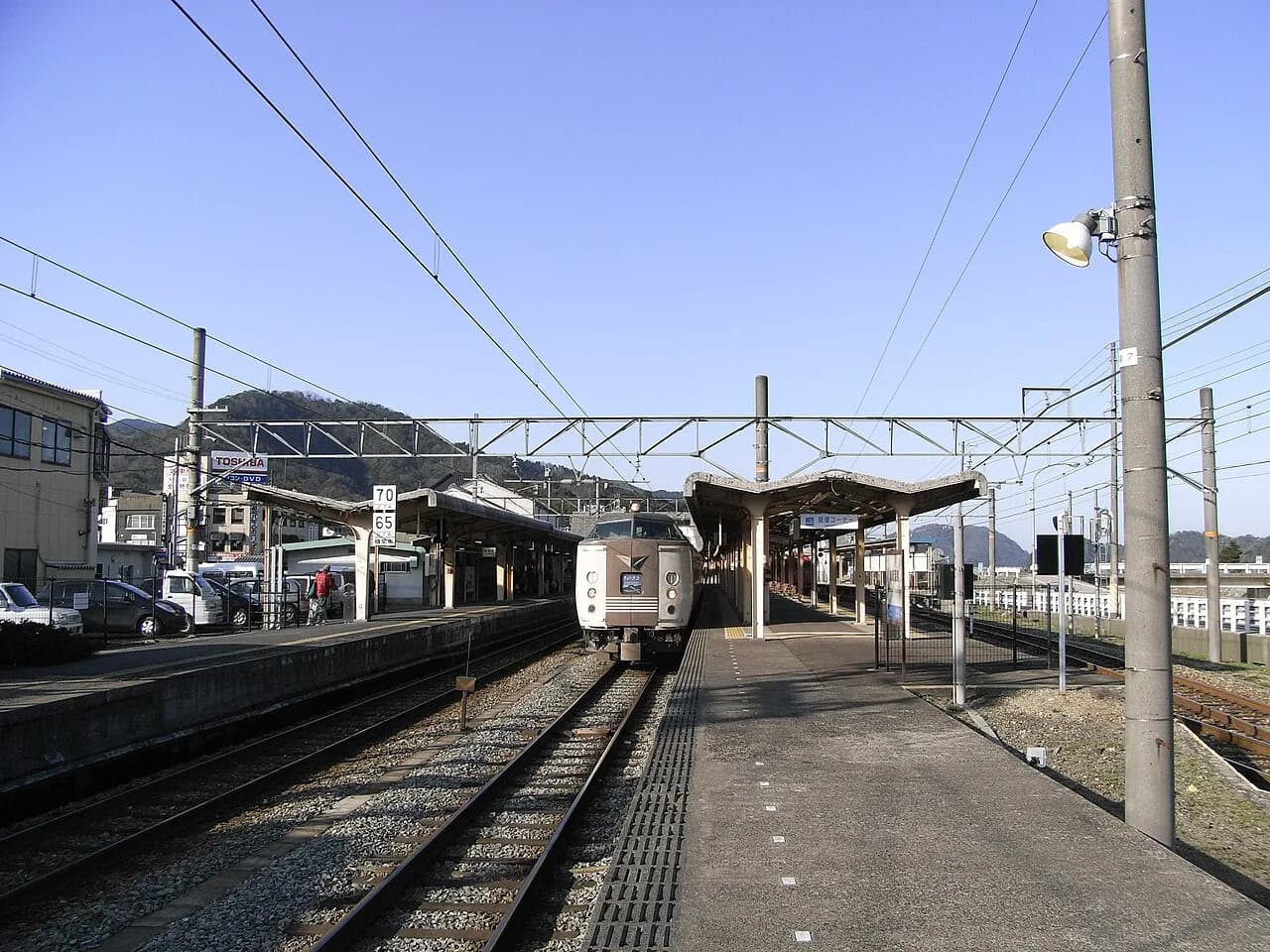
- ~14:00 — Arrive at Kinosaki Onsen Station. The station is compact and has coin lockers if you want to do a quick first stroll before check-in. Most ryokan offer a shuttle or will send someone to collect your luggage; call ahead or ask at the tourist information desk inside the station if yours does not. The main street is a ten-minute walk from the platform.
- 15:00 — Check in and change. This is the moment the trip starts in earnest. Your ryokan will hand you a yukata, geta, and — with most bookings — the Yumepa pass. Read the yukata and geta guide before you travel if you have not worn geta before; the wooden clogs take a short adjustment period, particularly on the cobbled bridge sections near Ichino-yu. Most ryokan provide a simple map marking the seven sotoyu and their opening hours.
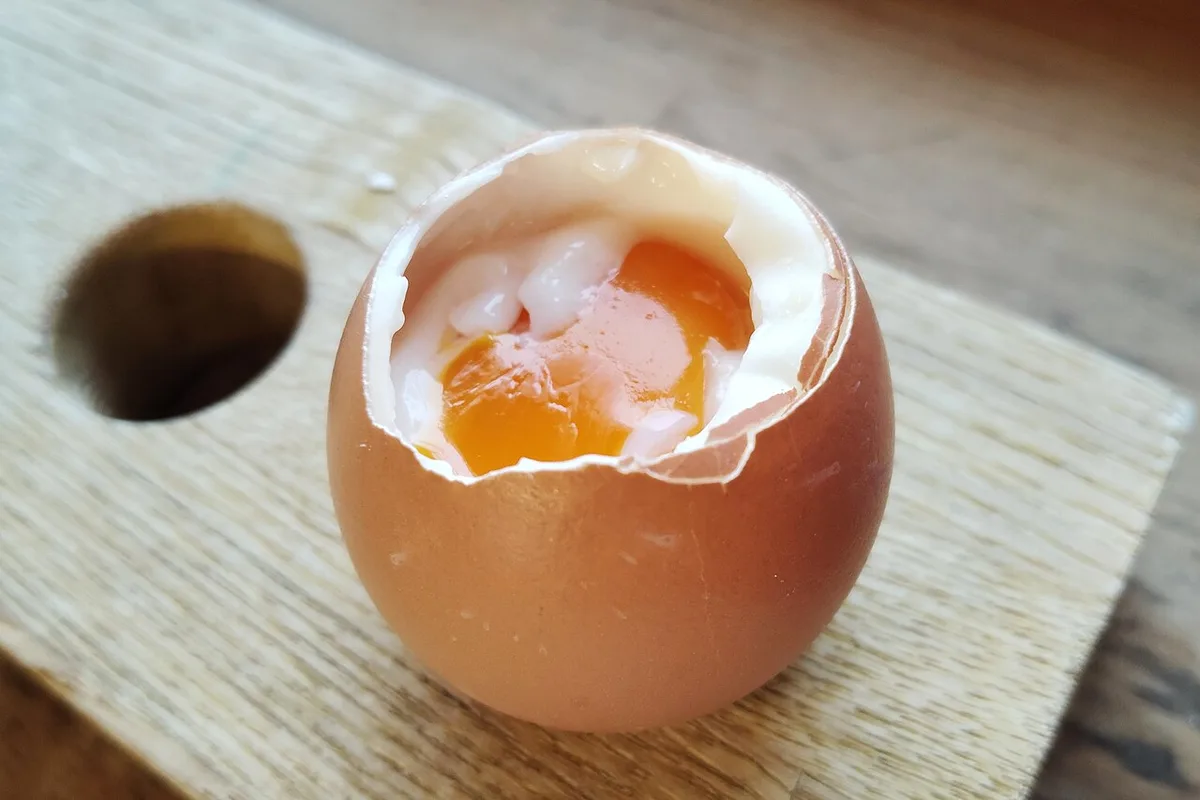
- 15:30 — First bath round: Goshono-yu and Ichino-yu. Begin with the two most central baths while the afternoon light is still good. Goshono-yu, with its imperial-style gate and large indoor pools, is usually the first stop for first-time visitors. Ichino-yu is a ten-minute walk south and has the town's most distinctive façade — a mock-cave entrance that has appeared on almost every Kinosaki postcard since the Edo period. Between the two, pick up an onsen-tamago (slow-cooked egg from the hot spring water) and the obligatory soft-serve from one of the stalls along the river. The full sotoyu guide covers all seven baths, their opening hours, and which ones suit different preferences.
- 18:00 — Kaiseki dinner at the ryokan. Kinosaki ryokan are built around the multi-course kaiseki meal, and the dinner hour is fixed — usually between 18:00 and 19:30. Most ryokan offer a seasonal crab dinner plan from November through March; if you are travelling in winter crab season, the matsuba crab option is worth booking in advance, as popular houses sell out months ahead. Summer and autumn menus lean on river fish, local vegetables, and smaller seafood courses.
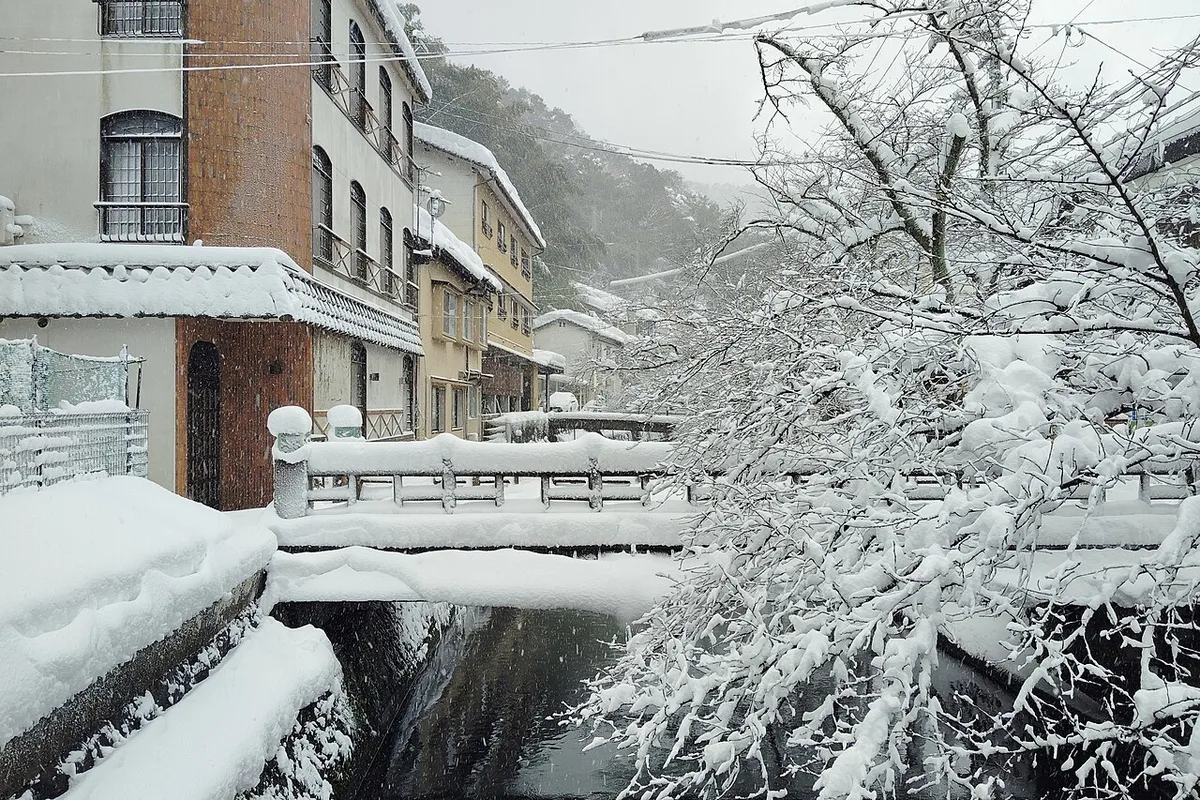
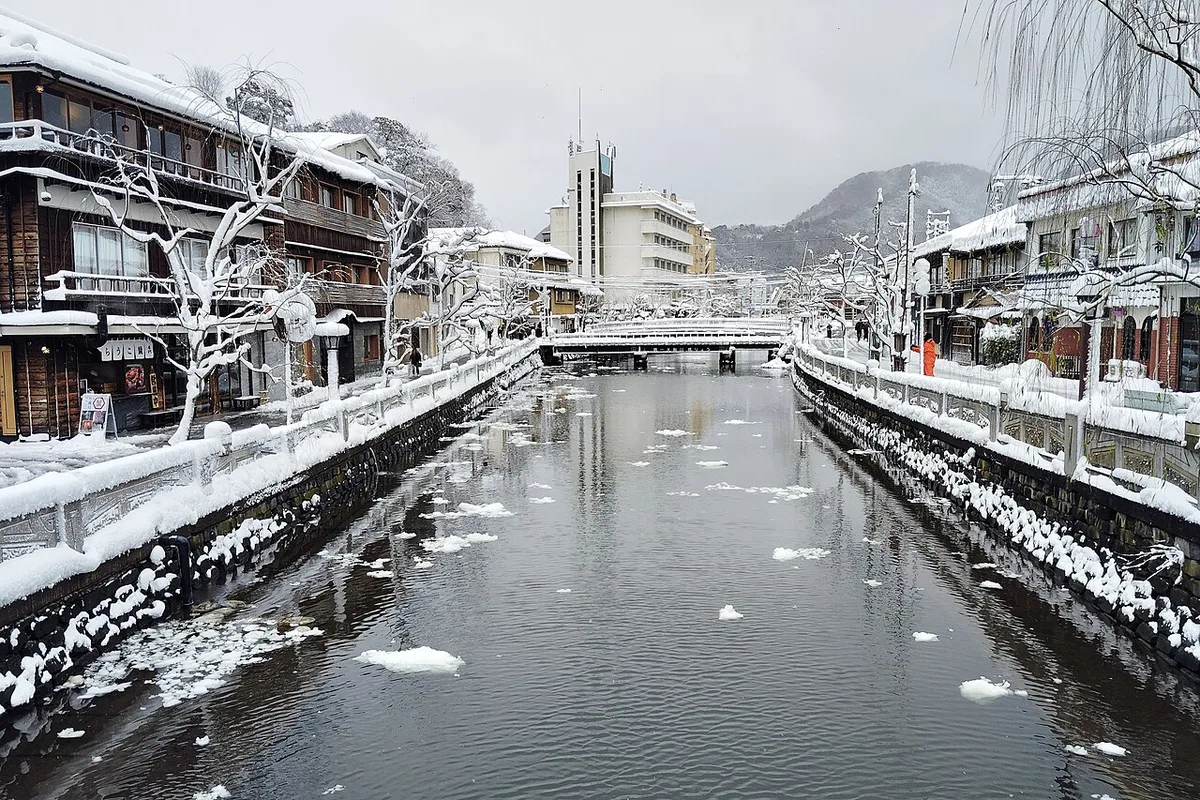
- 20:00 — Evening stroll and a second or third bath. After dinner, the town shifts register. The willow trees along the Otani River are lit from below, the bridges glow, and the streets are quieter. This is the ideal time for Satono-yu — a newer bath on the south end of the strip with modern facilities and a rotenburo (outdoor pool) — or Yanagi-yu, the oldest-looking of the seven, which has a traditional wooden front and is a favourite in the evening. The aim is not to tick off every bath on Day 1; pace yourself, as morning baths on Day 2 are part of the ritual too.
Day 2: Morning Bath, Ropeway, and Departure
Day 2 is unhurried by design. Breakfast is served at the ryokan, checkout is usually by 11:00, and the afternoon Limited Express gives you roughly three hours of free time to fill — which is exactly the right amount for the ropeway and any baths you missed the previous day.
- 08:00 — Breakfast and a morning bath. Most ryokan include breakfast in the room-rate package. The in-house meal is usually a spread of grilled fish, rice, pickles, miso soup, and local seasonal sides. After breakfast, fit in a morning bath at one of the sotoyu that opens early — Jizo-yu, the smallest of the seven, opens at 07:00 and has a quieter atmosphere than the larger baths on the main strip. A hot bath before a long train home is, according to anyone who has tried it, the correct way to end an onsen trip.
- 10:00 — Ropeway up Mt Daishi. Check out (leave luggage with the front desk or at the station lockers) and head to the ropeway base, which is a ten-minute walk from most central ryokan. The cable car makes a mid-station stop at Onsenji Temple — the Buddhist temple that has given Kinosaki Onsen its name and spiritual character since the 8th century, when a monk is said to have opened the first spring after a thousand days of prayer. The summit, roughly four minutes further up, has an observation deck overlooking the bay, the Maruyama River valley, and on clear days a sweep of the San'in coastline. There is a small café at the top. Budget about ninety minutes for the round trip plus temple and summit time; full details on timings and fares are in the ropeway guide.
- 12:00 — Last stroll, souvenirs, and any remaining baths. Kono-yu (near the ropeway base) and Mandara-yu (midway along the main street) are the two most likely to have been skipped on Day 1. Neither requires more than thirty minutes. Kinosaki's souvenir shops are concentrated on the main strip and run the full gamut from individually packed onsen-tamago and local sake to ceramic bath goods and hand-dyed cotton tenugui. The shops stay open through the lunch hour, so this window works without competing with the morning crowds.
- ~13:30 — Limited Express back to Kyoto or Osaka. Check the current Kinosaki-bound timetable before you arrive, as the Limited Express services run roughly every two hours. The 13:30 slot shown in most planning tools lands in Kyoto around 15:50 and in Osaka (Umeda/Osaka) around 16:10 — verify your specific service at Kinosaki Onsen Station on the morning of departure.
Getting There, Add-ons, and Trip-Planning Tips
The Limited Express Kinosaki from Kyoto and the Limited Express Kounotori from Osaka/Shin-Osaka are the standard approaches; both require a reserved seat on busy weekends and long weekends. The Japan Rail Pass covers both services. Full booking guidance, IC card compatibility, and bus alternatives from Osaka are in the Kinosaki Onsen transport guide.
If you have a third day to spare, the Genbudo basalt caves — about fifteen minutes by bus from Kinosaki — are a genuinely striking geological site, with hexagonal basalt columns formed by lava flows and several cave chambers open to visitors. Kinosaki Marine World aquarium, on the coast nearby, is popular with families. Further afield, the San'in coastline and Amanohashidate, one of Japan's three official "views" (a pine-tree sandbar stretching across Miyazu Bay), make a logical extension if you have your own transport or are willing to piece together local bus connections.
For seasonal timing, autumn is the most visually appealing window — the maple colours along the river peak in October and November, and the weather is reliably cool enough to appreciate a long soak. Winter, from November to March, brings the crab-plan menus that many visitors travel to Kinosaki specifically for. Spring cherry blossom along the canal is beautiful but brief and draws larger crowds. Summer is the least recommended season: the combination of humidity and outdoor walking in yukata is genuinely uncomfortable, and the baths feel less restorative in the heat.
Frequently Asked Questions
How do I get to Kinosaki Onsen from Kyoto or Osaka?
From Kyoto, take the Limited Express Kinosaki (direct, no transfer) to Kinosaki Onsen Station — approximately 2 hours 20 minutes, roughly ¥5,500 for a reserved seat (2026 estimate; covered by the Japan Rail Pass). From Osaka or Shin-Osaka, board the Limited Express Kounotori, approximately 2 hours 40 minutes. Services run every two hours on most days; reserve seats in advance on busy weekends and national holidays. Full timetable, booking, and bus alternatives are covered in the Kinosaki Onsen transport guide.
How many days do you need in Kinosaki Onsen?
One night (two days) is the standard and recommended stay. It gives you enough time to work through five or six of the seven sotoyu baths, enjoy the evening atmosphere along the willow-lined canal, take the ropeway up Mt Daishi on your second morning, and still reach your next destination by mid-afternoon. A day trip from Kyoto is possible but leaves you with only four to five hours on the ground — useful if an overnight stay does not fit your schedule, but not the same experience as arriving with the intention of slowing down.
What is the Yumepa pass and how does it work?
The Yumepa is a communal bath pass that gives unlimited access to all seven public sotoyu in Kinosaki Onsen during your stay. It is issued to you by your ryokan at check-in and is included in the room rate at most accommodation in town. Present it at the entry desk of each sotoyu instead of paying the individual admission (~¥800–¥900 per bath, 2026 planning estimate). The pass is valid for your full stay; a one-night guest can use it on both the afternoon of Day 1 and the morning of Day 2.
Which sotoyu baths should I visit first in Kinosaki Onsen?
Most visitors start with Goshono-yu and Ichino-yu on their first afternoon — both are central, open from early afternoon, and have the most recognisable architecture. Ichino-yu in particular, with its mock-cave entrance, is the image most associated with Kinosaki. For the evening session, Satono-yu offers a modern outdoor pool that is especially pleasant in cool weather. Yanagi-yu, the most traditionally styled bath on the strip, is a favourite for a final morning soak before departure. The full rundown of all seven baths, their hours, and what sets each one apart is in the sotoyu guide.
Is Kinosaki Onsen worth visiting in winter?
Yes — many regular visitors argue that winter is the best season. The crab dinner plans (matsuba crab, November through March) are genuinely outstanding and are a large part of why Kinosaki attracts repeat visitors from Osaka and Kyoto each year. Cold air also makes the transition between the outdoor sections of the baths and the steaming water far more dramatic than in summer. Snow occasionally dusts the rooftops and willows, which produces the most atmospheric version of the town's already-photogenic canal street. Book ryokan well ahead for winter weekends, as crab-plan rooms sell out two to three months in advance.
Kinosaki Onsen earns its reputation as one of Japan's most satisfying overnight detours. The combination of a walkable town centre, a communal bath culture that encourages multiple sessions in a single day, and ryokan dinner plans anchored to the season makes it almost impossible to leave having felt you wasted time. The one-night, two-day structure above is the distilled version of that experience — enough to work through the best baths, climb the ropeway, and eat one outstanding kaiseki meal without feeling like you are racing a checklist.
The key variables to decide before booking are the season and whether you want the crab plan. Get those right and the rest — the baths, the strolls, the morning ropeway ride — falls into place naturally. For the full picture of what the town has to offer, the Kinosaki Onsen attractions guide covers every sight, activity, and seasonal event worth knowing about before you travel.
For further background on the town's history and culture, see Kinosaki Onsen on Wikipedia.
Free guide: Japan's Hidden Gems
12 under-the-radar places beyond Tokyo & Kyoto — with the best season to visit each and a local tip you won't find in the guidebooks.
You might also like


Continue reading
More guides you'll find useful


