

Kinosaki Onsen Ropeway and Onsenji Temple (2026)
Ride the Kinosaki Onsen Ropeway to Onsenji Temple and the summit observation deck: 2026 fares, operating hours, seasonal closures, and the hot-spring pilgrimage tradition explained.
On this page
Rising from the north-west edge of town above the Kono-yu bathhouse, the Kinosaki Onsen Ropeway climbs Mt Daishi (Daishiyama) in two stages: a mid-station where Onsenji Temple sits quietly among cedar trees, then a final push to a summit observation deck with views across the whole onsen town, the Maruyama River plain, and the Sea of Japan beyond. For a place as compact as Kinosaki, where most sightseeing happens on foot along the willow-lined canal, a ropeway ride and a mountain temple add a completely different dimension to the day. Our full Kinosaki Onsen attractions guide places the ropeway in context alongside the town's seven public baths and other highlights.
Onsenji Temple is not simply a scenic detour. It is Kinosaki's guardian sanctuary and, historically, the reason the springs became a pilgrimage destination at all. For centuries, bathers were expected to climb the mountain to receive the temple's blessing before stepping into any of the town's waters. That relationship between mountain and village defines the character that sets Kinosaki apart from Japan's other onsen towns.
This 2026 guide covers both stages of the ropeway, what to do at Onsenji and at the summit observation deck, fare and hour estimates, and the option to walk up via the stone pilgrim path if you prefer to earn the views on foot.
The ropeway is closed on the 2nd and 4th Thursdays of each month — always confirm the schedule before building your day around it, especially if you are visiting mid-week on a fixed itinerary.
Key Takeaways
- The ropeway climbs in two stages: alight at the mid-station for Onsenji Temple, or ride directly to the summit observation deck overlooking Kinosaki and the Sea of Japan.
- Onsenji Temple was founded in the 8th century by the monk Dochi Shonin, whose 1,000 days of prayer on Mt Daishi are credited with revealing Kinosaki's hot springs — pilgrims historically received the temple's blessing before bathing in the town below.
- The Yakushido main hall enshrines Yakushi Nyorai, the Medicine Buddha; the Homotsukan treasure hall holds important cultural properties associated with the temple's founding history.
- The summit station has a café known for drip coffee and a platform for kawarake-nage — the traditional lucky-disc throwing ritual performed over the valley.
- The 2026 estimated round-trip fare is roughly ¥1,200 for adults (one-way ~¥900); gondolas run approximately every 20–30 minutes from 09:00 to 16:30.
The Two-Stage Ropeway: From Town to Summit
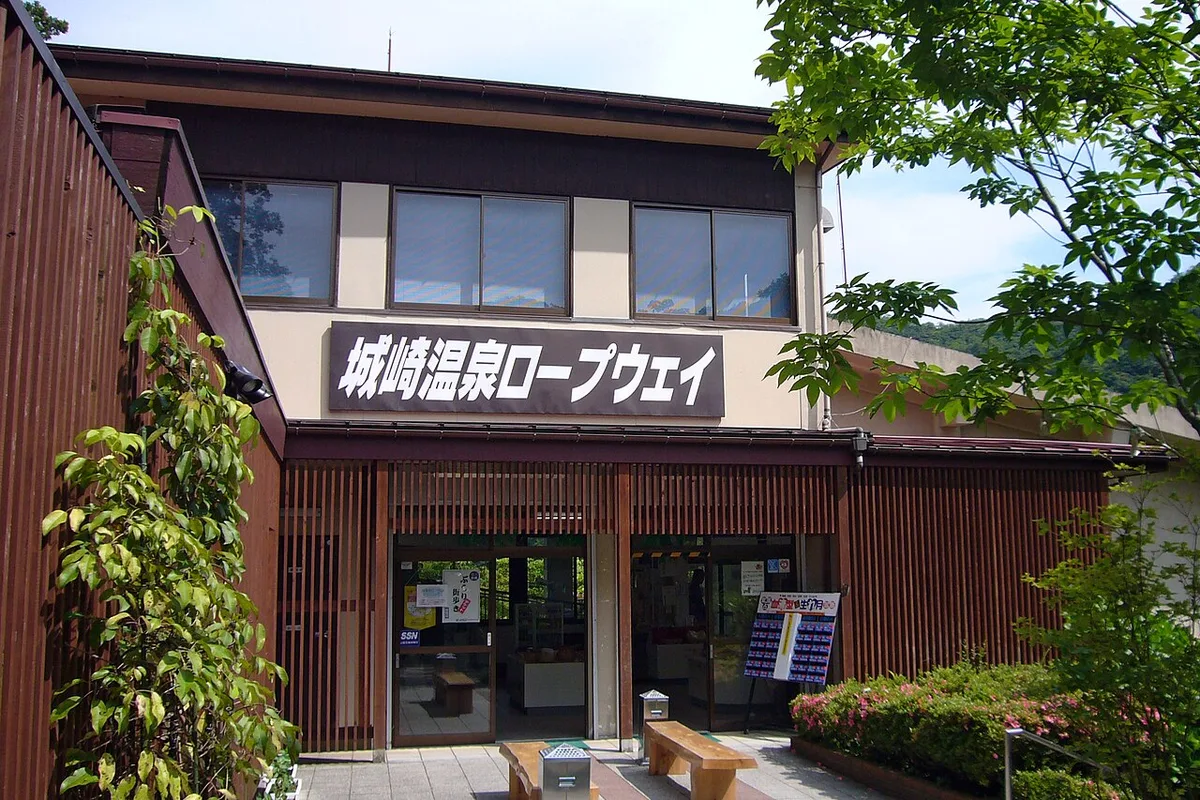
The Kinosaki Onsen Ropeway departs from a station near Kono-yu at the north-west end of the main street. The journey to the summit takes roughly seven minutes in total, but the gondola pauses at a mid-station that serves Onsenji Temple before continuing upward — making the ride feel more like a genuine mountain ascent than a simple tourist lift. The cabin is compact, as is typical of rural Japanese ropeway attractions, with enough space for a small group and a clear view of the town shrinking below as the treeline closes in.
At the mid-station, most visitors alight to explore Onsenji. The gondola continues to the summit every 20–30 minutes, so you can set your own pace: spend as long as you like at the temple precinct, then board again when you are ready. On the descent, both stages are served in reverse, so there is no need to time your visit around a fixed schedule. If your main interest is the panoramic view from the top rather than the temple, you can stay aboard for the uninterrupted ascent and call in at Onsenji on the way back down.
Even the gondola ride itself offers something: midway up, the willow-lined canal and the clustered ryokan rooftops become visible as a single composition for the first time. From street level, Kinosaki feels like a series of corridors; from above, the logic of the town — the canal as its spine, the mountains as its frame — becomes immediately clear.
Onsenji Temple and the Hot-Spring Pilgrimage Tradition
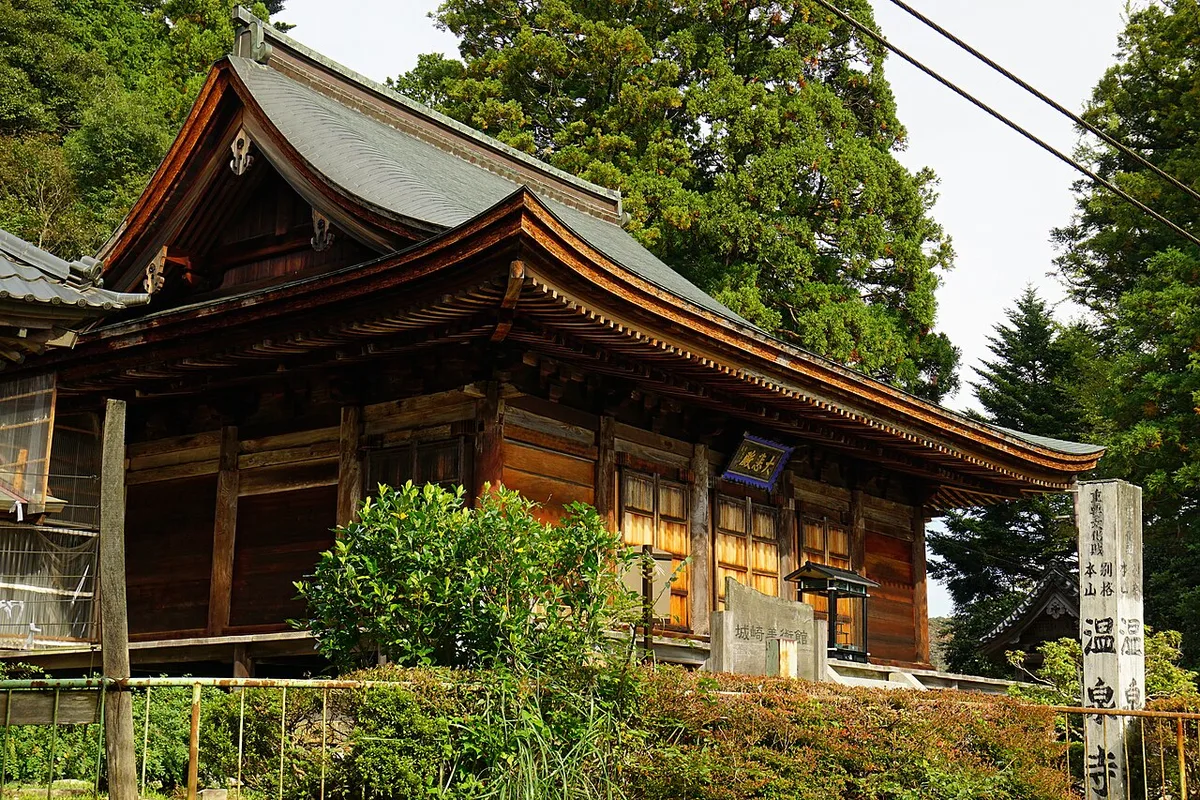
Onsenji Temple (温泉寺) is a Tendai/Shingon mountain sanctuary traditionally attributed to the 8th-century monk Dochi Shonin. According to local tradition, Dochi Shonin spent 1,000 days in prayer on Mt Daishi before Kinosaki's hot springs were revealed — and for much of the town's history, those springs belonged to the temple in a very practical sense. Pilgrims and bathers were expected to climb the mountain and receive Onsenji's official blessing before they were permitted to use the waters below. The thermal baths and the mountain sanctuary were understood as a single sacred complex, inseparable from one another.
The main hall, the Yakushido, enshrines Yakushi Nyorai — the Medicine Buddha, patron of healing and bodily wellbeing. It is an apt choice of deity for a temple that presides over a hot-spring town. The Homotsukan treasure hall on the grounds holds a collection of cultural properties connected to the temple's long history and the Kinosaki founding legend. The Kinosaki Art Museum and the Mihotoke-no-yado area occupy the same mountain flank, adding an unexpected contemporary dimension to the precinct.
The stone pilgrim path that runs up the mountain from the town below predates the ropeway by centuries and is still walkable. It is a steeper arrival than the gondola, but a more atmospheric one — particularly in the early morning, before the ropeway traffic begins and the cedar forest above town is at its quietest. Many visitors combine the two: walk up via the pilgrim path and ride the ropeway down, or vice versa. Either direction, the temple grounds reward unhurried time rather than a rushed transit between gondola stages.
The Summit: Views, Coffee, and Kawarake-nage
The summit station sits above the Onsenji mid-stop and rewards the additional few minutes of gondola travel with a panorama that puts Kinosaki's small scale into sharp perspective. From the observation deck, the entire town is legible at once: the narrow canal running through the centre, the ryokan rooftops pressed along its banks, and beyond them the Maruyama River plain opening towards the north coast. On clear days, the Sea of Japan is visible at the horizon — a reminder that Kinosaki sits on the northern side of the Chugoku mountains, facing the Japan Sea coast rather than the Pacific.
The summit café is known locally for its hand-drip coffee — an unhurried stop with the view from the terrace. It earns its place on the visit not through ambition but through position: the combination of altitude, fresh mountain air, and a properly made cup of coffee after the short walk from the gondola platform is genuinely pleasant. On autumn days in particular, when the foliage colours the slopes below, the terrace becomes a natural place to linger.
Kawarake-nage — the throwing of small clay saucers over the valley as a purification and luck ritual — is also practised at the summit. The discs are available near the observation deck; you throw them out over the hillside with a wish. The tradition appears at mountain sites across Japan and has roots in Shinto purification rites. It is a small gesture, but it anchors the summit stop within a recognisably Japanese ritual framework rather than leaving it as a purely scenic exercise.
Fares, Hours, and Getting to the Ropeway
The table below summarises 2026 planning estimates. All prices and hours are approximate — confirm current information before visiting, as these can change without notice.
| Ticket | 2026 Estimate (Adult) | Notes |
|---|---|---|
| Round-trip | ~¥1,200 | Recommended for most visitors |
| One-way | ~¥900 | Useful if walking down via the pilgrim path |
| Departures | Every ~20–30 minutes | From ~09:00 to ~16:30 |
| Closed | 2nd and 4th Thursdays | Confirm before visiting |
The ropeway station sits at the north-west end of Kinosaki's main street, roughly a ten-minute walk from Kinosaki Onsen Station. The route follows the canal, making it a natural last stop after an afternoon moving between the seven public baths — or an early first stop before the bathhouses get busy. If you are planning the walk in yukata, our Kinosaki yukata guide covers rental shops and the practicalities of navigating the town in traditional dress.
To slot the ropeway into a full day in town, the Kinosaki Onsen itinerary sequences the mountain visit alongside the seven sotoyu public baths and allows realistic time at each. Visitors arriving from further afield will find train access details — from Kyoto, Osaka, and Kyoto — in the how to get to Kinosaki Onsen guide. For the full visitor information, including accessibility notes and current contact details, see the ropeway visitor details page.
Frequently Asked Questions
How much does the Kinosaki Onsen Ropeway cost in 2026?
The 2026 planning estimate for a round-trip adult ticket is roughly ¥1,200. A one-way ticket is approximately ¥900 — useful if you plan to walk down via the stone pilgrim path. Confirm current prices directly with the ropeway before your visit, as these are planning estimates only.
When is the Kinosaki Onsen Ropeway closed?
The ropeway is typically closed on the 2nd and 4th Thursdays of each month for maintenance. Operating hours are approximately 09:00–16:30 on open days, with gondolas departing every 20–30 minutes. Always confirm the schedule before visiting, especially if your trip falls mid-week.
Can I walk up to Onsenji Temple instead of taking the ropeway?
Yes. A stone pilgrim path leads up the mountain from the town below and has been used by bathers and pilgrims for centuries, long before the ropeway existed. The ascent is steeper than the gondola ride but more atmospheric, particularly in the early morning. Some visitors walk up and ride the ropeway down, or do the circuit in reverse — either works well.
What can you see from the Kinosaki Onsen Ropeway summit?
The summit observation deck looks out over the whole of Kinosaki Onsen town — the canal, ryokan rooftops, and willow-lined streets — and across the Maruyama River plain to the Sea of Japan on clear days. There is also a café known for drip coffee and a platform for kawarake-nage, the traditional lucky-disc throwing ritual.
How long should I spend at the ropeway and Onsenji Temple?
Allow around 1.5 to 2 hours for the full experience: the ropeway ride up, a visit to Onsenji Temple at the mid-station (including the Yakushido hall and Homotsukan treasure hall), the second gondola leg to the summit, time on the observation deck, and the ride back down. Add extra time if you plan to walk the stone pilgrim path in either direction.
The Kinosaki Onsen Ropeway earns its place on a Kinosaki itinerary in ways that go beyond the practical. The views from the summit are a genuine reward — the kind that show you a town you thought you already understood from a completely different angle. But Onsenji Temple, at the mid-station, is arguably the more significant stop: a mountain sanctuary whose founding legend is inseparable from the springs below it, and whose presence explains why Kinosaki developed into a pilgrimage destination rather than simply a resort. Taking the ropeway is, in a small way, participating in a tradition that predates the gondola by more than a thousand years.
At roughly ¥1,200 for a round-trip, the ropeway is among the more affordable half-hours you can spend in Kinosaki — particularly when combined with a slow walk along the canal in yukata beforehand and an evening moving between the seven sotoyu public baths. For everything happening at street level, the Kinosaki Onsen attractions guide has the full picture.
For trip-planning details, see Kinosaki Onsen on Wikipedia.
Free guide: Japan's Hidden Gems
12 under-the-radar places beyond Tokyo & Kyoto — with the best season to visit each and a local tip you won't find in the guidebooks.
You might also like


Continue reading
More guides you'll find useful


