

Amanohashidate Day Trip from Kyoto and Osaka (2026)
Planning an Amanohashidate day trip from Kyoto or Osaka in 2026? Get the transit times, a day vs overnight comparison table, a one-day itinerary, and tips for pairing with Kinosaki Onsen.
On this page
Amanohashidate — one of Japan's celebrated Three Views — sits on the north-western coast of Kyoto Prefecture, roughly two hours from Kyoto Station on the direct Limited Express Hashidate. That transit time puts it firmly within day-trip range from Kyoto, but only just: an early departure is not optional if you want the matanozoki viewpoint, the sandbar crossing, and Chion-ji Temple without feeling rushed on the return. This guide answers the question honestly and shows you what to prioritise.
Coming from Osaka, add another 20–30 minutes each way, though the same San'in coast line reaches travellers starting from Osaka without a complicated transfer. Either way, the landscape you arrive at — pine trees arching over a kilometre-long sandbar, the bay framed by green mountains, fishing boats low in the water — repays every minute of the journey. If you have already browsed the Amanohashidate attractions overview and decided to visit, this page answers the practical question: can you do it in a day, and if so, how?
The short answer is yes. The more useful answer is a table — but first, the quick facts.
Families and groups can also compare Kyoto–Amanohashidate rail and rental-car costs, including tolls, parking and the flexibility to add coastal stops.
The Limited Express Hashidate runs roughly every one to two hours from Kyoto Station. A seat reservation (~¥520, 2026 planning estimate) is worth booking the evening before in peak season — the train fills quickly on weekends and during autumn foliage.
Key Takeaways
- The direct Limited Express Hashidate from Kyoto Station takes about two hours each way; leave by 8:00–8:30 AM and you will have five to six hours on site.
- A single day is enough for the three headline experiences: the matanozoki viewpoint from Kasamatsu Park, the sandbar walk or cycle, and Chion-ji Temple at the south end.
- An overnight stay unlocks Ine no Funaya boat-house village and Nariai-ji temple at a relaxed pace, and lets you catch the bay at dawn or dusk without racing for a train.
- Amanohashidate sits on the same San'in coast as Kinosaki Onsen; the two combine into a natural two-day onsen-and-scenery loop from Kyoto.
- Osaka visitors are better served treating Amanohashidate as an overnight, since the extra 30 minutes each way makes a same-day return tight.
Is Amanohashidate a Doable Day Trip from Kyoto?
Compare group fares and driving expenses with the Kyoto–Amanohashidate car vs train calculator. Choose a return journey for a day trip and allow extra time for stops beyond the station.
Yes — with an early start. The direct Limited Express Hashidate departs Kyoto Station on the JR San'in Main Line and Kitakinki Tango Railway and arrives at Amanohashidate Station in roughly two hours, placing the round-trip travel time at around four hours. That is long by the standard of Kyoto's usual day trips (Nara: 45 minutes, Uji: 17 minutes), but entirely manageable for a single dedicated day out.
The critical variable is departure time. Catch the first or second Hashidate of the morning — leaving Kyoto around 7:35–8:20 AM — and you arrive before 10:00 AM with five to six hours before the last sensible return service of the afternoon. Leave later than 9:00 AM and on-site time compresses to four hours, which is enough for the sandbar and one viewpoint, but uncomfortably tight if you also want to linger. Our how to get to Amanohashidate guide has the full timetable breakdown, IC card tips, and which seat numbers to request for the best bay views on the way in.
From Osaka, the Kounotori limited express from Shin-Osaka runs the same coast and takes roughly two hours 30 minutes, making a same-day return possible but long. Osaka visitors who want a relaxed experience are better served treating Amanohashidate as an overnight, or connecting via Kyoto and accepting a slightly shorter on-site window.
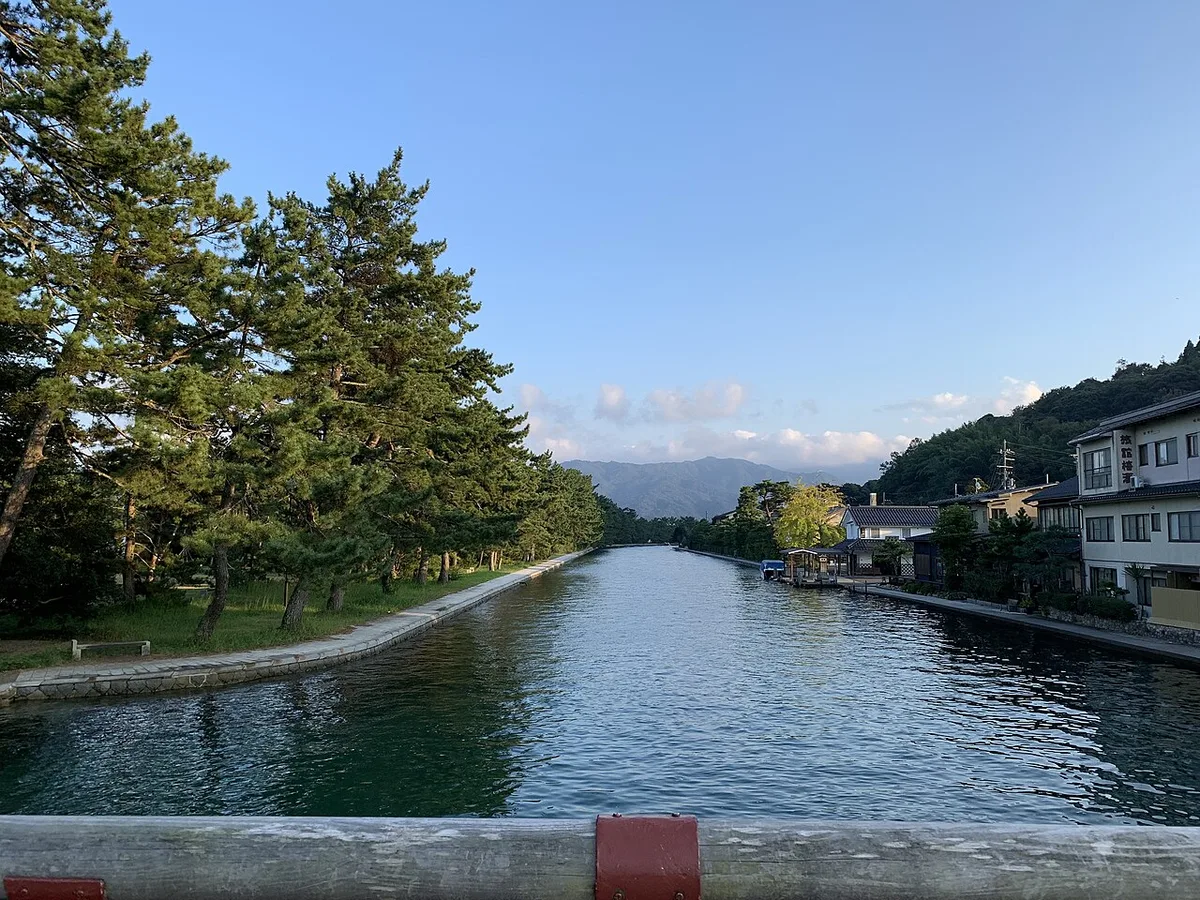
Day Trip vs Overnight: What Is the Difference?
The honest difference is not about the headline sights — you can tick the three main experiences comfortably in a day — but about pace, light, and the outlying attractions north of town that a compressed timetable cannot reach.
| What you get | Day trip | Overnight (1 night) |
|---|---|---|
| Matanozoki view, Kasamatsu Park | Yes | Yes |
| Sandbar walk or cycle (3.6 km) | Yes | Yes |
| Chion-ji Temple, south end | Yes | Yes |
| Lunch in Amanohashidate town | Yes (quick) | Yes (relaxed) |
| Ine no Funaya boat-house village | Not realistic | Yes (morning or afternoon) |
| Nariai-ji temple, north ridge | Not realistic | Yes |
| Bay at dawn or sunset | No | Yes |
| Ryokan dinner and evening stroll | No | Yes |
For the full difference in what the viewpoints offer across different times of day — why early-morning light on the sandbar looks nothing like midday — our Amanohashidate viewpoints and matanozoki guide covers north-versus-south angles and when to be at each platform for the best conditions.
What Fits into One Day?
A well-planned single day gets you the three headline experiences without feeling hurried, provided you are at the ropeway station by 10:00 AM. Order matters.
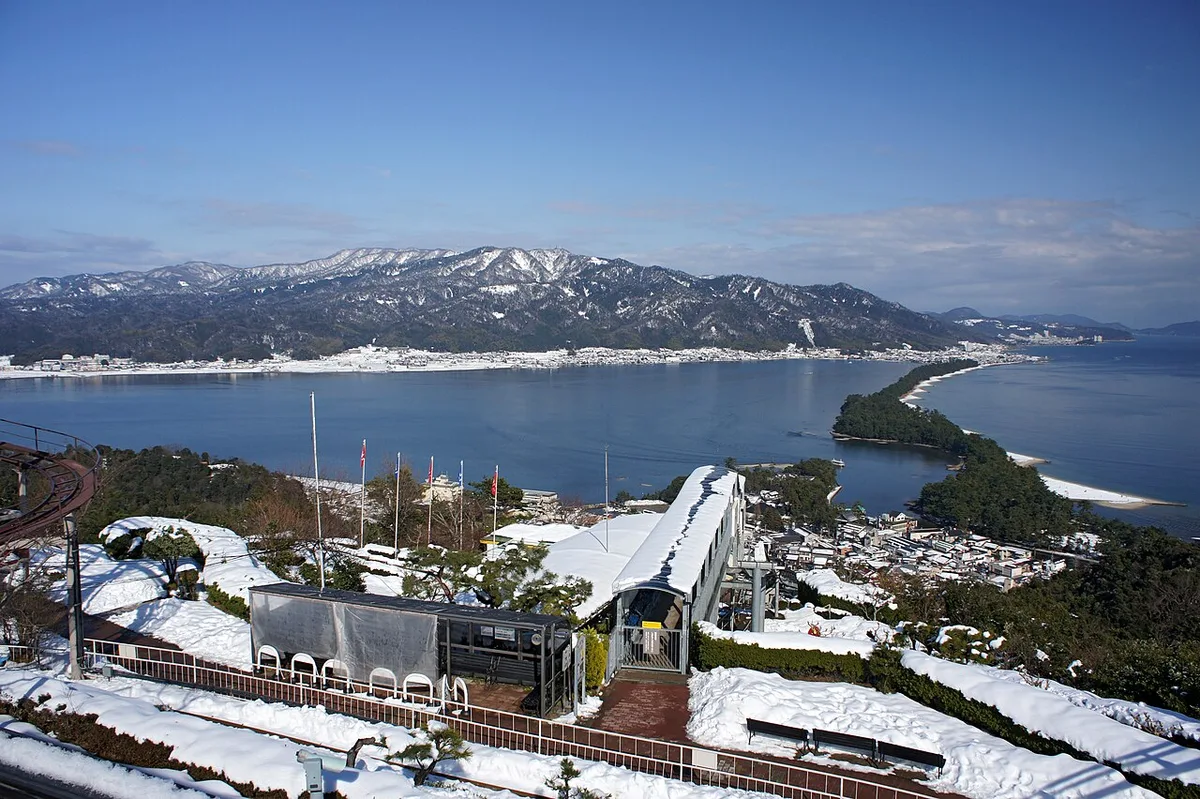
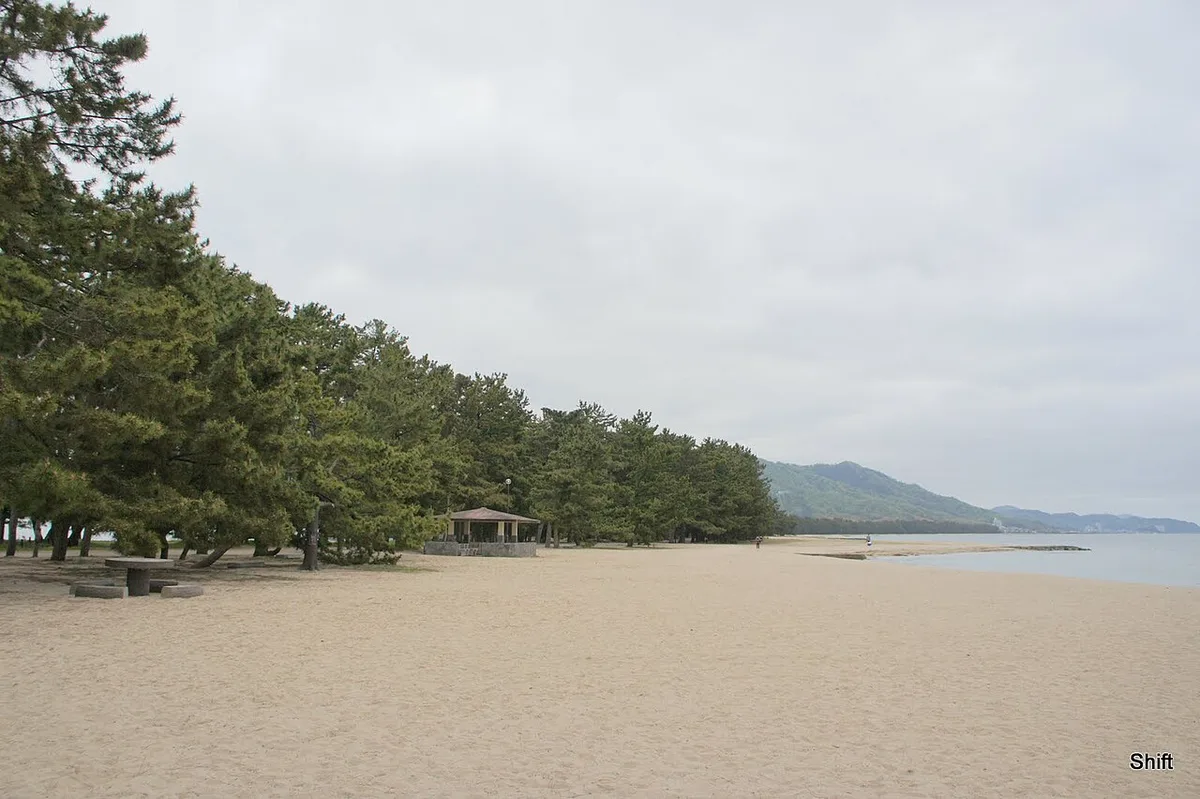
Start with the chairlift or ropeway up to Kasamatsu Park. Morning light falls across the bay from the east, making the sandbar glow against the dark water, and crowds are thin until around 11:00 AM. Do the matanozoki lean-and-look from the viewing platform while you are up there — bending over and looking at the bay upside-down through your legs genuinely transforms the sandbar into a "sky bridge" floating between clouds. Come back down, hire a bicycle from one of the rental shops near the station (roughly ¥600–700 for two hours, 2026 planning estimate), and ride the sandbar from south to north. The track is flat, 3.6 km end-to-end, and passes through a corridor of pine trees that cuts any sea breeze. Lock the bike at the north end, walk into Chion-ji Temple, pick up one of the temple's clover-shaped charms if the stalls are open, and double back for lunch. The sandbar walking and cycling guide covers rental logistics, the access gates that close at certain tides, and which stretches are best on foot.
If you want suggested timings mapped out hour by hour, the full one-day Amanohashidate itinerary includes the handful of food options open before 11:00 AM and notes where the circuit tightens if you arrive after 10:30.
Pairing Amanohashidate with Kinosaki Onsen
Amanohashidate's position on the San'in coast makes it a natural companion to Kinosaki Onsen, a town of seven public bathhouses about 50 minutes north by local train. Together they form a two-day loop from Kyoto that covers the most scenic stretch of Japan's Sea of Japan coastline — each destination distinct enough that the two days feel varied rather than repetitive.
The typical structure: travel to Amanohashidate on day one, spend the afternoon on the sandbar and at the viewpoints, check into a ryokan along the bay front, and depart for Kinosaki on the San'in Kinki Scenic Railway the following morning. Spend the second day cycling between Kinosaki's bathhouses in yukata, take the afternoon for the willow-lined canal and the town's small shops, and return to Kyoto by Kinosaki express in the evening. Round-trip travel time for the loop from Kyoto is roughly equivalent to two individual day trips, but you save the backtracking and gain two unhurried experiences instead of two compressed ones.
The same overnight format also makes space for the Ine no Funaya boat-house village — a settlement of historic funaya (boat garages) 30 minutes north of Amanohashidate by sightseeing boat — which simply does not fit a one-day turnaround from Kyoto without sacrificing the sandbar entirely.
For broader context on what Kyoto's sights offer as a base, or to compare the day-trip options available to visitors based in Osaka, those overview guides map the full range of options alongside Amanohashidate.
Frequently Asked Questions
How long does it take to get to Amanohashidate from Kyoto?
The direct Limited Express Hashidate from Kyoto Station takes roughly two hours each way (2026 timetable — confirm on the JR or Kyoto Tango Railway website before travelling). The train runs approximately every one to two hours. A reserved seat is worth booking in advance on weekends and peak-season days. The full logistics, including IC card coverage and the split between JR and Kitakinki Tango Railway sections, are covered in our how to get to Amanohashidate guide.
Is Amanohashidate worth it as a day trip?
Yes, provided you leave Kyoto on the first or second Hashidate of the morning (around 7:35–8:20 AM). An early departure gives you five to six hours on site — enough for the matanozoki viewpoint at Kasamatsu Park, the sandbar walk or cycle, and Chion-ji Temple, with time for lunch. The journey is long by Kyoto-day-trip standards, but the coast scenery and the Three Views setting make it a rewarding full day out.
What can I realistically see in one day at Amanohashidate?
The three headline experiences fit comfortably into a five-to-six-hour window: the ropeway or chairlift up to Kasamatsu Park for the matanozoki (upside-down) view; a bicycle or walk along the 3.6 km pine-lined sandbar; and Chion-ji Temple at the north end of the sandbar. Lunch in the town rounds out the day. The outlying sights — Ine no Funaya boat-house village and Nariai-ji temple on the ridge — are best left for an overnight visit.
Can I combine Amanohashidate and Kinosaki Onsen in one trip?
Yes, and it is one of the best two-day loops you can build on Japan's Sea of Japan coast. Amanohashidate and Kinosaki Onsen are roughly 50 minutes apart by local train on the same San'in line. A typical itinerary: arrive in Amanohashidate on day one (sandbar, viewpoints, ryokan overnight), then continue north to Kinosaki on day two (bathhouse circuit, yukata stroll, evening Kinosaki express back to Kyoto). The two days complement each other well — scenery and walking on day one, onsen and town culture on day two.
Is Amanohashidate better as a day trip or overnight?
Both are worthwhile, but the overnight version is better if you have the nights to spare. A day trip from Kyoto covers the headline sights at pace. An overnight adds the bay at dawn, Ine no Funaya village, and a relaxed dinner at a bayside ryokan — none of which fit a same-day turnaround. For visitors based in Osaka, where the transit time is an additional 30 minutes each way, an overnight is strongly recommended over a day trip.
For most visitors staying in Kyoto, a well-managed day trip to Amanohashidate is satisfying rather than a compromise. The sandbar, the matanozoki view, and Chion-ji form a coherent half-day circuit, and the Limited Express Hashidate ride along the Sea of Japan coast is scenic enough that the journey earns its time. The upgrade to overnight is genuinely worthwhile — dawn over the bay and the Ine no Funaya boat houses at low tide add a dimension that a same-day return cannot match — but the day trip holds up on its own terms if your schedule does not bend.
For the full attraction-by-attraction picture of what to do once you arrive, start with our Amanohashidate attractions guide. For transit details and which morning Hashidate to book, the getting to Amanohashidate guide covers everything from Kyoto and Osaka in one place.
For trip-planning background, see Amanohashidate on Wikipedia.
Free: The Kyoto Essentials guide
Top things to do, where to stay, a perfect day plan, getting around, and the best time to go — a Kyoto mini-guide you can take offline.
You might also like


Continue reading
More guides you'll find useful


