

Chion-ji and Nariai-ji Temples at Amanohashidate (2026)
Visit Chion-ji and Nariai-ji temples at Amanohashidate in 2026 — what to see at each, admission prices, how to reach Nariai-ji by bus from Kasamatsu Park, and how both temples fit a full-day itinerary.
On this page
Amanohashidate's pine-covered sandbar has a temple anchoring each end of the bay. On the south shore, within walking distance of the station, Chion-ji (智恩寺) stands as one of Japan's three great Monju temples — a free-to-enter Rinzai Zen site dedicated to Monju Bosatsu, the bodhisattva of wisdom. On the north shore, above Kasamatsu Park and reached by mountain bus, Nariai-ji (成相寺) draws pilgrims on the Saigoku Kannon circuit with a five-storied pagoda, a bell wrapped in legend, and the highest viewpoint over the entire bay.
The two temples complement each other in rhythm as much as location. Chion-ji is loose and accessible — grounds you can wander before breakfast, a ritual that requires nothing more than curiosity, architecture that rewards slow looking. Nariai-ji earns its mountain setting: the bus ride, the admission fee, and the climb to the panorama deck are all part of a visit that feels like a proper pilgrimage stage rather than a quick stop. Together they give a full day at Amanohashidate genuine cultural depth beyond the sandbar walk.
This 2026 guide covers what to look for at each temple, how the two fit a logical day circuit, and the admission and access details you need to plan your visit.
Chion-ji and Nariai-ji sit at opposite ends of the bay, so visiting both means crossing the sandbar — or taking the ferry — between north and south shores. Nariai-ji is served by a mountain bus from Kasamatsu Park whose last departure varies by season; plan your north-end afternoon with the bus timetable in hand before committing to a late arrival.
Key Takeaways
- Chion-ji is one of the Nihon San Monju — Japan's three great Monju temples — dedicated to the bodhisattva of wisdom, and is free to enter at all times.
- The Chie-no-wa wisdom ring at Chion-ji is the signature ritual: passing through the stone lantern opening is said to bring Monju Bosatsu's blessing of wisdom to all who step through.
- Nariai-ji is the 28th temple on the 33-temple Saigoku Kannon pilgrimage and sits on the hillside above Kasamatsu Park, reached by bus from the park in about ten minutes.
- Nariai-ji's Nariaisan Panorama Observation Deck sits higher than Kasamatsu Park and offers the broadest unobstructed view of the full bay from end to end.
- A full day at Amanohashidate fits both temples comfortably — Chion-ji in the morning at the south end, Nariai-ji in the afternoon after the sandbar crossing and the Kasamatsu chairlift.
Chion-ji: Wisdom Temple on the South Shore
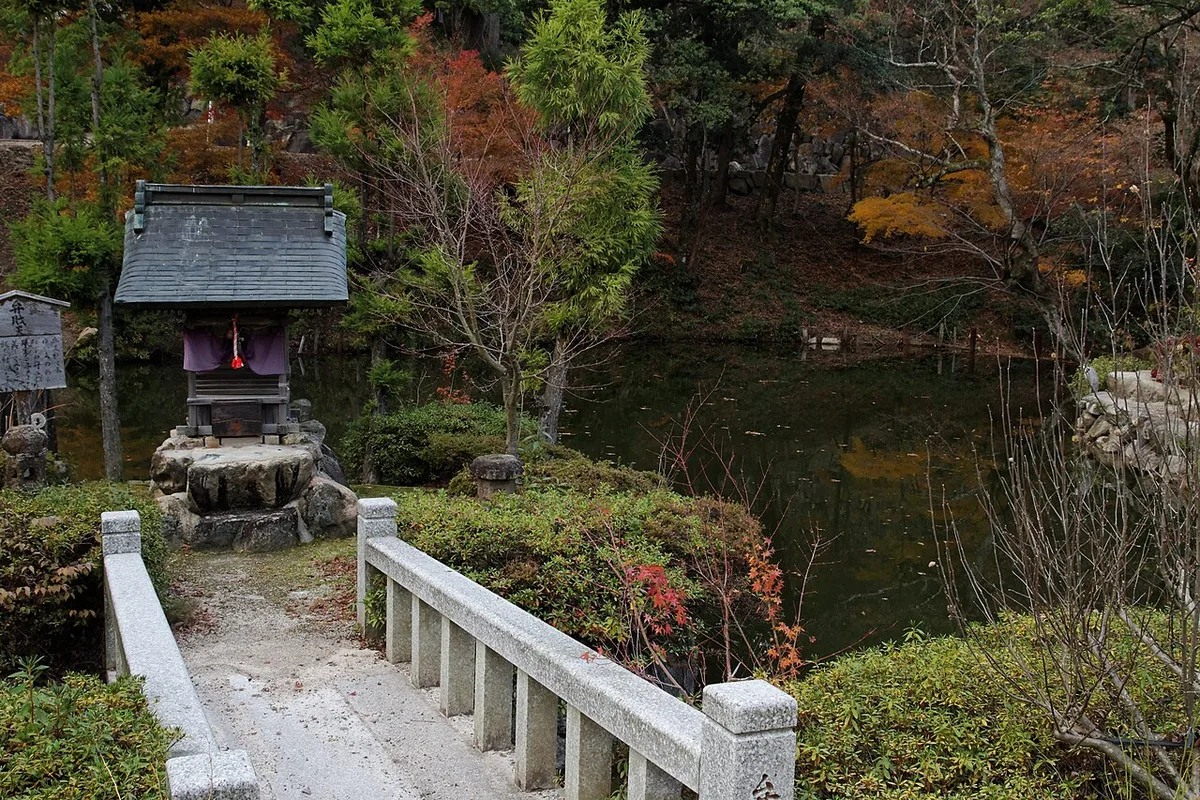
Chion-ji stands a couple of minutes' walk from Amanohashidate Station, at the southern tip of the bay beside the View Land cable car base. Its formal designation as one of the Nihon San Monju — Japan's three great temples of Monju Bosatsu — places it alongside Abe-Monjuin in Nara and Monjudo at Kokubunji in Yamagata as a principal pilgrimage site dedicated to the bodhisattva of wisdom. Students sitting university entrance examinations are among the most regular visitors, but the temple has a quietly welcoming atmosphere for every arrival regardless of purpose.
The core of the grounds is the Monju-do hall, Chion-ji's main worship building, where Monju Bosatsu is enshrined in a gilded interior riding his lion mount. In front of the hall stands the Chie-no-wa — the "wisdom ring" — a stone lantern with a circular opening cut through its body. Stepping through the ring is the signature ritual of the temple: tradition holds that the gesture brings Monju's blessing, and the queue on busy days is unhurried and welcoming to all, pilgrim or visitor alike.
A second tradition produces an unexpectedly decorative outcome. The Suehiro omikuji are fortune papers folded into a fan shape — "suehiro" meaning "spreading towards the wide future." Rather than tying them to a conventional wooden rack, visitors secure them to the branches of the surrounding pine trees. Over time the grounds accumulate a dense hanging of white paper fans that flutter and shift with every breeze off the bay, one of the more quietly beautiful sights on the south shore.
Two pieces of architecture complete the grounds. The Tahoto pagoda in the northwest corner — an Important Cultural Property, recognisable by its distinctive rounded lower storey and square upper tier — is notably different from the more common five-storied form. The Yamamon gate at the entrance is another point worth pausing at. Admission to the grounds is free at all times; omikuji cost around ¥100–300 per draw.
Nariai-ji: Pilgrimage Temple Above Kasamatsu
Nariai-ji (成相寺) occupies the forested hillside above the north end of the bay, set well above Kasamatsu Park. It is the 28th of the 33 temples on the Saigoku Kannon pilgrimage — the most venerable multi-temple Buddhist circuit in western Japan — and carries the particular atmosphere of a site that functioning pilgrims have been visiting for centuries. Admission is around ¥500 per adult (2026 estimate; confirm at the entrance).
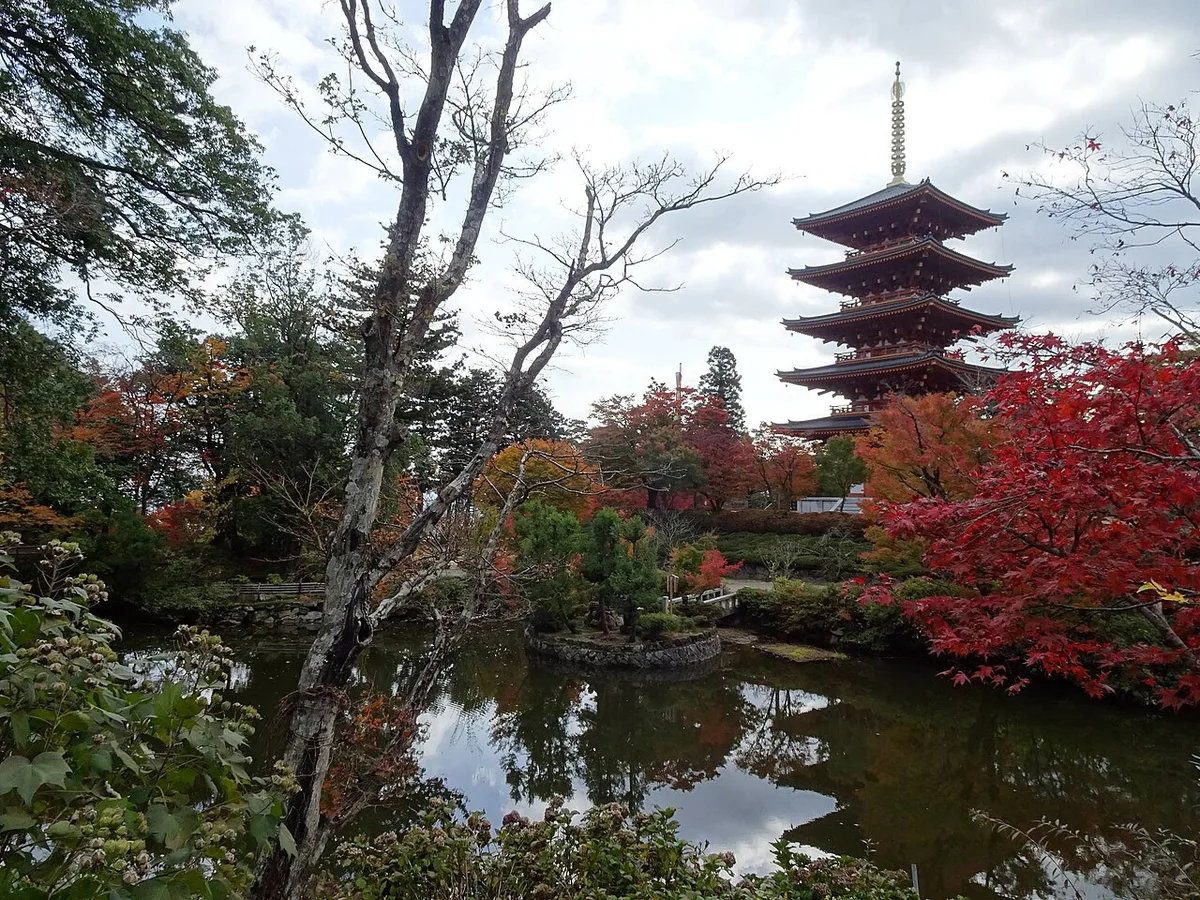
The approach by temple bus from Kasamatsu Park takes roughly ten minutes up a winding mountain road. The five-storied pagoda is the first major sight on arrival: vivid vermilion lacquerwork, five tapering tiers, and a backdrop of cedar forest. It is a stronger subject for photographs than many of the weather-worn pagodas elsewhere in the region and reads well in every season, from spring cherry blossom in the surrounding trees to autumn maple colour on the approach road.
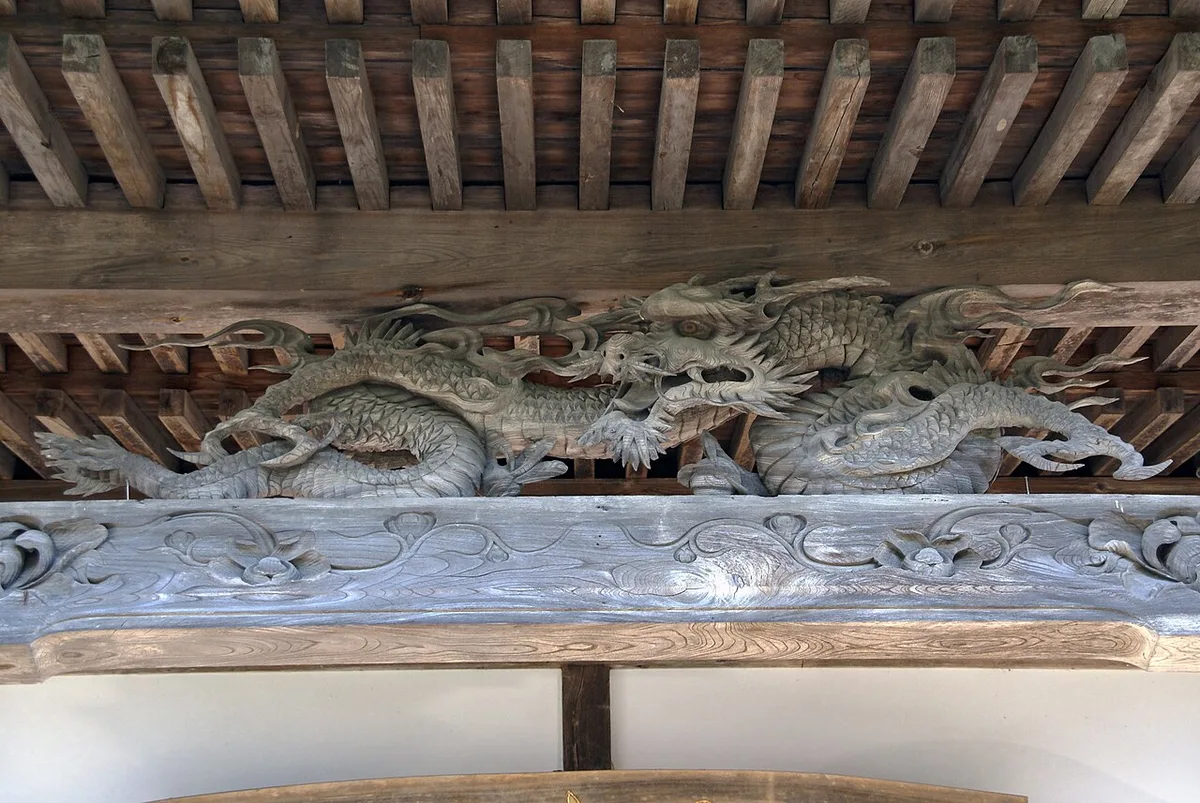
Two legendary objects inside the grounds draw specific pilgrims alongside general visitors. The Nakichi-no-Kane — the "Bell of a Crying Woman" — is a cast bell associated with the story of a woman who gave up her son so that the bell could be made; it is said to emit sounds like weeping on the anniversary of her loss. Nearby, a dragon carving attributed to Hidari Jingoro, the legendary 17th-century sculptor also credited with works at Nikko's Toshogu, is famous as the "left-facing dragon." Jingoro's dragons almost invariably face right; this one's opposite gaze is a detail that pilgrims seek out deliberately.
Above the main compound, a road climbs further to the Nariaisan Panorama Observation Deck — the highest public viewpoint over Amanohashidate bay, sitting noticeably above Kasamatsu Park below. On clear days the full arc of the sandbar spreads across the water from north end to south, with the surrounding mountains framing the scene on both sides. It is the single best vantage point for reading the geography of the bay as a whole, and worth the short walk from the temple gate to reach it.
How Both Temples Fit Your Amanohashidate Visit
The bay's geography makes a natural circuit: south-end start at Chion-ji, sandbar crossing, north-end finish at Nariai-ji. Chion-ji pairs naturally with View Land — the cable car viewpoint on the south shore — and is easy to fit in before or after the View Land ascent. Nariai-ji pairs with Kasamatsu Park on the north shore; both the park and the temple sit on the same hillside, with the chairlift giving access to Kasamatsu and the bus continuing up to Nariai-ji from there.
Our guide to walking and cycling the sandbar covers the crossing between shores in detail, including where to hire a bicycle and how long the pine-lined route takes on foot. The viewpoints and matanozoki guide covers Kasamatsu Park and View Land side by side, including the upside-down viewing tradition most visitors do at Kasamatsu — Nariai-ji's own panorama deck above the park is the logical next stop after that.
For a mapped day sequence combining the sandbar, both viewpoints, and both temples, our full-day Amanohashidate itinerary gives a practical schedule from arrival to departure. If you are travelling from Kyoto, the day trip from Kyoto guide includes transit times and first-train options to make an early south-to-north circuit feasible within a return-by-evening schedule.
Admission, Hours, and Getting There
The table below summarises 2026 planning estimates for both temples. Confirm all prices and hours before your visit — seasonal variation and policy changes are common at smaller pilgrimage temples.
| Temple | Admission (2026 Estimate) | Hours (Approx.) |
|---|---|---|
| Chion-ji grounds | Free (omikuji ~¥100–300) | 08:00–16:30 |
| Nariai-ji grounds | ~¥500 per adult | 08:00–16:30 |
Chion-ji is a two-minute walk from Amanohashidate Station on the JR Miyazu Line. Reaching the station from Kyoto requires a transfer at Fukuchiyama; the getting to Amanohashidate guide covers the full Kyoto–Amanohashidate transit route with current journey times and fare estimates.
Nariai-ji is reached by taking the chairlift from Hashidate-chaya pier on the north shore up to Kasamatsu Park, then boarding the temple bus for the final ten-minute ascent to the gate. Bus frequency is reduced outside peak season and the last service may depart well before the temple's posted closing time — check the current timetable with the operator or the tourist information office at the station before planning a late-afternoon visit to the north end.
Frequently Asked Questions
Is Chion-ji free to visit?
Yes. The grounds of Chion-ji are free to enter at all times. Omikuji — fan-shaped Suehiro fortune papers — cost around ¥100–300 per draw. There is no admission charge for the wisdom ring ritual, the Tahoto pagoda, or the Yamamon gate. It is one of the most accessible major sights at Amanohashidate for visitors on a budget.
How do I get to Nariai-ji from Amanohashidate?
Cross the sandbar on foot or by bicycle, or take the ferry to Hashidate-chaya on the north shore. From there, take the chairlift up to Kasamatsu Park, then board the temple bus for the ten-minute ride to Nariai-ji. Bus frequency is lower outside peak season and the last service may run earlier than the temple's closing time — check the timetable before visiting.
What makes Chion-ji one of Japan's three great Monju temples?
Chion-ji holds the Nihon San Monju designation alongside Abe-Monjuin in Nara and Monjudo at Kokubunji in Yamagata. All three are principal temples dedicated to Monju Bosatsu, the bodhisattva of wisdom and patron of students. The designation makes Chion-ji a significant pilgrimage site, particularly for those seeking blessings before university entrance examinations.
What are the opening hours for Chion-ji and Nariai-ji?
Both temples are open roughly 08:00–16:30 (2026 planning estimate). Hours can vary by season and on national holidays. For Nariai-ji in particular, confirm the bus service timetable as well as the temple hours — the bus may stop running before the gate closes, which can effectively shorten the afternoon window for a north-end visit.
Can I visit both temples in a single day?
Yes. A full day at Amanohashidate fits both temples comfortably. Visit Chion-ji in the morning alongside View Land at the south end, then cross the sandbar or take the ferry to the north shore, take the chairlift to Kasamatsu Park, and ascend by bus to Nariai-ji in the afternoon. The Nariaisan Panorama Observation Deck offers the best bay views in the softer light of late afternoon.
Chion-ji and Nariai-ji are genuinely different temples, and visiting both in a single day gives Amanohashidate a depth that the sandbar alone cannot provide. Chion-ji is loose and welcoming — free grounds, an accessible ritual, the quiet animation of paper fans stirring in the pines. Nariai-ji earns its position with a proper pilgrimage atmosphere, a bell with a story, a rare dragon carving, and the broadest view available anywhere over the bay. At around ¥500 for Nariai-ji's admission plus minimal bus fare, the combined cost for both temples is modest relative to what they offer.
For an overview of all major sights at Amanohashidate, including the sandbar, viewpoints, and surrounding area, the Amanohashidate attractions guide maps the full cluster. Further background on the Saigoku Kannon pilgrimage circuit that Nariai-ji sits on is available via the Saigoku Kannon Pilgrimage article on Wikipedia.
Free guide: Japan's Hidden Gems
12 under-the-radar places beyond Tokyo & Kyoto — with the best season to visit each and a local tip you won't find in the guidebooks.
You might also like


Continue reading
More guides you'll find useful


