
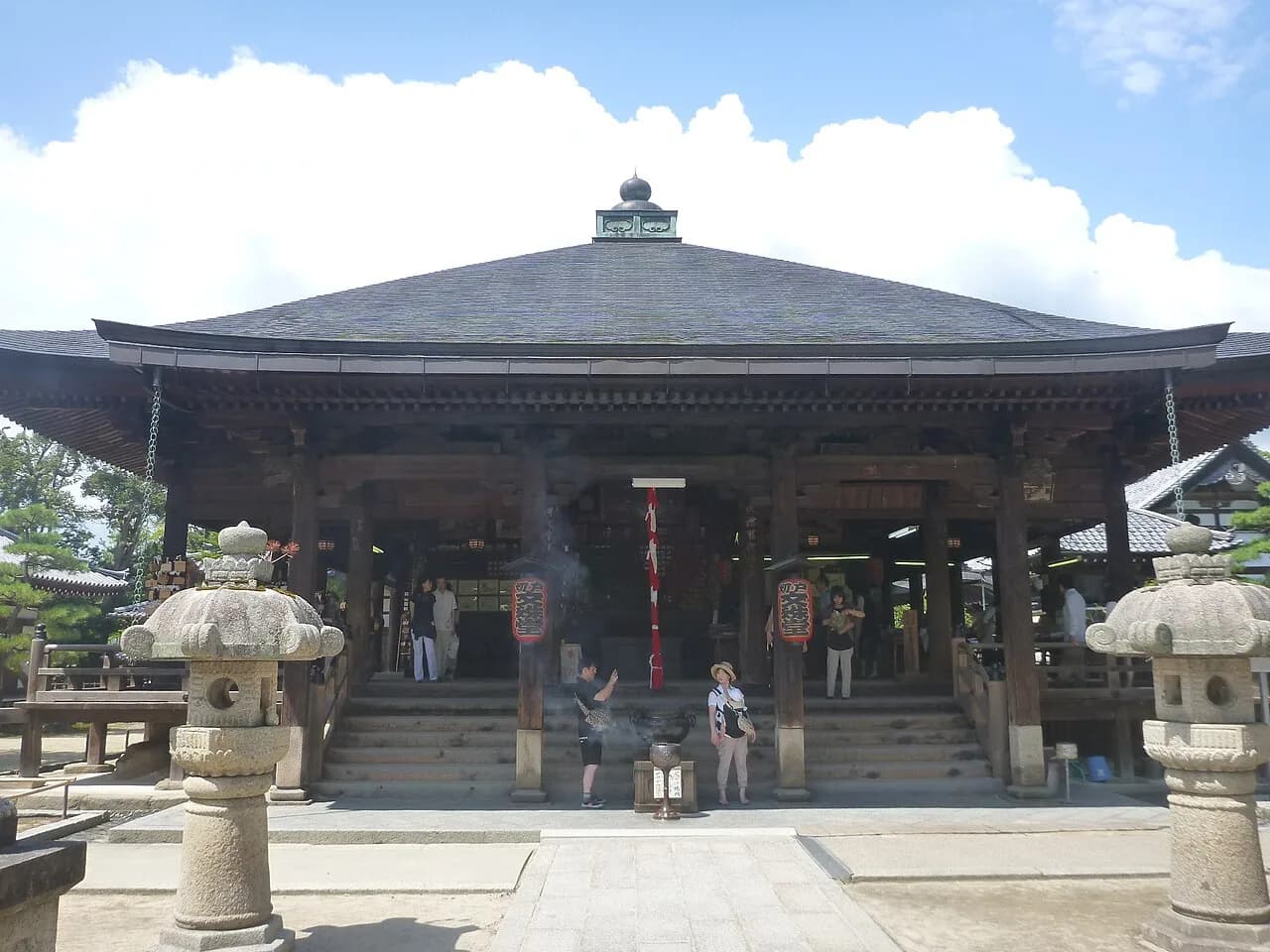
Monju-do Hall is the principal worship hall of Chion-ji temple, tucked at the southern tip of Amanohashidate where the sandbar meets the mainland town of Monju — a neighbourhood whose very name was borrowed from the bodhisattva enshrined within.
As one of Japan's three great Monju sites, the hall draws students, academics, and anyone facing a major examination or decision, all seeking the blessing of Monju Bosatsu, the bodhisattva of wisdom and discernment.
Entry to the temple grounds is free, the hall stands only minutes from Amanohashidate Station, and the ritual of passing through the Chie-no-wa wisdom ring makes it one of those quietly unforgettable stops that takes no more than thirty minutes but stays with you long after.
This guide covers everything you need to visit Monju-do Hall in 2026 — from its spiritual significance and distinctive rituals to practical access, tips, and how it fits into a broader day in Amanohashidate.
Why Visit Monju-do Hall? One of Japan's Three Great Monju
Japan acknowledges three temples as its foremost Monju sites: Abe Monjuin in Nara Prefecture, Kameoka Monjuin in Yamagata Prefecture, and Chion-ji's Monju-do here in Kyoto Prefecture's Miyazu City. This distinction — referred to in Japanese as Nihon sandai Monju — elevates the hall well beyond a local curiosity. Pilgrims travelling specifically to seek wisdom have made this journey for centuries.
For modern visitors, that heritage translates into a richly atmospheric ritual experience. The signature act is passing through the Chie-no-wa — a large circular lantern or ring structure standing before the hall — believed to bestow wisdom upon those who walk through it. Alongside it, the temple grounds are hung with thousands of fan-shaped Suehiro omikuji (fortune slips) dangling from pine branches, their folded white forms fluttering like an open fan's spread. The Suehiro (spreading fan) shape symbolises an expanding future, making them a particularly popular charm for students and young professionals at crossroads.
Unlike many major pilgrimage halls that require advance planning and long journeys, Monju-do Hall is an effortless stop — right beside the station and the View Land gondola base — making it easy to weave into things to do in Amanohashidate without sacrificing time on the sandbar itself.
History and Significance of Monju-do Hall
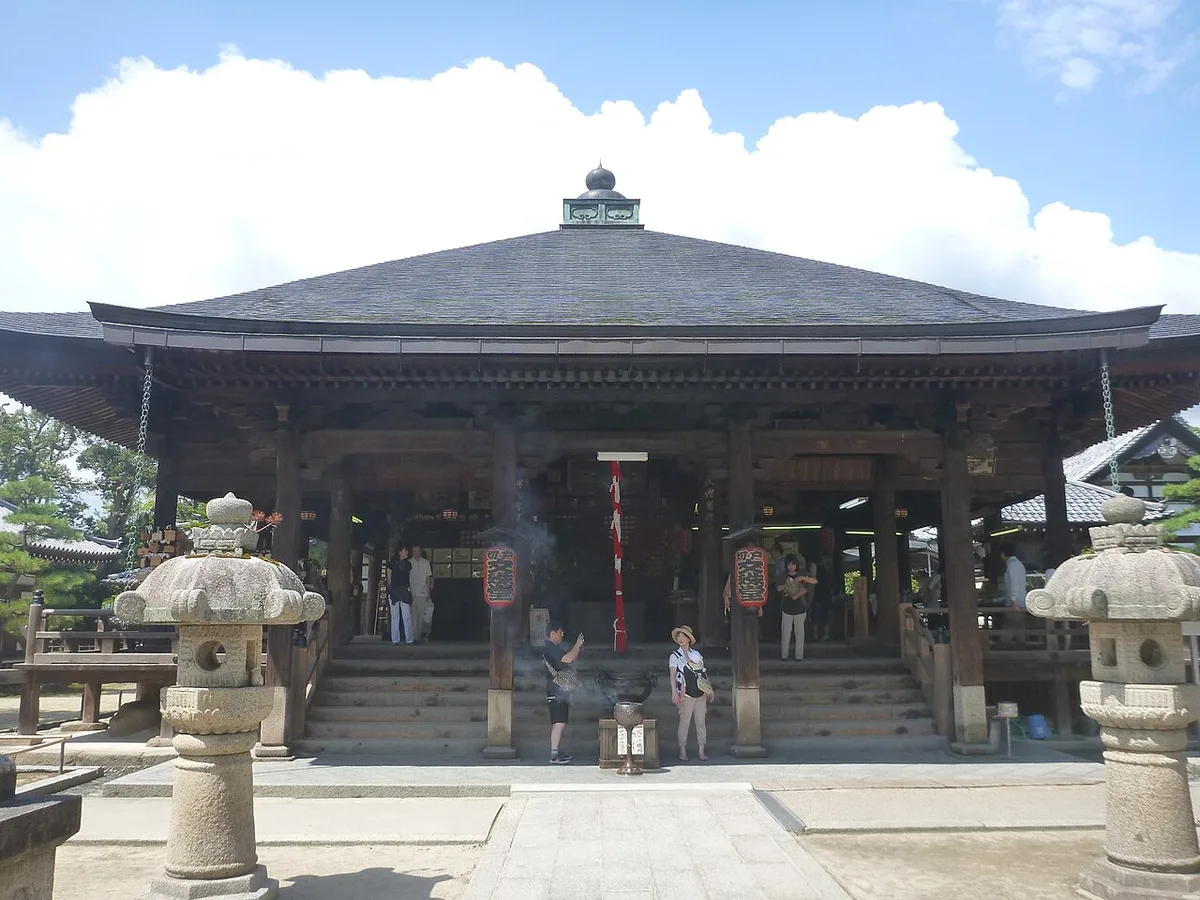
The temple of Chion-ji has stood on this southern shore since ancient times, its founding tradition linked to the monk Monku, who is said to have enshrined an image of Monju Bosatsu here during the early Heian period. The hall that visitors encounter today has been rebuilt and restored across the centuries, yet it retains the intimate, wood-framed character of a community worship space rather than a grand monastic complex.
Monju Bosatsu (Sanskrit: Manjushri) is the bodhisattva of transcendent wisdom — the figure depicted in classical Buddhist iconography riding a lion and wielding a flaming sword to cut through ignorance. In Japanese popular religion, veneration of Monju is closely bound up with worldly aspiration: it is Monju who is invoked in the celebrated proverb san nin yoreba Monju no chie — "three heads together equal the wisdom of Monju" — and Monju who watches over those facing examinations, difficult decisions, and intellectual endeavour.
The surrounding Monju district takes its name directly from this hall, a rare instance of a bodhisattva's name becoming the civic address of an entire neighbourhood. That etymological thread — from Sanskrit to Japanese Buddhist canon to Kyoto Prefecture postal code — speaks to how deeply the hall's identity has woven itself into the local fabric over more than a millennium.
For the complete picture of the temple precinct and its sister site further up the mountains, see the full Chion-ji & Nariai-ji temples guide.
Getting to Monju-do Hall: Access and Transport
Monju-do Hall sits within the grounds of Chion-ji in Miyazu City, Kyoto Prefecture, directly adjacent to Amanohashidate Station on the Kyoto Tango Railway (KTR). From the station exit, the temple gate is visible within a two-minute walk — making this one of the most accessible pilgrimage halls in western Japan.
From Kyoto, the most convenient route is the KTR Hashidate limited express, which runs from Kyoto Station (via Nishimaizuru on the JR Obama Line) to Amanohashidate Station in approximately two hours. From Osaka (Osaka Station), the journey takes around two hours and twenty minutes via Fukuchiyama on the JR Kyoto Line and KTR. Both routes are covered by the Japan Rail Pass for the JR segments, with a separate KTR fare for the final stretch.
Visitors arriving by car will find pay car parks near Amanohashidate Station and along the seafront approach. During peak seasons — late April, August, and the autumn colour period in November — parking fills quickly; an early arrival before 9:00 is strongly recommended. Cycling is a popular option for those already staying in Miyazu; the flat terrain around the station makes it straightforward.
Once at the station, Chion-ji Temple and the Monju-do Hall are immediately to your left as you exit — no bus or taxi required. This proximity also makes the hall a natural first stop before boarding the gondola at the Amanohashidate View Land, whose cable-car base station is only a short walk further along the waterfront.
Highlights of Monju-do Hall: What to See
The Monju-do Hall itself is a compact, beautifully proportioned wooden structure set within a quiet stone-paved precinct. The hall's interior enshrines the primary image of Monju Bosatsu, and worshippers may offer incense, ring the bell, and make offerings in the traditional manner. The atmosphere is contemplative rather than grand — Monju-do is a place for private petition, not spectacle.
The Chie-no-wa (智恵の輪, wisdom ring) stands before the hall and is the single most distinctive ritual feature of the site. This large ring — often fashioned from rope or framed as a circular lantern structure — is believed to transfer wisdom to those who pass through it. The custom is simple: step through the ring before approaching the hall to pray, and you engage in one of Amanohashidate's most recognisable folk-Buddhist gestures. Whether your wisdom challenge is a university entrance exam or a life decision, the act carries genuine meaning for the many visitors who make the journey specifically for it.
The Suehiro omikuji pine trees are another defining sight. Fan-shaped fortune slips, folded and tied to the branches, accumulate in the hundreds across the temple's mature pines. The Suehiro fan form is a traditional Japanese symbol of prosperity and expanding possibility (the fan opens outward, suggesting an unfolding future), making these omikuji especially popular amongst those praying for academic success or career advancement. Visitors who receive an unfavourable fortune may tie it to the pine branch and leave it with the temple, trusting in Monju's wisdom to transmute it.
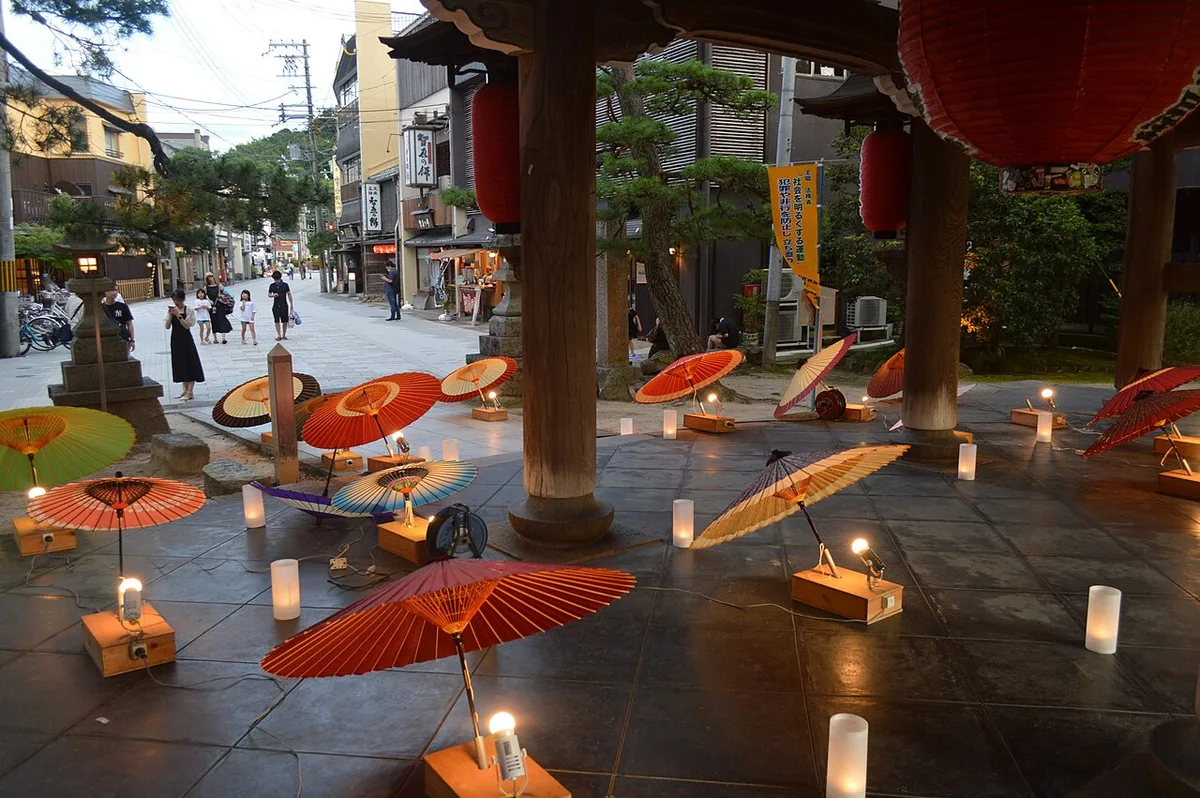
The grounds as a whole are calm and unhurried, set back from the busier tourist facilities along the waterfront. A brief circuit of the precinct — taking in the main gate, the hall, the ring, and the pine trees — makes for a genuinely restorative fifteen to twenty minutes before the more active pursuits of the sandbar or View Land.
Planning Your Visit: Hours, Access, and Tips
The grounds of Chion-ji, including access to Monju-do Hall, are open free of charge. As a working temple precinct, grounds access is available roughly from 08:00 to 17:00 — but hours can vary seasonally and are not guaranteed, so it is worth confirming current timings before your 2026 visit, particularly if you plan an early-morning or late-afternoon stop.
Entry is free. There is no admission gate or ticket booth. Visitors are welcomed as worshippers and guests, so the usual temple etiquette applies: speak quietly, step aside for those praying, and handle ritual objects (omikuji, ema, incense) respectfully. Purchasing an omikuji or small charm is optional but supports the temple.
The paved stone precinct is largely flat and accessible for visitors with mobility considerations, though the uneven stone approaches in older temple grounds can require care. The hall itself involves only a few low steps at the threshold.
The most practical tip for a 2026 visit is simply sequence: make Monju-do Hall your first or last stop on an Amanohashidate day, given its position right at the station. Pair it with a cable-car ride up to the Amanohashidate View Land for the famous matanozoki (view-between-the-legs) panorama, then walk or cycle the three-kilometre sandbar itself. For a fully planned sequence, our one-day Amanohashidate itinerary maps out the timing in detail and shows how the hall sits naturally within a single day's circuit.
Frequently Asked Questions
Is Monju-do Hall free to visit?
Yes. Entry to the Chion-ji grounds and Monju-do Hall is free of charge. There is no admission fee or ticket. Optional purchases such as omikuji fortune slips and small ema votive plaques are available for a modest cost and support the temple, but no purchase is required.
What are Monju-do Hall's opening hours?
The grounds are open roughly from 08:00 to 17:00, though these hours can vary by season and are not officially published in fixed form. For your 2026 visit, it is best to confirm current hours directly with the temple or via the Amanohashidate tourism office before planning an early or late arrival.
What is the Chie-no-wa at Monju-do?
The Chie-no-wa (智恵の輪) is a wisdom ring standing before Monju-do Hall. Passing through the ring is a traditional act of petition — by walking through it before praying at the hall, visitors seek to receive the wisdom blessing of Monju Bosatsu. It is one of Chion-ji's most distinctive rituals and the reason many visitors, especially students facing examinations, make the trip specifically to Monju-do.
What are Suehiro omikuji?
Suehiro omikuji are fan-shaped fortune slips unique to Chion-ji's Monju-do. Folded into the form of an open fan (Suehiro means "spreading fan"), they symbolise an expanding and prosperous future. After drawing a fortune, visitors who receive an unfavourable result may tie the slip to the pine branches in the precinct, leaving it with Monju Bosatsu's care. Thousands of these white fan slips hung in the pines are one of the hall's most photographed sights.
Why is Monju-do Hall significant for students?
Monju Bosatsu (Manjushri) is the bodhisattva of transcendent wisdom in the Buddhist tradition — the figure associated with intellectual clarity, study, and right discernment. In Japanese popular religion, praying to Monju before examinations or important decisions is a long-standing practice, and Chion-ji's hall is one of only three temples in Japan recognised as a principal Monju site. This status makes it a significant destination for students, academics, and anyone seeking guidance on an important path.
How long does a visit to Monju-do Hall take?
A focused visit — taking in the hall, passing through the Chie-no-wa ring, and admiring the Suehiro omikuji pines — takes around 15 to 30 minutes. If you draw an omikuji, write an ema, or simply wish to sit quietly in the precinct, allow up to 45 minutes. Monju-do is most naturally combined with a broader day in Amanohashidate that includes the sandbar walk and the View Land cable car.
Monju-do Hall rewards visitors in the way that the best small pilgrimage sites do — not through grandeur, but through specificity. The act of stepping through the Chie-no-wa, the sight of hundreds of fan omikuji against dark pine boughs, and the quiet of a precinct that has witnessed petitions for wisdom across more than a thousand years all combine into an experience that is brief in duration but disproportionate in resonance.
Whether you are a student heading into an examination season, a traveller simply following the pull of the unusual, or a devotee completing the trio of Japan's great Monju, the hall earns its place on any Amanohashidate itinerary — and costs nothing more than the short walk from the station gate.
For the full context of the Amanohashidate area and further reading on the site's wider temple grounds, see the Amanohashidate attractions hub and our detailed coverage in things to do in Amanohashidate.