

8 Best Things to Do in Amanohashidate (2026)
Discover the 8 best things to do in Amanohashidate in 2026 — the matanozoki view, sandbar walk, temple visits, sightseeing boat, and how to reach Japan's famous pine-covered sandbar from Kyoto in about 2 hours.
On this page
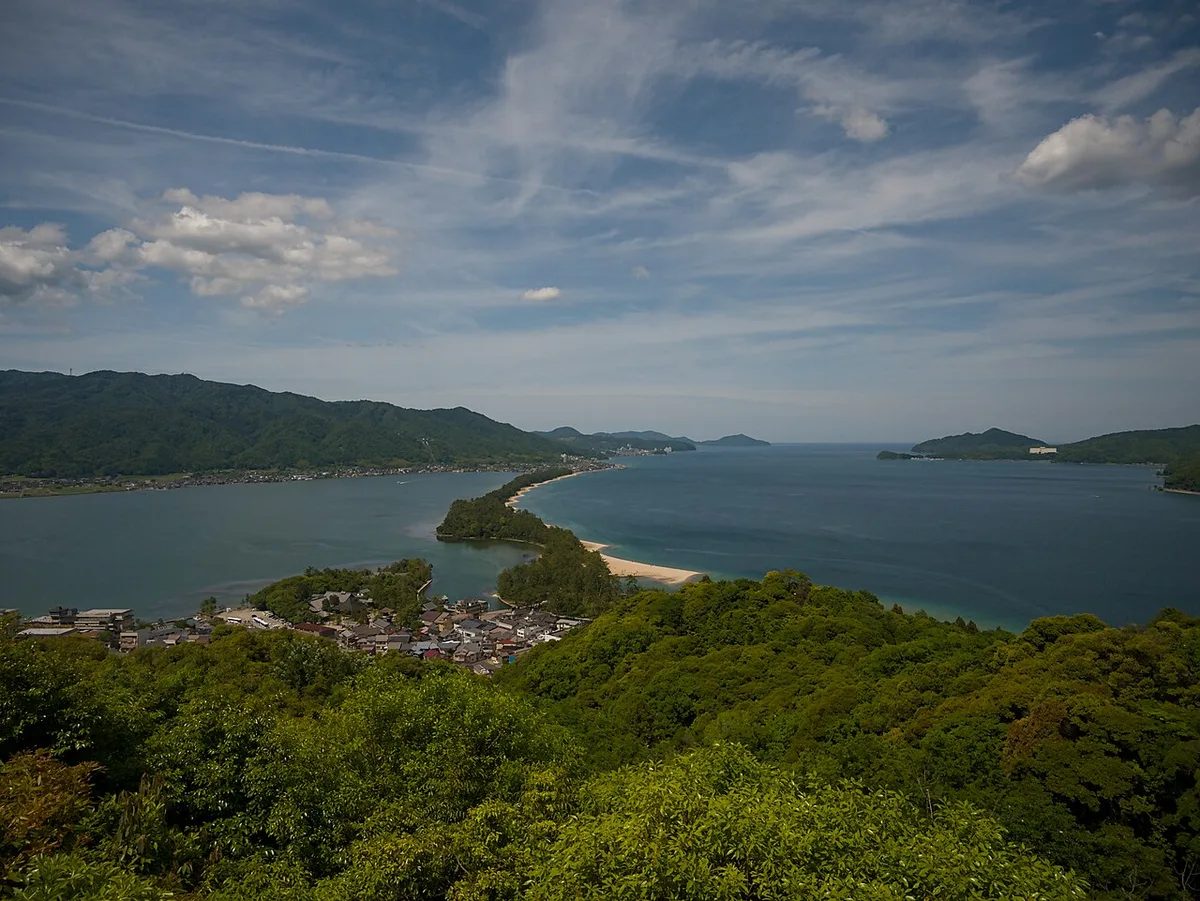
Amanohashidate is one of Japan's Three Scenic Views — the Nihon Sankei — sharing that honour with Matsushima in Miyagi and Miyajima near Hiroshima. Its claim: a 3.6-kilometre sandbar planted with roughly 8,000 pine trees, stretching across Miyazu Bay on the Sea of Japan coast of northern Kyoto Prefecture. From elevated viewpoints above the water, if you bend forward and peer between your legs, the pine-covered bar appears to float suspended in a sky-coloured void — an optical trick the Japanese call matanozoki, and one that has been celebrated in classical poetry since the Heian period. It is every bit as ridiculous and quietly magical as it sounds, and it is the signature experience of the Amanohashidate.
The site sits in the Tango region of northern Kyoto Prefecture and is most often visited as a day trip from Kyoto, reachable in roughly two hours by the Hashidate Limited Express on the Kyoto Tango Railway. That two-hour journey — winding through the mountains and emerging at a calm coastal bay — feels like stepping from the well-worn tourist circuit into somewhere that tourism has touched but not overrun. The town is relaxed, the seafood is excellent, and the walk under 8,000 pines on a clear morning is the kind of thing that does not photograph well but stays in the memory for a long time. For broader context on the Kyoto travel region, Amanohashidate sits at the far northern edge — wilder and less crowded than the city itself.
This 2026 guide covers all eight of the best things to do in Amanohashidate — from the matanozoki viewpoint trick and the sandbar cycle to the pilgrimage temples, the sightseeing boat, and a day-trip to the remarkable Ine no Funaya boat houses — plus how to get there, how long to spend, and when to visit.
Amanohashidate is one of Japan's three officially designated scenic views (Nihon Sankei). The matanozoki viewpoint trick — bending over and looking between your legs at the sandbar — is not optional: it is the single experience that every visitor describes as a genuine surprise, even those who felt sceptical beforehand. Try it at both the southern viewpoint (Amanohashidate View Land) and the northern one (Kasamatsu Park) for two quite different angles on the same sandbar.
Key Takeaways
- Amanohashidate is one of Japan's Three Scenic Views (Nihon Sankei), alongside Matsushima and Miyajima — a 3.6-km pine-covered sandbar spanning Miyazu Bay on the Sea of Japan coast of northern Kyoto Prefecture.
- The matanozoki trick — bending over and looking between your legs at the sandbar from an elevated viewpoint — makes it appear to float in the sky like a soaring dragon; try it at Kasamatsu Park (north) and Amanohashidate View Land (south) for two different perspectives.
- Walking the sandbar from end to end takes 40–60 minutes; cycling takes around 20 minutes. Rental bicycles are available near the southern station end.
- Two pilgrimage temples frame the visit: Chion-ji at the southern foot (Monju Bosatsu of wisdom, the Chie-no-wa ring) and Nariai-ji high on the hill above the northern end (Saigoku Kannon pilgrimage, five-storied pagoda, panoramic sea views).
- A full day comfortably covers viewpoints, sandbar crossing, both temples, and a sightseeing boat; add a night or a second day to reach the Ine no Funaya boat houses on the Tango Peninsula.
8 Best Things to Do in Amanohashidate
Below are the eight experiences that define a visit to Amanohashidate, ordered by impact. A well-paced full day covers the first six comfortably; the final two work best as extensions or on a second day.
-
Try the Matanozoki 'Bridge to Heaven' View. Stand at the viewpoint platform at either Kasamatsu Park or Amanohashidate View Land, face away from the bay, bend forward, and look at the sandbar between your legs. The inversion makes the pine-covered bar appear to hang in a sky-coloured space — an effect the Japanese have likened to a heavenly dragon ascending through clouds, giving Amanohashidate its poetic name ('bridge to heaven'). The matanozoki tradition dates to at least the Heian period and appears in classical poetry; every visitor in the queue around you will be doing exactly the same thing and grinning at exactly the same moment. The experience is different at each end of the sandbar — Kasamatsu gives a longer, wilder view; View Land frames it more neatly. Full detail on both platforms and the best time of day for each is in our guide to Amanohashidate's viewpoints and matanozoki.
-
Walk or Cycle the Pine-Clad Sandbar Itself. The sandbar — 3.6 kilometres of compacted sand shaded by roughly 8,000 Japanese black pines — is open to pedestrians and cyclists and is the physical heart of the experience. Walking end-to-end takes 40–60 minutes at a relaxed pace; cycling takes around 20 minutes. Rental bicycles are available from concessions near the Amanohashidate Station end. The light through the pines in the early morning, with the water of Miyazu Bay visible on both sides through the trunks, is the kind of thing that does not translate into photographs particularly well but stays in the memory for a long time. Tips on rental logistics, the best pace, and seasonal differences along the bar are in our sandbar walk and cycle guide.
-
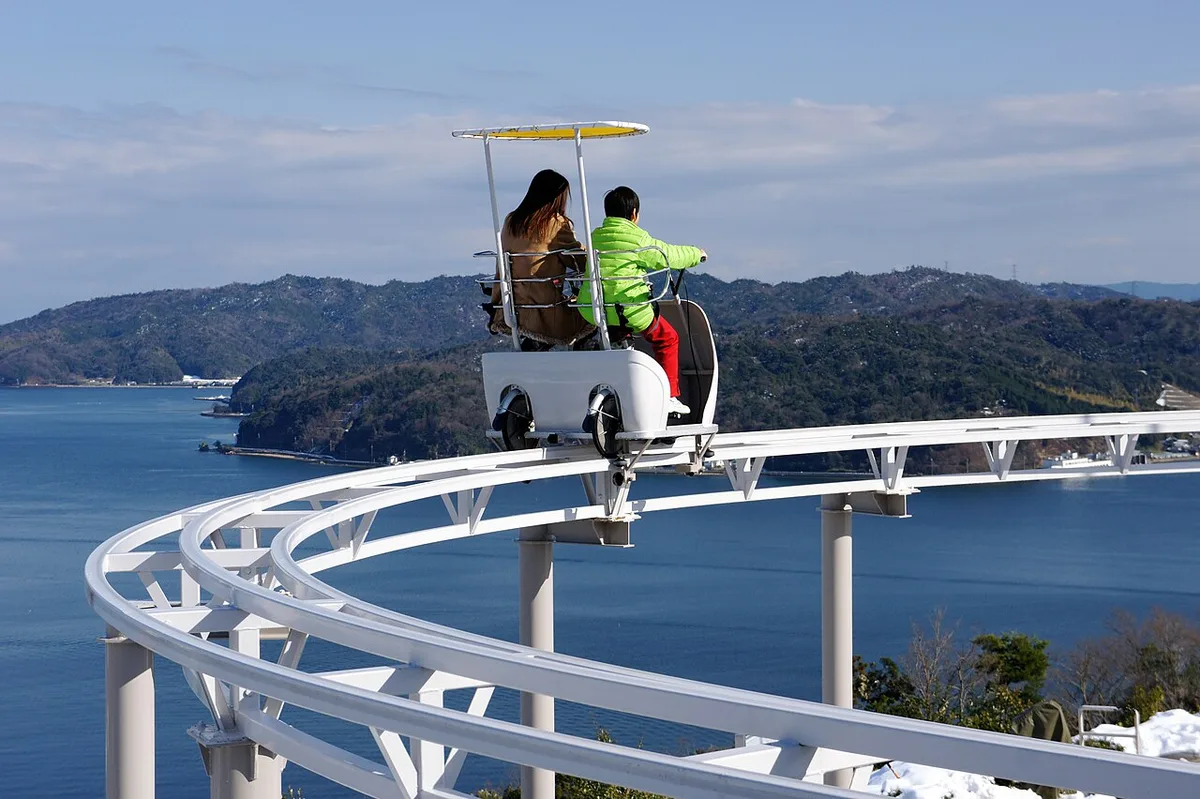
Ride Up to Amanohashidate View Land and Kasamatsu Park. There are two elevated viewpoints — one at each end of the sandbar — and reaching them requires a short ropeway or monorail ride. At the southern end, Amanohashidate View Land is reached by monorail or chair lift from the station area (approximately ¥700–900 one way, 2026 planning estimate); it doubles as a small amusement park with rides, which creates an oddly cheerful atmosphere around one of Japan's most classically contemplative viewpoints. At the northern end, Kasamatsu Park is accessed by ropeway from Ichinomiya (also roughly ¥700–900 one way) and is considerably quieter and more forested. The ideal approach is to visit View Land first, cross the sandbar by bicycle or on foot, then ascend to Kasamatsu at the other end. A full comparison of both platforms and the most efficient sequence is in our viewpoints guide.
-
Visit Chion-ji Temple at the Station End. The southern anchor of Amanohashidate is Chion-ji, a temple dedicated to Monju Bosatsu — the bodhisattva of wisdom and one of Japan's three great Monju sites. The complex sits immediately adjacent to Amanohashidate Station and functions as the natural entry point to the day. The Chie-no-wa ('ring of wisdom') is a straw ring hung at the entrance that worshippers pass through to receive the deity's blessing on their studies; fan-shaped omikuji fortune papers are a distinctive local variant not found elsewhere. The grounds are relaxed and uncommercialized. Both Chion-ji and the hillside Nariai-ji are covered together in our Amanohashidate temple guide.
-
Climb to Nariai-ji Temple Above the Bay. High on the hill above the northern end of the sandbar, Nariai-ji is the 28th of the 33 temples on the Saigoku Kannon pilgrimage circuit — one of Japan's oldest and most revered pilgrimage routes. Reaching it requires the Kasamatsu Park ropeway followed by a short walk through cedar forest. The temple sits on a dramatically positioned hillside terrace with a five-storied pagoda and an open panorama deck overlooking Miyazu Bay and the sandbar below. On clear days, the panorama is arguably more visually complete than the matanozoki view — it requires no contortion and encompasses the full sweep of the bay, the pine bar, and the distant mountains of northern Kyoto Prefecture simultaneously. Combined visiting information, including ropeway times and pilgrimage context, is in our guide to Amanohashidate's temples.
-
Cross the Bay by Sightseeing Boat. A sightseeing boat service runs between the station-end pier near Chion-ji and the northern Ichinomiya pier near Kasamatsu Park, passing the full length of the sandbar. The crossing takes approximately 12 minutes and offers a water-level perspective quite different from the elevated viewpoint experience — the pines appear denser and lower at eye level, and the scale of Miyazu Bay becomes much more legible from the water. Boats run roughly every 30 minutes during the main season (check timetables locally for 2026 schedules; frequency is reduced outside peak season and in poor weather). The boat is also a practical way to move between the two ends of the sandbar without walking or cycling the full length twice.
-
Day-Trip to the Ine no Funaya Boat Houses. Roughly 25 kilometres north-east of Amanohashidate by bus or taxi, the village of Ine is one of Japan's most quietly extraordinary places. Around 230 traditional funaya — wooden boat houses built directly over the water, with the ground floor serving as a garage for fishing boats and the upper floor as living quarters — ring the bay in an almost unbroken arc. It is the largest concentration of surviving funaya in Japan and a Nationally Important Preservation District for Groups of Historic Buildings. A full day in Amanohashidate can accommodate a half-day in Ine if you reach the sandbar early; an overnight stay makes the pacing considerably more relaxed. Our Ine no Funaya day-trip guide covers bus schedules from Amanohashidate, what to see in the village, and how to arrange a boat tour around the bay.
-
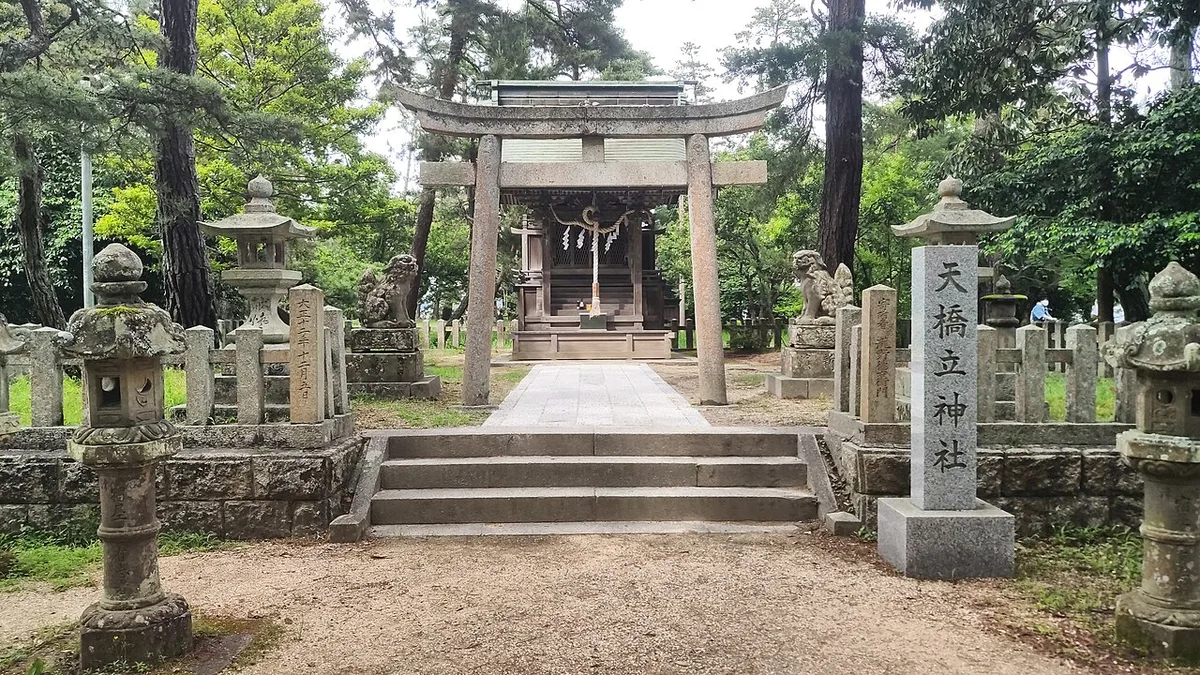
See Motoise Kono Shrine — or Swim at the Sandbar Beach in Summer. Near Kasamatsu Park at the northern end, Motoise Kono Shrine (Moto-Ise Kono Jinja) is believed locally to be the original site from which the sacred regalia of Amaterasu were eventually enshrined at Ise Grand Shrine in Mie Prefecture — making it the 'original Ise', a claim that invites historical debate but gives the modest building a weight it does not otherwise announce. In summer (roughly July to August), a stretch of sand near the southern end of the sandbar opens as a swimming beach — calm and shallow, crowded on summer weekends but pleasant on a weekday morning when the pines behind you are still quiet.
How to Get to Amanohashidate from Kyoto and Osaka
Amanohashidate Station sits on the Miyazu Line of the Kyoto Tango Railway (KTR), in Miyazu City, northern Kyoto Prefecture. The most straightforward route from Kyoto is the Hashidate or Tango no Umi Limited Express, which runs direct from Kyoto Station to Amanohashidate in approximately two hours. These trains operate several times a day but not at high frequency; check the KTR timetable before travel and consider reserving a seat on the express. Note that the Kyoto Tango Railway section is not covered by all standard JR rail passes — a Kansai Wide Area Pass or Kansai Hiroshima Area Pass typically does cover it, but verify your specific pass before purchase.
From Osaka, the most practical option is to travel first to Kyoto Station and join the direct Limited Express there. Journey time from Osaka to Amanohashidate is typically two and a half to three hours in total.
| Origin | Route | Approx. Time | Approx. Fare (2026 estimate) |
|---|---|---|---|
| Kyoto Station | Hashidate / Tango no Umi Ltd Exp (direct) | ~2 hours | ~¥3,000–3,800 |
| Osaka (Umeda / Osaka Sta) | Shinkansen or rapid to Kyoto, then Ltd Exp | ~2 hr 30 min–3 hr | ~¥3,500–4,500 |
| Kyoto (slower / more frequent) | JR San-in Line to Fukuchiyama, then KTR local | ~2 hr 30 min–3 hr | ~¥2,000–2,500 |
All prices and journey times above are 2026 planning estimates — confirm on the JR West or KTR website before you travel, as fares and Limited Express schedules change seasonally. Our complete getting-to-Amanohashidate guide covers IC card usage, rail pass compatibility in full, driving and car rental options from Kyoto, and access from Tokyo via the overnight Sanin route.
How Long to Spend — and a Sample Day Plan
A single full day is enough to cover the core of Amanohashidate comfortably. The most useful structure is to arrive on the first Limited Express from Kyoto (typically departing around 8:30 AM, arriving around 10:30 AM) and depart on the late-afternoon return service around 4:30 or 5:30 PM, leaving roughly six hours on the ground.
A logical day sequence: start at Chion-ji Temple immediately at the station → walk or cycle the sandbar to the northern end → take the Kasamatsu Park ropeway up and try the matanozoki view → walk up to Nariai-ji Temple above Kasamatsu → descend by ropeway → sightseeing boat back across the bay to the station end → monorail up to View Land for the southern matanozoki view → dinner in town before the return train. This covers all six core activities without feeling rushed.
If you want to include the Ine no Funaya boat houses, the choice is between a compressed half-day in Ine (leave Amanohashidate by noon, spend two hours in the village, return in the late afternoon) or an overnight stay in Amanohashidate, which allows a full day in Ine the following morning and the chance to see the sandbar at dawn — when the light is at its softest and tourist traffic is minimal. Our full one-day and two-day itineraries for Amanohashidate set out hour-by-hour sequences for both approaches, and our Amanohashidate day-trip guide from Kyoto covers current direct train times and realistic expectations for a single-day return.
Best Time to Visit Amanohashidate
Amanohashidate is accessible year-round, and each season produces a noticeably different atmosphere. The two peak periods are spring and autumn, but the site rewards off-season visits too.
Spring (April): Cherry blossoms in the town and around Chion-ji Temple bloom typically in early April. The pine trees on the sandbar are evergreen and do not change, but the contrast between pink blossom in the adjacent streets and the uniform green of the bar creates a striking combination. The viewpoints are at their busiest during the first two weeks of April; arriving on a weekday significantly reduces queues for the ropeway and monorail.
Autumn (November): Maples and ginkgos around both temple complexes and in the forested hillside around Nariai-ji colour from late October through mid-November. The light on Miyazu Bay in late afternoon in autumn — lower, warmer, and reflected more dramatically on the water — makes the matanozoki view particularly vivid. Visitor numbers are high but generally manageable compared with Kyoto's autumn crowds.
Summer (July–August): The sandbar beach is open for swimming, and the bay is calm and warm. Sea fog occasionally rolls in from the Sea of Japan on summer mornings and can obscure the viewpoint panoramas; if that happens, wait until late morning for it to clear. Humidity is high, so the sandbar walk under the pines is best done early.
Winter (December–February): Cold, sometimes snowy, and largely tourist-free. The pine-covered sandbar in light snow is an unusual image, and the viewpoints are empty — a rare opportunity to have one of Japan's Three Scenic Views almost to yourself. Snow-covered pine needles with a calm grey bay make for a quietly dramatic combination. Our seasonal guide to visiting Amanohashidate breaks down crowd levels, weather patterns, and seasonal highlights month by month.
Going deeper on this theme? Our What to Eat in Amanohashidate guide covers it in detail, with the practical planning this page leaves out.
Frequently Asked Questions
What is matanozoki at Amanohashidate?
Matanozoki (股のぞき) means 'looking between the legs'. At Amanohashidate, it refers to the practice of standing at one of the elevated viewpoints — Kasamatsu Park or Amanohashidate View Land — facing away from the bay, bending forward, and looking at the pine-covered sandbar upside-down between your legs. The inversion makes the water appear to be sky, and the sandbar appears to float in the air like a dragon ascending through clouds. It is this inverted view — not the sandbar as seen right-side-up — that earned Amanohashidate its place among Japan's Three Scenic Views in classical literature and poetry, and that gives the site its poetic name: 'bridge to heaven'.
How long does it take to get to Amanohashidate from Kyoto?
The Hashidate or Tango no Umi Limited Express connects Kyoto Station to Amanohashidate Station in approximately two hours. Trains run several times per day; seat reservations are available and recommended for the Limited Express services. Note that the Kyoto Tango Railway section is not covered by all standard JR passes — a Kansai Wide Area Pass typically covers it, but confirm this for your specific pass before purchase. Our getting-to-Amanohashidate guide covers current pass options and alternative slower routes via Fukuchiyama.
Is Amanohashidate worth visiting as a day trip from Kyoto?
Yes. A single full day covers the matanozoki viewpoints, the sandbar walk or cycle, Chion-ji Temple, and a sightseeing boat crossing of the bay — the core experiences that make Amanohashidate one of Japan's Three Scenic Views. The two-hour train journey through the mountains of northern Kyoto Prefecture is scenic and unhurried and forms part of the experience itself. If you want to add the Ine no Funaya boat houses on the Tango Peninsula, an overnight stay makes the pacing more comfortable.
What is the best time of year to visit Amanohashidate?
April and November are the peak seasons for scenery — cherry blossom in early April around Chion-ji and the town, and autumn foliage at both temple sites and the hillside above Kasamatsu Park in November. Both are busy periods; weekday visits are noticeably quieter than weekends. Winter (December–February) is the least-visited season and offers the viewpoints almost to yourself, sometimes with a light dusting of snow on the pine trees. Summer is suitable for the sandbar beach but sea fog can obscure the viewpoints until late morning.
How much does a day in Amanohashidate cost?
Budget approximately ¥4,000–7,000 per person for a full day on the ground, excluding train fares from Kyoto. This covers ropeway or monorail rides at both viewpoints (~¥700–900 one way per site), a sightseeing boat crossing (~¥800–1,000), bicycle rental if you cycle the sandbar (~¥500–800 for a couple of hours), and a light lunch in town. All figures are 2026 planning estimates — confirm locally on arrival, as prices can change without notice.
Amanohashidate earns its reputation slowly rather than immediately. The matanozoki trick seems gimmicky until you try it, at which point the pine bar genuinely does appear to hang in the sky and the landscape suddenly makes sense as a classical painter's subject. The sandbar walk under 8,000 pines is calmer and more spacious than any forested path in central Kyoto. Nariai-ji above the bay is a proper pilgrimage temple with a panorama that most visitors to the Kyoto region never see. The Ine boat houses are unlike anything else in Japan. None of it shouts for attention the way Arashiyama or Fushimi Inari do; Amanohashidate is more patient, and it rewards visitors who take the time to move between all its parts rather than ticking a single viewpoint and leaving.
For the full entity listing of attractions across Amanohashidate — including maps, visitor flow details, and accessibility notes — visit our Amanohashidate attractions hub. If you are building a broader Kyoto-region itinerary, our day trips from Kyoto guide maps how Amanohashidate fits alongside Nara, Uji, Arashiyama, and the other destinations reachable in under two to three hours from the city. To extend the trip, our guide to things to do in Kinosaki Onsen covers the hot-spring town an hour west that pairs with Amanohashidate into a classic two-day Sea-of-Japan loop.
For additional historical background, see Amanohashidate on Wikipedia.
Explore More Amanohashidate Guides
Plan a day at Amanohashidate, one of Japan's Three Scenic Views: walk or cycle the pine-clad sandbar, get the famous matanozoki 'bridge-to-heaven' view from Kasamatsu Park and View Land, visit the Chion-ji and Nariai-ji temples, add a day trip to the Ine boat houses, plus how to get there, when to go and a one-day itinerary.
Top Sights
- Walking and Cycling the Amanohashidate Sandbar
- the Amanohashidate Viewpoints and Matanozoki
- Chion-ji and Nariai-ji Temples at Amanohashidate
- Ine no Funaya Boat Houses: Day Trip from Amanohashidate
Itineraries & Day Trips
Plan Your Trip
Free guide: Japan's Hidden Gems
12 under-the-radar places beyond Tokyo & Kyoto — with the best season to visit each and a local tip you won't find in the guidebooks.
You might also like


Continue reading
More guides you'll find useful


