

Walking and Cycling the Amanohashidate Sandbar (2026)
Walk or cycle the Amanohashidate sandbar in 2026 — 3.6 km route, bike hire from ¥400–600, the freshwater spring Isoshimizu, crossing times by foot, bicycle, and sightseeing boat.
On this page
Amanohashidate means "bridge to heaven" — and the name earns its keep the moment you step onto the pine-shaded path. The sandbar is not a route to a destination; it is the destination. Roughly 3.6 kilometres long, it stretches across the mouth of Miyazu Bay in northern Kyoto Prefecture, separating the open Sea of Japan from the sheltered Aso Sea lagoon, and crossing it on foot or by bicycle is one of those quietly extraordinary pleasures that the rest of the day arranges itself around. As the centrepiece of the Amanohashidate attractions cluster, the sandbar is the natural starting point for any visit to this corner of Japan.
The full crossing takes 45 to 50 minutes at a relaxed walking pace, or about 20 minutes on one of the rental bicycles available near both ends. Neither requires any planning beyond comfortable shoes or a few hundred yen for bike hire. The real reward comes from slowing down: there is a freshwater spring that bubbles from salt-water sand, ancient pine trees with their own individual names, and a rotating bridge at the south entrance that opens on demand to let boats pass into the lagoon. A popular strategy is to cycle one way and return by sightseeing boat across Miyazu Bay — a 12-minute crossing that gives a completely different perspective on the same strip of land.
This 2026 guide covers how to cross, how long it takes, where to hire a bicycle, what to look for along the route, and how to combine the walk with the classic viewpoints at either end.
The sandbar path is free to use — there is no admission charge to enter the pine corridor. Rental bicycles are available near both the south entrance (close to Amanohashidate Station) and the north entrance at Fuchu, so you do not need to commit to a direction before deciding how to cross.
Key Takeaways
- The sandbar is 3.6 km long and covered with roughly 8,000 pine trees, some individually named — the Chie-no-matsu ("wisdom pine") and Meoto-matsu ("couple pines") among the most celebrated.
- Walking the full length takes 45–50 minutes; cycling takes about 20 minutes on rental bikes (~¥400–600 for a few hours, 2026 estimate) available near both ends.
- The most popular combination is to cycle one way and return by sightseeing boat across Miyazu Bay — the boat crossing takes approximately 12 minutes.
- The freshwater spring Isoshimizu rises from the ground surrounded by salt water on all sides and is listed among Japan's 100 famous waters.
- At the south entrance, the Kaisenkyo bridge rotates on a vertical axis to allow boats into the Aso Sea lagoon — worth arriving a few minutes early to catch it in motion.
The Geography: A Natural Bridge Across Miyazu Bay
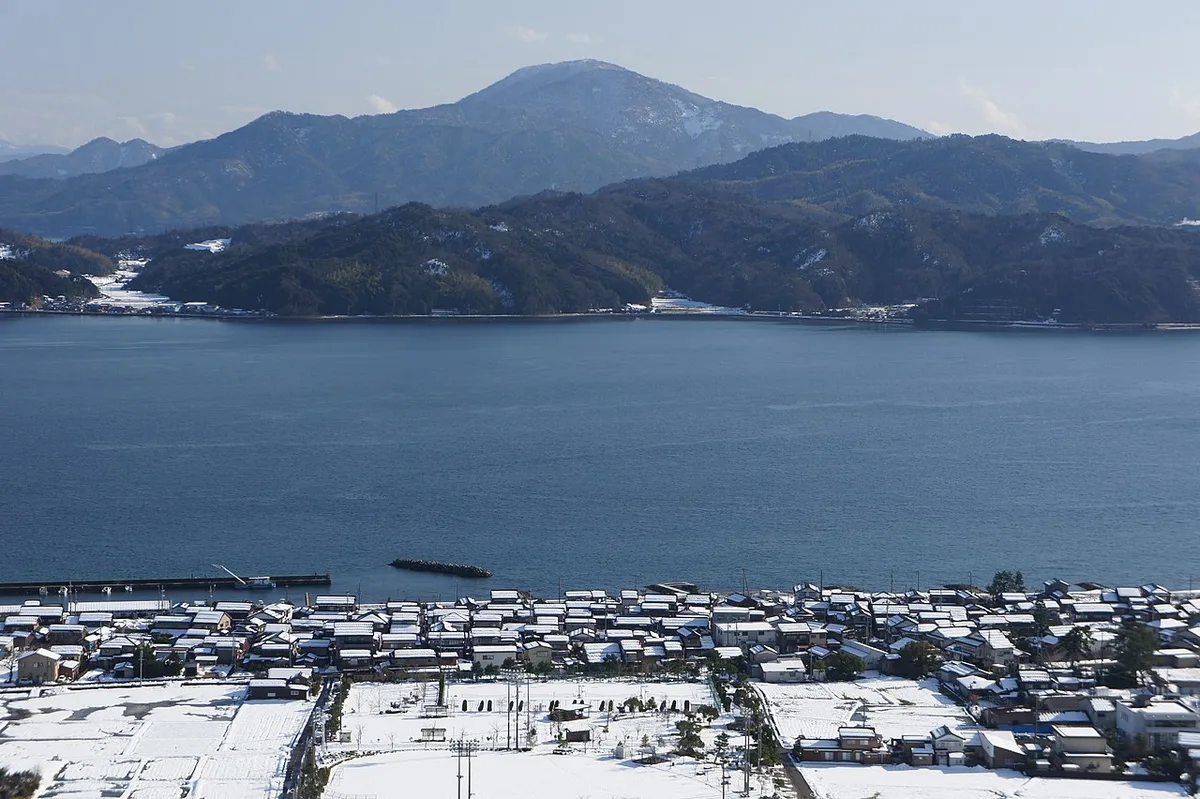
The Amanohashidate sandbar is a natural tombolo — a strip of sand, gravel, and pine-anchored soil that has accumulated at the mouth of Miyazu Bay over many centuries. It runs roughly north to south for 3.6 kilometres, and its width varies dramatically: barely 20 metres at the narrowest point, broadening to around 170 metres near the south. At no point does it feel wide. Standing on the central path, you are almost always within a short walk of water on both sides, separated from each by nothing but pine trunks and the occasional stone marker.
The water to the east is the Aso Sea (Aso-kai), a sheltered coastal lagoon; the water to the west is Miyazu Bay itself, open to the Sea of Japan. The contrast between the two gives the sandbar an unusual atmospheric quality — the lagoon side tends toward calm, green stillness, while the outer bay reflects the broader sky and, on clear days, the mountains of the Tango Peninsula. In early morning or late afternoon, the pine trunks cast long parallel shadows across the path and the water shimmers in two different tones simultaneously.
The pine trees are the sandbar's defining character. Roughly 8,000 of them line the path and shoreline, many old enough to have acquired names, plaques, and their own small followings. Some have grown in distinctive shapes — twisted by decades of sea wind, or grafted together where roots have intertwined over centuries. The collective effect is of walking through a living cathedral whose columns happen to smell of salt and resin.
Walking the Sandbar: What to Expect
The footpath running the full length of the sandbar is flat, well-maintained, and free to use — no ticket required at either end. The surface is a mix of compacted gravel and gentle tarmac in the busier sections, suitable for any footwear. The pine canopy provides consistent shade in summer; in winter, thin coastal light slants through the trunks at low angles for most of the morning, making it arguably the most photogenic season to walk the full route. The path is shared with cyclists, who stick broadly to the central lane, leaving walkers room on either side.
At a comfortable pace with stops at the spring, the named pines, and the occasional bench, allow a full hour rather than the strict 45–50 minutes for uninterrupted walking. The path is rarely congested outside Golden Week and Obon; on weekday mornings even in peak season, the first half of the walk often feels almost private. If you are cycling and plan to stop frequently, factor in time before your bike hire window closes.
Cycling and the Sightseeing Boat: Your Options for Crossing
Rental bikes are available near the south entrance (close to Amanohashidate Station and the Kaisenkyo bridge) and near the north entrance at Fuchu. In 2026, rental rates run roughly ¥400–600 for a few hours; confirm the exact rate and return time at the counter, as the two hire points may differ slightly. The bikes are standard single-speed cruisers — gearing is unnecessary on the flat terrain. Cycling the full sandbar end-to-end takes about 20 minutes at a comfortable pace.
The sightseeing boat runs across Miyazu Bay between the south pier near Amanohashidate Station and the north pier at Ichinomiya. The crossing takes about 12 minutes. Boats operate at intervals during daylight hours; purchase tickets at the pier on the day. The cycle-out, boat-back combination is the most popular approach: it keeps the experience varied and lets you see the pine corridor from the path and the sandbar from the water in a single outing. If you hire from the south end, the boat back from Fuchu deposits you across the bay, and a short walk or shuttle returns you to the station.
| Crossing Option | Time (one way) | Notes |
|---|---|---|
| Walk | 45–50 min | Free; flat, shaded path; no ticket required |
| Cycle | ~20 min | Rental bikes ~¥400–600 at both ends (2026 estimate) |
| Sightseeing boat | ~12 min | Bay crossing; tickets at pier; runs at intervals |
| Cycle + boat return | ~30–45 min total | Most popular combination; bike one way, boat back |
What to See Along the Way
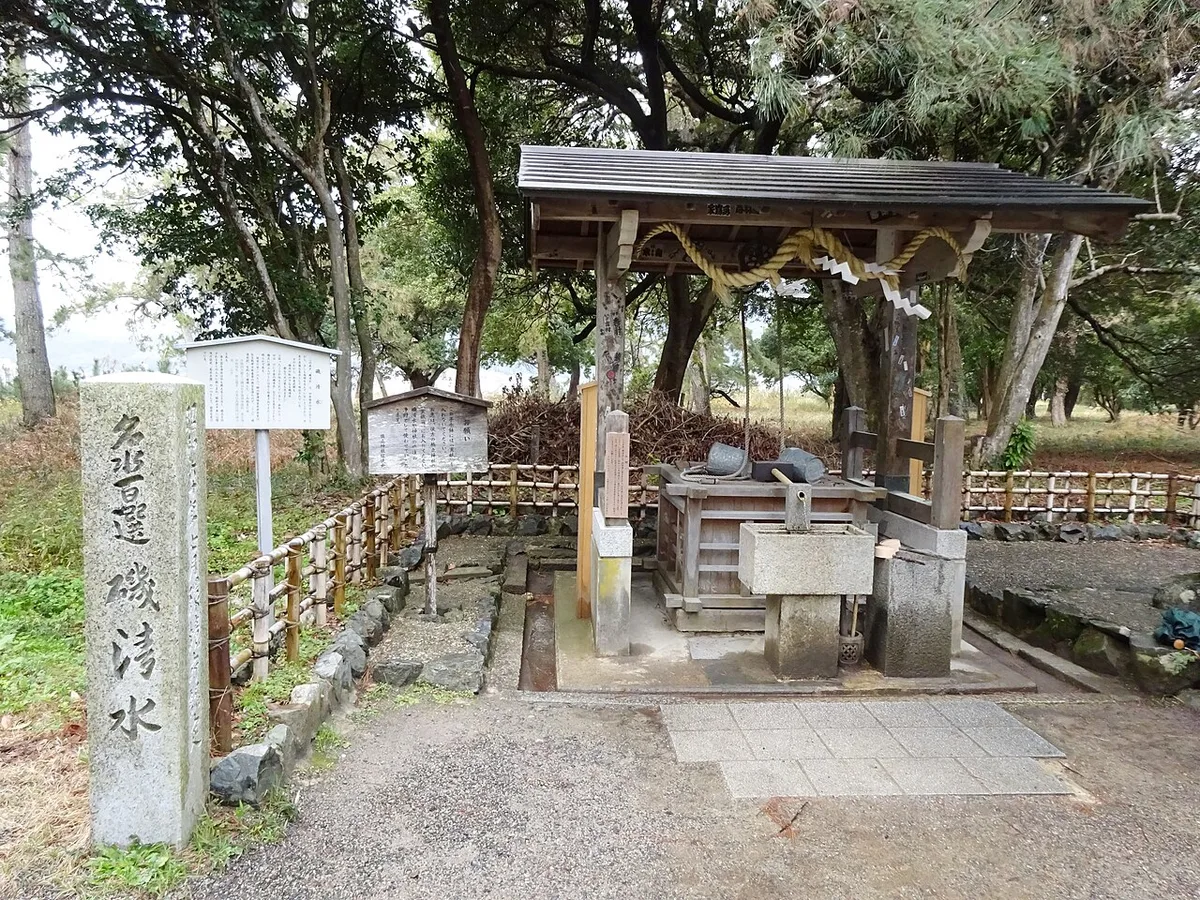
The Isoshimizu spring is the sandbar's most unusual natural feature: a pool of fresh water that rises from the ground completely surrounded by salt water. It is listed among Japan's Hyakumei-sui — the 100 famous waters selected by the Environment Agency for their purity and cultural significance. Small stone monuments and name-plaques mark the site, which sits roughly mid-sandbar. Walkers are more likely to notice it than cyclists passing at speed; slow down as you reach the midpoint and look for the cluster of stones to the side of the central path.
Named pines appear at irregular intervals along the route. The Chie-no-matsu (wisdom pine) is among the oldest and most distinctive; the Meoto-matsu (couple pines) are a pair of trunks that have grown intertwined over centuries, traditionally visited for luck in relationships. Name-plaques identify each tree, and a slow walk compounds awareness of them — by the second half of the route, you will find yourself looking at individual trees rather than past them. The Iwami-Shigeyoshi memorial, commemorating a local Sengoku-period general, stands near the midpoint as well and is easy to miss if you are moving quickly.
At the south entrance, the Kaisenkyo bridge rotates on a vertical axis to allow boats to pass from Miyazu Bay into the Aso Sea lagoon. The mechanism is operated on demand and the rotation takes a few deliberate minutes — watching it from the bridge approach, with a small vessel slipping through the gap as the wooden span swings clear, is unexpectedly satisfying. The south end also hosts Amanohashidate Kaisuiyokujo, a designated swimming beach that opens in summer (typically July to August), making the area a natural destination for families in the warmer months. For the visitor detail, historical notes, and facilities specific to the sandbar itself, the Amanohashidate sandbar attraction page has the full picture.
Planning Your Visit: Timing and What to Combine
The sandbar is accessible year-round with no closing time and no admission charge for the path. Morning is the best time to walk — the light is soft, the lagoon often still enough for reflections, and the path at its quietest. The pine shade makes midsummer afternoons manageable but not ideal; spring and autumn mornings offer the most pleasant conditions. Combine the crossing with a viewpoint at either end: the famous matanozoki ("crotch-peeping") inverted-view pose transforms the pine-covered strip into something that genuinely looks like a dragon ascending to heaven. Our Amanohashidate viewpoints and matanozoki guide covers both platforms and which one gives the better angle. For the full seasonal breakdown across all the main sites, see our best time to visit Amanohashidate guide.
If you are building a full day in the area, the sandbar pairs naturally with the temples at either end — Chion-ji just south of the Kaisenkyo bridge, and Nariai-ji reachable from the north viewpoint by ropeway. Our Chion-ji and Nariai-ji temples guide covers both. For those travelling from Kyoto or Osaka, our Amanohashidate day trip from Kyoto guide maps the train options and a logical sequence for the sandbar, viewpoints, and temples within a single day. Getting here by rail — including IC card tips and journey times from Kyoto Station — is covered in full in our how to get to Amanohashidate guide.
Frequently Asked Questions
Is it free to walk the Amanohashidate sandbar?
Yes. The footpath running the full length of the sandbar is free to use with no admission charge or ticket required. Rental bicycles cost roughly ¥400–600 for a few hours (2026 estimate), and the sightseeing boat across Miyazu Bay is priced separately at the pier — but walking the sandbar itself is free at any time of day, year-round.
How long does it take to walk the full length of the sandbar?
Walking the full 3.6 km from the south entrance near Amanohashidate Station to the north end at Fuchu takes 45–50 minutes at a comfortable pace without stopping. Allow a full hour if you plan to pause at the Isoshimizu spring, read the plaques on named pine trees, or sit on one of the benches to watch the water. Cycling the same route takes about 20 minutes.
What is the Isoshimizu spring?
Isoshimizu is a freshwater spring located roughly at the midpoint of the Amanohashidate sandbar, rising from the ground entirely surrounded by salt water on both sides. It is counted among Japan's Hyakumei-sui — the 100 famous waters selected by the Environment Agency for their purity and cultural significance. Small stone monuments mark the site; look for them to the side of the central path as you walk from south to north.
Can you hire a bicycle to cycle the Amanohashidate sandbar?
Yes. Rental bicycles are available near both the south entrance (close to Amanohashidate Station) and the north entrance at Fuchu. In 2026, hire rates run roughly ¥400–600 for a few hours — confirm the rate and return window at the counter. Standard single-speed cruisers are provided; the terrain is completely flat, so no gearing is needed. Cycling the full sandbar takes about 20 minutes. Many visitors cycle one way and return by sightseeing boat across Miyazu Bay (approximately 12 minutes).
What is the Kaisenkyo bridge at the south entrance?
The Kaisenkyo is a small rotating bridge at the south entrance to the sandbar. It pivots on a vertical axis to allow sightseeing and fishing boats to pass between Miyazu Bay and the Aso Sea lagoon. The rotation is operated on demand and takes a few minutes; if you arrive as a boat is waiting to pass, it is worth pausing to watch. The bridge also makes a natural framing element for photographs taken from the sandbar entrance looking south.
The Amanohashidate sandbar does not ask much of you — it is flat, free, and shaded, and it delivers in proportion to the time you are willing to spend moving slowly along it. Walk the full length and you will notice the named pines, the light through the trunks, the different colours of the water on either side. A good approach is to cycle outward for pace and spectacle, then walk a section on the return for the detail. Either way, the crossing holds up to being done more than once in a single visit, which is its own recommendation.
For a full suggested day combining the sandbar with viewpoints, temples, and the nearby Ine fishing village, our Amanohashidate itinerary guide maps the most efficient circuit. For a wider overview of everything the area offers, the Amanohashidate attractions guide covers the complete cluster.
For trip-planning details, see Amanohashidate on Wikipedia.
Free guide: Japan's Hidden Gems
12 under-the-radar places beyond Tokyo & Kyoto — with the best season to visit each and a local tip you won't find in the guidebooks.
You might also like


Continue reading
More guides you'll find useful


