

Ine no Funaya Boat Houses: Day Trip from Amanohashidate (2026)
Plan your 2026 visit to Ine no Funaya: the sightseeing boat, walking the village, getting there from Amanohashidate by bus or car, and how long to allow for this Tango Peninsula day trip.
On this page
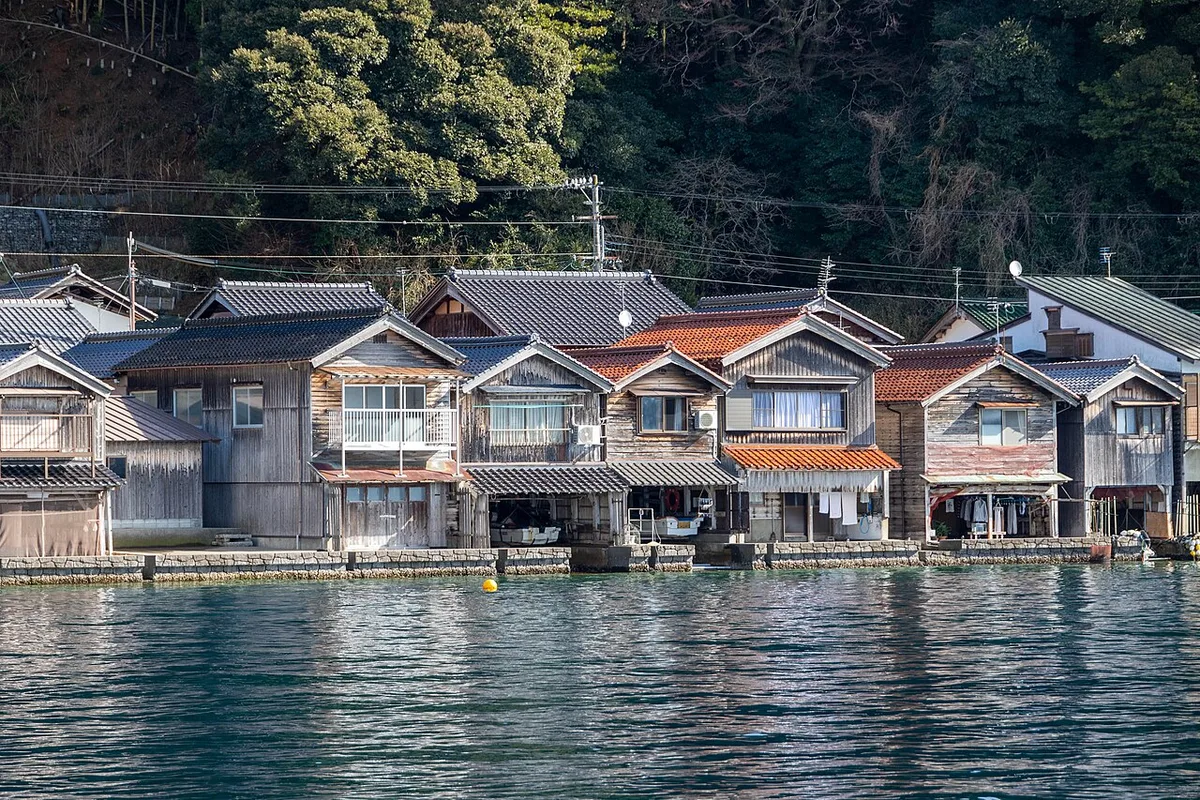
A short bus ride north of Amanohashidate, the fishing village of Ine conceals one of Japan's most striking seascapes. Around 230 traditional funaya — timber boat houses with open sea garages at water level and family living quarters directly above — ring the shore of a calm, almost tideless bay sheltered by Aoshima island. The effect from the water is quietly extraordinary: row after row of dark-beamed dwellings reflected in a surface so still it barely moves, earning Ine the nickname 'the Venice of Japan'. Unlike Venice, people still fish from these houses every morning before dawn.
Ine is designated one of Japan's Important Preservation Districts for Groups of Traditional Buildings, the highest heritage classification for living communities. The village stays deliberately low-key — no entrance gates, no ticketed zones — and rewards visitors who come to observe rather than perform. This 2026 guide covers how to see the funaya by boat and on foot, what else the village offers, and how to get here from Amanohashidate by bus or car.
Ine is a working fishing village, not a museum. Keep voices down in the lanes, do not peer into private boat garages, and follow any photography restrictions posted on individual dwellings.
Key Takeaways
- Around 230 funaya boat houses ring Ine Bay — each built directly over the water, with a sea garage below and the family home above; many are still in active daily use.
- The sightseeing boat (~25–30 min, ~¥1,000–1,200) is the best single way to see the funaya: it circles the entire bay at close range while gulls wheel overhead angling for kappa-ebisen snacks sold on board.
- Mukai Shuzo brewery produces 'Ine Mankai', a red sake brewed from purple rice — one of Japan's most unusual nihonshu and a memorable souvenir.
- The Tankai bus from Amanohashidate Station takes about an hour; a combined Amanohashidate + Ine bus pass is sold at the station.
- A half-day covers the boat, village walk, and brewery; combined with Amanohashidate it makes a full long day, or stay overnight in a funaya guesthouse for an entirely different experience.
What Are the Ine no Funaya?
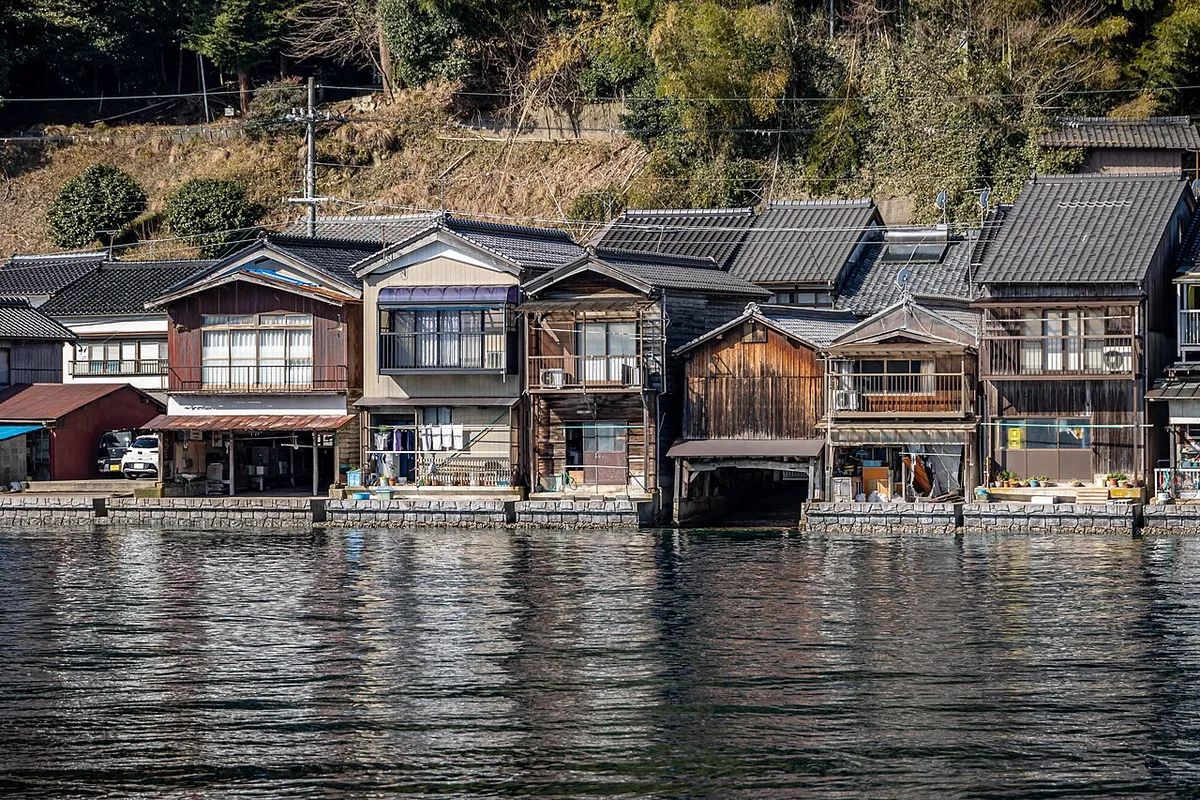
The word funaya combines fune (boat) and ya (house). The design is practical and ingenious: the boat is hauled directly from the sea into the ground-floor garage through a waterside opening, stored above the waterline on a ramp or rails, and worked on between fishing runs. The family lives on the floor immediately above — close enough that on still evenings water laps audibly against the hull from the kitchen table. Ine Bay's unusually sheltered aspect (the mouth faces the Sea of Japan but Aoshima island blocks the worst weather) made this style of building both possible and logical for the fishing families who settled here.
Around 230 funaya survive in various states of use, making Ine the largest and most intact concentration in Japan. The village earned its Important Preservation District status in 2005 not because it was empty and frozen, but precisely because it remained a working community. Many owners still moor active boats in their lower garages between dawn runs. That lived-in quality — the smell of salt and engine oil, laundry on upper balconies, the rumble of outboard motors before sunrise — is what sets Ine apart from any reconstructed heritage site.
How to See the Funaya: Boat, Sea Taxi, and On Land
The sightseeing boat — operated by the local fishermen's association — is the recommended first move. The 25–30 minute circuit traces the entire rim of Ine Bay at close range, near enough to read the grain of the timber beams and see boats resting on their garage ramps. Narration is in Japanese, but the scenery explains itself. The gulls are worth mentioning: they have learned that the boat tour reliably produces kappa-ebisen snacks (sold on board) and perform impressively acrobatic mid-air catches for any passenger willing to hold one out. Budget roughly ¥1,000–1,200 per adult (2026 planning estimate; confirm fare and schedule at the Michi-no-Eki Ine roadside station on arrival). Local fishermen also run smaller sea taxis on a flexible basis — a quieter option for those who prefer to set the pace themselves.
| Option | Duration | Note |
|---|---|---|
| Sightseeing boat (association-run) | ~25–30 min | Best bay overview; gulls follow for snacks; ~¥1,000–1,200 (2026 estimate) |
| Sea taxi (local fishermen) | Flexible | Smaller boat, quieter pace; enquire at Michi-no-Eki Ine; fares vary |
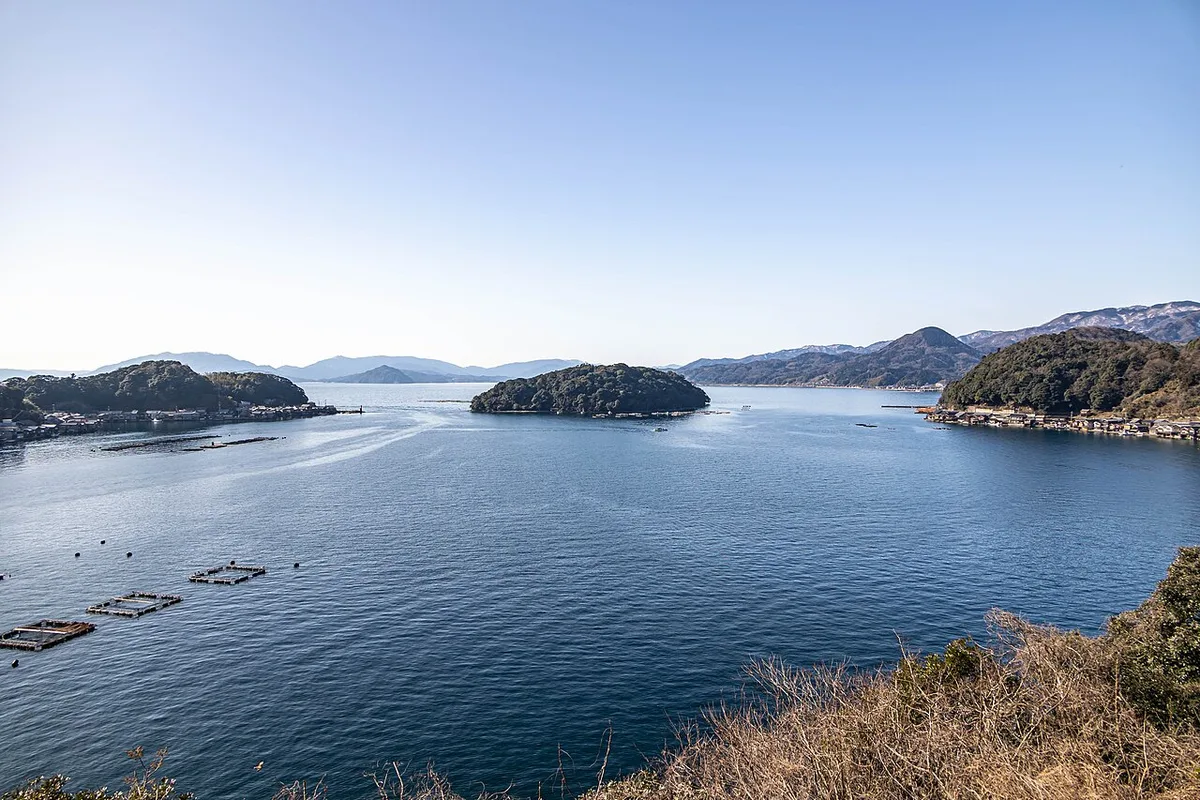
| Funaya-no-Sato Park overlook | 20–30 min | Hillside panorama over the whole bay; free; good for orientation and photography |
| Village lane walk | 30–60 min | Narrow paths beside the water; best after the boat gives you a sense of scale |
On land, the Funaya-no-Sato Park (also the location of Michi-no-Eki Ine) sits on the hillside above the bay and gives a panoramic overlook of the entire arc of funaya in a single glance — worth the short uphill walk before descending into the village lanes. The paths between funaya and water are narrow and sit right at the bay's edge; take care and stay on the marked routes.
Ine Village: Sake, Cafés, and Staying Overnight
Mukai Shuzo is the most compelling reason to linger on land. The sake brewery has operated in Ine for over 180 years and is one of the few in Japan producing sake from purple rice, marketed as Ine Mankai. The colour — a soft salmon-pink in the glass — and the flavour profile are immediately distinct from conventional nihonshu. Tastings and bottles are available on-site; it makes a genuinely unusual souvenir for any sake-curious traveller. A handful of cafés and small seafood restaurants round out the village offer, most operating seasonally through spring and summer with menus centred on the day's catch.
A number of funaya have been converted to guesthouses, where overnight guests sleep in the room directly above the boat garage with sea water beneath the floorboards. It is not a budget option and advance booking (available through regional tourism platforms in English) is essential in summer. But the experience of waking before dawn while fishing boats move quietly out of the bay is genuinely unlike anything available at a conventional inn. If your wider itinerary for the peninsula has room for a second night, spending it in Ine rather than heading back south is easy to recommend.
Getting to Ine from Amanohashidate
Without a car, take the Tankai bus from Amanohashidate Station (Kasamatsu/Fuchu side of the sandbar) toward Ine, alighting at the 'Ine' or 'Funaya-no-Sato Koen-mae' stop. The journey takes roughly one hour. A combined Amanohashidate + Ine bus pass is sold at the station ticket office and covers both the local Amanohashidate services and the Tankai Ine route — good value if you are making the return trip the same day. Timetables thin out in the early afternoon; check the posted schedule before your return to avoid a long wait. The getting to Amanohashidate guide covers the full journey from Kyoto by train, including the Kyoto Tango Railway connections that link into the Tankai bus network.
By car, Ine is approximately 50 minutes north of Amanohashidate via the coastal road. Parking is available near the Michi-no-Eki Ine. Driving gives you flexibility on timing and lets you stop at headland viewpoints along the Tango Peninsula coast on the way. If your plan already includes a rental car for the Amanohashidate sandbar or the Kasamatsu Park viewpoints, Ine slots naturally as a half-day extension on the return leg.
When to Visit and How Long to Allow
Ine works in every season. Summer (July–August) brings the calmest bay conditions, the most frequent sightseeing boat departures, and the café terraces at their liveliest. Winter offers something starker: on clear cold mornings, the funaya emerge from sea mist against a grey sky in a way that feels genuinely remote from the tourist circuit of central Japan. Check the sightseeing boat operating schedule before a winter visit, as rough weather can suspend services. Spring (late March to early May) and autumn (October–November) are the most comfortable weather windows. The seasonal guide for the Amanohashidate area maps conditions across the whole Tango Peninsula, including cherry blossom timing at the sandbar and the autumn light on the bay.
Allow a half-day — three to four hours — for the sightseeing boat, the Funaya-no-Sato overlook, a village lane walk, and a stop at Mukai Shuzo. Paired with a morning at Amanohashidate, the two make a full and rewarding long day from Kyoto. The day trip from Kyoto guide maps a logical sequence combining the sandbar, the viewpoints, and Ine without unnecessary backtracking.
Frequently Asked Questions
How do I get to Ine from Amanohashidate?
Take the Tankai bus from Amanohashidate Station toward Ine, alighting at the 'Ine' or 'Funaya-no-Sato Koen-mae' stop. The journey takes roughly one hour. A combined Amanohashidate + Ine bus pass is sold at the station and covers the return trip. By car, the drive is approximately 50 minutes north via the coastal road. Timetables are limited in the afternoon — check the posted schedule before your return journey.
How much does the Ine Bay sightseeing boat cost?
The association-run sightseeing boat costs approximately ¥1,000–1,200 per adult (2026 planning estimate). The circuit takes around 25–30 minutes and covers the entire bay. Confirm the current fare and departure schedule at the Michi-no-Eki Ine roadside station when you arrive, as prices and frequency vary by season.
Can you stay overnight in the Ine funaya?
Yes. A number of funaya have been converted to guesthouses, where guests sleep directly above the boat garage with sea water beneath the floor. Advance booking is essential, particularly in summer. English-language booking options are available through regional Kyoto Tango Railway tourism platforms and Japan travel agencies. Rates are higher than standard guesthouses, but waking at dawn while fishing boats leave the bay quietly makes it a worthwhile experience.
How long should I spend in Ine?
Allow three to four hours for the sightseeing boat, the Funaya-no-Sato Park overlook, a walk through the village lanes, and a visit to Mukai Shuzo brewery. Combined with a morning in Amanohashidate, Ine fits into a full long day from Kyoto. An overnight in a funaya guesthouse gives you the village at its quietest — before and after the day coaches arrive — and removes the pressure of the bus timetable entirely.
What is Ine Mankai sake?
Ine Mankai is a sake produced by Mukai Shuzo brewery in Ine village, brewed from purple (red) rice rather than conventional white rice. The result is a soft salmon-pink colour in the glass and a flavour profile distinctly different from standard nihonshu. Tastings and bottles are available at the brewery. It is one of the more unusual and memorable souvenirs available on the Tango Peninsula.
Ine earns its reputation. The funaya are not a reconstructed heritage display — boats still leave before dawn, the sake brewery still produces wine that tastes like nowhere else, and the bay still holds the quiet of a fishing community that has worked on exactly this principle for centuries. The sightseeing boat puts the scale of it in context within half an hour; the rest of the visit is yours to fill at whatever pace suits you.
For more on the area, the Chion-ji and Nariai-ji temples guide covers the other historic detour on the peninsula, while the Amanohashidate attractions guide sits both Ine and the sandbar within the broader cluster of sights in this part of northern Kyoto Prefecture. For broader background on Ine itself, see Ine on Wikipedia.
Free guide: Japan's Hidden Gems
12 under-the-radar places beyond Tokyo & Kyoto — with the best season to visit each and a local tip you won't find in the guidebooks.
You might also like


Continue reading
More guides you'll find useful


