Byodo-in Temple and the Phoenix Hall: 2026 Guide
Visit Byodo-in Temple and the Phoenix Hall in Uji: 2026 admission prices, timed interior tickets, Hoshokan museum tips, and how to combine it with a Kyoto day trip.
On this page
Byodo-in Temple in Uji is one of Japan's most photographed buildings — the Phoenix Hall's reflection in the Aji-ike pond is instantly recognisable to anyone who has held a 10-yen coin. Part of the UNESCO World Heritage cluster around Uji, Byodo-in sits just a ten-minute walk from JR Uji Station along the Byobugaura tea street, making it the natural anchor for a Kyoto day trip south of the city.
We have visited in every season and come away with the same advice every time: buy the Phoenix Hall interior timed ticket the moment you arrive, before you even look at the garden. It sells out by midday on busy days, and the interior — a gilded 11th-century chamber of gold, mirror discs, and sculpture — is the single thing most visitors wish they had booked when they left it too late.
This 2026 guide covers the history, what to see inside the hall and in the museum, how admission works, opening hours, and the easiest way to pair Byodo-in with a matcha stop next door on the way back to the station.
The Phoenix Hall interior timed ticket is sold separately at the gate and is not included in standard admission. Numbers per session are strictly limited — on weekends and national holidays, arrive before 10 AM to guarantee a slot.
Key Takeaways
- Byodo-in's silhouette has appeared on Japan's 10-yen coin since 1959; the gilt-bronze phoenixes on the rooftop appear on the 10,000-yen banknote.
- The Phoenix Hall interior houses a National Treasure Amida Buddha carved by master sculptor Jocho in 1053, flanked by 52 cloud-riding bodhisattvas.
- The timed interior ticket (~¥300 extra) sells out by midday on peak days — secure it immediately on arrival, before starting your garden walk.
- The Hoshokan museum displays the original bronze phoenixes, the Heian-period temple bell, and several bodhisattva reliefs preserved off the hall walls.
- Allow two to three hours total for garden, interior, and museum; add 20–30 minutes for a matcha stop on Byobugaura on the return to the station.
History and Significance of Byodo-in
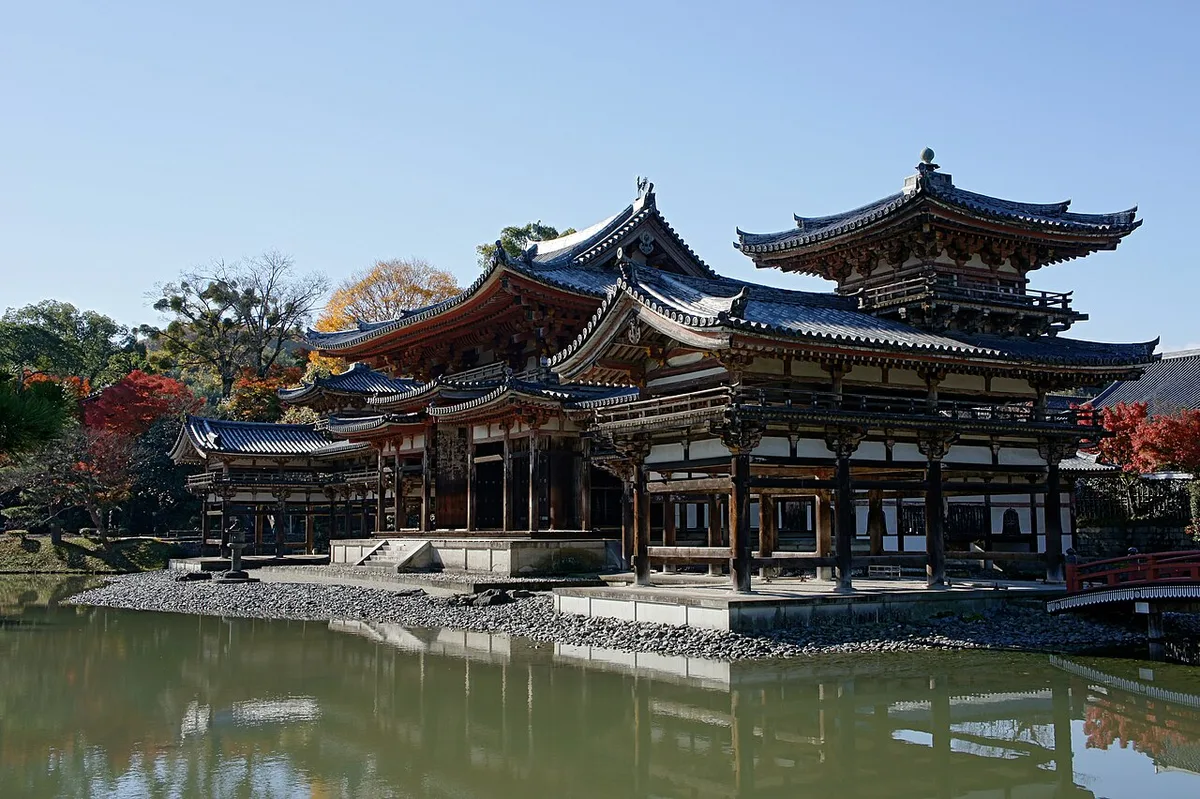
Byodo-in began as an aristocratic riverside villa, converted into a Buddhist temple in 1052 by Fujiwara no Yorimichi, son of the regent Fujiwara no Michinaga. The following year, 1053, construction completed the Hoodo — the Phoenix Hall — as a physical representation of the Pure Land paradise described in Amida Buddhist scripture. The architects placed it to face east across the Aji-ike pond so that the building appeared to float on still water, embodying a palace in the Western Paradise that awaited the faithful after death.
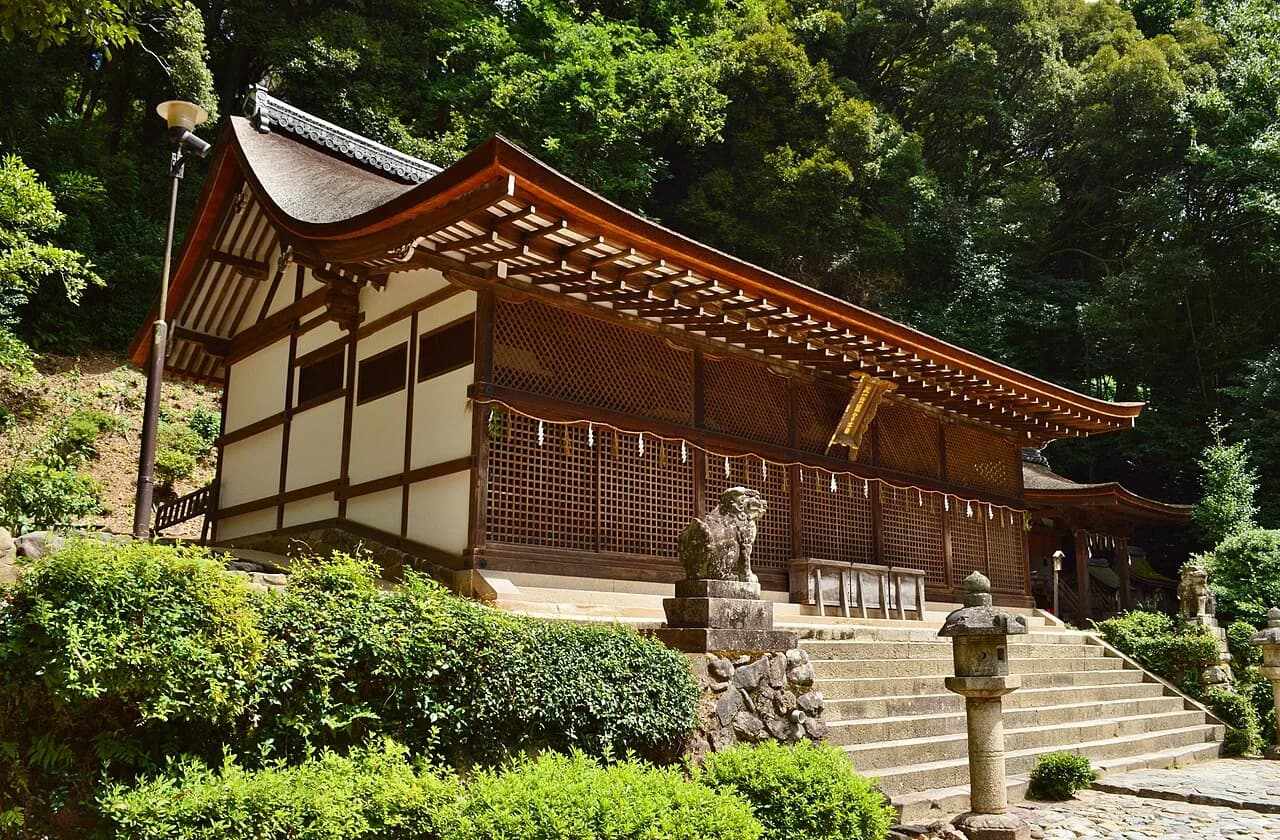
Nine centuries of wars, fires, and typhoons have claimed most of the original Heian-period temple complex. The Phoenix Hall alone survived intact, making it one of the oldest surviving wooden structures in Japan and the sole complete building from the Heian golden age still standing in its original form. In 1994, UNESCO inscribed Byodo-in as part of the 'Historic Monuments of Ancient Kyoto' World Heritage designation — a group of 17 sites shared between Kyoto, Uji, and Otsu. For a look at the other World Heritage monument in Uji itself, our Ujigami Shrine guide covers the oldest Shinto shrine building in Japan, just across the river.
The temple's presence in daily Japanese life is hard to overstate. Japan's 10-yen bronze coin has carried the Phoenix Hall's silhouette since 1959. The gilt-bronze phoenixes on the roof ridges appear on the 10,000-yen note. Even visitors who arrive knowing nothing about Pure Land Buddhism find the building immediately familiar — and then discover they have been carrying it in their pocket for years.
Inside the Phoenix Hall: What the Timed Ticket Gets You
Standard garden-and-museum admission does not include the Phoenix Hall interior. Visitors who want to step inside must purchase a separate timed entry ticket at the gate (~¥300 adults, 2026 planning estimate — confirm current pricing on the official site). Small groups of around 50 people enter at fixed intervals; each session lasts roughly 20 minutes.
Inside the central bay of the hall, the Amida Nyorai dominates the space. The statue — a seated Amida Buddha carved from Japanese cypress and covered in gold leaf — was completed by the sculptor Jocho in 1053 and is considered the definitive work of his career and the canonical example of the yosegi-zukuri joined-woodblock technique. Above the statue hangs a gilded canopy set with bronze mirror discs and small phoenixes designed to scatter reflected light across the interior, creating a shimmering effect intended to evoke the luminous quality of the Pure Land described in Buddhist texts.
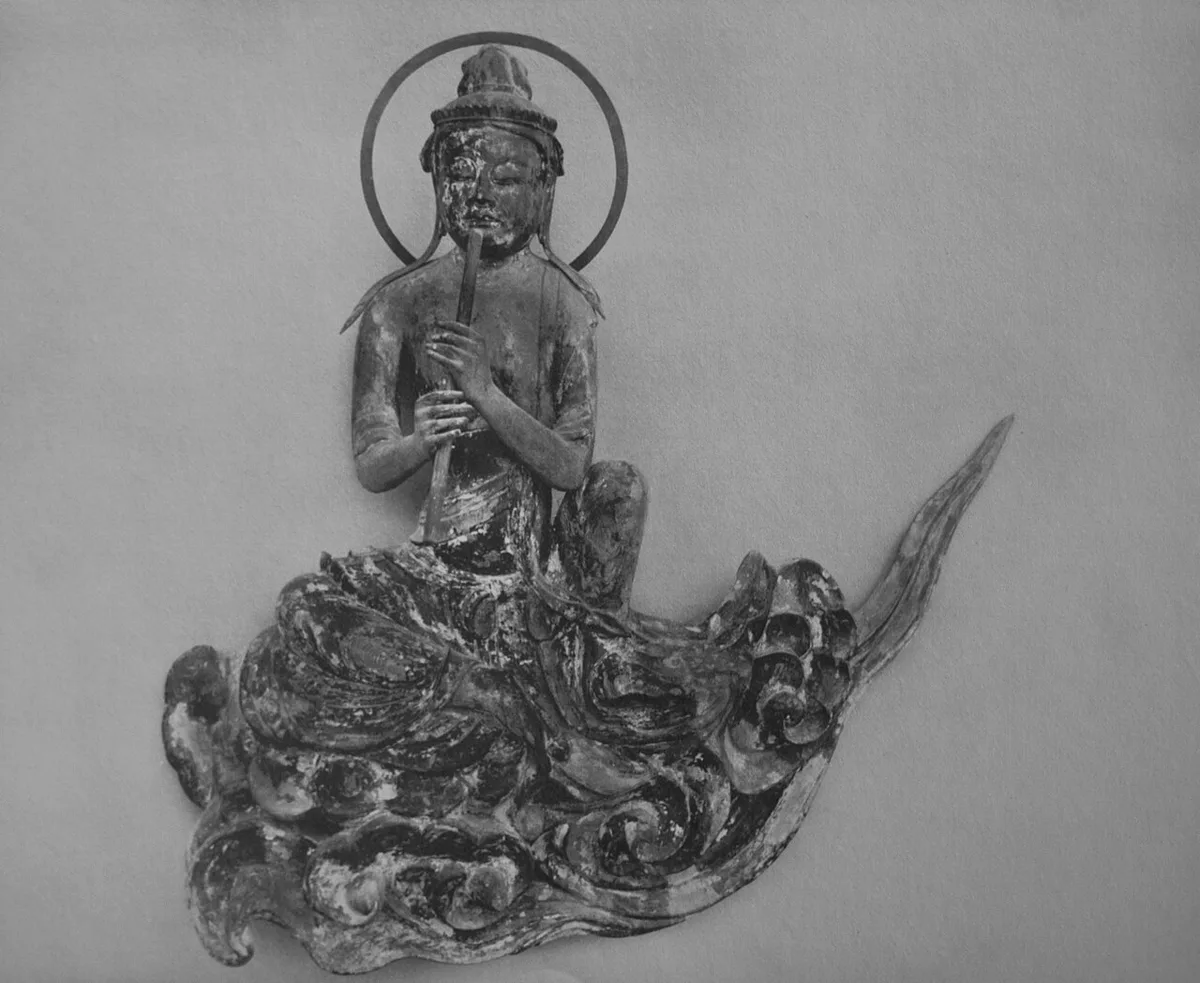
Along the upper walls of the hall, 52 wooden relief carvings depict bodhisattvas riding clouds — some playing lutes, some beating drums, some simply seated in meditation. The originals are now split between the hall (where reproductions replace several panels) and the Hoshokan museum below. Arriving early in the morning, when the light enters the hall at a low angle and visitor numbers are smallest, produces the most rewarding experience inside. Midday slots, if available at all, are busier and the light is less favourable.
The Garden, the Aji-ike Pond, and Getting the Shot
The Phoenix Hall faces the Aji-ike pond across a Pure Land garden designed to reproduce the topography of Amida's Western Paradise on earth. Water symbolises the threshold between this world and the next; the hall appears to float on the surface when approached from the eastern path, which is exactly the angle the 12th-century architects intended pilgrims to arrive from. The composition has not changed in nine centuries.
The reflection shot — Phoenix Hall mirrored in still water — is the most-reproduced photograph from Uji, and the garden path around the pond provides several vantage points at different distances. Early morning before the crowds arrive gives the stillest water and the softest light; by mid-morning on weekends, the path is busy enough that a clean foreground requires patience. Overcast skies often produce better reflections than full sun, which burns out the white-plastered walls. A tripod is not necessary but helps on grey days.
The garden is included in standard admission (~¥600 adults, museum included). Benches around the pond allow visitors to sit with the view rather than move through it quickly. Wisteria along the northern trellis blooms in late April and early May; autumn maples colour across the grounds in November. For the full picture of seasonal timing across Uji, our best time to visit Uji guide maps cherry blossom and foliage windows across the whole town.
The Hoshokan Museum: Originals in Climate Control
The Hoshokan is a purpose-built underground museum on the temple grounds, opened to house the most fragile original artefacts that could no longer safely remain in the hall. Admission is included in the standard garden ticket (~¥600 adults) — there is no separate museum charge.
Three exhibits anchor the visit. The original gilt-bronze phoenixes that topped the Phoenix Hall's roof ridges are displayed at eye level; up close, the casting detail and the traces of remaining gilding are far more legible than they ever were atop the building. The Heian-period temple bell, cast in the late 11th or early 12th century, is regarded by scholars as one of Japan's three finest surviving examples of the form. A selection of the cloud-riding bodhisattva relief carvings removed from the hall over the centuries rounds out the display — seeing them in the museum first, at close range and in proper light, then returning to the hall to see where they originally hung, makes the interior session significantly richer.
The museum opens roughly 9:00–17:00 (2026 planning estimate; confirm on arrival). A museum visit typically takes 30–45 minutes at a relaxed pace. We recommend visiting the museum last — after the garden walk and the interior session — so the carved details have context from having already seen the hall.
Admission, Hours, and Getting There
The table below summarises 2026 planning estimates. All prices and hours are estimates — confirm on the official Byodo-in website before your visit, as these can change without notice.
| Ticket / Area | 2026 Estimate (Adult) | Hours (Approx.) |
|---|---|---|
| Garden + Hoshokan museum | ~¥600 | 8:30–17:30 |
| Phoenix Hall interior (extra) | ~¥300 additional | Timed entry from ~9:00; buy immediately on arrival |
| Combined total | ~¥900 | Budget both if planning to see the interior |
Byodo-in is roughly a ten-minute walk from both JR Uji Station (JR Nara Line from Kyoto Station, about 17 minutes, roughly ¥240) and Keihan Uji Station (Keihan Uji Line, about 30 minutes from central Kyoto with a transfer at Chushojima). The route from both stations follows the Byobugaura tea street — a short lane lined with matcha shops, tea houses, and merchants selling Uji-branded tea products. Build in 20–30 minutes on the return leg for matcha soft-serve or a proper sit-down tea experience; our Uji matcha and tea houses guide covers the best stops on Byobugaura and which ones offer good value.
Planning to fit more into a half-day in Uji? Our Uji half-day itinerary maps a logical circuit between Byodo-in, Ujigami Shrine, and the Uji River walk without doubling back. If Byodo-in is part of a longer planning a Uji day trip from Kyoto, the itinerary slots neatly into a morning leaving Kyoto Station around 9 AM. For the literary side of Uji — the town is closely associated with the final chapters of The Tale of Genji — the Tale of Genji trail guide connects the temple to the riverside sites mentioned in the novel.
Frequently Asked Questions
Does the Byodo-in Phoenix Hall interior ticket sell out?
Yes. The interior uses timed entry with strictly limited numbers per session. On busy weekends, national holidays, and during cherry-blossom season (late March to early April), tickets sell out before midday. Arrive when the garden opens — around 8:30 AM — and buy the separate interior ticket at the gate immediately, before starting your garden or museum visit.
How much does Byodo-in cost to enter in 2026?
Standard garden and Hoshokan museum admission is around ¥600 per adult (2026 planning estimate). The Phoenix Hall interior is an additional ~¥300, sold as a separate timed ticket at the gate. Budget roughly ¥900 total if you intend to see everything. Confirm current prices on the official Byodo-in website before visiting, as these can change.
How do I get to Byodo-in from Kyoto?
Take the JR Nara Line from Kyoto Station to JR Uji Station (about 17 minutes, roughly ¥240). Alternatively, use the Keihan Uji Line, arriving at Keihan Uji Station (about 30 minutes from central Kyoto with one transfer). From either station, Byodo-in is a ten-minute walk along the Byobugaura tea street. The full transit breakdown, including IC card tips and bus options, is in our Uji day trip from Kyoto guide.
How long should I spend at Byodo-in Temple?
Allow two to three hours to cover the garden walk, Phoenix Hall interior timed session, and the Hoshokan museum at a relaxed pace. Add another 20–30 minutes if you plan a matcha stop on Byobugaura on the way back to the station. For a full morning combining Byodo-in with Ujigami Shrine and the Uji River walk, our Uji half-day itinerary maps the most efficient route between the sites.
Byodo-in is one of those rare places where the famous photograph does not oversell the reality. The Phoenix Hall is genuinely striking in person — more so once you are inside, where the gilded Amida Buddha and its canopy of mirror discs fill a space designed explicitly to overwhelm the senses with an idea of paradise. The 10-yen coin makes sense in a completely new way once you have stood in front of the building it depicts. At roughly ¥900 all-in for garden, museum, and interior, it is also among the better-value UNESCO sites in the broader Kyoto region.
Pair the temple with the Tale of Genji trail along the Uji River for a full literary and historical morning, or combine it with matcha on Byobugaura and the shrine grounds across the water. The full entity profile for Byodo-in — with map, accessibility notes, and visitor flow details — lives at our Byodo-in attraction page.
For trip-planning details, see Byodo-in on Wikipedia.
Free guide: Japan's Hidden Gems
12 under-the-radar places beyond Tokyo & Kyoto — with the best season to visit each and a local tip you won't find in the guidebooks.
You might also like


Continue reading
More guides you'll find useful