The Tale of Genji Trail in Uji — A Literary Riverside Walk (2026)
Walk the Tale of Genji Trail in Uji: chapter monument stones along Sawarabi-no-michi, the Genji Museum (around ¥600, closed Mon), and the Murasaki Shikibu statue at Uji Bridge. A gentle 1–2 hour literary east-bank walk perfect for a Kyoto day trip.
On this page
Few places in Japan wear their literary history as openly as Uji. The riverside city south of Kyoto is the setting for the final ten chapters of The Tale of Genji — and a walk along the east bank of the Uji River, covered in detail in our Uji travel guide, ties together nearly every major Genji landmark in one gentle, self-guided loop. Stone monuments, a dedicated museum, and a bronze statue of the novel's author cluster within easy strolling distance of Keihan Uji Station.
The walk is literary tourism done right: no crowd-herding, no timed entry, no bus required. You move at your own pace between open-air chapter monuments, a shaded riverside path that hasn't changed shape since the Heian era, and a handful of indoor exhibits for when the afternoon heat peaks. For 2026, the museum admission is around ¥600 — everything else on the trail is free.
This guide covers each stop in trail order, practical timing, the one thing worth skipping on a half-day visit, and how to connect the Genji Trail to the rest of Uji. Last updated June 2026.
At a Glance
The Tale of Genji trail runs along the east bank of the Uji River, so arrive via Keihan Uji Station rather than JR Uji. Pick up the Sawarabi-no-michi path between Ujigami Shrine and the museum to follow the chapter monuments in order.
Key Takeaways
- The trail follows the Uji Jujo — the ten final chapters of Murasaki Shikibu's early 11th-century novel, set along the east bank of the Uji River.
- Sawarabi-no-michi (Path of the Early Ferns) is the spine of the walk: a shaded riverside promenade lined with chapter-numbered granite monuments.
- The the Tale of Genji Museum (opened 1998) is the anchor indoor stop — recreated Heian interiors, an ox-carriage replica, and a short narrative film for around ¥600.
- the Uji Bridge (Ujibashi), one of Japan's three great ancient bridges, ends the walk with a stone statue of Murasaki Shikibu gazing downriver at the east end.
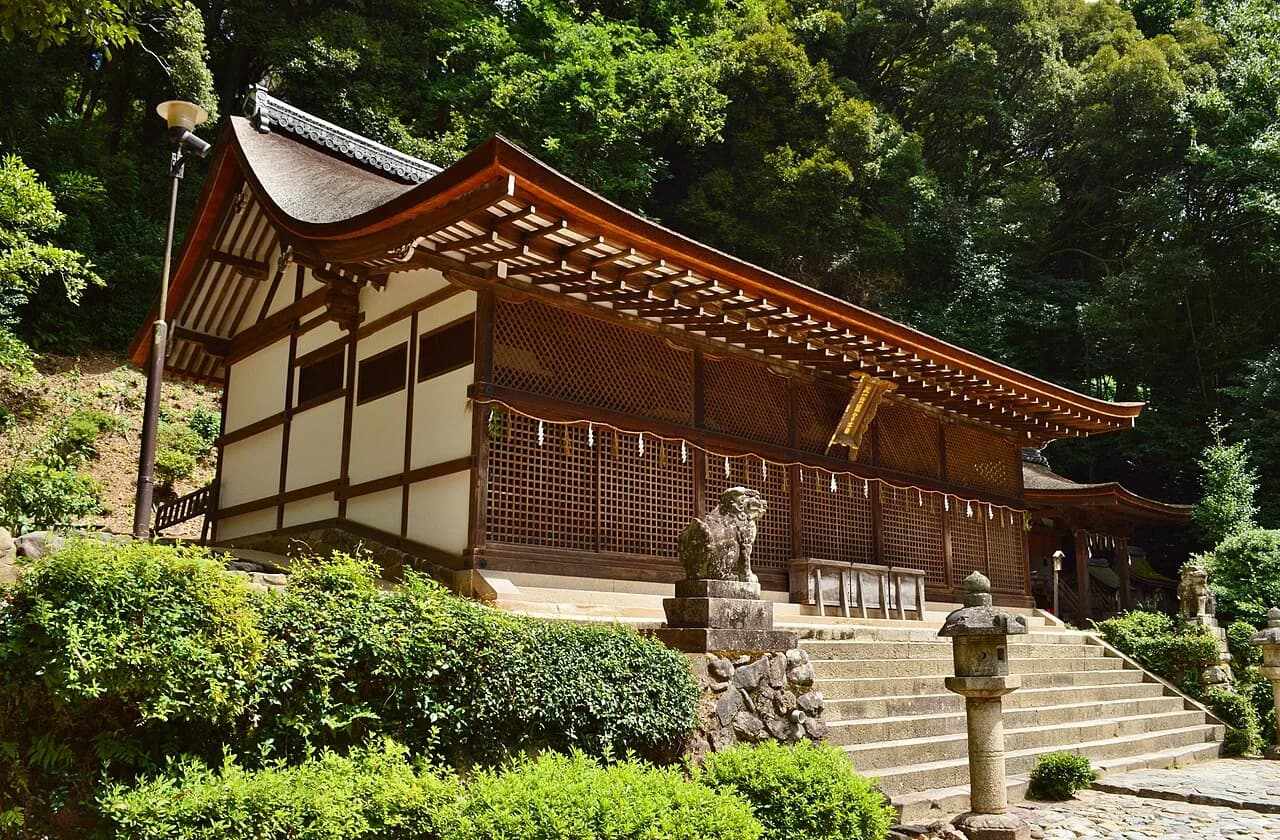
- Combine with the Ujigami Shrine at the southern end of Sawarabi-no-michi — Japan's oldest extant Shinto shrine sits on the same east-bank path, free to enter.
The Uji Jujo — Ten Chapters That Made a City Literary
The Tale of Genji (源氏物語, Genji Monogatari) was written in the early 11th century by Murasaki Shikibu, a lady-in-waiting at the Heian imperial court. Scholars widely regard it as the world's first novel — a 54-chapter portrait of court life, love, and loss. The final ten chapters, known as the Uji Jujo (宇治十帖, "Ten Quires of Uji"), unfold almost entirely in and around Uji, then a remote aristocratic retreat south of the capital Heiankyō.
The Uji Jujo introduced characters still known by name today: Ukifune, a young woman torn between two noblemen, and Prince Niou, one of her suitors. Their stories play out on the Uji River, in riverside villas, and in the surrounding wooded hills — which is why the city has spent centuries cultivating its identity as "the place where Genji ends." The trail formalises that identity into a walkable sequence of stops, each tied to a specific chapter or character.
Understanding even a rough outline of the Uji Jujo before arriving makes the monument stones far more interesting than they first appear on the path. A small illustrated English pamphlet is available free at the museum and at the Uji City Tourist Information Center near JR Uji Station — pick one up before you start walking. You do not need to have read the novel to enjoy the trail, but a few names go a long way.
Sawarabi-no-michi — Walking the Path of the Early Ferns
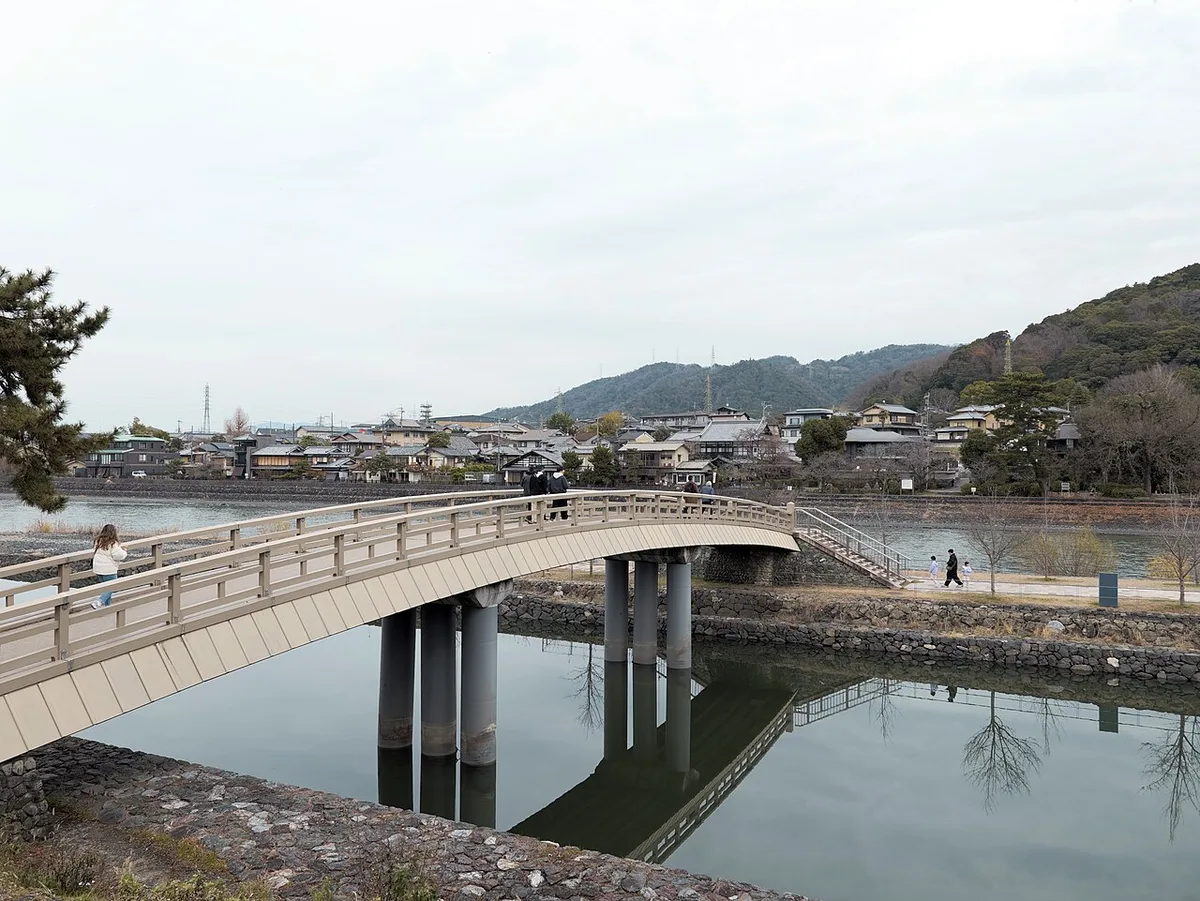
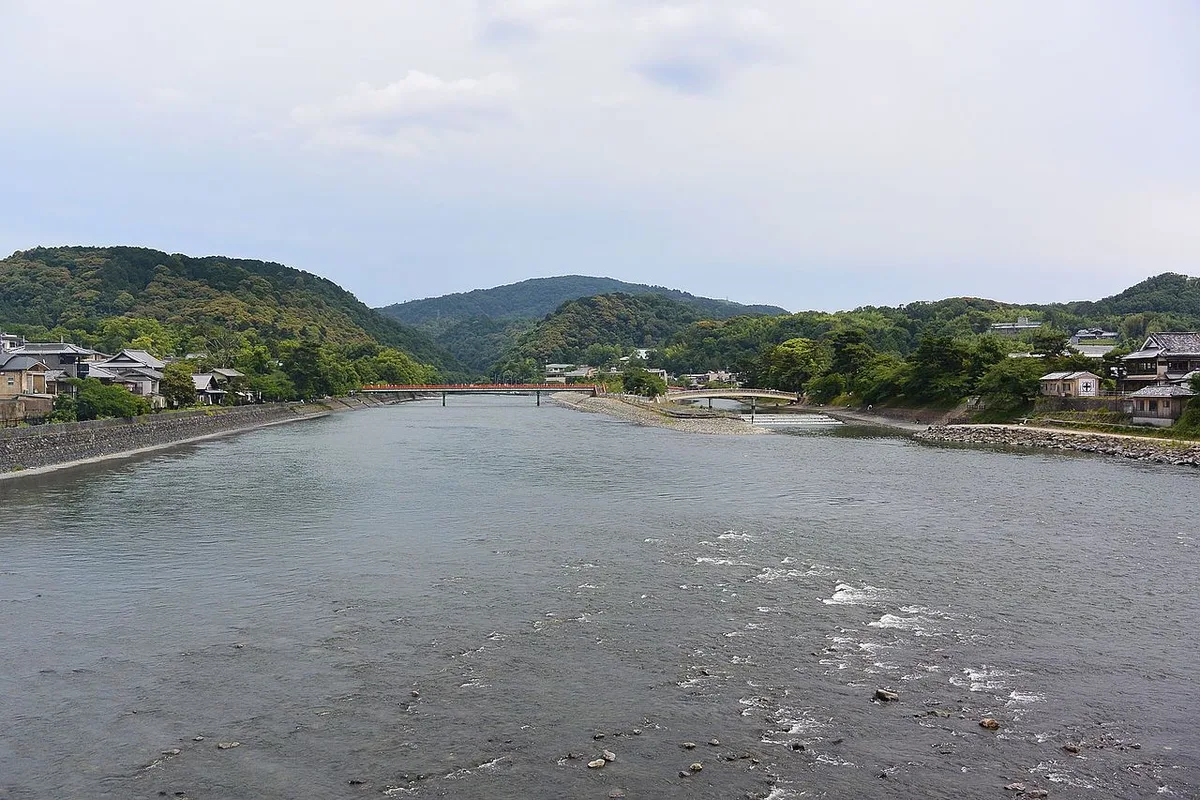
Sawarabi-no-michi (さわらびの道, "Path of the Early Ferns") is the formal name for the riverside promenade running between Ujigami Shrine's World Heritage halls to the south and the Tale of Genji Museum to the north, entirely along the east bank. The path takes its name from one of the Uji Jujo chapters, in which the protagonist gathers early ferns on the hillside above the river. On a spring morning, with mist rising off the Uji River and fern fronds along the verge, the name earns itself without effort.
At intervals along the path, granite monuments mark individual chapters of the Uji Jujo. Each stone carries a calligraphed chapter name and a small carved illustration — more evocative than informative, but atmospheric enough to slow most visitors to a deliberate pace. The spacing is generous: there is no rushing required, and no logical reason to move faster than the stones invite. Bronze statues of Ukifune and Prince Niou stand near the riverbank, south of the museum, positioned just off the main path and easy to miss at speed. The riverside view from here, looking toward the weir and the wooded hills beyond, is the one most photographers stop for.
The full path end to end takes around 20 minutes of steady walking without stops. Factor in time at the statues, the monument stones, and a few minutes at the Ujigami Shrine precincts and the trail stretches comfortably to 90 minutes without feeling padded.
| Stop | Location on trail | Highlight | Admission | Notes |
|---|---|---|---|---|
| Tale of Genji Museum | North end, near Keihan Uji Station | Heian interiors, ox-carriage replica, narrative film | Around ¥600 | Closed Mondays; 2026 prices — confirm official site |
| Sawarabi-no-michi | Full east bank between museum and shrine | Chapter monument stones, fern-lined promenade | Free | ~20 min end to end at a steady walk |
| Ukifune & Niou statues | Mid-path, riverside | Bronze characters from the Uji Jujo | Free | Look left off the main path — easy to walk past |
| Ujigami Shrine | South end of east-bank path | Japan's oldest extant Shinto shrine; UNESCO World Heritage | Free | Connected to the adjacent Uji Shrine complex |
| Uji Bridge (Ujibashi) | River crossing at east end | Murasaki Shikibu statue; one of Japan's three famous ancient bridges | Free | Best photographed from the riverbank, not the bridge deck |
Tale of Genji Museum — The Anchor Indoor Stop
The Uji's Tale of Genji Museum opened in 1998 near Keihan Uji Station and remains the best single introduction to the novel for visitors without prior knowledge of the text. The building recreates key settings from the Uji Jujo: full-scale Heian-period rooms dressed with period furnishings, a lacquered ox-carriage of the type the nobility used to travel between estates, and a short narrative film retelling the Uji chapters in visual form. The film runs with Japanese audio and English subtitles and takes roughly 20 minutes — a worthwhile investment before stepping out onto Sawarabi-no-michi.
Admission is around ¥600 for adults (2026 planning estimate — confirm the official site before visiting). The museum is closed on Mondays and on certain public holidays, so checking the schedule before building your Uji visit around it is worth doing. Allow 40 to 60 minutes inside; longer if you read Japanese and want to engage with the calligraphic text panels. English-language signage covers the main exhibits adequately.
One honest note on what to skip: the formal garden behind the museum building is attractive but adds little context to the Genji story. If your time is limited, exit directly to Sawarabi-no-michi rather than spending 15 minutes on a garden that functions more as a photo backdrop than an interpretive space. The riverside path outside does the interpretive work far more effectively.
Uji Bridge and the Murasaki Shikibu Statue
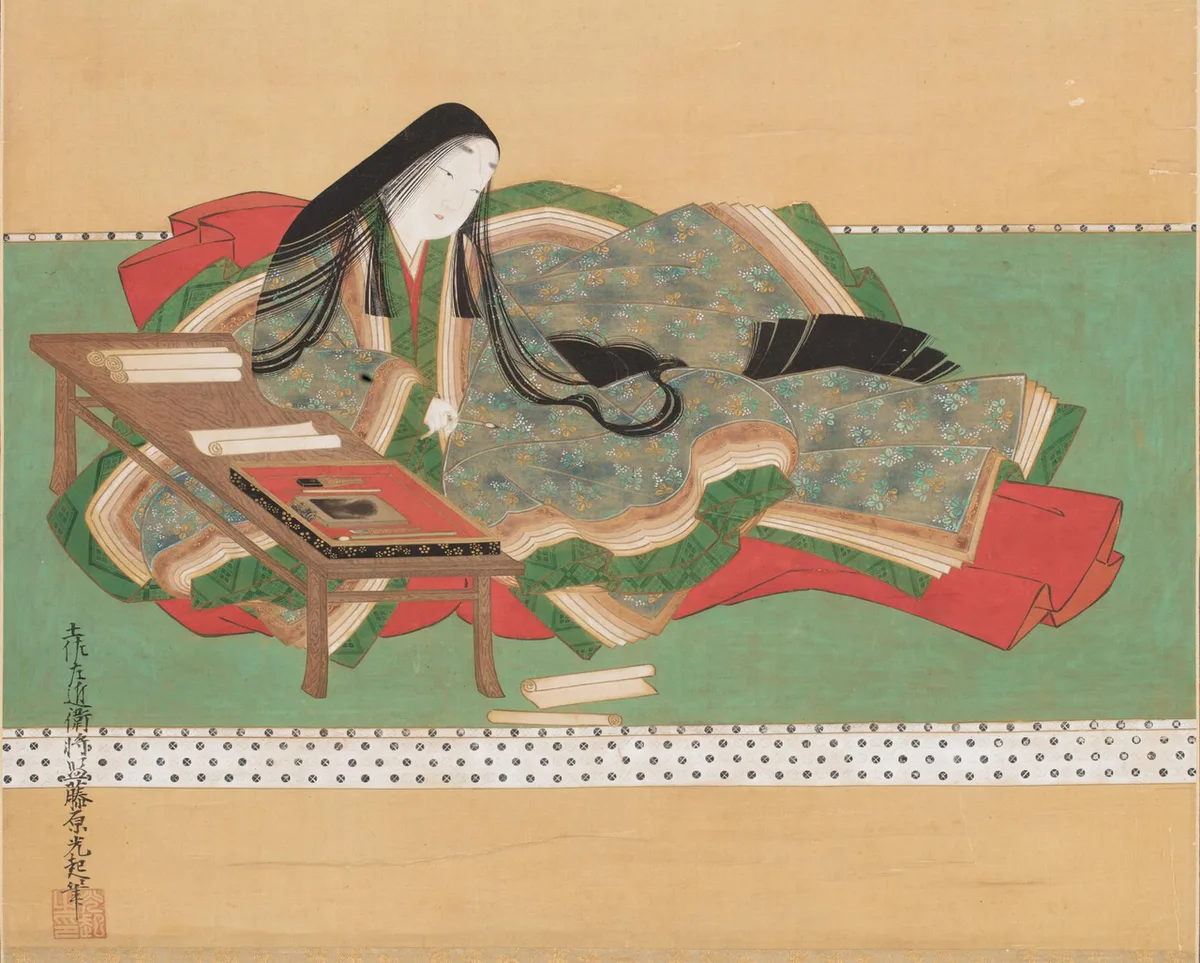
Uji Bridge (Ujibashi) (宇治橋, Ujibashi) has crossed the Uji River since at least 646 CE, placing it among Japan's three most celebrated ancient bridges alongside those at Yamazaki and Seta. The current structure is modern — rebuilt in wood-grained concrete to evoke the original's appearance — but the site carries genuine historical weight: the bridge appears in the Nihon Shoki chronicles and in the Uji Jujo itself, and has been fought over, flooded, and rebuilt many times across fourteen centuries of occupation on this crossing point.
At the east end of the bridge, a seated stone statue of Murasaki Shikibu looks out over the river toward the wooded hills. Installed in 1988 as part of Uji's effort to formalise its literary identity, the statue has since become one of the most photographed spots in the city. The author sits with inkstone and paper, the Uji River and its weir behind her. It makes an obvious but satisfying end-point for the trail walk, and the proportions of the statue are generous enough to read well in photographs even from a distance.
The bridge is best photographed from the east riverbank rather than from the bridge deck, particularly in morning light before the tourist flow from Kyoto arrives. The east-bank path extends further south from Uji Bridge toward Byodo-in's Phoenix Hall, a ten-minute walk that most visitors combining the two sites will want to include in the same half-day. Byodo-in and the Genji Trail anchor opposite ends of Uji's main sightseeing axis and pair without requiring any backtracking.
Practical Tips — Timing, Access, and How to Structure Your Day
The trail is entirely outdoors except for the museum interior, making morning visits before 10:00 AM most comfortable during summer months. Autumn (October to November) is our preferred season: the riverside maples along Sawarabi-no-michi turn gold and red, the softer light flatters the monument stones, and crowd levels sit below the spring peak. Spring cherry blossom along the Uji riverbanks draws significant weekend crowds from Kyoto — beautiful, but plan for company.
From Keihan Uji Station, the museum entrance is five minutes on foot: exit the station, cross the small local bridge, and the museum appears on your left. JR Uji Station is also a practical starting point if you are coming from the Kyoto JR side; it places you closer to Uji Bridge and Byodo-in, from which you can walk the trail in reverse (south to north). Our Uji half-day itinerary maps the most efficient route combining both stations with the Genji Trail, Byodo-in, and Ujigami Shrine without backtracking.
Anyone travelling from Kyoto should allow 20 minutes on the Kintetsu or Keihan lines from the city centre. The Genji Trail requires no advance booking, no timed entry, and no guide — the free pamphlet from the tourist office handles navigation. For the full picture of what Uji offers beyond the literary trail, our Uji sightseeing overview covers every major cluster including the tea houses and the Byodo-in complex. Visitors coming directly from Kyoto can also read the Uji day trip from Kyoto guide for rail logistics and IC card tips.
Frequently Asked Questions
What is the Tale of Genji Trail in Uji?
The Tale of Genji Trail is a self-guided literary walk along the east bank of the Uji River. It connects the Tale of Genji Museum, the Sawarabi-no-michi riverside path with its chapter monument stones and character statues, Ujigami Shrine, and Uji Bridge — all tied to the Uji Jujo, the final ten chapters of Murasaki Shikibu's 11th-century novel. The walk takes roughly one to two hours at a relaxed pace.
How much does it cost to walk the Genji Trail in Uji?
The outdoor portion of the trail — Sawarabi-no-michi, the character statues, Ujigami Shrine, and Uji Bridge — is entirely free of charge. The Tale of Genji Museum charges around ¥600 for adults (2026 planning estimate; confirm the official site before visiting). The museum is closed on Mondays.
Do I need to have read The Tale of Genji before visiting Uji?
No prior reading is required. The museum's exhibits and the free English pamphlet available at the Uji City Tourist Information Center provide enough context to enjoy the trail. Even a brief familiarity with the Uji Jujo characters — Ukifune, Prince Niou — will make the monument stones and statues considerably more meaningful, but the walk rewards visitors at any level of knowledge.
Can I combine the Genji Trail with Byodo-in on the same day?
Yes — the two sites sit at opposite ends of the same east-bank axis and pair naturally within a single half-day. Walk the Genji Trail north to south (museum, Sawarabi-no-michi, Ujigami Shrine), then continue along the east bank to Byodo-in. Total walking time across all stops is around three to four hours including museum time at both sites. Uji's full sightseeing guide covers how to sequence the day without backtracking.
The Tale of Genji Trail is one of the most genuinely atmospheric literary walks in Japan — a place where a thousand-year-old novel still shapes how a city sees itself. The outdoor path is free, the monument stones reward slow reading, and the Murasaki Shikibu statue at Uji Bridge provides a quiet, unhurried end-point that earns the walk from Keihan Uji Station several times over. The museum's ¥600 admission is well spent if you have any curiosity about Heian court culture, but the trail holds its value even if you choose to skip the interior and stay outside on Sawarabi-no-michi.
For a fuller day in Uji, our Uji half-day itinerary weaves the Genji Trail together with Byodo-in's Phoenix Hall, a matcha stop on the west bank, and Ujigami Shrine without feeling rushed. First-time visitors to the region will find Uji fits cleanly into a Kyoto itinerary as an afternoon excursion — the trains run frequently, the east-bank path rewards the journey, and the literary atmosphere is unlike anything else in the region.
For trip-planning details, see The Tale of Genji on Wikipedia.
Free guide: Japan's Hidden Gems
12 under-the-radar places beyond Tokyo & Kyoto — with the best season to visit each and a local tip you won't find in the guidebooks.
You might also like


Continue reading
More guides you'll find useful