
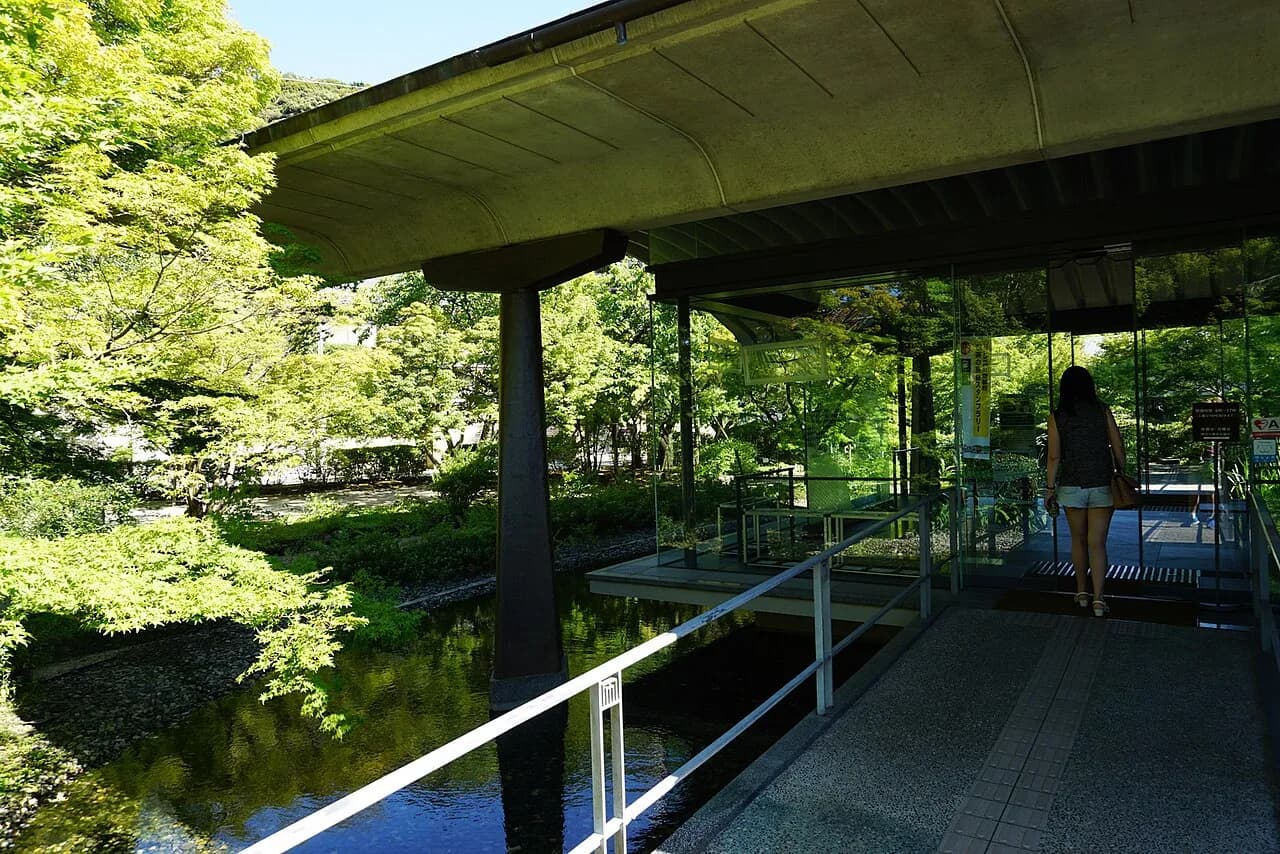
The Tale of Genji Museum sits on the east bank of the Uji River, a short walk from Keihan Uji Station, and offers the most focused encounter with Murasaki Shikibu's masterpiece available anywhere in Japan.
Opened in 1998, the museum is dedicated entirely to the Uji Jujo — the ten concluding chapters of The Tale of Genji set in Uji — bringing eleventh-century Heian court culture to life through recreated interiors, a full-size ox-carriage, and a short atmospheric film.
Plan roughly 45 to 60 minutes here before stepping onto the Sawarabi-no-michi literary walk, which links the museum to Ujigami Shrine and the wider Genji landscape along the river.
This guide covers everything you need for a 2026 visit: opening hours, admission costs, how to arrive from Kyoto, and how to fit the museum into a half-day in Uji.
Why Visit The Tale of Genji Museum? Uji's Literary Heart
Few cultural museums in Japan focus this precisely on a single literary work, and that concentration is exactly what makes this museum worth your time. Rather than attempting a broad survey of Japanese classical literature, it devotes every exhibit to The Tale of Genji (Genji Monogatari) — written by court lady Murasaki Shikibu in the early eleventh century and widely regarded as the world's first novel.
The Uji Jujo, the work's concluding ten chapters, are set along the Uji River, which makes this city the natural home for a museum of this kind. Where Kyoto preserves the broader context of Heian court life, Uji holds the specific literary landscape that Murasaki Shikibu imagined for Prince Genji's successors. No other site in the region explains that relationship with the same depth or clarity.
If you are already including things to do in Uji in a Kyoto day trip — Byodoin Temple, Ujigami Shrine, the riverside tea houses — the museum adds a literary dimension that enriches the whole visit. It also integrates naturally into our half-day Uji itinerary, positioned to follow or precede the Sawarabi-no-michi walk along the east bank.
Even visitors who have not read the novel leave with a clear sense of why Uji matters in Japanese literary history. The museum is accessible to first-timers and rewarding for those who know the text well.
History and Significance of The Tale of Genji Museum
The Tale of Genji was composed in the early eleventh century during the height of Heian-period aristocratic culture. Murasaki Shikibu, a lady-in-waiting at the imperial court in Kyoto, wrote across multiple years — most scholars date composition to approximately 1008–1021 CE. The work's 54 chapters follow the life of Hikaru Genji and, in its final movement, the stories of his successors in Uji.
The Uji Jujo are the chapters that cement this city's literary identity. Set against the Uji River — which Murasaki portrays as wild and melancholy, a counterpoint to the polished capital — these ten chapters trace themes of longing, rivalry, and impermanence that feel distinctly different in tone from the earlier, more courtly sections. For scholars of classical Japanese literature, the Uji chapters represent a late-period turn toward psychological depth that remains influential a thousand years later.
The museum opened in 1998 to bring this closing section of the novel into tangible form. Its exhibitions draw on Heian textile designs, architectural reconstructions, and reproductions of the illustrated scrolls (emakimono) that the novel inspired across subsequent centuries. A short film narrates the key Uji storylines, with English subtitles available for international visitors.
To follow the full literary geography on foot, the full Tale of Genji trail guide maps every site connected to the Uji Jujo — from the museum itself to the river banks Murasaki Shikibu described in the text.
Getting to The Tale of Genji Museum: Access from Kyoto
The museum stands on the east bank of the Uji River, making it one of the most straightforward attractions to reach from central Kyoto.
By Keihan Railway: Take the Keihan Main Line to Chushojima Station and transfer to the Keihan Uji Line for Keihan Uji Station. Journey time from Kyoto-Shijo is approximately 30–35 minutes. From Keihan Uji Station, the museum is a five-minute walk north along the east bank road — follow signs for the Genji Monogatari Museum (源氏物語ミュージアム).
By JR: The JR Nara Line from Kyoto Station reaches JR Uji Station in approximately 17 minutes on the Miyakoji Rapid service. From JR Uji Station, cross the Uji Bridge and continue north along the east bank — allow around 10–12 minutes on foot. The bridge crossing itself gives you an early view of the river scenery that features throughout the Uji Jujo.
Once on the east bank, the museum makes an easy starting point or natural continuation from Ujigami Shrine, the World Heritage shrine, Japan's oldest surviving Shinto shrine, which sits only minutes further north. The two sites together anchor a satisfying east-bank loop, with views of Uji Bridge (Ujibashi) framing both ends of the walk.
There is no dedicated car park at the museum. Visitors arriving by car should use the municipal car parks near the city hall or the Keihan station area and walk to the east bank.
Highlights: What to See at The Tale of Genji Museum
The centrepiece of the permanent collection is a full-size recreation of a Heian-era gissha — the lacquered, curtained ox-carriage that served as the standard conveyance for court ladies in the eleventh century. Standing beside this vehicle provides immediate physical scale to the world Murasaki Shikibu describes. The gissha is frequently photographed and gives first-time visitors a visceral sense of how the Heian aristocracy moved through the landscape.
Recreated Heian interiors occupy several galleries, furnished with screen paintings, layered textile reproductions, and period-style room partitions. The spatial layouts reflect the semi-public architecture of a Heian aristocratic residence — a world in which characters communicated through curtains and screens rather than face-to-face, a dynamic central to the novel's atmosphere and its famous scenes of concealed longing.
A short atmospheric film screens at regular intervals throughout the day, narrating key narrative moments from the Uji Jujo. English subtitles are available. For first-time readers of the novel, the film provides a clear storyline overview; for those already familiar with the text, it functions as a poetic visual companion to the chapters.
Exhibition panels cover Murasaki Shikibu's biography, the manuscript tradition, and the history of illustrated scroll paintings the novel inspired across subsequent centuries. The museum shop stocks scholarly editions, illustrated books in English and Japanese, and Genji-themed stationery and craft goods — useful if you are looking for a considered souvenir.
Planning Your Visit: Hours, Access, and Tips
Opening hours in 2026 are 09:00 to 17:00, with last entry at 16:30. The museum is closed on Mondays — or the following Tuesday when Monday falls on a public holiday. It also closes during the year-end period, typically in late December and early January. Check the official website at uji-genji.jp for the precise closure calendar before travelling.
Admission is ¥600 for adults and ¥300 for children (2026 estimates — verify locally, as fees occasionally change). The museum is not free, though the price is modest for the exhibition depth on offer. There are no additional charges for the film screenings.
Allow 45 to 60 minutes for a thorough visit, slightly longer if you watch the full film and browse the shop. The building is air-conditioned, making it a comfortable stop during Uji's warm, humid summers. Ground-floor galleries are accessible for wheelchair users; confirm upper-floor access with the museum directly if required.
Limited coin lockers are available near the entrance for larger bags — useful if you plan to walk the Sawarabi-no-michi literary trail afterwards and want to travel light. Signs at the entrance are in both English and Japanese. Weekday morning visits tend to be quieter than weekends and national holidays, when school groups and tour parties arrive.
Frequently Asked Questions
What is the Tale of Genji Museum about?
The museum is dedicated to The Tale of Genji (Genji Monogatari), written by Murasaki Shikibu in the early eleventh century and often called the world's first novel. It focuses specifically on the Uji Jujo — the ten final chapters set in Uji — through recreated Heian-era interiors, a full-size ox-carriage, exhibitions on court life, and a short film with English subtitles.
What are the opening hours in 2026?
The museum is open 09:00–17:00, with last entry at 16:30. It is closed on Mondays (or the following Tuesday if Monday is a public holiday) and during the year-end period. Check the official website at uji-genji.jp for the precise closure dates before your visit.
How much does admission cost?
Admission is ¥600 for adults and ¥300 for children (2026 estimates — verify locally before visiting). There are no additional charges for film screenings included in the exhibition. The museum is not free to enter.
How do I get to the Tale of Genji Museum from Kyoto?
By Keihan Railway, take the Keihan Main Line to Chushojima and transfer to the Keihan Uji Line; Keihan Uji Station is about 30–35 minutes from Kyoto-Shijo. The museum is a five-minute walk north along the east bank. By JR, the Nara Line Miyakoji Rapid reaches JR Uji Station in about 17 minutes from Kyoto Station; cross Uji Bridge and walk north for 10–12 minutes.
How long should I allow for the visit?
Allow 45 to 60 minutes for a thorough visit, slightly longer if you watch the full film and browse the museum shop. The museum pairs naturally with Ujigami Shrine and the Sawarabi-no-michi walk, so most visitors plan the east bank as a two-hour combined loop.
Is the museum suitable for visitors who haven't read The Tale of Genji?
Yes. The museum is designed to be accessible regardless of prior knowledge. A short film with English subtitles introduces the key storylines, and exhibition panels provide background on the novel, Murasaki Shikibu, and Heian court life. Visitors who have not read the novel typically leave with a clear sense of why the work matters and what makes Uji's literary landscape unique.
The Tale of Genji Museum rewards any visitor with an interest in Japanese literary history, Heian court culture, or the deeper meaning behind Uji's riverside landscape. Its focused scope — devoted entirely to the Uji Jujo — means every exhibit earns its place, and the hour you spend inside enriches everything you encounter on the walk outside.
For the complete east-bank experience, pair the museum with the Ujigami Shrine next door and follow the Sawarabi-no-michi path south. Our Tale of Genji trail guide maps the full literary route and tells you what to look for at each stop along the river.