

Uji Half-Day Itinerary from Kyoto (2026)
A timed 3–5 hour plan from Kyoto covering Byodo-in, Uji's matcha street, Ujigami Shrine, and the Tale of Genji trail — with JR Nara Line transport tips and a full cost breakdown.
On this page
Uji sits just 17 minutes south of Kyoto on the JR Nara Line, yet most visitors bypass it entirely for Nara or Osaka. That is a mistake our editors keep correcting: in under five hours you can see everything Uji does best — a UNESCO-listed phoenix hall, 800 years of matcha culture on a single tea street, Japan's oldest surviving Shinto shrine, and the riverside path described in the world's first novel. This timed plan runs west-to-east across the Uji River, starting at JR Uji Station and finishing at Keihan Uji Station on the opposite bank — no backtracking, no wasted time.
If you are weighing Uji against other Kyoto half-day options, our day trips from Kyoto guide compares travel times, costs, and crowd levels across the region. Uji consistently ranks among the fastest and cheapest to reach, which is partly why it rewards a focused half-day more than most destinations in the area.
All prices below are 2026 planning estimates. Confirm each venue's official site before visiting, as admission fees and operating hours change seasonally.
Walk straight from JR Uji Station to Byodo-in's main gate and buy your Phoenix Hall interior ticket before you do anything else. Interior visits run on timed 20-minute slots and sell out by mid-morning on weekends. The garden admission and interior ticket are sold separately at the same counter.
Key Takeaways
- Arrive at JR Uji Station (west bank) and depart from Keihan Uji Station (east bank) — the one-way river crossing is the structural move that keeps the itinerary flowing.
- Buy the Byodo-in Phoenix Hall interior ticket immediately on arrival; timed slots are capped and fill fast on busy days.
- Nakamura Tokichi on Byobugaura tea street draws queues that stretch 20–30 minutes by noon — arrive before 11:30 to keep waits short.
- Ujigami Shrine is free, takes just 20 minutes, and is widely considered the oldest surviving Shinto shrine building in Japan — do not skip it to save time.
- June visitors: Mimurotoji's hydrangea garden is spectacular but needs at least 90 minutes plus transit time — plan it as a separate full-day outing rather than bolting it onto this half-day.
The Five-Stop Route: A Timed Uji Half-Day
The itinerary below runs from roughly 10:00 to 14:30 on the ground. Every stop is within comfortable walking distance of the next; the longest single walk is about 12 minutes between Uji Bridge and Ujigami Shrine along the Sawarabi-no-michi riverside path. The route progresses west to east, ending at Keihan Uji Station rather than retracing the river.
- 09:30 — Depart Kyoto Station
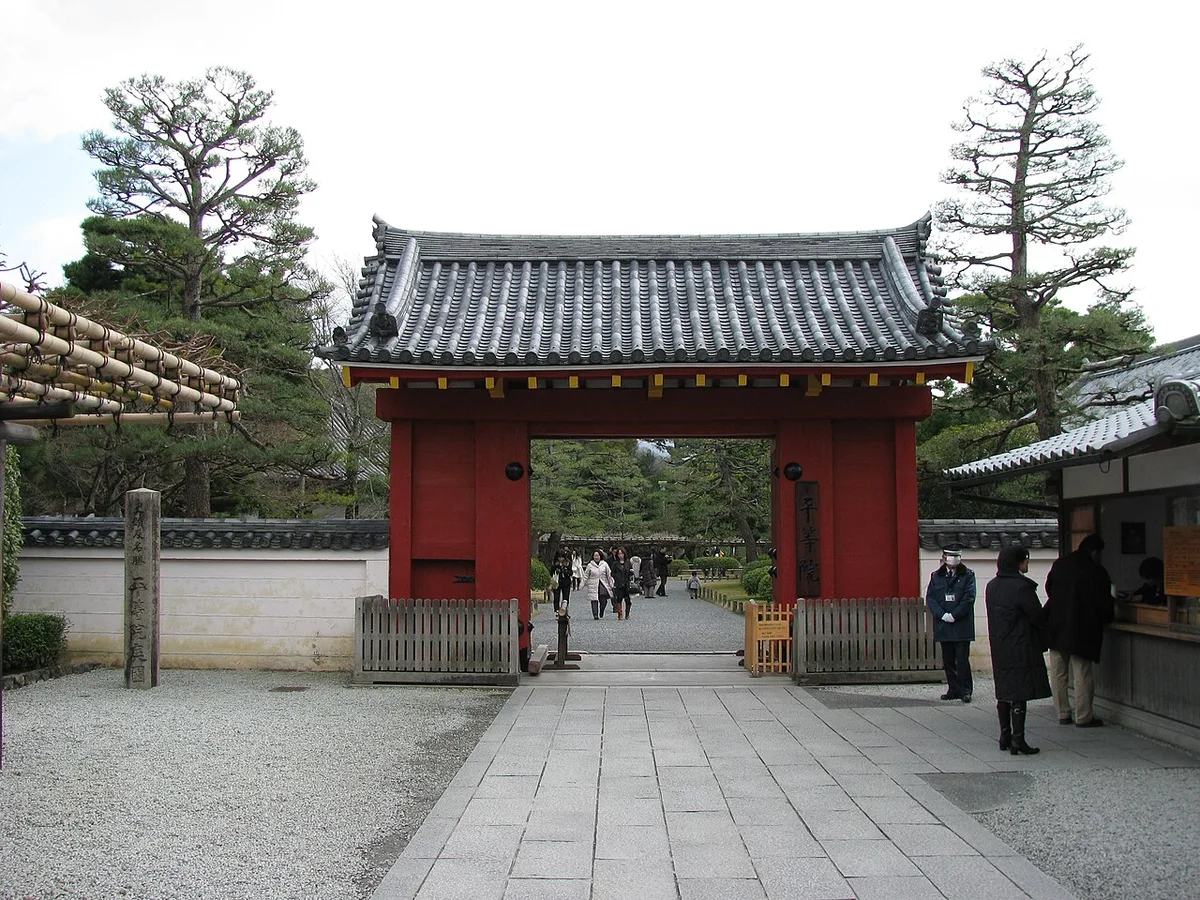
Take the JR Nara Line rapid or local service towards Nara, alighting at JR Uji Station. The rapid takes around 17 minutes (roughly ¥240 per person). IC cards work at the barriers — no paper tickets needed. From the station exit, Byodo-in's main gate is a five-minute walk straight ahead along the Omote-sando approach. - 10:00 — Byodo-in and the Phoenix Hall interior (60–90 minutes)
Head to the main gate counter and purchase garden admission (around ¥600 for adults) plus a Phoenix Hall interior ticket (around ¥300 extra). Interior visits run on 20-minute timed slots with limited capacity — your ticket will show a designated entry time. While waiting for your slot, explore the pond garden, the flanking corridor wings, and the Hoshokan museum on site. The interior reveals the gilded Amida Buddha and the 52 apsara musician figures carved into the walls — nothing else in Japan looks quite like it. Full timing advice and what to prioritise inside the hall is in our Byodo-in Phoenix Hall visitor guide. - 11:30 — Byobugaura tea street and Nakamura Tokichi (45–60 minutes)
Exit Byodo-in and turn onto Byobugaura, the 200-metre street that runs between the temple gate and Uji Bridge. Tea merchants, matcha soft-serve stalls, and soba restaurants line both sides. Nakamura Tokichi is the most celebrated stop: their matcha parfait layers houjicha jelly, matcha ice cream, and gyuhi mochi in a ceramic cup, and it is worth the queue. Arrive before 11:30 and the wait is typically under 15 minutes; by noon it stretches to 30 or more. The full café-by-café breakdown of the street is in our Uji matcha and tea houses guide. - 12:30 — Uji Bridge, the Murasaki Shikibu statue, and Tsuen Tea (15–20 minutes)
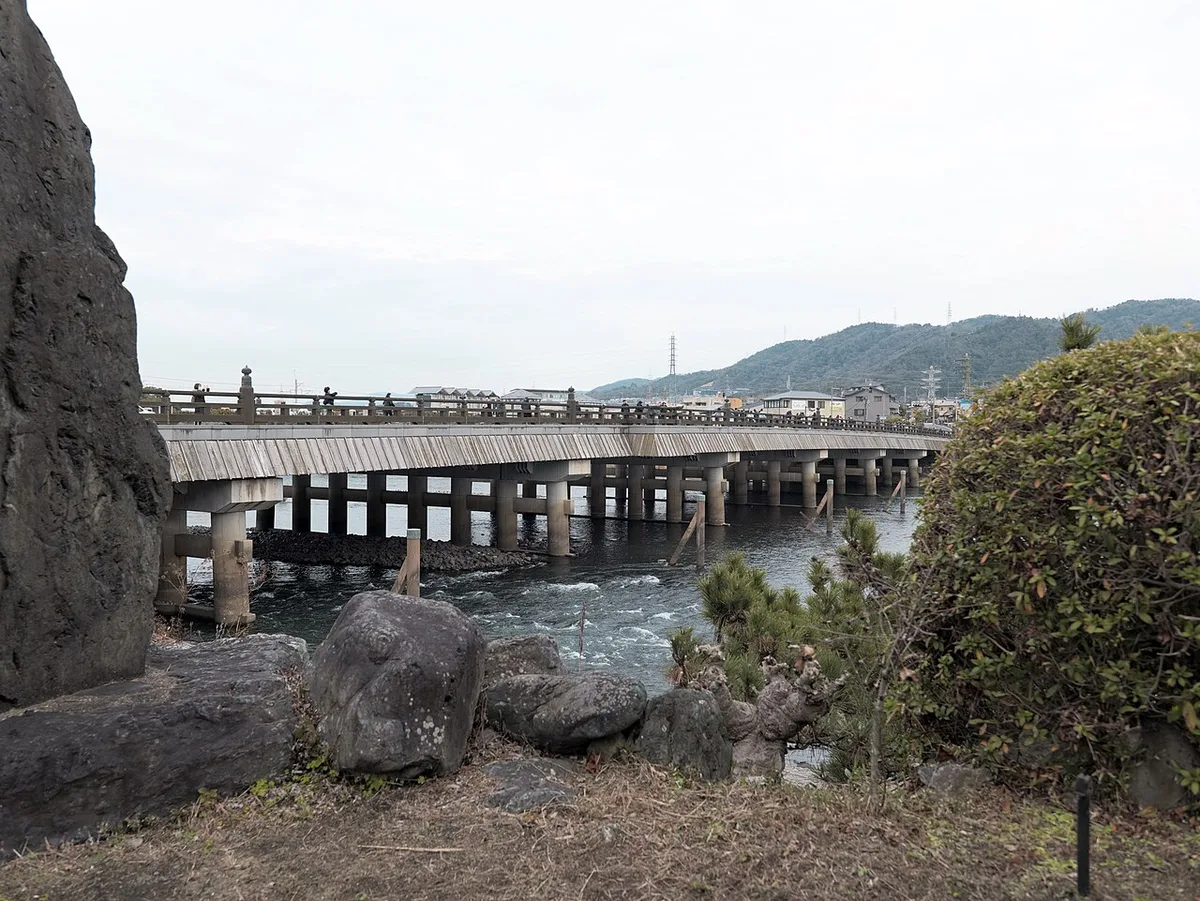
Uji Bridge is one of the three oldest bridges in Japan, first recorded in 646 CE. The view downstream from the middle of the bridge takes in the Uji River weirs and, on clear days, the wooded hills above Byodo-in. On the west-bank approach, a bronze statue of Murasaki Shikibu — author of The Tale of Genji, written in part while she was stationed in Uji — stands facing the river. Before crossing, duck into Tsuen, just off the bridge: established around 1160, it is widely cited as Japan's oldest tea merchant, and their matcha soft-serve is a lighter alternative to a full parfait. Cross the bridge to the east bank and turn right (north) onto the riverside path. - 13:00 — Sawarabi-no-michi, Ujigami Shrine, and the Tale of Genji Museum (60–90 minutes)
The Sawarabi-no-michi ("bracken sprout path") follows the east bank of the Uji River north from the bridge through quiet woodland for about 10 minutes. The path deposits you at Ujigami Shrine — free to enter, and believed to be the oldest surviving Shinto shrine structure in Japan, dating to the late Heian period (10th–11th century). Budget 20 minutes here: the main hall, the ablution spring, and the forested setting reward slow exploration. A five-minute walk further north brings you to the Tale of Genji Museum, dedicated to the novel's Uji chapters with an admission fee of around ¥600. Our Tale of Genji trail guide maps the full literary walking circuit if you want to extend beyond the museum. For the shrine itself, see our Ujigami Shrine article for opening hours and what to look for in the main hall. - 14:30 — Depart from Keihan Uji Station (east bank)
Walk south from the museum back to Keihan Uji Station — about five minutes. Keihan trains run to Chushojima, where you transfer to the Keihan Main Line for Sanjo, Shichijo, or Gion-Shijo in central Kyoto. The fare is around ¥310 to central Kyoto, and the total journey takes 35–40 minutes. This exit avoids backtracking to JR Uji and delivers you closer to Kyoto's eastern sightseeing corridor.
Getting There and Back
The JR Nara Line from Kyoto Station is the standard route: rapid trains reach JR Uji Station in about 17 minutes for roughly ¥240. IC cards (Suica, ICOCA, ICOCA) work at both ends — no paper ticket needed. JR Uji Station sits on the west bank of the Uji River, five minutes from Byodo-in's gate, which makes it the natural starting point for this west-to-east itinerary.
For the return, Keihan Uji Station on the east bank is the smoother exit. Keihan Uji Line trains connect to the Keihan Main Line at Chushojima, reaching Gion-Shijo in central Kyoto in about 35 minutes for around ¥310. Our dedicated guide to getting to Uji covers every option in detail — including the Kintetsu Kyoto Line alternative, bus times from Kintetsu Nishioji, and IC card quirks at Keihan barriers. Driving is possible but not advisable on weekends: the car park near Byodo-in fills by 9:30 AM in spring and autumn, and parking fees add up faster than the train fare.
Cost and Time Breakdown
The table below uses 2026 planning estimates. Food costs on Byobugaura vary widely depending on whether you opt for a full set meal or just a soft-serve; we have shown both a light-snack and a café-sit-down range. The Tale of Genji Museum is optional — dropping it trims the itinerary to under three hours and saves around ¥600.
| Stop | Time on site | Cost per adult (¥, 2026 est.) |
|---|---|---|
| JR Kyoto → JR Uji (train) | 17 min transit | ~240 |
| Byodo-in garden admission | 60–90 min combined | ~600 |
| Phoenix Hall interior ticket | ~300 | |
| Byobugaura tea street (food/drink) | 45–60 min | 600–1,200 (varies) |
| Uji Bridge + Tsuen Tea | 15–20 min | 200–400 (optional) |
| Ujigami Shrine | 20 min | Free |
| Tale of Genji Museum | 45–60 min | ~600 |
| Keihan Uji → central Kyoto (train) | ~35 min transit | ~310 |
| Total (excl. full lunch) | 3–5 hours | ~2,050–2,650 |
Budget-conscious visitors who skip the Tale of Genji Museum and buy only a soft-serve on the tea street can do the core itinerary — Byodo-in, Phoenix Hall interior, Ujigami Shrine — for around ¥1,500 all-in including transport from Kyoto.
What to Skip — and the June Hydrangea Add-On
The Taiho-an floating tea chamber near Uji Bridge is a popular recommendation in older guides, but in practice it is a poor fit for a half-day plan. Walk-in visits require a reservation queue that typically runs 45–60 minutes at peak times, and the experience is essentially a 30-minute tea ceremony — pleasant but not essential when you have already walked Byobugaura. Skip it unless you are returning on a dedicated second visit.
Mimurotoji Temple is one of the Kansai region's finest hydrangea sites, with around 10,000 plants in bloom through June. If you are visiting in June and want to see the garden, our Mimurotoji Temple guide has the bloom calendar, peak timing, and access details from Kintetsu Miyamaki Station. However, we do not recommend adding Mimurotoji to this half-day plan: the temple requires a bus or taxi from the main cluster, the garden alone takes 60–90 minutes, and including it means cutting either Byodo-in's interior or the east-bank shrine trail. For June visitors, the practical choice is to run the two itineraries on separate days — treating Mimurotoji as its own morning outing and the river cluster as a separate half-day.
Frequently Asked Questions
How long does the Uji half-day itinerary take from Kyoto?
Plan for three to five hours on the ground in Uji, plus roughly 20–35 minutes of travel each way. Departing Kyoto around 09:30 by JR Nara Line puts you back in central Kyoto by 14:30–15:00. If you skip the Tale of Genji Museum the core itinerary runs comfortably under three hours, leaving the afternoon free.
Do I need to book Byodo-in Phoenix Hall tickets in advance?
Phoenix Hall interior tickets cannot be booked online. They are sold at the main gate ticket counter on the day, separately from garden admission. Timed interior slots are capped and fill by mid-morning on weekends and public holidays. Buying your ticket immediately on arrival — before exploring the garden — gives you the best chance of securing a morning slot and avoiding a long wait for the next available entry time.
Should I arrive and leave from the same Uji station?
No — arrive at JR Uji Station on the west bank and depart from Keihan Uji Station on the east bank. The itinerary progresses west to east across the Uji River, so leaving from the east-bank Keihan station avoids backtracking entirely. Both stations connect to central Kyoto in under 40 minutes, with IC cards accepted on both lines.
Can I add Mimurotoji Temple to this half-day plan?
We do not recommend it. Mimurotoji requires a bus or taxi from the main cluster, and the temple garden alone needs 60–90 minutes. Adding it means cutting either Byodo-in's interior visit or the east-bank shrine trail — both highlights that define the Uji experience. June visitors who want both should treat Mimurotoji as a separate morning outing and keep the river cluster itinerary for another day.
Uji compresses more cultural depth into a short walk than almost any half-day destination near Kyoto. The Phoenix Hall alone would justify the trip — a thousand-year-old building that appears on every ¥10 coin — but the matcha street, the literary riverside trail, and the ancient shrine behind it make the whole loop feel genuinely complete. The west-to-east structure of this plan removes the only logistical friction and keeps the afternoon open.
First-time visitors who want to go deeper can extend the loop with Ujigami Shrine's forested grounds or a longer sit-down at one of the tea houses on Byobugaura; the full seasonal picture is in our Uji attractions guide, and step-by-step transport options for every route into town are covered in our getting to Uji transport guide.
Free guide: Japan's Hidden Gems
12 under-the-radar places beyond Tokyo & Kyoto — with the best season to visit each and a local tip you won't find in the guidebooks.
You might also like


Continue reading
More guides you'll find useful


